蔚来

Search documents
梁军履新一年,昉擎科技半年融三轮超5亿人民币
36氪· 2025-12-15 13:42
Core Viewpoint - The article discusses the recent Pre-A round financing of Fangqing Technology, a developer of AI chips and system architecture, highlighting the strategic importance of its innovative technology and the high-profile investors involved [6][9]. Financing and Investment - Fangqing Technology has completed its Pre-A round financing, with participation from industry investors such as a major internet company, Xianlian Capital, and Yima Capital, a fund under Hengsheng Electronics. Financial investors include Guangfa Xinde and a leading VC firm, with existing shareholders also increasing their stakes. The total financing amount has exceeded 500 million RMB in recent rounds [6]. - The company has rapidly attracted a prestigious group of shareholders, including internet giants, hardware leaders, automotive companies, and top VCs, indicating strong market confidence in its potential [10]. Technology and Innovation - Fangqing Technology proposes a new technology direction with a "context-aware" and "context-free" decoupled distributed computing architecture, separating feed-forward neural networks and attention mechanisms to enhance overall computational efficiency [7][9]. - The company aims to redefine AI hardware design by prioritizing scalable system design over single-chip performance, potentially leading to new market opportunities and innovative system forms [10][19]. Leadership and Vision - CEO Liang Jun, with extensive experience in the chip industry, emphasizes the need for a shift in chip design priorities towards scalable systems, which could liberate computing capabilities from traditional SoC constraints [10][18]. - The article highlights Liang's unique background and vision as a valuable asset in the current investment landscape, where capital is increasingly looking for breakthroughs in computational efficiency beyond traditional architectures [9][11]. Market Context - The article notes that 2025 is anticipated to be a pivotal year for AI applications, with significant investments from major players like ByteDance, Tencent, and Alibaba in AI infrastructure, intensifying the competition for computational resources [9]. - The shift in capital logic from seeking alternatives to Nvidia towards finding new species capable of overcoming Transformer architecture efficiency bottlenecks is discussed, positioning Fangqing Technology's approach as a timely innovation [9][10]. Future Outlook - Fangqing Technology's separation architecture is seen as a potential game-changer, allowing various devices like smartphones, smart glasses, and headphones to function as independent processing units, thus redefining their roles in the AI ecosystem [20][22]. - The company aims to accelerate innovation and define new forms of computing systems, rather than merely replacing existing ones, which could lead to significant market transformations [22].


首批两款L3准入车型的智驾系统,分别来自华为和长安
Di Yi Cai Jing· 2025-12-15 13:12
从"允许练习"变成了"允许正式上路"。 12月15日,工信部公布了我国首批L3级有条件自动驾驶车型准入许可,分别是来自重庆长安汽车股份 有限公司(下称"长安")和北汽蓝谷麦格纳汽车有限公司(下称"北汽")旗下的两款车型。 一是长安牌SC7000AAARBEV型纯电动轿车,可以实现在交通拥堵环境下高速公路和城市快速路单车 道内的自动驾驶功能(最高车速50km/h),目前该功能仅限在重庆市内环快速路、新内环快速路(高 滩岩立交—赖家桥立交)及渝都大道(人和立交—机场立交)等路段开启。 二是极狐牌BJ7001A61NBEV型纯电动轿车,可以实现高速公路和城市快速路单车道内的自动驾驶功能 (最高车速80km/h),目前该功能仅限在北京市京台高速(大兴区旧宫新桥—机场北线高速)、机场 北线高速(大渠南桥—大兴机场高速)及大兴机场高速(南六环—机场北线高速)等路段开启。 两款车型将分别由重庆长安车联科技有限公司、北京出行汽车服务有限公司两家使用主体在上述限定区 域内开展上路通行试点。 记者了解到,这两款车型分为长安汽车旗下深蓝SL03和北汽旗下极狐阿尔法S。其中,深蓝SL03搭载的 是长安自研的"天枢智能"辅助驾驶系统, ...


185亿估值卫蓝新能源冲刺IPO,华为、小米隐身其后
Xin Lang Cai Jing· 2025-12-15 11:20
12月10日,固态电池龙头卫蓝新能源正式提交了IPO备案。若此次上市成功,这家背靠中科院物理所的 固态电池独角兽将成为A股"固态电池第一股"。 从2017年的天使轮到如今集结华为、小米、蔚来等48家股东,卫蓝新能源9轮融资攒下了豪华的股东阵 容。 而当下,正是固态电池赛道的关键窗口期,全球半固态电池出货量同比激增。早期股东的退出考量以及 公司长期的融资需求也到了该释放的时候了。 来源:环球老虎财经app 12月10日,卫蓝新能源正式提交了创业板IPO辅导备案,剑指A股"固态电池第一股"。这家背靠中科院 物理所的独角兽凭借着技术优势,在9轮融资中集结了华为、小米、蔚来等48家资本,估值飙升至185亿 元。而在当下固态电池赛道的爆发期中,此次上市则承载着诸多考量;其185亿估值的背后,更是暗流 涌动。 不过,卫蓝新能源这185亿估值背后不仅藏着对固态电池量产的期待,也暗藏全球固态电池行业竞争加 剧的挑战。 固态电池第一股 冲刺IPO 12月10日,卫蓝新能源正式向北京证监局提交了创业板IPO辅导备案。作为中科院物理所固态电池技术 产业唯一的产业化平台,卫蓝新能源若成功上市,将成为A股"固态电池"第一股。 公开信息 ...

线控制动/转向:法规渐松绑,有望加速步入放量周期
Hua Yuan Zheng Quan· 2025-12-15 11:13
Investment Rating - The report rates the automotive parts industry as "Positive" (First Time) [1] Core Viewpoints - The loosening of regulations is expected to accelerate the mass production of electronic mechanical brakes (EMB) and steer-by-wire (SBW), leading to a significant market expansion [3] - The domestic market for line-controlled chassis is projected to exceed 100 billion by 2030, driven by advancements in high-level autonomous driving [3][30] - The report emphasizes the importance of focusing on high-quality Tier 1 suppliers and upstream components such as motors and lead screws [4][9] Summary by Relevant Sections Line-Controlled Chassis - The pursuit of human-machine decoupling in line-controlled chassis is fundamental for achieving L3/L4 autonomous driving [9] - The market for line-controlled braking systems is expected to reach 50 billion by 2030, with EMB projected at 16.4 billion [3][30] - The line-controlled steering market is anticipated to reach 50 billion by 2030, with SBW projected at 21.5 billion [3][30] Regulatory Developments - Regulations allowing EMB to be implemented in vehicles will officially take effect on January 1, 2026 [3][26] - New policies regarding SBW are expected to be catalyzed within the year, although specific certification details remain unclear [3][26] Market Dynamics - The report highlights that the penetration rate of line-controlled chassis is expected to rise from 5% in 2025 to 30% by 2030 [31] - The overall market for intelligent chassis in China is projected to exceed 100 billion by 2030, with a compound annual growth rate (CAGR) of 37% from 2025 to 2030 [30][29] Key Companies to Watch - The report suggests focusing on leading Tier 1 suppliers with comprehensive platform capabilities, such as NEXTEER, ZF, and others [4][9]




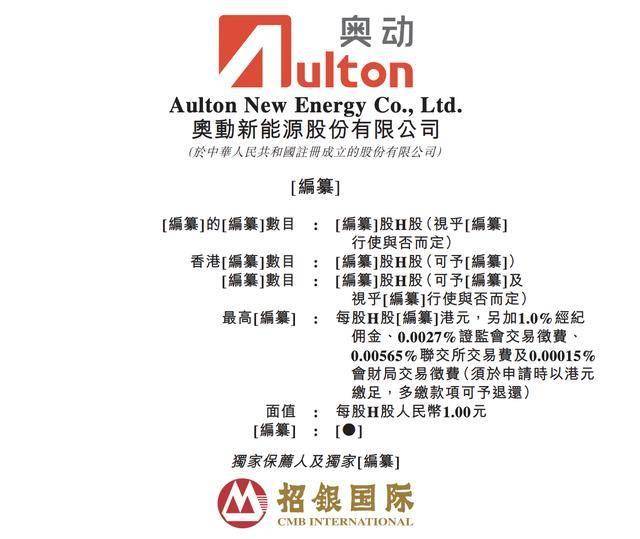
玩具大王冲刺第二家IPO,奥动新能源获蔚来、丰田参股
Sou Hu Cai Jing· 2025-12-15 10:50
Core Viewpoint - Aodong New Energy Co., Ltd. has submitted its application to list on the Hong Kong Stock Exchange, aiming to expand its operations as a leading independent third-party battery swapping solution provider in China [2]. Company Overview - Aodong New Energy was founded in June 2016 by Cai Dongqing and Zhang Jianping, focusing on establishing a comprehensive product and service portfolio for battery swapping ecosystems [2]. - As of June 30, 2025, Aodong New Energy has connected 521 battery swapping stations to its smart energy service platform, including 267 self-owned stations and 254 stations that are either operated by the company or connected to its platform [2]. Financial Performance - Revenue for Aodong New Energy from 2022 to 2024 is projected to be 1.106 billion RMB, 1.155 billion RMB, and 926 million RMB respectively, with corresponding losses of 785 million RMB, 655 million RMB, and 419 million RMB [3]. - In the first half of 2025, the company reported revenue of 324 million RMB, a year-on-year decrease of 31.71%, with a loss of 157 million RMB compared to a loss of 283 million RMB in the same period the previous year [2][3]. Shareholding Structure - Cai Dongqing directly holds approximately 39.11% of Aodong New Energy, while Zhuhai Aoli holds about 0.99%, and other notable shareholders include Zhang Jianping with 13.24% and NIO Capital with 5.53% [4][5]. - The board of directors consists of seven members, including three executive directors and three independent non-executive directors, with Cai Dongqing serving as the chairman and CEO [7]. Historical Context - Aodong New Energy has completed multiple rounds of financing since 2018, with investors including NIO Capital and others, achieving a post-investment valuation of approximately 11.9 billion RMB as of January 2022 [2].

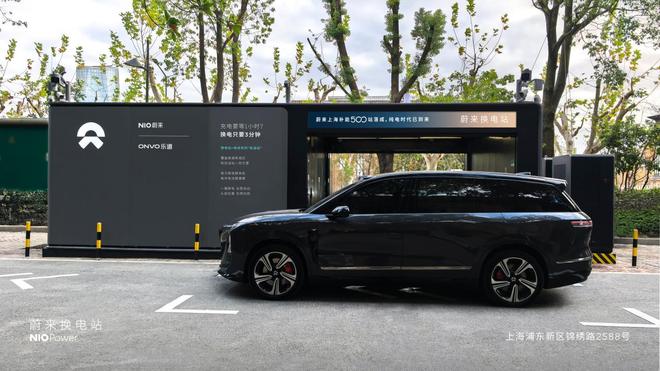
蔚来在上海建成500座充换电站,日均提供电量超过60万度
Guan Cha Zhe Wang· 2025-12-15 10:48
Core Insights - NIO has established a robust energy and service network in Shanghai, with 198 battery swap stations and 302 charging stations, providing over 600,000 kWh of energy daily [1][3]. Group 1: Battery Swap Station Details - The newly operational battery swap station at Shanghai Pudong Xinghe Bay Hotel features 23 battery slots, supports multiple battery specifications and brands, and can service up to 480 swaps per day, with an average swap time of 2 minutes and 24 seconds [3]. - The station's computing power reaches 1016 TOPS, equipped with high-performance intelligent perception hardware, allowing users to utilize smart assisted parking for easy access [3]. Group 2: Network Coverage and Performance - The coverage rate of NIO's battery swap stations within 3 kilometers of users' residences has significantly increased from approximately 40% in 2020 to 95% [3]. - In the area within Shanghai's outer ring, there is an average of one battery swap station every 8.5 square kilometers [3]. Group 3: Market Position and Growth - Shanghai has become a leading city for new energy vehicle consumption in China, with a projected market penetration rate of over 64% for new energy vehicles by October 2025, and pure electric vehicle penetration exceeding 50% for three consecutive months [5]. - Nationally, as of October 2025, the total number of electric vehicle charging infrastructure has reached 18.645 million, a year-on-year increase of 54%, with public charging facilities growing by 39.5% [5]. - From January to November 2025, the cumulative retail sales of new energy vehicles in China reached 11.472 million units, marking a year-on-year growth of 19.6% [5].
港交所酝酿每手买卖单位改革,43个不同单位将适度压缩
Jin Rong Jie· 2025-12-15 10:43
Group 1 - The Hong Kong Stock Exchange (HKEX) is planning to reform the trading unit sizes, with a market consultation process expected to start soon [1] - Currently, there are 43 different trading unit sizes in the Hong Kong stock market, ranging from 10 shares to 100,000 shares, with 666 companies having a unit size of 2,000 shares, accounting for 24.9% [1] - The diverse trading unit sizes create operational challenges, exemplified by NIO Inc. requiring only 10 shares per unit, valued at HKD 402.4, while Golden Stone Capital Group requires 100,000 shares per unit, valued at HKD 41,000 [1] Group 2 - HKEX aims to expedite the inclusion of Real Estate Investment Trusts (REITs) into the Stock Connect program [1] - There is a growing interest from southbound investors in ETFs, with the average daily trading amount for southbound ETF transactions reaching HKD 4.2 billion in the first three quarters of 2025, marking a nine-month high [1]

安全吗?线控转向获“准生”
3 6 Ke· 2025-12-15 10:39
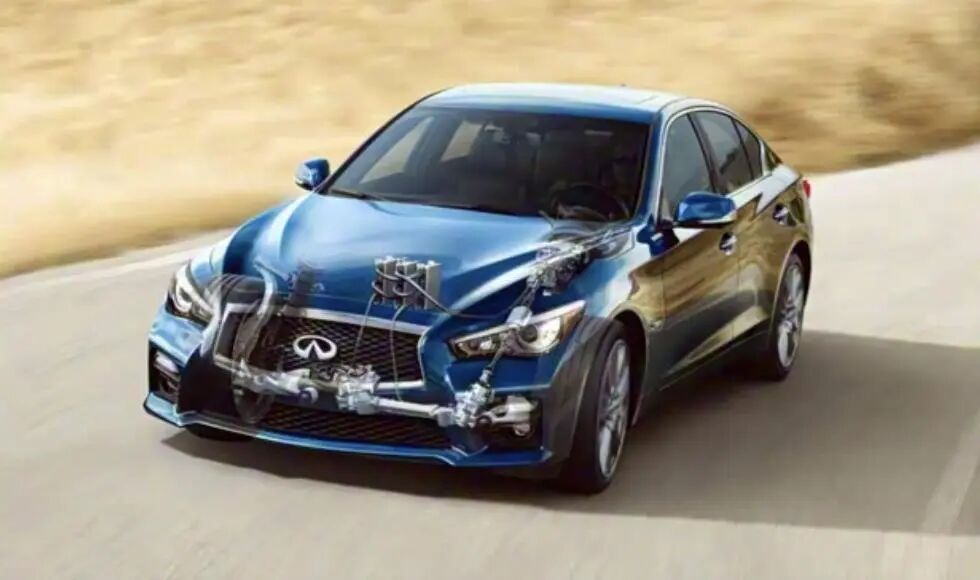
你有没有想过,开车时方向盘转动带动车轮——这个百年不变的机械逻辑,即将成为历史? 最近,工信部发布了新版《汽车转向系基本要求》,其中最关键的一条被删除:"转向系统必须保留机械连接"。这意味着,从2026年7月开始,你的方向 盘和车轮之间,可以不再依赖那根硬邦邦的转向柱,转而完全由电信号控制。 这项技术就是 "线控转向" ,而新国标正是它在中国的 "准生证"。那么,它到底是什么?为何现在才开放?对我们普通人又意味着什么? 所以,线控转向究竟是何原理?简单说就是转向和速度解耦了,传统转向系统通过机械连接传递转向力,而线控转向通过电信号控制,可自由改变转向特 性。 比如在泊车时,让它变得灵敏,方向盘打半圈就能一把入库;在高速时,让它变得沉稳,方向盘可以过滤掉大多路面震动。 这也让异形方向盘真正变得实用。一些专业赛车的异形方向盘将传统方向盘外圈砍半,扩大了仪表视野空间,但劣势在于大幅转向若存在交叉换手,可能 存在抓空,无法及时掌控方向盘的风险。而线控转向保证转向比可调,避免出现方向盘转动超过 180 度情况。 特斯拉Yoke方向盘最早应用于 Model S 和 Model X 车型,随后量产Cybertruck 配备 ...
从大厂人到汽车人:一群跨界者的生存实录
第一财经· 2025-12-15 10:14
Core Insights - The article discusses the transformative impact of the new energy and intelligentization wave on the automotive industry, highlighting both opportunities and challenges faced by traditional and new car manufacturers [2][3]. Group 1: Industry Trends - The penetration rate of new energy vehicles in China has surpassed 50%, with technology and internet companies entering the market, leveraging their advantages in technology and traffic [3]. - The automotive industry is experiencing a significant shift, with traditional car manufacturers and internet companies expected to collaborate in the next decade [3]. Group 2: Workforce Dynamics - Professionals from traditional automotive companies are transitioning to internet firms, often experiencing salary increases of over 30% and more flexible working conditions [4]. - Internet companies are facing challenges in adapting to the automotive ecosystem, particularly in areas like sales and after-sales service, which require a different operational approach compared to consumer electronics [5][6]. Group 3: Technological Integration - The integration of ICT (Information and Communication Technology) into the automotive sector is increasing, with engineers focusing on enhancing vehicle connectivity and communication capabilities [8][9]. - The demand for high data flow in smart connected vehicles is leading to a significant increase in data consumption, which impacts product lifespan and reliability [9][10]. Group 4: Cross-Industry Collaboration - Cross-industry car manufacturers are prioritizing the recruitment of talent with experience in both traditional automotive and new energy sectors, as they are better equipped to navigate the fast-paced market [14]. - The success of new entrants in the automotive industry is heavily influenced by the vision and strategy of their leadership, with a focus on adaptability and rapid decision-making [13][15].
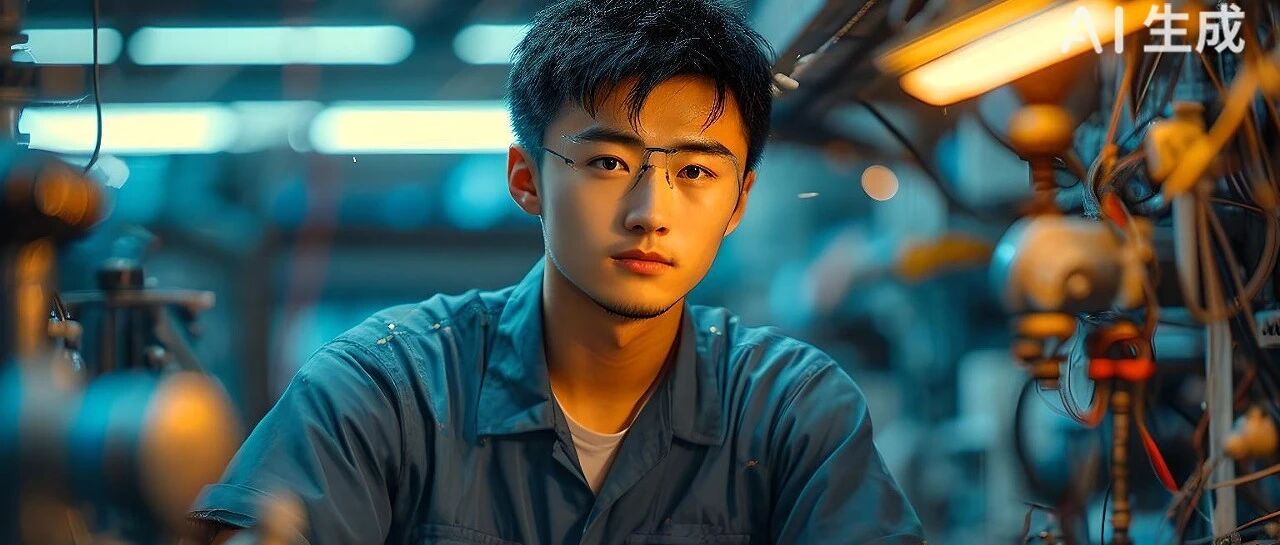
观察| 你曾引以为傲的工作,正在成为历史
未可知人工智能研究院· 2025-12-15 10:02
Core Viewpoint - The article discusses a significant shift in the job market and societal structure due to the rise of AI, leading to a reversal of economic hierarchies where manual labor becomes more valuable than knowledge work [14][25][49]. Group 1: Job Market Changes - Millions of white-collar workers are entering the job market as AI tools replace many knowledge-based jobs, while manual labor jobs are becoming scarce and highly valued [14][25]. - The demand for skilled tradespeople, such as electricians and welders, is at an all-time high, with companies offering salaries of 20,000 to 30,000 yuan per month, which exceeds the pay of many mid-level positions in tech companies [25]. - The employment rate for vocational school graduates (96.5%) has surpassed that of bachelor's degree holders (88.1%) for two consecutive years, indicating a shift in job market dynamics [25]. Group 2: Societal Implications - The traditional perception of "white-collar" jobs as superior is being challenged, as blue-collar jobs may offer more economic security and stability in the future [27][28]. - The societal structure built around the idea that intellectual work is more valuable than manual work is being disrupted, leading to potential identity crises for those who have defined themselves by their professional titles [29][30]. - The article draws parallels to historical events, such as the Black Death, which drastically changed labor dynamics and power structures, suggesting that a similar transformation is occurring today due to AI [20][24]. Group 3: Psychological Impact - The rapid changes in job value and societal status may lead to significant psychological adjustments for individuals who have long identified with their professional roles [29][32]. - There is a potential for a new social order where success is redefined, and traditional markers of achievement, such as job titles, may lose their significance [40][43]. - The article emphasizes the need for flexibility and the ability to redefine success in the face of these changes, as the old systems of value may no longer apply [48].