中国平安

Search documents
2026年格隆汇“下注中国”十大核心资产名单,重磅揭晓!
Ge Long Hui· 2025-12-31 20:53
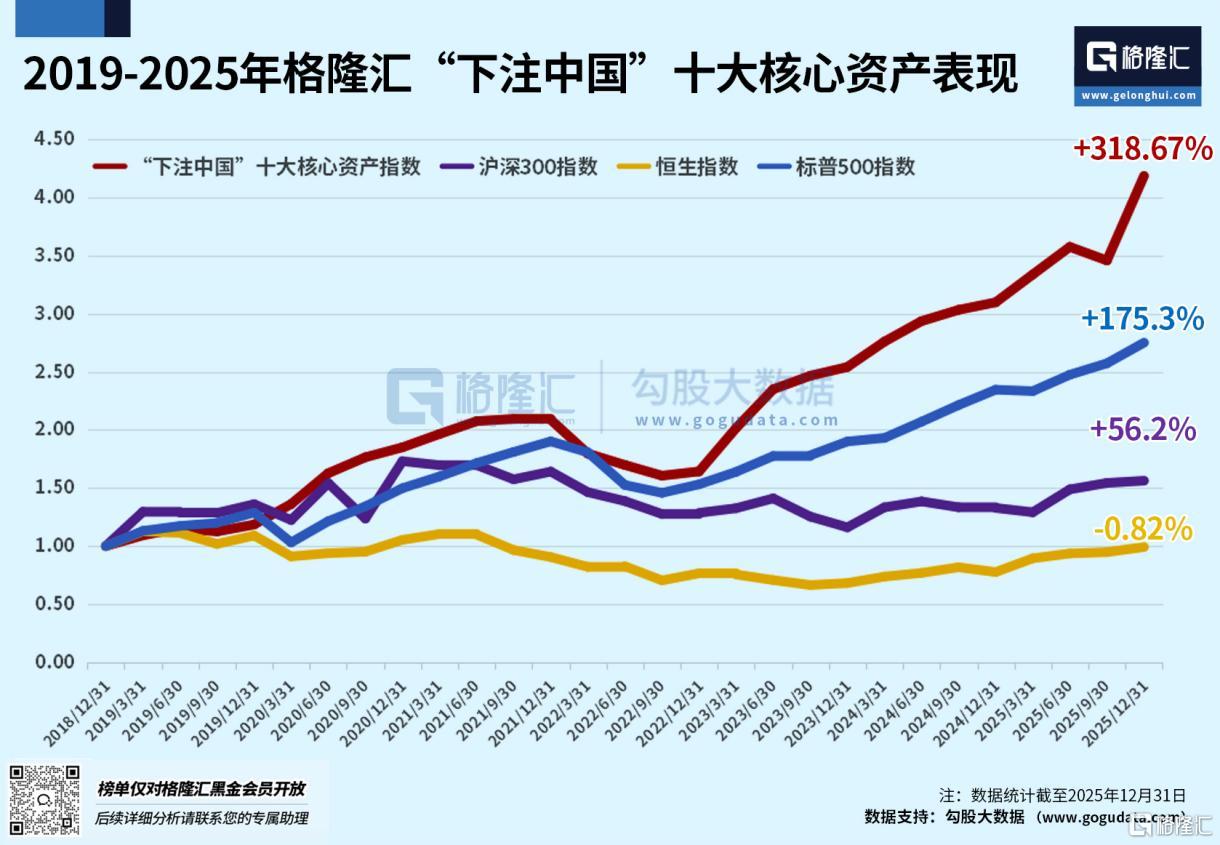
Core Insights - The 2026 "Bet on China" top ten core assets have been announced by Gelonghui, a well-known independent research institution in China, based on votes from millions of members across over 70 countries [1][3] - The selection process involved over half a month of voting, resulting in hundreds of thousands of valid votes, emphasizing the collective wisdom of global investors [3] Selection Criteria - The selected listed companies must meet four key principles, reflecting the uncertainties in the Chinese investment market for 2025, including fluctuating recovery expectations, real estate stability concerns, and the ambiguity in investment directions related to AI and new energy [2] Performance Metrics - Since the end of 2018, the "Bet on China" top ten core assets index has achieved a cumulative increase of 318.67%, significantly outperforming the CSI 300 index (+56.2%), Hang Seng index (-0.82%), and S&P 500 index (+175.3%) [3] - In 2025, the equal-weighted return of the top ten core assets reached 35.1%, again surpassing the CSI 300 index (+17.7%), Hang Seng index (+27.8%), and S&P 500 index (+17.3%) [3] Core Assets Overview 1. **Zhongji Xuchuang (300308)**: Expected to benefit from the acceleration of AI computing infrastructure in China, with a projected demand for optical modules reaching 18 billion yuan, and a 50% annual growth in domestic demand for 800G optical modules [5] 2. **Tencent Holdings (00700.HK)**: With a massive user base, Tencent is expected to see its advertising revenue exceed 40 billion yuan in 2026, driven by its social media platforms and AI efficiency improvements [6][7] 3. **Alibaba (09988.HK)**: Anticipated to achieve 170 billion yuan in revenue from cloud services, with a growth rate of 34%, while also focusing on domestic consumption upgrades [7][8] 4. **Gold ETF (518880)**: Positioned as a key hedging tool for domestic investors, with a forecasted gold price potentially reaching 5,000 USD per ounce, supported by liquidity and geopolitical factors [8] 5. **Luoyang Molybdenum (603993/03993.HK)**: Expected to produce 660,000 tons of copper and 120,000 tons of cobalt in 2026, benefiting from the growth of the domestic electric vehicle market [9] 6. **Ping An Insurance (601318/02318.HK)**: Projected to see a 20%-25% increase in market value, benefiting from the domestic interest rate cycle and a focus on quality equity assets [10] 7. **Dongfang Caifu (300059)**: Anticipated to see a 22%-28% growth in market value, driven by increased capital market activity and AI-driven wealth management services [11] 8. **Wanhua Chemical (600309)**: Expected to achieve a net profit of 15.5-16.2 billion yuan in 2026, supported by domestic demand for MDI and new materials [12] 9. **WuXi AppTec (02268.HK)**: Positioned as a leader in the ADC field, with over 60% of its pipeline serving domestic clients, reflecting the growth of China's biopharmaceutical industry [13] 10. **Trip.com Group (09961.HK)**: Projected to see a revenue growth of over 25%, benefiting from the recovery of domestic travel and tourism [14] Conclusion - The ten core assets are aligned with China's key sectors such as AI computing, new energy, consumption, finance, and biomedicine, reflecting the country's new productive forces and upgrading of livelihoods [14]






2026年格隆汇“下注中国”十大核心资产名单,重磅揭晓!
格隆汇APP· 2025-12-31 16:18
Core Insights - The article presents the "Top 10 Core Assets for 2026" as voted by millions of members from over 70 countries, highlighting the collective wisdom of global investors in navigating market uncertainties [2][5]. Summary by Categories Core Assets - The selected core assets include: - **Zhongji Xuchuang (中际旭创)**: Market cap of 6,778 million RMB, focusing on AI and advanced manufacturing [3] - **Tencent (腾讯)**: Market cap of 49,160 million RMB, centered on AI applications [3] - **Alibaba (阿里巴巴)**: Market cap of 24,500 million RMB, involved in AI and cloud computing [3] - **Gold ETF (黄金ETF)**: Market cap of 1 million RMB, categorized under precious metals [3] - **Luoyang Molybdenum (洛阳钼业)**: Market cap of 4,279 million RMB, with no specific industry listed [3] - **China Ping An (中国平安)**: Market cap of 12,400 million RMB, in the financial sector [3] - **Dongfang Caifu (东方财富)**: Market cap of 3,663 million RMB, with no specific industry listed [3] - **Wanhua Chemical (万华化学)**: Market cap of 2,400 million RMB, in the chemical industry [3] - **WuXi AppTec (药明合联)**: Market cap of 1,515 million RMB, in the pharmaceutical sector [3] - **Trip.com Group (携程集团)**: Market cap of 3,250 million RMB, in consumer discretionary [3] Market Context - The investment landscape in China for 2025 is characterized by uncertainties, including fluctuating recovery expectations, geopolitical tensions, and evolving trends in real estate and AI [4]. - The article emphasizes the importance of collective intelligence in investment decisions, asserting that the aggregated insights from millions can effectively guide investors through market complexities [5][7]. Performance Metrics - From 2019 to 2025, the "Top 10 Core Assets Index" achieved a cumulative growth of 318.67%, significantly outperforming the CSI 300 Index (+56.2%) and the Hang Seng Index (-0.82%) [11]. - In 2025, the equal-weighted return of the top assets reached 35.1%, again surpassing the performance of major indices [11]. Selection Criteria - The selected companies must meet four key principles: 1. Represent Chinese enterprises with a domestic market focus 2. Align with future economic directions and create long-term value 3. Possess competitive advantages or potential in emerging sectors 4. Have a projected market cap growth of 20% or more in 2026 [10] Individual Company Insights - **Zhongji Xuchuang**: Expected to benefit from a surge in AI-related demand, with a projected market cap growth of 25%-30% [12]. - **Tencent**: Anticipated to see a 25%-30% increase in adjusted net profit, driven by its strong domestic user base and advertising revenue [13]. - **Alibaba**: Forecasted to achieve a 25%-28% stock price increase, supported by its dual focus on AI and consumer markets [14]. - **Gold ETF**: Positioned as a key hedging tool, with a projected 28%-32% growth in fund inflows [15]. - **Luoyang Molybdenum**: Expected to maintain its leading position in the battery materials sector, with a projected net profit of 320-350 million RMB [16]. - **China Ping An**: Anticipated to grow its market cap by 20%-25%, benefiting from the domestic financial market's recovery [17]. - **Dongfang Caifu**: Projected to see a 22%-28% increase in market cap, driven by the growth in wealth management services [18]. - **Wanhua Chemical**: Expected to achieve a net profit of 155-162 million RMB, supported by domestic demand [19]. - **WuXi AppTec**: Positioned as a leader in the ADC field, with significant growth driven by domestic innovation [20]. - **Trip.com Group**: Forecasted to grow revenue by over 25%, capitalizing on the recovery of domestic travel [21]. Conclusion - The selected core assets reflect a strategic alignment with China's economic growth and key sectors, including AI, renewable energy, finance, and healthcare, emphasizing their potential for long-term value creation [22].



加码“长钱长投” 2025年险资在一级市场出资规模超千亿元
Zhong Guo Jing Ying Bao· 2025-12-31 15:45
Group 1 - The core viewpoint of the articles highlights the accelerated influx of insurance capital into the primary market, driven by regulatory guidance and a low-interest-rate environment, with insurance institutions contributing significantly to private equity funds [1][2] - In 2025, insurance institutions contributed a total of 1,097.56 billion yuan to private equity funds, marking a 55.85% increase compared to the same period in 2024 [1] - The top three insurance companies in terms of contributions to private equity funds in 2025 were China Pacific Life Insurance (205.99 billion yuan), Ping An Life Insurance (150 billion yuan), and Sunshine Life Insurance (114.88 billion yuan) [2] Group 2 - Insurance capital's participation in the primary market is facilitated through various investment methods, including fund-of-funds, direct investment funds, and proprietary capital [3] - In the first half of 2025, insurance asset management institutions registered equity investment plans totaling approximately 268 billion yuan, reflecting a year-on-year growth of 188% [3] - The significant performance of insurance capital in the primary market is attributed to three main factors: the need to address "asset scarcity," supportive regulatory policies, and the natural alignment of insurance capital characteristics with equity investments [3] Group 3 - Insurance capital is primarily directed towards future industries and new productive forces, promoting a shift towards more rational and patient value investing in the market [4] - Notable investments include a 50 billion yuan fund initiated by China Life Asset Management focused on hard technology, and a 100 billion yuan fund established by PICC aimed at modernizing industrial systems [4][5] - Insurance capital is characterized as "patient capital," favoring long-term investments in sectors aligned with national strategies, such as hard technology, AI, and healthcare [5] Group 4 - Despite the growing scale of insurance capital investments, not all general partners (GPs) are favored; insurance capital has stringent requirements for GP selection based on management scale, historical performance, and team capabilities [6] - Preferred GPs include those with insurance or state-owned backgrounds, as well as top-performing market-oriented GPs [6] - The collaboration between insurance capital and GPs is influenced by the need for alignment in long-term interests and risk management strategies [6][7]
保险行业2026年策略:资负两端全面改善,估值修复正当其时
SINOLINK SECURITIES· 2025-12-31 15:27
Investment Rating - The report indicates a positive outlook for the insurance industry, with expectations of double-digit growth in new premiums and net profit value (NBV) driven by the migration of deposits and improved margins [2][22]. Core Insights - The insurance sector is expected to benefit from strong household savings demand, with insurance products becoming increasingly attractive as low-risk savings options amid declining bank deposit rates [2][22]. - The transition towards participating insurance products is anticipated to enhance market share for leading insurance companies, as they leverage their stronger investment capabilities and distribution channels [2][3]. - The report highlights a favorable market environment for insurance stocks, driven by high demand for new policies and a stable investment return outlook, which is expected to support valuation recovery [4][8]. Summary by Sections Liability Side Outlook - New business and NBV are projected to grow at double-digit rates, supported by strong household savings and a shift towards insurance products due to declining bank deposit rates [2][22]. - The insurance sector is expected to maintain stable margins despite the downward adjustment of preset interest rates and the transition to participating insurance [2][22]. Asset Side Outlook - Insurance funds are expected to actively enter the market, with a significant portion of new premiums allocated to equities, particularly in A-shares [3][16]. - The report anticipates a diversified approach to asset allocation, with a focus on high-dividend stocks and sectors such as technology and advanced manufacturing [3][19]. Market Performance Review - The insurance sector has outperformed the broader market, with significant gains in both A-shares and H-shares, indicating strong investor confidence [8][4]. - The report notes that the insurance index has increased by 27.0%, outperforming the CSI 300 index, which rose by 18.2% [8]. Premium Income and Profitability - New premium income is expected to achieve double-digit growth, with specific companies like China Life and Ping An showing substantial increases in their new business premiums [14][32]. - The report highlights the importance of maintaining a favorable cost structure and investment returns to support profitability in the insurance sector [4][11].


2026年ESG有何发展趋势?他们这样说
Xin Lang Cai Jing· 2025-12-31 14:50
Group 1 - The core viewpoint emphasizes the importance of sustainable information disclosure as a compliance baseline for public companies in China, Hong Kong, and other major capital markets, driven by regulations like the EU's CSRD and China's sustainable development disclosure standards [1] - ESG disclosure is becoming increasingly critical for Chinese companies as they expand internationally, particularly in the EU and Belt and Road regions, presenting new challenges for compliance [1] - ESG is identified as a driver for three key actions that create value: influencing long-term financial performance, affecting financing costs and valuations in debt and capital markets, and impacting supply chain competitiveness and brand reputation [1] Group 2 - The year 2025 is marked as a pivotal point for ESG in China, transitioning from quantity to quality of disclosures and from policy-driven to market-driven approaches [2] - Current structural shortcomings in Chinese ESG practices include inadequate biodiversity disclosure, low carbon footprint reporting rates, and weak social issues representation, with only 8% of companies meeting female board member standards [2] - The trend in ESG standards is expected to align with ISSB's dual materiality concept, moving towards a market-driven model over the next 3-5 years [2] Group 3 - China's approach to ESG is characterized by a focus on adding standards while Western countries are seen as reducing them, with a clear direction in policy and practice [3] - The integration of international and domestic ESG indicators is emphasized, ensuring that standards are both applicable locally and comparable internationally [3] - Future ESG standards in China are expected to reflect the country's industrial structure, prioritizing energy management and clean production in manufacturing [3] Group 4 - The global sustainable fashion sector is experiencing a shift from localized actions to systemic transformations, with significant changes in environmental management practices [5] - The introduction of the Ecodesign for Sustainable Products Regulation (ESPR) in the EU aims to enhance product sustainability throughout their lifecycle, promoting circular economy principles [5] - The regulation will require products to meet standards for durability, reparability, and recyclability, while also introducing digital product passports for tracking carbon and water footprints [5] Group 5 - The prohibition of destroying unsold textiles and footwear has raised the challenge of recycling and reuse, leading to a notable increase in the adoption of recycled fibers [6] - New regulations related to responsible textile recycling and the CSRD are pushing the fashion and textile industry towards mandatory compliance with ESG requirements [6] - Key trends in the fashion ESG sector for the next three years will focus on circular economy, artificial intelligence, and nature-based solutions [6]
2026年第1期:1月1日-1月31日:“申万宏源十大金股组合”
Shenwan Hongyuan Securities· 2025-12-31 14:23
Group 1 - The report indicates that the "Shenwan Hongyuan Gold Stock Portfolio" reflects the market outlook and style judgment for the upcoming month, showcasing the research team's capabilities and competitiveness in the market [1][11] - The previous portfolio showed a slight increase of 0.14% from December 1 to December 31, 2025, with the A-share portfolio averaging a 0.80% increase, while the Shanghai Composite Index and CSI 300 Index rose by 2.06% and 2.28%, respectively [6][15] - Since the first release of the gold stock portfolio on March 28, 2017, the cumulative increase has reached 401.73%, with the A-share portfolio up by 293.13%, outperforming the Shanghai Composite Index and CSI 300 Index by 271.65 and 260.01 percentage points, respectively [6][15] Group 2 - The strategy judgment for the current period maintains that the conditions supporting the spring market remain unchanged, with liquidity in the stock market being loose and upcoming events likely to boost risk appetite [14] - The report suggests focusing on cyclical Alpha and thematic rotation opportunities, particularly in basic chemicals and non-ferrous metals, as well as sectors like AI, commercial aerospace, and high-dividend strategies [14] - The top recommended stocks include "Iron Triangle" stocks: Hualu Hengsheng, Lingyi Technology, and CIMC Enric (Hong Kong), along with other stocks such as Xingfa Group, TBEA, Chifeng Gold, WuXi AppTec, China National Glass, Ping An Insurance (Hong Kong), and Alibaba-W (Hong Kong) [6][17][18] Group 3 - The report highlights the performance of the top ten gold stocks, with Hualu Hengsheng benefiting from favorable policies in the domestic chemical industry, and Lingyi Technology experiencing high growth in AI and robotics [17][20] - CIMC Enric is positioned to benefit from the shipbuilding cycle and clean energy equipment orders, while Xingfa Group has a solid base in phosphate and specialty chemicals [18][20] - Other notable stocks include WuXi AppTec, which is seeing strong global demand in the CXO industry, and Alibaba-W, which is accelerating its integration from data centers to application layers in AI [18][22]


前瞻2026 | 健康险迈向万亿时代,百万医疗险如何穿越内卷深水区?
Di Yi Cai Jing· 2025-12-31 13:52
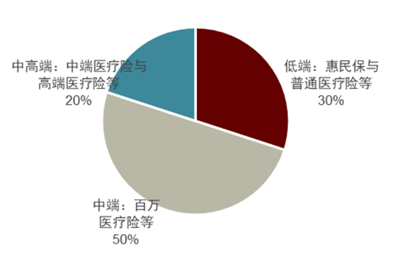
Core Insights - The health insurance market, particularly the million medical insurance, is transitioning from rapid growth to a more competitive and saturated environment, with premium growth slowing significantly [2][4][5] - The million medical insurance, once a growth driver, is now facing challenges such as homogenization, competition from inclusive insurance products, and evolving consumer demands [1][4][5] - A new wave of product iterations is underway, focusing on differentiation and service enhancement to meet consumer needs and adapt to regulatory changes [6][7][10] Market Trends - As of November 2025, the total premium for commercial health insurance reached 943.9 billion yuan, with a year-on-year growth of only 2.39%, indicating a slowdown compared to previous years [2][4] - The commercial medical insurance sector is expected to surpass critical illness insurance for the first time in 2024, with approximately half of its market share attributed to million medical insurance [2][4] Competitive Landscape - The industry is experiencing intense competition characterized by product similarity, with many offerings featuring similar coverage limits and deductibles, leading to a cycle of price competition and service enhancement [4][5] - The mismatch between supply and demand is evident, as current offerings primarily cover standard health insurance needs, leaving gaps in high-end medical services and coverage for non-standard health individuals [4][5][9] Consumer Demand - There is a growing consumer demand for services related to post-operative recovery, chronic disease management, and overall healthcare experience, which contrasts sharply with the current supply of similar insurance products [5][6] - The need for differentiated products that address long-tail demands is becoming increasingly critical as consumers seek more comprehensive health solutions [5][12] Product Innovation - Major insurance companies are launching updated versions of their million medical insurance products, focusing on customer-centric features and expanding coverage to include outpatient medications and high-value drugs [6][7][10] - The integration of rehabilitation costs into core coverage is emerging as a significant trend, reflecting a shift towards addressing long-term healthcare needs [8][9] Future Directions - The future of million medical insurance is expected to focus on three main innovation lines: extending coverage beyond traditional medical scenarios, enhancing service models through digital health platforms, and implementing personalized insurance solutions based on individual health data [13] - The industry is encouraged to find its position within the multi-tiered healthcare system, ensuring effective integration with basic medical insurance and critical illness insurance to provide tangible value to consumers [12][13]
中国平安:全力应对大范围雨雪冰冻天气,累计赔付金额超1.77亿元
Bei Jing Shang Bao· 2025-12-31 13:41
Core Viewpoint - The article highlights the significant impact of extreme weather conditions, including heavy snowfall and cold waves, on various provinces in China, and emphasizes the proactive response of China Ping An in managing the situation and supporting affected clients [1] Group 1: Weather Impact - Multiple provinces in China, including Shaanxi, Shanxi, Hebei, Beijing, Tianjin, Henan, Shandong, Liaoning, and Inner Mongolia, experienced the largest scale of strong rain and snow since the beginning of winter this year [1] - Some areas recorded snowfall levels reaching blizzard magnitude, with temperatures hitting new lows, posing severe challenges to transportation, public welfare, and enterprise production [1] Group 2: Company Response - In response to the extreme weather, China Ping An activated its major disaster emergency plan and launched a series of emergency service measures [1] - The company focused on risk reduction, rapid claims processing, and heartfelt services to ensure the safety of clients' lives and property, demonstrating the social responsibility and commitment of the insurance industry in disaster response [1] Group 3: Operational Metrics - As of December 31, China Ping An dispatched over 2,580 claims personnel and deployed more than 2,108 rescue vehicles [1] - The company conducted over 2,769 emergency rescues and processed 31,000 claims related to the rain and snow, with total compensation exceeding 177 million yuan, and the fastest claim being settled within 10 minutes [1]
2025年度山东省保险业影响力评选结果揭晓
Qi Lu Wan Bao· 2025-12-31 13:40
Core Insights - The insurance industry in Shandong is accelerating its development in high-quality growth, risk protection, and public service, responding to economic transformation and social demand changes [1] - The "Influential Shandong 2025 Annual Insurance Industry Impact Assessment" event recognized 38 insurance companies for their contributions to the industry [1][2] - Digital transformation, smart risk control, and inclusive insurance are key trends driving innovation in the Shandong insurance sector [2] Industry Developments - The insurance sector is becoming a stabilizer, booster, and ballast for high-quality development, extending its services from personal pensions to family health and disaster response [1] - The total votes for the impact assessment exceeded 2.4 million, indicating strong public engagement and interest in the insurance industry [2] - The event highlighted the importance of integrating technology with insurance services, enhancing efficiency and social influence [2] Award Winners - The most influential insurance companies in Shandong for 2025 include major players such as People's Insurance Company of China, China Life, and Ping An Life [3][4] - The best claims service companies recognized include China Life Property Insurance and Sunshine Property Insurance [4] - The leading insurance products awarded include various life and health insurance plans, showcasing innovation in product offerings [5] Media Influence - Qilu Evening News, the organizer of the event, has a significant media presence in Shandong, with over 1.05 billion downloads of its app and a daily active user base exceeding 1.75 million [3] - The media outlet has adapted to new communication trends, focusing on mobile platforms and smart content production to enhance its reach and effectiveness [2]
深圳创新四姐妹,2025年三大关键词
2 1 Shi Ji Jing Ji Bao Dao· 2025-12-31 13:03
Core Viewpoint - The rapid development of artificial intelligence (AI) is prompting a revaluation of technology assets globally, with Shenzhen emerging as a focal point for investors seeking opportunities in China. The city has produced several leading tech giants, referred to as the "Four Sisters" of innovation: Huawei, Tencent, Ping An, and BYD, all of which have market capitalizations exceeding 1 trillion yuan and revenues above 600 billion yuan, with Ping An surpassing 1 trillion yuan in revenue for 2024 [1][2][4]. Group 1: Value Reassessment - The "Four Sisters" have experienced a collective value reassessment, with stock prices and market capitalizations reaching new highs. Excluding Huawei, which is not publicly listed, Tencent, Ping An, and BYD have all recorded significant stock price increases this year, benefiting from the narrative of asset revaluation in China [4][5]. - As of December 29, the average stock price increase for the "Four Sisters" was 44.87%, outperforming the average increase of 27.95% for the "Magnificent Seven" in the U.S. [5][6]. - Ping An's stock price rose by 52.25%, Tencent by 44.29%, and BYD by 10.47% this year, with all three companies achieving new market capitalization highs [7][9]. Group 2: AI Development - The "Four Sisters" are heavily investing in AI, engaging in a talent acquisition race and increasing R&D expenditures to secure a competitive edge in AI technology. For instance, Tencent has recruited top AI talent, while Huawei has launched a global recruitment initiative for AI experts [11][12]. - R&D spending has surged, with Huawei's R&D expenses reaching 96.95 billion yuan, accounting for 22.7% of its revenue, and Tencent's R&D expenditure hitting 22.82 billion yuan, a 28% increase year-on-year [12][13]. - Each company has adopted a differentiated approach to AI: Huawei focuses on foundational technologies, Tencent aims to integrate AI into its social applications, Ping An emphasizes AI in financial and healthcare services, and BYD incorporates AI into smart transportation solutions [15][16]. Group 3: Global Influence and Expansion - The global influence of the "Four Sisters" has increased, as evidenced by their improved rankings in the 2025 Fortune Global 500 and Kantar BrandZ lists. Ping An ranked 13th, Huawei 24th, BYD 27th, and Tencent 32nd in the Fortune list [16][17]. - BYD has surpassed Tesla to become the world's top electric vehicle seller, with exports growing by 144% year-on-year [16][17]. - Tencent's international gaming revenue grew by 43% to 20.8 billion yuan, while its cloud business has maintained high double-digit growth, serving a significant portion of leading overseas internet and gaming companies [17][18].