珀莱雅

Search documents
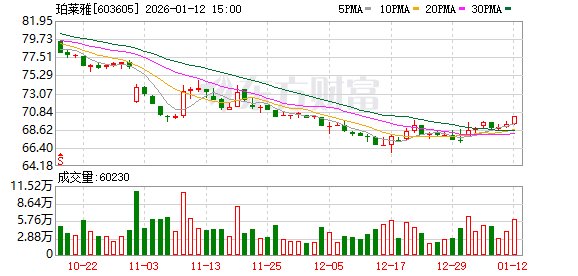
珀莱雅涨2.01%,成交额1.97亿元,主力资金净流入637.31万元
Xin Lang Cai Jing· 2026-01-14 03:14
Core Viewpoint - The stock price of Proya has shown a positive trend with a year-to-date increase of 4.67%, and a significant rise of 7.50% over the past 20 days, despite a decline of 7.75% over the last 60 days [2]. Group 1: Stock Performance - As of January 14, Proya's stock price increased by 2.01%, reaching 71.68 CNY per share, with a trading volume of 1.97 billion CNY and a turnover rate of 0.70% [1]. - The net inflow of main funds was 6.37 million CNY, with large orders accounting for 28.01% of purchases and 24.89% of sales [1]. Group 2: Financial Performance - For the period from January to September 2025, Proya achieved a revenue of 7.098 billion CNY, reflecting a year-on-year growth of 1.89%, and a net profit attributable to shareholders of 1.026 billion CNY, up by 2.65% [2]. - Since its A-share listing, Proya has distributed a total of 2.125 billion CNY in dividends, with 1.540 billion CNY distributed over the past three years [3]. Group 3: Shareholder Information - As of September 30, 2025, Proya had 84,100 shareholders, an increase of 39.53% from the previous period, with an average of 4,708 circulating shares per shareholder, down by 28.23% [2]. - The top ten circulating shareholders include Hong Kong Central Clearing Limited, which holds 27.11 million shares, a decrease of 20.41 million shares from the previous period [3].

中国美妆 2026 年展望:重启高质量增长;ROI 改善利好品牌龙头;上调美即(MGP)至买入(原中性);上海家化-China Cosmetics_ 2026 Outlook_ Reset for higher-quality growth; improving ROI favors branded leaders; Buy MGP (upgrading from Neutral)_Giant_Jahwa
2026-01-13 11:56
Summary of China Cosmetics Sector Conference Call Industry Overview - The China cosmetics sector is expected to experience a reset for higher-quality growth in 2026, moving away from reliance on high-cost Key Opinion Leaders (KOLs) and focusing on popular core SKUs. This shift has led to a contraction in Net Profit Margin (NPM) due to deleveraging impacts, despite improvements in Return on Investment (ROI) [1][2]. Key Trends and Insights - **Consumer Acquisition Costs**: Monitoring new consumer acquisition costs will be critical, especially as channel migration benefits diminish and the ingredient cycle remains ambiguous. Anti-involution policies will also play a significant role [1]. - **Branding Strategy**: Branding is anticipated to be the most effective strategy for consumer engagement and new product launches in 2026. Companies with high repurchase rates and cost-efficient omni-channel strategies are better positioned for success [1][2]. - **Market Dynamics**: The cosmetics market is expected to grow at a normalized rate, with growth projected at less than 1x GDP growth. The market is forecasted to see a 2.1% increase in beauty spending in 2026, with a mix of onshore and offshore market performance [17][18]. Company-Specific Insights - **Mao Geping Cosmetics (MGP)**: Upgraded from Neutral to Buy with a target price increase from HK$89 to HK$105, reflecting a 27% upside. The company is noted for strong branding and a balanced channel presence, with a forecasted sales and net income CAGR of 23% and 22% from 2025 to 2027, respectively [2][9]. - **Giant Biogene**: Maintained as Buy, with a target price lowered from HK$71 to HK$46, indicating a 36% upside. The company is expected to recover with new skincare products and a focus on medical aesthetics, projecting sequential growth of -8%/+12%/+17% YoY for 1H26E/2H26E/2027E [2][9]. - **Shanghai Jahwa**: Target price reduced from RMB 31 to RMB 28, with a 22% upside. The company is on a turnaround trajectory with improving margins and cash flow [2][9]. - **Proya Cosmetics**: Remains Neutral as the company is expected to moderate organic growth while awaiting more execution on white space exploration [2][9]. - **Botanee Biotech**: Neutral rating with early signs of a potential turnaround but lacking clear growth drivers [2][9]. - **Bloomage Biotech**: Maintained as Sell due to downside risks in skincare and muted growth in medical aesthetics amid a mature product cycle [2][9]. Market Performance and Projections - **E-commerce Trends**: Tmall is expected to maintain strong growth momentum, supported by anti-involution measures. Douyin's performance has been softer than expected, with a significant decline in KOL channel performance [19][21]. - **Sales Growth Expectations**: The cosmetics sector is projected to see sustained GMV growth on Tmall, while Douyin is expected to experience a narrowing gap in growth rates compared to Tmall [20][21]. Conclusion - The China cosmetics sector is poised for a shift towards higher-quality growth in 2026, with branding and strategic channel management becoming increasingly important. Companies that adapt to these changes and focus on core products are likely to outperform in the evolving market landscape [1][2][19].


国信证券:消费行业2026年聚焦新消费与困境反转 看好四大细分赛道
智通财经网· 2026-01-13 03:54
Core Viewpoint - Guosen Securities maintains an "outperform" rating for the consumer sector, anticipating potential rebounds in 2025 due to policy support and structural opportunities in specific sub-sectors like gold jewelry, beauty care, offline retail, and cross-border e-commerce [1] Group 1: 2025 Market Review - In 2025, the SW retail index increased by 11.6%, underperforming the CSI 300 index by 6.1 percentage points, as the market adjusted after significant gains in 2024 [2] - The SW beauty care index rose by 0.4%, lagging behind the CSI 300 index by 17.35 percentage points, with a notable decline in the second half of the year due to a shift in market focus towards technology [2] - The overall consumer sector showed stable fundamentals in 2025, with emerging structural highlights and strong rebound potential supported by clearer consumption-promoting policies [2] Group 2: 2026 Outlook - The new consumption trend is expected to continue into 2026, driven by changes in consumer sentiment among younger demographics and the successful market entry of new consumption companies [3] - Traditional consumption leaders are facing operational challenges but are adapting by innovating and adjusting their retail channels, leading to potential recovery starting from late 2024 [3] Group 3: Investment Recommendations - **Gold Jewelry**: The sector is entering a peak consumption season with overall valuations at low levels, and companies with strong product offerings are expected to see growth [4] - **Beauty Care**: The sector is returning to low levels, with traditional leaders showing signs of recovery and new product launches driving growth [4] - **Offline Retail**: The end of the year marks a sales peak, with potential positive impacts from CPI recovery and ongoing adjustments in supermarket operations [4] - **Cross-Border E-commerce**: Market sensitivity to external tariffs is decreasing, and leading companies are expected to benefit from the upcoming overseas consumption peak [4]
商贸零售行业1月投资策略:政策支持有望进一步加码,板块龙头蓄势待发
Guoxin Securities· 2026-01-12 13:43
Investment Rating - The report maintains an "Outperform" rating for the retail sector [3][56]. Core Insights - The retail sector is expected to benefit from increased policy support, with leading companies poised for growth [1][3]. - The overall consumption environment in 2025 is projected to be stable, with structural highlights emerging, particularly as consumption policies become clearer [1][12]. - The report identifies two main trends for 2026: the continuation of new consumption trends and the anticipated reversal of challenges faced by traditional consumption [2][20]. Summary by Sections Market Performance Review - In 2025, the SW retail index increased by 11.6%, underperforming the CSI 300 index by 6.1 percentage points, while the beauty care index rose by only 0.4%, lagging behind the CSI 300 by 17.35 percentage points [1][16]. - The retail sector's performance was initially strong in the first half of 2025 but faced a decline in the second half due to a shift in market focus towards technology [1][16]. Investment Recommendations - The report suggests several sectors for investment: 1. **Gold and Jewelry**: The sector is entering a consumption peak, with low valuations and expected growth in same-store sales and channel expansion. Recommended companies include潮宏基, 菜百股份, and 周大福 [3][56]. 2. **Beauty and Personal Care**: The sector is returning to low valuations, with traditional leaders showing signs of recovery. Recommended companies include 上美股份 and 珀莱雅 [3][56]. 3. **Offline Retail**: The end of the year is a peak sales period, with potential positive impacts from CPI recovery. Recommended companies include 名创优品 and 永辉超市 [3][56]. 4. **Cross-border E-commerce**: Companies are expected to benefit from reduced external tariff impacts, with recommendations including 小商品城 and 安克创新 [3][56]. Key Company Earnings Forecasts - The report provides earnings forecasts and investment ratings for key companies, all rated "Outperform" for 2025 and 2026, including 潮宏基, 上美股份, and 珀莱雅, with respective PE ratios indicating growth potential [5][59]. Recent Industry Data Tracking - As of November 2025, the total retail sales of consumer goods reached 43,898 billion yuan, with a year-on-year growth of 1.3%. The growth was influenced by high base effects and the timing of promotional events [26][30]. - Online retail sales for the first 11 months of 2025 reached 144,582 billion yuan, growing by 9.1%, with physical goods online retail accounting for 25.9% of total retail sales [28][30]. Policy Support and Future Outlook - Recent policy initiatives emphasize the importance of boosting consumer spending, with a focus on increasing the consumption rate and stabilizing demand through various measures [13][24]. - The report anticipates that traditional consumption leaders will gradually improve their performance as they adapt to new market conditions and innovate their product offerings [24][20].


流量失灵,美妆品牌换战场了
3 6 Ke· 2026-01-12 11:49
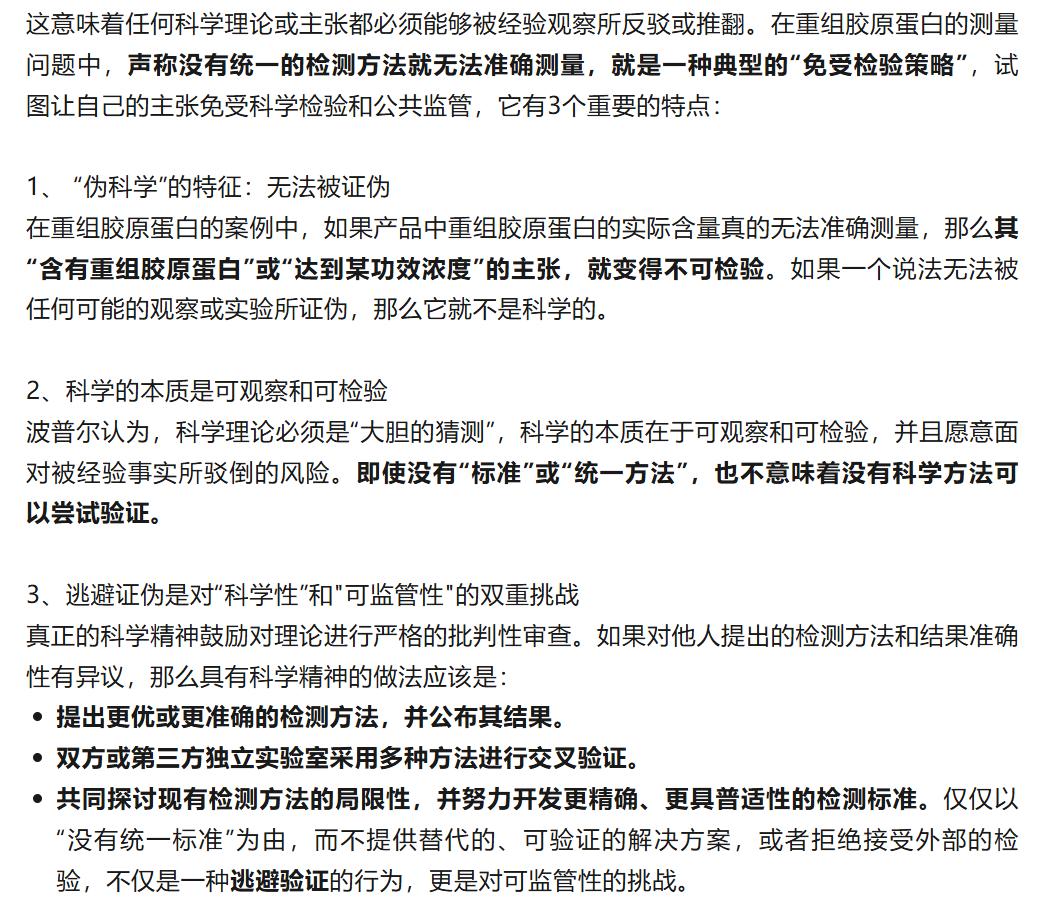
Core Insights - The beauty industry is undergoing a significant transformation as consumers prioritize product ingredients and efficacy over marketing narratives and brand stories [1][2] - The competition among companies is shifting from traditional marketing to a focus on scientific validation and technical authority, particularly regarding core ingredients [1][3] Group 1: Industry Dynamics - The battle for defining the "ingredient king" is exemplified by the prolonged conflict between Huaxi Biological and Juzhi Biological over recombinant collagen, highlighting the industry's shift towards scientific discourse [1][2] - Companies are increasingly engaged in disputes over intellectual property and scientific narratives, as seen in the conflict between medical company Aierfu and skincare brand Zhanmeiya, which revolves around the storytelling of scientific advancements [3] Group 2: Market Competition - The competition for established, cash-generating scientific products is illustrated by the dispute between Shuiyang Co. and Ruoyu Chen over the agency rights for the Spanish brand "Mestique," which has shown remarkable growth in the Chinese market [5][6] - The financial performance of companies varies significantly, with some experiencing revenue growth alongside increased R&D spending, while others face declining revenues despite high R&D investments [6][7] Group 3: Consumer Behavior - A significant shift in consumer preferences is noted, with 58.8% of consumers prioritizing product ingredients in their purchasing decisions, indicating a growing demand for transparency and efficacy [15][21] - The rise of the "ingredient party" has led to increased scrutiny of product claims, pushing companies to provide credible testing reports and validate their ingredients [15][21] Group 4: Future Trends - The beauty industry's future is marked by a "scientific arms race," with brands striving to establish their authority in scientific research and ingredient validation [8][16] - Companies are exploring unique natural ingredients and integrating skincare with makeup, reflecting a trend towards holistic beauty solutions [20][21]


珀莱雅赴港二次上市接受证监会问询,涉及募资用途和外资准入
Nan Fang Du Shi Bao· 2026-01-12 08:08
Group 1 - The China Securities Regulatory Commission (CSRC) has issued four inquiries to Proya regarding its upcoming secondary listing in Hong Kong, focusing on the use of raised funds, user information collection, advertising business operations, and foreign investment access [2][3] - Proya aims to enhance its international market presence and financing capabilities through this secondary listing, with plans for overseas acquisitions, particularly in the baby care, fragrance, and men's skincare sectors [3] - The CSRC has requested Proya to clarify whether its fundraising involves overseas investments and if it has completed the necessary approval processes [2][4] Group 2 - Proya's latest Q3 2025 report indicates a revenue of 7.098 billion yuan, a year-on-year increase of 1.89%, and a net profit attributable to shareholders of 1.026 billion yuan, up 2.65% [4] - The gross profit margin for the first three quarters reached 73.69%, an increase of 3.62 percentage points compared to the same period in 2024 [4] - The CSRC is also examining Proya's compliance with foreign investment regulations, particularly concerning its subsidiaries' business scopes that may intersect with restricted areas in the "Negative List for Foreign Investment Access (2024 Edition)" [3][4]
美护行业2026年度投资策略:国产替代趋势延续,优质国货凸显强a
Hua Yuan Zheng Quan· 2026-01-12 07:27
Group 1 - The report maintains a positive outlook on the beauty and personal care industry, highlighting the ongoing trend of domestic substitution and the emergence of high-quality domestic brands [1][5] - The beauty and personal care sector is expected to continue its growth trajectory, driven by strong brand marketing, product matrix, channel strategies, and management strategies [5][27] - The report identifies key investment opportunities in leading domestic brands such as Mao Ge Ping, Marubi, Proya, and RuYuchen, which are expected to maintain strong growth due to their competitive advantages [5][27] Group 2 - In 2025, the beauty and personal care sector showed stable revenue performance, with a slight increase in profit growth compared to revenue growth [17][22] - The overall performance of the beauty sector in 2025 was moderate, with a year-on-year revenue increase of 3.1% and a net profit increase of 5.0% [17][22] - The cosmetics market in 2025 experienced a steady retail growth rate, with a year-on-year increase of 4.8% in retail sales for cosmetics in China [22][27] Group 3 - The report notes a significant shift in consumer preferences towards efficacy-driven skincare products, with a growing focus on product ingredients and effectiveness [53][57] - The luxury segment of the beauty market is experiencing robust growth, particularly during promotional events, with high-end brands leading the sales increase [63][64] - The report highlights the transformation of sales channels, with Tmall focusing on high-end beauty products while Douyin showcases the rise of domestic brands [30][28] Group 4 - The medical aesthetics market is projected to maintain a compound annual growth rate (CAGR) of around 10% from 2025 to 2028, despite a slowdown in overall growth [31][38] - High-end consumers are increasingly seeking anti-aging treatments, with a notable rise in spending among this demographic [41][39] - The medical aesthetics industry is undergoing a consolidation phase, driven by stricter regulations and a slowdown in the growth of medical institutions [42][43] Group 5 - The personal care market is seeing strong growth in body care products, with a market share of 56% for body care and 44% for hair care [47][45] - The primary consumer demographic for personal care products is women aged 21-35, indicating a growing emphasis on personal care among younger consumers [48][49] - The report emphasizes the importance of product efficacy, with consumers increasingly prioritizing moisturizing, oil control, and beauty-enhancing benefits in personal care products [48][50]
溪木源的上市野心藏不住了
Sou Hu Cai Jing· 2026-01-12 04:35
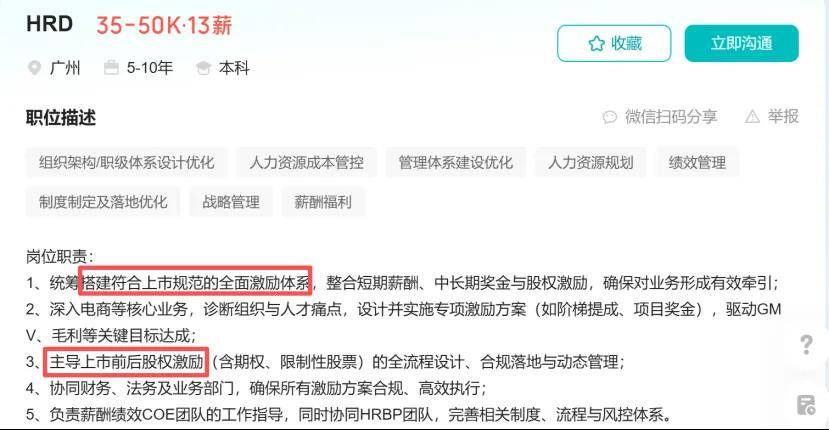
Core Insights - The company Ximu Yuan has undergone a rebranding, changing its name to Ximu Yuan Biotechnology Group, signaling a strategic shift towards de-regionalization and enhancing brand identity in the domestic beauty market [1][2] - The recruitment of a Human Resources Director with a salary of 650,000 annually indicates the company's intent to establish a comprehensive incentive system in preparation for an IPO [2][8] - The company is also actively hiring senior marketing and operations talent, reflecting its commitment to enhancing its marketing capabilities and operational efficiency in a competitive landscape [3][5][6] Recruitment Strategy - Ximu Yuan is offering a salary range of 35,000 to 50,000 per month for the HR Director position, emphasizing the need for experience in equity incentive design and performance systems aligned with IPO standards [2][3] - The company is also seeking a Product Marketing Director with a total annual compensation nearing 1 million, focusing on full-chain marketing capabilities and data-driven strategies [5][6] - Additional roles include a Tmall Operations Head and a Douyin Operations Manager, both with competitive salaries, highlighting the company's focus on digital marketing and e-commerce strategies [6][7] Growth Trajectory - Ximu Yuan has shown impressive growth, with sales exceeding 1 billion in its first year, reaching a GMV of 15 billion in 2022 and over 23 billion in 2023, with a valuation surpassing 7 billion [9][10] - The company is entering a critical phase for growth, having initiated a three-day strategic planning workshop to define its future direction and enhance brand and product strength [10][12] - The broader domestic beauty industry is witnessing a surge in IPO ambitions, with competitors also pursuing public listings, indicating a collective push towards capital market engagement [12][13]
净值偏差透露“玄机” 机构青睐科技成长板块
Shang Hai Zheng Quan Bao· 2026-01-11 18:51
Group 1 - Several funds have shown significant deviations between actual net asset values and estimated net asset values, indicating substantial changes in holdings since the fourth quarter of 2025 [1] - For instance, the GF Vision Smart Selection Mixed Fund saw a net value increase of 4.83% on January 7, 2026, despite most of its top ten holdings declining in value [1] - Similarly, the Huatai-PineBridge Competitive Advantage Mixed Fund experienced a 7.2% increase in net value on the same day, with seven of its top ten holdings also declining [1] Group 2 - New funds are actively entering the market, as evidenced by the Huaan Emerging Power Mixed Fund, which increased by 4.25% on January 7, 2026, suggesting a high stock position likely focused on the technology sector [2] - Institutional holdings have shifted, with notable reductions in positions in companies like Proya and Kelong Pharmaceutical, while new funds have emerged as significant shareholders [3][4] Group 3 - Institutions are increasing their research efforts, with over 11,000 institutional visits recorded in the past month, particularly focusing on advanced manufacturing sectors such as automotive, semiconductors, and general equipment [5][6] - Fund managers emphasize the need for deeper understanding of core business developments and competitive advantages within the industry, especially in light of recent market volatility [7]
从破产边缘到百亿市值,东北网红家族的“高端”之路
3 6 Ke· 2026-01-11 07:22
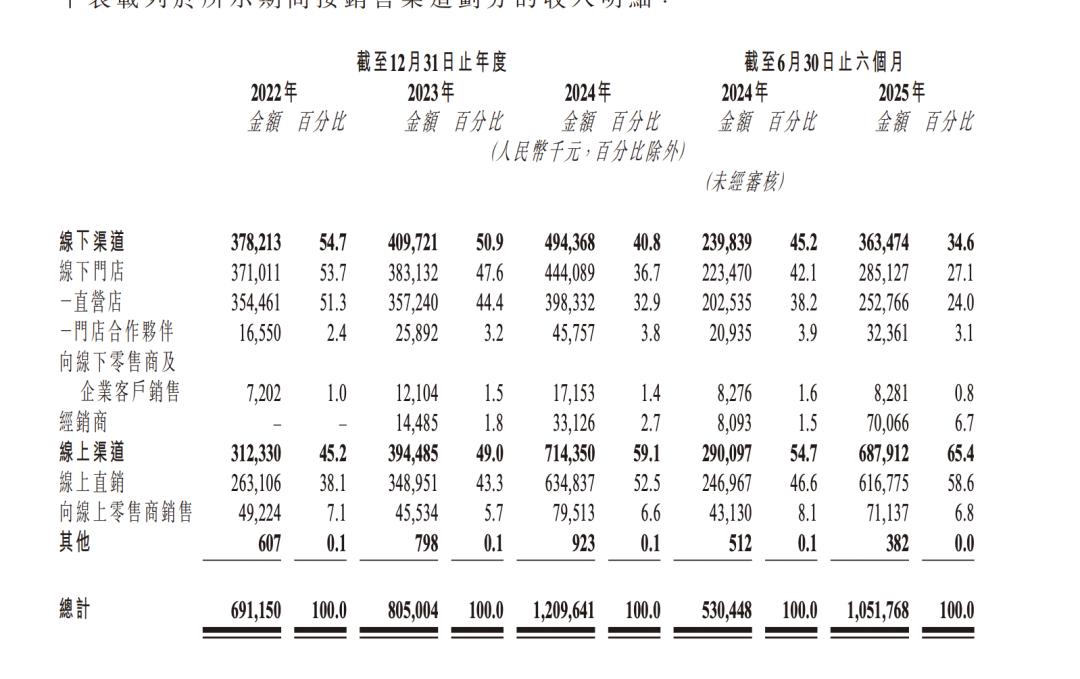
Core Viewpoint - Lin Qingxuan has successfully listed on the Hong Kong Stock Exchange, becoming the first high-end domestic skincare brand to do so, amidst a wave of consumer company IPOs expected by 2025 [1][2]. Company Overview - Lin Qingxuan was founded in 2003 during the SARS outbreak, initially starting with handmade soaps priced at 25 yuan each. The brand shifted towards high-end products with the launch of camellia oil in 2014 [2]. - The company has a notable shareholder base, including brands like Youngor and global beauty giant L'Oréal [2]. Market Position - Lin Qingxuan is positioned as a leader in the high-end domestic skincare market, ranking first among Chinese high-end domestic skincare brands and being the only domestic brand in the top 15 high-end skincare brands in China [15]. - The brand has established a high pricing strategy, similar to that of other high-end brands like Maogeping, and has created a unique market segment for domestic beauty products [4][15]. Financial Performance - On its first trading day, Lin Qingxuan's stock price rose by 9.3%, closing at 85 HKD per share, with a total market capitalization of approximately 11.9 billion HKD [2]. - Revenue figures from 2022 to the first half of 2025 show a compound annual growth rate (CAGR) of 51.2%, with online revenue increasing from 45.2% in 2022 to 65.4% in the first half of 2025 [11][12]. - The gross profit margin has consistently remained above 81%, with core products like camellia oil achieving a gross margin of 86.2% [17]. Sales and Marketing Strategy - Lin Qingxuan has adopted a unique family-based influencer marketing strategy, leveraging the founder and family members to create a content-driven approach to attract customers [13]. - The company has invested heavily in sales and distribution, with cumulative expenses reaching 2.263 billion yuan from 2022 to the first half of 2025, accounting for 55.2% of revenue in the first half of 2025 [20]. Store Expansion - The number of Lin Qingxuan stores has grown from 366 in 2022 to 554 by mid-2025, with over 95% of these located in shopping malls across major cities [18][19].