阿迪达斯

Search documents
贝恩资本收购Andar母公司:韩国“Lululemon”如何引爆亚洲运动消费赛道?
Xin Lang Cai Jing· 2026-01-14 05:48
Core Insights - Bain Capital announced the acquisition of EcoMarketing, the parent company of South Korean sportswear brand Andar, for 500 billion KRW (approximately 344 million USD), marking a significant move in the South Korean sportswear market and the global consumer investment landscape [1][9] - The acquisition will be executed in two phases: first, acquiring 43.66% of shares from the largest shareholder for 216.6 billion KRW (approximately 10 million RMB), followed by a tender offer for the remaining 56.4% at a price of 16,000 KRW per share, representing a 49.5% premium over the closing price prior to the transaction [1][9] Strategic Context - The acquisition reflects Bain Capital's investment logic and highlights structural changes in the global consumer market, betting on Andar's potential as the "Asian version of Lululemon" [2][10] - Since its founding in 2015, Andar has rapidly gained a user base in South Korea by offering products at a lower price point compared to Lululemon, with sales reaching 135.8 billion KRW (approximately 656 million RMB) in the first half of 2025, a historical high [2][11] - EcoMarketing's unique business model and growth potential are key values in the acquisition, having transitioned from an online advertising agency to a major player in sportswear after acquiring 75% of Andar in 2021 [2][11] Market Dynamics and Future Challenges - The acquisition is expected to significantly impact the Asian sports consumer market, providing Andar with resources for global expansion, as it has already established retail operations in Japan, Australia, and Singapore [4][13] - The competitive landscape in the Asian sportswear market is intensifying, with similar brands like MAIA ACTIVE being acquired, indicating a closing window for "Lululemon imitators" [5][13] - Bain Capital faces challenges in maximizing Andar's value amid a slowing global sports consumer market and balancing global expansion with local cultural relevance [14][15] - The transition to a private company may reduce short-term performance pressure but also limits access to public market financing and transparency, posing operational challenges for Bain Capital [14][15]
Alo想做lululemom,但更想做miumiu
3 6 Ke· 2026-01-13 00:42
Core Insights - Alo is transitioning from a sports brand to a luxury lifestyle brand, aiming to emulate the success of Miu Miu and Lululemon [1][5][21] - The appointment of Benedetta Petruzzo, former CEO of Miu Miu, as Alo's international CEO indicates a strategic shift towards luxury market expansion [1][6][19] Group 1: Leadership and Strategy - Alo has appointed Benedetta Petruzzo, who has a strong background in luxury brands, to lead its international expansion, particularly in Europe and Asia [1][6] - The company plans to open a flagship store in Paris by 2026, which will be over 2000 square meters, previously occupied by Zara [3][5] - Alo is also rumored to be exploring multiple store openings in China, particularly in Shanghai and Beijing, although these plans are not yet confirmed [3][19] Group 2: Market Positioning and Product Development - Alo's recent launch of a luxury handbag line, priced between $1,200 and $3,600, marks its entry into the high-end leather goods market [11][19] - The brand's collaboration with BLACKPINK member Jisoo for a limited edition sneaker further emphasizes its shift towards high-fashion products rather than traditional sportswear [11][19] - Alo's marketing strategy mirrors that of Miu Miu, focusing on social media and celebrity endorsements to attract a fashion-conscious audience [9][13] Group 3: Financial Performance and Growth Potential - Alo's revenue in 2022 was reported at $1 billion, while Lululemon's revenue exceeded $10 billion in 2024, highlighting the competitive landscape [13][21] - The growth trajectory of Alo is challenged by the saturation of the women's yoga apparel market, prompting the brand to seek new avenues for expansion through luxury offerings [15][21] - Alo's strategy to target affluent consumers aligns with the trend of high-end sports brands gaining traction in the luxury market [17][19]


品牌星球《小内容趋势报告2025》
Sou Hu Cai Jing· 2026-01-12 10:16
Core Insights - The report emphasizes the rise of "small content" as a key trend to address brand anxiety in the context of media transformation and rational consumer values [1][3] - Small content is characterized by its social engagement, rapid dissemination, and relatability to consumer life scenarios, moving away from traditional advertising [1][2] Group 1: Necessity of Small Content - Traditional large-scale advertising is becoming less effective as consumers seek authenticity and real connections, leading to a decline in trust towards overtly promotional content [11] - The shift towards small content is driven by changing consumer values, budget constraints, and the need for brands to adapt to new media forms while maintaining effective communication [12][14] Group 2: Characteristics and Definition of Small Content - Small content is defined as lightweight, human-centric, highly interactive, and easily shareable, facilitating dialogue between brands and users [18] - It emphasizes the importance of specific, relatable moments over grand narratives, allowing brands to connect more deeply with consumers [26][45] Group 3: Insights and Strategies for Brands - Brands are encouraged to adopt a friend-like approach in their interactions with consumers, focusing on long-term content IP management and value co-creation to build sustainable brand influence [3][39] - The transition from promotional messaging to user dialogue is crucial, as brands can embed their values into everyday scenarios, achieving efficient communication with lower costs [2][12] Group 4: Case Studies and Practical Applications - Procter & Gamble's emotional storytelling across 12 countries illustrates the effectiveness of small content in conveying brand warmth [2] - McDonald's creation of engaging IPs like "McNugget Hero" demonstrates how familiar language can build brand memory [2] - The use of localized dialects in outdoor advertising by STACCATO shows how small content can resonate with diverse audiences [24]




服饰鞋履卷设计,家居内衣“拼体感”|世研消费指数品牌榜Vol.96
3 6 Ke· 2026-01-12 06:12
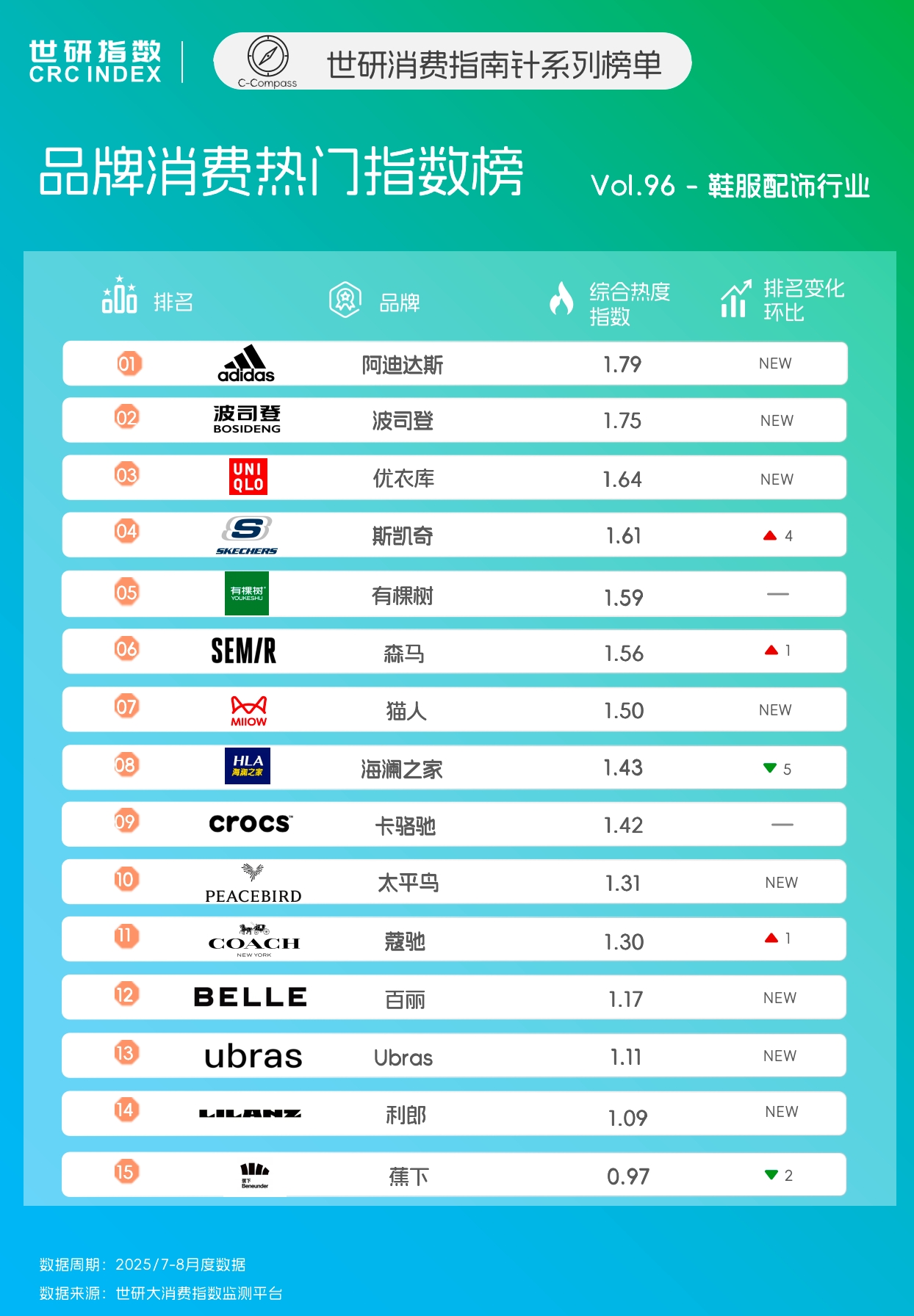
Group 1: Industry Trends - The footwear and apparel industry is undergoing a transformation from "external expression" to "internal experience," with a diverse consumption pattern that includes both basic styles and design-oriented products [1] - Brands are leveraging cultural integration to break into high-end markets, while the innerwear and homewear segments are driven by both technological experiences and emotional values [1] - As competition shifts from functionality to emotional and lifestyle aspects, brands must build an irreplaceable connection with consumers [1] Group 2: Brand Performance - Adidas, Bosideng, and Uniqlo lead the comprehensive popularity index with scores of 1.79, 1.75, and 1.64 respectively [4][5] - The demand for high-cost performance basic items and comfortable products with design elements is strong among consumers, particularly for brands like Uniqlo and Semir [5] - Taiping Bird has launched a high-end series that combines New York ready-to-wear language with Eastern aesthetics, targeting younger consumers born in the 1980s and 1990s [5] Group 3: Footwear Segment Insights - Young consumers are no longer satisfied with just durable shoes; they seek comfort and aesthetics, using footwear to express emotions and identity [5] - Belle, a mature national brand, connects product functionality with emotional values and has expanded into the "fashion leisure" segment, creating memorable shoe models that resonate with users [5] Group 4: Homewear and Innerwear Innovations - The focus in homewear and innerwear consumption is shifting from external design to internal experience, with "perceptible technology" becoming a key factor [6] - Brands like Catman and Ubras are innovating by emphasizing technological advancements and emotional connections, with Catman focusing on "tech innerwear" and Ubras promoting a "female value co-builder" concept [6] - Ubras has upgraded its signature breast health initiative and opened a "Comfort Aesthetics Collection Store," enhancing its offline presence and high-end experience [6]



全球研究:中金公司全球研究-全球区域行业市场动态第27期
中金· 2026-01-12 01:40
Investment Rating - The report maintains a "Positive" investment rating for several companies across various sectors, including Southern Copper, Vale, Bunge, Broadcom, and others, indicating a favorable outlook for these companies based on their operational strengths and market conditions [9][10]. Core Insights - The overall risk appetite stabilized in December 2025, with global equity markets experiencing slight gains, rising interest rates, and a weakening dollar. Emerging markets outperformed developed markets, particularly driven by strong performances in AI-related sectors in South Korea [4]. - The report highlights that the financial sectors in Europe and Japan continue to perform strongly, while the semiconductor and tech hardware sectors in emerging markets also show robust performance. In contrast, the tech sector in developed markets is underperforming [4]. - New coverage includes three overseas companies: Adidas, Linde Group, and Walmart, all rated as outperforming their respective industries [4]. Summary by Sections Global Industry Overview - Emerging markets, particularly in AI, are showing strong growth, with South Korea leading the way. Developed markets are seeing varied performances, with Europe outperforming Japan and the US [4]. - The financial industry in Europe and Japan is highlighted for its continued strength, while the semiconductor and tech hardware sectors in emerging markets are noted for their robust performance [4]. Newly Covered Companies - Adidas (ADS.GR) is rated as outperforming the industry due to its strong market position and growth potential. - Linde Group (LIN.US) is also rated positively, reflecting its operational strengths and market dynamics. - Walmart (WMT.US) is rated as outperforming, indicating confidence in its business model and market strategy [4].

以南京时装周为笔,书写南京城市时尚品牌新名片
Xin Lang Cai Jing· 2026-01-11 21:22
Core Insights - The article highlights the transformation of the FGMD Nanjing International Fashion Week from a simple fashion show to a core platform for Nanjing's urban fashion branding, driven by strategic leadership over nearly two decades [1][8] Strategic Positioning - The fashion week is positioned as a "fashion identity label" for the city, focusing on a dual-core strategy of professional clothing releases and Nanjing's cultural essence, distinguishing it from other fashion events [1][2] - The event aims to avoid generic fashion trends and instead emphasizes a unique dialogue between Nanjing's historical and contemporary elements [1][2] City Integration - The incorporation of "Nanjing elements" into the fashion week branding enhances regional recognition, including renaming the event to FGMD Nanjing International Fashion Week [2] - The event is designed to serve as a "fashion living room" for citizens and tourists, transforming traditional runway shows into immersive urban experiences [2][3] Cultural Narrative - The fashion week integrates local cultural elements into its presentations, using design inspirations from Nanjing's heritage, such as the "Qinhuai Fishing Lights" for lighting and traditional colors for makeup [3] - The event promotes the fusion of intangible cultural heritage with fashion, establishing a unique cultural value for Nanjing [3] Local Brand Development - The fashion week focuses on nurturing local brands, providing platforms for them to showcase their designs and connect with national distributors, significantly increasing their market reach [4] - Initiatives like the "Su Style Emerging Designer Support Program" aim to elevate local designers and their creations to a national audience [4] Economic Impact - The fashion week is positioned as a key driver of economic growth for the city, linking fashion events with local industries and consumer markets [5][6] - The integration of fashion with local commerce has led to increased sales and engagement, with initiatives like fashion consumption vouchers boosting retail performance [7] Brand Value Evolution - The event has evolved from an industry activity to a symbol of the city's brand, enhancing Nanjing's cultural, industrial, and international value [8][9] - It serves as a narrative tool for the city, blending fashion with urban identity and cultural heritage, thus reinforcing Nanjing's image as a hub of tradition and modernity [9]
西方营销模式正在失效,中国市场进入“本土规则”时代
Sou Hu Cai Jing· 2026-01-09 15:40
Core Insights - The global floor cleaning robot industry is witnessing a significant shift, with the acquisition of iRobot by its Chinese manufacturing partner, marking the end of an era for the former industry leader [2] - Local brands in China are rapidly gaining market share, forcing international brands like Starbucks, Nike, and Adidas to adapt or face decline [2] - A survey indicates that 85.79% of consumers prefer domestic trendy brands, highlighting the rise of local brands in various consumer sectors [2] Industry Trends - The traditional Western marketing models are becoming ineffective in the Chinese market, as local brands redefine the rules of engagement [4][7] - The previous reliance on mass advertising and standardized marketing strategies is being replaced by personalized and emotionally resonant approaches [9][10] - The emergence of new consumer behaviors emphasizes the importance of emotional connections and personalized experiences over traditional functional marketing [10][11] Brand Strategies - Successful local brands like Qingdao White Beer are leveraging cultural symbols and emotional narratives to resonate with consumers [19][21] - Qingdao White Beer has effectively created immersive experiences that connect with local culture, enhancing brand visibility and consumer engagement [21][22] - The focus has shifted from merely selling products to creating emotional experiences that align with consumers' lifestyles and values [22]




“链主”企业牵头搞大事,SHEIN的产业赋能密码藏不住了
Guan Cha Zhe Wang· 2026-01-09 07:52
Core Viewpoint - SHEIN has emerged as a leading player in the global fashion retail market, leveraging innovative digital supply chain solutions to address traditional industry challenges such as high inventory risks and production inefficiencies [2][12]. Group 1: Industry Transformation - The improvement in China's traditional manufacturing industry is attributed to continuous training of frontline workers, innovative tools, and the digitalization of the entire production and distribution chain [1]. - SHEIN's flexible supply chain model has allowed it to surpass competitors like ZARA, H&M, and Uniqlo, becoming the third-largest fashion retailer globally, following Nike and Adidas [2]. - The company has developed over 180 innovative tools by 2025, enhancing production efficiency by an average of 35% for suppliers [5]. Group 2: Technological Innovation - SHEIN's manufacturing innovation research center has played a crucial role in developing tools that streamline production processes, such as combining multiple sewing steps into one, which can increase efficiency by up to 40% [3][5]. - The introduction of digital heat transfer printing technology has significantly reduced the time from design to production, compressing the cycle from 4-6 weeks to just 7-15 days, while also minimizing water usage [9][10]. Group 3: Supplier Empowerment - SHEIN has conducted nearly 600 training sessions for suppliers in 2025, covering approximately 37,000 instances, to enhance skills and management capabilities within the industry [6]. - The company has established a robust digital management system that provides suppliers with stable orders and clear timelines, improving their operational efficiency [13]. Group 4: Environmental Impact - SHEIN's transition to using new energy vehicles for logistics has contributed to reducing carbon emissions, showcasing the company's commitment to sustainable practices [10]. - The digital heat transfer printing technology employed by SHEIN is verified to consume zero water resources, representing a significant advancement in eco-friendly production methods [9]. Group 5: Market Expansion - The cross-border e-commerce sector, represented by SHEIN, has shown steady growth, with exports reaching approximately 1.63 trillion yuan in the first three quarters of 2025, marking a 6.6% increase year-on-year [12]. - SHEIN's "500 Cities Industrial Belt Going Abroad Plan" has expanded its reach to nearly 400 cities, fostering brand development and international market access for local businesses [14].
传2026年“苏超”赞助超2亿元, 官方回应
Xin Lang Cai Jing· 2026-01-08 08:12
Core Insights - The sponsorship amount for the 2026 season of the "Su Super League" is reported to be 202 million yuan, but this information is currently deemed inaccurate as the sponsors have not yet been announced [1] - The 2026 season is expected to see an increase in the number of matches from 85 to 91, with the season set to kick off in April [1] Group 1: Sponsorship Details - The sponsorship for the 2026 season is anticipated to include a continuation of support from Jiangsu Bank at 45 million yuan, along with new sponsorship from Suhao Group at 30 million yuan [1] - The total sponsorship amount for the new season is projected to reach 202 million yuan, with the sponsorship recruitment nearing completion [1] Group 2: Growth and Popularity - The "Su Super League" has rapidly gained popularity since its inception in 2025, driven by a model of "mass participation + cultural tourism integration," leading to a total cultural and tourism consumption of over 120 billion yuan during the event [1] - The number of sponsors increased from 6 to 41 in the 2025 season, with individual sponsorship fees rising from hundreds of thousands to 3 million yuan, indicating high demand [1][2] - The league has set a new benchmark for amateur sports events in China, with an average attendance of 28,000 per match and a peak of 62,000 for the finals, alongside over 2 billion online views [2] Group 3: Future Plans - The Jiangsu Provincial Sports Bureau has confirmed that the 2026 Jiangsu City Football League will continue, with plans for optimizing player selection rules to enhance the league's characteristics and quality [2]



年营收55亿,李宁、安踏代工厂龙行天下闯关主板IPO
Nan Fang Du Shi Bao· 2026-01-08 08:01
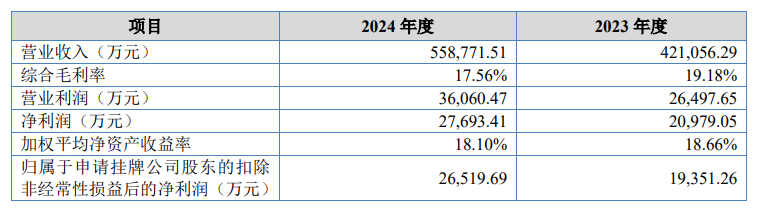
Core Viewpoint - Longxing Tianxia, a professional sports footwear manufacturer backed by major brands like Li Ning and Anta, has officially initiated its A-share listing process, aiming to list on the Shanghai Stock Exchange despite facing challenges such as high customer concentration and competitive pressures in the industry [1]. Group 1: Company Performance - Longxing Tianxia has shown steady growth in its financial performance, achieving a revenue of 4.211 billion yuan in 2023, with a net profit of 207 million yuan. The company expects a revenue increase of 32.71% to 5.588 billion yuan in 2024, with net profit rising to 278 million yuan [2][3]. - The company’s revenue structure indicates that running shoes are the primary source of income, contributing 2.068 billion yuan in 2024, accounting for 37% of total revenue [3]. Group 2: Production and Capacity - Longxing Tianxia has established a global production network with 27 factories across China, Vietnam, and Indonesia, employing a total of 27,458 staff, including 12,324 foreign employees. The company produced nearly 50 million pairs of footwear in 2024 [5]. - The company has been shifting production capacity overseas, with the sales proportion from its Vietnam base increasing from 25.68% in 2023 to 39.32% in 2024 [5]. Group 3: Industry Context - The Chinese sports footwear manufacturing industry has seen significant growth, with market size increasing from 23.4 billion yuan in 2019 to 47.8 billion yuan in 2023, reflecting a compound annual growth rate of 19.6%. The industry is expected to continue growing, potentially exceeding 70 billion yuan by 2028 [5]. - The industry is characterized by high competition and a trend towards specialization, which presents both opportunities and challenges for manufacturers like Longxing Tianxia [9]. Group 4: Customer Concentration and Risks - Longxing Tianxia faces risks associated with high customer concentration, with the top five clients accounting for 86.74% of revenue in 2023 and 88.86% in 2024. Li Ning is the largest client, contributing 24.76% of sales [7]. - The company’s gross profit margin has declined from 19.18% in 2023 to 17.56% in 2024, indicating pressure on profitability [10]. Group 5: Strategic Goals and IPO Plans - The primary goal of Longxing Tianxia's IPO is to leverage capital market resources to overcome development bottlenecks and expand production capacity in Vietnam and Indonesia, while also investing in smart and digital factory upgrades [11]. - The company acknowledges the risks associated with the IPO process, including the possibility of not passing the review or failing to issue shares, which could impact its market position [11].