奔驰

Search documents
华为吃高端,Momenta占中端:智驾的“圈地运动”谁能终结?
3 6 Ke· 2026-01-22 09:39
Core Insights - In 2025, the adoption of intelligent driving in China is expected to experience explosive growth, with L2 level vehicles' sales projected to reach a penetration rate of 66.1% by the end of the year, indicating that intelligent driving has become a standard feature in vehicles [1][2][3] Group 1: Market Trends - The intelligent driving industry is facing a significant downturn despite the growth in adoption, leading to a "survival of the fittest" scenario [2][3] - The competition is shifting focus from high-speed NOA (Navigation on Autopilot) to urban NOA, with over 3.129 million vehicles equipped with urban NOA sold from January to November 2025 [12][13] - Mainstream models priced below 300,000 yuan contributed 68.9% of urban NOA sales, indicating a move towards mass-market adoption [14][15] Group 2: Technological Pathways - Two main technological pathways are emerging: the "Vision-Language-Action" (VLA) route, which emphasizes rapid iteration and compatibility with existing hardware, and the "World Model" route, which focuses on deeper cognitive paradigms [5][7][10] - Companies like XPeng and Li Auto are strong proponents of the VLA route, while Huawei represents the World Model approach [6][9] Group 3: Competitive Landscape - The market is characterized by a trend of "self-research dominance" with a high concentration of third-party suppliers, where domestic brands accounted for 81.1% of urban NOA vehicle sales [18][19] - The collapse of companies like Haomo and the shift towards third-party suppliers highlight the challenges faced by automakers in self-research capabilities [20][21] - Leading third-party suppliers, such as Huawei and Momenta, dominate the market, with Momenta holding approximately 61.06% market share [25][26] Group 4: Future Outlook - The competition is expected to intensify, with predictions that only two or three intelligent driving companies may survive by 2026 [32] - The integration of software and hardware is becoming crucial for companies to build competitive advantages, with a focus on deep collaboration between chip design and software development [35][39] - Companies like Horizon Robotics are positioning themselves as challengers to the dominant players by targeting cost-sensitive markets and offering integrated solutions [44][47]

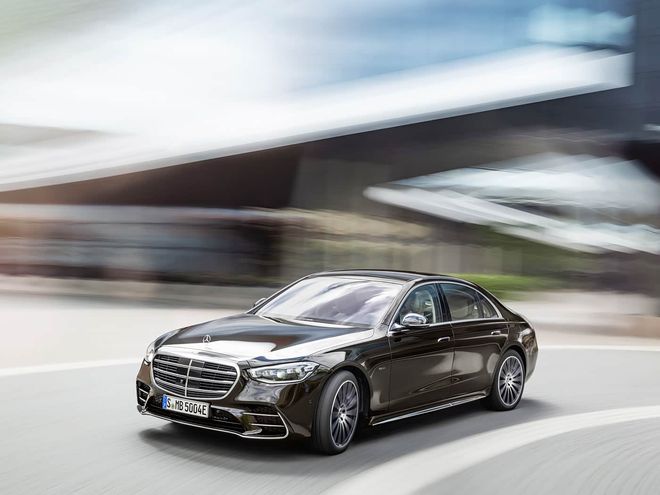
可能是世界上最贵的一辆车,黄仁勋透露曾卖股票买奔驰
Jin Rong Jie· 2026-01-22 07:14
Core Insights - Jensen Huang, founder and CEO of Nvidia, expressed his "only regret" at the Davos Economic Forum, revealing that he sold part of his shares when Nvidia's market value was only $300 million to buy a Mercedes-Benz S-Class for his parents, which he now considers "possibly the most expensive car in the world" [1] Company Performance - As of January 21, Nvidia's stock price closed at $183.32, with a total market capitalization of $4.45 trillion, representing an increase of approximately 14,833 times since Huang's purchase of the car [1] Market Context - The official price range for the Mercedes-Benz S-Class in the Chinese market is between 898,800 to 2,042,600 yuan [1]
2025全球汽车照明用 LED 驱动器行业Top5 生产商排名及市场占比
QYResearch· 2026-01-22 05:57
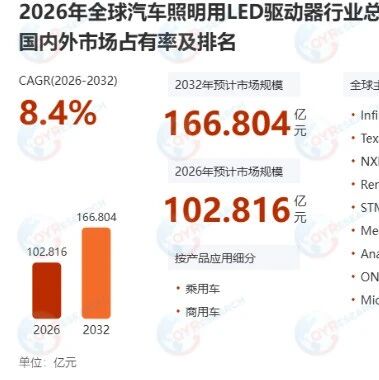
汽车照明用 LED 驱动器是一类用于精确控制车内外照明系统电流与电压的车规级功率管理器件,其核心作用 是在宽温度范围和复杂汽车电气环境下,保持照明亮度的一致性、高能效表现以及长期运行可靠性。通过对 LED 工作状态的稳定调节, LED 驱动器为汽车照明系统提供基础电气支撑,广泛应用于前照灯、尾灯、日行 灯以及智能氛围照明等场景,是实现汽车照明系统智能化与高安全性的关键基础器件之一。 据 QYResearch 调研团队最新报告"全球汽车照明用 LED 驱动器市场报告 2026-2032 "显示,预计 2032 年全球 汽车照明用 LED 驱动器市场规模将达到 24.5 亿美元,未来几年年复合增长率 CAGR 为 8.4% 。 全球 汽车照明用 LED 驱动器 市场前 10 强生产商排名及市场占有率(基于 2025 年调研数据;目前最新数据 以本公司最新调研数据为准) 根据 QYResearch 头部企业研究中心调研,全球范围内汽车照明用 LED 驱动器生产商主要包括 Infineon Technologies , Texas Instruments , NXP 等。 2025 年,全球前三大厂商占有大约 36. ...
红旗全固态电池首台样车成功下线;OpenAI推出控制数据中心能源成本的计划丨智能制造日报
创业邦· 2026-01-22 03:55
Group 1 - The first prototype of Hongqi all-solid-state battery has successfully rolled off the production line, marking a significant step for China FAW in the solid-state battery technology field, with key breakthroughs achieved in electrolyte and cell performance [2] - OpenAI has launched a community plan to manage energy costs for its data centers, aiming to ensure that its operations do not increase local electricity costs, reflecting a trend among tech companies to invest directly in power infrastructure [2] - Shenzhen's robotics sector is experiencing rapid growth, with companies like UBTECH, Zhongqing, and Yuejiang Technology securing significant domestic and international orders, indicating a strong commercialization trajectory and an acceleration in industry development [2] Group 2 - By 2025, China's artificial intelligence core industry is expected to exceed 1.2 trillion yuan, with over 6,000 AI companies projected to operate, and applications spreading across key industries such as steel, non-ferrous metals, and power [3]

英伟达的汽车“生意经”
3 6 Ke· 2026-01-22 02:42
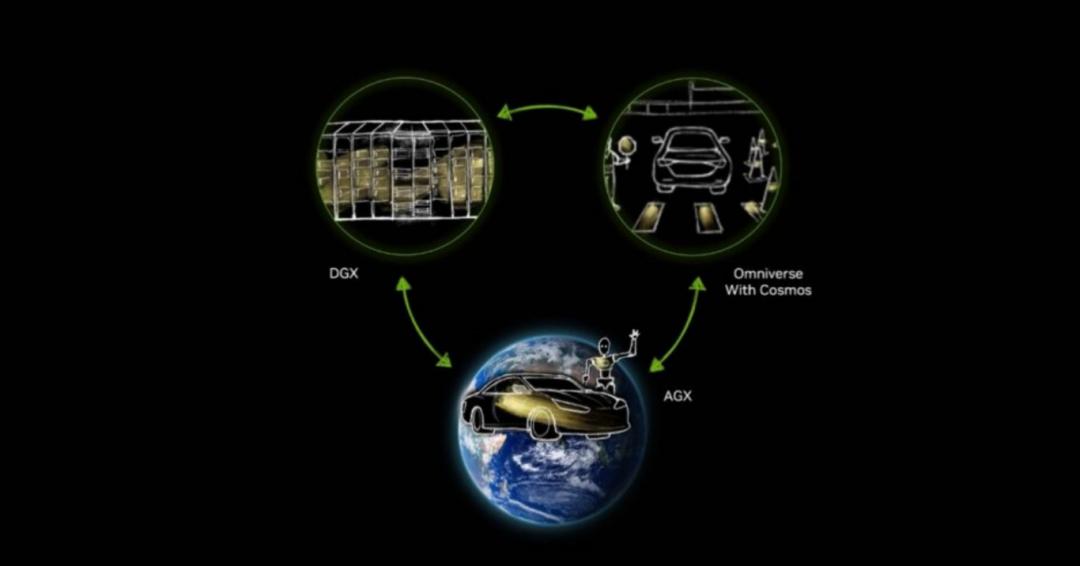
Core Insights - NVIDIA is redefining the next decade of smart automotive technology through a comprehensive approach that integrates cloud simulation and in-vehicle inference [1][2] Group 1: NVIDIA's Transformation - NVIDIA has evolved from a chip supplier to a comprehensive provider of autonomous driving solutions, offering not just vehicle chips (AGX) but also cloud training (DGX) and simulation (OVX) capabilities [2][3] - The company has opened its core AI models and datasets to lower industry barriers and expand its ecosystem, driving demand for computational power and reshaping industry standards [2][3] Group 2: Three Pillars of NVIDIA's Strategy - NVIDIA's automotive strategy is built on three key components: DGX for AI model training, OVX for simulation, and AGX for in-vehicle inference [3][8] - DGX serves as a training factory, utilizing a supercomputing cluster of thousands of GPUs to process vast amounts of driving data, including real-world videos and virtual simulations [4][9] - OVX creates a digital twin of the real world, allowing for extensive testing of autonomous driving algorithms in a risk-free environment [5][6][7] - AGX represents NVIDIA's well-known in-vehicle computing chips, with performance increasing from tens of TOPS to over a thousand TOPS, becoming standard in flagship models from various automakers [8][11] Group 3: Business Model Evolution - NVIDIA's revenue model has shifted from solely selling hardware to providing engineering services, where they assist automakers in optimizing algorithms on NVIDIA's platform [12][13] - This service model fosters a mutually beneficial relationship, allowing automakers to enhance their development capabilities while providing NVIDIA with valuable feedback for product improvement [13] Group 4: Open Source Strategy - In early 2025, NVIDIA announced the open-sourcing of its Alpamayo series, which includes a 100 billion parameter model and a comprehensive simulation framework, aimed at accelerating the development of autonomous driving technologies [16][17] - This strategic move lowers industry barriers, addresses the scarcity of high-quality data, and positions NVIDIA as a leader in defining the next generation of technology frameworks [18] Group 5: Market Dynamics and Competitive Edge - The demand from the Chinese market significantly drives NVIDIA's accelerated pace in the automotive sector, with local automakers pushing for rapid development and deployment of advanced features [21] - NVIDIA's confidence in its competitive position stems from its comprehensive engineering capabilities and the extensive ecosystem it has built over years, which is difficult for competitors to replicate [24] - The company's strategy is to become an architect and enabler of the AI-driven mobility era, moving beyond being just a supplier to defining new rules in the automotive industry [24]

甲醇技术路线重构商用车绿色发展版图,加速进入主流市场
Xin Hua Cai Jing· 2026-01-22 01:45
Core Viewpoint - The methanol-based alcohol-hydrogen electric technology is accelerating its entry into the mainstream commercial vehicle market, providing a competitive alternative to pure electric and hydrogen fuel cell technologies, and is expected to create a new trillion-level renewable energy sector [1][4]. Group 1: Market Overview - China is the largest commercial vehicle market globally, with rapid development expected in electric, hydrogen fuel cell, and methanol technologies, driven by supportive policies and both domestic and export demand [2]. - By 2025, domestic sales of commercial vehicles are projected to reach 3.237 million units, with 871,000 units being new energy commercial vehicles, resulting in a penetration rate of 26.9% [2]. - The current penetration rate of new energy in commercial vehicles is low compared to passenger vehicles, which have surpassed 50% [2]. Group 2: Challenges and Opportunities - The slow development of new energy in commercial vehicles is attributed to the limitations of existing technologies, which do not meet the specific needs of commercial vehicle usage [3]. - The commercial vehicle sector is a significant energy consumer, accounting for over half of vehicle fuel consumption and 56% of CO2 emissions from all vehicles [2]. Group 3: Technological Advantages - The alcohol-hydrogen electric vehicle technology, which utilizes methanol as a liquid hydrogen substitute, has shown practical and economic advantages, making it suitable for various operational conditions [4][5]. - Compared to pure electric vehicles, alcohol-hydrogen electric vehicles offer stronger endurance, less impact from weather conditions, and lower infrastructure costs [5]. - The latest generation of methanol-powered systems has achieved a thermal efficiency of 50.3%, with comprehensive energy costs reduced by 32%-52% compared to diesel vehicles [5]. Group 4: Infrastructure and Policy Support - The existing oil and gas pipeline network can be utilized for low-cost transportation of liquid methanol, and converting existing gas stations to methanol refueling stations is significantly cheaper than building new hydrogen stations [6]. - The Chinese government has introduced over 70 policy documents to support the promotion of methanol vehicles, indicating strong institutional backing for the industry [8][9]. Group 5: Global Trends and Future Outlook - European car manufacturers are increasingly developing methanol as a vehicle fuel, with models expected to enter the market post-2035 [7]. - The global methanol industry is expanding, with 414 ships confirmed to adopt methanol fuel by the end of 2025, indicating a growing acceptance of methanol in various transportation sectors [7]. - The integration of green hydrogen, ammonia, and methanol is becoming a key pathway for clean energy consumption and industrial innovation [10].

德启动电动车补贴,对中企开放
Huan Qiu Wang· 2026-01-22 01:41
Group 1 - The German government announced a new subsidy policy for electric vehicles (EVs) amounting to €3 billion, aimed at improving the climate and boosting the struggling automotive industry. The subsidies will be available to all manufacturers, including Chinese brands [1][2] - The subsidy amounts will range from €1,500 to €6,000 depending on the type of vehicle, income level, and family size, covering pure electric vehicles, range-extended electric vehicles, and plug-in hybrid vehicles [1] - The funding is expected to benefit approximately 800,000 electric vehicles over the next 3 to 4 years, with the aim of reducing dependence on gasoline and diesel, thereby protecting the climate [1] Group 2 - The inclusive nature of the subsidy plan distinguishes Germany from other European countries like France and the UK, which have excluded many Chinese vehicles from their subsidy programs [2] - Approximately 80% of newly registered electric vehicles in Germany are manufactured in Europe, indicating a strong confidence in the quality of European and German vehicles [2] - Chinese manufacturers, such as BYD, are expected to benefit significantly from this decision, as they are expanding their market share in Europe with more affordable electric vehicle options [2] Group 3 - A recent consensus between China and Europe regarding electric vehicle tariffs indicates a welcoming stance towards Chinese manufacturers, with new EU guidelines signaling openness [3] - Despite existing tariffs, sales of Chinese vehicles in Europe have been increasing, with no signs of dumping observed in the market [3] - The German automotive industry views the new EU minimum price guidelines positively, believing they will help maintain market stability amidst previous pricing chaos and consumer confidence issues [3]
中国车企在欧销量暴涨127%,份额逼近10%
Di Yi Cai Jing· 2026-01-21 11:32
Core Insights - In 2025, Chinese automakers achieved record sales in the European market, reaching 811,000 units, a year-on-year increase of 99% [2] - The overall European automotive market saw sales of 13.3 million units in 2025, a 2.3% increase from the previous year, with electric vehicle sales growing by 30% [2] Group 1: Market Performance - Chinese automakers' monthly sales in Europe surpassed 100,000 units for the first time in December 2025, totaling 109,900 units, representing a 127% year-on-year growth [2] - The market share of Chinese automakers in Europe reached 9.5% in December 2025, up from 4.5% in the same month of 2024 [2] - The total sales of Chinese brands in Europe for 2025 were 811,000 units, with a market share of 6.1%, compared to 3.1% in 2024 [2] Group 2: Brand Performance - SAIC MG was the highest-selling Chinese brand in Europe in 2025, with sales of 307,000 units, a 26% increase, ranking 16th overall [3] - BYD followed with sales of 187,000 units, a 276% increase, moving up from 31st to 22nd place [3] - Chery's brands collectively sold 120,000 units in Europe, significantly higher than 17,000 units in 2024, while Geely's brands sold 68,000 units, a 58% increase [3] Group 3: Market Dynamics and Strategies - The European automotive market is facing a 35.3% anti-subsidy tax on Chinese electric vehicles, effective from 2024, which poses challenges for Chinese manufacturers [3] - Despite initial sales declines in Q1 2025 due to tariffs, BYD and other brands like Leap Motor are expanding their market share in Europe [4] - Chinese automakers are leveraging plug-in hybrid models, which are still subject to a 10% basic tariff, to navigate the tariff landscape and capture market share [4] Group 4: Future Outlook - The price commitment mechanism between China and the EU is expected to stabilize sales in the short term, with a projected annual growth rate of around 20% for Chinese electric vehicle exports to the EU from 2026 to 2028 [5] - As companies adapt to new regulations and enhance local production capabilities, the competitiveness of Chinese electric vehicles in the EU market is anticipated to improve [5]

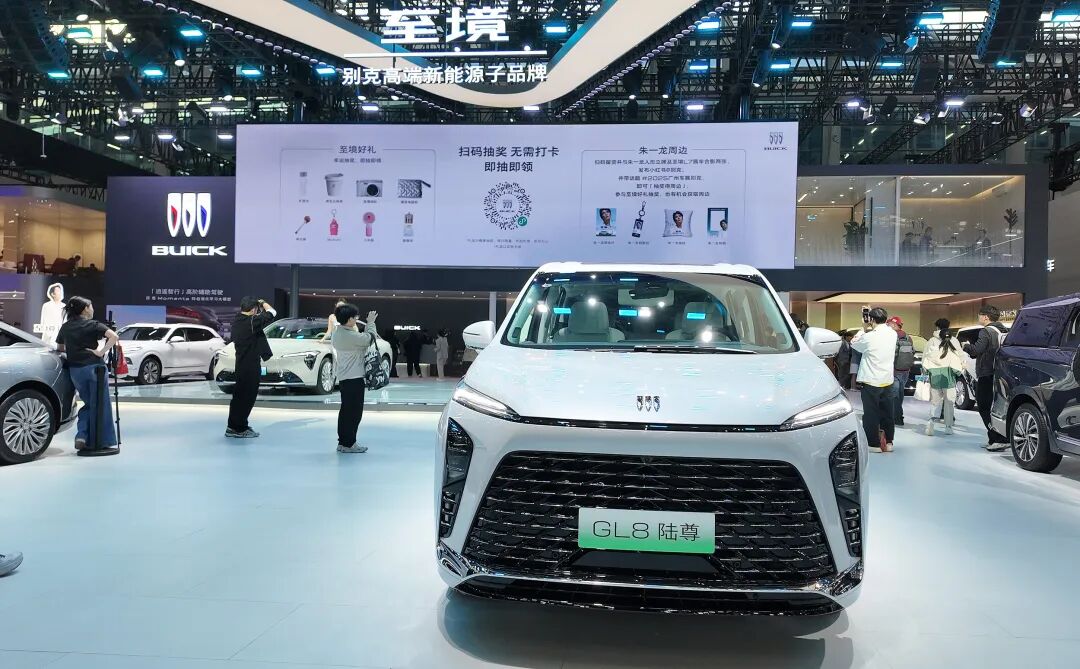
中年别克,不用再靠GL8苦撑了
3 6 Ke· 2026-01-21 11:14
Core Insights - Buick has successfully navigated the challenges of transitioning to new energy vehicles, achieving unexpected growth through its "Joint Venture 2.0" strategy [1][2]. Sales Performance - Buick's sales in China have significantly declined from over 1 million units a decade ago to 360,000 units in 2024, with SAIC-GM reporting a net loss of 26.6 billion yuan that year [2]. - In 2025, Buick's high-end models priced above 300,000 yuan saw a remarkable sales increase of 92.6%, totaling 57,000 units, making it one of the few joint venture brands to achieve significant growth in a challenging high-end market [2]. - The GL8 family of vehicles, particularly in the MPV segment, has shown a year-on-year growth of approximately 23.7%, with total sales exceeding 121,949 units, accounting for nearly 30% of Buick's overall sales [6][8]. Product Strategy - Buick's high-end models include the GL8 fuel version, GL8 plug-in hybrid, Century, and the new high-end brand "至境" (Zhijing) [4]. - The GL8 has historically dominated the business MPV market but faced competition from domestic brands, leading to a decline in sales from 110,000 units in 2023 to 87,700 units in 2024 [6]. - The introduction of the "one-price" sales model has helped stabilize market presence and rebuild dealer confidence, with significant sales increases observed for models like the Envision Plus [9][12]. Technological Advancements - Buick has shifted its R&D focus to local teams, resulting in the development of the "逍遥" (Xiaoyao) architecture and "真龙" (Zhenlong) powertrain, which enhance efficiency and reduce development costs [15][16]. - The new architecture allows for compatibility across various vehicle types and energy sources, marking a significant advancement in Buick's product development capabilities [15]. - The launch of the 至境L7, Buick's first model developed by a Chinese team, has garnered over 12,000 pre-orders within ten days, indicating strong market interest [19]. Future Outlook - Buick plans to launch six new energy vehicles within a year based on the Xiaoyao architecture, including the upcoming 至境E7 SUV and a pure electric version of the 至境世家 [19]. - The transition to a more localized and aggressive strategy positions Buick as a leader in the evolving automotive landscape, showcasing a shift from traditional joint ventures to a more autonomous and innovative approach [19].
BBA,势败如山倒
商业洞察· 2026-01-21 09:24
Core Viewpoint - The article discusses the significant decline in sales of traditional luxury car brands (BBA: BMW, Benz, Audi) in China for 2025, attributing this downturn to the rise of domestic electric vehicle brands and changing consumer preferences [6][9]. Group 1: Sales Performance - In 2025, the sales figures for BBA in China were as follows: BMW (including MINI) sold 625,500 units, down 12.5%; Audi (from FAW and SAIC) sold approximately 617,000 units, down 5%; and Mercedes-Benz (including commercial vehicles) sold 575,000 units, down 19% [6][8]. - The collective decline in sales for BBA is not seen as a short-term fluctuation but rather a structural loss due to the surge in new energy vehicles, with the penetration rate nearing 60% and domestic brands capturing 65% of the market share [9]. Group 2: Market Dynamics - The article highlights that the traditional luxury brands are struggling to maintain their market position as consumers shift away from brand loyalty, with BBA's user intent loyalty dropping below 18% in 2025 [13][14]. - The competition from new energy brands like NIO, Li Auto, Tesla, and Xiaomi is evident, with a significant percentage of their potential repeat customers coming from former BBA users [14]. Group 3: Strategic Responses - BMW has initiated price cuts on over 30 models to attract customers, with the entry-level electric iX1 dropping to 187,500 yuan, but the effectiveness of this strategy in boosting sales remains uncertain [10][11]. - Audi plans to launch new models like the A6L e-tron and E7X in 2026 to address its technological shortcomings, while Mercedes-Benz aims to introduce 15 new models, including a locally produced electric GLC [16][18]. - BMW's upcoming iX3, set to launch in late 2026, will feature advanced technology and pricing will be crucial for its success in the new energy market [17].