宝马

Search documents
科技制造产业月报(2025年12月):奔跑的机器人,与变局的制造业-20260117
Huachuang Securities· 2026-01-17 14:01
Investment Rating - The report does not explicitly provide an investment rating for the industry Core Insights - The human-shaped robot's ability to run smoothly represents a significant technological leap from mere functionality to human-like capabilities, indicating a potential shift towards practical applications in complex environments [9][20] - The competition in the humanoid robot industry has evolved into a multi-dimensional strategic game, with different focuses across the supply chain, emphasizing the need for companies to integrate technology, establish standards, and meet real industry demands [22][30] - The future of humanoid robots hinges on overcoming five critical conditions: technological maturity, cost control, clear market positioning, infrastructure development, and societal acceptance [30][31] Summary by Sections Section 1: The Impact of Robot Running Demonstrations - The recent running demonstrations by Tesla's Optimus and Figure AI have generated significant global interest, suggesting a potential breakthrough in the commercialization of humanoid robots [5][6] - These demonstrations challenge the notion that advanced robotics can only exist in controlled environments, indicating a shift towards practical, scalable applications [31] Section 2: Technical Breakdown of Running Capabilities - Achieving running capabilities involves overcoming substantial technical challenges, including dynamic balance, rapid response times, and energy efficiency [10][19] - The transition from walking to running signifies a fundamental change in robotic capabilities, moving from static to dynamic balance, which is essential for operating in unpredictable environments [12][20] Section 3: Business Logic Behind the Demonstrations - The timing of these demonstrations reflects a strategic move by industry leaders to signal their technological advancements and readiness for market integration [32] - Both Tesla and Figure AI are pursuing different paths: Tesla aims for a universal platform while Figure AI focuses on specific industrial applications, highlighting the diverse strategies within the industry [26][30] Section 4: Industry Chain Dynamics - The competition among suppliers, manufacturers, and application developers is intensifying, with each segment vying for control over standards and market share [22][30] - The report emphasizes the importance of establishing a robust ecosystem that supports the development and deployment of humanoid robots in real-world applications [30] Section 5: Future Outlook - The next few years are critical for validating the feasibility of humanoid robots, with key indicators including commercial orders, supply chain formation, and cost reduction trends [31] - The industry is at a pivotal moment, transitioning from experimental demonstrations to practical implementations that can deliver economic value [31]





晚间利空!超过十家上市公司发布减持、4家超过2.2%!
Sou Hu Cai Jing· 2026-01-17 05:40
Group 1 - Multiple listed companies announced shareholder reduction plans, with notable reductions including Ruimaite at 4.98%, Youyan Silicon at 3%, Chengdu Xian Dao at 2.51%, and Zhen Shitong at 2.24% [1] - Other companies such as Lianchuang Optoelectronics and Xiongdi Technology announced reductions of 2%, while several others planned reductions of 1% [3] - The reasons given for these reductions were primarily "personal funding needs," which may be interpreted negatively in a sensitive market environment [3] Group 2 - Some stocks, like Zhizhi New Materials, experienced significant price increases but later clarified that their business does not involve popular market concepts such as AI or quantum technology, which led to a denial of the narrative supporting their stock price surge [4] - Liou Co. faced a trading suspension due to a 96.77% price increase over ten trading days, with the company indicating that its AI-related revenue is minimal [4] Group 3 - Several companies, including Kunlun Wanwei and Shanghai Hanhua, forecasted significant losses for 2025, with Kunlun Wanwei expecting a loss between 1.9 billion to 2.4 billion [6][7] - The list of companies predicting profit declines or losses is growing, with Weiyuan Co. expecting a more than 2000% drop in net profit [8] Group 4 - On January 16, 2026, institutional investors showed mixed sentiments, with Meinian Health receiving a net buy of 579.4 million and Sanan Optoelectronics 552.4 million, while Jin Feng Technology faced a net sell of 1.097 billion [9][12] - The divergence in fund flows indicates a split in market sentiment among institutional investors [12] Group 5 - Industry-wide pressures are emerging, with a report indicating that the smartphone market will face tight supply and rising prices for memory chips starting in the second half of 2025, which may lead to decreased consumer demand [14] - The automotive sector also reported declines, with major brands like BMW, Mercedes-Benz, and Audi showing significant drops in sales in China [14] Group 6 - Global commodity price fluctuations, such as a 4.56% drop in NY crude oil prices, are impacting the profitability of energy and raw material companies in the A-share market [16] - Despite negative news, market activity continues with notable trading in stocks like Tongyu Communications and Hongxiang Shares, indicating ongoing volatility [16] Group 7 - The evening of January 16, 2026, presented a mixed market landscape with ongoing shareholder reductions, risk warnings from popular stocks, and a blend of positive and negative earnings forecasts [17]

万吨级项目公示,国轩/当升等掀硫化物“扩产潮”
高工锂电· 2026-01-17 04:13
Core Viewpoint - The acceleration of production expansion for sulfide solid electrolytes signifies a pivotal shift towards industrialization in the domestic market, driven by companies like Guoxuan High-Tech, which is establishing a 10,000-ton production capacity for sulfide solid electrolyte materials [3][4]. Group 1: Company Developments - Guoxuan High-Tech has completed a full-chain layout in the sulfide solid battery sector, achieving breakthroughs in technology, pilot testing, and capacity reserves [4]. - The company has established collaborative innovation networks with institutions like Tsinghua University and the Chinese Academy of Sciences to tackle challenges in electrolyte interface stability and material modification [4]. - Guoxuan High-Tech's first 0.2 GWh solid-state battery pilot line became operational in May 2025, with a 100% localization rate for core equipment [4]. Group 2: Industry Trends - The domestic sulfide solid electrolyte industry is experiencing a wave of expansion, with multiple companies accelerating their production capabilities [5]. - Key projects include Enjie Co., which is set to establish a 1,000-ton production line by 2026, and Ruigu New Materials, which launched China's first mass production line for sulfide solid electrolytes in June 2025 [6]. - The Ministry of Industry and Information Technology has included Guoxuan High-Tech in a major technology funding initiative, providing 15 billion yuan for solid-state battery R&D and industrialization [5]. Group 3: Challenges and Future Outlook - Despite the rapid industrialization, sulfide electrolytes face significant challenges, including high production costs and stringent environmental controls [7]. - The cost of sulfide electrolytes is currently 10 to 100 times that of liquid electrolytes, necessitating further cost reductions for competitive viability [7]. - Major automotive players like Toyota and BMW are advancing their timelines for mass production of sulfide solid batteries to 2027, indicating a competitive landscape for domestic leaders like Guoxuan High-Tech and CATL [7].

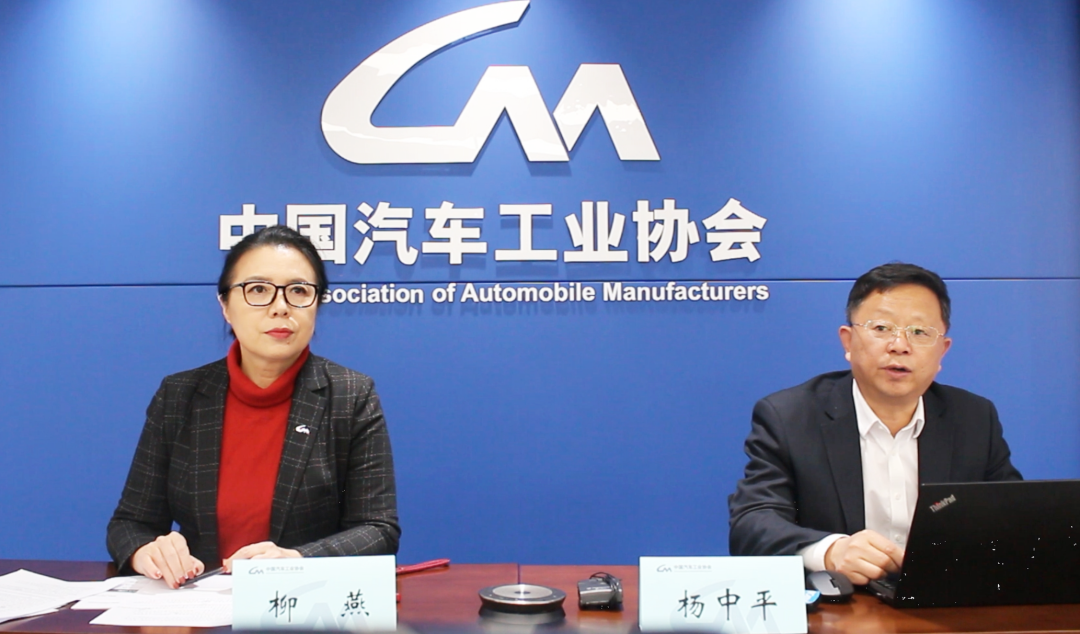
BBA中仅宝马去年全球销量实现增长,在中国市场集体遇冷
Xin Lang Cai Jing· 2026-01-17 00:02
具体来看,宝马以246.37万辆的全球交付量稳居三强首位,同比微增0.5%,成为唯一保持增长的品牌; 奥迪全球交付162.36万辆,同比下降2.9%;奔驰表现最弱,集团全年交付216万辆,同比下滑10%,其 核心乘用车板块交付180万辆,同比下滑9%,已连续六年销量走低。 就中国市场的表现来看,BBA悉数下跌。其中,宝马销量最高;奔驰跌幅最大,下跌近两成。整体计 算,三家车企2025年在华销量比2024年减少了约26万辆。 | 车企 | | 2025 年全球销量 全球同比 2025 年在华销量 在华同比 | | | | --- | --- | --- | --- | --- | | 事」 | 246.37 万辆 | 0.5% | 62.55 万辆 | -12.5% | | 奔驰 | 216 万辆 | -10% | 57.5 万辆 | -19% | | 奥迪 | 162.36 万辆 | -2.9% | 61.75 万辆 | -5% | 三家企业都在公告中提及,受全球地缘政治、经济环境及区域市场竞争加剧等多重因素影响,公司销量 承压。 2025年对BBA而言又是充满挑战的一年。 近日,传统豪华车三强BBA(奔驰、 ...

解码全球新材料政策:从美/日/中等12国布局看产业未来机遇
材料汇· 2026-01-16 15:41
Core Viewpoint - New materials are the cornerstone of global technological revolution and industrial transformation, with significant implications for high-end manufacturing and emerging industries. Major economies are integrating new materials into their national strategies to secure competitive advantages and ensure supply chain safety [2]. Group 1: United States - The U.S. focuses on maintaining its global leadership in advanced materials, emphasizing digital-driven research and strategic breakthroughs in areas like semiconductors and quantum technology [4]. - The U.S. has invested over $40 billion in the National Nanotechnology Initiative, which has led to significant advancements in nanotechnology and the rapid development of emerging industries [4][6]. - The U.S. aims to reduce the average research and development cycle for new materials by 45% through AI-driven initiatives and has established a $1 billion project for sustainable semiconductor materials [6]. Group 2: Japan - Japan emphasizes enhancing material innovation capabilities, focusing on high-end materials and data-driven research to maintain its global market share [8][9]. - The Japanese government allocated 123 billion yen for semiconductor-related plans in 2024, aiming to boost domestic semiconductor sales significantly by 2030 [10]. - Japan's National Institute for Materials Science is integrating AI to predict material properties, enhancing the reliability of electronic materials [11]. Group 3: China - China aims for high-quality development in the new materials industry, focusing on strategic materials and leveraging vast application scenarios for industrialization [14]. - The country has established a comprehensive policy framework to support new materials, including a guide covering 299 types of new materials to facilitate their application [15][16]. - China leads in the production of rare earth functional materials and advanced energy storage materials, with a significant market share in superhard materials [16]. Group 4: European Union and Core Member States - The EU aims to become a global leader in materials science, focusing on green and digital transitions while ensuring regional supply chain security [18]. - The EU has initiated the European Green Deal and the Critical Raw Materials Act to enhance the circular economy and local sourcing of critical materials [18][19]. - The EU's Horizon Europe program allocated €3 billion for new materials research, emphasizing biobased and two-dimensional materials [19]. Group 5: Germany - Germany integrates new materials with its industrial base, particularly in automotive and high-end equipment manufacturing, focusing on lightweight and smart materials [22]. - The country invests over €1 billion annually in automotive lightweight materials research, aiming for significant weight reductions in vehicles [22]. - Germany's advanced ceramics hold a global market share of approximately 12-15%, widely used in automotive and aerospace applications [22]. Group 6: France - France focuses on aerospace and renewable energy sectors, enhancing high-performance composite materials and energy storage materials through dedicated funds [23]. - The French government established a €1.5 billion fund for aerospace materials, collaborating with Airbus on carbon fiber composites [23]. - France leads in aerospace structural materials, holding a significant market share in the European market [23]. Group 7: Sweden - Sweden emphasizes low-carbon technologies, focusing on green steel and biobased materials, leveraging local resources for production [24]. - The country achieved large-scale production of green steel, aiming to meet low-carbon demands in automotive and construction sectors [24]. - Sweden's biobased materials technology is leading in Europe, with a significant market share in wood-based materials [25]. Group 8: United Kingdom - The UK aims to enter the "Materials 4.0" era, focusing on digitalization and sustainable materials through integrated research and development [26]. - The UK government has invested £800 million in a materials digitalization platform to enhance research efficiency [28]. - The UK is a leader in quantum materials and hydrogen storage materials, with significant advancements in biocompatible materials [28]. Group 9: South Korea - South Korea targets core material localization and supply chain autonomy, closely aligning with its semiconductor and battery industries [30]. - The country has set ambitious goals for domestic production of semiconductor materials, aiming for an 85% localization rate by 2030 [32]. - South Korea's battery materials hold over 30% of the global market share, with significant advancements in silicon-based anode materials [32]. Group 10: Brazil - Brazil leverages its mineral and agricultural resources to focus on lithium processing and biobased materials, integrating its materials industry with renewable energy [38]. - The Brazilian government has established a fund to support lithium material industries, attracting international investments [39]. - Brazil aims to become a top-three global supplier of lithium materials by 2030, with significant market shares in biobased materials [40]. Group 11: India - India emphasizes localized manufacturing of materials, focusing on semiconductors and photovoltaic materials to support its electronics and renewable energy sectors [41]. - The Indian government has launched initiatives to attract investments in semiconductor materials, offering substantial incentives [42]. - India aims for a 40% localization rate in semiconductor materials by 2027, leveraging its demographic advantages for cost-effective production [42]. Group 12: New Material Technology Development Trends - AI is expected to exponentially enhance the speed of new material research and development, integrating data-driven approaches into material design [46]. - Modern material manufacturing techniques are evolving towards atomic-scale control, enhancing material properties through nanoscale innovations [47]. - The demand for materials capable of performing under extreme conditions is driving the development of multifunctional materials [48]. - The green transformation of material production and application is becoming increasingly important, with a focus on sustainability and lifecycle assessment [50]. - The diversification of cutting-edge material technology routes is evident, with multiple approaches being explored for quantum computing and storage materials [51]. Conclusion - The global competition in the new materials industry is fundamentally a contest of national strategic intent, technological innovation, and resource endowment. The focus on strategic areas, technological empowerment, green transformation, and supply chain security will shape the future landscape of the new materials industry [52][53].

中汽协发布《2025城市NOA汽车辅助驾驶研究报告》
Yang Shi Wang· 2026-01-16 15:27
Core Insights - The report highlights the significant development of urban Navigation Assisted Driving (NOA) as a new competitive frontier for China's automotive industry, driving a transformation in the global industrial ecosystem [1] Market Overview - From January to November 2025, the cumulative sales of passenger cars equipped with urban NOA reached 3.129 million units, with a market penetration rate of 15.1%, an increase of 5.6 percentage points compared to the entire year of 2024 [2] - Domestic brands led the smart driving wave, contributing 2.5373 million units, accounting for 81.1% of total sales, while global brands like Mercedes-Benz, BMW, Audi, and Toyota are collaborating with leading Chinese technology suppliers [2] Competitive Landscape - The market is characterized by a "dual-driven" model of "in-house development" by car manufacturers and "third-party collaboration" [4] - In the third-party supplier market, Momenta and Huawei dominate, holding approximately 80% of the market share, with Momenta leading at about 61.06% and Huawei at 19.76% [4] Technological Advancements - The report emphasizes that technological iteration is the fundamental driving force of industry development, with end-to-end large models leading the transformation of smart driving system architecture [6] - Companies like Tesla and Li Auto have achieved mass production of "one-piece" end-to-end models, while Huawei's architecture enhances complex scenario processing through cloud-vehicle collaboration [7] Future Outlook - The report anticipates that by 2030, high-level autonomous driving functions will achieve large-scale market application, with urban NOA expected to become a mainstream configuration, potentially generating trillions in industry growth [8] - It identifies challenges such as the need for breakthroughs in core technologies, data security, and the establishment of a regulatory framework, proposing five key development recommendations [8]
比亚迪2025年在日本卖出3870辆
36氪· 2026-01-16 14:41
Core Insights - Japan's imported car sales (excluding domestic manufacturers) are projected to grow by 7% in 2025, reaching 243,129 units, marking the first positive growth in two years [4][5] - Electric vehicle (EV) sales are expected to increase by 26%, reaching 30,513 units, setting a new historical record [5] - BYD's sales in Japan surged by 62%, totaling 3,870 units, driven by the strong performance of the SUV "Hai Lion 7" [5][7] Group 1: Electric Vehicle Market - EV sales in Japan have seen continuous growth for seven years, with EVs accounting for 13% of total sales in 2025, an increase of 2 percentage points from the previous year [5] - Tesla's sales in Japan, although not officially disclosed, saw an 88% increase in the "other" category, reaching 10,693 units, marking the first time Tesla's monthly sales exceeded 10,000 units [5] - Hyundai's sales grew by 89%, reaching 1,169 units, supported by the strong sales of the small EV "INSTER" launched in April 2025 [7] Group 2: Overall Market Trends - The overall imported car market saw a decline in sales for some traditional brands, with Mercedes-Benz sales decreasing by 4% to 50,857 units, while BMW and Volkswagen saw slight increases [7] - In terms of price segments, vehicles priced above 10 million yen (approximately 446,000 RMB) increased by 3% to 40,602 units, while those priced between 4 million yen (approximately 178,000 RMB) and 10 million yen increased by 9% to 151,273 units [10] - The Japanese government plans to increase the subsidy cap for purchasing EVs by 400,000 yen, reaching a maximum of 1.3 million yen (approximately 58,000 RMB), which may temporarily affect consumer purchasing behavior [10]

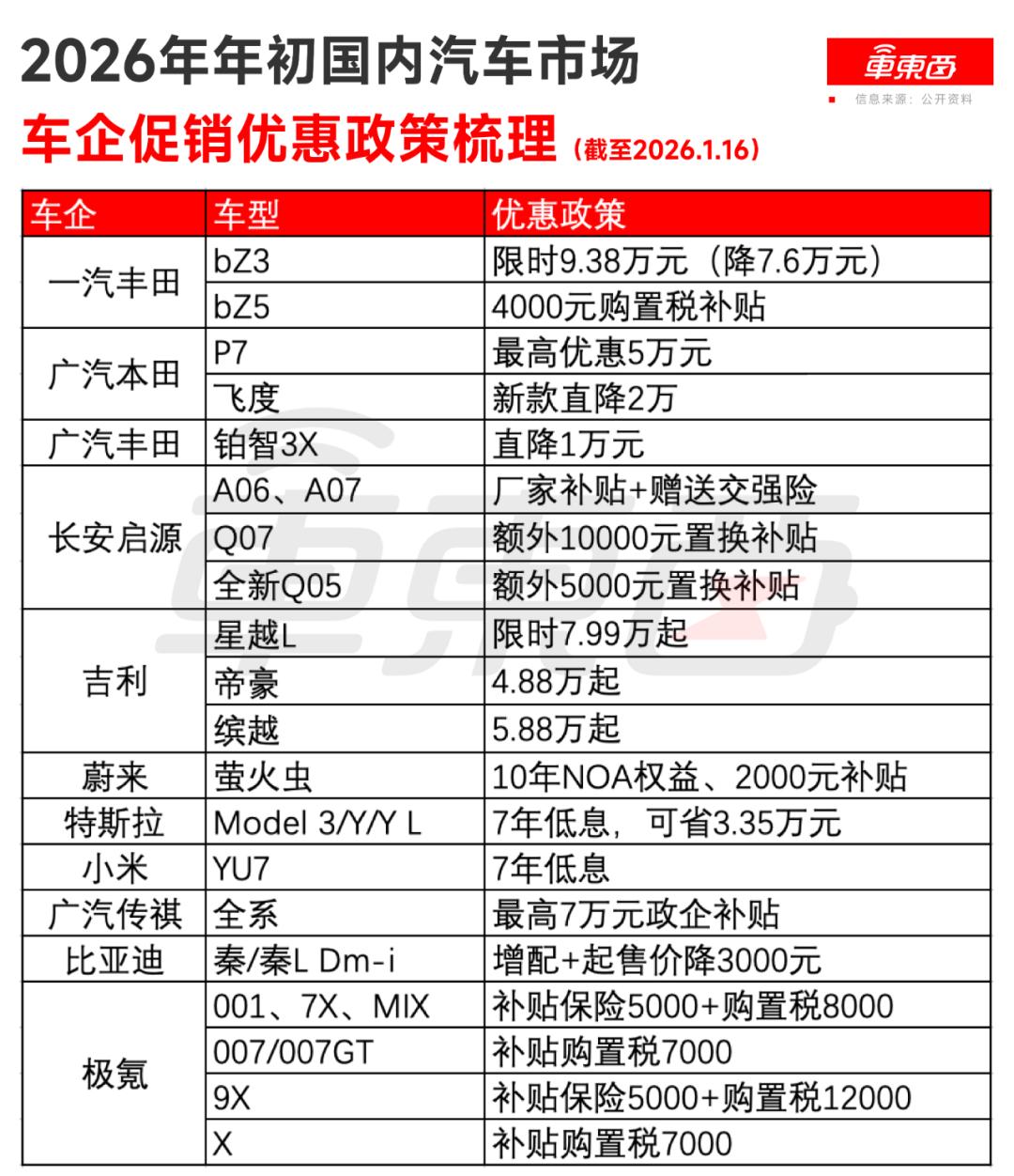
超20款车光速调价,丰田“自杀式”反击,2026价格战再升级
3 6 Ke· 2026-01-16 12:53
Core Viewpoint - The automotive industry is experiencing an intense price war initiated by luxury brands, leading to significant price reductions across various models from multiple manufacturers, creating a new wave of discounts in the market [1][6]. Group 1: Price Reductions and Promotions - BMW has initiated a price drop of up to 300,000 yuan, prompting over 10 automakers to follow suit with more than 20 mainstream models participating in the price reduction trend [1]. - Geely's Emgrand is now priced at 48,800 yuan, while the new Honda Fit has seen a price cut of 20,000 yuan, setting a new low at 66,800 yuan [1][13]. - Toyota's bZ3 electric sedan has been drastically reduced to 93,800 yuan, a decrease of 76,000 yuan, representing a nearly 45% drop from its previous price [9]. Group 2: Competitive Strategies - The competition has escalated with joint efforts from joint venture brands, particularly Japanese automakers, who are adopting aggressive pricing strategies to reclaim market share [7]. - Various automakers are employing a combination of subsidies, enhanced features, and financing options to attract buyers, rather than relying solely on price cuts [20][30]. - NIO's Firefly brand is offering cash subsidies along with a 10-year NOA (Navigation on Autopilot) free usage right, showcasing a strategic approach to enhance customer value [32]. Group 3: Market Dynamics and Consumer Impact - The price war has led to a significant reduction in the entry price for electric vehicles, making them more accessible to consumers [9][19]. - The automotive market is witnessing a shift where companies are not just competing on price but also on the value offered through financing and additional features, which may lead to a more sustainable competitive environment [37]. - The ongoing promotions and price adjustments are expected to drive sales ahead of the Chinese New Year, indicating a strategic push by manufacturers to maximize order volumes during this peak season [37].





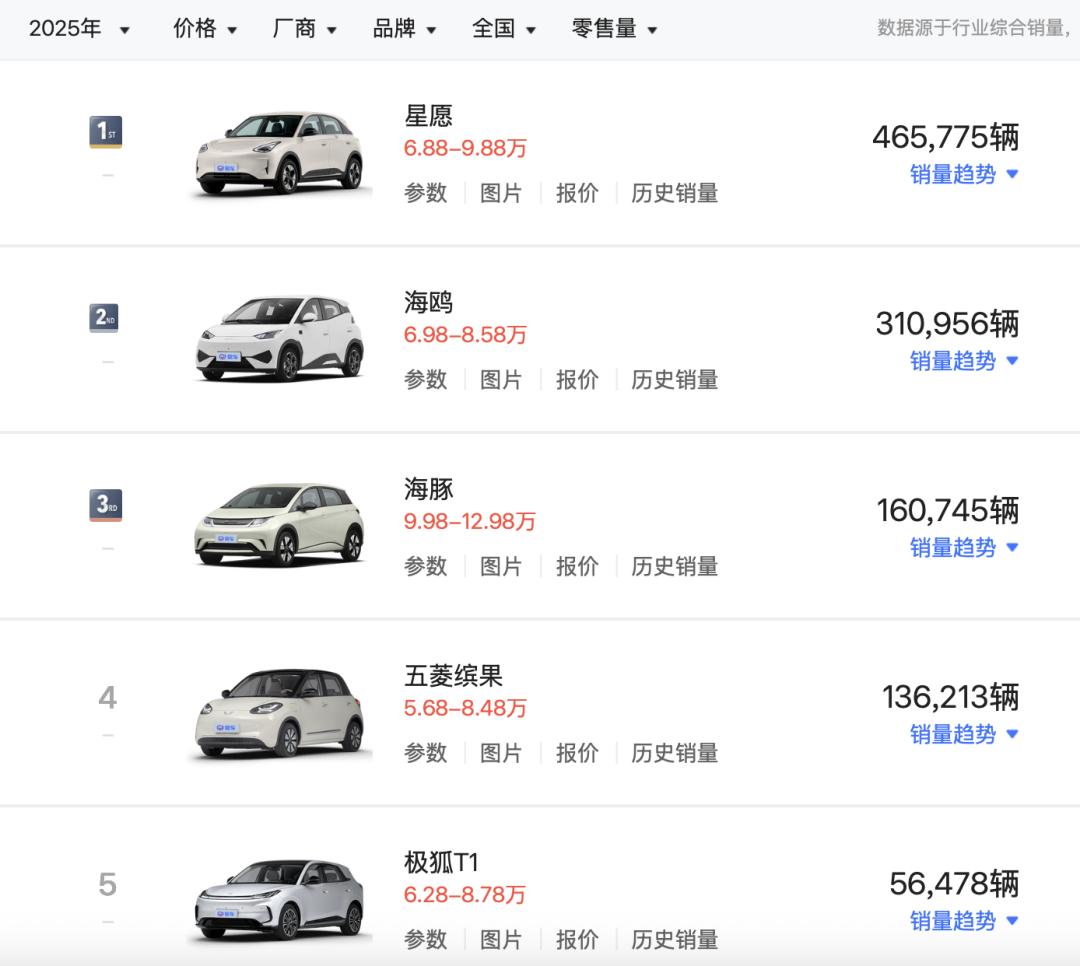
小型车市场火热,星愿年销46.58万辆霸榜
3 6 Ke· 2026-01-16 11:20
Group 1 - GAC Honda has officially launched the new model of the Fit at a price of 66,800 yuan, with a limited production of 3,000 units. The new model features upgrades in color, headlights, bumpers, and an addition of a smart screen in the interior [1][9] - The Fit was once regarded as a "legendary car" in the fuel vehicle era, achieving annual sales of over 100,000 units from 2015 to 2019 due to its competitive pricing and fuel efficiency. However, its sales have declined significantly in recent years due to the rise of electric vehicles [1][2] - In the A0 segment, the market has seen a shift towards electric vehicles, with brands like BYD and Geely capturing significant market share. By 2025, the top-selling small cars will be electric models, with the Fit and Polo projected to sell only 2,695 and 1,069 units, respectively [1][3][5] Group 2 - The A0 sedan market is experiencing significant growth, with wholesale numbers reaching 1.6564 million units in 2025, a year-on-year increase of 57%. Retail sales also saw a 59% increase, totaling 1.13 million units [2][3] - The trend towards full electrification in the A0 sedan market is evident, with a lack of strong fuel vehicle products, highlighting the advantages of pure electric offerings from domestic brands [3][8] - The competitive landscape in the small car market is intensifying, with new electric models being introduced frequently. The price sensitivity of A0 users is leading to fierce competition among manufacturers [5][10]
蜂巢能源2025年出货41GWh
起点锂电· 2026-01-16 10:17
Core Viewpoint - The article highlights the significant achievements of Honeycomb Energy, including its first quarterly profit in Q4 2025 and a total shipment volume of 41 GWh, representing a 53% year-on-year growth compared to 2024, surpassing the industry average growth rate [2]. Group 1: Performance Metrics - In the first eleven months of 2025, Honeycomb Energy ranked ninth globally in power battery installation, with overseas installation growth reaching 321%, making it one of the fastest-growing battery companies worldwide [2]. - The company secured over 7 new designated customers and more than 25 new projects in 2025, including partnerships with Hyundai, Vinfast, Smart, and others, with deliveries starting in 2025 [2]. Group 2: Product Highlights - The "Short Blade" battery, launched in 2022, has gained significant market recognition, with cumulative shipments exceeding 1 million units, making it one of the fastest-growing battery categories [3]. - Notable vehicle deliveries include over 80,000 units of Haval plug-in hybrids and over 30,000 units of Ora pure electric vehicles [3]. Group 3: Global Expansion and Strategy - Honeycomb Energy has signed strategic cooperation agreements in Germany and India to establish localized supply chains and service systems, aiming to reduce transportation and operational costs [5]. - The company targets a battery shipment of 61 GWh in 2026, a 50% increase year-on-year, and aims to achieve profitability for the full year [7]. Group 4: Technological Innovations - New product developments include the Fortress 2.0, a hybrid battery pack with a capacity of 80 kWh and a peak fast charging capability of 6C, suitable for D-class hybrid vehicles [8]. - The company is also focusing on the energy storage market with advanced battery cells, such as the 588Ah and 684Ah cells, which have high cycle life and efficiency [9]. Group 5: Future Outlook - The global electric vehicle market is expected to exceed 30 million units in 2026, with increasing penetration rates, while emerging markets in Southeast Asia and South America are anticipated to experience rapid growth [6]. - Honeycomb Energy expects to maintain high growth in orders, with over 30 new vehicle models and a continued overseas shipment ratio exceeding 30% [10]. Group 6: IPO Plans - Honeycomb Energy is actively advancing its latest IPO plans, indicating a strategic move towards capital market engagement [11].