山姆会员店

Search documents
被围剿的卤味生意
创业邦· 2025-04-30 03:03
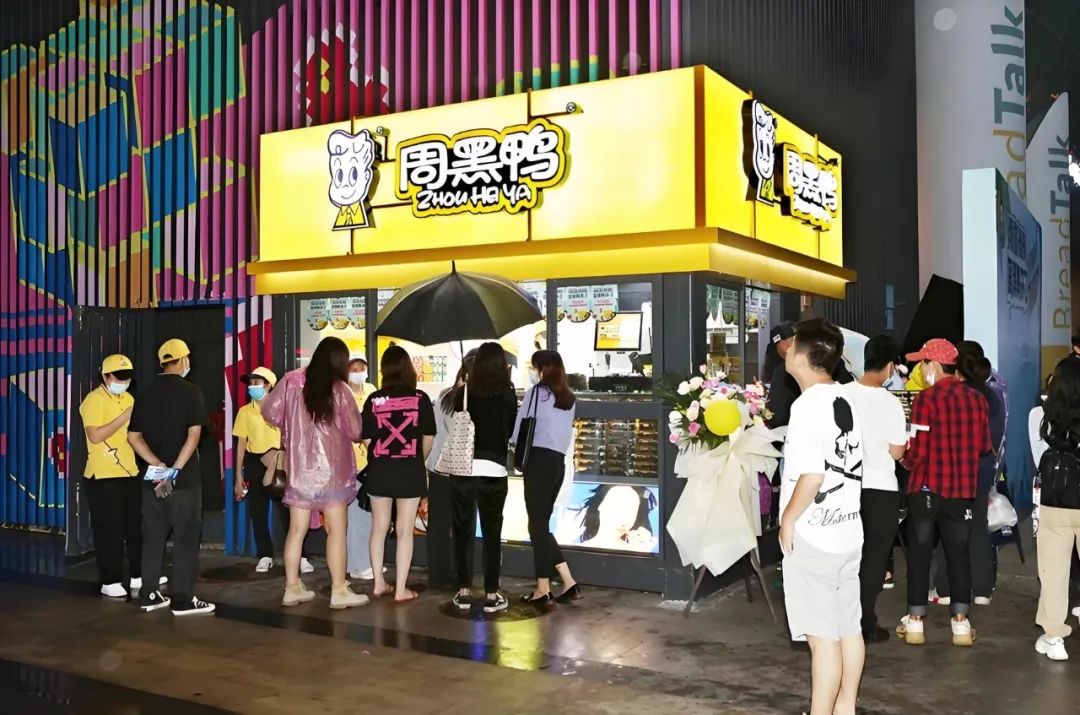
灵兽 . 以下文章来源于灵兽 ,作者十里 专注零售,聚焦消费。商业改变世界。你们负责改变世界,我们带你们改造商业。灵兽,零售消费行业 头部新媒体平台,为商业原创报道而生。投稿及合作:lingshouke@126.com 来源丨灵兽(ID:lingshouke) 作者丨十里 卤味业绩下跌 2024年,曾经风光无限的"卤味三巨头"——绝味食品、周黑鸭和煌上煌,集体陷入业绩下滑的困境。 从财务数据来看,三家企业无一幸免。绝味食品作为行业龙头,2024年营收降至62.57亿元,同比减少 13.84%,净利润更是大幅缩水34.04%至2.27亿元。这是绝味自2017年上市以来首次出现营收负增长。 周黑鸭同样出现了下滑,2024年收入同比下滑10.7%,至24.51亿元,净利润下降15.03%,至9820万元。 煌上煌全年营收则同比减少9.44%,至17.39亿元,净利润锐减42.86%,仅为4033万元。值得注意的是, 煌上煌已经连续四年出现营收负增长。 这轮业绩下滑并非偶然。早在2022年,三家公司的净利润就已出现较大幅度下跌。近两年,"卤味太 贵"频繁登上社交媒体热搜,许多消费者抱怨价格不再亲民。 究其原因,市场竞 ...


美国零售和中国线下零售区别在哪里?
2025-04-30 02:08
Summary of Conference Call Records Industry Overview - The records discuss the retail industry in the United States and China, highlighting differences in operational strategies and market dynamics [1][2][4][36]. Key Points and Arguments U.S. Retail Market - U.S. retail giants like Walmart and Amazon excel in supply chain management and innovation, particularly through strategies like Everyday Low Pricing (EDLP) and the application of AI [1][2][3]. - The U.S. retail market is characterized by its stability and maturity, with a historical evolution from small family-owned stores to large chains [2]. - Walmart's focus on digitalization and automation has enhanced operational efficiency and innovation capabilities [3]. Chinese Retail Market - China leads in instant delivery services, achieving delivery within 30 minutes, while still needing to improve in large retail management and product design [1][4]. - The development of private labels in China requires strong brand influence and product development capabilities, alongside a focus on omnichannel consumer experience [1][6][12]. - Professional talent is crucial for optimizing large retail management, product design, and targeting consumer pain points [5]. Private Label Development - The evolution of private labels in the U.S. has shifted from reliance on suppliers to in-house development, with Costco's Kirkland brand demonstrating significant growth [7][8]. - Successful private label strategies require strong market influence, a dedicated talent team, optimized supply chains, and effective marketing strategies [9][12]. - Demand forecasting is critical in fresh retail for inventory management and profitability, with Walmart successfully implementing precise forecasting methods [21]. Challenges and Opportunities - The management of fresh products poses challenges for private labels, particularly in maintaining quality and safety standards [19][20]. - The retail industry must adapt to consumer demands and preferences, emphasizing the importance of emotional value and unique shopping experiences in physical stores [24][39]. - Discount stores are expanding rapidly in both the U.S. and China, with a focus on supply chain management and data-driven decision-making to ensure sustainable growth [25][43]. Future Trends - The future of retail may see the emergence of new business models and opportunities, with a focus on meeting consumer needs and maintaining profitability [37][38]. - The integration of online and offline resources is expected to enhance the competitiveness of private labels, particularly through the use of AI in supply chain management [16][32]. - The retail landscape will continue to evolve, with the potential for large retail formats to expand into lower-tier markets [41]. Additional Important Content - The records highlight the importance of experiential marketing, such as sampling events, to enhance consumer engagement and drive sales [28][29]. - The impact of tariffs on U.S. retailers has been significant, affecting supply chains and product availability [34]. - The records also discuss the challenges faced by traditional department stores like Macy's, which must adapt to the changing retail environment to survive [49][50]. This comprehensive overview captures the essential insights from the conference call records, focusing on the dynamics of the retail industry in both the U.S. and China, the evolution of private labels, and the challenges and opportunities that lie ahead.


被围剿的卤味生意
3 6 Ke· 2025-04-26 01:30
Core Viewpoint - The "three giants" of the marinated food industry, namely Juewei Food, Zhou Hei Ya, and Huang Shang Huang, are collectively facing a decline in performance in 2024, marking a significant downturn in an industry that was once thriving [1][3][5]. Financial Performance - Juewei Food's revenue dropped to 6.257 billion yuan in 2024, a year-on-year decrease of 13.84%, with net profit plummeting 34.04% to 227 million yuan, marking its first revenue decline since its IPO in 2017 [1][3]. - Zhou Hei Ya's revenue fell by 10.7% to 2.451 billion yuan, with net profit down 15.03% to 98.2 million yuan [3]. - Huang Shang Huang experienced a 9.44% decrease in revenue to 1.739 billion yuan, with net profit sharply declining by 42.86% to 40.33 million yuan, marking its fourth consecutive year of revenue decline [3][5]. Market Dynamics - The decline in performance is attributed to intensified market competition and changing consumer demand, with rising prices leading to consumer complaints about affordability [3][5]. - Juewei Food acknowledged that its performance was significantly impacted by fierce market competition, with continued revenue and profit declines in the first quarter of 2024 [3][5]. - Huang Shang Huang cited changes in consumer purchasing power and consumption scenarios as factors leading to reduced single-store revenue, alongside increased promotional costs and other operational challenges [5]. Store Count and Expansion - The total number of marinated food stores in China decreased by 23,000 over the past year, with the three major brands closing over 1,700 stores in the first half of 2024 alone [7]. - Juewei Food's store count dropped from 15,950 at the end of 2023 to 12,129 by mid-April 2024, a net decrease of 3,821 stores in 16 months [7]. Profit Margins - Despite the revenue and profit declines, the gross profit margins of the three giants improved in 2024, with Juewei Food's gross margin increasing by 6.1 percentage points to 33.96% [9]. - Huang Shang Huang's gross margin rose by 3.93 percentage points to 32.95%, while Zhou Hei Ya's gross margin reached 56.8%, up by 4.4 percentage points [9]. Internal Challenges - The marinated food industry faces significant internal challenges, including uncontrollable production costs due to reliance on volatile raw material prices, particularly poultry by-products [10][12]. - The soaring costs of raw materials, such as duck products, have severely compressed profit margins, with procurement costs remaining high despite some price reductions in the latter half of 2023 [12][14]. - The industry's growth model, heavily reliant on rapid store expansion, is now hindered by declining consumer demand and rising operational costs, forcing companies to shift focus from quantity to improving single-store performance [16]. External Competition - The marinated food industry is experiencing pressure from diversified consumption channels, with new retail formats like bulk snack stores and e-commerce platforms drawing customers away from traditional marinated food outlets [17][19]. - Changing consumer dietary habits and preferences, driven by economic pressures, have led to a decline in the appeal of traditional marinated products, which are often perceived as unhealthy [19][21]. - Supermarkets have increasingly focused on their own processed products, enhancing their competitiveness against traditional marinated food brands, which struggle to adapt to changing consumer tastes [21][23].

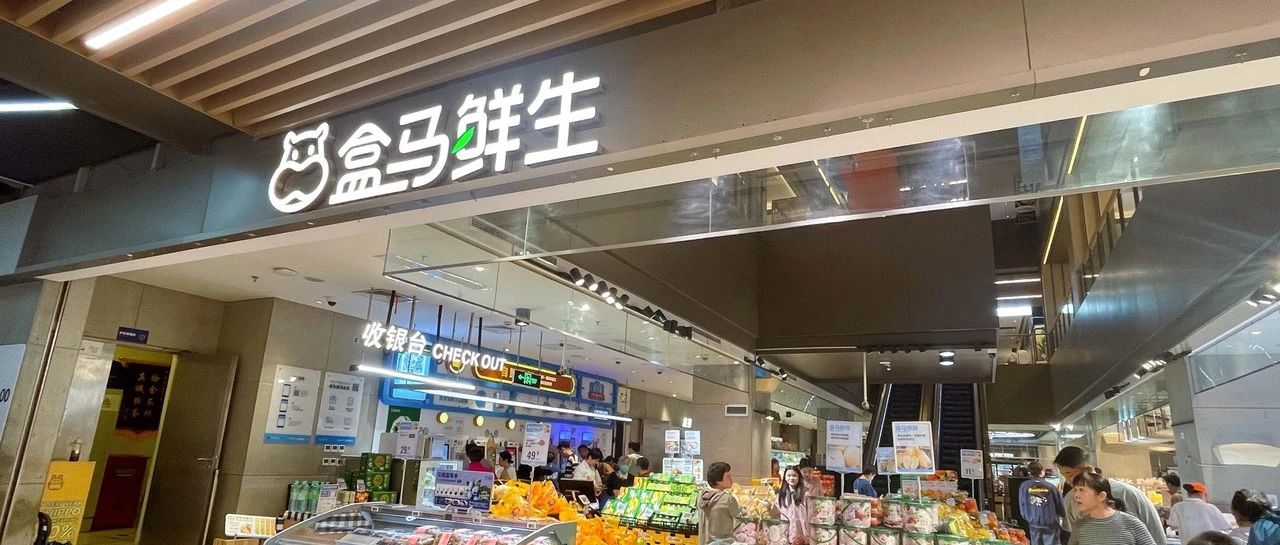
十岁盒马,开始赚钱
3 6 Ke· 2025-04-22 12:24
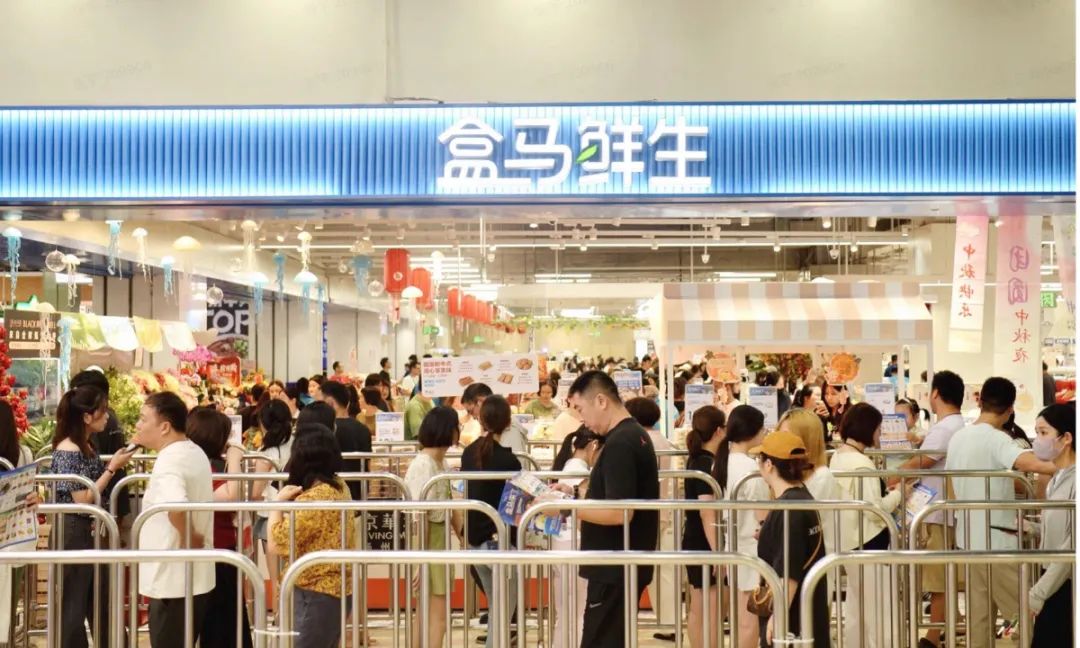
Core Insights - Hema has achieved its first annual profitability since its establishment, marking a significant milestone for the company [2][3] - The company plans to open nearly 100 new Hema Fresh stores in the upcoming fiscal year, indicating a strong focus on expansion [6][18] - Hema's business structure has been streamlined into four core segments, enhancing decision-making efficiency [2][15] Financial Performance - Hema reported a total transaction volume of 59 billion yuan for the 2024 fiscal year, a notable increase from 55 billion yuan in the previous year, with online transactions contributing over 63% to GMV [5] - The company experienced a customer growth rate exceeding 50% and achieved double-digit growth after nine consecutive months of profitability [4][12] Strategic Focus - Under the leadership of new CEO Yan Xiaolei, Hema has shifted its strategy from "model exploration" to "profitability first," focusing on two core business models: Hema Fresh and Hema NB [3][9][11] - Hema is actively enhancing its product offerings and supply chain capabilities, including the introduction of private label products and improvements in logistics [13] Market Expansion - Hema is targeting the lower-tier market, having entered 21 new cities and regions in the past year, with a focus on areas with strong consumer purchasing power [18][19] - The company is adapting its strategies to meet the unique challenges of the lower-tier market, including price sensitivity and varying consumer habits [19]
武商集团布局会员店,正面对垒山姆
Tai Mei Ti A P P· 2025-04-16 02:55
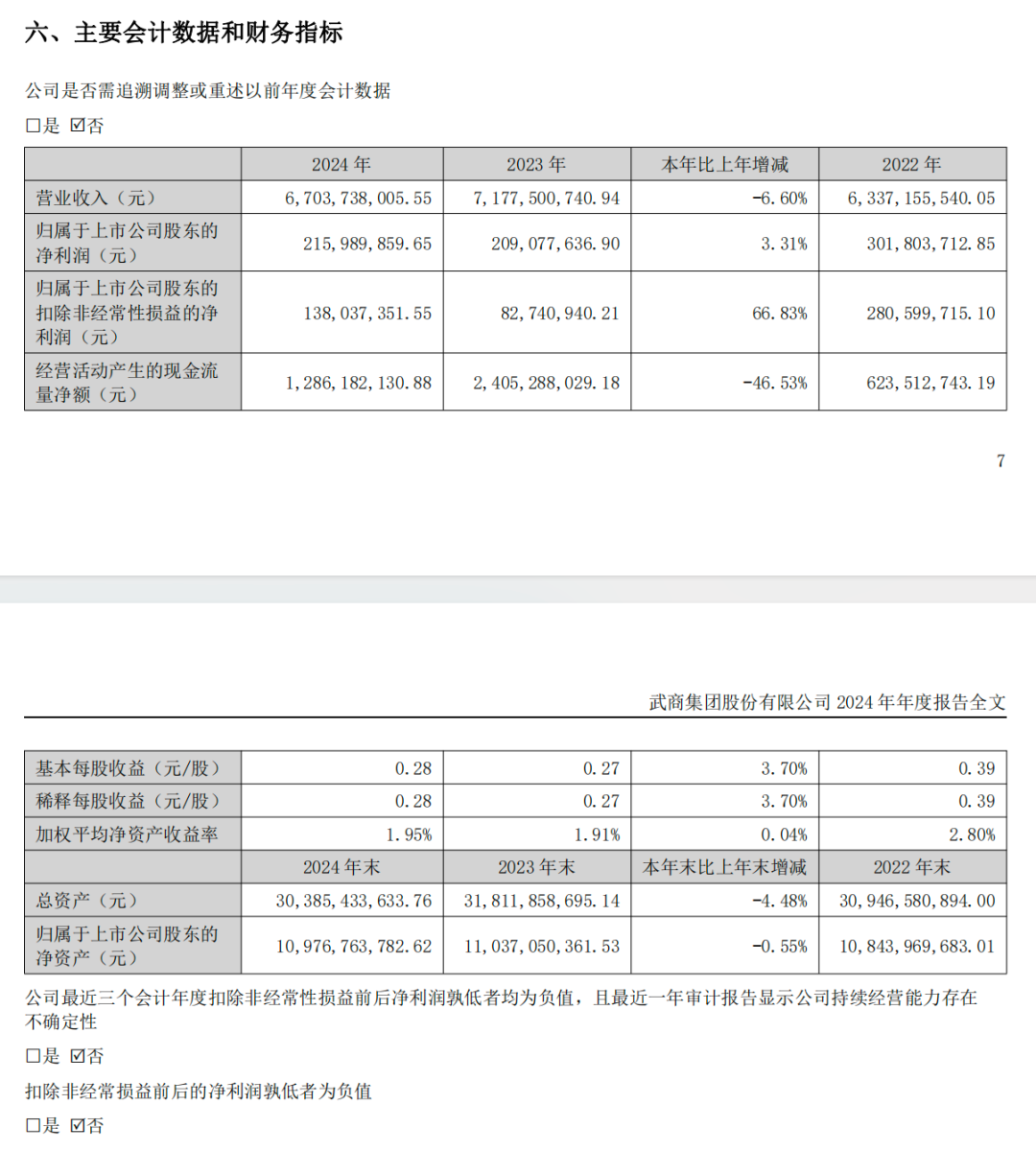
Core Viewpoint - Wushang Group is undergoing a strategic transformation by entering the warehouse membership store sector, responding to declining traditional retail revenues and profits while aiming to capture new consumer trends [1][2][23] Financial Performance - In 2024, Wushang Group reported operating revenue of 6.70 billion yuan, a decrease of 6.6% year-on-year, while net profit attributable to shareholders was 216 million yuan, a slight increase of 3.31% [2][3] - The net profit after excluding non-recurring gains was 138 million yuan, reflecting a significant increase of 66.83% year-on-year, indicating challenges in core business growth [2][3] - The company closed 11 supermarket stores in 2024, highlighting the high operational costs of labor-intensive formats [6][14] Market Position and Competition - Wushang Group's entry into the warehouse membership store market is set against a backdrop of intense competition in Wuhan, where major players like Sam's Club have established a strong presence [12][18] - Sam's Club operates three stores in Wuhan with a fourth under construction, leveraging a robust supply chain and high customer loyalty [12][18] - Wushang Group's strengths include its extensive local presence and property resources, with over 90% of its properties owned, providing a strategic advantage for new store locations [12][19] Strategic Initiatives - The establishment of Wushang Jiangtun Membership Store marks a significant shift towards a high-margin, high-loyalty business model [1][19] - The company aims to leverage its local supply chain and digital marketing capabilities to enhance its competitive edge in the membership store sector [12][21] - Wushang Group is exploring a "light asset operation model" to facilitate rapid replication of its membership store format, potentially allowing for a broader regional presence [21][23] Challenges and Considerations - The company faces challenges in building a compelling membership ecosystem, particularly in competing with established brands like Sam's Club that offer a combination of products and services [14][19] - There is a need for a skilled team capable of managing both product sourcing and membership operations, as well as overcoming supply chain restructuring difficulties [19][21] - Consumer acceptance of the paid membership model in Wuhan remains uncertain, especially with existing competition already capturing significant market share [19][23]

用户运营,故事才是最好的广告!
Sou Hu Cai Jing· 2025-04-03 05:20
Core Insights - The article emphasizes the importance of content power in brand communication, suggesting that effective storytelling can significantly enhance user engagement and conversion rates [2][17][18] Group 1: Challenges in Traditional Content Operations - Users are bombarded with approximately 12,000 messages daily, but can only remember brand content for about 7 seconds [3] - Traditional content operations face three main pitfalls: information overload, value misalignment, and emotional detachment [3][4] - Brands that successfully engage users, like Pop Mart, utilize storytelling to create emotional connections, transforming users from passive recipients to active emotional investors [3][4] Group 2: Engaging User Systems - Effective content must activate three user systems: cognitive impact, emotional resonance, and behavioral drive [5] - Cognitive impact can be achieved through unconventional insights that challenge user perceptions, such as using surprising facts or data [6][7] - Emotional resonance involves making users feel like protagonists in the story, enhancing relatability and connection with the brand [8][9] - Behavioral drive focuses on creating compelling calls to action that resonate with user pain points and urgency [10] Group 3: Engines of User Engagement - Four key engines can enhance user engagement: 1. Product content transformation, turning product manuals into engaging narratives [11] 2. Service dramatization, making customer service interactions feel like engaging stories [12] 3. User-generated content monetization, allowing users to earn rewards for their contributions [12] 4. Promotional gamification, turning discounts into interactive challenges [12] Group 4: Industrialization of Content Production - Leading brands have established content production systems that streamline the creation of engaging narratives [14] - The process includes topic discovery through data analysis, standardized production lines for content quality, and strategic distribution to capture user attention [15] - Continuous improvement through A/B testing allows brands to refine their content strategies based on user feedback [16]


港澳有钱人,排队往珠海「送钱」
36氪· 2025-04-02 13:38
Core Insights - The article highlights the surge in cross-border consumption by residents of Hong Kong and Macau at the Sam's Club in Zhuhai, which has become a popular shopping destination due to its larger space and lower prices compared to local options [3][9][25] - The implementation of policies allowing vehicles from Hong Kong and Macau to enter mainland China has significantly increased traffic and consumer activity at the Zhuhai Sam's Club, leading to a notable rise in sales [5][8][9] Group 1: Consumer Behavior - Approximately 7,000 vehicles with Hong Kong and Macau license plates cross the Hong Kong-Zhuhai-Macao Bridge daily, with many heading directly to the Zhuhai Sam's Club [4][8] - The Zhuhai Sam's Club achieved sales of 2.5 billion yuan in 2023, ranking 7th among over 800 Sam's Club locations globally, driven by the influx of cross-border shoppers [9][25] - The average spending per new member from Hong Kong at the Zhuhai Sam's Club exceeded 6,000 yuan, with 35% of new members being Hong Kong tourists [25] Group 2: Market Dynamics - The article notes a shift in consumer preferences, with many residents of Hong Kong and Macau increasingly opting for shopping in mainland China due to price differences and the availability of larger retail spaces [19][21][22] - The competitive landscape is evolving, with new entrants like Hema Fresh and plans for additional Sam's Club locations in Zhuhai, indicating a growing retail market [40][41] - The retail environment in Hong Kong is facing challenges, with a reported 7.3% decline in total retail sales value in 2024, prompting local retailers to adapt by opening new stores and offering competitive pricing [31][32]
2025年第一季度北京零售物业市场报告
Cushman & Wakefield· 2025-04-01 00:35
Investment Rating - The report does not explicitly state an investment rating for the industry Core Insights - The Beijing retail market is experiencing a transformation with the introduction of new projects and the renovation of existing ones, driven by changing consumer habits and demands [3][5] - The market is expected to see over 700,000 square meters of quality retail space launched in 2025, primarily from large-scale new projects and urban renewal initiatives [5] - The introduction of new brands, particularly first stores, is revitalizing consumer engagement in Beijing, with 960 first stores expected in 2024 and 800 in 2025 [4] Market Overview - In Q1 2025, three new projects opened in Beijing, adding 356,000 square meters of quality retail space, bringing the total shopping center stock to 1.666 million square meters [3] - Urban renewal projects are becoming the main source of quality shopping center supply, with significant upgrades in both space structure and brand offerings [3] - The trend of upgrading older retail projects is ongoing, with operators taking over and revitalizing these spaces [3] Brand Developments - High-end dining and cultural entertainment brands are particularly active, with notable first stores opening in Beijing, such as Armani Coffee and POOPOSUPER [4] - Independent shops in traditional hutongs are gaining popularity among brands, indicating a shift in consumer preferences [4] Market Outlook - The report anticipates continued support for traditional brands and cultural enterprises, with policies being introduced to promote physical bookstores [5] - Future projects are expected to increasingly incorporate cultural elements, creating distinctive commercial spaces [5] Key Market Indicators - The average rent for prime retail space in Beijing is projected at ¥2,130 per square meter per month, with a vacancy rate of 10.6% [11] - The report provides detailed statistics on various commercial districts, highlighting their stock, vacancy rates, and rental price ranges [11] Major Upcoming Projects - Several significant projects are set to open in 2025, including Beijing Shangde Yintai City and Wangfujing WellTown, contributing to the retail landscape [13]
多个大型商超闭店整改 山姆、胖东来模式是唯一出路?
Sou Hu Cai Jing· 2025-03-30 11:49
Core Insights - The retail landscape in Shenyang is undergoing significant changes, with major players like Carrefour, Yonghui, and Xinlongjia facing store closures and operational adjustments, while other formats like membership-based stores are thriving [2][9][11] Group 1: Store Closures and Adjustments - Yonghui Supermarket plans to close 12 stores in Heilongjiang and Jilin provinces by April 18, 2025, transferring resources to the brand "Biyoute" [3][9] - Xinlongjia Group announced the closure of four stores due to structural limitations, focusing on developing lifestyle plaza stores to enhance customer experience [7][9] - Carrefour has seen a reduction from 14 stores to several closures and conversions into other retail formats, indicating a significant shift in the market [6][9] Group 2: Successful Retail Models - The "Fat Donglai" model in Shenyang has led to a nearly fourfold increase in daily foot traffic and a sixfold increase in sales, demonstrating the effectiveness of innovative retail strategies [5][11] - Membership-based stores like Sam's Club and Happy Farm are gaining popularity, offering unique products and high-quality service, which attracts a loyal customer base [11][12] - Biyoute supermarkets have achieved high coverage in Shenyang, with multiple locations within a short distance, contributing to their success [12] Group 3: Future Strategies - Yonghui is committed to improving service quality and customer experience through comprehensive store renovations across the Shenyang region [5][9] - Xinlongjia aims to create a one-stop shopping experience with lifestyle plaza stores, integrating various retail formats to meet diverse consumer needs [7][8] - The overall trend indicates a shift towards enhancing product quality and customer service as key competitive advantages in the retail sector [11][13]


换帅365天:盒马挥别山姆模式,或与永辉狭路相逢
雷峰网· 2025-03-19 09:14
Core Viewpoint - Hema is shifting its focus towards lower-tier markets, moving away from the previous membership store model to adapt to changing market conditions and competition [3][5][14]. Group 1: Strategic Changes - Hema has undergone significant strategic adjustments under the new CEO, Yan Xiaolei, including the closure of X membership stores and a focus on Hema Fresh and Hema Outlet stores [5][14]. - The company plans to open 100 Hema Fresh stores in the fiscal year 2025, indicating a commitment to expanding its presence in lower-tier markets [5]. - Hema's previous strategy of competing with Sam's Club has been abandoned, leading to the closure of unprofitable membership stores [8][12]. Group 2: Market Position and Competition - Hema's entry into lower-tier markets is seen as a response to the competitive landscape, particularly against traditional retailers like Yonghui and emerging players like Pang Donglai [13][16]. - The company aims to leverage Alibaba's data capabilities for site selection and inventory management, enhancing operational efficiency in less saturated markets [15]. - Hema's market share in eastern regions has reached 3.2%, surpassing Yonghui, indicating a growing presence in the competitive landscape [16]. Group 3: Operational Challenges - Hema faces challenges in maintaining product selection and quality, which are critical for attracting customers in the retail sector [10][11]. - The transition to a more streamlined product offering is complicated by internal complexities and external competition, making it difficult to achieve significant reforms [12]. - The operational intricacies of retail, such as inventory management and customer flow prediction, require strong management capabilities, which Hema is currently working to enhance [11][12].