
元气森林

Search documents
未来5年,要活下去,每家企业都需要有极致产品力大单品!
Sou Hu Cai Jing· 2025-10-02 10:46
Core Viewpoint - The article emphasizes that "extreme product power" is the primary productivity force for companies, highlighting the importance of product development over marketing in a competitive environment [2][3]. Group 1: Importance of Product Development - In a highly competitive market, companies must focus on product development to create extreme product power, which serves as a significant leverage point for business operations [2][3]. - The concept of the power law in product development suggests that even a small improvement in product quality can lead to exponential growth in sales and market presence over time [4][6]. - Companies with strong product foundations can outperform larger competitors, as demonstrated by the power law where a small base raised to a high exponent can yield greater results than a larger base with a lower exponent [6][8]. Group 2: Key Recognitions for Building Extreme Product Power - Companies must adopt a consumer-centric perspective, recognizing that their products are just one of many choices available to consumers [8][10]. - Products should aim to achieve at least two out of three desirable attributes: being good (taste, appearance, fun), strong (technology, craftsmanship, supply chain), and large (market scale) to create competitive advantages [12][16]. - Establishing the shortest possible connection with consumers is crucial, as it aligns with their instinctive decision-making processes [14][15]. Group 3: Strategic Product Selection - Selecting the right products is the most critical factor in building extreme product power, accounting for 40% of its importance [23]. - Products should be high-frequency, essential, versatile, and unique to ensure future sales potential [24]. - Successful examples include products that are widely applicable and have high consumer value, such as the "耗油牛柳" from 欧赛斯, which can be used in various dishes [24][25]. Group 4: Research and Development - R&D is the second most important factor, contributing 30% to extreme product power, where defining and developing outstanding products is essential [28][29]. - Companies that prioritize R&D and foster a culture of continuous product improvement tend to excel in the market [29][31]. Group 5: Marketing and Branding - Effective product naming is crucial for extreme product power, requiring names that are memorable, clear, and directly address consumer needs [34][36]. - The creation of compelling product selling points is essential, focusing on a single, strong reason for consumers to purchase [46][49]. - Packaging design should convey the product's value and brand identity, enhancing market appeal and driving conversion [49].


2025年第39周:食品饮料行业周度市场观察
艾瑞咨询· 2025-09-30 00:07
Group 1 - Consumer acceptance of prepared dishes varies significantly based on dining scenarios, with over 50% acceptance in fast food chains and only 8.8% in high-end restaurants, highlighting concerns over food safety and pricing [3] - The iced tea market is experiencing a resurgence, with brands like Nongfu Spring and Yuanqi Forest entering the space, focusing on "sugar reduction" and "carbonation" innovations, and the market is projected to reach 300 billion yuan by 2024 [4] - The global food and beverage industry sees PepsiCo reclaiming the top spot with revenues exceeding 90 billion USD, driven by product innovation and AI technology, while Nestlé and JBS follow closely [5] Group 2 - The rise of "supermarket canteens" and "restaurant supermarkets" reflects a trend towards blending dining experiences, driven by consumer demand for value and fresh ingredients, although it increases operational complexity [6] - The dairy market faces challenges with liquid milk experiencing a decline, while powdered milk and cheese show growth, indicating a shift in consumer preferences towards plant-based alternatives [8] - The tea beverage industry is shifting towards fast-moving consumer goods, with brands like Mixue Ice Cream rapidly expanding, while competition intensifies in lower-tier cities [9] Group 3 - Bamboo sugar and reed root water have emerged as popular health drinks, driven by trends towards natural, low-sugar products and cultural resonance, with a projected compound annual growth rate exceeding 88% over the next five years [10] - The night economy is becoming a significant growth driver for the restaurant industry, with cities like Shanghai and Chengdu seeing nighttime consumption rates reach 60% [14] - The tea restaurant sector is undergoing transformation due to innovation challenges, with a market size expected to exceed 300 billion yuan by 2025 [15] Group 4 - The bottled beverage market is seeing a rise in "construction site drinks," favored for their affordability and large volume, despite health concerns [16] - The ice cream market is diversifying, with mini and cultural-themed ice creams gaining popularity, reflecting a shift towards health-conscious and personalized consumption [17] - The instant noodle market is projected to grow, with China accounting for 37.2% of global demand, emphasizing the need for product innovation [19] Group 5 - The launch of a new high-end sugar-free tea by Master Kong sold out rapidly, indicating strong consumer demand for premium products in the sugar-free beverage market, which is expected to reach 401.6 billion yuan in 2023 [20] - The sugar-free beverage market is evolving, with consumers seeking transparency in ingredients and health benefits, leading to increased competition among brands [21] - Subway's collaboration with Michelin-star chefs to launch a new series of sandwiches reflects a deepening localization strategy in the Chinese market [22] Group 6 - Three Squirrels has introduced a new quality standard for pine nut products, aiming to enhance industry standards and meet consumer demand for high-quality nuts [24] - Wahaha's rebranding to "Wah Xiaozong" under the leadership of Zong Fuli aims to attract younger consumers while addressing compliance issues [25] - Zhou Hei Ya's promotional campaign targeting college students highlights efforts to regain market share amid declining revenues [26] Group 7 - The beverage brand Bawang Chaji has gained international recognition by winning multiple awards at the 2025 World Beverage Innovation Awards, showcasing the potential of Chinese tea brands [28] - Pupu Supermarket's launch of an affordable meal delivery service aims to capture market share in the competitive food delivery sector [29] - Yili's new concept store emphasizes fresh, made-to-order products, reflecting a shift in consumer preferences towards quality and innovation [30]

中国“土味”零食,靠邪修馋哭老外
3 6 Ke· 2025-09-28 10:29
Group 1 - The core point of the article highlights the rising popularity of Chinese snacks and beverages in international markets, particularly in Southeast Asia and South Korea, where they have become trendy and sought after by local consumers [6][10][20] - Wahaha is set to rebrand as "Wah Xiaozong" next year, which has sparked mixed reactions among fans, with some expressing nostalgia and others criticizing the name change [2] - Ice tea, once considered a "working-class drink" in China, has gained a new status in South Korea, where over 30 Korean female celebrities have become its unofficial endorsers [4][10] Group 2 - Chinese snacks like spicy strips and melon seeds have gained significant traction overseas, with brands like Yanjinpuzi earning 516 million yuan from international sales last year, marking a 7.7% increase [8][39] - The price of Chinese spicy strips has skyrocketed in the U.S., with a 65g pack selling for $16.99, significantly higher than domestic prices, indicating a strong demand [10][18] - The popularity of Chinese snacks has led to the emergence of imitation products in foreign markets, showcasing their influence and acceptance [12][18] Group 3 - The success of Chinese snacks abroad is attributed to effective marketing strategies, including leveraging social media influencers and adapting products to local tastes [21][22][31] - Brands like Qiaqia and Wangwang have established production bases in countries like Vietnam and Thailand, facilitating their entry into local markets [43][45] - The article emphasizes that the future of the overseas market for Chinese snacks is promising, as the strategies used by foreign brands to enter China are now being applied in reverse [49][50]

食品饮料行业周度市场观察-20250927
Ai Rui Zi Xun· 2025-09-27 09:13
Investment Rating - The report does not explicitly provide an investment rating for the food and beverage industry Core Insights - The food and beverage industry is experiencing significant trends, including the rise of ready-to-eat meals, the popularity of low-sugar and sparkling beverages, and the emergence of health-focused drinks like bamboo sugar and reed root water [1][2][7] Industry Trends - Consumer acceptance of ready-to-eat meals varies significantly by dining context, with over 50% acceptance in fast food chains and only 8.8% in high-end restaurants [2] - The iced tea market is booming, with brands like Nongfu Spring and Yuanqi Forest entering the space, focusing on sugar reduction and carbonation innovations. The market is expected to grow from 300 billion yuan in 2024 to 350 billion yuan in 2025 [2] - The global top 100 food and beverage companies list for 2025 sees PepsiCo reclaiming the top spot with revenues exceeding $90 billion, driven by product innovation and AI technology [4] - The integration of supermarkets and restaurants is on the rise, with new business models emerging that combine high cost-performance and fresh ingredients [4] - The dairy market in China faces challenges, particularly in liquid milk, while powdered milk and cheese are experiencing growth [5] - The tea beverage industry is shifting towards fast-moving consumer goods, with brands focusing on efficiency and cost reduction [6] - Bamboo sugar and reed root water have become popular health drinks, reflecting the potential of traditional Chinese health beverages [7] - The night economy is becoming a significant growth point for the restaurant industry, with night-time consumption in cities like Shanghai and Chengdu reaching 60% [10] Brand Dynamics - Brands like Kang Shifu are launching successful sugar-free tea products, indicating a shift towards premium and health-oriented offerings in the beverage market [14] - The introduction of new products by brands like Subway, which incorporates local flavors into their offerings, highlights the trend of localization in the food industry [15] - The collaboration between Three Squirrels and JD to establish quality standards for nuts aims to elevate industry standards and meet consumer demand for high-quality products [16] - Wahaha's rebranding to "Wah Xiaozong" under the leadership of Zong Fuli aims to attract younger consumers while addressing compliance issues [17] - Zhou Hei Ya's promotional activities targeting college students reflect efforts to engage younger demographics amid declining sales [20]
东鹏饮料20250924
2025-09-26 02:29
Summary of Dongpeng Beverage Conference Call Industry and Company Overview - Dongpeng Beverage has become the second-largest player in the energy drink industry, surpassing Red Bull with nearly 30% market share [2][3] - The company has expanded from the Guangdong and surrounding regions to a nationwide presence, diversifying its product line to include energy drinks, sports drinks, ready-to-drink tea, and coffee [2][3] Key Points and Arguments - **Sales Network Expansion**: By the end of 2024, Dongpeng Beverage will have 4 million sales outlets, with an expected increase to 4.5 million by the end of 2025, significantly outpacing competitors like Xiangpiaopiao and Yangyuan [2][6] - **Regional Growth**: The company has achieved over 50% growth in regions such as Southwest, Central China, and North China [2][7] - **Product Structure Growth**: Hydration products are projected to reach 1.5 billion yuan in 2024, doubling to 3.2-3.5 billion yuan in 2025. The new juice tea product's annual target has been raised to 700-800 million yuan [2][7] - **Business Model**: Dongpeng's business model is similar to Nongfu Spring, focusing on long lifecycle products to nurture new offerings. The energy drink category has high stickiness and lifecycle characteristics, with favorable ROE, net profit, and gross margin [2][8] - **Market Position**: Since its IPO in May 2021, Dongpeng has maintained a compound annual growth rate (CAGR) of approximately 30% in revenue and earnings per share (EPS), with a consistent price-to-earnings (P/E) ratio around 30 [3][4] Additional Important Insights - **Future Growth Projections**: The company anticipates a 15-20% CAGR for specific items until around 2027, despite potential growth slowdowns due to regulatory restrictions on certain products in schools [10] - **Diversification Strategy**: Dongpeng is actively exploring overseas markets in Southeast Asia and the Middle East, with significant growth potential despite current small volumes [10][15] - **Performance of Hydration Products**: Hydration products have shown remarkable growth, with sales increasing from 400 million yuan in 2023 to 1.5 billion yuan in 2024, and expected to reach 3.4-3.5 billion yuan in 2025 [12] - **Juice Tea Market Challenges**: The juice tea market is competitive, with major brands like Master Kong and Uni-President holding significant market shares. Dongpeng is cautious about profitability in this segment, setting a sales target of 700-800 million yuan for the year [13] - **Overall Performance Expectations**: For the current year, Dongpeng expects a revenue growth of approximately 33%, reaching 21 billion yuan, and a profit increase of about 37%, exceeding 4.6 billion yuan [14] Conclusion Dongpeng Beverage is positioned for significant growth in the energy drink and hydration markets, with a robust expansion strategy and a focus on product diversification. The company’s strong sales network and innovative business model provide a competitive edge in a rapidly evolving market.

谁在杀死大品牌经销商?
Sou Hu Cai Jing· 2025-09-26 00:42
Core Insights - The article highlights the decline of channel dominance by major brands in the fast-moving consumer goods (FMCG) sector, as evidenced by the inability of Inner Mongolia dairy companies to recruit new distributors in Shanghai despite significant market share losses [1][7][24] - The report indicates a 37% increase in the distributor attrition rate for leading FMCG brands since 2020, with the beverage sector facing the most severe challenges [1][6] - The shift in consumer behavior towards price sensitivity and the rise of small brands is reshaping the distribution landscape, leading to a re-evaluation of the role of distributors [6][9][12] Industry Dynamics - The era of channel dominance by major brands, characterized by a "direct + deep distribution" model, has led to the marginalization of smaller brands, forcing them into lower-tier markets [2][4] - Major brands have historically treated distributors as mere execution tools, which has contributed to their current vulnerabilities [3][4][14] - The transition from a "stockpiling" strategy to a "neglected" approach reflects the changing consumer preferences and the need for brands to adapt to a more competitive environment [6][24] Distributor Evolution - Small brands are leveraging strategies such as profit sharing and operational flexibility to redefine channel value, offering higher margins (25%-40%) compared to major brands (8%-15%) [9][10][12] - The concept of "coexistence" is emerging, where small brands prioritize long-term loyalty and investment from distributors over short-term gains [12][18] - Major brands are facing a dilemma regarding the necessity of distributors in the digital age, prompting a reevaluation of their roles and contributions [16][17] Future Collaboration Models - The future relationship between brands and distributors is expected to shift from a "management and control" model to one of "empowerment and coexistence" [18][19] - Successful brands are beginning to integrate distributors into their value networks, as seen with companies like Nongfu Spring and Coca-Cola, which focus on core competencies while allowing distributors to thrive [21][22] - The article concludes that brands that respect and collaborate with their distributors will be better positioned to navigate market challenges and sustain growth [24]

有糖食品又回来了
3 6 Ke· 2025-09-23 11:12
Core Insights - The trend of "0 sugar, 0 calories, 0 fat" has dominated the food and beverage industry, becoming a prominent symbol of health consciousness [1] - Consumers are beginning to realize that health is not solely defined by "0 sugar," leading to a more rational approach towards sugar consumption [3][4] - The industry is shifting towards "low sugar" products, balancing taste, health, and safety [4][10] Group 1: Market Trends - The rise of "0 sugar" products began with brands like Yuanqi Forest, which launched a zero-sugar sparkling water in 2018, sparking a trend in the beverage market [5] - Major brands are now introducing low-sugar options, such as Master Kong's "low sugar high fiber iced tea," which reduces sugar content by 50% to 4.5g/100ml [6][8] - The Shanghai sugar beverage grading standard will be implemented in 2024, indicating a shift in industry practices towards healthier options [10] Group 2: Product Development - New products are focusing on "reduced sugar" rather than "no sugar," with brands like Yuanqi Forest and Vita Lemon Tea launching low-sugar versions [11][20] - Brands are using natural juices and purees as sugar substitutes, which can create a perception of a cleaner label, although this may raise concerns about hidden sugars [23] - The popularity of prebiotic sparkling water in the U.S. has surged, with a tenfold market growth, emphasizing the importance of taste alongside health benefits [24] Group 3: Consumer Behavior - Consumers are becoming more discerning, preferring transparency in product labeling and the option to choose their sugar levels [16][17] - The concept of "half-sugar" is gaining traction, reflecting a desire for a balanced approach to health and indulgence [29] - The industry recognizes that both sugar and sugar substitutes have their roles, and a diverse, balanced diet is essential for true health [27]

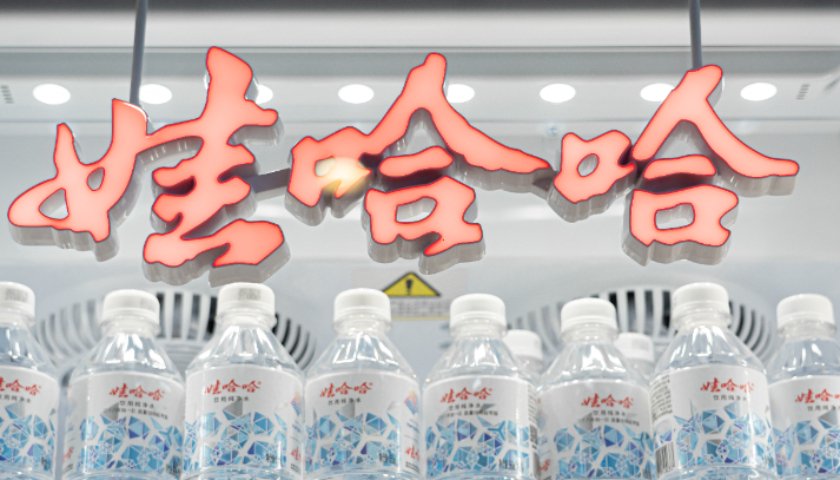
娃哈哈改名,宗馥莉太想进步了
Xin Lang Cai Jing· 2025-09-23 06:20
Core Insights - The company is facing significant challenges in sales growth, particularly in its key products like AD calcium milk and purified water, with a notable decline in market share in the East China region [2][4][5] - Despite a brief surge in revenue in 2024, the overall performance has been stagnant over the past eight years, with revenue fluctuating around 50 billion [4][9] - The competitive landscape in the beverage industry is evolving, with new entrants and changing consumer preferences impacting traditional market leaders like Wahaha [5][20] Group 1: Sales Performance - In the first half of 2024, sales growth slowed down, with AD calcium milk sales in East China dropping by 37% and purified water market share declining from 18% to 12% [2][4] - The beverage industry typically sees peak sales in the second quarter, making the current downturn a concerning indicator for the company's annual performance [2][27] - Wahaha's revenue reached 70 billion in 2024, but this was largely attributed to emotional spending following the founder's passing, rather than sustainable growth [4][9] Group 2: Market Position and Competition - The beverage market in China is increasingly competitive, with brands like Nongfu Spring and others gaining market share in bottled water and other beverage categories [5][6][20] - Wahaha's market share in bottled water has been declining, with competitors like Nongfu Spring and Master Kong overtaking its position [6][17] - The bottled water market is projected to grow significantly, with an expected market size of 310 billion by 2025, indicating a lucrative opportunity for agile competitors [13][14] Group 3: Strategic Initiatives - The new leadership under Zong Fuli is focusing on revitalizing the company's product offerings, particularly in bottled water and tea categories, to drive growth [9][10][21] - Wahaha is attempting to penetrate first-tier markets through partnerships with retail channels like Hema and FamilyMart, which could enhance its distribution [10][13] - The introduction of new products, such as sugar-free tea, is part of a broader strategy to diversify and capture emerging market segments, although initial results have been underwhelming [21][25][28]
2024年中国养生茶饮行业现状研究及消费者洞察报告
Sou Hu Cai Jing· 2025-09-23 02:48
Core Insights - The Chinese health tea beverage industry is experiencing explosive growth, with the market size reaching 41.16 billion yuan in 2023, a year-on-year increase of 27.3%, and is expected to exceed 100 billion yuan by 2028, reaching 118.95 billion yuan [1][8] - The growth is driven by the revival of traditional Chinese medicine culture, the upgrading of national health demands, and changes in consumer habits [1][2] Industry Development Drivers - Policy support has injected strong momentum into the health tea beverage sector, with the inclusion of nine substances into the "food and medicine homologous" directory by the National Health Commission and the State Administration for Market Regulation [1][21] - The increasing health consciousness among the public has laid a solid foundation for industry growth, with the health product market reaching 328.2 billion yuan in 2023 and expected to exceed 400 billion yuan by 2026 [2][24] Market Characteristics - The industry is characterized by product diversification and a younger consumer demographic, with nearly 50% of consumers preferring health tea beverages [2][10] - The main product categories include bagged tea, solid paste, bottled beverages, powdered drinks, and in-store freshly made tea, with bagged tea being the most favored, accounting for 45.9% of the market [2][19] Consumer Insights - The consumer base for health tea beverages is no longer limited to the elderly, with 37.6% of consumers aged 25-35, and 48.8% of this group indicating an increased willingness to consume in the future [3][14] - Female consumers represent 56.1% of the market, with middle-income earners (monthly income of 5,001-15,000 yuan) being the primary consumer group [3][14] Consumer Preferences - Taste and efficacy are the core concerns for consumers, with 65.2% prioritizing taste when purchasing, followed by consumer reviews (42.6%) and brand recognition (41.7%) [3][10] - The most sought-after health benefits include calming and sleep aid (53.5%) and spleen health (49.7%), with preferences varying by demographic [3][14] Sales Channels - Online platforms have become the primary sales and communication channels for health tea beverages, with 71.2% of consumers purchasing through e-commerce platforms like Taobao and Pinduoduo [3][10] - Short video platforms are significant for information acquisition, with 45.6% of consumers using them for insights [3][10] Future Trends - Product innovation and channel expansion will be key directions for the health tea beverage industry, with consumers showing high interest in increasing vitamin content and organic products [3][10] - Companies need to optimize product formulations through technological upgrades and develop niche products tailored to regional and demographic needs [3][10]
轻工行业投资发展观察周报(2025.9.15—2025.9.19)
Sou Hu Cai Jing· 2025-09-22 00:59
Group 1: Market Performance - The A-share market experienced high volatility last week, with the Shanghai Composite Index falling by 1.31% to 3820.09 points, while the Shenzhen Component Index rose by 1.14% to 17503.43 points [2] - The Hang Seng Index increased by 0.59%, and the ChiNext Index saw a rise of 2.34% [2] - The coal sector showed strong performance with a rise of 3.51%, while the banking sector led the declines with a drop of 4.21% [2] Group 2: Company Developments - Bright Dairy reported a total revenue of 12.472 billion yuan and a net profit of 231 million yuan for the first half of 2025, emphasizing a commitment to high-quality development amid industry challenges [3] - HLA Home announced plans for a Hong Kong IPO to enhance its global strategy, with overseas revenue reaching 206 million yuan, a year-on-year increase of 27.42% [4] - Genki Forest has entered the UK market by launching products in Tesco, marking a significant step in its international expansion [5][6] - Yipin Nutrition Technology submitted an IPO application to the Hong Kong Stock Exchange, focusing on infant formula and special medical foods, with revenues showing a decline in the first half of 2025 [7] - Anke Intelligent Supply Chain Technology has filed for an IPO in Hong Kong, with Midea Group as the controlling shareholder [8] - Proya Cosmetics initiated its Hong Kong IPO to boost international growth, reporting a revenue of 5.362 billion yuan for the first half of the year, a 7.21% increase [9] - Wahaha plans to transition to a new brand "Wah Xiaozong" starting from 2026, following the passing of its founder [10] Group 3: Industry Trends - The Ministry of Industry and Information Technology, along with other departments, issued a plan to stabilize growth in the light industry from 2025 to 2026, focusing on enhancing consumption and maintaining competitive advantages [13] - The plan aims to promote new growth points in intelligent home products, elderly and infant goods, and sports fashion items, with a target of launching 300 upgraded and innovative products [13] Group 4: Economic Indicators - The Federal Reserve lowered the federal funds rate target range by 25 basis points to between 4.00% and 4.25%, indicating potential further rate cuts in the future [14]
