
霸王茶姬

Search documents
道指、标普500创新高,英特尔涨超10%,美联储1月降息可能性几乎为零
2 1 Shi Ji Jing Ji Bao Dao· 2026-01-09 23:48
Group 1 - US stock markets experienced a broad rally, with all three major indices closing higher on January 9, 2025. The Dow Jones rose by 0.48% to 49,504.07 points, the S&P 500 increased by 0.65% to 6,966.28 points, and the Nasdaq gained 0.81% to 23,671.35 points. Both the Dow and S&P 500 reached all-time closing highs [1] - The non-farm payroll data released on January 9 indicated an increase of 50,000 jobs in December 2025, falling short of the market expectation of 73,000 jobs. The unemployment rate decreased to 4.4% from 4.6% in November 2025, suggesting a slowdown in the labor market [3][4] - Major technology stocks mostly rose, with the US Technology Seven Index increasing by 0.48%. Notable movements included Tesla rising over 2% and Facebook gaining more than 1%, while Nvidia saw a slight decline of 0.12% [1] Group 2 - The Philadelphia Semiconductor Index surged by 2.73%, with Intel experiencing a significant increase of over 10%, marking its largest single-day gain since September. Other notable performers included Lam Research up over 8% and Applied Materials up over 6% [1] - The energy sector showed mixed results, with ExxonMobil rising over 1% and Chevron nearly 2%, while ConocoPhillips fell over 1%. This reflects the volatility in the energy market [2] - In the commodities market, precious metals and base metals saw an overall increase, with COMEX gold futures rising by 1.29% to $4,518.4 per ounce and silver futures increasing by over 6% to $79.79 per ounce [2]
美股三大指数集体收涨 道指、标普500指数创历史收盘新高
Xin Lang Cai Jing· 2026-01-09 23:41
Core Viewpoint - The U.S. stock market saw all three major indices close higher, with the Dow Jones and S&P 500 reaching record closing highs [1] Group 1: Major Indices Performance - The Dow Jones increased by 0.48% [1] - The Nasdaq rose by 0.81% [1] - The S&P 500 gained 0.65% [1] Group 2: Large Technology Stocks - Most large tech stocks experienced gains, with Tesla rising over 2% [1] - Meta increased by more than 1% [1] - Apple, Microsoft, Google, and Amazon saw slight increases, while Netflix dropped over 1% [1] Group 3: Chinese Concept Stocks - The Nasdaq Golden Dragon China Index fell by 1.30% [1] - Stocks such as Atour dropped over 5%, while Alibaba, Xpeng Motors, and Vipshop fell by more than 2% [1] - Beike and Trip.com declined by over 1%, whereas stocks like Bawang Tea and Legend Biotech rose by over 2% [1] - Bilibili and Baidu increased by more than 1%, with Kingsoft Cloud and Miniso showing slight gains [1]
2025餐饮业复盘:新茶饮IPO年,资本盛宴后的供应链暗战
3 6 Ke· 2026-01-09 13:02
Group 1 - The core viewpoint of the article emphasizes that the new-style tea beverage industry is transforming from a "restaurant model" to a "retail model," focusing on large-scale, multi-channel sales to achieve greater market size and stable cash flow [1][2] - In 2025, the new-style tea beverage industry is characterized by a significant capital influx, with four major brands going public, marking it as the "IPO year" for the industry [3][6] - The industry is experiencing a dual trend of store closures and expansions, with 5,788 stores shutting down, indicating a shift towards high-quality development and a "survival of the fittest" market environment [6][19] Group 2 - The article outlines six key strategies for the new-style tea beverage industry, including product standardization, vertical supply chain integration, and online-offline integration to enhance customer retention [10][12][16] - The competitive landscape is diversifying, with leading brands adopting different operational models: efficiency-driven, quality-premium, and digital balance strategies [7][19] - The profitability logic of the industry is primarily driven by the franchise model, allowing rapid expansion with lower risks, while direct-operated models face higher operational costs and slower adjustments [26][30] Group 3 - The article highlights the importance of supply chain management as a core competitive advantage, suggesting that the future competition will focus on efficiency and innovation in supply chain operations rather than just front-end store battles [21][24] - The new-style tea beverage market is characterized by high gross margins and quick product turnover, allowing for potential price reductions while maintaining profitability [28][30] - The article concludes that the industry's future will depend on balancing efficiency and customer experience, with a focus on sustainable profitability for franchisees and consumer satisfaction [32][33]

新茶饮一年消失15.7万家,品类选错了?
3 6 Ke· 2026-01-09 12:39
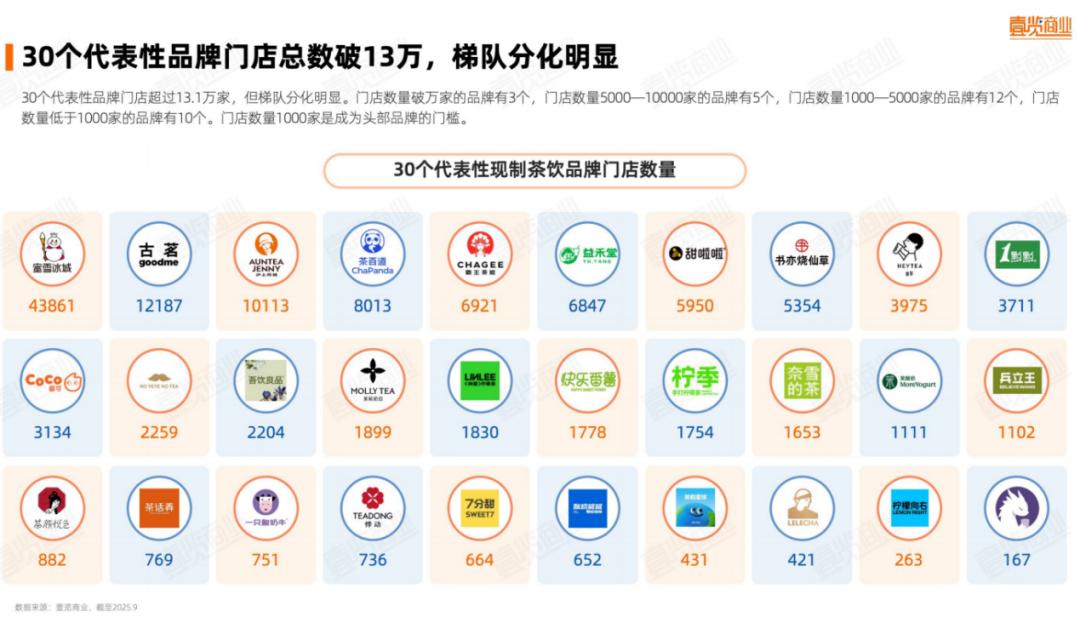
Core Insights - The new tea beverage sector in China has seen significant growth, with major brands like Mixue Ice City, Gu Ming, and others successfully going public, leading to the emergence of the "New Tea Beverage Six Dragons" [1][10] - The total number of tea beverage stores in China has surpassed 400,000, but the industry is experiencing a rapid "survival of the fittest" phase, with 157,000 stores closing in the past year [1][3] Industry Overview - The new tea beverage industry is characterized by a high chain rate of 50.54%, with a total of 410,245 stores and a net decrease of 29,349 stores in the past year [3] - The development of the tea beverage sector has evolved from low-cost, low-quality products in the 1980s to a focus on high-quality tea and innovative flavors in recent years [4][7] Brand Development - Major brands have adopted different strategies, with some focusing on single-hit products while others diversify their offerings [9][10] - The "single-hit" strategy has allowed brands like Shuyi Burned Fairy Grass to optimize their product development and operational efficiency, but it also poses risks if consumer preferences shift [11][13] Product Innovation - The introduction of unique products like cheese milk cap tea has revolutionized the market, leading to a focus on high-quality tea bases and innovative flavor combinations [5][7] - Brands are increasingly exploring the use of fresh fruits and unique ingredients to differentiate their products, although this also complicates supply chain management [8][17] Market Challenges - The rapid expansion of the new tea beverage market has led to intense competition and a high rate of store closures, indicating a need for brands to innovate continuously [1][13] - Supply chain complexities are increasing as brands strive to maintain quality and manage costs, with some companies investing in their own ingredient sourcing [17][18]
霸王茶姬还没做成“东方星巴克”,先得了星巴克的病
3 6 Ke· 2026-01-09 10:24
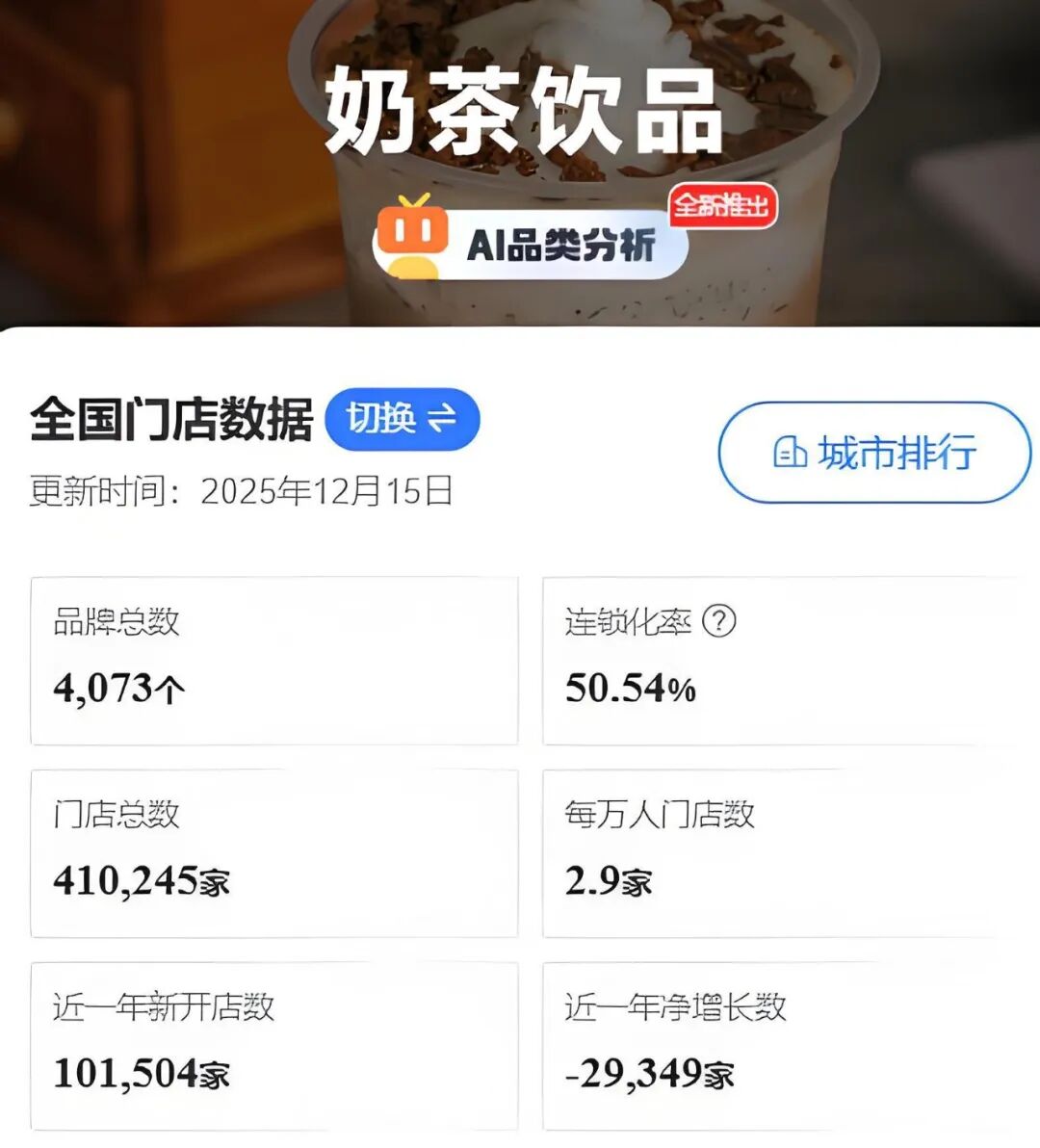
Core Viewpoint - The company BaWang Tea Ji, which went public on NASDAQ less than a year ago, is reportedly considering a secondary listing in Hong Kong, although it has denied these rumors. The company is experiencing a significant slowdown in revenue and profit growth, raising concerns about its market position and brand image [1][3][4]. Financial Performance - BaWang Tea Ji's revenue and profit growth have noticeably slowed over the past year, with growth rates declining for three consecutive quarters. In Q3 of the previous year, the company reported a revenue decline of 9.4% year-over-year and a nearly 40% drop in net profit, marking the first time its quarterly GMV turned negative [1][5]. - The average monthly GMV per teahouse in Greater China has been declining for seven consecutive quarters, with the same-store GMV growth rate falling into negative territory for four quarters, reaching a decline of nearly 28% in Q3 [1][2]. Market Position and Brand Image - BaWang Tea Ji has faced multiple public relations crises that have damaged its high-end brand image, including controversies over product ingredients and employee behavior. The company is known for its significant marketing expenditures, which have helped it establish a premium position in the market [3][4][11]. - The company has refrained from participating in the aggressive food delivery subsidy wars that have benefited competitors, which has contributed to its revenue decline. While other brands like MiXue Ice City and GuMing have seen substantial growth, BaWang Tea Ji's revenue growth has sharply decreased since Q2 of the previous year [5][6][7]. Expansion and Future Strategy - BaWang Tea Ji has expanded its store count significantly, from 1,087 in 2022 to 6,440 in 2024, but the pace of new store openings is expected to slow in 2025 [8][10]. - The company is exploring overseas markets, where it has seen better performance, with GMV in international markets exceeding 300 million RMB, reflecting a year-over-year growth of 75.3% [22]. Stock Performance - Since its peak market valuation of over $7 billion, BaWang Tea Ji's stock price has dropped by more than 60%, with a current market cap of approximately $2.366 billion [23].
霸王茶姬,不止困在“失眠”里
3 6 Ke· 2026-01-09 10:07
Core Viewpoint - The recent controversies surrounding Bawang Chaji, including concerns over high caffeine content in its products, have led to significant market reactions, including a drop of over 14% in its stock price, marking the largest single-day decline since its IPO. The company is facing declining performance metrics, raising questions about its competitive strength and the overall market for new tea beverages [1][8]. Group 1: Caffeine Controversy - The debate over Bawang Chaji's caffeine levels has been ongoing since the popularity of its product "Boya Juexian" in 2021, which was associated with sleep disturbances due to its high tea polyphenol content [2]. - A recent post by a blogger highlighted the caffeine content in Bawang Chaji's drinks, leading to widespread discussions on social media about the brand's "sleep assassin" reputation [2][3]. - Bawang Chaji claims that its caffeine content is lower than that of a cup of Americano, but the caffeine levels in its drinks, such as 117.2 mg in "Boya Juexian" and 210 mg in "Wanli Mulian," are significantly higher than common energy drinks [3][4]. Group 2: Market Performance - Since its peak market value of approximately $76.7 billion in April 2025, Bawang Chaji's stock has declined over 70%, with its third-quarter revenue dropping by 9.4% year-on-year to 32.08 billion yuan and net profit falling by 35.8% [8][9]. - The brand's rapid expansion has led to a decline in single-store performance, with average monthly GMV decreasing for five consecutive quarters [8]. - The company has struggled to introduce new blockbuster products following the success of "Boya Juexian," which previously accounted for 60%-70% of its total revenue [9][10]. Group 3: Consumer Awareness and Brand Strategy - Bawang Chaji has attempted to address caffeine concerns by launching "light caffeine" versions of its products, but the impact on sales has been limited compared to its regular offerings [6][7]. - Other brands, such as Heytea, have begun to disclose caffeine content more transparently, which has been well-received by consumers, highlighting a shift in consumer expectations for information on beverage ingredients [6][7]. - The current market trend indicates that consumers are increasingly concerned about health implications, leading to a demand for clearer labeling and information regarding caffeine content in beverages [7].
六大关键词回顾2025年一级市场:美元基金复苏、港股IPO火热 人工智能与半导体双线并进
Xin Lang Cai Jing· 2026-01-09 05:57
Group 1 - In 2025, the primary market is evolving amidst significant changes, driven by disruptive technologies led by artificial intelligence and reshaped capital flows due to geopolitical factors [1][50] - Global venture capital activity remained stable with 22,500 investment events and a total disclosed investment of approximately $348.1 billion, marking a 44.8% increase compared to 2024 [50] - The IPO and M&A markets rebounded strongly, with 1,372 companies successfully listing and raising approximately $170.6 billion, the best performance since 2022 [2][50] Group 2 - In China, the narrative differs, with government policies aimed at improving the efficiency of fiscal funds and supporting strategic sectors like AI and aerospace [51] - The establishment of a national venture capital fund with a registered scale exceeding 120 billion yuan aims to support seed and early-stage projects [51] - The banking sector's financial asset investment companies (AIC) have made significant progress, with 99 new funds established and a total scale of 198 billion yuan [3][51] Group 3 - The fundraising environment has shifted from quantity expansion to quality improvement, with a slight decrease in the number of private equity and venture capital managers [5][53] - The total scale of private equity funds reached 11.18 trillion yuan, showing a modest increase of 2.3% year-on-year [53] - Notably, the fundraising situation for dollar funds has improved, with several funds successfully closing significant amounts [7][55] Group 4 - Artificial intelligence remains the dominant investment theme in 2025, with 788 AI companies receiving 1,015 investments totaling 65.6 billion yuan, a significant increase from 2024 [18][60] - The robotics sector, particularly embodied intelligence, saw substantial growth, with 530 investments totaling 34.5 billion yuan, reflecting a 116.3% increase in investment events [19][60] - The competition in the foundational model space has stabilized, with a noticeable decline in investment activity as resources concentrate among leading firms [20][60] Group 5 - The trend of early-stage investments continues, with A-round investments being the most frequent, comprising 34.5% of total investment events [25][26] - Seed and angel round investments have seen significant increases, with seed round investments growing by 59.5% in number and 179.4% in amount compared to 2024 [27][25] - Noteworthy large investment events include significant funding rounds for various companies across sectors, indicating a robust interest in early-stage ventures [26][27] Group 6 - The Yangtze River Delta region remains the most active investment area, accounting for nearly 50% of total investment events in China [31][30] - Jiangsu province alone had 1,256 investment events, representing 19.8% of the national total, with significant investments in advanced manufacturing and AI [33][30] - Beijing reported the highest disclosed investment amount at 95.9 billion yuan, highlighting its prominence in the investment landscape [36][30] Group 7 - The M&A market in China is characterized by a trend of private equity firms acquiring foreign brands, with notable transactions involving major global companies [38][39] - Investment institutions are increasingly engaging in mergers and acquisitions of listed companies, marking a shift towards deeper involvement in operational aspects [39][40] - The trend indicates a growing preference for controlling stakes in companies to enhance operational synergies and market positioning [40][39] Group 8 - The Hong Kong stock market has regained its position as a leading venue for IPOs, with 247 Chinese companies listed in 2025, a 26.7% increase year-on-year [44][43] - The total fundraising amount for Chinese companies in Hong Kong reached approximately 326.6 billion yuan, reflecting a significant recovery in the IPO market [44][43] - The A-share market also saw a notable increase in listings and fundraising, with 116 companies raising around 128.7 billion yuan [45][43]
四川明确脑机接口医疗服务价格,置入费最高6583元/次|首席资讯日报
首席商业评论· 2026-01-09 04:51
Group 1 - Sichuan has set a maximum price of 6,583 yuan per session for brain-computer interface medical services, effective from April 30 this year, which is expected to promote industry standardization and prevent speculation [2] - WeChat has clarified that normal social behaviors will not be restricted under the new rules, ensuring users' accounts will not be penalized for typical usage patterns [3] - Aima Technology has denied rumors of a workforce reduction exceeding 50%, stating that personnel optimization is a normal adjustment for business development [4] Group 2 - Ant Group and Meituan Longzhu have invested in Shenzhen Guangzhi Shikong Technology Co., a developer of AI interactive devices, increasing its registered capital from approximately 1.6435 million yuan to about 2.1062 million yuan [5] - The film "The Legend of the Condor Heroes" has surpassed 200 million yuan in box office revenue within 9 days of its release [6][7] - IKEA announced the closure of 7 stores, including one in Shanghai, as part of its strategy to optimize business operations and focus on consumer-centric channels [8][13] Group 3 - Bawang Tea has responded to rumors of a potential IPO in Hong Kong, stating that there are currently no plans for such an initiative [9] - Lin Yunfeng, head of NetEase's DreamWorks division, has left the company, with the DreamWorks mobile game team being integrated into the Sea God division [10] - Chinese automotive brands are performing well in Ecuador, with BYD's sales expected to grow by 243.1% in 2025, and overall new car sales projected to increase by 15% [11] Group 4 - JD.com has established a "Chameleon Business Unit" to focus on the development and commercialization of core AI products [12] - JD.com is reportedly considering the issuance of dim sum bonds to raise approximately 10 billion yuan, although the company has stated there are no current plans for such an issuance [14]




霸王茶姬回应赴港IPO传闻,美股上市不到一年
Sou Hu Cai Jing· 2026-01-09 03:35
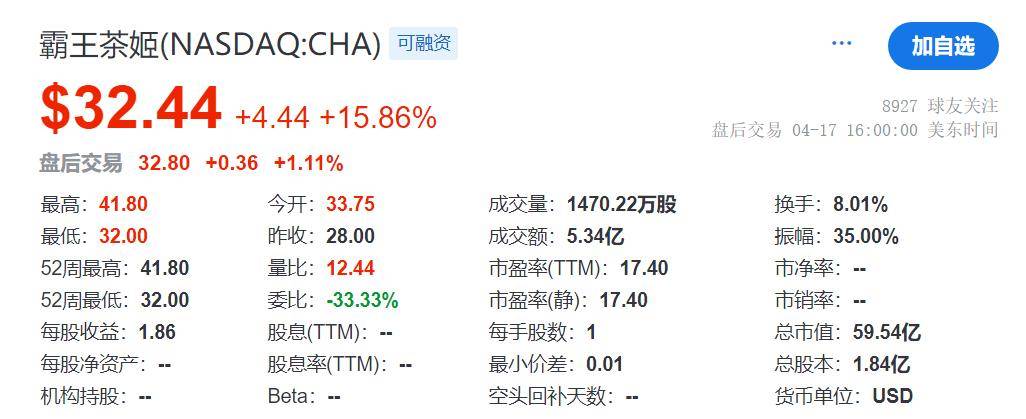
瑞财经 吴文婷1月8日,有消息称,中国茶饮连锁品牌霸王茶姬正考虑在香港上市,相关知情人士表示,霸王茶姬已就上市计划与投资银行展开初步沟通, 融资金额或达数亿美元,可能今年进行。相关磋商仍在进行中,也可能决定不推进香港上市计划。此外,该计划仍需获得监管批准。 对此,霸王茶姬方面回应称,暂无计划。 公开资料显示,霸王茶姬创立于2017年,灵感来源自1970年代以来国际咖啡连锁店如何将喝咖啡变成一种全球生活方式和社会观念。 2025年4月17日,霸王茶姬在纳斯达克上市,成为中国茶饮赴美第一股。截至首日收盘,其报32.44美元,涨15.86%,总市值约59.54亿美元。 如今,截至1月8日发稿时,霸王茶姬报13.37美元,涨2.45%,总市值约24.54亿美元。 | 最高: 41.80 | 今开: 33.75 | 成交量: 1470.22万股 | 换手:8.01% | | --- | --- | --- | --- | | 最低: 32.00 | 昨收:28.00 | 成交额:5.34亿 | 振幅: 35.00% | | 52周最高: 41.80 | 量比: 12.44 | 市盈率(TTM): 17.40 | 市净率 ...
外围走弱,恒指2万6整固
Guodu Securities Hongkong· 2026-01-09 02:21
Market Overview - The Hang Seng Index experienced a decline, closing at 26,149 points, down 309 points or 1.17%, with a total trading volume of 268.275 billion HKD [3] - The index fell below key moving averages, including the 10-day, 50-day, and 100-day moving averages, indicating bearish market sentiment [3] Sector Performance - Among 89 blue-chip stocks, 59 saw declines, with notable drops in technology stocks such as Tencent (-1.4% to 616 HKD), Alibaba (-2.3% to 142.6 HKD), and Meituan (-3.3% to 101 HKD) [4] Consumer Confidence - The Hong Kong Consumer Confidence Index for Q4 2025 recorded a score of 89.1, reflecting a quarterly increase of 1.7% and an annual increase of 5.8% [7] - Confidence in economic development rose significantly, with a sub-index score of 90.2, up 13.9% year-on-year [7] - However, confidence in purchasing property remains the lowest among six categories, with a decline of 1.9% [7] Employment Outlook - The confidence index for employment recorded a score of 85.7, showing a slight quarterly increase of 5.4% [8] - The index for current employment conditions rose significantly by 11.4% quarter-on-quarter [8] Company News - JD.com is considering the issuance of a dim sum bond with a potential scale of approximately 10 billion RMB, aimed at securing low-cost funding [12] - Bawang Tea is reportedly considering a Hong Kong listing, with potential financing of several hundred million USD, although the plan is still in preliminary discussions [13] - Crystal Tech plans to issue zero-coupon convertible bonds worth 2.866 billion HKD, with proceeds aimed at enhancing R&D capabilities and expanding business operations [14]