
百威亚太

Search documents
老铺黄金年内第三次调价正式兑现,港股消费ETF(513230)现涨近1.5%
Mei Ri Jing Ji Xin Wen· 2025-10-27 06:08
Group 1 - Hong Kong stock indices showed volatility with the Hang Seng Index rising by 1.02%, the Hang Seng China Enterprises Index increasing by 0.95%, and the Hang Seng Tech Index up by 1.48% as of the midday close on October 27 [1] - Popular ETFs in Hong Kong, particularly the Hong Kong Consumer ETF (513230), saw an increase of nearly 1.5%, with top holdings like Alibaba, Shenzhou International, Budweiser APAC, Tencent Holdings, Li Auto, Gu Ming, and China Feihe showing significant gains [1] - Lao Pu Gold announced its third price adjustment of the year, with multiple products seeing price increases exceeding 20%, following earlier increases of 5% to 13% in August [1] Group 2 - The U.S. CPI for September rose by 3% year-on-year, the highest since January, but below market expectations of 3.1%. Core CPI showed a month-on-month increase of 0.2%, also lower than anticipated, leading to increased expectations for interest rate cuts by the Federal Reserve [1] - China's GDP growth for the first three quarters was reported at 5.2%, with quarterly growth rates of 5.4%, 5.2%, and 4.8% respectively [1] - The overall valuation of the Hong Kong stock market is currently at a historically high level, with expectations of wide fluctuations in the market moving forward [1] Group 3 - Investment recommendations suggest focusing on sectors benefiting from increased market risk aversion, such as precious metals [2] - There is a rising interest in dividend assets as market styles shift, particularly those that have previously shown lower gains [2] - The technology and consumer sectors are expected to attract funding attention based on the policy priorities outlined in the 14th Five-Year Plan [2]
行业调整接近尾声 机构看好酒类行业底部配置机会(附概念股)
Zhi Tong Cai Jing· 2025-10-24 00:39
Group 1: Industry Overview - The overall sales in the industry are expected to decline by over 20%, with a gradual improvement month-on-month and a narrowing decline in the festive season of Mid-Autumn and National Day, estimated at around 20% [1] - Business banquets are performing weakly, while mass consumption and wedding banquets are relatively resilient, with a smaller decline in Q3; high-end gifting shows improvement before the holidays [1] - Major liquor companies are adopting a more pragmatic approach, accelerating adjustments to reduce channel pressure, cutting investment, and enhancing operational efficiency [1] Group 2: Company Performance - Leading liquor companies like Moutai and Wuliangye have achieved over 80% collection progress, while regional companies are generally around 70%, with pressure on mid-tier liquor companies [1] - Wuliangye has held dealer meetings in multiple locations, emphasizing strict checks on market price disruptions and announcing increased subsidy policies for different-sized dealers [1] - The report from Citic Securities indicates that the bottom of the industry fundamentals is expected to appear in Q3 2025, with Q3 of this year being the most challenging period for sales, prices, and market confidence [2] Group 3: Market Trends - Huachuang Securities highlights the importance of bottom catalysts in the liquor sector, with traditional consumption entering a bottom accumulation phase, and seasonal catalysts expected to drive valuation recovery [3] - The launch of the new flagship product "Dazhen" by Zhenjiu Lidu has achieved a collection of 370 million yuan, with over 2,800 alliance merchants signed [4] - In the beer sector, the acquisition of 53% of Xianpi Fulu's shares by Mixue Ice City marks its expansion into the alcoholic beverage market, with the financial performance to be consolidated into the group’s reports [5]


港股概念追踪|行业调整接近尾声 机构看好酒类行业底部配置机会(附概念股)
智通财经网· 2025-10-24 00:36
Group 1: Industry Overview - The overall sales in the industry are expected to decline by over 20% due to external demand shocks, with a gradual improvement month-on-month and a narrowing decline in the festive periods of Mid-Autumn and National Day, estimated at around 20% [1] - Business banquets are performing weakly, while mass consumption and wedding banquets are relatively resilient, with a smaller decline in Q3; high-end gifting shows improvement before the holidays [1] - Major liquor companies are adopting a more pragmatic approach, accelerating adjustments to reduce channel pressure, cutting investment, and enhancing operational efficiency [1] Group 2: Company Performance - Leading liquor companies such as Moutai, Wuliangye, and Fenjiu have achieved over 80% collection progress, while regional companies are generally around 70%, with pressure on mid-range liquor companies [1] - Wuliangye has held dealer meetings in multiple locations, emphasizing strict checks on market price disruptions and announcing increased subsidy policies for different-sized dealers [1] - The report from Citic Securities indicates that the third quarter of this year is expected to be the most challenging period for the industry's sales, prices, and market confidence, with a recovery trend anticipated in the latter half of the year [2] Group 3: Market Trends - Huachuang Securities highlights the importance of bottom catalysts in the liquor sector, with traditional consumption entering a bottom accumulation phase, and upcoming peak seasons likely to drive valuation recovery [3] - The launch of the new flagship product "Dazhen" by Zhenjiu Lidu has achieved a collection of 370 million yuan, with over 2,800 national alliance merchants signed [4] - The beer sector is facing increased competition and pressure from alcohol restrictions, with companies like China Resources Beer and Qingdao Beer maintaining stable pre-holiday stocking rhythms [5]
珠江啤酒前三季度净利增长17%,单季营收两年来首次下滑
Xin Lang Cai Jing· 2025-10-23 12:03
Core Viewpoint - Zhujiang Beer reported a net profit growth of 17.05% year-on-year for the first three quarters of 2025, despite a decline in revenue for the third quarter, marking the first revenue drop since 2018 [2][4]. Financial Performance - For the first three quarters, Zhujiang Beer achieved beer sales of 1.2035 million tons, a year-on-year increase of 1.83% [2][3]. - The company's operating revenue reached 5.073 billion yuan, up 3.81% year-on-year, while the net profit attributable to shareholders was 944 million yuan, reflecting a growth of 17.05% [2][3]. - In the third quarter, operating revenue was 1.875 billion yuan, down 1.34% year-on-year, with a net profit of 332 million yuan, an increase of 8.16% [2][3]. Cost and Expenses - Sales expenses for the first three quarters amounted to 747 million yuan, a year-on-year increase of 3.76%, while management expenses rose to 335 million yuan, up 6.69% [6]. Asset and Equity Changes - As of the end of the reporting period, Zhujiang Beer’s total assets were approximately 16.495 billion yuan, a 3.69% increase from the end of the previous year [3][6]. - The equity attributable to shareholders was about 11.078 billion yuan, reflecting a growth of 5.40% [3]. Management Changes - In June 2023, the company appointed Huang Wensheng as the new chairman and Zhang Yong as the new general manager following the retirement of the previous general manager [6]. Industry Context - The Chinese beer industry is experiencing a stable development phase with increasing competition and a noticeable trend towards premiumization [8]. - For the first eight months of 2025, the cumulative beer production in China was 26.833 million kiloliters, showing a slight decline of 0.2% year-on-year [8].


燕京啤酒三季度打赢价值战,“百万级县城”战略筑牢基本盘
Sou Hu Cai Jing· 2025-10-23 02:55
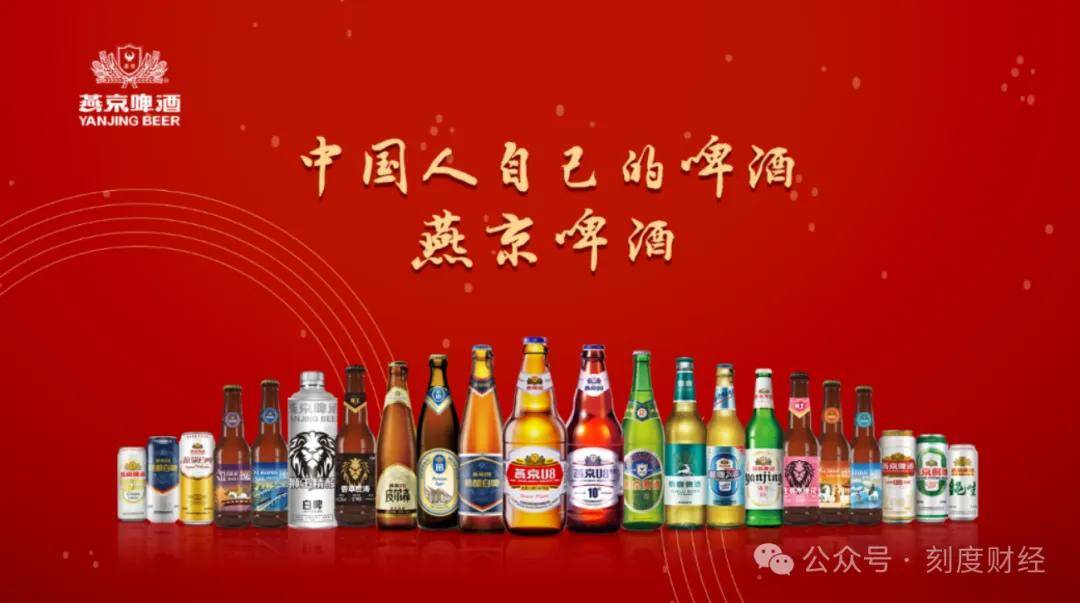
Core Viewpoint - The beer industry in 2025 is experiencing a "stock game" competition, with major companies shifting from "incremental competition" to "stock slaughter" as beer production from large enterprises decreased by 0.2% year-on-year from January to August [2] Financial Performance - In Q3 2025, Beijing Yanjing Beer Co., Ltd. reported revenue of 4.875 billion yuan, a year-on-year increase of 1.55%, and a net profit attributable to shareholders of 668 million yuan, up 26% [3] - For the first three quarters of 2025, the company achieved revenue of 13.433 billion yuan, a 4.57% increase year-on-year, and a net profit of 1.770 billion yuan, up 37.45% [3] - The beer sales volume for January to September 2025 was 3.495 million kiloliters, a year-on-year increase of 1.39% [2] Operational Efficiency - The net cash flow from operating activities for the first three quarters was 4.065 billion yuan, a 23.51% increase year-on-year, indicating improved cash collection capabilities [4] - The company reduced short-term borrowings from 682 million yuan to 138 million yuan, easing debt repayment pressure [4] - Total assets increased from 231.47 billion yuan to 253.23 billion yuan, reflecting continuous asset expansion [4] Product Strategy - The U8 product line has become a benchmark in the beer industry's "mass upgrade" trend, contributing significantly to revenue, with mid-to-high-end products generating 5.536 billion yuan in revenue, accounting for 70.11% of main business [5][6] - The U8 product line's market share in the 8 yuan price range increased from 18% in 2023 to 27% in Q3 2025, capitalizing on the demand from young consumers in first and second-tier cities [6] Market Penetration - The "Hundred Counties Project" strategy has cultivated 127 "million-level sales counties" in key regions, contributing 42% of total revenue with a growth rate of 7.8% [9][10] - In Hebei province, the company's market share reached 68%, significantly outperforming competitors [10] Challenges and Risks - A significant portion of the net profit growth (87.05%) was attributed to non-recurring gains from land storage payments, raising concerns about the sustainability of profit growth [12] - The company faces challenges in managing supplier relationships and must reduce accounts payable to alleviate supply chain pressure [19] - The increase in construction in progress from 348 million yuan to 771 million yuan raises concerns about strategic planning and potential idle capacity [18]

食品饮料行业2025年三季报前瞻:白酒加速出清,大众逐渐改善
Huachuang Securities· 2025-10-22 00:46
Investment Rating - The report maintains a recommendation for the liquor sector, indicating a bottoming out phase with potential for recovery in the future [2]. Core Insights - The liquor industry is experiencing a significant decline in sales, with an expected drop of over 20% in overall sales volume. However, there are signs of month-on-month improvement, and the decline is narrowing [5][9]. - Major liquor companies like Moutai and Wuliangye are showing strong recovery in payment collection, with over 80% collection rates, while regional brands are performing adequately [5][9]. - The report emphasizes the importance of focusing on high-quality liquor brands that are likely to recover faster, such as Moutai and Fenjiu, while also highlighting the need to monitor companies undergoing significant changes [6][9]. Summary by Sections 1. Liquor Sector: Q3 Accelerated Decline and Bottoming Out - The liquor sector is facing a 20%+ decline in sales due to external demand shocks, with a gradual improvement expected in the coming months [5][9]. - High-end liquor brands are expected to show resilience, with Moutai projected to achieve a 3% revenue growth in Q3, while Wuliangye is expected to see a 20% revenue decline [10][11]. - The report indicates that companies are adjusting their strategies to reduce channel pressure and improve operational efficiency [9][10]. 2. Consumer Goods Sector: Overall Demand Weakness, Structural Resilience - The consumer goods sector is experiencing overall weak demand, but segments like snacks and beverages are showing higher resilience [17][24]. - The report notes that while the demand for dairy and beer remains stable, the restaurant supply chain is still under pressure [17][24]. - Raw material prices are generally declining, which may provide some cost relief to companies in the sector [24][25]. 3. Investment Recommendations: Focus on Liquor Bottoming Catalysts and Selective Consumer Goods Trends - The report suggests focusing on liquor companies that are at the bottom of their cycles, with Moutai and Fenjiu being primary recommendations [6][9]. - For consumer goods, the report highlights the potential of snack and beverage companies, recommending brands that are well-positioned to benefit from current trends [6][17].





燕京啤酒前三季度净利增近四成:啤酒销量增1.39%,拟分红2.82亿元
Xin Lang Cai Jing· 2025-10-21 00:04
Core Viewpoint - Yanjing Beer reported a significant increase in net profit for the first three quarters of 2025, with a nearly 40% year-on-year growth, indicating strong financial performance despite a competitive market environment [2][4]. Financial Performance - In Q3 2025, Yanjing Beer achieved revenue of 4.875 billion yuan, a year-on-year increase of 1.55%, and a net profit of 668 million yuan, up 26% [3]. - For the first three quarters of 2025, the company reported total revenue of 13.433 billion yuan, reflecting a 4.57% increase, and a net profit of 1.770 billion yuan, which is a 37.45% increase [3]. - The beer sales volume for the first nine months was 3.495 million kiloliters, showing a growth of 1.39% year-on-year [2]. Profit Distribution - Yanjing Beer announced a cash dividend distribution plan for the first three quarters of 2025, proposing a payout of 1.00 yuan per 10 shares, totaling 282 million yuan [6]. Strategic Initiatives - The company emphasized its commitment to a major product strategy, with the Yanjing U8 brand continuing to perform well, contributing to product structure upgrades and market rejuvenation [6]. - Yanjing Beer is focusing on enhancing its management systems and accelerating digital transformation to improve operational efficiency [6]. Shareholder Changes - Among the top ten circulating shareholders, one increased their holdings, three new shareholders entered, and two reduced their stakes, indicating active market participation [6][7]. Industry Context - The overall beer industry in China is experiencing a period of structural adjustment and transformation, with a slight decline in production reported [8]. - Yanjing Beer is also diversifying its product offerings by introducing beverages like Baisite soda, aiming to create a dual growth model of "beer + beverages" [9].
多地零碳园区建设提速,中小企业探索破解高成本难题
Zhong Guo Zheng Quan Bao· 2025-10-20 00:18
Core Viewpoint - The construction of zero-carbon parks is gaining momentum across various regions, driven by policy support and market demand, and is seen as a crucial strategy for industrial green transformation [2][3]. Policy and Market Drivers - The National Development and Reform Commission, Ministry of Industry and Information Technology, and National Energy Administration issued a notice in July to accelerate the energy structure transformation of parks and promote energy conservation and carbon reduction [3]. - Zero-carbon parks can receive funding support of 20% of the approved total investment amount as part of the "low-carbon, zero-carbon, negative-carbon demonstration projects" [3]. - Local governments have set ambitious targets for zero-carbon park construction, such as Sichuan aiming to establish 20 near-zero carbon parks by 2025 and Shandong targeting 15 provincial-level zero-carbon parks by 2027 [3]. Energy Structure Transformation - Energy structure transformation is key to carbon reduction in parks, with local resource endowments influencing energy supply methods [7][8]. - The establishment of a green electricity supply system in parks can significantly reduce product carbon footprints and help small and medium-sized enterprises (SMEs) cope with international green trade barriers [4]. Technological Innovations - AI and digital technologies are becoming critical supports for zero-carbon parks, enabling complex energy dispatch and management [10]. - Digital management platforms are emerging as essential tools for precise management of energy consumption and carbon emissions in parks [11]. Challenges and Solutions - SMEs face high costs for zero-carbon transformation, which poses a significant challenge for park construction [9]. - To lower transformation costs for SMEs, park management can provide centralized energy operation platforms and financial institutions can offer low-interest green loans based on overall park credit [9]. Examples of Successful Implementation - Companies like Kangfen Biotech are implementing zero-carbon standards in their facilities, utilizing solar energy and waste recycling to reduce carbon footprints [2]. - The Ordos zero-carbon industrial park serves as a model for transforming coal-dependent areas into industrial decarbonization examples, leveraging local wind and solar resources [4].

多地零碳园区建设提速 中小企业探索破解高成本难题
Zhong Guo Zheng Quan Bao· 2025-10-19 20:13
Core Insights - The construction of zero-carbon parks is gaining momentum across various regions, driven by policy support and market demand, becoming a crucial tool for industrial green transformation [2][3] - The transition of energy structure in zero-carbon parks faces multiple challenges, including resource endowment differences and varying energy management levels among enterprises [1][4] - "Smart" solutions are identified as a key pathway to overcome the challenges in energy structure transformation within zero-carbon parks [1][5] Policy and Market Drivers - The National Development and Reform Commission, Ministry of Industry and Information Technology, and National Energy Administration issued a notice in July to accelerate the transition of energy structures in parks, outlining eight key tasks [3] - Zero-carbon parks can receive funding support of 20% of the approved total investment under the central budget management measures for energy conservation and carbon reduction [3] - Local governments are setting ambitious targets for zero-carbon park construction, such as Sichuan aiming for 20 near-zero carbon parks by 2025 and Shandong targeting around 15 provincial-level zero-carbon parks by 2027 [3] Economic Benefits - The construction of zero-carbon parks is expected to reduce operational costs for enterprises, with solar power prices in certain parks being significantly lower than industrial electricity prices [3][4] - The integration of a traceable green power system in zero-carbon parks helps reduce product carbon footprints, aiding small and medium-sized enterprises in meeting international green trade barriers [3][4] Energy Structure Transformation - The core evaluation metric for zero-carbon parks is "unit energy consumption carbon emissions," with specific targets set for different energy consumption levels [4] - Current national average carbon emissions per unit energy consumption in parks are around 2.1 tons per ton of standard coal, indicating a need for a 90% reduction to achieve zero-carbon status [4] Pathways for Emission Reduction - Three main pathways for reducing carbon emissions in parks include increasing renewable energy supply, enhancing energy efficiency on the consumption side, and establishing resource recycling systems [5][6] - The establishment of zero-carbon parks is seen as a critical step in transitioning coal-dependent regions to industrial decarbonization models [3][6] Smart Management and Digitalization - The management capabilities of energy systems are becoming increasingly important for the construction of zero-carbon parks, with a focus on enhancing energy management levels [7] - The application of AI and digital technologies is emerging as a key support for zero-carbon parks, enabling efficient energy dispatch and management [8] - Digital management platforms are being developed to facilitate precise management of energy consumption and carbon emissions within parks [8]

餐饮、潮玩及家电行业周报-20251019
Haitong Securities International· 2025-10-19 14:35
Investment Ratings - The report assigns an "Outperform" rating to multiple companies including Pop Mart, Anta Sports, Huazhu Group, and Haidilao, while Budweiser APAC is rated "Neutral" [1]. Core Insights - The report highlights the strong performance of the F&B sector, particularly noting the 10.7% increase in the stock price of Guoquan [4][7]. - It also mentions the strategic partnership between Haier Group and Alibaba, focusing on AI and digital innovation [3][6]. - Jiumaojiu's operational data for Q3 shows a decrease in same-store sales, but improvements in operational metrics are noted [3][6]. Weekly Performance Summary - Key performers in the F&B sector include Guoquan (+10.7%) and Xiaocaiyuan (+3.0%), while underperformers include ECOVACS (-11.8%) and ROBOROCK (-12.5%) in the home appliances sector [4][7]. - The report provides detailed stock price changes and PE ratios for various companies, indicating market trends and investor sentiment [5].
