
阿里

Search documents
为了三套新工服,外卖平台烧光1000亿
3 6 Ke· 2025-12-04 23:48
Core Insights - The intense competition among Meituan, JD.com, and Alibaba in the food delivery sector has led to a combined loss of nearly 100 billion yuan in profits over the past six months, marking one of the most costly battles in Chinese internet history [1][4][7] - The third quarter saw unprecedented levels of platform subsidies, resulting in significant financial losses for all three companies, with Meituan reporting its largest quarterly loss since its IPO [1][4][12] Financial Performance - Meituan experienced a quarterly loss of approximately 448 million yuan, while Alibaba's e-commerce business saw a staggering 85% year-on-year decline in operating profit [1][4] - JD.com reported a 108% year-on-year drop in overall operating profit, indicating severe financial strain across the board [1][4] - Marketing expenditures surged dramatically, with Alibaba and JD.com increasing their spending by 106% and 110% respectively, while Meituan's marketing costs rose by 91% [4][12] Market Dynamics - The oligopolistic structure of the food delivery market is beginning to shift, with Meituan's market share expected to drop to around 65% in 2024, a decline of nearly 20% from previous levels [4][7] - The competition is not just about food delivery; it serves as a strategic entry point for e-commerce growth, with JD.com and Alibaba leveraging food delivery to drive traffic to their core retail businesses [7][12] User Engagement and Growth - Despite the financial losses, user engagement metrics have shown positive trends, with JD.com's food delivery GMV experiencing triple-digit growth and a nearly 50% conversion rate for new users [7][12] - Meituan's daily active users increased by over 20% year-on-year, indicating a strong user base despite the competitive pressures [7][12] Strategic Shifts - The companies are recognizing the unsustainable nature of the price war, with a collective call to resist "disorderly competition" in the food delivery sector [22][24] - JD.com is reportedly adjusting its strategy by launching an independent app for food delivery and focusing on improving unit economic costs [22][24] - Alibaba plans to significantly reduce its investment in flash sales in the upcoming quarter, indicating a shift towards more sustainable practices [22][24]


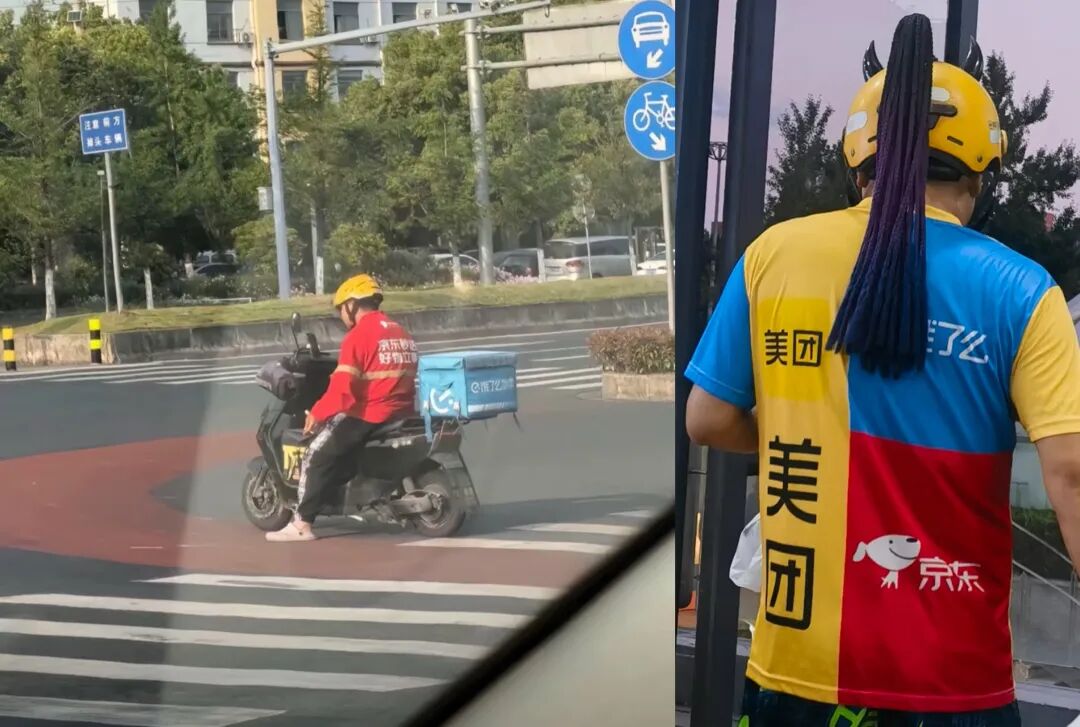
美团-W(03690.HK)3Q25点评:补贴进入深水区 中高单价订单成竞争焦点
Ge Long Hui· 2025-12-04 21:50
Core Viewpoints - Q3 losses have materialized, and post-Double 11, industry subsidies have somewhat receded, indicating that the worst period for the company may have passed, although the focus on core users and high average order value (AOV) may prolong the duration of losses, necessitating ongoing attention to competitive dynamics [1] - The Q3 instant delivery business losses were largely in line with expectations, with future subsidies shifting towards higher AOV orders, potentially leading to sustained losses. The topline saw a significant increase in order volume driven by subsidies, with Q3 takeaway and flash purchase daily order volume growing by 21% year-on-year to approximately 93 million orders. However, competition negatively impacted AOV, resulting in a year-on-year decline in takeaway revenue of about 12% [1] - Q3 losses for takeaway and flash purchase combined were approximately 19 billion (with a loss of 2.5 yuan per takeaway order and 0.8 yuan per flash purchase order), compared to Alibaba's losses of approximately 360-380 billion during the same period, indicating a loss ratio of about 1:2 [1] Business Segment Performance - The in-store and travel segment's topline growth has slowed, with losses better than market pessimism. Q3 GMV for in-store travel grew by 18% and revenue by 11%, primarily affected by macroeconomic consumption weakness and the impact of the takeaway battle on advertising budgets for certain beverage categories. Operating profit margin (OPM) was approximately 28%, with operating profit down 11% year-on-year to 4.9 billion, which was better than the anticipated decline of 30%-40% [2] - For Q4, topline growth is expected to remain relatively weak, with ongoing factors from Q3 continuing to affect performance, alongside the need to dynamically monitor competition from Douyin and Alibaba. Q4 GMV is projected to grow by 14% and revenue by 11%, with OPM expected to be in the range of 25%-30% [2] New Business Developments - The new business segment saw a significant reduction in losses in Q3, performing better than expected, maintaining an annual loss forecast of 10 billion, with expectations for reduced losses in 2026. Q3 losses were 1.3 billion (compared to Bloomberg's consensus estimate of 2.3 billion), with Q4 losses expected to be 4 billion, primarily due to new openings in three Gulf countries and a pilot in Brazil [2] Earnings Forecast and Investment Recommendations - Considering short-term competitive impacts, the company has revised down its earnings per share forecasts for 2025-2027 to -3.21/-4.20/-0.11 yuan (previously -1.56/2.62/6.44 yuan). Using a segmented valuation approach, the company's reasonable valuation is calculated at 8.291 billion HKD, with a target price of 135.66 HKD, maintaining a "buy" rating [2]
为了三套新工服,外卖平台烧光1000亿
远川研究所· 2025-12-04 13:04
Core Viewpoint - The intense competition among Meituan, JD, and Alibaba in the food delivery sector has led to significant financial losses, with nearly 100 billion yuan in profits wiped out over the past six months, marking one of the most costly battles in Chinese internet history [2][6]. Group 1: Financial Performance - Meituan reported its largest quarterly loss since its IPO, while Alibaba's e-commerce business saw operating profits decline by 85% year-on-year, and JD's overall operating profit dropped by 108% [2][6]. - In Q3, Alibaba's EBITDA decreased by approximately 24 billion yuan, while JD and Meituan's EBITDA fell by 17.5 billion yuan and 44.8 billion yuan, respectively [6]. - Marketing expenses surged dramatically, with Alibaba and JD increasing their spending by 106% and 110% year-on-year, while Meituan's marketing costs rose by 91% [6]. Group 2: Market Dynamics - The oligopolistic structure of the food delivery market is beginning to shift, with Meituan's market share expected to drop to around 65% in 2024, a decline of nearly 20% this year [6][8]. - The competition is not just about food delivery; it serves as a strategic entry point for e-commerce growth, with JD and Alibaba leveraging food delivery to drive traffic to their core retail businesses [8][9]. Group 3: User Engagement and Growth - JD's food delivery GMV experienced triple-digit growth, with new user conversion rates nearing 50%, leading to a 40% increase in active users and shopping frequency [9]. - Taobao's flash sales in August contributed to a 25% year-on-year increase in monthly active users, while Meituan also saw a more than 20% increase in daily active users [9]. Group 4: Strategic Adjustments - The three major platforms have begun to recognize the unsustainable nature of the price war, with joint statements issued to resist "disorderly competition" in July [22]. - JD has quietly adjusted its strategy, including plans to launch an independent app and improve unit economic costs, while Alibaba aims to significantly reduce its flash sales investments in the upcoming quarter [22]. Group 5: Long-term Outlook - Despite the fierce competition, the platforms are now more focused on survival rather than solely defeating competitors, indicating a potential shift towards more sustainable practices in the industry [22][23]. - The ongoing battle in the food delivery sector is expected to continue, with companies acknowledging that the price war has not created value for the industry and is not sustainable [20][26].

互联网行业 2025 年 12 月投资策略:AI 驱动巨头业绩释放,四季度预计外卖大战投入力度边际缓和,迎来布局良机
Guoxin Securities· 2025-12-04 12:46
Market Overview - The Hang Seng Tech Index fell by 5.2% in November, while the Nasdaq Internet Index decreased by 3.5% during the same period [11][13] - Individual stock performances varied, with JD Health, Meituan, and NetEase being the top performers in Hong Kong stocks, while Google, Vipshop, and Beike led in the US market [13][14] - The PE-TTM of the Hang Seng Tech Index slightly rebounded to 23.64x as of December 3, 2025, positioning it at the 34.41% percentile since its inception [16] AI Developments - Google launched Gemini 3 Pro and the new image generation and editing model NANO BANANA PRO [2][18] - OpenAI introduced the GPT-5.1 series model and ChatGPT group chat feature [22][23] - Meta's HSTN AI glasses are set to launch in India, while Microsoft upgraded its Copilot suite and introduced the Fara-7B model [27][30] Industry Dynamics - The domestic gaming market showed steady growth in October, with a record number of domestic game approvals in November [43][44] - Payment institutions' reserve funds increased by 8% year-on-year in October [45] - E-commerce platforms reported strong performance during the Double 11 shopping festival, with significant sales growth across various brands [48][49] Investment Strategy - The report suggests that AI is significantly empowering the advertising growth of internet giants, with Tencent's advertising business accelerating in Q3 [3] - Alibaba Cloud's growth accelerated to 34% year-on-year in Q3, up from 26% in the previous quarter [3] - The report recommends focusing on AI-driven stock selection, particularly highlighting Alibaba and Tencent as key investment opportunities [3]

坚定不移看好端侧AI
格隆汇APP· 2025-12-04 10:54
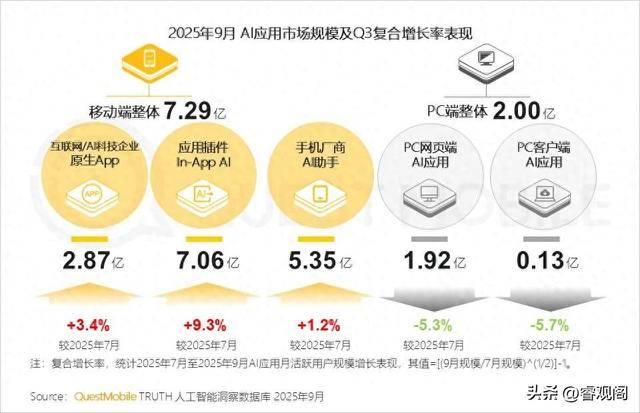
Core Viewpoint - The launch of Doubao Mobile Assistant by ByteDance marks a significant event in the consumer electronics industry, indicating the onset of the "Agent Era" in mobile AI applications [4][5]. Group 1: Doubao Mobile Assistant Features - Doubao Mobile Assistant achieves a "human-like" operation capability, allowing for complex cross-application tasks with a success rate exceeding 80%, significantly surpassing market expectations [7]. - Key highlights include: - **System-level Interaction**: Supports voice, side AI key, and Bluetooth headset wake-up, enabling real-time Q&A, voiceprint unlocking, and video calls without opening apps [8]. - **Cross-Application Execution**: Users can command the assistant to perform tasks like comparing prices across platforms and modifying images, with user intervention only required for critical payment steps [8]. - **Scheduled Tasks**: Automates operations like capturing trending topics on Weibo and daily coupon collection, running silently in the background to minimize user disruption [8]. Group 2: Industry Trends and Opportunities - The emergence of Doubao Mobile Assistant is part of a broader trend where edge AI technology is nearing a "singularity," with a dense release period for edge AI hardware expected from December 2025 to mid-2026 [10]. - Major companies like Ideal, Samsung, Baidu, and Google are set to launch various edge AI products, enhancing the competitive landscape [10][11]. - The breakthrough in edge model technology supports ecosystem expansion, with advancements in model compression and low-bit quantization becoming standard [12]. Group 3: Investment Opportunities - **SOC Chips**: As the core of edge AI's computing power, SOC chips are expected to see sustained demand with the growth of AI smartphones and AIoT hardware [15]. - Companies like Hengxuan Technology and Lexin Technology are well-positioned to benefit from this expansion, with potential valuation increases anticipated [16]. - **Edge Storage**: The demand for high-bandwidth, low-cost storage driven by local inference in edge AI creates strong opportunities, with companies like Zhaoyi Innovation leading the sector [17]. - Their 3D DRAM products are expected to achieve breakthroughs in various applications by 2026, enhancing their market value [18]. - **Consumer Electronics**: Opportunities in the consumer electronics sector are concentrated in ODM manufacturing and core components for AR glasses, with companies like Tianyue Advanced and GoerTek expected to gain from increased orders in AIoT hardware production [19].

东吴证券晨会纪要-20251204
Soochow Securities· 2025-12-04 02:33
Macro Strategy - The macro environment is influenced by both domestic and overseas factors, leading to a decline in market confidence due to a drop in manufacturing PMI and uncertainty in macroeconomic data [1][15] - Domestic liquidity support through fiscal issuance and monetary policy is stabilizing the valuation environment, while industry policies in sectors like renewable energy and satellite IoT provide long-term support for related sectors [1][15] - The consumer technology sector shows structural differentiation in earnings reports, with companies like Meituan, JD, and Alibaba facing profit declines due to intense competition, while Tencent and Xiaomi achieve profit growth through international expansion and premiumization [1][15] Industry Analysis - The Nasdaq 100 index experienced volatility driven by concerns over AI bubbles and mixed macroeconomic data, with strong non-farm employment data coexisting with rising unemployment rates, complicating the Federal Reserve's assessment of economic health [2][4][16] - The semiconductor sector's performance is shaped by the earnings of companies like Broadcom and Micron, which validate demand trends [4][17] - The gold market is influenced by interest rate expectations, geopolitical tensions, and the performance of other precious metals, with a significant focus on the upcoming Federal Reserve meetings and inflation data [5][18][19] Index Outlook - The Hang Seng Technology Index is expected to maintain a bottoming and slightly upward trend in December 2025, influenced by macroeconomic conditions and policy expectations [1][15] - The Nasdaq 100 index is projected to experience a volatile upward trend, supported by the AI industry revolution and commercial validation, despite potential pullbacks if key economic data underperform [4][17] - The gold price is anticipated to remain strong in the short term, with a bullish medium-term outlook, contingent on the Federal Reserve's policy direction and macroeconomic data releases [5][18][19] ETF Products - The Huaxia Hang Seng Technology ETF (513180) closely tracks the Hang Seng Technology Index, with a total market value of 47.745 billion yuan as of November 28, 2025 [1][15] - The GF Nasdaq 100 ETF (159941.SZ) also closely follows the Nasdaq 100 Index, with a circulating scale of 29.915 billion yuan as of November 28, 2025 [4][17] - The Huaan Gold ETF (518880.SH) tracks domestic gold spot price returns, with a total market value of 90.631 billion yuan as of November 28, 2025 [5][18][19]
新势力狂揽 1.72 亿用户?谷歌营收破千亿,搜索王座稳了
Sou Hu Cai Jing· 2025-12-03 10:40
Core Insights - The competition in AI search is intensifying, yet established players like Google and Baidu continue to thrive, with Google's Q3 revenue surpassing $100 billion and Baidu's AI revenue increasing by over 50% [1][9]. Group 1: New Entrants and Their Challenges - New AI search applications like Doubao and DeepSeek have gained traction, with Doubao reaching 172 million monthly active users in Q3, but they face a significant user retention challenge, with over 80% of users abandoning these apps after the first month [3][6]. - Many new entrants lack unique features and primarily offer a "dialogue + search" model, failing to meet core user needs, which leads users to prefer established platforms like Baidu for reliable results [6][9]. Group 2: Established Players' Strategies - Baidu has recently revamped its search capabilities with the introduction of an "intelligent box" that allows for more complex queries, enhancing user experience and retention [7][9]. - Google's financial performance remains robust, with Q3 revenue of $102.35 billion, a 16% year-over-year increase, and significant contributions from AI-related services [9][11]. - Both Google and Baidu have developed comprehensive AI capabilities, allowing them to manage the entire AI ecosystem from hardware to applications, which new entrants cannot match [11][14]. Group 3: Market Dynamics and Future Outlook - The search market is evolving from a zero-sum game to a more expansive landscape, with AI technology creating new opportunities for growth, benefiting both new entrants and established players [16]. - The competition in AI search is not just about immediate trends but also about long-term capabilities and practical applications, with both new and old players contributing to a more vibrant market [16].
传媒互联网周报:11月游戏版号发放数量创新高,《疯狂动物城2》票房出色-20251203
Guoxin Securities· 2025-12-03 08:34
Investment Rating - The report maintains an "Outperform" rating for the media and internet industry [5][6]. Core Views - The media industry has shown a significant upward trend, with a 3.64% increase, outperforming both the CSI 300 (-0.84%) and the ChiNext Index (0.34%) during the week of November 24-30 [1][12]. - The release of 178 domestic games and 6 imported games in November marks a new high for the year, indicating a robust regulatory environment for the gaming sector [2][4]. - The success of "Zootopia 2," which grossed 1.824 billion yuan within five days of release, highlights the potential for box office revenue in the film sector [2][19]. Summary by Sections Industry Performance - The media sector's performance ranked second among all sectors, with notable gains from companies like Xinhua Du (29%), Easy Point (26%), and Blue Light (18%) [1][12][13]. - Conversely, companies such as China South Media and Perfect World experienced declines [1][12]. Key Developments - The release of AI models and products, such as DeepSeek-Math-V2 and Alibaba's Z-Image, showcases rapid advancements in AI technology, which could impact various sectors including gaming and media [2][16][17]. - The gaming sector is expected to benefit from a strong product cycle, with recommendations for companies like Giant Network and Kying Network [4][40]. Investment Recommendations - The report suggests focusing on the gaming sector due to recent adjustments providing good buying opportunities, and highlights the potential for growth in AI applications and film industry recovery [4][40]. - Specific companies recommended include Mango Super Media, Bilibili, and Light Media, alongside AI-driven content creators [4][40].



佰维存储(688525.SH):ePOP系列产品目前已应用于阿里夸克AI眼镜中
Ge Long Hui· 2025-12-03 07:57
Core Viewpoint - The company Bawei Storage (688525.SH) has successfully integrated its ePOP series products into the AI glasses developed by Alibaba Quark, indicating a strong presence in the AI/AR wearable device market [1] Group 1: Product Applications - The ePOP series products are currently utilized by well-known companies such as Meta, Google, Xiaomi, Xiaotiancai, Rokid, and Thunderbird Innovation in their AI/AR glasses and smartwatches [1]
2025中报华为收入占比超60%遭问询 华丰科技回复
2 1 Shi Ji Jing Ji Bao Dao· 2025-12-03 01:56
Core Viewpoint - Huawei's sales contribution to Huafeng Technology has significantly increased, raising concerns about customer concentration risk as over 60% of the company's revenue is now dependent on a single client [1][2] Group 1: Customer Concentration - In the first half of 2025, the top five customers accounted for 77.40% of Huafeng Technology's sales, with Huawei alone contributing 64.29%, a substantial increase from 35.82% in 2024 [1] - The increase in Huawei's sales contribution is attributed to a surge in demand for AI server products, leading to a significant rise in sales of high-speed line modules [1] Group 2: Business Stability and Growth - Huafeng Technology has maintained a nearly 30-year partnership with Huawei, expanding their product offerings from RF and power connectors to high-speed backplane connectors and modules [2] - The company believes that the demand for AI computing power will continue to grow, providing strong momentum for future growth due to sufficient orders on hand [2] Group 3: Mitigation of Customer Dependency Risks - To address potential risks associated with reliance on major clients, Huafeng Technology has successfully entered the supply chains of other server manufacturers and leading internet companies, securing bulk orders [2] - The company's industrial connector business is experiencing steady growth, and there are signs of recovery in the defense sector [2]