
奈雪的茶

Search documents
动辄投入百万,餐饮品牌正透过联名游戏IP“抢人”?
投中网· 2025-11-18 03:14
Core Viewpoint - The collaboration between the restaurant industry and game IPs is becoming a prevalent marketing strategy, driving significant traffic and engagement for brands, despite the high costs associated with such partnerships [4][5][12]. Group 1: Trends in Collaboration - Game IPs are increasingly becoming a frequent choice for restaurant brand collaborations, with 70 game brands engaging in partnerships with various food and beverage companies by mid-2025 [6]. - The nature of these collaborations is evolving from simple branding to deeper integrations, including in-game items, themed stores, and exclusive menus [6][10]. - Notable examples include Luckin Coffee's collaboration with "Honor of Kings," which sold over 10 million cups in just three days, and Gu Ming's partnership with "Honkai: Star Rail," which caused their app to crash due to high traffic [4][6]. Group 2: Financial Considerations - Collaborating with top-tier game IPs typically incurs costs exceeding one million, with deeper partnerships ranging from 1.5 million to 3 million [8][10]. - Gu Ming reported a significant increase in advertising expenses, attributing over 70 million yuan to IP collaborations, indicating the financial impact of these marketing strategies [9]. - While the immediate financial returns may not be evident, the long-term brand value enhancement is often cited as a key benefit of these collaborations [10][17]. Group 3: Strategic Motivations - The restaurant industry is targeting the growing gaming demographic, which reached approximately 679 million users in China, with a market revenue of 168 billion yuan in the first half of 2023 [13]. - Collaborating with game IPs allows brands to tap into established fan bases, generating organic promotion and enhancing brand recognition [14][15]. - The emotional connection created through familiar game characters and narratives can lead to stronger customer engagement compared to traditional marketing methods [15][17]. Group 4: Success Factors - Successful collaborations require a strong alignment between the restaurant brand and the game IP's user demographics to maximize effectiveness [18]. - Quality control in supply chains is crucial, as many collaborations have failed due to issues like insufficient stock or poor product quality [18]. - Innovative and engaging marketing strategies, such as limited-time offers and interactive experiences, are essential to capture consumer interest and differentiate from competitors [18][20]. Group 5: Long-term Considerations - The challenge for brands lies in converting the temporary traffic spikes from collaborations into lasting customer loyalty and brand equity [21]. - The ultimate goal is to transform casual customers into loyal fans, ensuring that the collaborations yield sustainable benefits rather than fleeting attention [21].



涨价成掘金信号!公募选股看好“确定性+弹性”
证券时报· 2025-11-17 08:42
Core Viewpoint - The concept of price increases based on supply and demand has become a key logic for fund managers to outperform the market and identify potential high-growth stocks [1][2]. Group 1: Price Increase as a Signal for Investment - Price increases are viewed by fund managers as a sign of corporate expansion and competitive strength, often leading to excess returns [2]. - The price of Moutai liquor has risen from 499 RMB to approximately 1169 RMB from January 2011 to November 2023, significantly benefiting funds heavily invested in it [2]. - Companies like Bilibili, Meitu, and Tencent Music have also seen positive investment cycles due to membership price increases, with Meitu's net profit reaching 467 million RMB in the first half of the year, a 71.3% year-on-year increase [2]. Group 2: Risks of Price Decrease - The decline in prices can indicate either an industry recession or a competitive "elimination round," posing risks for non-leading companies [3]. - A notable example is the significant losses incurred by funds that invested heavily in Nayuki Tea during a price decline cycle, leading to its market value dropping to less than 2 billion HKD [3]. Group 3: Fund Flows and Market Trends - In a climate of rising risk aversion, companies with price increase expectations have become attractive investment targets [4]. - Recent data shows that the top-performing funds are concentrated in resource and new energy themes, with some funds achieving returns of up to 31% in a month due to price increases in related commodities [4]. Group 4: Sensitivity to Price Increase Logic - There has been a significant influx of funds into chemical ETFs, reflecting investor sensitivity to price increase logic, despite some ETFs experiencing net value losses earlier in the year [5]. - The asset size of the Jianxin Chemical ETF grew from 604 million RMB to 1.099 billion RMB from June to September 2023, indicating strong investor interest [5]. Group 5: Long-term Investment Strategies - Fund managers are focusing on sectors with price increase potential, such as non-ferrous metals, which are expected to see upward price trends due to supply constraints [6]. - The technology sector is also benefiting from price increases, with major memory suppliers planning to raise prices by up to 30% to meet the growing demand driven by AI [6]. Group 6: Caution in Competitive Industries - Some fund managers advocate for caution in industries experiencing price competition, such as the AI large model sector, where price reductions have been announced [7].

涨价成掘金信号!公募选股看好“确定性+弹性”
券商中国· 2025-11-17 04:52
Group 1 - The price increase logic has become a key strategy for fund managers to outperform the market and identify potential stocks, especially during year-end risk aversion periods [1][2] - Fund managers view price hikes as a strong indicator of corporate expansion and competitive strength, leading to significant returns, as seen with Kweichow Moutai and other stocks like Bilibili and Tencent Music [2][3] - The price increase of Kweichow Moutai from 499 RMB to approximately 1169 RMB from January 2011 to November 2023 has provided substantial returns for funds heavily invested in it [2] Group 2 - The decline in prices within certain industries, such as the milk tea sector, signals potential risks and has led to significant losses for funds that invested heavily in stocks like Nayuki's Tea [3] - The strategy of observing price trends (both increases and decreases) is effective for assessing the profitability of companies across various industries [3][4] - Recent data shows that funds focused on resource themes and new energy have seen strong performance, with some funds achieving returns of over 31% in the past month [4][6] Group 3 - The recent surge in prices for chemical products, such as the 68% increase in the price of ethylene carbonate, reflects the strong correlation between price hikes and investor interest [5][6] - The influx of capital into chemical ETFs indicates a high sensitivity among investors to price increase logic, despite some ETFs experiencing net value losses earlier in the year [6] - Fund managers are optimistic about sectors like non-ferrous metals, anticipating upward price movements due to supply constraints and competitive advantages [7] Group 4 - The focus on price increase logic has led some fund managers to adopt a cautious approach towards industries facing price competition, such as the AI sector, where price cuts have been announced [8]

雷军连发数文回怼质疑:车好看与安全不矛盾/曝库克将于明年卸任苹果CEO/华为或将发布AI突破性技术
Sou Hu Cai Jing· 2025-11-17 03:12
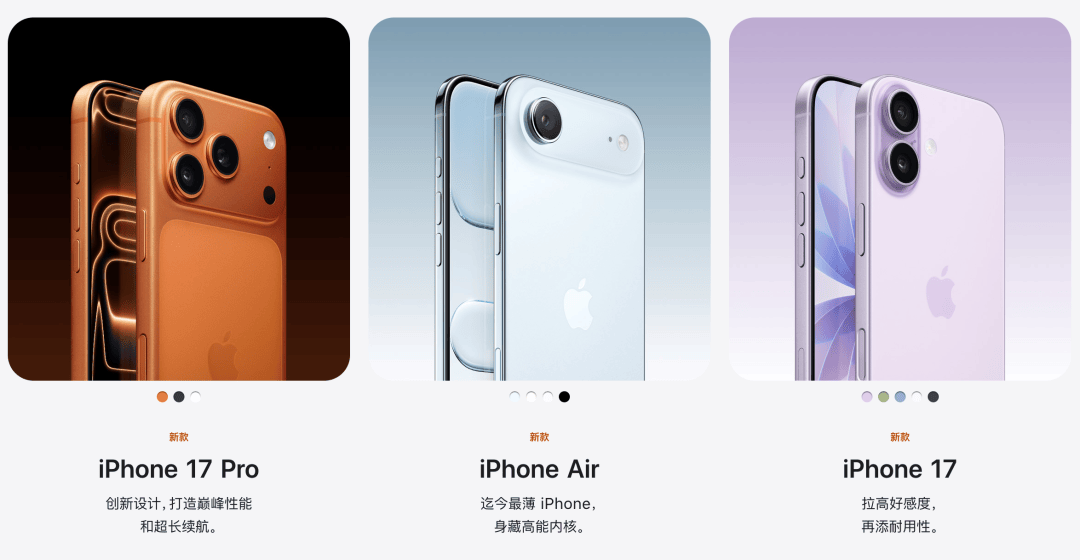
Group 1 - Apple is set to change its iPhone release cycle, potentially launching 5-6 new models each year starting in 2026, including the iPhone 18 Pro/Pro Max and a new foldable product [3][4] - The second-generation iPhone Air is expected to feature a dual-camera system and improved battery capacity, but its release has been delayed to 2027 due to previous poor sales [4][5] - Apple has halted the development of the M4 Ultra chip and will focus on the M5 Ultra, with significant updates to the Mac Pro not expected until 2026 [5] Group 2 - Huawei plans to unveil a breakthrough AI technology on November 21, aimed at improving the utilization efficiency of computing resources from an industry average of 30-40% to 70% [6] - The technology will unify resource management across various processors, enhancing support for AI training and inference [6] Group 3 - Apple is accelerating its CEO succession plan, with Tim Cook expected to step down in early 2026, and John Ternus is seen as a potential successor [7][8] - The transition aims to maintain product release schedules and is not prompted by current performance issues [8] Group 4 - Beijing has announced significant advancements in its 6G laboratory, showcasing ten key technological achievements in high-frequency communication and intelligent surfaces [9][12] - The developments include a prototype 256TR U6G base station capable of achieving a peak downlink speed of 20Gbps [9] Group 5 - Xiaomi's CEO Lei Jun emphasized the importance of safety in the design of the new SU7 vehicle, which features a high-strength steel and aluminum body [15][16] - The vehicle's battery design incorporates multiple safety measures to prevent thermal runaway, ensuring passenger safety [17] Group 6 - Leap Motor has achieved its annual sales target of 500,000 vehicles 45 days ahead of schedule, with plans to target 1 million units next year [21][23] - The company is set to unveil several new models at the upcoming Guangzhou International Auto Show [25] Group 7 - WeChat has updated its Android version to allow users to back up chat records to external storage devices, including USB drives [29][30] - This feature supports manual backup path selection and automatic backups every 24 hours [29] Group 8 - Meta will introduce "AI-driven impact" as a core metric in employee performance evaluations starting in 2026, aiming to foster an AI-native culture [31] - The company has already integrated AI into its hiring process and will launch an "AI Performance Assistant" tool to assist employees in performance feedback [31] Group 9 - Wang Xingxing, CEO of Yuzhu Technology, stated that AI will enable robots to understand the world, transitioning them from industry tools to life partners over the next decade [32][33] - He highlighted the need for global collaboration and ethical standards in the development of robotics technology [33]

巴菲特时代过去了,在恶劣的竞争中,必须找到商业模式的这“三个问题”
3 6 Ke· 2025-11-17 02:54
Core Insights - The article discusses the importance of understanding business models in the context of investment analysis, particularly in the A-share market, emphasizing the need to adapt beyond traditional frameworks like those of Warren Buffett [1] Group 1: Business Models in the Tea Beverage Industry - The two tea brands, Mixue Ice Cream and Nayuki, operate under fundamentally different business models, with Mixue focusing on low-cost products and profitability, while Nayuki has reported significant losses despite high revenue [2][3] - Nayuki's business model is centered around a direct sales approach, prioritizing store locations and customer experience, which has led to operational challenges and losses [3] - In contrast, Mixue's franchise model relies on providing raw materials and support to franchisees, allowing for easier scalability and profitability [4][6] Group 2: Efficiency and Cost Management - Mixue achieves cost efficiency through lower material costs and economies of scale, allowing it to maintain competitive pricing and profitability [8][9] - The franchise model of Mixue is particularly suited to the Chinese market, leveraging a vast pool of potential franchisees who seek stable business opportunities [4][6] - The operational strategy of Gu Ming, another tea brand, focuses on supply chain efficiency, ensuring rapid delivery and fresh ingredients, which enhances its competitive edge in lower-tier markets [10] Group 3: Live Streaming E-commerce Models - The article outlines two primary business models in live streaming e-commerce: brand self-broadcasting and MCN (Multi-Channel Network) models, each with distinct core resources and key operations [11][13] - The self-broadcasting model emphasizes long-term operations and customer loyalty, while the MCN model relies on leveraging popular influencers for sales [13][14] - The challenges faced by traditional live streaming models highlight the need for companies to innovate and adapt their business strategies to maintain competitiveness [14][24] Group 4: Evolution of Oriental Selection - Oriental Selection has transitioned to a self-built supply chain model, integrating cultural elements with agricultural products to create a unique market position [18][20] - The company's shift towards self-operated products and direct supply chain management has resulted in significant revenue growth and improved profit margins [21][22] - Despite challenges following the departure of a key influencer, the company continues to pursue its strategic goals, focusing on building a sustainable business model [19][24]


2025年中国现制咖饮行业发展历程、市场政策、产业链图谱、市场规模、竞争格局及发展趋势分析:“价格战”愈演愈烈[图]
Chan Ye Xin Xi Wang· 2025-11-17 02:05
Core Insights - The coffee consumption market in China is experiencing significant growth, with the ready-to-drink coffee industry projected to reach a market size of 117.7 billion yuan in 2024, reflecting a year-on-year growth of 15.39% [1][8] - Consumer preferences are shifting from occasional indulgence to daily necessity, with motivations evolving from "energizing function" to "flavor experience" and "daily accompaniment" [1][8] - The industry is witnessing a diversification trend, with innovative products and consumption scenarios emerging, alongside a growing emphasis on local coffee bean usage [3][7] Industry Overview - Ready-to-drink coffee is defined as beverages made from coffee beans or powder, combined with water, milk, cream, syrup, and other ingredients, prepared on-site for immediate consumption [2] - The industry has evolved since Starbucks opened its first store in Beijing in 1999, leading to the rise of local brands like Luckin Coffee, which has disrupted the market with competitive pricing [3][5] Market Dynamics - The number of coffee consumers in China is expected to reach 417 million in 2024, marking a 4.47% increase [8] - Female consumers dominate the market, accounting for 65.4%, while Generation Z and Y represent over 90% of the consumer base, with Generation Z being the largest group at 66.1% [8] Policy Environment - The Chinese government has implemented various policies to support the development of the restaurant industry, including ready-to-drink coffee, creating a favorable environment for growth [5] Industry Structure - The supply chain includes raw material suppliers (coffee beans, milk, etc.), equipment suppliers, brand operators, and sales channels [6][7] - Yunnan province is the primary coffee bean production area, contributing over 90% of China's coffee bean output, which supports the industry's growth [7] Competitive Landscape - The market is characterized by intense competition, with over 32,000 new companies registered in the ready-to-drink coffee sector in 2025, and independent brands making up approximately 60.5% of the market [10][11] - Price wars have intensified, leading brands to seek differentiation through supply chain optimization and product innovation [11] Future Trends - Future developments will likely include deeper integration of tea and coffee products, as well as a focus on health-conscious options like low-sugar and plant-based ingredients [13]


早报|曝iPhone换代周期大改:或一年发布 6 款新机/雷军连发多条微博回应质疑/Android 微信更新聊天备份至 U 盘
Sou Hu Cai Jing· 2025-11-17 01:50
Group 1: Apple iPhone Release Cycle Changes - Apple is set to change its iPhone release cycle, potentially launching 5-6 new models each year starting in 2026 [5][6] - The new cycle includes the release of iPhone 18 Pro/Pro Max and a new foldable product in 2026, followed by iPhone 18/18e and a special edition in 2027 [5][6] - The decision aims to alleviate pressure on marketing and engineering teams and improve revenue distribution throughout the year [6] Group 2: Apple CEO Succession Plan - Apple is accelerating its CEO succession plan, with Tim Cook expected to step down in early 2026 [9][10] - The board is discussing a smooth transition without affecting product release schedules, with John Ternus seen as a potential successor [10] - The succession plan is based on long-term strategy rather than current performance, with changes expected to be announced after the January 2026 earnings report [10] Group 3: Huawei AI Breakthrough - Huawei plans to unveil a breakthrough technology in AI on November 21, aimed at improving the efficiency of computing resource utilization from an industry average of 30-40% to 70% [8] Group 4: Xiaomi's Automotive Safety Focus - Xiaomi's CEO Lei Jun emphasized the importance of safety in the design of the new SU7 vehicle, stating that safety is a fundamental principle [17][18] - The SU7 features a steel-aluminum hybrid body with over 90% high-strength steel and aluminum, and advanced battery safety measures [18] Group 5: Zero Run Automotive Sales Achievement - Zero Run has achieved its sales target for 2025, reaching 500,000 vehicles 45 days ahead of schedule [21][23] - The company aims to double its sales target to 1 million vehicles in the following year [23] Group 6: WeChat Update for Android - WeChat has updated its chat backup feature, allowing users to save data directly to external storage devices like USB drives [29][30] - The update supports manual backup path selection and automatic backups every 24 hours [31] Group 7: Meta's AI Performance Evaluation - Meta will introduce "AI-driven impact" as a core metric in employee performance evaluations starting in 2026 [33][34] - This shift aims to foster an "AI-native culture" within the company, rewarding significant AI contributions [34] Group 8: 6G Development in Beijing - Beijing has announced significant advancements in 6G technology, including prototypes and systems aimed at enhancing communication capabilities [12][13] - The developments include a 256TR U6G base station prototype achieving a peak user downlink of 20Gbps [12]


白砂糖重回配料表
36氪· 2025-11-17 00:10
Core Viewpoint - The article discusses the return of white sugar to beverage ingredient lists, driven by an upgrade in consumer health awareness and a demand for controllable taste experiences [4][27]. Group 1: Market Trends - The beverage market has seen a significant shift with the rise of sugar-free drinks, initiated by brands like Yuanqi Forest in 2018, which led to a decline in the presence of white sugar in ingredient lists [9][15]. - However, in the recent beverage season, traditional beverage companies have reintroduced white sugar in their products, indicating a change in consumer preferences towards a balance of taste and health [8][15]. - The global largest erythritol manufacturer, San Yuan Bio (301206.SZ), saw its erythritol revenue peak at 1.567 billion yuan in 2021, but it is projected to drop to 515 million yuan in 2024 due to an oversupply in the market [12][13]. Group 2: Consumer Preferences - Consumers are now more inclined to accept the presence of white sugar in beverages, as seen with brands like Yuanqi Forest and Nongfu Spring launching new products that contain white sugar while promoting low-sugar options [15][17]. - The trend reflects a shift from an absolute avoidance of sugar to a preference for lower sugar content that still delivers enjoyable taste experiences [27][28]. - Brands are strategically reducing serving sizes to manage sugar intake while still offering products that satisfy taste preferences, indicating a nuanced approach to sugar consumption [18][22]. Group 3: Competitive Landscape - The sugar tea market, valued at nearly 90 billion yuan, is experiencing a competitive yet stable environment, with traditional beverage companies maintaining significant market shares [32][35]. - Major players like Master Kong, Uni-President, and Nongfu Spring dominate the market, collectively holding over 69% of the market share, with growth rates exceeding 5% [35][36]. - The introduction of new products in the sugar tea category continues to outpace sugar-free options, suggesting a sustained consumer interest in traditional flavors [34][35].



年末避险情绪抬升 公募选股遵循涨价硬逻辑
Zheng Quan Shi Bao· 2025-11-16 17:58
Core Viewpoint - The concept of price increases based on supply and demand has become a key logic for fund managers to identify potential high-performing stocks, especially during year-end risk aversion periods [1][4]. Group 1: Price Increase as a Stock Selection Logic - Price increases are viewed as a strong indicator of corporate expansion and competitiveness, often leading to excess returns for investors [2][3]. - The price of Moutai liquor has risen from 499 yuan to approximately 1169 yuan from January 2011 to November 2023, significantly benefiting funds heavily invested in it [2]. - Internet companies like Bilibili, Meitu, and Tencent Music have also seen positive investment cycles due to membership price increases, with Meitu's net profit in the first half of this year reaching 467 million yuan, a year-on-year increase of 71.3% [2]. Group 2: Impact of Price Decrease on Investment Decisions - The decline in prices within certain industries can signal dangerous trends for non-leading companies, as it may indicate either a recession or a competitive "elimination round" [3]. - Funds that heavily invested in Nayuki Tea faced significant losses as the industry entered a price-cutting phase, leading to its removal from major fund holdings [3]. Group 3: Fund Flows and Market Trends - The expectation of price increases has attracted significant capital into specific sectors, particularly during times of heightened risk aversion [4][5]. - Recent data shows that funds focused on resource themes and new energy have performed well, with some achieving returns of up to 31% in the past month, closely linked to price increase news in related industries [4]. - The rapid growth of chemical ETFs, despite previous underperformance, indicates strong investor sensitivity to price increase logic [5][6]. Group 4: Long-term Investment Strategies - Fund managers emphasize the importance of price increase logic in their investment strategies, particularly in sectors like non-ferrous metals, where supply constraints are expected to drive prices higher [7]. - In the technology sector, rising prices for memory chips, driven by increased demand from AI applications, are expected to support strong performance in tech growth stocks [7].
从茶饮到潮玩 中国文创产品走红海外市场
Xin Hua Wang· 2025-11-16 05:53
Group 1: Chinese New Tea Beverage Industry - Chinese new tea beverage brands like Bawang Chaji, Mixue Ice City, Nayuki, and Heytea are expanding internationally, particularly in Malaysia, by combining cultural elements with their products to enhance their appeal [2][3] - The Malaysian market is witnessing a significant increase in the market share of Chinese tea brands, which are transitioning from passive followers to active participants in the global market, showcasing strong cultural attraction [2] - The incorporation of Chinese visual elements such as characters and traditional patterns into brand identity enhances brand recognition and consumer loyalty, reflecting cultural confidence and creativity of Chinese enterprises in overseas markets [3] Group 2: Chinese Television Dramas - Chinese historical dramas like "Journey to the West," "Empresses in the Palace," and "Nirvana in Fire" have gained immense popularity in Vietnam, with viewers discussing plots and characters passionately [4][5] - The cultural values portrayed in these dramas resonate deeply with Vietnamese audiences, fostering a better understanding of Chinese history and traditions [5] - The ongoing cultural exchanges between China and Vietnam are strengthening the ties between the two nations, enhancing mutual understanding and friendship [5] Group 3: Chinese Trendy Toy Industry - Chinese trendy toy brands such as Pop Mart are rapidly expanding in the UK, with plans to open additional stores, reflecting a growing market presence [6] - The sales of blind boxes from Chinese brand Miniso are increasing significantly, with a reported 63% growth in the past year in the UK [6] - Trendy toys are increasingly incorporating Chinese cultural elements, with brands like 52TOYS achieving success in Thailand by creating culturally inspired products that resonate with local consumers [6][7] - The success of these brands highlights the potential of Chinese creative products in the global market, showcasing the ability to connect emotionally with consumers [7]

