
浙商证券

Search documents
浙商证券李超:从“稳增长”到“新增长” 聚焦新质生产力与“投资于人”
Shang Hai Zheng Quan Bao· 2026-01-19 18:45
Core Viewpoint - The core theme for the "14th Five-Year Plan" period is high-quality development, with a strong focus on the technology sector as a key driver for market performance and economic transformation [1][2]. Group 1: Macroeconomic Policies - Monetary policy will maintain a moderately loose stance, with tools like reserve requirement ratio cuts and interest rate reductions still available, but their implementation will be cautious and measured [2]. - Fiscal policy will continue to provide necessary financial support for economic structural transformation, emphasizing the stability of industrial and supply chains [2]. Group 2: Industry Focus - The focus will be on two key directions: promoting industrial growth and accelerating the development of new productive forces, particularly in strategic emerging industries and future industries [2]. - Human-shaped robots are highlighted as a critical area for policy support, with expectations for significant advancements in both research and commercialization [4]. Group 3: Investment Recommendations - Investors are advised to focus on two main areas: technology growth stocks, which will benefit from structural transformation and policy support, and high-dividend stocks, which are currently undervalued and offer defensive stability [5]. - The technology sector is expected to see investment opportunities as market sentiment improves, while high-dividend stocks reflect the potential for asset revaluation due to currency appreciation [5].

2025年中国经济的含金量,不止140万亿元
Jing Ji Guan Cha Wang· 2026-01-19 14:56
Economic Growth Overview - In 2025, China's GDP grew by 5% year-on-year, surpassing 140 trillion yuan for the first time, achieving the growth target set at the beginning of the year [1][3] - The average annual GDP growth rate during the 14th Five-Year Plan period was 5.4%, significantly higher than the global average, positioning China as a leader among major economies [3] K-shaped Growth Characteristics - The Chinese economy is exhibiting a "K" shaped growth pattern, with strong performance in sectors like equipment manufacturing and high-tech industries, while some enterprises remain cautious about market expectations [1][7] - Quarterly GDP growth rates showed a declining trend throughout 2025, indicating potential underlying issues in demand and economic momentum [7][8] Consumer and Investment Trends - In 2025, the total retail sales of consumer goods exceeded 50 trillion yuan, with a year-on-year growth of 3.7%, contributing 52% to economic growth [4][6] - Fixed asset investment saw a decline of 3.8% year-on-year, highlighting challenges in sustaining investment levels [7] Innovation and R&D Investment - R&D expenditure intensity reached 2.8%, surpassing the OECD average for the first time, indicating a strong focus on innovation [4] - The production of high-tech products, such as 3D printing equipment and industrial robots, saw significant growth, reflecting China's robust manufacturing capabilities [4] Future Economic Projections - Experts suggest maintaining a GDP growth target of around 5% for 2026 to support long-term economic goals, including achieving a per capita GDP of $20,000 by 2035 [2][10] - Predictions for 2026 GDP growth vary, with estimates ranging from 4.3% to 5%, indicating a cautious outlook amid external uncertainties [12]
研报掘金丨浙商证券:维持金沃股份“买入”评级,丝杠、绝缘轴承套圈有望打开空间
Ge Long Hui A P P· 2026-01-19 06:34
Core Viewpoint - Jinwo Co., Ltd. is expected to see a 87% year-on-year increase in its performance center for 2025, with potential growth in the screw rod and insulating bearing ring segments [1] Company Summary - The company has received approval from the China Securities Regulatory Commission for a private placement, aiming to raise no more than 721 million yuan within the next 12 months [1] - The raised funds will be allocated to the expansion and upgrading of the intelligent manufacturing production base for bearing rings and the enhancement of forging capacity [1] - Jinwo Co., Ltd. has established long-term and stable partnerships with major global bearing companies such as Schaeffler, SKF, NSK, NTN, and JTEKT, showcasing its strong technological leadership and robust R&D capabilities [1] Industry Summary - The bearing ring market has a large scale and low industry concentration, indicating that there is still room for the company to increase its market share [1] - The industry is expected to experience explosive growth in both complete machines and components by 2026, marking a significant opportunity for the company [1]
全球央行竞购,黄金储备新高
Sou Hu Cai Jing· 2026-01-19 06:08
Core Insights - The global official gold reserves reached approximately $3.69 trillion by the end of Q3 2025, accounting for 28.9% of total official reserves, marking the highest level since 2000 [4][20][12] - The International Monetary Fund (IMF) reported that the dollar's share in global foreign exchange reserves fell to 56.92%, the lowest since 1995, continuing a trend of being below 60% for over ten consecutive quarters [7][20] - China's central bank has been actively increasing its gold reserves, with a total of 7.415 million ounces (approximately 2306.32 tons) as of the end of December 2025, marking the 14th consecutive month of gold accumulation [3][10] Global Gold Reserve Trends - Global central banks have been net buyers of gold for 15 consecutive years, with significant purchases recorded in 2022 (1081.9 tons), 2023 (1050.8 tons), and 2024 (1044.6 tons) [5][14] - Emerging market central banks, particularly from Turkey and China, have been the primary drivers of gold purchases, with Turkey buying 148 tons in 2022 and China leading in 2023 with 225 tons [5][16] - The total gold purchases by central banks in the first three quarters of 2025 amounted to 634 tons, indicating a strong demand despite a slight decrease compared to previous years [6][15] Shifts in Reserve Asset Composition - The increasing share of gold in global reserves reflects a strategic shift among central banks towards diversifying away from dollar-denominated assets, driven by geopolitical tensions and the need for risk management [7][19] - The World Gold Council's survey indicated that over 90% of central banks expect to increase their gold reserves in 2026, with more than 70% anticipating a decline in the dollar's share of global reserves over the next five years [27][28] Market Dynamics and Future Outlook - The gold market is expected to remain robust, with predictions of continued price increases due to central bank purchases and macroeconomic factors such as U.S. monetary policy and geopolitical risks [8][28] - Analysts forecast that central bank gold purchases will remain a long-term trend, with expectations of around 755 tons in 2026, despite a decrease from the peak levels seen in 2022-2024 [28][33] - The potential for gold price volatility exists, particularly if retail investor behavior shifts, but central bank demand is expected to provide a stabilizing influence on the market [30][32]


浙商证券1月16日获融资买入5275.89万元,融资余额27.17亿元
Xin Lang Cai Jing· 2026-01-19 01:39
Core Viewpoint - Zhejiang Securities experienced a decline in stock price and trading volume, with a net financing outflow on January 16, indicating a low level of investor confidence and activity in the stock [1]. Financing and Margin Trading - On January 16, Zhejiang Securities had a financing buy-in amount of 52.76 million yuan and a financing repayment of 72.86 million yuan, resulting in a net financing outflow of 20.10 million yuan [1]. - The total margin trading balance for Zhejiang Securities as of January 16 was 2.718 billion yuan, with the financing balance accounting for 5.45% of the circulating market value, which is below the 50th percentile level over the past year, indicating a low position [1]. - In terms of securities lending, there were no shares repaid on January 16, with 900 shares sold short, amounting to 9,819 yuan at the closing price, and a remaining short position of 65,300 shares valued at 712,400 yuan, also below the 20th percentile level over the past year [1]. Financial Performance - For the period from January to September 2025, Zhejiang Securities reported operating revenue of 6.789 billion yuan, a year-on-year decrease of 42.94%, while net profit attributable to shareholders increased by 49.57% to 1.892 billion yuan [2]. - Cumulatively, since its A-share listing, Zhejiang Securities has distributed a total of 3.748 billion yuan in dividends, with 1.718 billion yuan distributed over the past three years [3]. Shareholder Structure - As of September 30, 2025, the number of shareholders for Zhejiang Securities was 157,500, a decrease of 5.78% from the previous period, while the average circulating shares per person increased by 6.13% to 29,047 shares [2]. - Among the top ten circulating shareholders, the Guotai CSI All-Index Securities Company ETF ranked as the third-largest shareholder with 70.8914 million shares, an increase of 28.5418 million shares from the previous period [3].
5家光伏龙头合计预亏超289亿元
2 1 Shi Ji Jing Ji Bao Dao· 2026-01-18 23:19
Core Viewpoint - Several leading photovoltaic companies have announced significant expected losses for 2025, indicating ongoing challenges in the industry due to supply-demand imbalances and rising raw material costs [1][2][3]. Company Summaries - Tongwei Co., Ltd. (通威股份) expects a net loss of 9 billion to 10 billion yuan for 2025, citing unresolved supply-demand issues and rising prices of core raw materials [1]. - Longi Green Energy (隆基绿能) anticipates a net loss of 6 billion to 6.5 billion yuan for 2025, highlighting ongoing low operating rates and increased costs due to rising prices of silver paste and silicon materials [1]. - Aiko Solar Energy (爱旭股份) projects a net loss of 1.2 billion to 1.9 billion yuan for 2025, attributing this to structural overcapacity and sustained low product prices [1]. - TCL Zhonghuan (TCL中环) expects a net loss of 8.2 billion to 9.6 billion yuan for 2025 [2]. - JA Solar Technology (晶澳科技) forecasts a net loss of 4.5 billion to 4.8 billion yuan for 2025, contributing to a total expected loss of over 28.9 billion yuan for these five leading companies [3]. Industry Overview - The photovoltaic industry has faced significant price fluctuations since 2025, leading to widespread losses among companies [4]. - The Chinese government plans to strengthen capacity regulation and manage photovoltaic manufacturing projects to address the ongoing challenges in the industry [4]. - Experts suggest that merely relying on government initiatives may not be sufficient, and additional measures may be necessary to stabilize the industry [4][5]. - The industry has experienced a continuous loss trend for eight quarters, with a 33% reduction in workforce in 2024, and an increase in average interest-bearing debt ratio from 23% to 31% [5].




机构:高净值人群资金成A股入市主力
2 1 Shi Ji Jing Ji Bao Dao· 2026-01-18 14:49
Core Viewpoint - The A-share market has shown strong performance at the beginning of 2026, with active trading and a significant increase in margin financing accounts, indicating a robust influx of new capital into the market [1]. Group 1: Market Activity and Capital Inflow - In 2025, a record 1.5421 million new margin financing accounts were opened, marking a more than 50% increase from 2024 [1]. - By the end of 2025, the total margin financing balance surged from 1.85 trillion yuan to 2.52 trillion yuan, reflecting a growth of over 30% [1]. - In the first week of 2026, net inflow of margin financing exceeded 80 billion yuan [1]. Group 2: Changes in Margin Financing Regulations - On January 14, 2026, the Shanghai and Shenzhen Stock Exchanges announced an increase in the minimum margin financing ratio from 80% to 100% for new contracts, aimed at reducing leverage levels and protecting investor rights [3][7]. - This adjustment is applicable only to new margin financing contracts, while existing contracts will continue under previous regulations [8] [7]. Group 3: Future Capital Inflow Expectations - Analysts predict that the structure of new capital inflow in 2026 will shift towards ordinary residents as their risk appetite recovers, with an estimated total inflow of 2 trillion yuan for the year [12]. - The influx of capital in 2025 was characterized by significant participation from private equity funds and leveraged funds, with a notable return of foreign capital [10][11]. Group 4: Investment Trends and Sector Focus - Financial institutions maintain an optimistic outlook for the A-share market, driven by increasing investor confidence and a stable upward trend [13]. - Key investment areas include AI, high-end manufacturing sectors such as military and nuclear power, and traditional industries undergoing transformation through AI [13]. - Investment strategies for 2026 emphasize technology innovation and cyclical supply-demand rebalancing, particularly in AI-driven hardware and domestic semiconductor industries [14].
机构:高净值人群资金成A股入市主力
21世纪经济报道· 2026-01-18 14:46
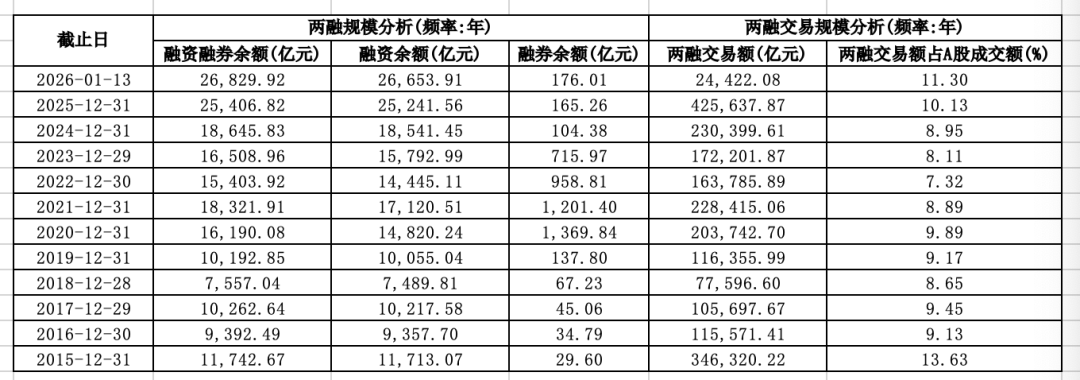
Core Viewpoint - The A-share market has shown strong performance at the beginning of 2026, with significant increases in margin trading accounts and financing balances, indicating a robust influx of new capital into the market [1][2]. Group 1: Margin Trading and Financing Data - In 2025, a total of 1.5421 million new margin trading accounts were opened, marking a nearly ten-year high and an increase of over 50% compared to 2024 [1]. - By the end of 2025, the total financing balance surged from 1.85 trillion yuan to 2.52 trillion yuan, reflecting a growth of over 30% [1]. - As of January 13, 2026, the margin trading balance reached approximately 268.30 billion yuan, with a financing balance of about 266.54 billion yuan [3]. Group 2: Changes in Financing Margin Ratio - On January 14, 2026, the Shanghai and Shenzhen Stock Exchanges announced an increase in the minimum financing margin ratio from 80% to 100% to stabilize the market and protect investors [2][4]. - This adjustment is aimed at reducing leverage levels and is applicable only to new financing contracts, while existing contracts will continue under previous regulations [5]. Group 3: Inflow of New Capital - The structure of new capital entering the A-share market is under scrutiny, with expectations that high-net-worth individuals will initially drive market participation, followed by an increase in ordinary residents' investments as their risk appetite improves [1][8]. - It is projected that the total new capital inflow for 2026 could reach 2 trillion yuan, influenced by historical patterns and the gradual entry of resident funds into the market [8]. Group 4: Market Outlook and Investment Trends - Financial institutions maintain an optimistic outlook for the A-share market, driven by increasing investor confidence and a stable upward trend [10]. - Key investment areas include AI, high-end manufacturing sectors such as military and nuclear power, and the transformation of traditional industries through AI [10]. - The focus for 2026 will also include technology innovation and the rebalancing of supply and demand in cyclical products, with significant opportunities in the semiconductor industry and other emerging technologies [11].

非银存款同比少减2.84万亿元,券商分析师解读
券商中国· 2026-01-18 09:38
Core Viewpoint - The financial data for December 2025 indicates a decrease in non-bank deposits by 330 billion yuan, with a year-on-year reduction of 2.84 trillion yuan, raising market concerns about the implications for the stock market and financial institutions [1][2][3]. Group 1: Non-Bank Deposit Trends - Non-bank deposits decreased by 330 billion yuan in December, which is significantly lower than the average reduction of 532.7 billion yuan in 2022 and 2023, indicating a notable shift in market dynamics [2]. - Analysts attribute the high year-on-year reduction to a low base effect from December 2024, when non-bank deposits saw a historic drop of 3.17 trillion yuan due to regulatory changes [1][2]. - The overall non-bank deposit scale reached 34.5 trillion yuan by the end of December, accounting for 10.5% of total deposits, reflecting a slight decrease in proportion compared to previous years [2]. Group 2: Market Influences - The reduction in non-bank deposits is partly attributed to seasonal factors, such as the return of funds to deposits from off-balance-sheet products and the influence of a vibrant stock market [3][4]. - Analysts suggest that the capital market's performance, particularly the "924" market rally, has led to significant capital inflows, impacting the overall deposit landscape [3][5]. - The trend of "deposit migration" continues, but the pathways and timing of fund flows may become more complex due to varying asset return expectations and market conditions [3].

浙商证券:市场修斜率 慢牛更可期 两法可应对
Xin Lang Cai Jing· 2026-01-18 09:03
Market Overview - The market experienced a surge followed by a pullback, with a general trend of "strong small caps and weak large caps" observed this week [1][2][7] - The technology sector is gaining momentum, while other styles are generally weakening [2][8] - Trading volume in the Shanghai and Shenzhen markets has significantly increased, with most stock index futures contracts trading at a discount [2][9] Market Sentiment and Capital Flow - The margin balance for margin trading has notably increased, although the proportion of financing purchases has decreased, indicating a net outflow from stock ETFs [2][9] - The valuation of the ChiNext index remains relatively low, and the downward energy model is at a normal level [2][8] Market Drivers - The increase in financing margin requirements by the Shanghai and Shenzhen Stock Exchanges has influenced market dynamics [3][9] - Several listed companies issued announcements urging rational decision-making and cautious investment [3][9] - The China Securities Regulatory Commission held a system work meeting, which may impact regulatory outlooks [3][9] Future Market Outlook - Following the recent pullback in major indices, the rapid rise in A-shares since January is expected to slow down, leading to a horizontal consolidation phase [4][10] - The current market correction is not expected to alter the "systematic slow bull" nature of the market, with expectations of reaching a target range of 5178-2440 [4][10] - The small and medium growth style is expected to continue to dominate in the near term [4][10] Investment Strategy - Based on the assessment that "correction does not harm the overall situation and technology growth is clearly superior," the company suggests two strategies: 1. Distributing current medium-term positions across sectors with high prosperity and reasonable price levels, such as electronics, new energy, chemicals, non-bank financials, and machinery, to participate in the market using a "defensive growth" approach [5][11] 2. Selecting relatively low-positioned indices like the CSI 1000 and National 2000, which are favored in the "broad-based rotation" pattern, as sources of relative returns [5][11] - Additionally, the Hong Kong stock market has seen relatively less increase in this round; thus, any suitable pullback buying opportunities should be closely monitored [5][11]