
英飞凌

Search documents
AI点燃晶圆代工新周期
半导体芯闻· 2025-06-26 10:13
Core Viewpoint - The global semiconductor foundry 2.0 market revenue is projected to grow by 13% year-on-year in Q1 2025, reaching $72.29 billion, driven by the surge in demand for AI and high-performance computing (HPC) chips [1][4]. Group 1: Market Dynamics - The traditional semiconductor foundry model (foundry 1.0) is evolving into a technology integration platform, emphasizing vertical coordination and faster innovation, influenced by AI trends and system-level optimization [1]. - TSMC leads the market with a share of 35.3% in Q1 2025, achieving approximately 30% year-on-year revenue growth, followed by Intel and Samsung [4][6]. Group 2: OSAT and Advanced Packaging - OSAT suppliers are becoming a critical segment in the foundry 2.0 supply chain, with a nearly 7% year-on-year growth in Q1 2025, benefiting from TSMC's excess demand for AI-related CoWoS [4][5]. - Advanced packaging demand is increasing, with key players like ASE, SPIL, and Amkor enhancing their capacities [4]. Group 3: Non-Memory IDM and Light Mask Suppliers - Non-memory IDMs such as NXP, Infineon, and Renesas are experiencing a decline in revenue by 3% in Q1 2025, particularly in the automotive and industrial sectors, with recovery expected to be delayed until the second half of 2025 [5]. - Light mask suppliers are benefiting from the adoption of 2nm EUV technology and the increasing complexity of AI/Chiplet designs [5]. Group 4: Future Outlook - The foundry 2.0 ecosystem is expected to transition from a linear manufacturing model to a seamlessly integrated value chain, enhancing collaboration between design, manufacturing, and advanced packaging [8].


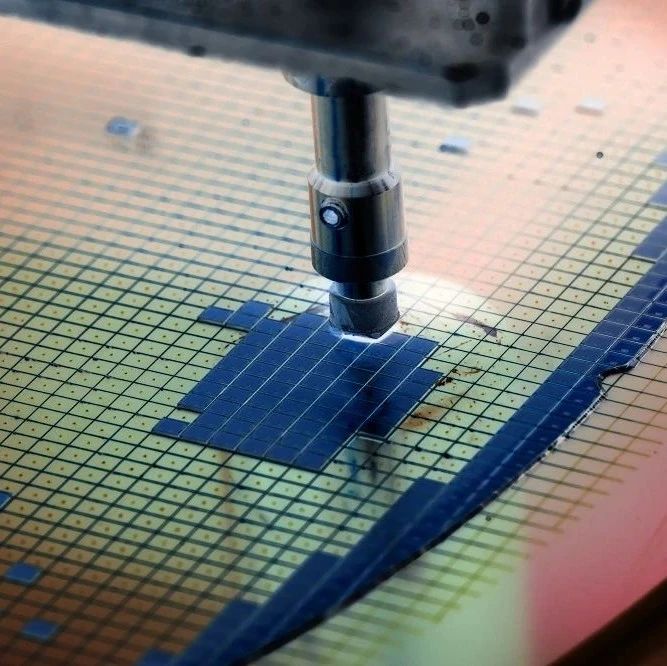
机构:一季度全球“晶圆代工2.0”收入同比增长12.5%至723亿美元
Zheng Quan Shi Bao Wang· 2025-06-25 11:41
Core Insights - The global semiconductor foundry 2.0 market is projected to grow by 12.5% year-on-year to reach $72.29 billion in Q1 2025, driven by surging demand for AI and high-performance computing chips [1] - The definition of foundry 2.0, introduced by TSMC, encompasses not only traditional wafer manufacturing but also packaging, testing, and photomask production, expanding the market size to nearly $250 billion in 2023 from $115 billion under the old definition [1] Company Performance - TSMC holds a dominant market share of 35.3%, with a year-on-year growth of approximately 30%, attributed to its strong position in advanced processes and substantial AI chip orders [2] - Intel ranks second with a 6.5% market share, while ASE and Samsung follow with 6.2% and 5.9% shares, respectively [2] - The traditional foundry market revenue increased by 26%, while the non-memory IDM market saw a 3% decline due to weak demand in automotive and industrial applications [2] Industry Trends - AI is identified as the core driver of growth in the semiconductor industry, reshaping the priorities within the foundry supply chain and reinforcing TSMC's and advanced packaging suppliers' critical roles [3] - The foundry industry is transitioning from a traditional linear manufacturing model to a highly integrated value chain system, with expectations of new waves of semiconductor technology innovation driven by AI applications and Chiplet integration [3] - The broader foundry 2.0 market is anticipated to reach $298 billion by 2025, marking an 11% growth from 2024, with a compound annual growth rate (CAGR) of 10% projected from 2024 to 2029 [3]
中国车规SiC功率模块市场现状研究分析与发展前景预测报告
QYResearch· 2025-06-25 07:51
Core Viewpoint - The article emphasizes the significant advantages of Silicon Carbide (SiC) modules over traditional silicon-based devices, highlighting their high temperature tolerance, fast switching speeds, and high mobility, which are crucial for applications in electric vehicles and other emerging technologies [1][2]. Group 1: SiC Module Characteristics and Applications - SiC modules consist of multiple SiC chips packaged through specific circuits, achieving an output power of up to 200KW [1]. - In the electric vehicle sector, SiC is primarily used in main inverters, onboard charging systems, power conversion systems, and EV charging stations [1]. - The current market share of SiC power devices is approximately 6%, indicating that the industry is still in its early development stages, allowing room for new entrants [2]. Group 2: Market Size and Growth Forecast - According to QYResearch, the sales revenue of the Chinese automotive SiC power module market is projected to reach 6.613 billion yuan in 2024, with an expected growth to 31.49 billion yuan by 2031, reflecting a compound annual growth rate (CAGR) of 20.05% from 2025 to 2031 [5]. - The 1200V SiC module is currently the dominant product type, expected to capture 96% of the market share by 2031 [12]. Group 3: Competitive Landscape - The core manufacturers in the Chinese market include ON Semiconductor, BYD, Infineon, and Bosch, with the top seven companies accounting for approximately 94% of the market share in 2024 [10]. - The industry is witnessing a trend towards increased concentration, with leading companies gaining scale advantages through mergers and capacity expansion, while smaller firms may face challenges due to technological obsolescence [17]. Group 4: Industry Trends and Drivers - The industry is expected to experience three main trends: larger sizes and cost reduction through the adoption of 8-inch SiC substrate technology, diversification of application scenarios beyond electric vehicles, and a reshaping of the competitive landscape [17]. - The penetration of electric vehicles is rapidly increasing, with an expected production of 12.888 million units in China in 2024, leading to a significant rise in the adoption of SiC devices in high-voltage platforms [19]. - Government policies encouraging local chip procurement are providing a favorable environment for domestic SiC module manufacturers [20].

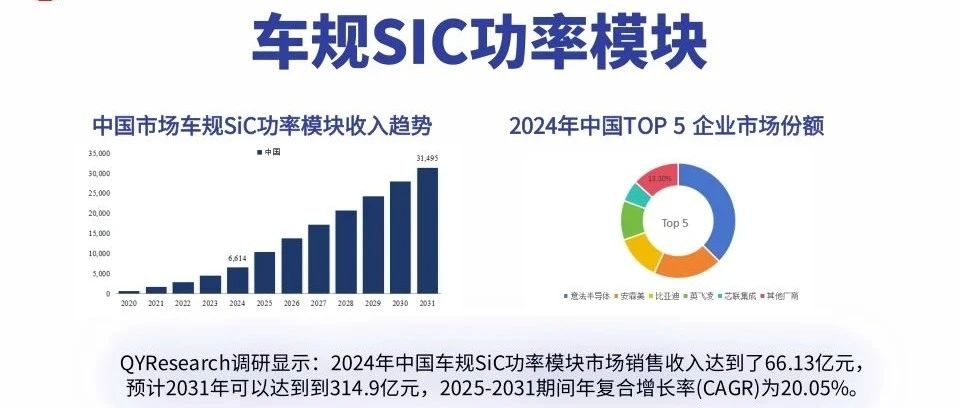
中国车载芯片自主化进程提速,从“25%”到“100%”
Xin Lang Cai Jing· 2025-06-24 07:02
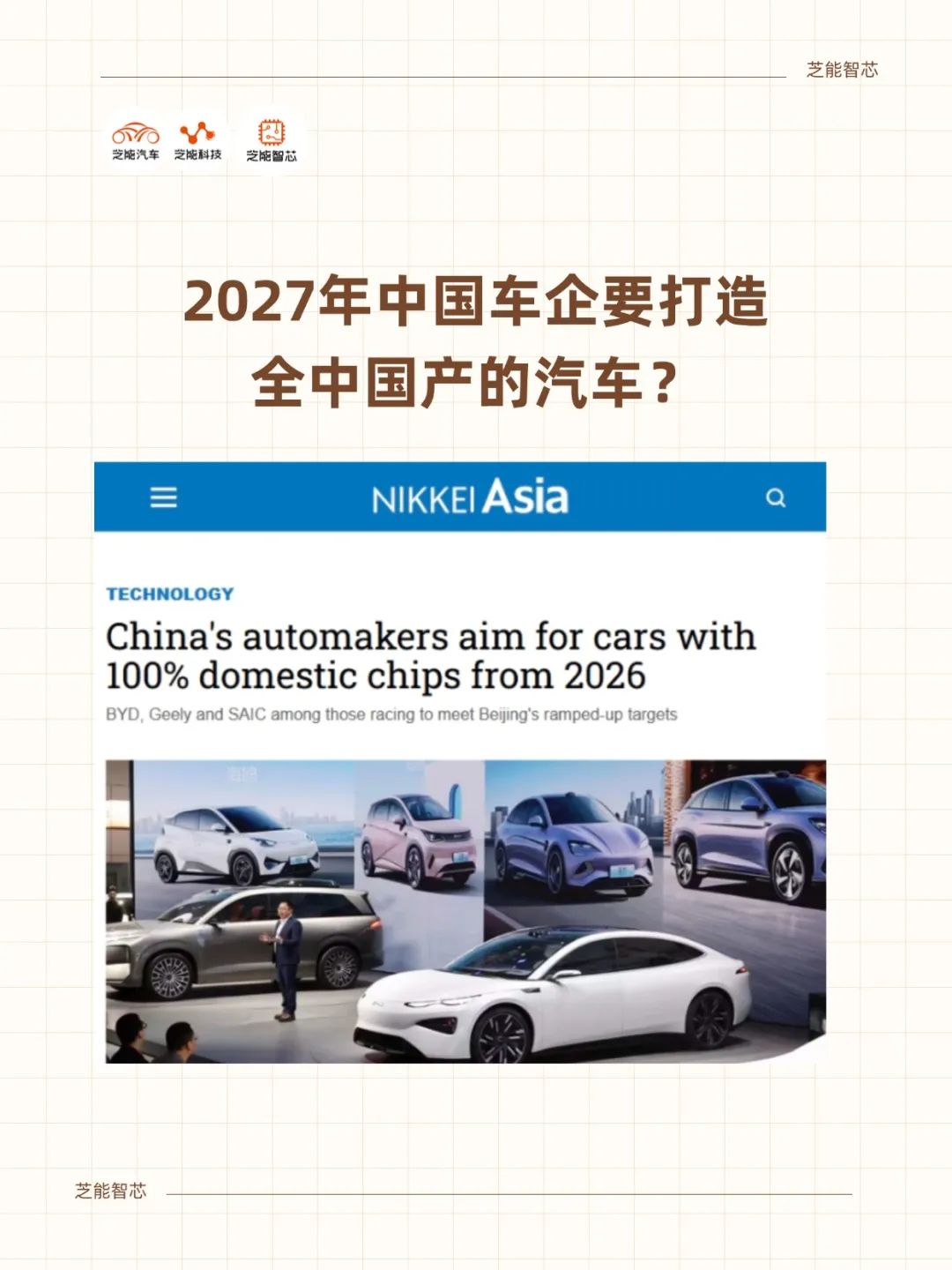
Core Viewpoint - Chinese automotive companies are accelerating the localization of automotive chips, aiming for 100% domestic production by 2027, driven by policy guidance and market awareness, significantly impacting the global chip landscape [1]. Group 1: Chip Classification and Current Status - Automotive chips are essential for the "soft and hard integration" architecture of modern vehicles, with a single vehicle typically requiring hundreds of chips across various functions [5]. - Chips can be categorized into five types: main control (e.g., MCU, SoC), communication (e.g., CAN/LIN/Ethernet transceivers), power (e.g., IGBT drivers), sensor (e.g., millimeter-wave radar front-end), and functional safety chips (e.g., TPM) [6]. - Chinese chip manufacturers have made breakthroughs primarily in main control and communication chip products [6][8]. Group 2: Current Developments in Domestic Chip Production - Companies like Neusoft Carrier, Jiefa Technology, and Huada Semiconductor have launched automotive-grade MCU products that meet AEC-Q100 certification, supporting ISO 26262 safety standards [8]. - In the communication chip sector, companies such as Xingyu Technology and Xinyi Information have achieved small-scale production of domestic CAN and Ethernet PHY chips, with some products entering the vehicle development cycle [8]. - High-performance intelligent driving SoC chips are still dominated by a few companies, with examples like Horizon's Journey series and Huawei's Kirin series, which are being deployed in various vehicle models [9]. Group 3: Trends in Chip Research and Development - Chinese automotive companies are transitioning from being "chip purchasers" to "chip architecture participants" and even "definers," with firms like XPeng leading the way in self-developed AI chip strategies [10]. - The evolution of hardware architecture is moving towards SoC integration platforms that emphasize multi-domain collaboration, requiring chip companies to possess both hardware design capabilities and a complete software SDK stack [12]. - Collaborations between automotive and chip companies are increasing, with examples including Geely's partnership with Hezhima for intelligent driving platforms and BYD's full-stack self-research model for core modules [13][15].
摩根士丹利:中国汽车芯片国产化的三大投资主题
摩根· 2025-06-23 02:30
Investment Rating - The investment rating for CR Micro (688396.SS) has been upgraded from Underweight to Equal-weight with a target price increase from Rmb28.10 to Rmb40.00 [3][5]. Core Insights - The report identifies three key investment themes in the Chinese automotive semiconductor sector: Power Discrete Devices, Advanced Driver Assistance Systems (ADAS), and Microcontrollers (MCU) [4][23]. - China's electric vehicle (EV) market is projected to grow significantly, with EV penetration expected to rise from 28% in 2024 to 42% by 2030, indicating a strong demand for automotive semiconductors [3][27]. - The report emphasizes the importance of localization in the semiconductor supply chain, noting that most global automotive chip companies are still in the early stages of implementing localization strategies in China [4][28]. Summary by Sections Investment Themes - The three key investment areas are: 1. **Power Discrete Devices**: Chinese companies have made solid progress in IGBT and SiC substrates, with opportunities in MOSFET and SiC devices [4][40]. 2. **ADAS**: The ADAS SoC market is expected to have the highest compound annual growth rate (CAGR), benefiting various suppliers including SoC vendors and peripheral chip manufacturers [4][24]. 3. **MCU**: The self-sufficiency rate for automotive MCUs is very low, at less than 5% in 2024, indicating significant growth potential for leading local companies [4][41]. Market Dynamics - China consumed 56% of the global electric vehicle production, and the report forecasts that the domestic automotive semiconductor market will continue to grow faster than global peers due to the increasing demand for EVs and government support for supply chain localization [3][27]. - The report highlights that the automotive semiconductor supply chain in Greater China currently accounts for less than 5% of the global supply, with a self-sufficiency rate of only 15% [37][38]. Company Ratings and Strategies - The report recommends specific companies for investment based on their positions in the identified themes: - **Power Semi**: Companies like Starpower (603290.SS), Yangjie Technology (300373.SZ), and SICC (688234.SS) are highlighted for their growth potential [5][23]. - **ADAS**: Companies such as Horizon Robotics (9660.HK) and Will Semiconductor (603501.SS) are noted for their strong positions in the ADAS market [5][23]. - **MCU**: GigaDevice (603986.SS) is recognized for its potential to benefit from localization trends [5][23]. Future Projections - The report anticipates that by 2027, the self-sufficiency rate for automotive chips in China will reach 28%, reflecting the ongoing efforts to enhance local production capabilities [16][53]. - The expected growth in the electric vehicle market is projected to triple by 2030, with significant implications for the semiconductor industry [33][34].


中国汽车芯片,国产化加速
半导体芯闻· 2025-06-18 10:09
Core Viewpoint - The article discusses China's push for automotive chip localization amid increasing US-China tech competition, aiming for 100% self-developed chips by 2027 [1][3]. Group 1: Government Initiatives and Industry Response - The Chinese government, through the Ministry of Industry and Information Technology (MIIT), is leading the initiative for automotive chip localization, with a target to increase the domestic chip usage rate from 25% in 2024 to 100% by 2027 [1]. - Major Chinese automotive brands, such as Geely and BYD, have expressed willingness to prioritize the use of domestic chips, reflecting a strong commitment to this initiative [1][2]. - Despite the lack of a mandatory requirement for 100% localization, the automotive industry is actively collaborating with domestic wafer manufacturers like SMIC to explore the feasibility of domestic alternatives [1][2]. Group 2: Challenges and Strategic Adjustments - The automotive chip localization faces significant challenges, particularly in the autonomous driving sector, where there is still heavy reliance on US suppliers like Nvidia and Qualcomm [1]. - Chinese automotive manufacturers are adopting flexible strategies by using consumer-grade chips for non-core functions, which reduces costs and shortens testing and certification times to 6-9 months, compared to several years for European manufacturers [2]. - Chinese chip companies, such as SemiDrive, are beginning to expand into international markets, indicating a new phase for Chinese chip manufacturers [2]. Group 3: Market Dynamics and Future Outlook - The global demand for automotive chips is surging, making automotive chip manufacturing a crucial strategic direction for China's semiconductor industry [3]. - The rapid expansion of China's mature process nodes is creating price pressure in markets for microcontrollers and analog chips, although the overall self-sufficiency rate in semiconductors remains low, with only 17.5% of domestic demand expected to be met by 2025 [2][3]. - The shift towards automotive chip localization is not only a part of national technology strategy but also signifies a fundamental change in the global automotive supply chain, potentially altering the competitive landscape in the automotive market [3].

日媒:大量中国车企正在推出完全自研自制芯片
Guan Cha Zhe Wang· 2025-06-17 11:20
Core Viewpoint - Chinese automakers, including SAIC, Changan, Great Wall, BYD, Li Auto, and Geely, are preparing to launch models equipped with 100% self-developed chips, with at least two brands aiming for mass production by 2026 [1] Group 1: Industry Trends - The goal is to achieve 100% self-research and manufacturing of automotive chips by 2027, driven by increasing tensions with the U.S. [1] - The self-sufficiency rate of automotive chips in China is currently around 15%, showing improvement from the previous year but still heavily reliant on foreign manufacturers [5] Group 2: Company Developments - Several Chinese automakers have announced their self-developed or produced automotive chips, including those for smart cockpits and intelligent driving systems [3] - Geely's chip subsidiary has produced the Long Eagle No. 1 7nm smart cockpit chip, which has already entered mass production [3] - NIO has released its self-developed intelligent driving chip, Shenji NX9031, based on 5nm technology, with a computing power exceeding 1000 TOPS [4] Group 3: Collaborations and Partnerships - Global automotive chip leaders like STMicroelectronics, NXP, and Infineon are strengthening collaborations with Chinese chip foundries to enhance production capacity for Chinese automakers [3] - Volkswagen plans to procure the self-developed 7nm Turing AI chip from Xiaopeng Motors, which has a maximum computing power of 700 TOPS [4]
ASML的尴尬
是说芯语· 2025-06-14 07:13
Core Viewpoint - TSMC's decision to limit the purchase of ASML's new High-NA EUV lithography machines indicates a significant shift in the semiconductor industry, reflecting a broader trend of changing power dynamics and technological advancements that reduce reliance on high-cost equipment [1][2]. Group 1: TSMC's Position on High-NA EUV Machines - TSMC has only symbolically purchased one unit of ASML's new High-NA EUV lithography machine, which has sold only five units globally, indicating a lack of demand [1]. - TSMC executives stated that the 1.4nm chip process does not require High-NA EUV technology, as significant performance improvements have already been achieved without it [1][2]. - The high price of the High-NA EUV machine, at $400 million (approximately 3 billion RMB), is a major factor in TSMC's decision to delay its adoption [2]. Group 2: Industry Dynamics and Technological Advancements - The semiconductor industry is undergoing a major restructuring, with a consensus among international media that the era of high-price monopolies maintained by Western companies is ending [2]. - Chinese companies have made significant technological breakthroughs in areas such as 7nm chip manufacturing and SiC power devices, prompting foreign companies to reduce prices by 30% by 2025 to remain competitive [2]. - TSMC's technology team has achieved notable advancements, extending the lifespan of EUV lithography machines and improving the 1.4nm process performance by 15% or reducing power consumption by 25%-30% at the same frequency [2]. Group 3: EUV Lithography Technology Overview - ASML's EUV lithography machines are essential for manufacturing chips below 7nm, with ASML being the sole producer of these machines globally [2][4]. - The transition from Low NA EUV machines (0.33 NA) to High NA EUV machines (0.55 NA) is crucial for processes below 3nm, as the latter offers higher resolution and lower power consumption [3]. - ASML's EUV machines support advanced process nodes of 5nm and below, with a registration accuracy of ≤1.5nm, while domestic lithography machines lag behind in capabilities [4].


这家模拟芯片大厂,业绩还在哐哐涨
芯世相· 2025-06-13 08:58
Core Viewpoint - MPS has demonstrated strong growth in the analog chip industry, achieving record revenue for 13 consecutive years, with a notable increase in demand for its products despite overall market challenges [3][12][34]. Group 1: MPS Financial Performance - MPS reported a revenue of $2.2 billion in 2024, marking a 21.2% year-over-year increase, driven by product optimization and increased average selling prices (ASP) [12][24]. - In Q1 2025, MPS achieved a revenue of $640 million, a significant 39.2% increase compared to the previous year, reflecting the effectiveness of its diversified market strategy [12][24]. - The company's net profit reached $1.787 billion in 2024, a staggering 318.1% increase, showcasing its strong performance in high-power clean energy applications and automotive audio sectors [14][24]. Group 2: Market Dynamics and Demand - Despite a general downturn in the analog chip market, MPS has maintained a robust presence, particularly in the spot market, with demand surging for AI power management and automotive chips [4][5][12]. - The demand for MPS products peaked in July 2024, followed by a gradual decline, but is expected to rebound by the end of 2024 due to increased automotive chip requirements [5][6]. - MPS's market demand has shown fluctuations, with some distributors reporting a drop in inquiries while others still experience high demand, indicating a mixed market sentiment [7][9]. Group 3: Product and Market Strategy - MPS focuses on high-value areas such as DC/DC converters and power modules, expanding from single ICs to subsystems, which is a key strategy for long-term growth [30][31]. - The company has successfully penetrated the enterprise data market, which accounted for 32.5% of its revenue in 2024, up from 14% two years prior, driven by AI application sales [32][33]. - MPS adopts a conservative approach to acquisitions, only pursuing small projects that enhance its existing platform, thereby maintaining a focus on organic growth and technological advancement [26][30]. Group 4: Future Outlook - MPS aims to grow its revenue at a rate exceeding the overall market growth by 10% to 15% from 2025 to 2027, while stabilizing its gross margin between 55% and 60% [36]. - The company is well-positioned for future growth, with a strong cash flow of $256.4 million in Q1 2025 and over $1 billion in cash reserves to support R&D and expansion efforts [16][36].

半导体行业月报:美国半导体出口管制再升级,存储器价格持续回升-20250613
Zhongyuan Securities· 2025-06-13 08:27
Investment Rating - The semiconductor industry is rated as "Outperform" [2] Core Insights - The semiconductor industry is currently in an upward cycle, driven significantly by AI as a key growth engine [4][28] - Global semiconductor sales continued to grow year-on-year, with a 22.7% increase in April 2025, marking 18 consecutive months of growth [22][23] - The prices of DRAM and NAND Flash are expected to rise due to strong demand from AI-driven enterprise SSDs [5][29] Summary by Sections 1. Market Performance - In May 2025, the domestic semiconductor industry saw a decline of 5.65%, significantly underperforming the Shanghai Composite Index, which rose by 1.85% [4][10] - The Philadelphia Semiconductor Index increased by 12.48% in May 2025, outperforming the Nasdaq 100, which rose by 9.04% [12][18] 2. Sales Growth - April 2025 global semiconductor sales reached approximately $57 billion, with a year-on-year growth of 22.7% and a month-on-month increase of 2.5% [22][23] - China's semiconductor sales in April 2025 were $16.2 billion, reflecting a year-on-year growth of 14.4% [23] 3. Price Trends - The DRAM price index rose by approximately 33% and the NAND Flash index increased by about 11% from March to May 2025 [3][4] - TrendForce forecasts that NAND Flash prices will continue to rise in Q2 and Q3 of 2025 due to strong demand [5][29] 4. Industry Dynamics - The demand for consumer electronics is gradually recovering, with global smartphone shipments in Q1 2025 showing a slight year-on-year increase of 0.2% [4][22] - AI mobile penetration is expected to rise rapidly, reaching 34% in 2025, while AI PC penetration is projected to hit 35% [4][22] 5. Investment Opportunities - The report suggests focusing on sectors such as EDA software, AI computing chips, CPUs, FPGAs, analog chips, semiconductor equipment, and wafer manufacturing due to the acceleration of domestic semiconductor industry self-sufficiency [4][5]