欧莱雅集团

Search documents
商贸零售行业 2026 年度投资策略:细分需求企稳,甄选供给优化
Changjiang Securities· 2025-12-15 01:49
Investment Rating - The report maintains a positive investment rating for the retail industry [12] Core Insights - Domestic demand is expected to gradually stabilize, while export demand presents several structural opportunities. The focus is on supply-side logic and selecting sub-industries with optimized supply patterns [3][6] - The report highlights the potential of the Belt and Road Initiative and structural demand in North America for export opportunities, alongside the advantages of leading export companies during compliance improvements [6][25] - In the beauty and personal care sector, high-end brands and extreme cost-performance products are identified as stable segments with high entry barriers [6][8] - The physical retail sector is seeing thorough adjustments from leading companies, which, combined with ongoing supply chain reforms, is expected to lead to profit optimization [6][9] - The gold and jewelry sector continues to favor brands with strong product differentiation capabilities, aligning with growing consumer demand [6][10] Summary by Sections Cross-Border Expansion - The report emphasizes the strong performance of the Belt and Road Initiative, with exports to these regions growing by 10.4% year-on-year from January to October 2025, while overall export growth has slowed to 5.3% [25] - Structural opportunities in the U.S. market are noted, with high-end retail showing resilience and discount retail experiencing accelerated growth [34][35] Beauty and Personal Care - The cosmetics industry is experiencing a slight recovery in growth, but competition among mid-tier brands is intensifying. The report recommends focusing on high-end and cost-effective brands [8][19] - The medical aesthetics sector is seeing increased compliance with more approved products, but competition is expected to intensify, necessitating a focus on companies with strong product innovation [8][19] Supermarkets and Department Stores - The demand in the supermarket and department store sector remains stable, with a slowdown in store closures. Leading supermarket companies are maintaining their market positions, particularly quality retail firms [9][18] - Adjustments in supply chain and compensation mechanisms are enhancing operational efficiency and promoting private label products [9][18] Gold and Jewelry - The gold and jewelry sector is adapting to high gold prices, with an increase in lightweight products and a stable demand for gifting scenarios. The report suggests focusing on companies with strong design capabilities and expansion potential [10][19]
14起项目,食品饮料依旧是11月投融资市场主角
3 6 Ke· 2025-12-09 07:53
Core Insights - In November 2025, 14 new consumer-related projects completed financing, totaling approximately 900 million RMB, with notable projects including "LAN" and "Thunderbird Innovation" not disclosing specific amounts [1] - The financing landscape includes 7 food and beverage projects, 3 in smart technology, and single projects in new retail, apparel, beauty, and pet sectors [1] Group 1: Food and Beverage Sector - The food sector saw 5 completed financings, with "Xianbing Sister" and "Houxishi" being restaurant chains, while "Maisen" is a professional sports nutrition brand under Mengniu Group, and "Ruiyun Cold Chain" and "Jiajixian" are backend supply chain companies [1] - Mengniu Group announced its entry into the professional sports nutrition market in February 2023, launching the "Maisen" brand, which has been recognized for its performance and market presence [2] Group 2: Supply Chain Innovations - "Ruiyun Cold Chain," established in 2020, focuses on enhancing cold chain logistics efficiency through digitalization and has established a cross-border cold chain network in Southeast Asia and Hong Kong [3] - "Jiajixian," founded in 2019, specializes in AI-driven fresh supply chain services, ensuring product freshness and quality through comprehensive monitoring from source to consumer [3] Group 3: Coffee and Beverage Brands - "Xinyue NEAVES" and "Bixing Coffee" have completed financing, with Bixing Coffee's recent round being particularly noteworthy as it marks its fourth financing amidst a competitive market [4][5] - Bixing Coffee has expanded its franchise model, surpassing 500 signed stores nationwide since opening its first store in Suzhou in 2022 [4] Group 4: Beauty and Personal Care - "LAN," a clean beauty brand, received minority investment from L'Oréal's Shanghai Meici Fang Investment Co., marking L'Oréal's first investment in a local skincare brand [7] - "LAN" has achieved significant sales success, leading the market in facial oil sales for two consecutive years, with its products entering the "billion club" [7] Group 5: Market Challenges and Trends - The bankruptcy of POLYVOLY Technology highlights the challenges faced by brands that rapidly scaled without sustainable foundations, indicating a shift away from the era of quick brand creation through capital and traffic [8] - In the pet sector, Yunnan Hezhong Lian Investment completed a 12 million RMB angel round financing, while "Paiteshengxian," a pet fresh food venture, announced the closure of all offline stores due to unsatisfactory performance [8][9]
4.5 亿,巨子生物创始人,入局新赛道
Xin Lang Cai Jing· 2025-12-08 12:25
Core Viewpoint - The recent capital layout by Yan Jianya, founder of Juzhi Biotechnology, involves acquiring shares in Sanrenxing Media Group, indicating a strategic investment in a company facing declining performance in recent years [1][2][17]. Company Overview - Sanrenxing Media Group is a comprehensive advertising and marketing service company, focusing on digital marketing, event services, and campus media marketing, with clients from various sectors including telecommunications, finance, consumer goods, and automotive [1][15]. - As of December 5, the total market capitalization of Juzhi Biotechnology is approximately HKD 410.2 billion (around RMB 372.54 billion), while Sanrenxing's market capitalization stands at RMB 64.09 billion [16]. Financial Performance - In 2022, Sanrenxing achieved record revenues of RMB 56.53 billion and a net profit of RMB 7.37 billion [3][18]. - However, the company has experienced a decline in performance over the past two years, with projected revenues for 2024 dropping to RMB 42.08 billion (a 20% decrease) and net profit falling to RMB 1.23 billion (a 76.65% decline) [4][18]. - For the first three quarters of the current year, Sanrenxing reported revenues of RMB 25.69 billion, down 16.72% year-on-year, and a net profit of RMB 1.45 billion, down 20.48% [4][18]. Investment Details - Yan Jianya's acquisition involves the transfer of 16.865 million unrestricted shares from multiple controlling shareholders of Sanrenxing, totaling approximately RMB 4.51 billion [1][19]. - Post-transaction, Yan will hold an 8% stake in Sanrenxing, becoming the second-largest shareholder after the controlling shareholders [1][15]. Strategic Implications - The investment is seen as a strategic move for Yan, allowing him to leverage Sanrenxing's extensive marketing resources, including a nationwide campus media network covering over 900 universities [20]. - Sanrenxing has established partnerships with major internet media platforms, enhancing its digital marketing capabilities and transitioning towards a technology-driven marketing model [21]. Industry Context - The beauty industry, including companies like Juzhi Biotechnology, faces challenges in balancing brand building and effective advertising, with marketing costs rising significantly [22][23]. - Juzhi's sales expense ratio has increased from 22.30% in 2021 to 36.25% in 2024, reflecting the industry's trend towards higher marketing investments [23]. Future Outlook - The collaboration with Sanrenxing is expected to provide Juzhi Biotechnology with enhanced marketing strategies and execution support, aiding in the establishment of a more sustainable brand communication system [25]. - The beauty sector is witnessing a shift towards ecological layouts, with companies expanding their investment portfolios and seeking synergies among brands to create value [26][27].


东北兄弟卖美妆,6个月收入10亿,冲刺国货高端护肤第一股
2 1 Shi Ji Jing Ji Bao Dao· 2025-12-06 12:18
Core Viewpoint - Lin Qingxuan, a domestic beauty brand, has resubmitted its IPO application to the Hong Kong Stock Exchange, highlighting significant revenue growth and a rebranding to position itself as a high-end skincare brand in China [1][2]. Group 1: Company Performance - In the first half of 2025, Lin Qingxuan reported total revenue of 1.05 billion RMB, representing a remarkable year-on-year growth of 98% compared to the first half of 2024 [1]. - The company's gross margin reached 82.4% in the first half of 2025, up from 81.9% in the same period of 2024, indicating strong pricing power and operational efficiency [3]. - The revenue contribution from the essence oil product line accounted for 45.5% of total revenue in the first half of 2025, showing a consistent upward trend in its importance to overall sales [2]. Group 2: Market Positioning - Lin Qingxuan emphasizes its high-end positioning, ranking first among domestic high-end skincare brands in China by retail sales in 2024, and is the only domestic brand among the top 15 high-end skincare brands [2]. - The high-end skincare market in China is relatively concentrated, with the top 15 brands holding 66.1% of the market share, indicating a competitive landscape [2]. Group 3: Marketing and Sales Strategy - The company has significantly increased its sales and distribution expenses, which rose by 100.2% to 580.6 million RMB in the first half of 2025, driven by enhanced online and offline marketing activities [4]. - Lin Qingxuan's marketing strategy has been questioned for being "heavy on marketing and light on R&D," but industry experts suggest that marketing and brand strength are crucial competitive factors in the cosmetics industry [3]. Group 4: Investment and Shareholding - The founder, Sun Laichun, holds 38.21% of the shares directly and approximately 79.27% in total, indicating strong founder control [5]. - Notable external investors include Yagao Fashion, Country Garden Venture Capital, and others, with Yagao holding 4.49% of the shares [5]. - Recent share acquisitions before the IPO have led to an estimated pre-IPO valuation of approximately 3.846 billion RMB for Lin Qingxuan [6]. Group 5: Industry Trends - The trend of domestic beauty brands pursuing IPOs in Hong Kong has intensified, with Lin Qingxuan following other brands like Natural Hall and Proya, reflecting a strategic move to access capital markets for growth [7]. - The domestic cosmetics market is expected to see increased demand for plant-based essential oils, indicating a potential growth area in the coming years [8].
欧莱雅中国研发和创新中心扬帆20年:本土实验室正孵化产业公共属性的迭代引擎
Cai Jing Wang· 2025-12-05 13:37
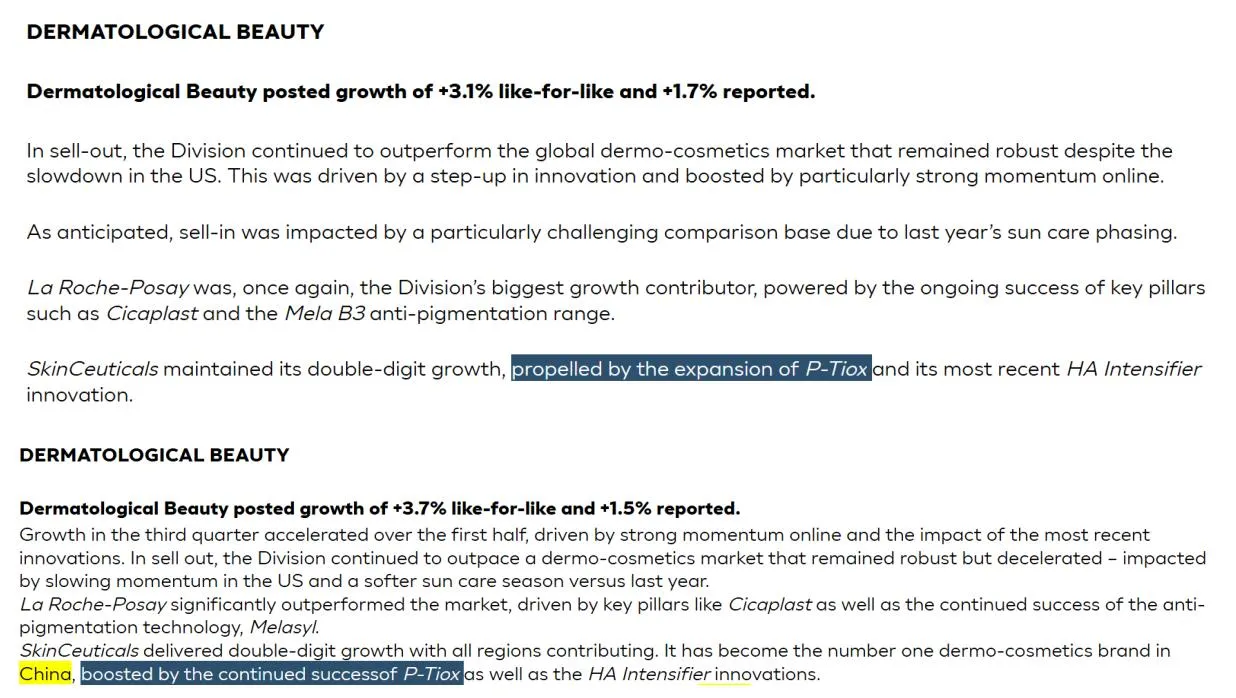
Core Insights - L'Oréal's China R&D and Innovation Center is driving global beauty giant's performance through localized product innovations tailored for Chinese consumers [1][2] - The center has evolved into a key pillar in L'Oréal's global R&D landscape, emphasizing collaboration with local scientific institutions and startups to enhance innovation capabilities [4][5] Group 1: Product Innovations - Customized products such as a jasmine-scented cream and a lip gloss inspired by local culinary flavors are examples of L'Oréal's localized approach [1] - The "P-TIOX" peptide serum, developed by the Chinese R&D team, has been highlighted as a major contributor to sustained double-digit growth for the brand [2] Group 2: R&D Achievements - Over the past 20 years, L'Oréal's China R&D has conducted approximately 35 large-scale foundational research projects, involving over 100,000 Chinese consumers annually [7] - In 2024, the center is set to publicly file 372 patents, with 81 of those being inventions from the Chinese R&D team [7] Group 3: Collaborations and Investments - L'Oréal has engaged in strategic investments in local biotech firms, such as "Unnamed Light," to co-develop innovative bioactive ingredients and promote sustainable production methods [10][11] - The establishment of the "Academician Workstation" in collaboration with Shanghai Jiao Tong University marks a significant milestone in L'Oréal's commitment to local scientific advancement [9] Group 4: Market Strategy - L'Oréal's investment strategy includes backing emerging local brands like LANlan, which aligns with the company's long-term vision of investing in the future of the Chinese market [15][16] - The company aims to leverage its R&D capabilities to support the commercialization of innovative products and enhance the overall beauty ecosystem in China [12][16]

半年营收翻番,林清轩改名再冲上市
Sou Hu Cai Jing· 2025-12-03 13:25
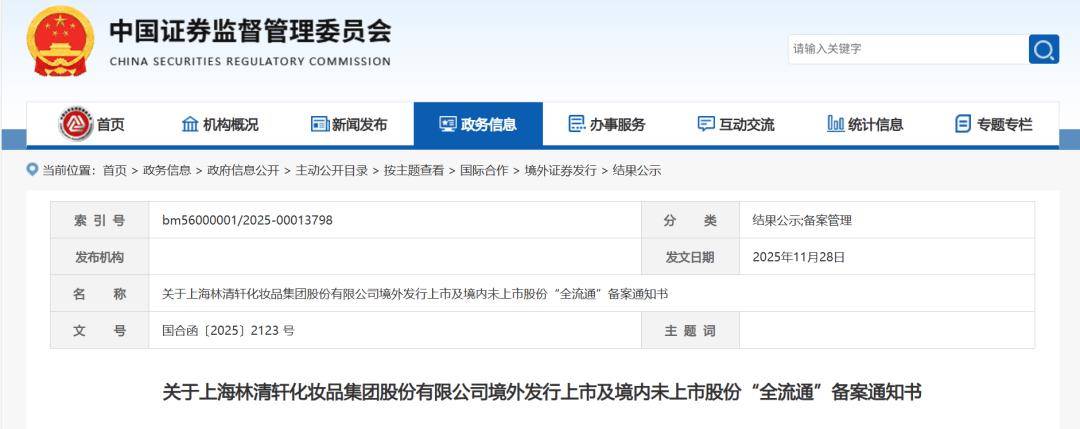
Core Insights - Lin Qingxuan has updated its prospectus for its IPO in Hong Kong, indicating a potential shift in the competitive landscape of domestic beauty brands in China [1] - The company has changed its name from "Shanghai Lin Qingxuan Biotechnology Co., Ltd." to "Shanghai Lin Qingxuan Cosmetics Group Co., Ltd." to reflect its strategic intent towards multi-brand and group operations [2][4] - The updated prospectus highlights a significant increase in revenue, with a 98.3% year-on-year growth in the first half of 2025, reaching 1.052 billion yuan [21][22] - Lin Qingxuan aims to expand its brand portfolio and enhance its market presence through internal incubation and strategic acquisitions [32][36] - The company plans to initiate international expansion starting with Southeast Asia, leveraging its unique plant resources and the concept of "Chinese beauty" [48] Company Name Change - The name change signifies a strategic shift towards a multi-brand and group-oriented operation [2][4] - The term "high-end" appears more frequently in the updated prospectus, indicating a continued focus on premium positioning [5] Financial Performance - Lin Qingxuan reported a revenue of 1.052 billion yuan in the first half of 2025, a substantial increase from 530 million yuan in the same period last year [21][22] - The company’s net profit for the same period was 182 million yuan, with a gross margin of 82.4% [22] - Historical revenue figures show a consistent upward trend, with revenues of 691 million yuan in 2022, 805 million yuan in 2023, and projected 1.21 billion yuan in 2024 [23] Shareholder Structure - The shareholder structure remains largely unchanged, with the founder holding a significant portion of shares [12][15] - Notably, a new investment from Shanghai Kaihui Chuangmei, an affiliate of L'Oréal, has been made, indicating increased interest from international beauty giants [18][20] Product and Brand Strategy - Lin Qingxuan's flagship product, the Camellia Oil, has been a major revenue driver, accounting for 45.5% of total revenue in the first half of 2025 [28][31] - The company is focusing on expanding its product matrix and has introduced new brands targeting different consumer segments [32][35] Retail and Distribution - As of June 30, 2025, Lin Qingxuan operates 554 stores, with over 95% located in high-end shopping malls [44] - The average repurchase rate has slightly decreased to 33.5%, while the active customer base has grown significantly [44] - Online sales accounted for 65.4% of total revenue in the first half of 2025, indicating a strong digital presence [48] Future Outlook - Lin Qingxuan plans to enhance its R&D capabilities, with an increase in the number of researchers to 85, focusing on developing proprietary ingredients and technologies [36][42] - The company is exploring potential acquisitions to strengthen its supply chain and expand its brand portfolio [36][40] - The upcoming IPO could position Lin Qingxuan as the leading domestic high-end skincare brand in the Hong Kong market, potentially altering the competitive dynamics within the industry [11][48]
国际资本按下中国投资新按钮:开云、欧莱雅从“收购”转向“播种”
Yang Zi Wan Bao Wang· 2025-12-03 11:40
Core Insights - Global luxury and beauty giants are shifting their investment strategies in China from direct acquisitions to minority stake investments and strategic partnerships, marking a new investment era focused on local brand ecosystems [1][2][5] Group 1: Investment Strategies - Kering Group's investment in "宝兰" represents a strategic move to discover emerging brands, particularly those rooted in Chinese cultural narratives, as part of its new investment department "Dream House" [2] - L'Oréal's investment strategy in China emphasizes a "light asset, heavy ecosystem" approach, focusing on local high-end brands with Eastern aesthetic narratives [2][3] - L'Oréal has established two new investment funds to systematically invest in beauty-related enterprises, indicating a clear and broad investment map in the Chinese market [3] Group 2: Market Dynamics - The high-end gold jewelry market in China, represented by "宝兰," is gaining traction among international investors due to its cultural significance and luxury attributes, appealing to high-net-worth consumers [4] - The market for traditional Chinese gold jewelry has proven to be a lucrative investment avenue, with companies like "老铺黄金" seeing stock price increases of over 15 times since their IPO, reflecting strong market demand [4] Group 3: Collaborative Models - The new investment model of "investing instead of buying" is reshaping the relationship between international giants and local brands, fostering mutual empowerment rather than simple capital acquisition [5] - For international companies like Kering and L'Oréal, investing in culturally rooted brands like "宝兰" and "LAN兰" provides insights into the preferences of a new generation of Chinese consumers, allowing for efficient market testing and strategic positioning [6] - This collaboration allows local brands to maintain cultural and operational autonomy while benefiting from the global resources of international firms, enhancing brand credibility and international visibility [6]
申万宏源证券晨会报告-20251203
Shenwan Hongyuan Securities· 2025-12-03 00:13
Group 1: Economic Policy Outlook - The fiscal policy for 2025 is characterized by increased intensity, advanced timing, and enhanced flexibility, reflecting a strong intent to support the economy. The fiscal financing scale is expected to reach a historical high of 14.36 trillion yuan, accounting for 10.2% of GDP [2][8] - In the first three quarters of 2025, broad fiscal expenditure is projected to grow by 7.9% year-on-year, indicating a high level of spending intensity [2][8] - The monetary policy is expected to return to a "moderately loose" tone, focusing on guiding expectations and improving transmission channels, with a cautious approach to interest rate cuts compared to 2024 [8] Group 2: Cosmetics and Aesthetic Medicine Industry - The international cosmetics and aesthetic medicine companies are experiencing a strategic adjustment in China, with signs of recovery in the market. The third quarter of 2025 shows a positive revenue growth trend in China, driven by promotional events [3][11] - Key recommendations for the cosmetics sector include companies with strong channel and brand matrices such as Maogeping, Shangmei, and Proya, while companies like Marubi and Huaxi Biological are expected to see marginal improvements in growth [3][11] - In the aesthetic medicine sector, companies with high R&D barriers and strong profitability are favored, with a focus on major product drivers and extensive product pipelines [3][11] Group 3: Kweichow Moutai (贵州茅台) - Kweichow Moutai maintains a buy rating with profit forecasts for 2025-2027 at 90.47 billion, 95.02 billion, and 101.53 billion yuan respectively, with corresponding PE ratios of 20x, 19x, and 18x [12][10] - The company emphasizes its strong brand barrier and excellent business model, which contribute to stable long-term profitability and high cash flow quality [12][10] - Moutai's strategy includes a focus on sustainable development and a commitment to not sacrificing long-term growth for short-term gains, with expectations for stable growth during the 14th Five-Year Plan period [13][10]

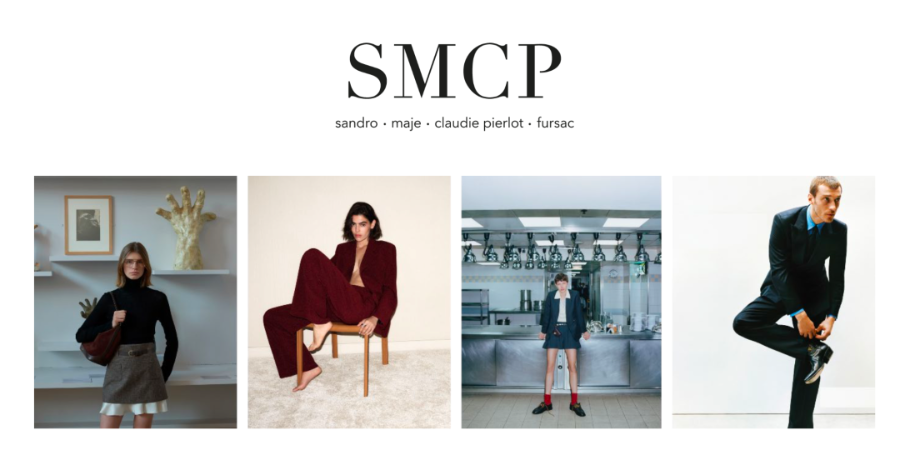
SMCP计划出售控股权;杰尼亚家族第四代上台|二姨看时尚
2 1 Shi Ji Jing Ji Bao Dao· 2025-12-01 02:38
Group 1: SMCP and PUMA Developments - SMCP Group has initiated a process to sell up to 51.2% of its equity, aiming to stabilize its shareholder structure and focus on development strategies [3] - Anta Sports is listed as a potential buyer for PUMA, which has seen its stock price drop nearly 50% over the past year due to various market pressures [4] Group 2: Financial Performance of Luxury Brands - Golden Goose reported a 13% increase in net revenue to €517 million for the first nine months of the fiscal year, with a 21% growth in direct-to-consumer (DTC) sales [5][6] - The adjusted EBITDA for Golden Goose grew by 7% to €173.6 million, with an EBITDA margin of 33.6% [6] Group 3: Market Trends and Consumer Behavior - A report by Bain & Company indicates that global luxury goods spending is expected to reach €1.44 trillion by 2025, remaining stable compared to the previous year [8] - Chinese luxury consumption is projected to shrink by 3%-5% this year, with a shift towards more localized and accessible brands [8] Group 4: Leadership Changes in Luxury Brands - Ermenegildo Zegna Group announced a new leadership structure, with the fourth generation of the Zegna family taking over as co-CEOs [11] Group 5: Investments and Expansions - L'Oréal plans to invest €60 million to upgrade its perfume factory in France, aiming to double its annual production capacity to 200 million bottles [10] - Watsons is preparing for an IPO in Hong Kong and the UK, with a potential fundraising target of $2 billion [15] Group 6: Bankruptcy and Market Challenges - Parfümerie Pieper, Germany's largest family-owned perfume retailer, has filed for self-administration bankruptcy while maintaining normal operations [13] - Estée Lauder is considering selling its Korean skincare brand Dr.Jart+, which is expected to generate $150 million in revenue for 2025, significantly lower than initial expectations [14]
SMCP计划出售控股权;杰尼亚家族第四代上台
2 1 Shi Ji Jing Ji Bao Dao· 2025-12-01 02:37
Group 1: Luxury Goods Market Overview - The global luxury goods market is expected to reach €1.44 trillion by 2025, remaining stable compared to the previous year, with a trend of gradual improvement anticipated for the coming year [10][11] - The personal luxury goods market is projected to maintain stability, with a forecasted market size of €358 billion for 2025, although a decline of approximately 2% is expected this year [11] Group 2: Company Developments - SMCP Group has initiated a process to sell up to 51.2% of its equity, aiming to stabilize its shareholder structure and focus on strategic development [3] - Anta Sports is reportedly a potential buyer for German sports brand PUMA, which has seen its stock price drop nearly 50% over the past year due to various market pressures [6] - Golden Goose reported a 13% increase in revenue to €517 million for the first nine months of the fiscal year, with a 21% growth in direct-to-consumer (DTC) sales [6][7] - L'Oréal announced a €60 million investment to upgrade its perfume factory in France, aiming to double its annual production capacity to 200 million bottles [16] - Ermenegildo Zegna Group will implement a new leadership structure, with the fourth generation of the Zegna family taking over as co-CEOs [17] - Parfümerie Pieper, a major family-owned perfume retailer in Germany, has filed for bankruptcy management while continuing normal operations [19] - Estée Lauder is considering selling its Korean skincare brand Dr.Jart+, which is expected to generate approximately $150 million in revenue for 2025 [21] - Watsons is planning to list in Hong Kong and the UK, with an expected fundraising target of up to $2 billion [24]