伊利股份

Search documents
数说公募纯债与混合资产策略基金2025年四季报:固收+规模再创新高,含权敞口小幅下降
SINOLINK SECURITIES· 2026-01-26 15:04
Report Title - "Counting the Public Offering Pure Bond and Hybrid Asset Strategy Funds' 2025 Q4 Reports - The Scale of 'Fixed Income +' Reaches a New High, and the Exposure to Equity Slightly Declines" [1] Report Date - January 26, 2026 [2] Market Overview General Fixed - Income Fund Scale in 2025 Q4 - Among the top 20 fund companies in terms of general fixed - income fund scale, the scale of some companies increased while others decreased. For example, the scale of China Merchants Fund increased by 9.88% to 3512.27 billion yuan, while the scale of E Fund decreased by 4.71% to 3627.05 billion yuan [8]. Hybrid Asset Strategy Fund Scale in 2025 Q4 - In the hybrid asset strategy fund scale ranking, the scale changes also varied. For instance, the scale of Invesco Great Wall Fund increased by 32.11% to 2263.68 billion yuan, while the scale of Fullgoal Fund decreased by 5.85% to 1281.73 billion yuan [8]. Performance Return - Different types of funds had different average returns in 2025 Q4, year - to - date, and in the past 1 - year, 3 - year, and 5 - year annualized periods. For example, the average return of convertible bond funds in 2025 Q4 was 0.84%, and the year - to - date return was 23.10% [15]. Maximum Drawdown - The average maximum drawdowns of various fund types also differed. For example, the average maximum drawdown of convertible bond funds in 2025 Q4 was - 5.26%, and the year - to - date maximum drawdown was - 8.90% [15]. Annualized Sharpe Ratio - The annualized Sharpe ratios of different fund types were distinct. For example, the annualized Sharpe ratio of short - term pure bond funds in 2025 Q4 was 4.28 [15]. Asset Allocation Leverage Ratio - In 2025 Q4, different types of funds had different leverage ratios and their changes compared to Q3. For example, the leverage ratio of short - term pure bond funds was 111.89% in Q4, an increase of 0.40% compared to Q3 [40]. Holding Characteristics Stock Holdings - From 2025 Q1 to Q4, the industry and stock holding ratios of funds changed. For example, the proportion of non - ferrous metals in the stock market value increased from 11.27% in Q1 to 14.65% in Q4 [54][57]. Bond Holdings - The industry and bond holding ratios of funds also changed over the four quarters of 2025. For example, the proportion of bank bonds in the bond market value decreased from 20.75% in Q1 to 14.45% in Q4 [67][68]. Fund Managers' Views Pure Bond Market Views - Different fund managers had different views on the pure bond market in 2026 Q1. For example, Huang Yingjie of Bank of Communications Yulong Pure Bond A believed that the bond market might be in a range - bound market with a steeper curve [74]. Bond and Stock Market Views - Some fund managers had comprehensive views on the bond and stock markets. For example, Deng Xinyu and Zhao Yucheng of China Europe Dingli A were optimistic about the stock market's structural opportunities and adjusted their convertible bond positions [75]. Convertible Bond and Stock Market Views - Fund managers also had different views on the convertible bond and stock markets. For example, Huang Bo of Everbright Tianyi A planned to select high - cost - effective convertible bonds for the fund's fixed - income part [79].
食品饮料2025年四季度基金持仓分析:白酒持仓继续下降,食品配置环比回升
Shenwan Hongyuan Securities· 2026-01-26 15:01
Investment Rating - The investment rating for the food and beverage sector is "Buy" for key companies such as Kweichow Moutai, Wuliangye, and Luzhou Laojiao [44]. Core Insights - The report indicates a continued decline in the holdings of the food and beverage sector within mutual funds, with the top 20 holdings' market value as a percentage of total fund equity investments decreasing to 16.31% in Q4 2025, down 0.47 percentage points from Q3 2025 [5][21]. - Kweichow Moutai's market value as a percentage of total fund equity investments is 1.31%, a decrease of 0.06 percentage points from the previous quarter, while Wuliangye and Luzhou Laojiao also saw declines [9][10]. - The food and beverage sector's weight in the total A-share market capitalization has decreased to 4.04%, down 0.66 percentage points [25]. Summary by Sections Fund Holdings Analysis - In Q4 2025, the number of funds holding Kweichow Moutai remained stable at 1,048, while Wuliangye saw a decrease of 109 funds to 175, and Luzhou Laojiao's holdings dropped by 18 to 128 [21]. - The concentration of holdings in the food and beverage sector is low, with only one company (Kweichow Moutai) in the top 20 holdings [7][8]. Sector Allocation - The food and beverage sector's heavy stock holdings accounted for 6.10% of total fund equity investments, a decrease of 0.28 percentage points from the previous quarter [25]. - The white liquor sector's heavy stock holdings accounted for 5.13%, also down 0.4 percentage points, indicating a position close to levels seen in Q1 2010 [25][39]. Individual Stock Performance - The report highlights that Kweichow Moutai, Wuliangye, and Luzhou Laojiao are currently below their average allocation levels since 2009, indicating potential undervaluation [9][10]. - The report notes that the allocation coefficient for the white liquor sector is 1.92, which is below the historical average of 2.11, suggesting a potential for recovery [25][39]. Northbound Capital Changes - In Q4 2025, the northbound capital holdings for major food and beverage stocks showed a mixed trend, with Shuanghui Development seeing an increase of 0.13 percentage points, while Kweichow Moutai and Wuliangye experienced declines of 0.48 and 0.58 percentage points, respectively [44][45].




食品饮料行业深度报告:2025Q4基金食品饮料持仓分析:持仓继续下降,结构向大众品倾斜
Soochow Securities· 2026-01-26 12:24
Investment Rating - The report maintains an "Increase" rating for the food and beverage industry [1] Core Insights - The food and beverage sector continues to see a decline in holdings, with a shift towards mass-market products. The proportion of active equity funds in the food and beverage sector decreased to 4.04% in Q4 2025, down from 4.18% in Q3 2025, reflecting a 0.14 percentage point decline [9][15] - The report highlights a continued reduction in allocations to alcoholic beverages, while holdings in mass-market products have shown signs of recovery. The proportion of holdings in white liquor decreased by 0.29 percentage points to 2.92% in Q4 2025 [14][17] - Major consumer funds have reduced their allocations to alcoholic beverages, with a notable decrease of 2.22 percentage points in white liquor holdings, while overall food and beverage allocations have increased [17][21] Summary by Sections 1. Food and Beverage Holdings Continue to Decline, Structure Shifts Towards Mass-Market Products - As of Q4 2025, the total scale of active equity fund heavy holdings is approximately 19.4 trillion yuan, with food and beverage holdings at 78.4 billion yuan, reflecting a 9.01% decline [9][10] - The decline in alcoholic beverage holdings is evident, with white liquor allocations decreasing to 2.92% and beer and pre-mixed drinks also seeing slight reductions [14][15] 2. Holdings Become More Diversified, Capturing Marginal Recovery Themes - The number of heavy holdings in the food and beverage sector has become more diversified, with only Kweichow Moutai remaining in the top 20 heavy holdings [24] - The report notes that the top five stocks with the largest increase in heavy holdings include Baba Foods, Yingjia Gongjiu, Youran Dairy, Ximai Foods, and Modern Animal Husbandry [28][29] 3. Investment Recommendations - The report suggests five key directions for investment: focusing on functional health foods, improving supply chains and product/channel resonance in leading snack companies, expanding quality retail formats, investing in long-lifecycle beverage leaders, and tracking sectors with potential recovery such as dairy and large-scale dining [10][29]
2025Q4基金食品饮料持仓分析:持仓继续下降,结构向大众品倾斜
Soochow Securities· 2026-01-26 12:12
Investment Rating - The report maintains an "Increase" rating for the food and beverage industry [1] Core Insights - The food and beverage sector continues to see a decline in holdings, with a shift towards mass-market products. The proportion of active equity funds in the food and beverage sector decreased to 4.04% in Q4 2025, down 0.14 percentage points from the previous quarter [9][15] - The report highlights a continued reduction in allocations to alcoholic beverages, while holdings in mass-market products have shown signs of recovery. The proportion of holdings in white liquor decreased by 0.29 percentage points to 2.92% in Q4 2025 [14][17] - The report emphasizes the importance of capturing valuation switching opportunities in five key areas: health food and supplements, leading snack brands, quality retail chains, beverage leaders with long life cycles, and sectors expected to recover from downturns, particularly dairy [29][30] Summary by Sections 1. Holdings Decline and Shift Towards Mass-Market Products - Active equity funds' holdings in the food and beverage sector decreased by 9.01% to 784 billion yuan in Q4 2025, with a total market value of approximately 1.94 trillion yuan [9][10] - The decline in holdings is attributed to a preference for technology and other sectors, while the alcoholic beverage sector continues to face downward pressure [10][14] 2. Increased Diversification in Holdings - The number of heavily held stocks in the food and beverage sector has become more diversified, with only Kweichow Moutai remaining in the top 20 heavy holdings [24][28] - The report notes that the top five stocks with the largest increase in heavy holdings include Baba Foods, Yingjia Gongjiu, Youran Dairy, Ximai Foods, and Modern Dairy [28][29] 3. Investment Recommendations - The report suggests focusing on five areas for investment: innovative health food, leading snack brands, quality retail chains, beverage leaders, and sectors expected to recover from downturns [29][30] - It emphasizes the need to pay attention to the health food sector, which is expected to benefit from an expanding consumer base and product innovation [29][30]
2026年债券信用风险展望
Si Lu Hai Yang· 2026-01-26 11:35
Group 1: Report Industry Investment Rating - No information provided in the given content. Group 2: Core Viewpoints of the Report - In 2026, focus on provinces with large maturity scales of industrial bonds, such as Inner Mongolia, Heilongjiang, and Jilin, and avoid entities with industry downturns, weakened profitability, and financing channels, or those with non - bond debt risks [2]. - The broad private real estate developers still face challenges, and other industries have a low probability of concentrated risks, but entities with weak competitiveness, significant profit decline, cash - flow pressure, and concentrated debt maturities should be focused on [2]. - For convertible bonds, weak - quality entities with low - priced underlying stocks and high conversion premiums may face difficulties in exiting through conversion, and potential losses should be watched out for [2]. Group 3: Summary by Relevant Catalogs 1. Overall Bond Market Situation - As of January 6, 2026, the national credit bond balance was 36.18 trillion yuan, with urban investment bonds at 17.73 trillion yuan (49.00%) and industrial bonds at 18.45 trillion yuan (51.00%, down from 54.57% last year) [5]. - Beijing has the largest bond balance, followed by Jiangsu, Guangdong, Zhejiang, and Shandong. Inner Mongolia has the highest short - term bond maturity ratio at 81.09%, followed by Heilongjiang at 40.39% [5]. 2. Urban Investment Bonds - Since 2023, with a series of policies and measures, the debt pressure of urban investment platforms has been relieved, the issuance cost and credit spread of urban investment bonds have decreased, the financing cost is generally below 3%, and the debt term has been significantly extended [10]. 3. Industrial Bonds Provincial - level Analysis - Excluding urban investment bonds, Beijing has the largest industrial bond scale at over 7 trillion yuan, mainly central - enterprise bonds. Inner Mongolia has the highest short - term industrial bond maturity ratio at 82.64%, followed by Tibet, Heilongjiang, Tianjin, and Jilin [11]. - Inner Mongolia, Heilongjiang, and Jilin have a bond issuance coverage ratio of less than 1 for the next - year's maturity scale, indicating weak refinancing ability [14]. Industry - level Analysis - In 2025, default industries included 12 sectors such as automobile services and real estate development. The industrial holding and power industries have the largest bond balances, over 2 trillion yuan each [15]. - The paper - making, automobile services, medical devices, medical services, and publishing media industries have a short - term debt ratio of over 50%, with poor debt term structures [15]. - Industries with large short - term debt repayment pressures include rail transit, packaging, heating, furniture and home appliances, textiles, automobile services, and information technology [15]. 4. Real Estate Industry - In 2025, the default rate of real estate development entities remained high, with Vanke and Zhengxinglong defaulting. As of January 6, 2026, the real estate development enterprise bond balance was 11,528.76 billion yuan, mainly held by local and central state - owned enterprises [18]. - The short - term bond maturity pressure of public, Sino - foreign joint - venture, and private enterprises is over 40%. The broad private enterprises still face pressure, with an issuance amount of only 234.38 billion yuan in the past year, 76.93% of the next - year's maturity amount [20]. - In 2026, private real estate enterprises to focus on are Longfor and Yida Development [23]. 5. Loss - making Industrial Entities - Large - loss entities (losses over 10 billion yuan in 2024 and still in losses in the first three quarters of 2025) are mainly in the real estate development industry, including state - owned enterprises such as Overseas Chinese Town Group and financial street - related companies, as well as steel giant Ansteel Group [24]. - Entities with losses between 5 and 10 billion yuan involve industries such as electrical equipment, chemical, steel, and airport [26]. 6. ABS Market - From 2023 - 2025, the default rate of CSRC - regulated ABS was 1.10%, 0.77%, and 0.88% respectively. As of January 6, 2026, the ABS balance was 25,021.96 billion yuan, with a one - year maturity amount of 3,541.59 billion yuan (14.15%). The 2025 issuance amount covered the next - year's maturity amount 3.97 times, with good continuation [32]. 7. Convertible Bond Market - Since 2024, the convertible bond repayment risk has increased. As of January 6, 2026, the convertible bond balance was 5553.51 billion yuan, a 22.89% year - on - year decrease. The broad private enterprises accounted for 64.73%, with a relatively large proportion [33]. - Entities such as Anhui Honglu Steel Structure, Shenzhen Huayang International Engineering Design, and Shanghai Kehua Bio - Engineering face large convertible bond repayment pressures, but the conversion mechanism can reduce credit risks to some extent [35]. - Entities such as Dongfang Fashion Driving School, Hainan Pulili Pharmaceutical, and Jiangsu Fumiao Technology, although not facing immediate repayment pressures, have negative information such as business fluctuations, financial fraud, and equity freezes, and their dynamic changes should be continuously monitored [36].



乳制品周期展望:26年原奶价格有望迎来回升
Dongxing Securities· 2026-01-26 09:49
Investment Rating - The report maintains a "Positive" outlook on the food and beverage industry, particularly in the dairy sector, anticipating a recovery in raw milk prices by 2026 [2]. Core Insights - The current adjustment cycle in milk prices is nearing its end, with the previous cycle lasting approximately seven years, driven by over-expansion of dairy enterprises and weakened demand post-pandemic [4]. - Domestic dairy cow inventory is projected to decline to 6.3 million heads in 2024, marking a 4.55% year-on-year decrease, while raw milk production is expected to be 40.79 million tons, down 2.8% year-on-year [5]. - The report suggests that despite a slight increase in milk production due to improved yield per cow, the overall supply of raw milk is stabilizing and may slightly contract in the coming years [6]. - Demand for dairy products remains weak, with per capita consumption expected to decline to 12.6 kg in 2024, but there is potential for long-term growth as current consumption levels are significantly below global averages [7]. - The report highlights that the dairy industry is experiencing a shift towards higher-end products, with growth in segments like milk powder and cheese, indicating a diversification in consumer preferences [7]. Summary by Sections 1. Raw Milk Price Cycles - The report outlines the cyclical nature of raw milk prices, typically spanning six years, with the current cycle characterized by prolonged adjustments due to supply-demand imbalances [4][20]. - Historical analysis shows three significant U-shaped cycles in raw milk prices since 2008, with the latest cycle beginning in 2021 and marked by a decline in prices due to oversupply [23][30]. 2. Supply-Side Analysis - The supply of raw milk is influenced by factors such as dairy cow inventory, production efficiency, and feed costs, with the latter accounting for over 60% of total costs [32]. - The report notes a significant reduction in dairy cow inventory due to economic pressures, with a shift towards larger, more efficient dairy farms contributing to increased milk yields [41][43]. - The decline in imported dairy products is attributed to price discrepancies, with domestic raw milk becoming more competitive as international prices rise [55]. 3. Demand-Side Analysis - Demand for dairy products has been inconsistent, with per capita consumption fluctuating due to economic conditions and consumer behavior changes [63]. - The report emphasizes the potential for growth in dairy consumption, particularly in rural areas, as current levels remain low compared to global standards [7][63]. - The diversification of dairy products and the rise of high-end segments are seen as positive indicators for future demand growth [7]. 4. Future Price Trends - The report anticipates a recovery in raw milk prices by 2026, driven by declining cow inventories and a potential stabilization of supply [8]. - Short-term demand may see slight improvements, but long-term growth is expected to be modest, primarily driven by deep processing and import substitution [8].


饮料乳品板块1月26日跌1.03%,养元饮品领跌,主力资金净流出2.63亿元
Zheng Xing Xing Ye Ri Bao· 2026-01-26 09:37
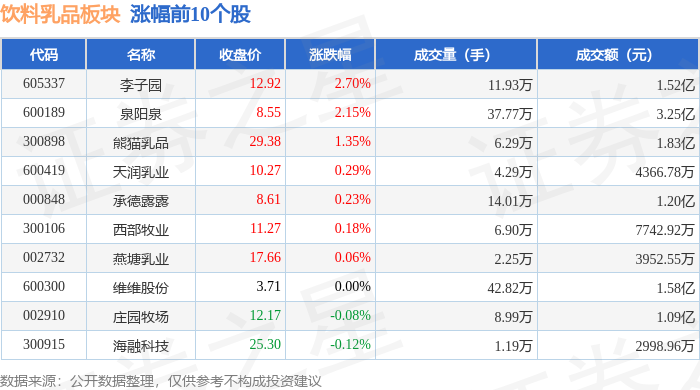
证券之星消息,1月26日饮料乳品板块较上一交易日下跌1.03%,养元饮品领跌。当日上证指数报收于 4132.61,下跌0.09%。深证成指报收于14316.64,下跌0.85%。饮料乳品板块个股涨跌见下表: | 代码 | 名称 | 收盘价 | 涨跌幅 | 成交量(手) | 成交额(元) | | --- | --- | --- | --- | --- | --- | | 605337 | 李子园 | 12.92 | 2.70% | 11.93万 | 1.52亿 | | 681009 | 泉阳泉 | 8.55 | 2.15% | 37.77万 | 3.25亿 | | 300898 | 熊猫乳品 | 29.38 | 1.35% | 6.29万 | 1.83亿 | | 600419 | 天润乳业 | 10.27 | 0.29% | 4.29万 | 4366.78万 | | 000848 | 承德國露 | 8.61 | 0.23% | 14.01万 | 1.20亿 | | 300106 | 西部牧业 | 11.27 | 0.18% | 6.90万 | 7742.92万 | | 002732 | 范捷乳业 | 17.66 ...


国际黄金突破5000美元,老铺黄金“逆势打折”大涨超7%!消费ETF(159928)金针探底,全天大举揽金2.6亿份!
Sou Hu Cai Jing· 2026-01-26 09:20
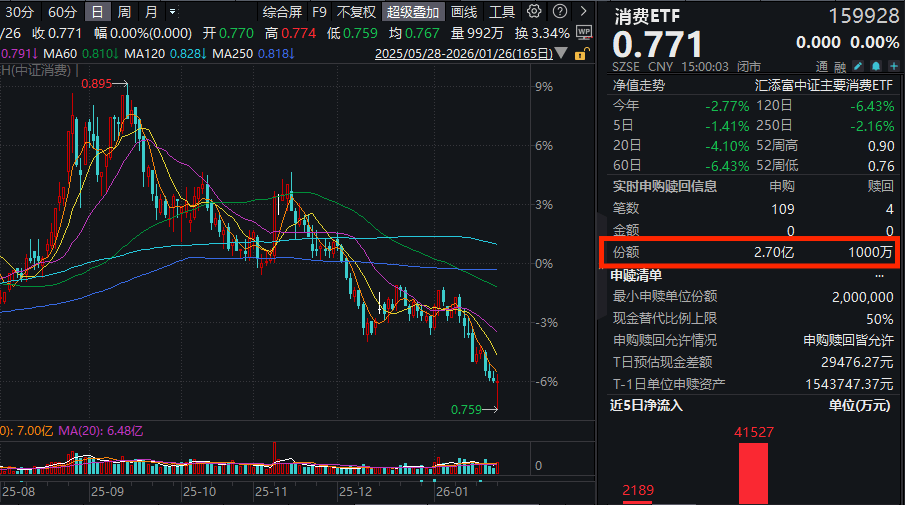
今日(1.26),A股震荡走低,大消费窄幅震荡。规模领跑的消费ETF(159928)探底回升收平,全天成交额近8亿元,环比放量 102%,上演"金针探底"走势。资金面上,全天大举揽金2.6亿份,近10日大举净流入超16亿元!最新规模超228亿元,同类遥遥领先! 白酒方面,1月23日,洋河股份预计2025年全年归母净利润为21.16亿元至25.24亿元,同比下滑62%-68%,创下公司上市以来最大年度 跌幅。更为关键的是,洋河股份删除了此前"现金分红不低于人民币70亿元"的承诺,引发了投资者广泛关注和不满。截至收盘,洋河 股份跌9.85%,逼近跌停,创下2017年以来新低。 政策方面,1月26日,有关部门举行新闻发布会,指出将优化实施消费品以旧换新,促进家电等大宗耐用商品消费。此外,消息人士 称,加快培育服务消费新增长点相关政策近日将推出。1月16日召开的重要会议提出,要加快培育服务消费新增长点,支持新业态新 模式新场景竞相涌现,增加优质服务供给,解决好信用、标准、安全管理等问题,促进服务消费提质惠民。 国际黄金突破5000美元,老铺黄金"逆势打折"股价飙升。1月26日,现货黄金价格突破每盎司5000美元,再刷 ...
平价雪糕重回顶流 雪糕“刺客”悄然退场
Yang Guang Wang· 2026-01-26 07:06
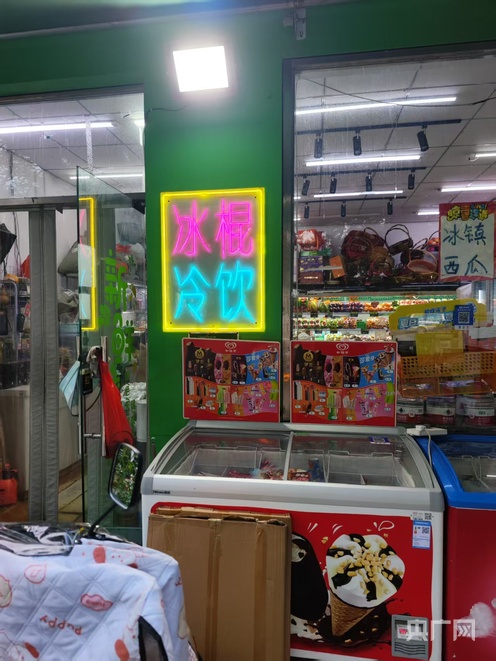
Core Insights - The news highlights the decline of high-priced ice cream brands like Zhong Xuegao, which is facing bankruptcy, while affordable ice creams under 10 yuan are dominating the market [4][6]. Group 1: Market Trends - Affordable ice creams are becoming the mainstream in the market, with prices below 10 yuan being the most popular [1][3]. - In various convenience stores and ice cream wholesale shops, the majority of ice creams sold are priced between 1 yuan and 10 yuan, with average prices around 3 yuan [1][3]. - Online platforms also reflect this trend, with many best-selling ice creams priced under 10 yuan, indicating a shift in consumer preference towards lower-priced options [3][4]. Group 2: Company Performance - Zhong Xuegao has recently filed for bankruptcy due to its inability to pay debts, with its products now limited in availability [4]. - Haagen-Dazs, another premium brand, is experiencing a decline in store traffic and has closed several locations, indicating challenges in maintaining its market position [4][6]. - The high profit margins of brands like Haagen-Dazs are becoming unsustainable in the current market environment, as consumers are increasingly opting for lower-priced alternatives that offer similar quality [6]. Group 3: Consumer Preferences - There is a growing demand for healthier ice cream options, with consumers showing interest in low-sugar and plant-based products [7][8]. - Companies are encouraged to innovate and adapt to changing consumer behaviors, focusing on quality and price competitiveness to ensure sustainable growth [7][8]. - The market is shifting towards mid-to-high-end products, with a focus on real quality rather than inflated prices, as consumers become more health-conscious [7][8].
两大重点实验室主办!第五届生物基和可降解包装论坛官宣 | Bio-based 2026
合成生物学与绿色生物制造· 2026-01-26 05:36
Core Viewpoint - The 11th Bio-based Conference and Exhibition (Bio-based 2026) will be held from May 20-22, 2026, in Shanghai, China, focusing on promoting green and low-carbon transformation in the industry through various forums and activities [1][15]. Group 1: Event Overview - Bio-based 2026 will feature 10 major upstream and downstream thematic forums, 9 concurrent activities, over 1000 new product displays, and an innovation award ceremony [1][9][15]. - The event aims to facilitate discussions on industry trends, technological innovations, and sustainable practices among industry leaders and brands [1][10]. Group 2: Key Forums and Topics - The event will include forums on critical chemical products and materials, international cooperation, and bio-based materials for packaging, footwear, and automotive applications [10][11][15]. - Specific topics will cover sustainable packaging innovations, carbon reduction practices in various consumer sectors, and the development of biodegradable materials [4][8][11]. Group 3: Participants and Collaborators - Notable participants include global brands and packaging solution companies such as McDonald's, L'Oréal, and Mengniu, as well as bio-based and biodegradable material companies like NatureWorks and 金发科技 [5][6]. - The forums will invite industry leaders from various sectors to discuss collaboration and innovation in sustainable packaging [1][5]. Group 4: Concurrent Activities - Concurrent activities will include a high-level strategic seminar, product and technology release events, and a standard review meeting for bio-based materials [12][15]. - The 4th DT New Leaf Award will also take place, recognizing innovations in materials and applications [15].