
安踏

Search documents
迪卡侬的“中国棋局”:50年来首次开放股权的战略变奏
Xin Lang Zheng Quan· 2025-08-20 10:22
Core Insights - Decathlon plans to sell approximately 30% of its Chinese subsidiary, with an estimated valuation of €10-15 billion (around ¥100 billion), marking the first significant equity transfer in nearly 50 years [1][2] - The decision is driven by competitive pressures in the Chinese market and the need for strategic restructuring amid declining profitability [2][4] Group 1: Strategic Rationale - The equity sale is a response to increasing competition from local brands like Anta and Li Ning, which have been capturing market share through localized designs and digital marketing [2][3] - The move towards a mixed strategy of "capital increase and share transfer" allows Decathlon to optimize its asset structure while maintaining control over its core supply chain [3][4] - The funds from the equity sale may support Decathlon's supply chain diversification strategy, particularly as it shifts some procurement focus to India [3][7] Group 2: Market Position and Challenges - Decathlon China has a localized supply chain with a design center in Suzhou and factories in Shandong, enabling it to maintain competitive pricing [4][5] - Digital sales in China account for 25% of total sales, surpassing the global average of 20%, indicating a successful transition towards digitalization [4][6] - However, Decathlon faces structural challenges, including pressure from local brands and a need to enhance customer experience compared to competitors [5][6] Group 3: Future Outlook - The equity sale could lead to two potential transformation paths: collaboration with local retail partners for deeper market penetration or a more aggressive digital transformation led by financial investors [7][8] - Regardless of the outcome, maintaining control over the strategic direction remains a priority for Decathlon's founding family [7][8] - The equity experiment reflects a broader trend of multinational companies adapting to local market dynamics and consumer preferences in China [8]
人形机器人“杀入”体育圈,未来市场几何?
Hu Xiu· 2025-08-20 10:13
Core Points - The 2025 World Humanoid Robot Games opened in Beijing, showcasing 280 teams from various countries, marking the first comprehensive sports event focused on humanoid robots [2] - The rapid advancements in artificial intelligence have enabled humanoid robots to transition from theoretical concepts to practical applications in sports [3][6] - Humanoid robots are increasingly participating in sports events, demonstrating significant technological breakthroughs in a short period [7][9] Group 1: Industry Trends - The integration of humanoid robots in sports is seen as a way to enhance brand exposure for companies involved in robotics, leveraging sports marketing to attract attention in both consumer and capital markets [12][13] - The complexity of sports provides a valuable training ground for humanoid robots, allowing them to improve their learning and adaptability in dynamic environments [15][16] - The sports industry is expected to embrace technology more actively, with humanoid robots poised to meet growing market demands and development opportunities [27] Group 2: Company Collaborations - Major Chinese sports brands, including Anta, Li Ning, Xtep, and 361°, are actively collaborating with robotics companies to integrate technology into their products [30][31] - These collaborations aim to fuse technology with sports, driving innovation and enhancing brand competitiveness in a saturated market [36][37] - The partnership between sports brands and robotics firms reflects a broader trend of merging sports with technology, which is anticipated to revolutionize the industry [38] Group 3: Future Applications - Humanoid robots are expected to expand their roles beyond competitions to include officiating, training, and service in various sports contexts [20][22][23] - The potential for humanoid robots to enhance the spectator experience at events is significant, with applications ranging from logistics assistance to interactive engagement with audiences [25] - The market for humanoid robots is projected to grow substantially, with estimates suggesting over 100 million units in use across various sectors by 2045, indicating a market size of approximately 10 trillion yuan [28]



大中华区增长42%,但始祖鸟增速放缓,“运奢”赛道是否面临天花板?
Guan Cha Zhe Wang· 2025-08-20 07:25
Core Viewpoint - Amer Sports reported strong revenue growth in Q2 2025, with a 23% year-on-year increase, driven primarily by significant growth in the Greater China and Asia-Pacific regions, despite facing macroeconomic pressures and a cooling luxury market [1][2]. Group 1: Financial Performance - In Q2 2025, Amer Sports achieved revenue of $1.236 billion, a 23% increase year-on-year, with Greater China revenue growing by 42% to $410 million and Asia-Pacific revenue increasing by 45% [1]. - For the first half of 2025, total revenue reached $2.709 billion, up 23.46% year-on-year, with net profit of $153 million compared to a slight profit of $1 million in the same period last year [1]. - The company adjusted its 2025 revenue guidance to a growth range of 15-17%, up from the previous estimate of 13-15% [2]. Group 2: Segment Performance - In Q2 2025, the technical functional apparel segment (Arc'teryx) grew by 23% to $509 million, while the outdoor performance segment (Salomon) also saw a 23% increase to $414 million, and the ball sports segment (Wilson) grew by 11% to $314 million [2]. - Compared to Q1 2025, growth rates for all segments slowed down, with Arc'teryx's growth decreasing by 5 percentage points [2]. Group 3: Market Dynamics - Industry experts noted that high-end brands are facing growth bottlenecks due to macroeconomic pressures and consumer downgrading, prompting Arc'teryx to expand its market reach beyond core sports to attract a broader audience [3]. - The brand is shifting its focus from niche outdoor enthusiasts to a larger non-outdoor consumer base in China [3]. Group 4: Shareholder Actions and Market Sentiment - Amer Sports is experiencing shareholder withdrawal, with major shareholder FountainVest seeking to sell 35 million shares at a price range of $37.20-$37.73 per share, potentially raising about $1.3 billion [6]. - Despite positive mid-year financial results, the stock price fell by 4.69% to $35.74 per share after the earnings report, indicating market skepticism about the luxury segment's sustainability [8].
特步困局:弃亏损品牌换业绩增长,操控赛事丑闻、鞋底频繁开胶等争议侵蚀信任根基
Jin Rong Jie· 2025-08-19 10:14
Core Viewpoint - Xtep International's financial performance shows a mixed picture, with revenue growth in core operations but significant challenges in brand positioning and market competitiveness [1][6][11]. Financial Performance - For the first half of 2025, Xtep reported a revenue increase of 7.1% to 6.838 billion yuan, operating profit up 9.1% to 1.305 billion yuan, and net profit up 21.47% to 914 million yuan [1]. - However, when including divested brands, actual revenue declined by 5.07% [1]. - From 2021 to 2023, Xtep's revenue growth rates were 22.53%, 29.13%, and 10.94%, dropping significantly to 6.55% in 2024 [1]. Market Position and Comparison - Xtep's revenue in 2024 was 13.577 billion yuan, less than one-fifth of Anta's 70.826 billion yuan and below half of Li Ning's 28.676 billion yuan [2]. - Net profit for 2024 was 1.238 billion yuan, significantly lower than Anta's 16.989 billion yuan and Li Ning's 3.013 billion yuan, with Anta's net profit being 13.7 times that of Xtep [2]. Operational Efficiency - Xtep's accounts receivable turnover days increased from 107.76 days in 2022 to 132.40 days in 2024, indicating lower operational efficiency compared to Anta and Li Ning [4]. - In 2024, Xtep's net cash flow from operating activities was 1.228 billion yuan, far below Anta's 16.741 billion yuan and Li Ning's 5.268 billion yuan [5]. Brand Strategy and Challenges - Xtep's multi-brand strategy has faced setbacks, with a heavy reliance on its main brand, which accounted for 88.5% of revenue in 2025 [7]. - The main brand's revenue growth was only 4.5% in the first half of 2025, below the overall group growth rate, and its gross margin decreased by 0.3 percentage points [9]. - Xtep's brand recognition is heavily focused on running shoes, limiting its diversification and market competitiveness compared to brands like Anta and Li Ning [6][7]. Brand Image and Consumer Sentiment - Xtep has faced negative public sentiment due to various incidents, including a controversial social media post and product quality issues, leading to consumer complaints [11][12]. - The company has received 1,688 complaints related to quality and service, indicating significant challenges in maintaining brand reputation [12].
大消费渠道脉搏:毛戈平华南商场同店增长优异,潮宏基强势获取份额
Haitong Securities International· 2025-08-17 14:05
Group 1: Beauty Sector Insights - Mao Ge Ping's department store same-store sales growth exceeds 10% YoY, while shopping plaza stores show over 20% growth[2] - Average customer spending in department stores is around 600-900 yuan, higher than 300-600 yuan in shopping centers, reflecting different customer demographics[2] - Mao Ge Ping expects over 20% sales growth for the full year of 2025[2] Group 2: Skincare and Product Focus - Mao Ge Ping's product mix consists of approximately 50% makeup, 45% skincare, and 5% perfume, with a strong reliance on star products in skincare[3] - The skincare segment still heavily depends on caviar star products, which account for over half of skincare sales[3] Group 3: Jewelry Market Trends - From January to July 2025, sales of Chow Tai Fook, Chow Sang Sang, and Zhou Liu Fu declined by 10%-20% YoY, while CHJ Jewellery increased by 40% YoY[4] - CHJ Jewellery's growth is attributed to lower gold prices and fixed-price products that attract consumers[4] Group 4: Sports Apparel Performance - Adidas and Nike's average customer spending decreased to 800-1500 yuan, while Anta and Li Ning increased to 500-700 yuan[5] - Columbia's sales grew by 10-15% YoY, while The North Face and Jack Wolfskin saw declines of 5-10% YoY[5]


上半年入账57亿!百亿之后,361度增速慢了
Nan Fang Du Shi Bao· 2025-08-14 12:01
Core Insights - 361 Degrees reported a revenue increase of 11% year-on-year to 5.705 billion yuan and a net profit of 858 million yuan, marking an 8.6% increase, both reaching historical highs [2] - Despite the positive financial results, the growth rate has slowed compared to previous years, leading to a more than 10% drop in stock price following the earnings announcement [2] Revenue Breakdown - The company achieved its first annual revenue exceeding 10 billion yuan last year, reaching 10.07 billion yuan, joining the "100 billion club" of domestic sports brands alongside Anta and Li Ning [2] - The children's business has emerged as a significant growth driver, with revenue reaching 1.26 billion yuan in the first half of the year, a year-on-year increase of 11.4%, accounting for 22.1% of total revenue [3] Product and Market Strategy - 361 Degrees has developed a dual-brand matrix with 361 Degrees as the main brand and 361 Degrees Kids as a key growth segment, covering various sports categories [3] - The children's footwear segment saw a remarkable revenue increase of 27.8%, supported by favorable policies promoting sports in education [3] Research and Development - The company holds 870 patents and employs 832 technical staff, with a focus on children's and accessory product development [4] - R&D expenditure accounted for 2.8% of total revenue in the first half of the year, with plans to increase this to 3%-4% [4] E-commerce and Sales Channels - E-commerce sales reached 1.817 billion yuan, representing 31.8% of total revenue and a 45% year-on-year growth, becoming a core growth driver [5] - The company operates 5,669 brand stores, with 76% located in lower-tier cities, and has expanded its international presence with 1,357 overseas sales points [5] Competitive Landscape - 361 Degrees is positioned in the high-cost-performance segment, contrasting with competitors like Anta and Li Ning, which are pursuing high-end and trendy market strategies [7] - The company's gross margin of 41.5% is lower than Anta's projected 62% and Li Ning's 50%, raising concerns about its long-term profitability if it continues to rely on the cost-performance model [7]

361度,业绩涨了,股价却跌了
Xin Lang Cai Jing· 2025-08-14 09:38
Core Viewpoint - The stock price of 361 Degrees experienced a significant drop despite reporting revenue and net profit growth for the first half of 2025, indicating a disconnect between market performance and financial results [1][2]. Financial Performance - For the first half of 2025, 361 Degrees reported a revenue increase of 11.0% year-on-year, reaching 5.705 billion yuan, and a net profit increase of 8.6%, totaling 858 million yuan [1][2]. - The revenue growth rate of 11% is the lowest in the past five years, and the net profit growth rate of 8.6% is also the lowest, marking the first time it has fallen to single digits [2]. Sales and Product Performance - The slowdown in revenue growth is attributed to a decline in apparel sales, with adult clothing revenue growing by only 1.6% and children's clothing revenue decreasing by 7.6% [3]. - The average wholesale price of adult clothing fell by 4.5% to 70.7 yuan per piece, indicating a strategy of increasing volume at the expense of price [4]. Cost and Profitability Issues - The company's profitability has declined due to rising sales expenses and production costs, with production costs increasing from 3.016 billion yuan to 3.338 billion yuan, a nearly 11% rise [5]. - Sales and distribution expenses rose by 13.2%, outpacing revenue growth, with commissions to e-commerce platforms increasing by 45.3% and logistics costs rising by 40.2% [5]. Market Position and Brand Strength - 361 Degrees has successfully positioned itself in the market by focusing on cost-effectiveness, with revenue nearly doubling since 2019, reaching over 10 billion yuan in 2024 [7]. - Despite its growth, the brand's strength remains a concern, as it relies heavily on distributors in lower-tier cities, which may weaken price and channel control [8]. Accounts Receivable and Financial Management - As of June 30, 2025, accounts receivable increased by 376 million yuan, with an average turnover period of 146 days, significantly higher than competitors like Anta and Li Ning [9]. - The company is working to manage accounts receivable more strictly, but the reliance on distributors may lead to pricing and brand image challenges [9].
好的户外品牌,都有了班味儿
Hu Xiu· 2025-08-13 05:52
Group 1 - Outdoor clothing has been reinterpreted by office workers, symbolizing aspirations and ambitions in the workplace [2][3][5] - Brands like The North Face, Salomon, and HOKA have transformed from symbols of freedom to "invisible uniforms" for office workers [3][4][29] - The term "班味儿" (office flavor) has emerged, reflecting a shared sense of overwork and fatigue among young professionals in major cities [14][15][20] Group 2 - The pricing of outdoor apparel has increased, with items like polo shirts from Descente selling for around 890 yuan, indicating a shift towards luxury in work attire [22][23][24] - Brands are not actively marketing the "班味儿" concept, but the association is growing among consumers who are willing to pay for these items as a status symbol [27][21] - The trend suggests a cultural shift where outdoor clothing, originally meant for leisure, is now intertwined with the pressures of office life [29][30]
贵的户外品牌,都有了班味儿
3 6 Ke· 2025-08-13 05:27
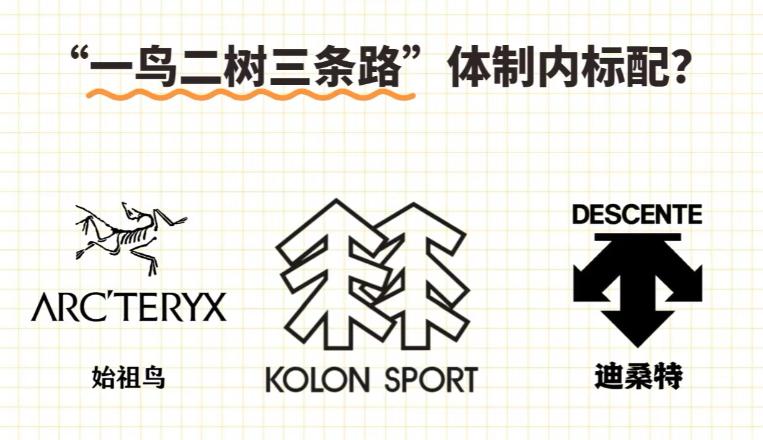
Core Insights - The article discusses the transformation of outdoor clothing into a symbol of workplace culture, referred to as "班味儿" (ban wei er), reflecting the aspirations and struggles of office workers [1][10][17] Group 1: Brand Interpretations - Outdoor brands like Arc'teryx, KOLON, and Descente have been reinterpreted by office workers, with their logos and designs now symbolizing career aspirations and challenges [2][4][12] - The North Face has become popular among young people, with its logo's unique features being used to distinguish genuine products from counterfeits [6][16] - Salomon's logo and brand image have evolved to represent the struggles of middle-class workers, while HOKA is seen as a symbol of hope for upward mobility [8][9][12] Group 2: Economic Implications - The rise of "班味儿" has led to increased demand for outdoor apparel, with brands like Descente and KOLON pricing their products at premium levels, indicating a strong economic backing required to participate in this trend [13][15] - The sales figures for these brands reflect their popularity, with Descente achieving over 10 billion yuan in sales in China by June this year [16] Group 3: Cultural Shifts - The concept of "班味儿" has become a common term among young professionals in major cities, highlighting a shared sense of overwork and fatigue in the workplace [10][12] - The article notes a decline in workplace fashion standards, with a shift from aspirational dressing to more casual and comfortable attire, reflecting the changing attitudes of workers [12][17] - The phenomenon illustrates a broader cultural shift where outdoor clothing, originally associated with freedom and adventure, has become intertwined with the pressures of corporate life [17][18]
被年轻人遗忘的国民零食,为何在拼多多突然翻红?
Xin Jing Bao· 2025-08-13 02:44
Group 1 - The article discusses the evolution of traditional snack brands in Fujian, highlighting their historical significance and initial success in the market [1][4] - It notes that these brands faced challenges due to their reliance on traditional distribution channels and missed early e-commerce opportunities, leading to stagnation [2][5] - The emergence of new e-commerce platforms like Pinduoduo provided these brands with a chance to revitalize their sales and connect directly with consumers [3][6] Group 2 - Since 2020, brands like Jin Guan and You Chen have successfully leveraged Pinduoduo's platform to adapt their products and marketing strategies, resulting in significant sales growth [8][9] - The article emphasizes the importance of cost-effective strategies and the ability to respond to consumer demands, which have been facilitated by Pinduoduo's supportive policies [10][12] - Brands have reported impressive returns on investment (ROI) on Pinduoduo, with some achieving ratios as high as 1:10, compared to traditional e-commerce channels [9]
