
中国商飞

Search documents
中航西飞(000768) - 2025年9月1日投资者关系活动记录表
2025-09-01 11:16
Group 1: Business Performance - The company's revenue in the first half of 2025 decreased by 4.49% year-on-year, while the net profit attributable to shareholders increased by 4.83% [3][4] - The decline in revenue was primarily due to changes in product delivery structure and cycles, but improvements in gross profit margin contributed to the increase in net profit [3][4] - The company aims to achieve a total operating target of 44.988 billion yuan for 2025, with 19.416 billion yuan completed in the first half [19][20] Group 2: Strategic Development - The company plans to expand its customer base in the civil aircraft sector by actively participating in international bidding and enhancing cooperation with international clients [4][5] - Future growth drivers include capitalizing on the rapid development of the domestic civil aircraft industry and focusing on new aircraft models like C909 and C919 [5][6] - The company is also targeting emerging industries, particularly in unmanned and intelligent aircraft, as part of its strategic expansion [6][14] Group 3: Cost Management and Efficiency - The company is implementing cost control measures across various operational aspects, including design, technology, supply chain, and management to enhance efficiency [16][18] - The proportion of sales, management, and financial expenses to revenue increased by 41.66% year-on-year, primarily due to a decrease in interest income [22] - Continuous efforts are being made to optimize human resources and reduce auxiliary personnel while enhancing the quality of the workforce [17][18] Group 4: Market Position and Competitiveness - The company is recognized as a leading manufacturer of large and medium-sized military and civilian aircraft in China, with core technological capabilities at an international level [21] - The company has been selected as a preliminary supplier for the C929 aircraft, indicating its strong position in the market [8][9] - The management emphasizes the importance of market value and investor relations, aiming to enhance shareholder value through effective communication and performance [10][11][12]

特朗普上任不到半年,美国白宫面对中国,出现了3次重大战略误判
Sou Hu Cai Jing· 2025-09-01 08:01
Group 1: Economic Misjudgments - The Trump administration underestimated China's economic resilience, with China's GDP growth rate remaining at 6.1% in 2019 despite trade tensions [1] - The trade war has resulted in hundreds of billions of dollars in additional costs for American consumers and businesses annually, leading to a significant drop in export orders from Midwest agricultural states [5] Group 2: Strategic Responses - China has demonstrated a strong willingness to retaliate against U.S. tariffs, implementing measures such as restricting rare earth exports, which are crucial for high-tech industries [3][6] - The U.S. continues to impose high tariffs on Chinese goods, such as a 1157.53% tariff on low-speed electric vehicles, despite the growing popularity of these vehicles in the U.S. market [8] Group 3: Technological Developments - Chinese companies have adapted to U.S. sanctions, achieving significant advancements in domestic technology, including the development of EDA tools and the C919 aircraft, with local component production increasing from 10% to over 55% [10] - In the first quarter of 2025, China's high-tech product exports grew by 39%, with AI chips and complete products seeing over 60% growth [13] Group 4: Global Alliances and Trade Relations - The Trump administration's attempts to isolate China have faced resistance from other countries, with Japan and South Korea expressing concerns about the impact on their industries [11] - The EU has moved to strengthen trade relations with China, planning to increase trade volume to $2 trillion by 2030, indicating a shift away from U.S. influence [13] Group 5: Strategic Reflections - The misjudgments of the Trump administration have prompted reflections within the U.S. strategic community, recognizing China's significant military and technological advancements [14][16] - The contradictory policies of imposing tariffs while seeking cooperation on rare earths highlight the confusion and anxiety within U.S. strategy towards China [16]


学科专业优化三年行动方案出炉,低空学科超常布局
2 1 Shi Ji Jing Ji Bao Dao· 2025-08-29 13:10
Core Viewpoint - A new round of adjustments and optimizations in higher education discipline and major settings has been initiated, aiming to align with technological advancements and national strategic needs [1][5]. Group 1: Recent Developments - The Ministry of Education has reported that in the past two years, 3,715 new undergraduate programs were established, while 6,638 were canceled or suspended [2][5]. - The plan includes optimizing about 20% of higher education disciplines by 2025, with a focus on new technologies and industries [1][2]. Group 2: Specific Actions and Mechanisms - The action plan outlines six major mechanisms, including coordination, supply-demand matching, and evaluation systems, alongside six major actions such as urgent discipline layout and foundational discipline enhancement [5][6]. - The urgent discipline layout action has gained attention, with several top universities applying to establish new programs in low-altitude technology and engineering [6][7]. Group 3: Regional Progress - Hunan Province plans to cancel 349 undergraduate programs and add 86, achieving an adjustment ratio of 20.6%, exceeding national requirements [3][4]. - By 2027, Hunan aims to adjust approximately 50% of its discipline settings [4]. Group 4: Innovative Educational Models - Fudan University is developing a new talent cultivation model that emphasizes project-based learning and interdisciplinary integration, moving away from traditional discipline-based education [8][9]. - The university has initiated various dual-degree programs to foster high-level interdisciplinary talents [9].
前中国商飞团队转战eVTOL、合作滴滴出行,拿下数亿元A轮融资|早起看早期
36氪· 2025-08-29 00:10
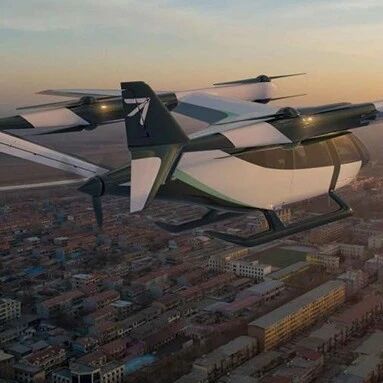
Core Viewpoint - The article discusses the recent A-round financing of Yiwit Aviation, a developer of electric vertical takeoff and landing (eVTOL) aircraft, highlighting its potential in urban air mobility and the challenges it faces in certification and supply chain maturity [4][5]. Financing and Development - Yiwit Aviation has completed several hundred million RMB in A-round financing, led by Jinpu Investment, with participation from other investors [4]. - The funds will primarily be used for the development and certification of its main aircraft model and the construction of production capacity for its electric propulsion system [5]. Market Demand and Challenges - According to Guojin Securities, the demand for eVTOLs in China is expected to reach 16,316 units by 2030, covering various services such as short-distance passenger flights and medical transport [5]. - The industry faces challenges such as long certification cycles and low supply chain maturity, which hinder commercialization [5]. Product Overview - Yiwit Aviation's core product is the ET9 eVTOL, designed to carry five people with a maximum takeoff weight of 2.2 tons, a range of 240 kilometers, and a maximum speed of 240 km/h [6]. - The company is also developing the ET3 hydrogen-lithium hybrid energy model, targeting long-distance inspection and survey needs with a range of 800 kilometers [6]. Technical Innovations - The ET9 features a composite wing design that combines the flexibility of vertical takeoff with the long-range capabilities of fixed-wing aircraft [8]. - Yiwit has achieved full domestic production of its electric propulsion system, significantly reducing costs compared to imported solutions [9]. Certification and Testing - The company aims to complete cargo certification by 2026 and passenger certification by 2027, with a simulation testing platform established in collaboration with Nanjing University of Aeronautics and Astronautics [11]. - Yiwit has conducted over 400 test flights, using the data for system validation and optimization [8]. Strategic Partnerships and Orders - Yiwit has signed over 300 letters of intent for orders, including emergency rescue and logistics solutions, and plans to open its electric propulsion system to third-party manufacturers by 2026 [12]. - The company is collaborating with Didi Chuxing and other partners to explore low-altitude operations [12]. Team and Expertise - The founding team includes experienced professionals from COMAC, with an average industry experience of over 15 years, focusing on integrated aircraft development [14]. - The team employs a model-based systems engineering approach to enhance the aircraft development process [14]. Investor Insights - Investors express confidence in Yiwit Aviation's capabilities, highlighting its strong team and the potential of the low-altitude economy as a strategic emerging industry in China [15][16].
中航西飞C919批产交付同步推进,C929能否成为新增长点?
2 1 Shi Ji Jing Ji Bao Dao· 2025-08-27 08:39
Core Viewpoint - The company is transitioning from being the largest supplier of structural components for the C919 aircraft to aiming for a strategic leap as a major player in the C929 project, which is seen as a future flagship for Chinese commercial aviation [1][5]. Financial Performance - In the first half of 2025, the company reported revenue of 19.416 billion yuan, a year-on-year decrease of 4.49%, while net profit attributable to shareholders was 689 million yuan, an increase of 4.83% [1]. - The company aims for a 2025 operational target of 44.988 billion yuan, but the current half-year revenue suggests challenges in meeting this goal [7]. C919 Project Progress - The C919 aircraft has entered a phase of mass commercial operation, with the company achieving a "four consecutive increases" in the total batch delivery of C919 structural components [1]. - The company benefits from learning curves and economies of scale, leading to a gradual reduction in the unit cost of the C919, which is expected to contribute to profit growth [1]. C929 Project Development - The C929 project is progressing steadily, with a target to obtain domestic type certification by 2032 and achieve its first commercial flight by 2035 [5][6]. - The company has successfully entered the initial supplier list for the C929 project, aiming to expand its participation by securing additional work packages [5][6]. International Market Expansion - The company is deepening its layout in the aviation structural component manufacturing sector, with 99.1% of its revenue coming from the aviation manufacturing industry, amounting to 15.295 billion yuan [2]. - Domestic revenue accounts for 95.65% of total revenue, while international revenue is only 4.35%, indicating significant room for growth in overseas markets [2]. - The company is actively pursuing international subcontracting opportunities and expanding its international business through global bidding and customer visits [3].
时隔三年再度下发,第二轮毫米波专网牌照或将出炉
Xuan Gu Bao· 2025-08-26 23:42
Industry Insights - The Ministry of Industry and Information Technology (MIIT) is set to issue the second batch of millimeter-wave private network frequency licenses, with more companies expected to receive licenses by the end of the year, covering various verticals such as ports, manufacturing, and power grids [1] - This issuance follows the granting of dedicated frequencies of 5.925GHz and 24.75GHz to China Commercial Aircraft Corporation in 2022, marking the second public authorization [1] - The new frequency approvals include both state-owned and private enterprises, with one being the first to apply 26GHz millimeter-wave 5G in actual production processes [1] - The release of these frequencies indicates the maturity of the domestic millimeter-wave 5G industry chain and is expected to initiate a wave of innovation led by industry enterprises [1] - The future mobile communication forum highlights that the 5G millimeter-wave spectrum, referenced by the 3GPP protocol, is crucial for the 5G-A era, offering richer spectrum resources compared to traditional sub-6GHz bands, enabling ultra-high bandwidth and low-latency transmission [1] Company Developments - Deli Technology focuses on soft and hard combined boards and LCP components, primarily catering to consumer electronics wearables and domestic and international 5G millimeter-wave demand clients [3] - Xinwei Communication possesses a 5G millimeter-wave antenna technology engineering laboratory in Shenzhen, with testing capabilities reaching an internationally leading level [4]
市场即底气:国产大飞机的产业突围与广阔空间
Tianfeng Securities· 2025-08-26 06:21
Industry Rating - The industry rating is maintained at "Outperform" [1] Core Viewpoints - The domestic large aircraft industry chain's self-control is urgent, with vast market space. China's commercial aircraft global market share exceeds 20%, and the C919 production capacity is continuously expanding. By 2042, the global passenger aircraft fleet is expected to reach 48,455 units, approximately 2.2 times that of 2022, with China's fleet reaching 9,969 units, accounting for 21% [2][51]. - The demand for new commercial aircraft in China over the next 20 years (2023-2042) is projected to exceed 9,000 units, corresponding to a market value of $1.4 trillion [2]. - The C919's production capacity is set to reach 150 units per year by 2027 and 200 units per year by 2029, with plans for accelerated operations in Southeast Asia and positive progress in European airworthiness [2][18]. - The engine system, referred to as the "heart" of large aircraft, has a high technical content and value, with engine maintenance costs expected to match procurement costs over their lifecycle. The demand for new commercial engines in China over the next 20 years may exceed $600 billion, averaging over 200 billion RMB annually [2][25]. - The onboard systems are of high value, and China is transitioning from "having" to "good" in this area, with significant development plans in place [3]. Summary by Sections 1. Current Development Status of China's Civil Aircraft Industry - The C919 has achieved commercial-scale operations, and the C929 is making positive progress [8]. - The development of large aircraft in China has gone through several stages, with the C919 being the first domestically developed jet airliner with independent intellectual property rights [12]. 2. Review of Boeing and Airbus Development - The report reviews the historical development of Boeing and Airbus, providing insights into their growth patterns and strategies, which may serve as references for China's large aircraft industry [32][41]. 3. Market Demand and Supply - The global demand for passenger aircraft is expected to grow, with China projected to maintain a 21% market share by 2042. The report anticipates a total of 43,644 new aircraft deliveries globally over the next 20 years, with a market value of approximately $6.5 trillion [51][53]. 4. Investment Recommendations - The report suggests focusing on various segments of the industry, including materials, structures, engines, onboard systems, and total assembly, highlighting specific companies for potential investment [4]. 5. Engine Development Progress - The CJ-1000 and CJ-2000 engines are under development, with the CJ-1000 entering the airworthiness certification phase. The report emphasizes the importance of these engines for the C919 and C929 aircraft [25][27]. 6. Aviation Material Supply and Demand - The aviation material market in China is heavily reliant on imports, with a significant need for domestic production to meet the demands of over 4,000 existing civil aircraft [22][24]. - The aviation material management industry is projected to grow, with the market size reaching 1,601 billion RMB in 2023 [24]. 7. Future Outlook - The report indicates that the domestic large aircraft industry is on the verge of historic development opportunities, driven by external changes, national policies, and funding support [4].
万亿宁王、千亿陕煤,院士候选人中的“企业家们”
2 1 Shi Ji Jing Ji Bao Dao· 2025-08-23 05:33
Core Insights - The announcement of the 2025 academician candidate list reflects the landscape of industrial innovation in China, with significant attention from the capital market regarding the implications of this list [1] Group 1: Key Candidates - Wu Kai, Chief Scientist of CATL, is included in the candidate list, representing the trillion-yuan market value of the company [1] - Lian Yubo, Chief Scientist of BYD, is recognized as a representative figure in the electric vehicle sector [1] - Chen Yong, Chief Designer of COMAC's C909, and Deng Jinghui, Chief Designer at Aviation Industry Helicopter Institute, are included from the aerospace sector [1] Group 2: Digital Technology and Software - Wu Qingbo, Chief Scientist of Kirin Software under China Electronics, represents the software industry in the candidate list [1] Group 3: Energy and Materials - Li Zhenguo, founder of LONGi Green Energy, is nominated for the Engineering Academy in the Chemical, Metallurgical, and Materials Engineering division [1] - Shang Jian, Chief Engineer of Shaanxi Coal and Chemical Group, is included in the Energy and Mining Engineering division [1] - Zhang Jianguo, Executive Deputy General Manager of China Pingmei Shenma Group, and Wang Xiangzeng, Chief Scientist and Chief Geologist of Shaanxi Yanchang Petroleum Group, are also nominated in the coal sector [1]




万亿宁王、千亿陕煤,院士候选人中的”企业家们“
Sou Hu Cai Jing· 2025-08-23 04:22
Group 1 - The list of candidates for the 2025 academician election reflects the landscape of industrial innovation in China, attracting attention from the capital market due to the inclusion of executives from leading listed companies [1] - Wu Kai, chief scientist of CATL, and Lian Yubo, chief scientist of BYD, are notable candidates representing the electric vehicle sector [1] - In the aerospace field, Chen Yong, chief designer of COMAC's C909, and Deng Jinghui, chief designer at the Aviation Industry Helicopter Institute, are also included [1] Group 2 - In the digital technology sector, Wu Qingbo, chief scientist of Kirin Software under China Electronics, represents the software industry [1] - Li Zhenguo, founder of LONGi Green Energy, is nominated for the engineering academy's chemical, metallurgy, and materials engineering division [1] - In the coal industry, candidates include Shang Jian, chief engineer of Shaanxi Coal and Chemical Group, and Zhang Jianguo, executive deputy general manager of China Pingmei Shenma Group [1]
达索系统为上海再投“信任票” 中国首个开放创新实验室启用 还成立创业孵化器企业引入全球专家资源
Jie Fang Ri Bao· 2025-08-23 02:28
Core Viewpoint - Dassault Systèmes has launched its first 3DEXPERIENCE Lab in China, located in Shanghai, aiming to foster innovation and collaboration in advanced manufacturing, new materials, green infrastructure, and life sciences [1][2]. Group 1: Establishment of the 3DEXPERIENCE Lab - The 3DEXPERIENCE Lab in Shanghai is the fifth globally and focuses on creating a collaborative innovation ecosystem by leveraging global expert resources [1]. - The lab aims to incubate up to 1,000 startups in its first year, with potential growth to over 10,000, comparable to the scale of labs in the United States [3]. Group 2: Support for Startups - The lab will provide guidance to startups in using 3D modeling software and digital twin technology for material design and validation [2]. - Over 2,000 entrepreneurial mentors from Dassault Systèmes' global labs will interact with startups, offering cross-disciplinary and international experience [2]. Group 3: Commitment to the Chinese Market - Dassault Systèmes has seen a 22-fold growth in its Chinese market over 20 years, with over 60,000 customers, making it the largest market globally for the company [4]. - The company has moved its Asia-Pacific headquarters to Shanghai, reflecting the strategic importance of the Chinese market [4]. Group 4: Future Plans - The company plans to establish a venture capital fund in Shanghai to support local innovation enterprises [5]. - The lab's establishment received support from the Shanghai government, highlighting the city's commitment to fostering innovation [5].
