
茶百道

Search documents
八马茶业港交所敲钟,传统茶企资本化破冰
Nan Fang Nong Cun Bao· 2025-10-29 01:00
Core Viewpoint - Baima Tea has successfully listed on the Hong Kong Stock Exchange, marking a significant milestone for traditional tea companies in capital markets, reflecting the challenges faced by the industry in capitalizing compared to the new tea beverage sector [2][3][5]. Group 1: Company Overview - Baima Tea officially listed on the Hong Kong Stock Exchange on October 28, becoming one of the few traditional tea companies to successfully enter the capital market in recent years [2][3]. - The stock price peaked at 97.9 HKD per share, with a total market capitalization approaching 8 billion HKD [3]. - The company has faced multiple setbacks in its attempts to go public, including failed listings on the Shenzhen Stock Exchange and the New Third Board, as well as withdrawal of IPO applications in A-shares [8][9][10]. Group 2: Industry Context - The traditional tea industry is struggling to capitalize, with no traditional tea companies successfully listed on A-shares to date [20]. - In contrast, the new tea beverage sector has seen a surge in listings, with companies like Nayuki and others rapidly entering the market from 2021 to 2025 [22][24]. - New tea beverage companies have adopted standardized production processes and digital operations, allowing for rapid expansion and alignment with capital market preferences [26][30]. Group 3: Future Plans - Baima Tea aims to become the world's leading tea company, with plans to open 1,500 new stores over the next three to five years as part of its "thousand cities, ten thousand stores" initiative [35][41]. - The company intends to enhance its online sales channels and improve operational digitalization, as well as expand its production facilities to strengthen supply chain capabilities [42].


补贴撑起的“虚假繁荣”,餐饮人终于看懂了
36氪未来消费· 2025-10-28 04:07
Core Viewpoint - The article highlights the challenges faced by the restaurant industry due to the recent "takeout war," which has led to a false sense of prosperity driven by heavy subsidies, resulting in declining profit margins and customer spending [6][10][16]. Group 1: Industry Challenges - 75% of new orders during the takeout war had a payment price below 15 yuan, while dine-in customer spending has returned to 2015 levels, indicating a significant drop in profitability for restaurants [6][10]. - The takeout war has created a vicious cycle of low-price competition, with 75% of consumers opting for cheaper takeout over dine-in options, further squeezing restaurant margins [14][15]. - Many restaurants are forced to participate in subsidy programs, leading to unsustainable business practices where they often lose money on each order [21][26]. Group 2: Impact of Subsidy Wars - The subsidy wars have consumed nearly 100 billion yuan, equivalent to three years of profits for the entire takeout industry, leaving many restaurants to deal with the aftermath [6][18]. - The competition has led to a significant increase in the recovery of second-hand restaurant equipment, with reports indicating a 100% year-on-year increase in the recovery of hot pot restaurant equipment [9][10]. - Despite the apparent growth in order volume, many restaurants are experiencing closures, highlighting the disparity between reported growth and actual business health [11][24]. Group 3: Responses and Strategies - Companies like Meituan are advocating for a "de-involution" approach, focusing on supporting restaurants rather than engaging in destructive price wars [5][28]. - Meituan has launched initiatives such as the "Prosperity Plan," allocating 28 billion yuan to help restaurants maintain profits and improve operations [29][30]. - Successful restaurants are finding ways to innovate their products and business models rather than competing solely on price, as seen with brands like Laoxiangji, which has accelerated product innovation during the subsidy wars [32][33]. Group 4: Future Outlook - The article suggests that the restaurant industry's core competitiveness lies in quality, service, and innovation rather than low prices, emphasizing the need for a sustainable business model [16][44]. - The return to fundamental business practices, focusing on product and service quality, is essential for long-term survival in the industry [44].
补贴撑起的“虚假繁荣”,餐饮人终于看懂了
3 6 Ke· 2025-10-28 04:06
Core Insights - The recent restaurant industry conference in Beijing highlighted the struggles faced by businesses post the intense food delivery subsidy wars, revealing that 75% of new orders were priced below 15 yuan and dine-in customer spending has reverted to 2015 levels [1][3] - The so-called "false prosperity" created by heavy subsidies has led to a significant decline in merchant profits and customer spending, with many restaurants forced to lower prices to maintain order volumes [1][6][9] Industry Overview - The food delivery subsidy wars, which began in early 2025, have consumed nearly 100 billion yuan, equivalent to three years of profits for the entire food delivery sector, leaving restaurant owners to deal with the aftermath [3][10] - Data from the restaurant industry conference indicated a sharp decline in customer spending starting in April 2025, with many businesses unable to raise prices during peak demand months due to ongoing subsidy competition [8][14] Business Impact - Many restaurants are experiencing closures, with a significant increase in second-hand equipment being sold, as evidenced by a 100% year-on-year increase in the recovery of used equipment from hot pot restaurants [5][6] - The competitive landscape has forced restaurants to either participate in subsidy programs or lose customer traffic, leading to a vicious cycle of low pricing and reduced profit margins [9][14] Consumer Behavior - A survey indicated that 75% of consumers opted for cheaper delivery options over dine-in, and 86% would choose delivery if it was less expensive than dining in, further exacerbating the challenges for dine-in reliant businesses [8][14] Strategic Responses - Meituan's CEO emphasized the need for restaurants to focus on structural cost advantages and overall operational improvements rather than engaging in price wars [3][18] - Meituan has initiated a 28 billion yuan support plan for merchants, including direct financial assistance and funds for innovative store models, to help stabilize the industry post-subsidy wars [18][20] Future Outlook - The industry is shifting focus from aggressive discounting to enhancing product quality and service, with successful businesses finding ways to innovate and adapt rather than compete solely on price [19][25] - AI tools introduced by Meituan aim to assist restaurants in optimizing operations and improving efficiency, indicating a move towards sustainable growth strategies [26]

48小时卖30万杯,“冬天第一杯热奶茶”杀疯了
3 6 Ke· 2025-10-27 02:36
Core Insights - The demand for hot beverages has surged across multiple regions in China as temperatures drop, leading to significant sales increases for various brands [1][2][6] - Popular products include "Super Thick Taro Mud" from Cha Bai Dao, which sold nearly 200,000 cups on its first day, and "Strawberry Milk Cloud Mochi" from Shu Yi Shao Xian Cao, which sold 300,000 cups within 48 hours [1][6] Group 1: Market Trends - The topic "First Cup of Milk Tea in Winter" has gained over 20 million views on Xiaohongshu, indicating a strong consumer interest in hot drinks [1] - Offline store orders for hot drinks have increased significantly, with some stores reporting that over half of the orders are for hot beverages [2] - Major brands are actively launching new products to capitalize on the rising demand, with Cha Bai Dao introducing a cake milk tea series and other brands promoting their classic hot drink offerings [3][4] Group 2: Product Innovations - Many brands are reintroducing successful past products, such as Cha Bai Dao's "Super Thick Taro Mud," which has proven to be a hit again this season [8] - The trend of combining unconventional ingredients, such as sweet soy sauce and salted egg yolk with traditional beverages, is gaining traction, showcasing a willingness to experiment with flavors [10][12] - Common ingredients like pumpkin, sweet potato, and rice are being incorporated into drinks, reflecting a shift towards more familiar, home-style flavors [12][14] Group 3: Seasonal Adaptations - Hot fruit teas made with ingredients like pear and orange are becoming popular as the seasons change, with brands innovating by pairing these fruits with various tea bases [15][17] - The introduction of seasonal flavors and ingredients is expected to continue, with brands planning to incorporate apples and strawberries into their offerings [17]
餐饮、潮玩及家电行业周报-20251026
Haitong Securities International· 2025-10-26 13:38
Investment Rating - The report assigns an "Outperform" rating to multiple companies including Pop Mart, Anta Sports, Haidilao, and Midea Group, while Budweiser Asia is rated "Neutral" [1]. Core Insights - In September, total retail sales of consumer goods in China reached 4.1971 trillion yuan, reflecting a year-on-year increase of 3.0%. Excluding automobiles, retail sales amounted to 3.7260 trillion yuan, up 3.2% year-on-year [6][7]. - Pop Mart reported a significant revenue growth of 245%-250% in Q3, with domestic revenue increasing by 185%-190% and overseas revenue by 365%-370% [6][7]. - Haidilao launched its first sushi restaurant in Hangzhou, focusing on diverse dining options and achieving high customer turnover [6][7]. - Midea Group plans to invest at least 50 billion yuan in R&D over the next three years, targeting advanced technologies [6][7]. - TCL Huaxing's 8.6-generation printed OLED production line commenced construction, with a total investment of approximately 29.5 billion yuan [6][7]. Weekly Performance Summary - Top performers in the F&B sector included Chagee (+8.5%), Xiaocaiyuan (+5.8%), and Yum China (+5.3%). In the home appliance sector, Sanhua (+12.3%), Roborock (+7.7%), and Haier Smarthome (+5.4%) showed strong performance [2][7]. - Underperformers included Helens (-5.7%), Mixue Group (-8.1%), and Guming (-10.1%) in the F&B sector, while Pop Mart experienced a decline of -16.3% in the trendy toy industry [2][7].


秋冬“暖经济”持续升温 奶茶咖啡店迎来消费旺季
Zheng Quan Shi Bao Wang· 2025-10-24 10:56
Group 1 - The "warm economy" is gaining traction as colder temperatures drive demand for hot food and beverages, with consumers seeking comfort and warmth through their purchases [1][3] - Sales of hot drinks have significantly increased, with brands like Tea Baidao reporting over 350,000 cups sold of their new "cake milk tea" on its first day, particularly in northern cities like Beijing and Tianjin [1][2] - Heytea's popular product "Snowy Yak Milk" has sold out in multiple cities due to increased demand and seasonal supply fluctuations, prompting the brand to work on restocking [1][2] Group 2 - Naixue's Tea has launched a new "Raw Cocoa Black Tea" series, combining traditional tea flavors with modern ingredients to appeal to younger consumers during the winter hot drink season [2] - The coffee segment is also experiencing growth, with Lucky Coffee reporting over 300 million yuan in sales and 30 million cups sold of their "Coconut Latte" this year [2] - Online platforms are seeing a surge in hot drink orders, with coffee orders increasing by 800% and overall beverage orders up by 270% compared to the previous year [2]
中泰国际每日晨讯-20251024
ZHONGTAI INTERNATIONAL SECURITIES· 2025-10-24 07:45
Market Overview - The Hong Kong stock market opened lower but closed higher, with the Hang Seng Index reaching 25,968 points, up 0.7%. The National Enterprises Index rose 0.8% to 9,301 points. Total trading volume increased to HKD 245.3 billion from HKD 227.5 billion the previous day [1] - In sector performance, Energy, Consumer Discretionary, and Telecommunications sectors rose by 1.6%, 1.0%, and 0.8% respectively, while Industrials, Consumer Staples, and Healthcare sectors declined by 0.1%, 0.2%, and 1.2% respectively [1] Company Performance - Li Ning (2331 HK) and China Hongqiao (1378 HK) were the top gainers, increasing by 6.6% and 4.5% respectively. Conversely, Pop Mart (9992 HK) and CSPC Pharmaceutical Group (1093 HK) were the biggest losers, falling by 9.4% and 3.0% respectively [1] - In the beverage sector, the price war in the mainland's ready-to-drink tea market intensified, leading to a decline in leading companies such as Mixue Ice City (2097 HK) by 4.5% and Gu Ming (1364 HK) by 6.9% [5] - In the gaming sector, Sands China (1928 HK) reported a 7.5% year-on-year increase in total revenue for Q3, with net profit up 1.5% and adjusted property EBITDA up 2.7%. This positive performance led to a more than 4% increase in Sands China's stock price [5] Industry Dynamics - The energy sector saw a rise in crude oil prices, with WTI rebounding to USD 61.5 per barrel amid concerns over tight supply due to sanctions on Russian oil companies [2] - The electricity consumption in China for September was reported at 888.6 billion kWh, reflecting a year-on-year growth of 4.5%, which is lower than the 5.0% growth in August. This indicates a potential slowdown in the energy sector [6]
冷空气带火“热奶茶”,茶百道“蛋糕奶茶”新品首日热销35万杯
Zhi Tong Cai Jing· 2025-10-24 07:04
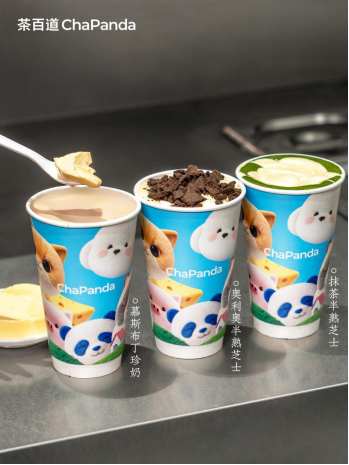
Group 1 - A new wave of cold air has led to a rise in demand for warm foods and beverages, contributing to the "warm economy" during autumn and winter [1][3] - The sales of hot drinks have significantly increased, with brands like Tea Baidao reporting a surge in demand for their new "cake milk tea" product, which sold over 350,000 cups on its first day [1][3] - The "cake milk tea" series is inspired by French brulee and semi-cooked cheese cakes, offering a layered drinking experience with ingredients like fresh pudding and New Zealand dairy cream [3] Group 2 - The concept of the "warm economy" combines temperature and emotional consumption, where consumers are not just purchasing items for warmth but also for the immediate emotional experience they provide [3]
港股新消费概念午后走弱,古茗跌超2%
Mei Ri Jing Ji Xin Wen· 2025-10-24 06:30
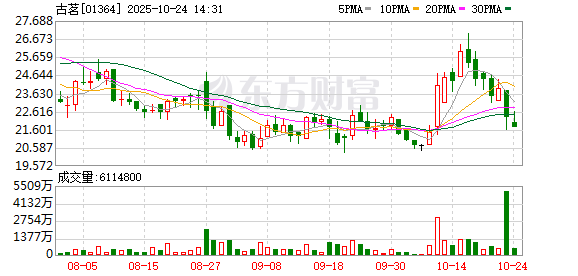
Group 1 - The new consumption concept in the Hong Kong stock market weakened in the afternoon session on October 24 [2] - Gu Ming (01364.HK) experienced a decline of over 2% [2] - Other companies such as Blu-ray (00325.HK) and Cha Bai Dao (02555.HK) also followed the downward trend [2]
36氪首发|「UMe Tea优米茶铺」完成1000万美元A轮融资,华人工程师在北美开奶茶店
3 6 Ke· 2025-10-24 04:41
Core Insights - UMe Tea has successfully completed a $10 million Series A funding round led by Conductive Ventures, with plans to enhance team structure and expand store presence in the Bay Area [1][3] Company Overview - Founded in 2019 in California by Li Jiachun, UMe Tea combines American consumer preferences with the advantages of Chinese tea brands, offering a range of products including milk cap tea, fruit tea, baked goods, and snacks, with approximately 30 SKUs [1][3] - The company has grown its store count from 9 to 27 in two years, with plans to reach 33 stores by the end of 2025, primarily focusing on direct-operated stores [3] Market Position - UMe Tea's customer base is predominantly non-Asian, with about 60% of customers being from diverse backgrounds, including Indian, Vietnamese, and Korean [3] - The company has experienced a 30% increase in same-store sales year-over-year, indicating resilience against competitive pressures [4] Product Strategy - UMe Tea emphasizes localization in its product offerings, catering to American tastes while maintaining a diverse menu that accommodates dietary preferences [5] - Popular items include classic bubble tea and seasonal products, with a significant portion of sales coming from salt and crispy chicken, which accounts for 30% of total sales [5][6] Marketing Approach - The company engages younger consumers through emotional marketing strategies, utilizing social media campaigns and interactive promotions that have significantly boosted store performance [9] Industry Context - The U.S. bubble tea market is fragmented, with no single brand holding more than 5% market share among approximately 6,635 tea shops, projected to grow to around 8,000 by 2025 [11] - UMe Tea aims to solidify its presence in California, particularly in the Bay Area, with plans to open more stores within a 3-mile radius of existing locations [11]
