
滔搏

Search documents
纺织服装行业周报:2025年中报前瞻发布,重点关注新成长方向-20250713
Shenwan Hongyuan Securities· 2025-07-13 14:41
Investment Rating - The report maintains a "Positive" outlook on the textile and apparel industry, highlighting the potential for growth driven by domestic demand recovery and new growth directions [2]. Core Insights - The textile and apparel sector has shown a mild recovery in domestic consumption, with expectations for acceleration in the second half of 2025. The report emphasizes the importance of adapting to new consumer trends and market dynamics [11][13]. - Recent trade agreements, particularly between the US and Vietnam, are expected to impact the competitive landscape, favoring manufacturers with strong local supply chains [9][10]. - The report identifies key investment opportunities in various segments, including sports and outdoor brands, home textiles, and children's apparel, suggesting a focus on companies that can leverage e-commerce and brand strength [11][12]. Summary by Sections Industry Performance - From July 4 to July 11, the SW textile and apparel index increased by 1.6%, aligning with the SW All A index. The SW apparel and home textiles index rose by 1.7%, while the SW textile manufacturing index saw a 2.3% increase [3][4]. Recent Industry Data - Retail sales for clothing, shoes, and textiles totaled 613.8 billion yuan from January to May, reflecting a year-on-year growth of 3.3%. Textile and apparel exports reached 116.67 billion USD during the same period, marking a 1.0% increase year-on-year [3][32]. - Cotton prices have shown mixed trends, with domestic cotton prices rising slightly while international prices have decreased [34]. Market Trends - The report notes a significant disparity in textile exports between Vietnam and China, with Vietnam's textile exports growing by 13.5% year-on-year in June, indicating a potential shift in market dynamics [9][11]. - The apparel market is experiencing a K-shaped recovery, with high-end and cost-effective segments performing well, while many brands in the children's and women's apparel categories continue to face challenges [11][12]. Investment Recommendations - The report recommends focusing on companies with strong brand recognition and e-commerce capabilities, such as Anta Sports, Bosideng, and others in the textile manufacturing sector like Shenzhou International and Huayi Group [11][12].



暑期催热运动用品“即需即买”,美团闪购:多类运动户外用品销量大增
Feng Huang Wang· 2025-07-10 14:25
Group 1 - The core viewpoint highlights the surge in demand for outdoor sports equipment and apparel during the summer, with instant retail becoming the mainstream choice for consumers [1][2] - Instant retail has seen significant growth, with sales of running shoes, sports T-shirts, and basketball shoes increasing over 200% year-on-year since June, while swimming and cycling products have also seen over 100% growth [1][2] - Major brands like Decathlon have experienced substantial sales increases, with swimming gear sales doubling and sun protection clothing sales increasing by 30 times during promotional events [1][3] Group 2 - The convenience of instant retail has been particularly beneficial during holiday seasons, with children's and father's day sales seeing a 70% increase in product quantity and nearly 60% increase in transaction value for sports apparel [2] - Recent sporting events have further fueled consumer enthusiasm for sports, with significant sales growth in related products, such as a 120% increase in ball-related goods and a doubling of swimming gear sales in Jiangsu province [2] - Decathlon has partnered with Meituan to launch seasonal activities and services, resulting in nearly 200% year-on-year growth in overall sales during promotional periods [3][4] Group 3 - The trend of purchasing larger items through instant retail is on the rise, with Decathlon's children's bicycles seeing a tenfold increase in sales during the first month of availability on Meituan [4] - Meituan's instant delivery services for larger sports equipment ensure safe and timely delivery, making it easier for consumers to purchase these items [4] - The collaboration between major sports retailers and Meituan is expected to continue driving growth, with Decathlon projected to achieve record order volumes in 2024 and further doubling sales by 2025 [4]

国泰海通晨报-20250709
Haitong Securities· 2025-07-09 02:47
Group 1: Coal Industry - The introduction of the "430, 531" policies is expected to reduce the profitability of new energy projects, leading to a slowdown in new energy development after a surge in installations in early 2025, with a potential demand turning point for thermal coal expected around 2027 [2][5][6] - The rapid growth of new energy installations has significantly pressured thermal power demand, with the share of thermal power generation capacity decreasing from 66.75% in 2015 to 43.88% in 2024 [4] - The report recommends leading companies in the coal sector, including Shaanxi Coal and Chemical Industry, Jinkong Energy, China Shenhua, and others, as they are expected to benefit from the easing of pressure on thermal coal [3] Group 2: Beverage Industry - The tea beverage industry is experiencing high demand driven by competition in the takeaway market and the introduction of new product categories, with a forecasted revenue growth of 16% in 2025 [7][8] - The company anticipates a double-digit profit growth in the first half of 2025, with a significant increase in product launches and improvements in supply chain efficiency [8] - The competitive landscape is improving as price wars in the tea beverage sector have begun to stabilize, benefiting brand players [7] Group 3: Stablecoin Industry - The stablecoin market is projected to expand significantly, with potential growth to $3.5 trillion driven by applications in crypto asset trading, cross-border payments, consumer payments, and traditional capital markets [14][15] - Circle, a leading stablecoin issuer, is focusing on building an ecosystem around its USDC stablecoin, which has shown strong revenue growth but faces challenges related to profit margins and regulatory uncertainties [15][14] Group 4: Robotics Industry - The tactile sensor market is expected to see substantial growth, with the potential for a trillion-dollar market as humanoid robots become more prevalent [16][19] - The report highlights the importance of tactile sensors in the development of humanoid robots, indicating a significant market opportunity as production scales increase [19][16] - Various technological routes in tactile sensing are being explored, with a focus on integrating multiple technologies to overcome performance and cost barriers [17][19]
滔搏(06110):零售符合预期,期待业绩复苏
Changjiang Securities· 2025-07-08 23:30
Investment Rating - The investment rating for the company is "Buy" and is maintained [8]. Core Views - The retail performance is in line with expectations, with a year-on-year decline in retail sales volume. As of May 31, 2025, the company's direct store gross sales area decreased by 1.3% quarter-on-quarter and 12.3% year-on-year [2][6]. - The company is expected to gradually stabilize after a period of store closures, with a forecast of continued net store closures but at a reduced rate [8]. - The outdoor brand matrix is expanding, with the main brand Nike expected to show improvement. New brands like Norrøna will be introduced through single-brand stores and online channels, which is anticipated to enhance overall performance [8]. - The company is currently at the bottom of its operational cycle, with revenue under pressure and weak gross margin recovery. The profit margin recovery for FY2026 is primarily dependent on cost control, with a cautious outlook for net profit remaining flat [8]. - The forecasted net profit for FY2026/2027 is 1.32 billion and 1.42 billion respectively, corresponding to P/E ratios of 13 and 12 times, with an expected dividend yield of approximately 8% for FY2026 [8][10]. Summary by Sections Retail Performance - The retail performance for FY2026Q1 shows a year-on-year decline in sales volume, which aligns with expectations. The gross sales area for direct stores has decreased by 12.3% year-on-year [2][6]. Store Operations - The company is expected to continue experiencing net store closures, but the rate of closures is anticipated to slow down, leading to a gradual stabilization in operations [8]. Brand Development - The expansion of the outdoor brand matrix is underway, with Nike's performance expected to improve, contributing positively to the company's overall results [8]. Financial Outlook - The company is projected to achieve net profits of 1.32 billion and 1.42 billion for FY2026 and FY2027, respectively, with a P/E ratio of 13 and 12 times, and an estimated dividend yield of around 8% for FY2026 [8][10].

英国知名跑步品牌Soar入华,昂跑们有了新对手?
Hua Er Jie Jian Wen· 2025-07-08 14:51
Core Insights - The British running brand Soar has officially entered the Chinese market by launching a flagship store on Tmall, offering products priced between 499 yuan and 1999 yuan [2] - Soar was founded by London fashion designer Tim Soar in 2015, blending high fashion with sports science to create innovative running apparel [4] - Soar has gained recognition in various countries over its 10-year existence, participating in major events like the London Marathon and UTMB [5] Group 1: Market Entry and Strategy - Soar's entry into China is facilitated by its partnership with Tmall and the exclusive operational collaboration with Tabo Sports, a leading sports retail operator in China [2][5] - Tabo Sports has over 20 years of experience in the sports retail sector and a user base exceeding 80 million, providing a robust platform for Soar's growth in China [5] Group 2: Product Offering and Market Position - Soar's product line includes marathon vests, shorts, and hats, specifically designed for high-temperature running and intense training [4] - Despite its innovative offerings, Soar faces challenges in competing with established brands like On, Li Ning, and Anta, particularly in terms of market size and product variety [10] Group 3: Market Trends and Consumer Insights - The running market in China is expanding, with over 500 million users expected by 2024, and a significant portion of these users being affluent middle-class consumers [10] - The performance of brands like On, which reported a 29.4% increase in net sales to 23.18 billion Swiss francs (approximately 188.75 billion yuan), highlights the potential for growth in the premium segment of the running apparel market [9]


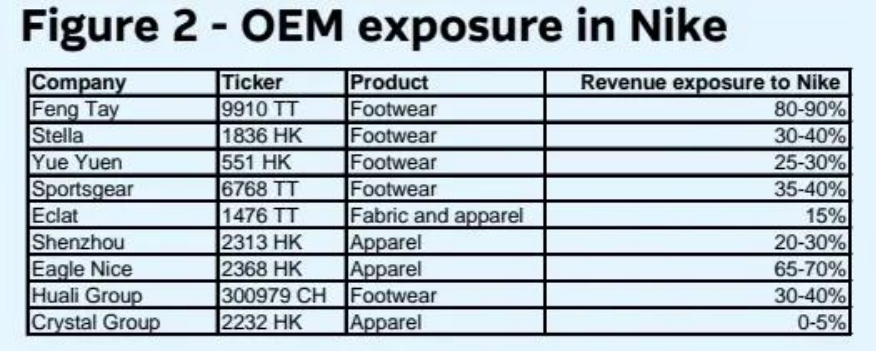
麦格理:滔搏(06110)受益于耐克(NKE.US)中国调整期 维持裕元集团(00551)和九兴控股(01836)“跑输大盘”评级
智通财经网· 2025-07-08 01:47
Group 1 - The core viewpoint is that Nike's management expects a narrowing of revenue decline to a mid-single-digit percentage in Q1 of FY2026, following an 11% year-over-year decline in Q4 of FY2025 [1] - Nike's revenue for Q4 FY2025 decreased by 11% year-over-year, exceeding FactSet's expectation by 3.4%, with regional revenue declines in North America, EMEA, Greater China, and Asia-Pacific-Latin America [1][2] - Inventory levels remained high, with a year-over-year change of 0% in Q4 FY2025, and Nike plans to continue reducing inventory over the next two quarters [1] Group 2 - Management anticipates a year-over-year revenue decline of mid-single digits for Q1 FY2026, with gross margin expected to decrease by 350-425 basis points, including a 100 basis point negative impact from tariffs [2] - The increase in wholesale holiday orders is offset by declines in the Greater China region, with apparel and footwear categories showing year-over-year declines of 9% and 12%, respectively [2] - Macquarie believes that approximately $1 billion in incremental tariff costs will be alleviated through optimizing sourcing and production distribution, reducing the import share from China, and phased price increases starting in Fall 2025 [2] Group 3 - In the Greater China region, Nike's direct business revenue declined by 15% year-over-year, with digital and store sales down 31% and 6%, respectively [3] - The decline in wholesale revenue by 24% year-over-year is expected to relieve pressure on retailers like Tmall [3] - Efforts to revitalize the Chinese market will take time, with deeper resets leading to increased discounts and reduced supply, as evidenced by an 11% year-over-year decline in inventory [3] Group 4 - The report maintains an underperform rating for Yue Yuen Industrial Holdings and Kwan Hung Holdings, despite ongoing revenue challenges for Nike in China [4] - Tmall is rated outperform with a target price of HKD 3.70, as competition from domestic and emerging international brands may lead to more discounts [4] - Yue Yuen is rated underperform with a target price of HKD 9.60, facing slow recovery in brand client orders and adverse impacts from raw material costs and foreign exchange [4]

耐克中国调整期,安踏或迎份额增长?麦格理这份报告划重点了
Zhi Tong Cai Jing· 2025-07-07 14:53
Core Viewpoint - Macquarie's research report indicates that Anta Sports is likely to gain market share as Nike continues to adjust in China, with expectations of a narrowing revenue decline for Nike in the upcoming fiscal quarter [1][2]. Group 1: Nike's Financial Performance - Nike's revenue for Q4 FY2025 decreased by 11% year-over-year, exceeding FactSet's expectation of a 3.4% decline, with regional revenues in North America, Europe-Middle East-Africa, Greater China, and Asia-Pacific-Latin America showing declines of -11%, -10%, -20%, and -3% respectively [1][2]. - Management anticipates a moderate single-digit decline in revenue for Q1 FY2026, with gross margins expected to decrease by 350-425 basis points, including a 100 basis point negative impact from tariffs [2][3]. - Inventory levels remained high, with a year-over-year change of 0% in Q4 FY2025, while Nike plans to continue reducing inventory over the next two quarters [2][3]. Group 2: Market Dynamics and Competitive Landscape - Anta Sports is expected to benefit from Nike's market adjustments, potentially gaining market share as Nike's direct business in Greater China saw a 15% year-over-year revenue decline [1][3]. - The wholesale revenue for Nike in Greater China decreased by 24%, which may alleviate pressure on retailers like Topsports [3]. - The competitive landscape is intensifying as international brands increase efforts to regain market share, leading to more frequent promotional activities due to slower-than-expected inventory clearance [7]. Group 3: Supply Chain and Cost Management - Nike is implementing strategies to mitigate approximately $1 billion in incremental tariff costs by optimizing procurement and production distribution, aiming to reduce imports from China to the U.S. from 16% to a high single-digit percentage by the end of FY2026 [2][3]. - Collaboration with suppliers and retail partners is planned to minimize the impact of rising costs on consumers, with price increases phased in starting from Fall 2025 [2][3]. Group 4: Stock Recommendations - Anta Sports (2020 HK) is rated as outperform with a target price of 132 HKD, while companies like Feng Tay (9910 TT) and Stella (1836 HK) are rated underperform [5][6]. - The report highlights that despite ongoing revenue challenges for Nike in China, improved inventory management is expected to benefit Topsports (6110 HK) [5].
AI重塑消费全流程,兴趣经济来临……终于有报告讲透了
Nan Fang Du Shi Bao· 2025-07-07 12:26
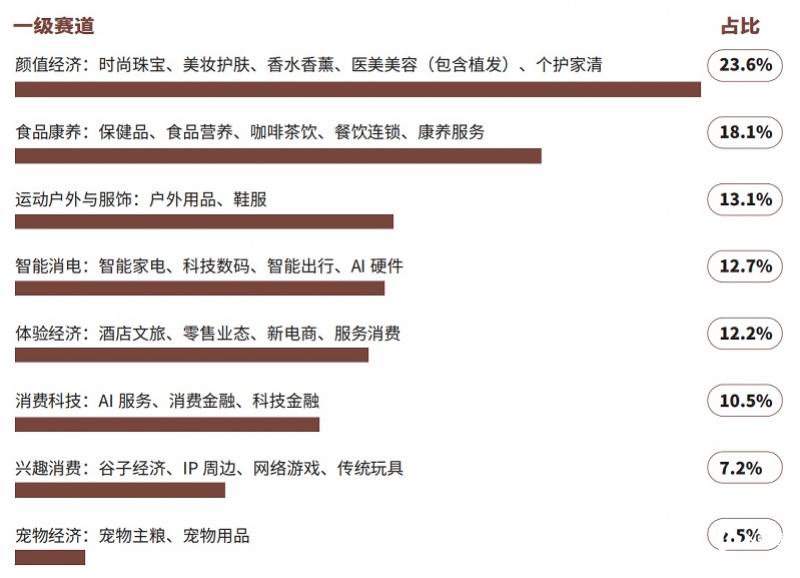
Core Insights - The "2025 High-Quality Consumer Brand TOP100 Innovation Ecological Conference" will be held in Shanghai, focusing on brand influence, innovation, social responsibility, and company scale [1] - A report titled "2025 High-Quality Consumer Brand TOP100 Trend Insight" will be released, highlighting four major trends in high-quality consumer brands [1] Group 1: Trends in High-Quality Consumer Brands - The rise of health consciousness is driving the growth of wellness and sports consumption, with outdoor sports and health products seeing the highest brand representation [5][6] - AI technology is enhancing product and service upgrades across various sectors, becoming a core competitive advantage in high-end home appliances [5][36] - Novel experiences are igniting consumer enthusiasm, particularly in the experience economy, where immersive and interest-based consumption is gaining traction [6][25] - Emotional value is unlocking new consumption scenarios, especially among younger consumers who prioritize emotional connections in their purchases [6][27] Group 2: Brand Distribution and Characteristics - Nearly 300 brands are competing across nine major sectors, with the largest representation in the beauty economy (23.6%) and health food sector (18.1%) [2][3] - Over 70% of the candidate brands are "post-00s brands," indicating a trend towards newer companies [7][8] - The geographical distribution of brands shows a concentration in major cities like Shanghai, Beijing, and Guangzhou, with Shanghai being favored by foreign brands [11][12][14] Group 3: Consumer Behavior and Market Dynamics - The beauty and personal care market is experiencing a shift towards efficacy-driven products, with a notable increase in consumer awareness regarding product effectiveness [16][18] - The outdoor sports market is becoming increasingly segmented, with traditional apparel brands entering the space to capture the growing demand for specialized outdoor gear [19][20] - The health and wellness industry is projected to reach a total revenue of 9 trillion yuan by 2024, driven by a growing awareness of health among consumers [22][23] Group 4: AI and Technology Integration - AI is reshaping the consumer experience across various sectors, with applications in personalized recommendations, smart home devices, and immersive entertainment experiences [35][38] - A significant majority of surveyed companies (87%) believe that AI technology will bring substantial changes to the consumer sector, with many planning to increase AI integration [40][43] - The integration of AI in consumer products is becoming a key trend, with companies focusing on enhancing user experience through intelligent features [36][37]
申万宏源证券晨会报告-20250707
Shenwan Hongyuan Securities· 2025-07-07 00:44
Core Insights - The report emphasizes the distinction between "capital expenditure reduction," "capacity reduction," and "output reduction" in the context of anti-involution policies, drawing parallels to supply-side reforms from 2016-2017 [1][10] - The current anti-involution policies are expected to lead to a significant decline in capital expenditure growth in the midstream manufacturing sector, with the growth rate hitting a new low since 2012 [2][10] - The report predicts that by mid-2026, the fixed asset formation growth rate of listed midstream manufacturing companies will fall below the nominal GDP growth rate, indicating a visible turning point in supply-demand dynamics [3][10] Summary by Sections Section 1: Anti-Involution Policies - The report identifies three core elements of the supply-side reform experience from 2016-2017: "capacity reduction," "output reduction," and the significant impact of demand-side stimulation [1][10] - The current anti-involution policies are seen as a systematic correction of excessive investment in advanced manufacturing driven by local government subsidies from 2022-2024 [2][10] - The report suggests that the current environment is not conducive to strict "output reduction" policies due to the lack of mechanisms for implementation in privately-owned advanced manufacturing sectors [2][10] Section 2: Market Trends and Predictions - The report anticipates that the supply-demand dynamics in the midstream manufacturing sector will improve significantly by 2026, with a focus on sectors such as electric equipment, steel, and building materials [3][10] - The report maintains a bullish outlook for the Hong Kong stock market, despite concerns over liquidity fluctuations [3][10] Section 3: Outdoor Apparel Industry - The outdoor apparel market in China is projected to reach a scale of 102.7 billion yuan in 2024, with a year-on-year growth of 17%, driven by factors such as increased health awareness and a shift towards experiential consumption [15][16] - The brand "Berghaus" has shown remarkable growth, with a projected revenue of 1.77 billion yuan in 2024, reflecting a year-on-year increase of 94.5% [15][16] - The report highlights the competitive landscape of the outdoor apparel industry, noting that the top ten brands account for only 27.2% of the market, indicating significant room for growth [15][16]
纺织服装行业2025年度中期投资策略:弱于周期,兴于结构
Changjiang Securities· 2025-07-06 03:15
Group 1 - The report indicates that the domestic retail growth remains stable, supported by favorable policies such as tariff reductions and demand stimulation, with expectations of entering a destocking cycle in Q2-Q3 2025 [3][9] - The textile and apparel industry is expected to transition from a destocking to a stocking cycle, typically lasting 1-3 years, with the current accumulation phase lasting over a year [9][10] - The report highlights that premium manufacturing companies may find low-level investment opportunities, while long-term industry optimization will benefit leading companies [3][11] Group 2 - The report notes that the retail environment for brands is under pressure, with income declining and negative operating leverage affecting performance [28][30] - The manufacturing sector is currently facing challenges, with weak demand and inventory pressures leading to a passive accumulation phase [11][28] - Long-term, the report anticipates a restructuring of the industry, with quality manufacturers expected to gain market share due to competitive advantages [11][12] Group 3 - The report emphasizes the importance of quality-price ratio and health trends in consumer preferences, with domestic brands leveraging online platforms for targeted consumer education and product upgrades [10][12] - The report identifies key investment opportunities in brands that align with new consumption trends, such as Hai Lan Home and Semir Fashion, as well as undervalued stocks in the Hong Kong market [12][12] - The textile manufacturing sector is projected to face short-term challenges but is expected to see a turning point in the second half of the year, with a focus on quality leading companies [12][12]