万达

Search documents
凝聚资本之力,照亮未来之路
Sou Hu Cai Jing· 2025-12-03 13:05
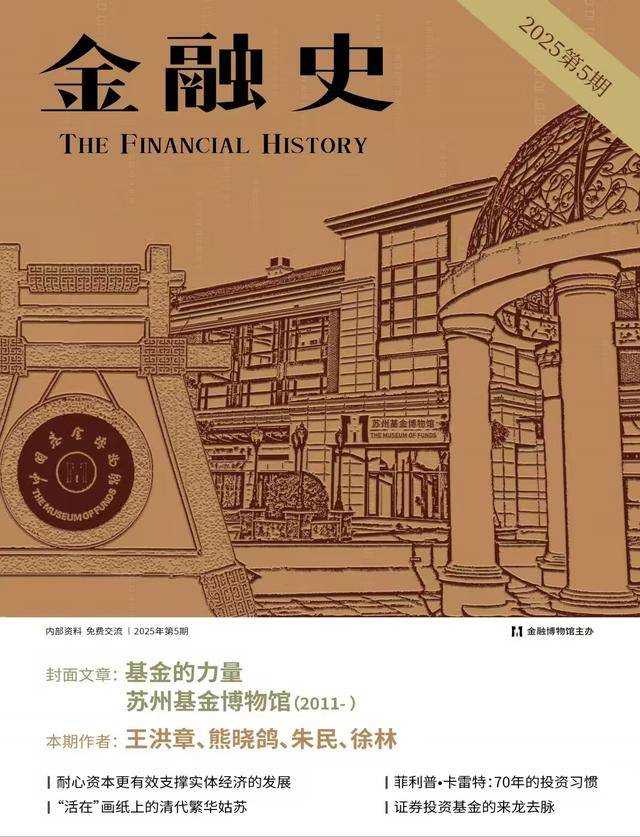
Core Insights - The article emphasizes the transformative power of funds, viewing them not merely as financial instruments but as carriers of historical wisdom, institutional trust, and future vision, providing a profound perspective on the modern financial ecosystem [1] Historical Context - The evolution of funds is traced from the establishment of the world's first contractual fund in 1868 to the development of the U.S. venture capital landscape over the past seventy years, and the rise of China's fund industry from "Zhu Xin Fund" to a significant player in the global capital market [3] - The Suzhou Fund Museum is highlighted as a key institution preserving and narrating this history, utilizing various multimedia methods to make abstract financial concepts tangible for the public [4] Conceptual Framework - The article presents deep insights from prominent figures in finance, emphasizing that the core of funds lies in the integration of trust, wealth management, and values, which elevates the discussion from a technical to a value-based perspective [6] - The discourse includes critiques of the current financial market's short-term profit focus and underscores the importance of long-termism in fostering new productive forces [6][7] Patience Capital - "Patience capital" is identified as a strategic pillar for China's capital market, characterized by long-term orientation, stability, and a higher risk tolerance, which is essential for supporting the development of new industries [8] - As of June 2024, China has 24,344 active venture capital funds with a total scale of 3.3 trillion, providing robust support for technology innovation [9] Fund Safety - The safety of funds is a critical concern, with China having over 20,000 GP management teams and more than 60,000 funds, raising questions about the reliability of these investments [12] - The article reflects on the rapid growth of the fund industry in China compared to the U.S., highlighting the need for safety and trust in this expanding market [12] Practical Narratives - The article employs case studies to illustrate the journey of IDG Capital from replicating Silicon Valley models to leading China's internet sector, showcasing the growth trajectory of domestic venture capital institutions [26] - It also addresses the lessons learned from early market imperfections and discusses current trends in ESG investment and smart finance [26] Future Outlook - The article captures the evolving role of funds in shaping the future, with AI and algorithms transforming investment decisions and ESG becoming a core metric for investment value [17] - Funds are positioned as not only wealth amplifiers but also as strategic forces in driving national core industry development and addressing significant social needs [17][18]

中美西线无战事,热点主线板块
Sou Hu Cai Jing· 2025-11-27 13:05
Market Overview - A-shares and Hong Kong stocks remained stable, with the ChiNext index retreating after approaching the 60-day moving average, indicating a cautious market sentiment and reduced trading volume [1] - The overall market sentiment is positive, with more favorable news than negative, leading to a structural market where investors focus on sectors rather than indices [1] Positive Factors - Positive news includes the delay of U.S. tariffs on China until 2026 and the near certainty of a Federal Reserve rate cut in December [1] - The Federal Reserve's rate cut is expected to benefit cyclical resource stocks, suggesting opportunities for short-term positioning around this event [1] Negative Factors - Minor external issues, such as tensions with a certain country, and internal concerns like the decline in Vanke's bonds, are noted [1] - The decline in Vanke's bonds may be a deliberate market action, with the external negative factors largely priced in [1] Real Estate Market Dynamics - The real estate market is undergoing a "soft landing" approach, with gradual price reductions to prevent a significant drop in housing prices [3] - The strategy involves both soft and hard landing methods, with the former focusing on state-owned enterprises acquiring existing housing stock and the latter on the liquidation of real estate companies [3] Investment Recommendations - Investors are advised to avoid real estate and focus on sectors such as semiconductor chips, AI and internet leaders, innovative pharmaceuticals, new consumption, industrial robots, energy storage batteries, and photovoltaics [6] - The policy direction indicates a focus on creating three trillion-yuan industries and ten hundred-billion-yuan industries, with consumer electronics, home appliances, and automotive manufacturing expected to benefit [6]


展望2026:地产磨底与规则重写
Di Yi Cai Jing· 2025-11-27 11:20
Core Viewpoints - 2026 is expected to be a "bottoming year" for the real estate market, with new residential sales likely to see further adjustments, although the decline may be less severe than in 2025. Prices are expected to show an "L-shaped" tail effect, with core areas in first-tier cities possibly seeing a month-on-month increase in the first half of 2026, while weaker third and fourth-tier cities are unlikely to stop declining throughout the year [3][4][5] Macro: Credit Bottoming and Fiscal Support - The drag of real estate on GDP is projected to decrease from 1.5-2 percentage points in 2025 to 0.5-1 percentage points, indicating a consensus expectation of "diminishing macro headwinds" [4] - The fiscal policy for 2026 includes an early allocation of 1.5 trillion yuan in special bonds, with 300 billion yuan specifically for acquiring existing residential properties for affordable housing, providing a safeguard for 250-300 million square meters of inventory [6][7] Financial: From "Leverage Dividend" to "Asset Dividend" - The financing landscape shows a peak in credit bond maturities in Q3 2025, with a gap of 25 billion yuan for private real estate companies needing to refinance. By 2026, the maturity volume is expected to decrease by 18%, and 21 distressed companies are projected to complete debt restructuring, alleviating the "default pulse" in the industry [8] - The REITs market is anticipated to expand by 150-200 billion yuan in 2026, with projects yielding cash flows above 5% expected to achieve valuations of 15-20 times, compared to traditional development businesses at 3-5 times PE [8] Residential Real Estate: Structural Race for Inventory Depletion - The estimated new residential sales area for 2026 is projected to be 85-86 million square meters, corresponding to a sales amount of 8.6 trillion yuan, reflecting a year-on-year decrease of 4-6%, but the narrowing decline suggests a potential end to the "volume-price double kill" phase [9] - In first-tier and strong second-tier cities, inventory depletion is expected to take 14-18 months, with a potential slight price increase of within 5% for desirable properties in main urban areas [10] - In weaker second-tier and third-fourth tier cities, inventory is expected to exceed 30 months, with prices continuing to decline by 3-8% [11] Commercial Real Estate: "Threefold Evolution" - The industry is undergoing a transformation from scale worship to refined operations and risk hedging, with 2026 serving as a critical testing period for this framework [12] - The ability to revitalize assets is exemplified by Wanda's management of the Beijing Blue Harbor, which improved rental income by 5% and reduced vacancy rates to 5% through operational adjustments [12] - The introduction of public REITs tax incentives and technological advancements will determine which companies can upgrade commercial real estate into urban service infrastructure [12] Corporate Strategies: From "Three Highs" to "Three Light" - The light asset model, including construction agency, asset management, and property management, is expected to maintain a growth rate of 15-20% in 2026, with net profit margins of 8-12%, significantly higher than the 3-4% profit margin of development businesses [13] - Major state-owned enterprises aim for a net debt ratio below 50% by 2026, while private distressed companies are expected to reduce their net debt ratios to 80-100% [13] - The "sales-driven investment" approach will become a hard constraint, with a land sales ratio of 0.2-0.5, compelling real estate companies to convert land reserves into sellable resources [13] Policy Outlook: From "Market Rescue" to "Reform" - The real estate policy for 2026 will feature a dual track of "short-term stability and long-term reform," with measures including marginal relaxation of purchase restrictions in core areas and a 30 basis point reduction in mortgage rates [14][15] - Structural reforms such as the national trading of land indicators and the introduction of housing pension schemes are expected to be implemented in 2026, providing a foundational framework for new real estate models during the 14th Five-Year Plan [15]

传媒互联网教育行业2026年度策略
2025-11-24 01:46
Summary of Key Points from Conference Call Records Industry Overview - **Industry Focus**: Media, Internet, and Education sectors are highlighted for 2026 strategies, with significant emphasis on AI-driven advancements and market dynamics [1][2]. Core Insights and Arguments Advertising Sector - **AI Impact**: AI has significantly improved advertising efficiency, with Tencent's advertising revenue growing by 20% year-over-year in Q2 and continuing to rise in Q3. Kuaishou has made notable progress in user profiling and targeted advertising, while Bilibili achieved over 20% growth through AI enhancements [6][4]. - **Competition**: Third-party programmatic advertising platforms like Huishuangzang Technology and Yidian Tianxia are gaining competitiveness, driving transformation in the advertising industry [1][5]. Gaming Industry - **Regulatory Environment**: The normalization of game license issuance ensures a steady supply of content, supported by a resilient consumer environment. Major companies like Century Huatong and Giant Network are expected to benefit from a concentrated release of new products [7][9]. - **Market Dynamics**: The gaming sector is projected to maintain a high level of activity, driven by product innovation and commercial efficiency. Key players include Tencent, Century Huatong, and Giant Network [14][9]. Instant Retail Market - **Market Growth**: The instant retail market is expected to reach 1.175 trillion yuan by 2026, with a year-on-year growth rate of 28%. Major players like Alibaba, Meituan, and JD.com are heavily investing in this space, although profitability is under pressure due to intense competition [11][8]. - **Consumer Trends**: The county-level market is emerging as a new growth point, supported by the increasing number of rural internet users and their consumption habits [11][10]. Autonomous Driving Sector - **Competitive Landscape**: The autonomous driving sector is entering a price competition phase, with companies like Xpeng and Li Auto differentiating themselves through chip technology and self-driving capabilities. This trend is expected to enhance user experience and drive further development in the electric vehicle industry [12][10]. Short Drama and AI Animation - **Market Expansion**: The short drama market is rapidly growing, with approximately 700 million users in China. The market share of Hongguo exceeds 50%, while companies like China Online and Kunlun Wanwei are performing well in overseas markets, particularly targeting the U.S. [18][1]. - **AI Animation Growth**: The supply of AI animation (dynamic comics) has surged, with a compound monthly growth rate of about 83% in the first half of the year, resulting in over 3,000 works produced and a revenue scale that has increased twelvefold [19][3]. Education Sector - **AI Integration**: AI is increasingly penetrating the education sector, with companies like Dou Shen Education expected to achieve full AI integration by 2026, with AI revenue accounting for 90% of total income. Fenbi Education's AI interview courses are projected to enhance profit margins significantly [20][21]. - **Valuation Appeal**: Dou Shen Education's valuation metrics, such as a PS ratio of around 7 and a PE ratio in the 30s, are considered attractive compared to other sectors, which often see PE ratios of 60-70 [21][20]. Additional Important Insights - **Consumer Resilience**: The macroeconomic environment is supporting consumer resilience, with trends like the "lipstick effect" maintaining consumption levels [9][8]. - **Content Supply Recovery**: The film and television sectors are experiencing a recovery in content supply, with stable growth in box office revenues and favorable policies aiding the industry [17][7]. This summary encapsulates the key points from the conference call records, providing a comprehensive overview of the current trends and future outlooks across various sectors.




适配AI落地的组织,应该长啥样?【AI落地研学营】
虎嗅APP· 2025-11-17 13:49
Core Insights - The article emphasizes the rapid transition of AI from concept to implementation, highlighting the challenges organizations face in effectively utilizing AI tools and the necessity of developing organizational capabilities to adapt to AI [4][5]. Group 1: AI Implementation Challenges - Many organizations have acquired AI tools but struggle with their effective use due to a lack of skilled personnel who can harness AI's potential [4]. - The core issue is not just finding AI tools but also cultivating the organizational culture and capabilities necessary to leverage AI effectively [5]. Group 2: AI in Retail and Consumer Brands - The article discusses the AI implementation experiences of various retail and consumer brands, including Yili, Yum China, Wanda, and others, focusing on how they are exploring AI's role in marketing and supply chain solutions [5]. - The fourth session of the AI implementation seminar will address the essential characteristics of organizations and cultures that can adapt to AI productivity [5][12]. Group 3: Perspectives on Organizational Change - The article outlines three perspectives on how AI can drive organizational transformation: tools, operations, and organizational culture [6]. - It highlights the need for AI to evolve from being a mere tool to becoming a foundational infrastructure that reshapes business processes and decision-making [7]. Group 4: Practical Insights from Industry Leaders - The seminar will feature insights from industry leaders on how AI can be integrated into various operational aspects, such as inventory management, service innovation, and recruitment processes [9][10]. - Participants will gain firsthand experience of AI applications in real-world settings, such as supermarket operations, to observe how AI reshapes workflows [9]. Group 5: Networking and Learning Opportunities - The AI implementation seminar serves as a networking platform for decision-makers from leading retail and consumer enterprises, facilitating knowledge sharing and collaboration [12][14]. - The event aims to create a comprehensive understanding of AI's role in retail, covering strategic insights, technological tools, and practical case studies [13][26].

新首富身价771亿美元,雷军第七,马云跌出前十,财富版图生变
Sou Hu Cai Jing· 2025-11-08 19:12
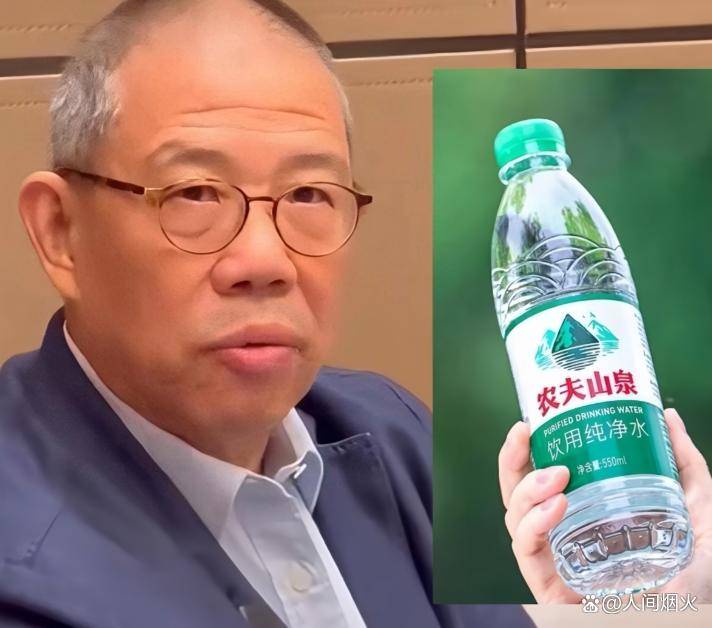
Core Insights - The Forbes China Rich List reveals that Zhong Shanshan retains the title of the richest person for the fifth consecutive year, with a net worth of $77.1 billion, increasing by $26.3 billion over the past year, averaging over $70 million daily in earnings [1][3] - Xiaomi's founder Lei Jun ranks seventh with a wealth of $36.8 billion, surpassing Jack Ma for the first time, who has fallen out of the top ten for the first time since the list's inception [1][3] Group 1: Zhong Shanshan's Wealth Growth - Zhong Shanshan's wealth is attributed to the resilience of the consumer goods sector against economic fluctuations, with his company Nongfu Spring achieving double-digit growth in revenue and net profit in the first half of 2025 [3] - The expansion of his distribution network to 8 million outlets has provided stability for low-cost essential products, even amid consumer tightening [3] Group 2: Decline of Internet Tycoons - The drop in rankings for internet billionaires highlights the challenges faced by the industry, with Jack Ma falling out of the top ten and Meituan's Wang Xing experiencing a wealth decrease of $6.2 billion, over 42% [3][9] - The end of the "burning money for market share" model is evident as platform-based companies like Meituan and JD.com see their wealth shrink [9] Group 3: Lei Jun's Rise - Lei Jun's wealth surged from $19.9 billion to $36.8 billion, an increase of 85%, driven by explosive growth in Xiaomi's automotive business, with revenue reaching 39.8 billion yuan, a year-on-year increase of over 500% [5] - The successful delivery of over 150,000 units of the SU7 model in the first half of the year has significantly impacted Lei Jun's position on the wealth list [5] Group 4: Emergence of New Wealth - New entrants in the AI sector, such as Chen Tian Shi and Liang Wen Feng, have seen significant wealth increases, contrasting with the decline of traditional real estate tycoons like Wang Jianlin [7] - The threshold for the wealth list has risen from $3.9 billion to $4.6 billion, indicating a shift in wealth towards hard technology and global consumer brands [7] Group 5: Market Dynamics - The shift from internet and real estate wealth engines to new paths represented by Zhong Shanshan's consumer goods and the technological breakthroughs of figures like Zhang Yiming and Liang Wenfeng is evident [9] - The total wealth of listed billionaires increased from $1.03 trillion to $1.35 trillion, with the CSI 300 index rising by 15%, reflecting a clear market vote for these new sectors [9][11]


商业活力华东最盛,上海新开业商场远超北京
3 6 Ke· 2025-11-07 02:27
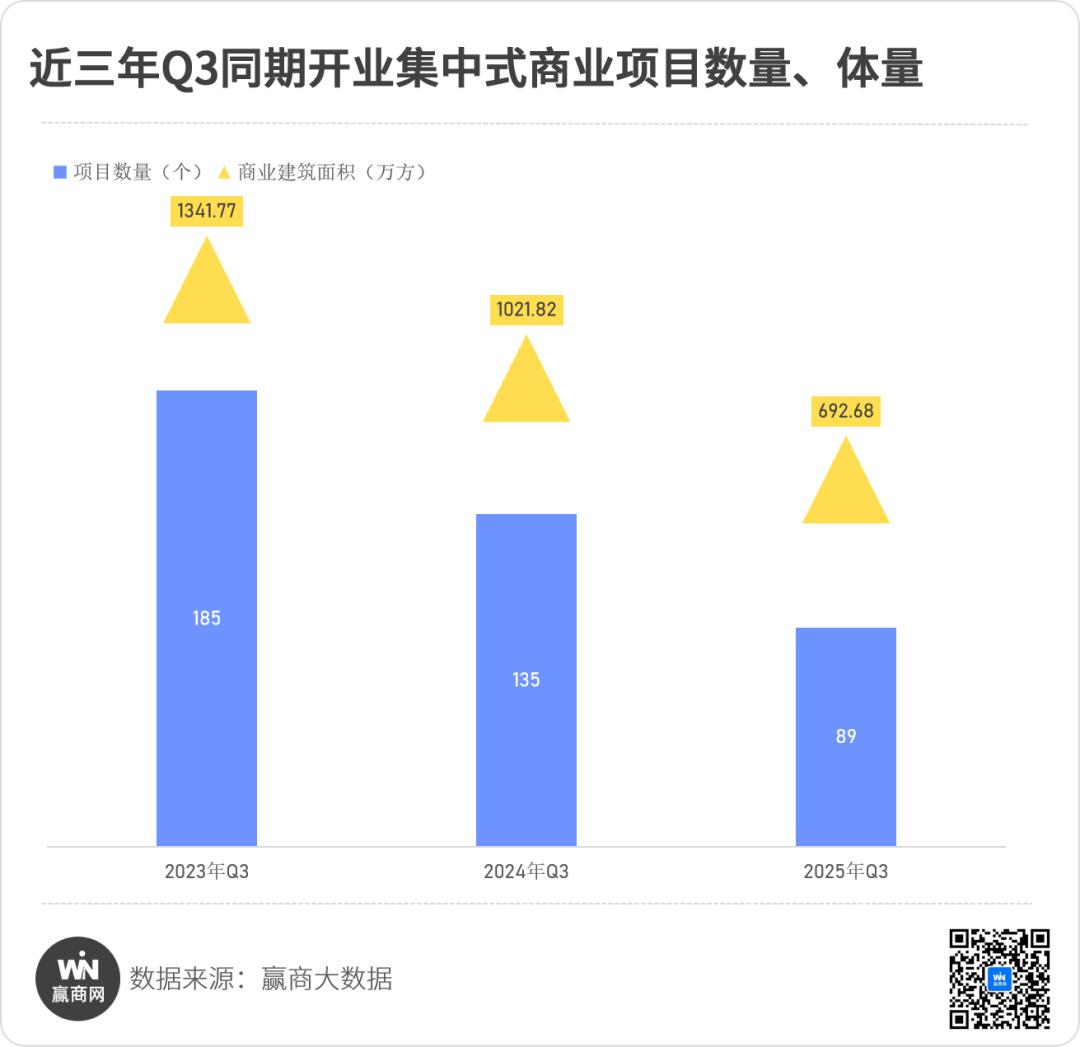
Core Insights - The third quarter of 2025 sees a peak in commercial openings, driven by the "National Day" holiday, with 89 new projects totaling approximately 6.93 million square meters [2][5] - The Eastern China region, particularly Jiangsu, Zhejiang, and Shanghai, dominates the commercial project openings, accounting for over 80% of the total [5][7] - High-tier cities maintain their market position, while lower-tier cities, especially county-level markets, show increased commercial activity [7][9] Summary by Sections Opening Statistics - A total of 89 commercial projects opened in Q3 2025, with a commercial area of about 6.93 million square meters. September alone accounted for 59 projects, representing 66% of the quarterly total [2] - Among the new openings, 15 projects were renovations of existing properties, contributing approximately 1.37 million square meters [2][14] Regional Distribution - The Eastern region leads with 32% of openings, with Jiangsu, Zhejiang, and Shanghai contributing significantly [5] - Central and Southern China follow, with Central China having 8 openings and Southern China 15 openings, primarily in Guangdong [5] Market Tier Analysis - High-tier cities account for over 70% of new projects, with first-tier cities at 27%, second-tier at 10%, and a notable activity in fourth-tier cities [7] - County-level commercial projects are becoming more active, with several notable openings in various regions [9] City-Specific Highlights - Hangzhou leads with 8 new projects, followed by Chongqing and Wuhan with 6 each. Notable projects include the Hangzhou Asian Games Village and several large-scale developments in Chongqing [11][12] - Beijing and Shanghai also saw significant openings, focusing on urban renewal and high-end commercial spaces [12][15] Major Developers and Projects - Leading commercial management companies like China Resources, Longfor, and Wanda opened multiple projects, with China Resources launching 6 projects, including several in lower-tier cities [13] - High-profile projects include Shenzhen Bay MixC Phase II and Guangzhou's K11 Select, both featuring innovative designs and a mix of retail and cultural spaces [18][19][20] Renovation Projects - The quarter saw 15 renovation projects, with a total area of approximately 1.37 million square meters, indicating a trend towards upgrading existing properties [14] - Examples include the transformation of previously stalled projects into successful commercial spaces, such as the Hohhot MixC [25]


韩国今年就拍了17部,中国谁还在拍电影?
3 6 Ke· 2025-10-28 09:41
Core Viewpoint - The South Korean film industry is experiencing a significant downturn, with only 17 films produced this year, raising concerns about the future of local cinema [1][4]. Group 1: South Korean Film Market - The South Korean film market is described as being in a "collapse" state, with a drastic reduction in film production and a lack of major box office hits [1]. - The director Kim Seong-soo expressed that there is virtually no one making films in South Korea anymore [1]. - The situation mirrors previous concerns about the Korean drama market, which has also faced challenges but continues to produce content primarily through streaming platforms like Netflix [4]. Group 2: Domestic Film Industry Trends - The domestic film industry is also seeing a decline in project initiations, with major studios adopting a cautious investment approach [6]. - Notable projects this year include over 50 live-action films, but there is a clear trend towards cost-cutting and efficiency [6]. - Major studios like Wanda, LeTV, and Bona have significantly reduced their project outputs compared to previous years, indicating a shift in investment strategies [10][12]. Group 3: Investment and Production Shifts - Companies are increasingly focusing on smaller, more manageable projects, with a notable rise in female-led narratives and collaborations with streaming platforms [21][23]. - The trend of production companies diversifying into film projects is evident, with several companies that traditionally focused on series now investing in films [20][21]. - The involvement of distribution and marketing companies in film production is increasing, as they seek to adapt to the changing market dynamics [21][25]. Group 4: Emerging Opportunities - Despite the downturn, there are signs of resilience as production companies pivot towards new content types, including female-centric stories and collaborations with emerging directors [15][20]. - Companies like iQIYI are actively investing in film projects, indicating a willingness to explore new narratives and support new talent [15]. - The current market environment is seen as a transitional phase, where traditional business models are being reassessed, and new creative directions are being explored [25].
卖资产回血,广州老牌房企又一项目7折法拍
Nan Fang Du Shi Bao· 2025-10-28 09:19
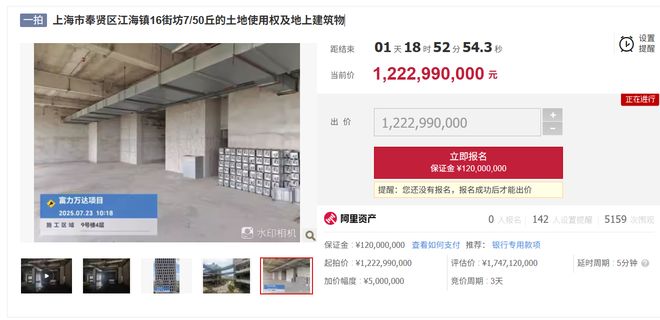
Core Viewpoint - R&F Properties, once the largest luxury hotel owner globally, is facing significant asset devaluation and financial distress, leading to a series of asset disposals, including hotels and commercial complexes [1][3][7]. Asset Disposal - R&F Properties has initiated a wave of asset disposals, with multiple core assets being put up for auction, including the Shanghai Fengxian R&F Wanda project, which has an opening bid of 1.223 billion yuan, significantly lower than its assessed value of 1.747 billion yuan [1][4]. - The company’s hotel assets have decreased from 89 to 22, with projections indicating a potential drop below 20 by the end of 2024 [3][5][7]. - The Shanghai project, originally planned for completion in 2021, has been stalled for nearly four years due to liquidity issues, requiring substantial further investment to complete [4]. Financial Performance - R&F Properties' financial situation has deteriorated, with a projected revenue drop of nearly 60% to 5.765 billion yuan in the first half of 2025, alongside a net loss of 4.046 billion yuan [7]. - The company has a cash reserve of only 3.508 billion yuan against a staggering short-term debt of 97.59 billion yuan, highlighting severe liquidity challenges [7]. Industry Context - The broader real estate sector is experiencing similar pressures, with many developers divesting non-core assets to alleviate leverage issues. As of the end of 2024, hotel investment transactions in mainland China totaled 17.87 billion yuan, with 68% of sellers being developers [7][8]. - Despite some optimism regarding potential investment opportunities due to falling asset prices, the overall outlook for the hotel market remains bleak, with expected declines in occupancy rates and average room prices in 2025 [7][8].
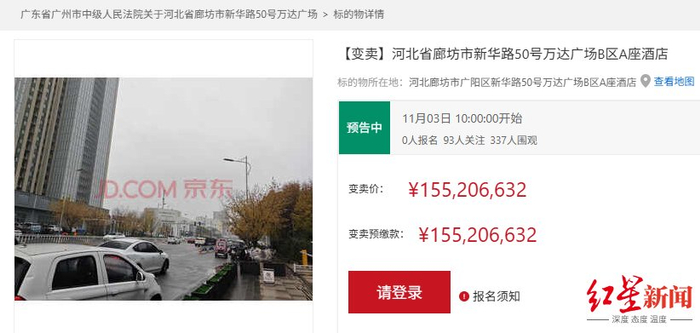
富力1.55亿变卖廊坊万达酒店,宁德分店同步出售
Cai Jing Wang· 2025-10-21 02:23
Core Viewpoint - R&F Properties is accelerating the sale of two Wanda hotels to generate cash, with significant price reductions compared to their assessed values [1] Group 1: Sale Details - The R&F Wanda Hotel in Langfang, Hebei, is set to be sold at an opening price of 155 million yuan, which is a reduction of 122 million yuan from its assessed value of 277 million yuan [1] - The auction for the Langfang hotel will begin on November 3, with a bidding period of 60 days and a minimum increment of 776,000 yuan [1] - The R&F Wanda Jiakua Hotel in Ningde, Fujian, will also be sold at the same time [1] Group 2: Background Information - The two hotels being sold are part of a larger portfolio of 77 hotels that R&F Properties acquired from Dalian Wanda in 2017 [1] - As of the end of 2024, R&F Properties still owns 22 self-built hotels according to their financial report [1]