
赵一鸣零食

Search documents
大湾区辐射力升级:超级路网贯通临省“共赢走廊”
21世纪经济报道· 2025-07-09 03:10
Core Viewpoint - The establishment of efficient intercity transportation networks is crucial for economic integration and cultural collaboration, serving as a key driver for coordinated urban development. The recent completion of the Suichuan to Dayu Expressway significantly enhances connectivity between Ganzhou and the Guangdong-Hong Kong-Macao Greater Bay Area, reducing travel time to 4 hours and facilitating trade and personnel movement [1][2]. Transportation Network Development - The Suichuan to Dayu Expressway, costing 24.45 billion yuan and spanning 127 kilometers, is part of a broader strategy to enhance transportation links between Jiangxi and Guangdong, with 7 cross-province expressways completed to date [1][5]. - Jiangxi and Guangdong have the highest density of expressways in the country, averaging one expressway every 50 kilometers, with plans for complete coverage of expressways in border counties [4][5]. Economic and Industrial Collaboration - The improved transportation network has led to deeper industrial collaboration between Guangdong and Jiangxi, exemplified by the "Bay Area R&D + Jiangxi Manufacturing" model, which has attracted major companies like Gree and BYD to invest in Jiangxi [1][11]. - In 2024, Jiangxi utilized 334.516 billion yuan from Guangdong enterprises, accounting for 30.52% of its total external project funding, highlighting the strong economic ties [11]. Population and Labor Mobility - The enhanced transportation infrastructure has significantly increased labor mobility, with 2.3 million workers from Jiangxi in Guangdong, and over 50,000 enterprises from Jiangxi operating in Guangdong [7]. - In 2024, Ganzhou is expected to receive 113 million domestic tourists, with 70% coming from Guangdong, indicating strong interprovincial tourism and economic interaction [7]. Future Developments - Plans for the Ganzhou-Guangzhou High-Speed Railway aim to further integrate Jiangxi into the "railway-based Greater Bay Area," enhancing connectivity and economic opportunities [8]. - The ongoing development of expressways and high-speed rail is expected to create a "dual-channel" transportation layout, facilitating even greater economic collaboration between the regions [8].


遂大高速通车:江西融湾按下“快进键”
2 1 Shi Ji Jing Ji Bao Dao· 2025-07-08 13:06
Group 1 - The completion of the Suichuan to Dayu Expressway, costing 24.45 billion yuan and spanning 127 kilometers, significantly reduces travel time from Ganzhou to the Guangdong-Hong Kong-Macao Greater Bay Area to 4 hours, enhancing personnel movement and trade flow [1][4] - The density of expressways between Guangdong and Jiangxi provinces is the highest in the country, with an average of one expressway every 50 kilometers, facilitating cross-regional collaboration and economic integration [3][4] - The "Bay Area R&D + Jiangxi Manufacturing" development model is gaining momentum, with major companies like Gree and BYD establishing operations along the expressway corridor, while Jiangxi enterprises are setting up R&D centers in Guangdong [1][6] Group 2 - The collaboration between Guangdong and Jiangxi is part of a broader trend where provinces like Guangxi, Hunan, and Guizhou are accelerating their integration with the Greater Bay Area, leveraging improved transportation networks for resource flow and industrial cooperation [2][8] - The establishment of a high-speed rail network, including the Ganshen High-Speed Railway, has integrated the Jiangxi region into the "2-hour economic circle" of the Greater Bay Area, enhancing economic connectivity [4][5] - Jiangxi's agricultural products, such as Gan Nan navel oranges and high mountain tea, benefit from improved logistics, achieving a 30% reduction in transportation costs and enabling rapid supply to the Greater Bay Area [6][7] Group 3 - The electronic information industry in Jiangxi is experiencing rapid growth, with a projected output nearing 1.2 trillion yuan in 2024, supported by deep collaboration with the Greater Bay Area, particularly in sourcing materials and equipment [7] - Companies from the Greater Bay Area are increasingly investing in Jiangxi, with over 140 industrial projects exceeding 100 million yuan in investment, indicating a strong industrial partnership [7][8] - The trend of "R&D/market in the Bay Area, production in other provinces" is emerging, expanding the industrial complementarity between the Greater Bay Area and surrounding provinces [8]
张一鸣重回一线?知情人士:仍base在新加坡;罗马仕充电宝3C证书几乎全数被撤销;携程调价助手被指强制调价丨邦早报
创业邦· 2025-06-21 00:54
Group 1 - Zhang Yiming, the founder of ByteDance, is reportedly focusing on AI business while based in Singapore, participating in core technology team discussions monthly [2] - Weima has been acquired by Baoneng Automobile, with reports indicating that Weima vehicles are now displayed in Baoneng's showroom [2] - Romaishi's fast-charging power bank has had its 3C certification revoked, leading to a significant reduction in product availability on e-commerce platforms [4][5] Group 2 - Yushu Technology has completed a C round financing of approximately 700 million RMB, with a post-financing valuation of about 12 billion RMB, and is preparing for an IPO, primarily targeting the A-share market [6] - Ele.me's former CEO, Han Liu, has been taken by police for investigation related to alleged job-related crimes, prompting internal company changes [6][7] - Nio Automobile's parent company has entered bankruptcy proceedings, with industry insiders suggesting potential restructuring due to significant sales declines [7] Group 3 - Ctrip's price adjustment tool has faced criticism for disrupting market pricing, with hotel operators claiming it forces them to lower prices against their will [6][7] - The Hong Kong IPO market has seen strong performance in the first half of 2025, with Ningde Times leading in fundraising at 41 billion HKD [15] - OpenAI is in a critical restructuring phase to secure a significant investment from SoftBank, with potential reductions in funding if deadlines are not met [16] Group 4 - The Chinese humanoid robot market is projected to see commercial sales reach nearly 60,000 units by 2030, with a compound annual growth rate of 95.3% [26] - The Chinese gaming market reached a size of 28.051 billion RMB in May 2025, showing a year-on-year growth of 9.86% [26] - The retail sales of narrow passenger vehicles in June are expected to reach 2 million units, with new energy vehicles projected at 1.1 million units, indicating a penetration rate of around 55% [26]

零食集合店零售模式分析:量贩式选品与会员体系构建
LINSHOU· 2025-06-10 03:35
Investment Rating - The report indicates a positive investment rating for the snack collection store industry, highlighting its rapid growth and market potential [26]. Core Insights - The snack collection store industry is characterized by a direct procurement model, offering a wide variety of products at competitive prices, with a significant market expansion projected [12][18]. - The industry has evolved through various phases, with notable growth in the number of stores and market size, particularly from 2019 to 2024 [22][26]. - The report emphasizes the importance of a well-structured membership system and effective product selection strategies to enhance customer loyalty and sales [54][135]. Summary by Sections 1. Industry Overview - Snack collection stores, also known as bulk snack stores, eliminate the distributor layer by sourcing directly from manufacturers, focusing on low prices and product diversity [12]. - The market size for snack collection stores in China is expected to grow from 4.08 billion yuan in 2019 to 104.59 billion yuan in 2024, capturing over 40% of the snack sales market [26]. 2. Bulk Selection Strategy - Effective product selection can attract more customers, with a mix of well-known brands and private label products to enhance store traffic and conversion rates [28][34]. - The strategy includes placing popular brands at prominent locations to draw customers while maintaining a higher margin on private label products [36][51]. 3. Membership System Construction - A robust membership system enhances customer loyalty by offering exclusive benefits such as discounts and priority access [54][57]. - The design of the membership system should be fair and incentivizing, with clear criteria for upgrading membership levels based on spending [60][61]. 4. Industry Competitive Landscape - The market is dominated by major players like Wanchen Group and Snack Very Busy, with significant store counts and market shares [82][84]. - Competitive strategies include aggressive market expansion and brand consolidation to enhance market presence [87][89]. 5. Consumer Demand Analysis - The primary consumer demographic includes younger generations (90s and 00s), with a strong preference for convenience and variety [90]. - Consumers are increasingly drawn to snack collection stores due to their competitive pricing and diverse product offerings, often perceiving them as more affordable than traditional supermarkets [92][102]. 6. Industry Development Trends - The industry is moving towards an integrated online and offline retail model, leveraging technology for personalized marketing and improved customer engagement [106][108]. - Future trends indicate a focus on quality, health, and personalized experiences, with an expected increase in market concentration [139].
零食界的“蜜雪冰城”,不能只做“薄利生意”
新消费智库· 2025-05-28 12:31
Core Viewpoint - The article discusses the rapid expansion and business model of the snack retail company "Ming Ming Hen Mang," highlighting its impressive growth metrics and the challenges it faces in maintaining profitability while competing in a price-sensitive market [3][4][5]. Group 1: Company Overview - "Ming Ming Hen Mang" achieved a retail sales figure of 55.5 billion RMB and a total revenue of 39.3 billion RMB in 2024, with over 14,394 stores nationwide [3][4]. - The company was formed by the merger of two snack giants, "Snacks Hen Mang" and "Zhao Yi Ming Snacks," which had previously raised significant venture capital [4][5]. - The merger has led to a combined store count of 6,500 before the merger, positioning "Ming Ming Hen Mang" as a dominant player in the snack industry [5][6]. Group 2: Business Model and Strategy - The company operates on a "low-margin, high-volume" model, similar to "Mi Xue Bing Cheng," focusing on rapid store expansion and competitive pricing [5][9]. - "Ming Ming Hen Mang" has a SKU count of at least 1,800 per store, which is double that of average supermarkets, and offers prices approximately 25% lower than similar products in offline supermarkets [6][12]. - The majority of its revenue (99%) comes from selling products to franchise stores, which enhances its bargaining power with suppliers and spreads operational risks [9][12]. Group 3: Financial Performance - From 2022 to 2024, the company's revenue grew from 4.29 billion RMB to 39.34 billion RMB, while its gross margin remained stable at around 7.5%-7.6% [13][12]. - The net profit margin increased slightly from 1.7% to 2.1% during the same period, indicating ongoing profitability challenges in the snack retail sector [12][13]. Group 4: Market Dynamics and Competition - The snack retail market is highly fragmented, with the top five retailers holding only 4.2% of the market share, suggesting significant opportunities for new entrants [16][17]. - The industry is currently experiencing a "price war," with competitors engaging in aggressive discounting strategies to attract consumers [18][16]. - "Ming Ming Hen Mang" is exploring new store formats and product categories to adapt to changing consumer preferences and market conditions [19][20]. Group 5: Future Outlook - The company plans to introduce 30 proprietary products to reduce reliance on wholesale margins and improve gross margins [14][15]. - The expansion into new categories, such as baked goods and frozen products, presents operational challenges and increases supply chain complexity [24][22]. - To succeed, "Ming Ming Hen Mang" must balance its low-price strategy with the need for supply chain efficiency and product innovation [24][15].
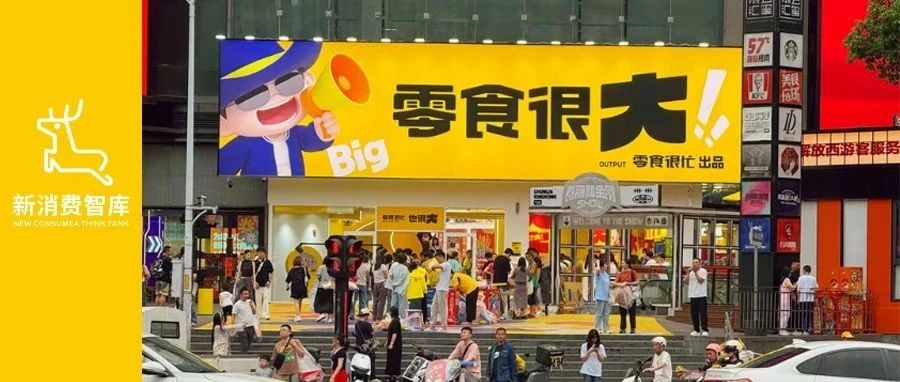
赵一鸣“省钱超市”跟风战:复制粘贴易,突围内卷难
3 6 Ke· 2025-05-26 09:28
Core Insights - The retail industry is experiencing intense competition, particularly in the snack sector, where brands are struggling with stagnant or declining same-store sales. Zhao Yiming Snacks has launched "Zhao Yiming Discount Supermarket" to enter the discount supermarket space, indicating a bold strategic shift [1][5]. Group 1: Market Dynamics - The discount retail sector has seen a resurgence, becoming a significant growth driver in the retail industry. Zhao Yiming's hard discount model shows potential for development but also presents new challenges [1][3]. - Competitors like Wancheng Group's "Lai You Pin Discount Supermarket" have already established a presence, increasing the competitive landscape. This intensifies the pressure on Zhao Yiming to differentiate itself [1][3]. Group 2: Operational Challenges - Expanding from a single snack category to multiple categories such as daily chemicals and fresh food imposes unprecedented demands on Zhao Yiming's procurement, warehousing, and quality control capabilities [2]. - The existing supply chain established in the snack sector may not be easily replicated for new categories, particularly for temperature-sensitive products like frozen goods, which require specialized cold chain logistics [2]. Group 3: Competitive Landscape - The discount retail market is crowded, with established players requiring Zhao Yiming to maintain price advantages while also focusing on product differentiation and service quality [3]. - Traditional supermarkets are responding to the rise of discount supermarkets by lowering prices, which could lead to a price war that further compresses profit margins across the industry [3]. Group 4: Internal Challenges - Zhao Yiming Snacks faces significant issues such as product homogenization, reliance on franchisees for store expansion, and frequent product quality problems, which could hinder its long-term growth [5][6]. - The franchise model, while enabling rapid expansion, can lead to inconsistent service quality and operational standards across stores, impacting brand reputation [6]. Group 5: Strategic Recommendations - To succeed in the competitive snack market, Zhao Yiming must focus on precise positioning in the value-for-money segment of the sinking market, enhance supply chain efficiency, and develop unique product offerings [9]. - Short-term strategies should include creating blockbuster products and increasing regional density, while mid-term efforts should focus on digital operations to reduce costs and improve efficiency [9].
两个85后霸总组CP,一年干出555亿
创业家· 2025-05-22 10:33
Core Viewpoint - The article discusses the rapid growth and competitive dynamics of snack retail brands "Zhao Yiming Snacks" and "Snacks Are Busy," highlighting their recent merger and the implications for the snack retail market in China, particularly in county-level cities [6][39]. Group 1: Company Overview - "Zhao Yiming Snacks" and "Snacks Are Busy" are two emerging snack retail brands that have gained popularity in county-level cities, with a significant increase in store openings [6][39]. - The brands are led by two 85-year-old CEOs, Zhao Ding and Yan Zhou, who have transformed their businesses from traditional snack shops to modern retail chains [7][20]. Group 2: Business Growth and Strategy - "Zhao Yiming Snacks" was founded in 2019 and quickly expanded from 84 stores in 2022 to over 2,500 stores [31]. - "Snacks Are Busy" has over 4,000 stores as of October 2023, supported by significant funding from investors [30][31]. - Both brands focus on low-cost snack offerings, with prices averaging 7%-40% lower than traditional supermarkets [36]. Group 3: Market Dynamics - The merger of "Zhao Yiming Snacks" and "Snacks Are Busy" into "Ming Ming Very Busy" aims to reduce internal competition and enhance market presence [37][39]. - The combined entity is expected to leverage their strengths in different market segments, with "Snacks Are Busy" focusing on acquisitions and "Zhao Yiming Snacks" on expanding in lower-tier cities [39]. Group 4: Consumer Behavior and Market Trends - The snack retail market is witnessing a shift in consumer preferences, with a high repurchase rate of 75% for members of "Ming Ming Very Busy," indicating strong customer loyalty [41]. - The article suggests that the demand for snacks may surpass that of beverages like milk tea, reflecting changing consumer habits in county-level markets [44]. Group 5: Financial Performance - "Ming Ming Very Busy" reported retail sales of 55.5 billion yuan in 2024, with over 1.6 billion transactions [47]. - The company is positioned as a leading player in the snack retail sector, with plans for further expansion following its recent IPO application [48][49].

2025中国快消市场一季度纵览
凯度· 2025-05-08 23:20
Investment Rating - The report indicates a positive outlook for the fast-moving consumer goods (FMCG) market, with a steady growth trend observed in the first quarter of 2025 [5][69]. Core Insights - The FMCG market in China is experiencing a recovery, with a GDP growth rate of 5.4% and an increase in urban disposable income by 4.9% in the first quarter of 2025 [6][69]. - Consumer purchasing behavior is shifting towards smaller, more frequent purchases, reflecting a trend towards convenience and emotional value in products [11][69]. - Domestic products are gaining traction, while imported products face challenges due to declining prices and changing consumer preferences [70][69]. - The growth of the out-of-home consumption market is notable, particularly during festive periods, indicating a need for brands to focus on specific consumption scenarios [71][69]. Summary by Sections Market Overview - The FMCG market is showing signs of recovery with a growth rate of 4.2% year-on-year as of March 2025 [6][8]. - The overall market sentiment is positive, with food and daily chemical products accelerating in sales compared to the previous quarter [8][69]. Consumer Behavior - There is a notable trend of small-sized product purchases, with a 25.1% increase in small specifications [12][69]. - The frequency of purchases has increased by 6.3%, indicating a shift towards fragmented purchasing channels and diverse consumption scenarios [15][69]. Product Categories - Food and beverage categories are performing well, with food sales up by 4.5% and beverages by 6.1%, while dairy products are under pressure with a decline of 3.0% [11][69]. - The average purchase price for imported products has decreased by 7.6%, leading to a decline in household spending on these items [19][70]. Retail Channels - The modern retail channel is experiencing a bifurcation, with traditional supermarkets and convenience stores adapting to consumer needs [24][71]. - E-commerce continues to grow, with platforms like Douyin leading in penetration rates and purchase frequency [31][69]. Out-of-Home Consumption - The out-of-home consumption market is thriving, with significant growth during the Spring Festival, highlighting the importance of targeting specific consumer scenarios [71][69]. - Brands are encouraged to enhance their presence in various out-of-home settings, such as snack shops and entertainment venues, to effectively reach consumers [43][71]. Demographic Trends - The rise of single-person households is influencing consumption patterns, with a focus on self-enjoyment and convenience [54][71]. - Brands need to adapt their strategies to cater to the unique preferences of single households, emphasizing emotional value and efficient products [71][69].
3年12倍!狂飙的零食第一妖股
格隆汇APP· 2025-04-24 09:30
Core Viewpoint - The snack industry has undergone significant adjustments in recent years, with traditional giants facing declines while new players like Wanchen Group are rapidly rising [1][3][10]. Group 1: Market Dynamics - Wanchen Group's stock price has surged sixfold since July 2022, making it the top performer among listed companies in the Shanghai and Shenzhen markets [4][5]. - Wanchen Group's market capitalization has surpassed 20 billion, overtaking established players like Three Squirrels to become the industry leader [7]. - The snack industry is experiencing a stark contrast, with traditional giants like Three Squirrels and Laiyifen struggling, while Wanchen Group has reported a revenue increase of 247.9% to 32.33 billion in 2024 [12][11]. Group 2: Business Model and Expansion - Wanchen Group has transitioned from a mushroom cultivation business to a major player in the bulk snack sector, launching its brand "Lvxiaochan" in August 2022 [14][15]. - The company has aggressively acquired multiple snack brands, consolidating them under the "Haoxianglai" brand to streamline operations and expand its market presence [20]. - By 2024, Wanchen Group's store count reached 14,196, nearly doubling from the previous year, with plans to exceed 15,000 stores by March 2024 [20][21]. Group 3: Financial Performance - Wanchen Group's revenue from bulk snacks accounted for 98.33% of its total revenue in 2024, highlighting its focus on this segment [19]. - Despite significant revenue growth, Wanchen Group's gross margin was only 10.76%, well below the industry average of 20.35% [28]. - The company reported a net profit of 294 million in 2024, recovering from a loss of 82.93 million the previous year [12]. Group 4: Competitive Landscape - The bulk snack market is characterized by intense competition, with brands engaging in price wars to attract cost-sensitive consumers [37][42]. - The market is becoming increasingly concentrated, with the top two brands controlling 70% of the market share by late 2024 [48]. - Wanchen Group and its competitor Mingming Hen Mang are leading the market, but both face challenges with low profit margins, hovering around 2% [52]. Group 5: Future Outlook - The bulk snack industry is expected to grow significantly, with projections indicating the number of stores will reach 45,000 by 2025 and the market size will hit 123.9 billion [33]. - Companies are exploring new formats, such as discount supermarkets, to adapt to changing consumer preferences and enhance profitability [60][61]. - Wanchen Group's valuation has reached 84.95 times earnings, significantly higher than industry averages, raising concerns about sustainability amid increasing competition [65].
2024年中国量贩式零食店行业:头部品牌收购及合并动作频频,跑马圈地正当时
Tou Bao Yan Jiu Yuan· 2025-02-26 13:16
Investment Rating - The report indicates a favorable investment outlook for the volume snack store industry in China, highlighting significant growth potential and market opportunities [4]. Core Insights - The volume snack store industry in China has experienced rapid growth, with market size increasing from 1.81 billion to 41.47 billion from 2018 to 2022, achieving a CAGR of 87.0%. It is projected to reach 217.29 billion by 2027 [5][26][29]. - The competitive landscape is characterized by frequent mergers and acquisitions among leading brands, indicating a shift towards consolidation in the industry [4][7]. - The industry is transitioning towards community-based consumption, with volume snack stores emerging as a preferred retail channel due to their cost-effectiveness and convenience [6][35]. Market Overview - The volume snack store industry is defined as a new retail format that focuses on offering a wide variety of snacks at competitive prices, primarily targeting lower-tier markets [16][17]. - The market has seen a significant increase in the number of stores, with estimates suggesting over 60,000 stores by 2027 [6]. - The industry is benefiting from a shift in consumer preferences towards affordable and diverse snack options, particularly among younger demographics [42]. Industry Chain - The industry chain consists of upstream snack suppliers, midstream volume snack stores, and downstream consumers who prioritize cost-effectiveness and quality assurance [40][42]. - Major suppliers include well-known snack manufacturers that provide a mix of branded and private-label products, with a significant portion of sales coming from bulk private-label snacks [42]. Competitive Landscape - The competitive landscape is described as fragmented, with no single dominant player, but notable brands like "Snack Busy" and "Wancheng Biological" are rapidly expanding their market presence through acquisitions [7][29]. - The report highlights the strategic mergers between leading brands, such as "Snack Busy" and "Zhao Yiming," as a key trend in the industry [7][29]. Growth Drivers - The growth of the volume snack store industry is driven by the increasing demand for snacks, with the overall snack market in China reaching 1,535.97 billion in 2022 and expected to grow further [31][34]. - Continuous capital investment is facilitating the rapid expansion of volume snack stores, with significant funding rounds reported in recent years [36][38].