瑞幸咖啡

Search documents
这些消费者去奶茶店、咖啡店的理由,没想到是……
东京烘焙职业人· 2025-12-28 08:33
Core Viewpoint - The rise of "Instagrammable" spaces in beverage shops, particularly in tea and coffee stores, is becoming a significant factor in attracting customers, as seen in the popularity of Luckin Coffee's store in Pizhou, which gained attention for its aesthetic appeal rather than product promotions [2][4]. Group 1: Thematic Stores and Consumer Experience - Beverage brands are increasingly focused on creating "thematic stores" and "third spaces" that enhance the consumer experience beyond just the drinks offered [5][7]. - For instance, Heytea's new store in Huizhou features minimalist design elements that provide a serene environment, appealing to consumers seeking relaxation [5]. - The design evolution of brands like Guming Coffee reflects a continuous exploration of consumer scenarios and sensory experiences, with their sixth-generation store showcasing this trend [7]. Group 2: Independent Cafés and Atmosphere - Independent coffee shops excel at creating narrative atmospheres, using simple elements like lighting and decor to evoke specific feelings and experiences [11]. - Examples include a retro café in Shanghai that uses a sunset lamp to create a sought-after "dusk warmth" ambiance, and a Chengdu café that offers a laid-back vibe with natural elements like trees and bamboo chairs [11][13]. - The value of a café or tea shop often extends beyond the beverages served, as the overall experience and atmosphere contribute significantly to customer satisfaction and memory [13].


瑞幸“入侵”岗亭、地铁闸机旁!成打工人“9.9元收费站”?
东京烘焙职业人· 2025-12-27 08:33
Core Viewpoint - The article discusses the innovative strategies employed by coffee brands, particularly Luckin Coffee, to expand their market presence by opening stores in unconventional locations, thereby transforming consumer access to coffee and enhancing convenience [2][12][39]. Group 1: Innovative Store Locations - Luckin Coffee has transformed a security booth in a Zhejiang industrial park into a mini coffee shop, attracting attention on social media for its unique positioning [5][8]. - The coffee brand is strategically placing stores in high-traffic areas such as subway stations and train stations, allowing customers to order coffee conveniently during their daily commutes [18][19]. - The trend of coffee brands occupying unexpected spaces, such as newspaper kiosks and public transport stations, signifies a shift in retail strategy from waiting for customers to come to actively reaching out to them [17][41]. Group 2: Creative Store Transformations - Coffee shops are being creatively integrated into existing structures, such as transforming newspaper kiosks into coffee outlets, which blend nostalgia with modern convenience [24][25]. - The article highlights various examples of coffee shops located in unusual settings, including temples and public parks, which create a unique consumer experience [28][30]. - The innovative use of space not only expands the physical boundaries of coffee shops but also enhances their visibility and accessibility to consumers [20][23]. Group 3: Collaborative Business Models - The article notes that some coffee brands are adopting a "store within a store" model, partnering with convenience stores and internet cafes to increase operational efficiency and expand their footprint [33][34]. - Nova Coffee, for instance, has successfully integrated its offerings into major convenience store chains, achieving significant growth with over 10,000 locations [35][36]. - This collaborative approach allows coffee brands to penetrate deeper into retail networks, making coffee more accessible to consumers [38][40].
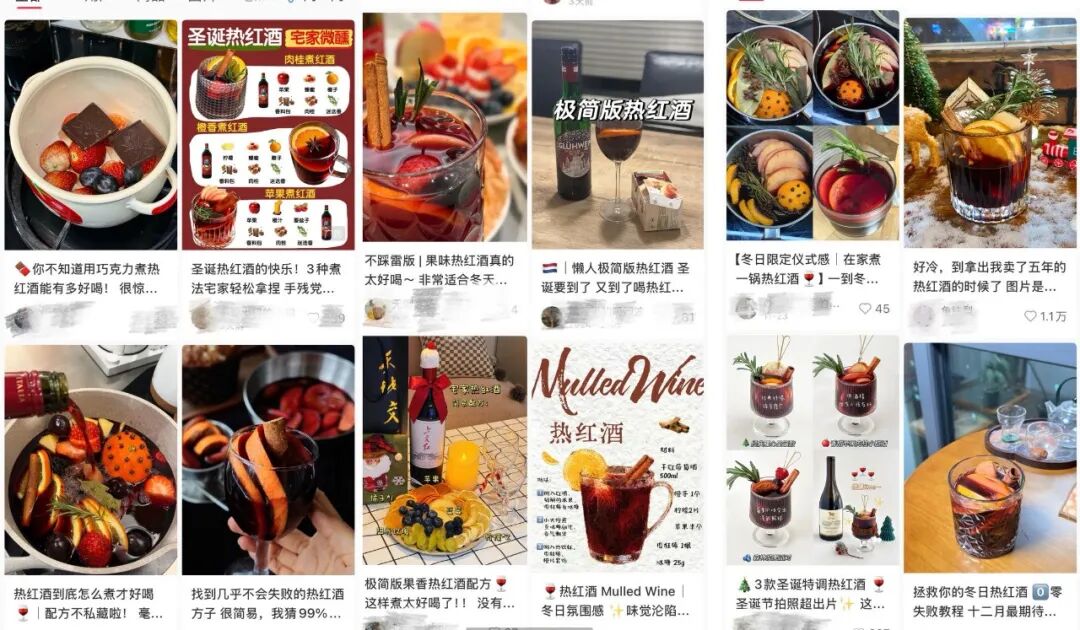
“懒人热红酒”刷屏社交平台,蜜雪冰城意外躺赚?
3 6 Ke· 2025-12-27 03:46
Core Insights - The "lazy version" of mulled wine has gained significant popularity, with related topics reaching over 3 million views on social media platforms [1][3] - This trend reflects a broader movement in the beverage industry towards simplified, DIY drink recipes that resonate with consumers [2][11] Group 1: Product Trends - The "lazy version" of mulled wine involves mixing red wine with orange juice, which is easier and quicker than traditional recipes that require complex spices [8][10] - Social media has played a crucial role in popularizing this drink, with users sharing their own simplified recipes and experiences [3][10] - Other brands have also launched similar products, such as holiday-themed drinks, indicating a trend towards seasonal offerings in the beverage market [3][11] Group 2: Consumer Behavior - Consumers are increasingly favoring low-cost, easy-to-make drinks that still provide a sense of occasion, as seen with the rise of DIY beverage trends [11][24] - The success of these "lazy" drinks is attributed to their accessibility and the low risk of trial, making them highly shareable on social media [24] - Brands that quickly adapt to these trends can capitalize on the resulting consumer interest and engagement [11][24] Group 3: Market Opportunities - The emergence of "lazy" drinks like mulled wine presents opportunities for brands to innovate and create standardized products based on popular DIY recipes [11][24] - The beverage industry is witnessing a shift towards products that are not only easy to make but also visually appealing, which enhances their shareability on social media [18][23] - Brands that can effectively engage with consumer trends and leverage user-generated content are likely to gain a competitive edge in the market [24]

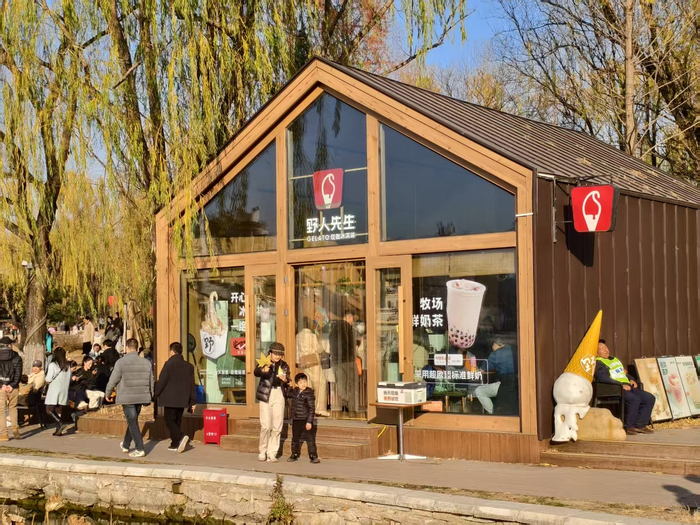
死磕“冰冷”赛道15年,野人先生接棒星巴克成为新“多巴胺放大器” | 穿越周期的消费品
Tai Mei Ti A P P· 2025-12-27 03:12
Core Insights - The article highlights the rapid growth of the ice cream brand "Mr. Wildman," which has expanded from 431 stores in 2024 to over 1,200 stores by 2025, surpassing Haagen-Dazs in mainland China [1][4][9] - The brand's founder, Cui Jianwei, emphasizes the need for market education regarding fresh ice cream, as traditional views on health and diet still pose challenges [1][2] - Mr. Wildman differentiates itself by using fresh ingredients and a "made on the same day" principle, competing against established brands like DQ and Haagen-Dazs [2][4] Company Growth and Strategy - Mr. Wildman started as a small shop in Beijing in 2011, leveraging social media to attract young customers [5][6] - The brand initially faced challenges with rapid expansion, leading to a retreat and a more cautious approach to growth [7][8] - After a three-year period of stabilization, the brand successfully re-entered the market, focusing on major cities like Shanghai [8][9] Market Position and Consumer Engagement - The brand has developed a unique customer engagement strategy, including a trial system that encourages potential customers to sample products without pressure [9][10] - Mr. Wildman aims to create a strong emotional connection with consumers, positioning ice cream as a lifestyle product rather than just a dessert [11][17] - The brand's innovative flavors, such as the Five常大米 (Wuchang rice) ice cream, reflect a commitment to local ingredients and cultural relevance [12][13] Founder’s Vision and Market Perspective - Cui Jianwei, with a background in investment, has chosen not to seek external funding, focusing instead on organic growth and a solid supply chain [14][16] - The founder believes in the potential for the fresh ice cream market to grow independently, without the intense competition seen in coffee and tea sectors [17] - The brand's success is attributed to the overall improvement in consumer spending power and a shift towards premium lifestyle products [17]
众品牌加码潮玩IP 情绪消费的狂热与风险
Xin Lang Cai Jing· 2025-12-26 21:01
Group 1: Core Insights - The holiday season, particularly Christmas, is a significant time for emotional consumption, with brands leveraging various IPs to boost sales and profits [1] - Companies are increasingly focusing on audience segmentation to create scarcity and collectability for core fans while emphasizing practicality and trendiness for broader audiences [1][5] - The IP collaboration trend is gaining momentum, with brands like Heineken and Pop Mart successfully launching products that resonate with consumers [2][3] Group 2: Market Trends - The Chinese IP retail market is experiencing historic growth, with retail sales reaching $13.77 billion in 2023, a 9.6% increase year-on-year [6] - The interest consumption market is projected to exceed 380 billion yuan by the end of 2025, reflecting a growth rate of over 10% compared to the previous year [2] - The collaboration between brands and popular IPs, such as Disney's "Zootopia 2," is seen as a benchmark for IP commercialization, with over 60 brands participating [5][6] Group 3: Business Models - There are three main business models for IP: self-owned IP, licensed IP, and short-term collaborations for exposure [7] - Successful IPs typically possess cross-media content value, allowing for low-cost and precise connections with users [7] - Companies like Disney have established a robust commercial ecosystem, generating $62 billion in retail sales from IP licensing [8] Group 4: Strategic Approaches - Brands are exploring innovative strategies to avoid homogenization in IP collaborations, such as creating unique product categories [6][7] - Miniso is actively signing original toy artists to build its own IP matrix, aiming for a dual strategy of international licensed IP and exclusive artist collaborations [8][9] - The emotional connection between consumers and IP characters is crucial for successful branding, requiring a deeper understanding of consumer needs [9]

瑞幸+茅台,龙年没火起来
Ge Long Hui· 2025-12-26 17:52
Core Insights - The new collaboration product "Sauce Aroma Chocolate" from Luckin Coffee and Kweichow Moutai has not replicated the success of the previous "Sauce Aroma Latte" [2][5] - The initial response to "Sauce Aroma Chocolate" has been lukewarm, with low sales and minimal social media buzz compared to the previous product launch [2][5][11] Product Launch and Sales Performance - "Sauce Aroma Chocolate" was launched on January 22, priced at 38 yuan per cup, but available for 18 yuan after discounts [2] - In contrast to the "Sauce Aroma Latte," which sold over 5.42 million cups and generated over 100 million yuan in sales on its first day, "Sauce Aroma Chocolate" did not sell out at stores and had low consumer awareness [5][10] - Consumers reported that the product remained available at multiple Luckin locations even hours after its launch [2][11] Consumer Reception and Market Trends - The initial excitement for "Sauce Aroma Latte" stemmed from its unique blend of Moutai liquor and coffee, appealing to a younger demographic who found it affordable compared to other Moutai products [10] - However, after the novelty wore off, many consumers expressed a lack of interest in repurchasing, which may explain the poor reception of the new chocolate product [10][11] - Luckin Coffee has been recognized as a "product explosion machine" in the coffee industry, but the challenge remains to maintain consumer interest with new offerings [3][16] Competitive Landscape - Luckin Coffee's pricing strategy is more affordable than Starbucks, allowing it to capture a significant market share [18] - The company faces increasing competition from both traditional coffee brands and emerging tea beverage brands that are also entering the coffee market [22][23] - The ongoing price war in the coffee sector has led to many brands offering coffee at lower prices, intensifying competition [25]
拟购蓝瓶咖啡:瑞幸的“高端化”
Xin Lang Cai Jing· 2025-12-26 12:21
Core Viewpoint - Luckin Coffee is considering acquiring Blue Bottle Coffee, a premium coffee brand owned by Nestlé, marking a significant potential merger between the "old king" Nestlé and the "new king" Luckin Coffee [1][13]. Group 1: Nestlé and Blue Bottle Coffee - Nestlé acquired a 68% stake in Blue Bottle Coffee for approximately $425 million in 2017, which was seen as a strategic move to embrace the "third wave" of specialty coffee [3][15]. - Over the past eight years, Blue Bottle has shifted from being a prized asset to a less valuable one for Nestlé, which reported nearly 740 billion RMB in annual revenue [3][15]. - The new CEO, Philippe Naefratil, has emphasized a growth strategy focused on internal growth rates and has raised critical questions regarding the attractiveness and positioning of Blue Bottle within Nestlé's portfolio [3][15]. Group 2: Blue Bottle's Market Position - Blue Bottle Coffee operates around 150 stores globally, with only 14 in mainland China, and its expansion has been nearly stagnant [5][17]. - The brand's commitment to a slow and artisanal coffee-making process contrasts sharply with Nestlé's focus on structured scale, making Blue Bottle a financial burden [5][17]. - Nestlé's growth is driven by its billion-dollar brands, while Blue Bottle's niche retail business contributes minimally and is misaligned with Nestlé's fast-moving consumer goods model [5][17]. Group 3: Luckin Coffee's Acquisition Intent - Luckin Coffee's potential acquisition of Blue Bottle is driven by a desire to elevate its brand perception from a budget option to a premium player in the coffee market [8][20]. - The acquisition could serve as a shortcut for Luckin to shed its "cheap drink" label and establish a presence in the high-end market, similar to how Anta leveraged acquisitions to build its brand matrix [8][20]. - Luckin's international expansion has been cautious, with only 108 overseas stores, making Blue Bottle's established presence in mature markets an attractive opportunity for global growth [8][20]. Group 4: Market Reactions and Concerns - Following the acquisition rumors, Luckin's stock price fell over 7%, indicating investor concerns about potential dilution of earnings [10][22]. - There is a fundamental cultural clash between Luckin's algorithm-driven operations and Blue Bottle's emphasis on artisanal craftsmanship, raising questions about the compatibility of their business models [10][22]. - Despite having approximately 9.4 billion RMB in cash, Luckin faces intense competition in the Chinese coffee market, with rising costs and price wars impacting profitability [10][22]. Group 5: Industry Trends - The potential merger is part of a broader trend in the global coffee industry, where major players are strategically divesting non-core assets while retaining valuable brand equity [12][24]. - This trend reflects a shift in the coffee value proposition, focusing on brand equity and intellectual property rather than the operational complexities of physical stores [12][24]. - The acquisition of Blue Bottle by Luckin symbolizes a clash of coffee philosophies and business models, highlighting the ongoing reevaluation of coffee's value in the market [12][24].
12.26犀牛财经晚报:水贝铂金条被买到缺货
Xi Niu Cai Jing· 2025-12-26 10:51
Group 1 - The Shenzhen Stock Exchange has announced a reduction in fees for 2026, with an expected total reduction exceeding 800 million yuan, covering various financial products including stocks, funds, and bonds [1] - The measures include waiving listing fees for companies and funds, transaction fees for bonds (excluding convertible bonds), and halving the service fees for online voting at shareholder meetings [1] Group 2 - As of the end of Q3 2025, China's financial institutions reported total assets of 531.76 trillion yuan, a year-on-year increase of 8.7%, with the banking sector's assets at 474.31 trillion yuan, growing by 7.9% [2] - The securities sector's assets reached 17.05 trillion yuan, marking a 16.5% increase, while the insurance sector's assets were 40.4 trillion yuan, up by 15.4% [2] Group 3 - The risk reserve ratio for personal public funds is expected to be lowered, as current regulations require a minimum of 20% of management fee income for personal funds, compared to 10% for non-personal funds [3] - This adjustment aims to alleviate constraints on the development of personal public fund companies [3] Group 4 - The lithium battery industry in China is projected to see a total investment exceeding 820 billion yuan in 2025, with over 282 investment projects, reflecting a year-on-year growth of over 74% [4] Group 5 - The SSD and HDD markets are expected to experience significant growth by 2026, with manufacturers advised to strengthen collaborations with major clients and plan for capacity expansion [5] Group 6 - Various regions in China have introduced additional subsidies for automobile sales, totaling over 1.1 billion yuan, as part of efforts to boost the car market before the year's end [6] Group 7 - The price of platinum has surged to a historical high, leading to a shortage of available stock in the Shenzhen market, with consumers needing to place orders and wait for delivery [7] Group 8 - Luckin Coffee is reportedly considering acquiring Blue Bottle Coffee, with no official comments from either party regarding the speculation [8] Group 9 - Midea Building Technology has announced a price increase of 5% across all product lines due to rising raw material costs, effective from December 15, 2025 [9] Group 10 - Annoqi has decided to terminate its investment in a 50,000-ton dye intermediate project due to significant changes in market conditions and related industry policies [11] - The company had initially planned to invest 421 million yuan in the project, with 43.26 million yuan already spent [11] Group 11 - Shengyi Electronics has adjusted its share repurchase price limit to not exceed 144.36 yuan per share, while other terms of the repurchase plan remain unchanged [12] Group 12 - China Electric Research has proposed a cash dividend of 2.5 yuan per 10 shares for the first three quarters of 2025 [13] Group 13 - Weiteou has signed a strategic cooperation agreement with Huairuixin Energy to develop new materials and applications, establishing a joint laboratory for product development [14] Group 14 - Zhuolang Intelligent plans to increase its wholly-owned subsidiary's capital by 900 million yuan, utilizing self-owned funds and fixed assets [15] Group 15 - Zhenhua Heavy Industry has signed a contract worth 1.149 billion yuan with Guangzhou Salvage Bureau for the construction of a deep-water crane vessel [16] Group 16 - Huayin Technology's subsidiary has signed a framework agreement worth 392 million yuan for the processing of aircraft engine components [18] Group 17 - The Shanghai Composite Index recorded a slight increase of 0.1%, marking an eight-day consecutive rise, with significant trading volume and active market sectors [19]
传瑞幸将收购蓝瓶咖啡,瑞幸未予置评
Xin Lang Cai Jing· 2025-12-26 09:25
Core Viewpoint - Luckin Coffee is considering acquiring Blue Bottle Coffee, which is owned by Nestlé, and is also evaluating other potential acquisition targets, including the China operations of % Arabica, backed by private equity firm PAG [1] Group 1: Acquisition Considerations - Luckin Coffee is in discussions regarding the acquisition of Blue Bottle Coffee [1] - The company, along with its investor Dazhong Capital, is assessing additional acquisition opportunities [1] Group 2: Background on Blue Bottle Coffee - Nestlé acquired approximately 68% of Blue Bottle Coffee for about $500 million in 2017 [1] - Blue Bottle Coffee entered the mainland China market in 2022, currently operating a total of 15 stores in Shanghai, Shenzhen, and Hangzhou [1] - There are plans for Blue Bottle Coffee to open a store in Beijing by 2026 [1]
2025十大热点解锁餐饮业“不基础”的生长密码
Sou Hu Cai Jing· 2025-12-26 08:15
Core Insights - The restaurant industry in 2025 is characterized by a shift from rapid expansion to a focus on sustainable growth, driven by challenges such as rising labor costs and store closures, leading to innovative paths in digital transformation and transparent operations [1] Group 1: Pre-prepared Dishes - The debate surrounding the use of pre-prepared dishes has become a focal point in the industry, prompting a shift from concealment to transparency in their usage, accelerating the establishment of supply chain traceability systems [2] Group 2: Delivery Wars - The entry of JD.com into the delivery market has disrupted the previous duopoly of Meituan and Ele.me, leading to a new competitive landscape characterized by dual strategies of subsidy-driven customer acquisition and supply innovation [5] Group 3: Digital Transformation - The application of new technologies such as automated delivery vehicles and service robots has accelerated the digital transformation in the restaurant industry, with significant advancements in operational practices [7] Group 4: Store Closures - A significant number of restaurants have closed in 2025, with over 800,000 exiting the market in the first half of the year, highlighting the industry's realization that focusing on single-store profitability is more beneficial than blind expansion [9] Group 5: Chinese Cuisine Going Global - The rise of niche dishes utilizing local ingredients has led to a surge in Chinese restaurants expanding internationally, showcasing the global potential of regional flavors [11] Group 6: Emotional Consumption - A report indicates that 56.3% of young consumers are willing to pay for experiences that meet their emotional needs, prompting restaurants to enhance their offerings to attract this demographic [13] Group 7: Small Store Models - The popularity of small, community-focused restaurants has increased, with many leveraging low rent and flexible offerings to reduce operational costs and achieve growth [15] Group 8: Compliance - New regulations regarding food safety and labor practices are pushing restaurants to improve supply chain management and operational compliance, making it a core competitive advantage [17] Group 9: ESG Responsibility - The third China Restaurant Industry Social Responsibility Conference highlighted the importance of ESG practices, with initiatives aimed at community engagement and sustainable development gaining traction [19] Group 10: Lightweight Health Trends - The rise of health-conscious consumers has led to the popularity of lighter health food options, integrating wellness elements into everyday snacks and beverages, driving growth in the food and beverage sector [20] Conclusion - The restaurant industry has transitioned from a phase of rapid growth to one of meticulous cultivation, emphasizing the importance of understanding value and adhering to industry regulations as key drivers for future success [22]