嘉能可

Search documents
将成为刚果(金)新配额制度下首家出口钴企?嘉能可回应:不予置评
Xin Lang Cai Jing· 2025-12-10 10:59
Core Viewpoint - Glencore has become the first company to export cobalt under the new quota system in the Democratic Republic of Congo, following the payment of a 10% royalty fee [1] Group 1 - Glencore has received approval to ship its first batch of trial cobalt shipments under the new quota system [1] - The report indicates that the Tenke Fungurume mine, owned by China Molybdenum, has also initiated export preparations [1] - Glencore declined to comment on the Reuters report regarding its cobalt exports [1]

铅年报:成本与过剩角力,铅价宽幅震荡
Tong Guan Jin Yuan Qi Huo· 2025-12-10 09:10
1. Report Industry Investment Rating No relevant content provided. 2. Core Views of the Report - The lead market will experience wide - range fluctuations in 2026. The supply of lead concentrates will shift from shortage to tight balance, with global new capacity increasing from 110,000 tons in 2025 to 230,000 tons in 2026. The processing fees are expected to remain low with a narrowing decline. The price of waste batteries is likely to rise due to supply - demand mismatch [2][71]. - The growth of global refined lead supply will slow down in 2026. Domestic primary lead production will increase by 100,000 tons to 3.94 million tons, while secondary lead production may decrease by 0.5% year - on - year due to the implementation of the new national standard and constraints on raw materials and profits [2][71]. - Policy support for terminal consumption is expected to continue, with replacement demand and new - standard electric vehicle demand driving battery consumption. However, battery exports will face challenges from trade barriers and technological substitution, leading to a slight decline in consumption growth [2][71]. - Overall, macro - drivers are moderately positive, and cost support and rigid procurement will underpin lead prices. But increased supply and falling demand growth may lead to a wider supply - demand surplus, causing the main contract price of Shanghai lead futures to fluctuate widely between 16,500 - 18,000 yuan/ton in 2026 [2][72]. 3. Summary by Directory 3.1 Lead Market Review - In 2025, Shanghai lead futures showed wide - range fluctuations, mainly between 16,165 - 17,840 yuan/ton. By December 10, the main contract price closed at 17,115 yuan/ton, up 1.7% from the beginning of the year [7]. - London lead futures were slightly weaker than Shanghai lead. By December 10, the price closed at 1,988 US dollars/ton, up 2.8% from the beginning of the year [8]. 3.2 Lead Fundamental Analysis 3.2.1 Lead Ore Supply - In 2025, global new lead concentrate capacity was 110,000 tons, with overseas capacity increasing by about 60,000 tons and domestic by about 55,000 tons. In 2026, global new capacity is expected to increase to 230,000 tons, with overseas at 90,000 tons and domestic at 143,000 tons [12][13][14]. - In 2025, lead concentrate processing fees continued to decline, with domestic and imported fees dropping by 300 yuan/metal ton and 125 US dollars/dry ton respectively by December. In 2026, processing fees are expected to remain weak with a slowdown in the decline [21]. - In 2025, lead ore imports increased by 10% year - on - year to about 1.36 million tons. In 2026, the growth rate is expected to slow to about 5%. Silver concentrate imports are expected to grow steadily [22][23]. 3.2.2 Refined Lead Supply - In 2025, global refined lead production increased by 4.42% to 13.341 million tons. In 2026, production is expected to grow by 1% to 13.472 million tons [27][30]. - In 2025, domestic primary lead production increased by 6.4% to 3.84 million tons. In 2026, production is expected to increase by 2.6% to 3.94 million tons [32]. - In 2025, domestic secondary lead production decreased by 0.5% to 3.176 million tons. In 2026, with the implementation of the new national standard, production is expected to decrease by another 0.5% to 3.16 million tons [37][40]. 3.2.3 Refined Lead Demand - In 2025, global refined lead consumption increased by 1.8% to 13.25 million tons, with a surplus of 91,000 tons. In 2026, consumption is expected to grow by 0.9% to 13.37 million tons, with a slightly wider surplus [49][50]. - In 2025, refined lead and lead products had a net import, while battery exports decreased significantly. In 2026, the export growth of refined lead and lead products is expected to slow, and net imports will continue. Battery exports will still face challenges but may decline at a slower pace [52][53]. - Policy support for terminal consumption will continue. In 2026, electric bicycle and automobile sectors will maintain demand for lead - acid batteries, and the energy storage sector will see stable growth, but lithium - ion battery substitution will pose long - term pressure [57][60][61]. 3.2.4 Inventory Performance - In 2025, LME lead inventory increased slightly and fluctuated at a high level, reaching 236,900 tons by December 9. Domestic inventory decreased significantly, dropping to 20,500 tons by December 8 [66]. 3.3 Summary and Outlook for the Future - In 2026, the lead market will be affected by cost and supply - demand factors, with the main contract price of Shanghai lead futures fluctuating widely between 16,500 - 18,000 yuan/ton [72].
刚果(金)设定新的钴出口条件
Zhong Guo Neng Yuan Wang· 2025-12-09 09:27
Core Viewpoint - The Democratic Republic of Congo (DRC) has implemented new conditions for cobalt exporters to enhance control over this critical battery mineral, complicating the existing quota system [1][2]. Group 1: New Export Regulations - The DRC government requires mining companies to prepay 10% of the mining rights fee within 48 hours and obtain a compliance certificate, among other conditions [1]. - A quota system has replaced a months-long export ban, aiming to increase national revenue and strengthen regulation over cobalt, which accounts for over 70% of global production [1][6]. Group 2: Export Process and Compliance - The Ministry of Mines and the Ministry of Finance issued a notification detailing the export process, including mandatory quota verification, joint sampling, bulk weighing, and packaging [2]. - Exporters must submit a list of certificates from multiple agencies along with the Quota Verification Certificate (AVQ) and pay the mining rights fee before customs clearance [3][4]. Group 3: Export Quotas and Market Impact - The DRC has set a cobalt export quota of 18,125 tons for Q4 2025, with plans to export 96,600 tons annually starting in 2026 [6]. - Cobalt prices have risen from $16 per pound in August to $24 per pound currently, following a low of $10 per pound during the export ban [8]. Group 4: Industry Uncertainty - Industry executives express concerns over the new conditions, particularly regarding the clarity of the 10% rights fee in relation to previous exports [8]. - Analysts indicate that the unpredictable export policies and last-minute fee requirements may lead to fluctuations in exports and prices [8].
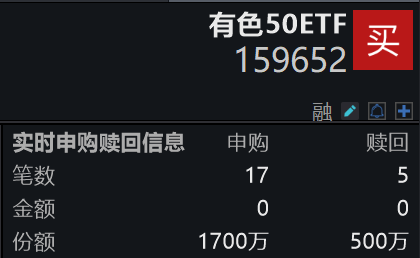
有色新高后首度回调,紫金矿业跌超3%,有色50ETF(159652)跌逾3%,盘中再获资金逆市加仓超1800万元,昨日“吸金”超8700万!机会来了?
Sou Hu Cai Jing· 2025-12-09 02:57
Core Viewpoint - The non-ferrous metal industry is experiencing volatility, with the CSI Non-Ferrous Metal Industry Theme Index declining by 3.00% as of December 9, 2025, while the Non-Ferrous 50 ETF has seen fluctuations in trading volume and net inflows, indicating active market participation and potential investment opportunities [1][3]. Group 1: Market Performance - The CSI Non-Ferrous Metal Industry Theme Index (000811) fell by 3.00%, with major stocks like Luoyang Molybdenum (603993) down 5.72% and China Aluminum (601600) down 5.41% [1]. - The Non-Ferrous 50 ETF (159652) decreased by 3.24%, with a latest price of 1.52 yuan, but has shown a 2.74% increase over the past week, ranking in the top half among comparable funds [1]. - The trading volume for the Non-Ferrous 50 ETF was 3.27%, with a total transaction value of 113 million yuan, and an average daily transaction of 178 million yuan over the past week [1]. Group 2: Fund Flows and Liquidity - The Non-Ferrous 50 ETF has seen a net subscription of 12 million units, with an estimated net subscription amount exceeding 18.3 million yuan based on the average transaction price [1]. - The latest fund inflow for the Non-Ferrous 50 ETF is 87.29 million yuan, with a total of 373 million yuan net inflow over the past five trading days, averaging 7.46 million yuan per day [3]. - The leverage funds are actively participating, with a net purchase of 4.66 million yuan in the previous trading day and a latest financing balance of 24.97 million yuan [3]. Group 3: Commodity Price Trends - Expectations for a Federal Reserve rate cut in December have led to fluctuations in precious and base metal prices, with silver prices rising due to tight supply and increased liquidity expectations [4]. - Copper prices are anticipated to perform strongly due to low non-US inventories and a significant reduction in copper production guidance by Glencore for 2026 [4]. - Aluminum prices have reached new highs for the year, driven by positive macro sentiment, although seasonal demand may weaken in the near term [4]. Group 4: Sector Outlook - The non-ferrous metal sector is positioned for growth due to favorable monetary policies, rigid supply conditions, and new demand drivers, making the Non-Ferrous 50 ETF a compelling investment option [6]. - The Non-Ferrous 50 ETF focuses on key strategic metals like copper, gold, aluminum, lithium, and rare earths, with a high concentration of leading companies, achieving a top five concentration of 38% [9]. - The index has shown superior performance since 2022, with a cumulative return leading its peers and a PE ratio of 23.74, indicating a reasonable valuation compared to historical levels [11].


短期博弈加剧 沪铜长期逻辑未改
Qi Huo Ri Bao· 2025-12-09 00:21
近期,在宏观流动性预期支撑、供应短缺预期强烈、库存引发"挤仓"忧虑的提振下,沪铜主力合约价格 持续攀升,突破了90000元/吨关口。在当前铜价处于历史新高的背景下,市场正面临短期支撑松动与 长期逻辑的严峻考验。 高铜价抑制需求释放 全球铜矿供应延续偏紧格局 面对历史性负加工费的局面,中国冶炼行业计划通过主动减产进行应对。中国铜原料联合谈判小组 (CSPT)近期达成决议,计划自2026年起将矿铜产能负荷至少下调10%,以扭转扭曲的原料供需结 构,并维护基准计价体系。 尽管面临成本压力,国内电解铜产量短期仍呈现增长。据SMM数据,11月国内精炼铜产量为110.31万 吨,环比增长1.05%,增长主因是粗铜供应阶段性宽松及部分检修影响低于预期。进入12月,原定11月 减产的某冶炼厂因硫酸收益较高及出口需求维持生产,检修推迟至12月进行,其影响预计在2026年1月 体现。当月另有4家冶炼厂计划检修,涉及粗炼、精炼产能各75万吨,预计影响产量0.5万吨。由于部分 冶炼厂统计周期延长,加上前期检修产能基本恢复,预计12月国内精炼铜产量将环比增加6.57万吨,至 116.88万吨。然而,进口市场反映了内外供需的失衡,10月 ...
【有色】线缆开工率连续5周回升,11月中国电解铜产量环比+1%——铜行业周报(20251201-251205)(王招华/方驭涛)
光大证券研究· 2025-12-08 23:07
报告摘要 本周小结:矿端短缺+美国以外地区低库存,看好铜价继续上行 截至2025年12月5日,SHFE铜收盘价92780 元/吨,环比11月28日+6.12%;LME铜收盘价11665 美元/吨, 环比11月28日+4.38%。12月3日LME注销仓单库存达5.7万吨(占LME总库存35%),引发市场对于美国以 外地区低库存的担忧;嘉能可当日将2026年铜产量指引中枢下调9万吨,显示铜矿扰动增强;线缆企业开 工率在铜价维持高位背景下连续回升5周,Q4电网旺季效应仍存;2025Q4空调排产同比下降,但环比改 善;供需仍将维持偏紧格局,继续看好铜价上行。 库存:国内铜社库环比-8.4%,LME铜库存环比+2% (1)港口铜精矿库存:截至2025年12月5日,国内主流港口铜精矿库存75.0 万吨,环比上周+3.7%。 (2)全球电解铜库存:截至2025年12月1日,全球三大交易所库存合计67.6 万吨,环比11月24日+1.0%。 截至2025年12月4日,LME铜全球库存16.3 万吨,环比+2.0%;SMM铜社会库存15.9 万吨,环比11月27 日-8.4%。 供给:10月中国铜矿产量环比-8%、同比-12% ...
有色金属海外季报:嘉能可2025Q3公司自有铜产量同比减少1%至23.96万吨,自有钴产量同比减少9%至0.96万吨
HUAXI Securities· 2025-12-08 13:17
Investment Rating - Industry rating: Recommended [5] Core Insights - In Q3 2025, the company's own copper production decreased by 1% year-on-year to 239,600 tons, but increased by 36% quarter-on-quarter, primarily due to improved grades from KCC, Antapaccay, and Antamina mines [2][4] - Cobalt production in Q3 2025 was 9,600 tons, a 9% decrease year-on-year but a 2% increase quarter-on-quarter [2] - Zinc production increased by 8% year-on-year to 244,200 tons, while lead and nickel production saw year-on-year decreases of 13% [2] - Silver production increased by 18% year-on-year to 5,721,000 ounces, while gold production decreased by 16% year-on-year to 147,000 ounces [3][2] - The Democratic Republic of Congo has lifted its cobalt export ban, setting annual quotas for 2026 and 2027 at 87,000 tons, with a remaining quota of 18,125 tons for the rest of 2025 [8][12] Summary by Sections Q3 2025 Production Overview - Copper production: 239,600 tons, down 1% YoY, up 36% QoQ [2] - Cobalt production: 9,600 tons, down 9% YoY, up 2% QoQ [2] - Zinc production: 244,200 tons, up 8% YoY, down 3% QoQ [2] - Lead production: 41,800 tons, down 13% YoY, up 2% QoQ [2] - Nickel production: 15,800 tons, down 13% YoY, down 11% QoQ [2] - Gold production: 147,000 ounces (4.57 tons), down 16% YoY, down 6% QoQ [2] - Silver production: 5,721,000 ounces (177.94 tons), up 18% YoY, up 18% QoQ [3] Year-to-Date Production Overview - Total copper production for the first three quarters of 2025 was 583,500 tons, a decrease of 12.17 million tons (17%) compared to the same period in 2024 [4] - Cobalt production for the same period was 28,500 tons, an increase of 2,000 tons (8%) YoY [6] - Zinc production for the first three quarters was 709,400 tons, an increase of 10% YoY [6] Future Production Guidance - The company expects copper production for FY 2025 to be between 850,000 and 875,000 tons [10] - Cobalt production guidance for FY 2025 is set at 41,000 to 43,000 tons [10] - Zinc production guidance for FY 2025 is between 950,000 and 975,000 tons [10]
铜2026年度策略:宏观为翼产业托举,铜价屡攀新高仍可期
Chang Jiang Qi Huo· 2025-12-08 12:54
Report Industry Investment Rating No relevant content provided. Core Viewpoints - In 2025, copper prices reached new highs driven by both macro and fundamental factors. The easing of Sino-US trade frictions was positive, and the continuation of the Fed's interest rate cut cycle boosted copper prices. In 2026, the tightness of copper mine supply is expected to intensify, and in the long term, the demand for new energy, power, and AI data center construction will increase steadily. Therefore, the upward momentum of copper prices remains strong. However, due to the suppression of downstream demand by high copper prices, copper prices may show a pattern of rising periodically and then oscillating and correcting [5][82]. Summary by Directory 1. Market Review - In 2025, copper prices rose under the influence of overseas interest rate cuts and copper mine shortages, with strong support from new energy, power, and AI computing power demand. Although tariff disturbances periodically suppressed copper prices, copper prices still reached new highs under the impetus of favorable macro factors and strong supply - demand fundamentals [9]. - **Q1**: Copper prices oscillated upward. Overseas interest rate cuts, tight raw material supply, and positive domestic policy expectations pushed up copper prices. However, factors such as Trump's tariff policy, the Fed's hawkish stance, and the Altonorte smelter incident affected the price trend, resulting in a high - level oscillation pattern with limited gains [11]. - **Q2**: Copper prices first fell sharply and then rebounded. Trump's tariff policy shocked the market, but the tight supply and strong demand of copper fundamentals supported the price rebound. Events such as the Kakula mine shutdown, the cease - fire agreement between Israel and Palestine, and Sino - US economic and trade talks also influenced the price [12]. - **Q3**: Copper prices were generally strong. In July, copper prices first rose and then fell due to factors such as supply tightening expectations and Trump's copper tariff implementation. In August and September, positive factors such as the easing of Sino - US trade frictions, the Fed's dovish remarks, and domestic policy expectations boosted copper prices. The shutdown of the Grasberg mine due to a mudslide also pushed up copper prices [13]. - **Q4**: Copper prices reached new highs. The Sino - US summit and trade consultations brought confidence to the market. The Fed's interest rate cuts and the continuous tight supply of copper mines supported the price increase [14]. 2. Macro Analysis (1) Overseas - **Global economic growth slowdown**: In 2025, due to uncertainties such as overseas anti - globalization tariff policies, the global trade pattern was reshaped, and the economic growth rate was expected to slow down. According to the IMF, the global economic growth rate in 2025 was 2.8%, a 40 - basis - point reduction from the previous forecast [15]. - **US economic situation**: - **Manufacturing and service industries**: The US manufacturing PMI was relatively low, with the November 2025 ISM manufacturing PMI at 48.2, remaining below the boom - bust line for nine consecutive months. The service industry continued to expand, with the October ISM services PMI reaching 52.4, the highest in eight months [17]. - **GDP**: The US Q2 real GDP annualized quarterly - on - quarterly rate was revised up to 3.3%, mainly driven by improved business investment and a significant boost in trade. Net exports contributed nearly 5 percentage points to GDP growth, and consumer spending was also robust [18]. - **Inflation**: US inflation increased slightly and was generally moderate. In September, the CPI increased by 3% year - on - year, and the core inflation rate increased by 0.2% month - on - month. The PCE price index was in line with expectations, which further promoted the Fed's interest rate cut in December [19]. - **Employment**: The US labor market cooled down. The unemployment rate rose from 4% at the beginning of the year to 4.4% in September. The ADP employment number decreased by 32,000 in November, and the Fed's interest rate cut probability continued to increase [25]. (2) Domestic - **Social financing and price levels**: - **Social financing**: The growth rate of China's social financing scale slowed down in the second half of 2025. From January to October, the cumulative social financing scale increment was 30.9 trillion yuan, but the increment in October was the lowest since August 2024. The M2 - M1 gap widened, indicating a decline in the willingness of enterprises and residents to consume and invest [26]. - **Inflation**: The improvement of China's CPI was still moderate. In October, CPI turned positive year - on - year, mainly driven by food, service, and gold prices. PPI increased month - on - month for the first time this year, and the year - on - year decline narrowed [28]. - **Economic growth**: In 2025, China's economic growth faced mild downward pressure due to insufficient domestic demand and overseas tariff policies. The manufacturing PMI was below the boom - bust line for seven consecutive months, but the service industry was generally expanding. From January to October, the added value of large - scale industries increased by 6.1% year - on - year. The economic growth pressure was more prominent in the fourth quarter, but the full - year 5% growth target could still be achieved [30][31]. - **Policy**: China proposed "strengthening unconventional counter - cyclical regulation" this year. In May, the central bank cut the reserve requirement ratio and interest rates. The 14th Five - Year Plan suggestions provided guidance for future economic development. In 2026, as the first year of the 15th Five - Year Plan, policies are expected to be more proactive to ensure a stable economic start [34][35]. 3. Supply - Demand Fundamental Analysis (1) Supply Side - **Copper mines**: - **Overseas mine disruptions**: In 2025, global copper mine accidents frequently occurred, such as the Kakula mine earthquake in Congo, the El Teniente mine collapse in Chile, and the Grasberg mine mudslide in Indonesia. The ICSG lowered the mine supply growth rate from 2.3% to 1.4%. The global copper concentrate supply increment was less than expected, and the copper concentrate TC was at a historical low [36][38]. - **Domestic imports and inventory**: From January to October, China imported 22.684 million tons of copper ore, a year - on - year increase of 7.58%. As of November 28, the copper concentrate port inventory was 674,000 tons, a year - on - year decrease of 27.14%, indicating a tight supply [39]. - **Electrolytic copper**: - **Global production**: Some large mining companies lowered their copper production targets due to mine accidents. The ICSG predicted a 150,000 - ton global copper supply shortage in 2026. Global new smelting capacity exceeded copper ore supply, and some overseas smelters stopped production due to various reasons [40][42]. - **Domestic production**: From January to November, SMM China's electrolytic copper production increased by 11.76% year - on - year. However, since September, production has decreased month - on - month due to raw material shortages and smelter overhauls. The price increase of by - product sulfuric acid alleviated the smelting pressure [43]. - **Recycled copper**: - **Import**: China's recycled copper imports were stable. Although imports from the US decreased due to tariffs, imports from Southeast Asia and other regions increased. The country's policies support the development of the recycled copper industry, and the demand for recycled copper imports is expected to be stable in 2026 [45][47]. - **Downstream industry**: The operating rate of recycled copper rods was at a low level. Factors such as tight supply of recycled copper raw materials, weak downstream orders, and policy uncertainties led to a low operating rate [48]. - **Imports and exports**: - **Imports**: China is a net importer of electrolytic copper. In 2025, the import profit window was mostly closed. From January to October, the cumulative import of electrolytic copper decreased by 6.34% year - on - year [49][51]. - **Exports**: The export window opened in June, and the export volume increased significantly in October. From January to October, the cumulative export of electrolytic copper increased by 29.44% year - on - year [51]. (2) Demand Side - **New energy and power investment**: - **New energy installation**: As of October, the total installed power generation capacity in China increased by 17.3% year - on - year, with significant growth in solar and wind power. The "抢装潮" in the first half of the year affected the new installation volume in the second half, but the annual new installation volume of photovoltaic and wind power still increased steadily. The new installation scale of new energy is expected to reach a new high during the 15th Five - Year Plan period [55][56]. - **Grid investment**: The grid investment scale reached a new high this year, driving copper demand. The investment in the power grid and energy storage is expected to increase during the 15th Five - Year Plan period to support the development of new energy [57]. - **Real estate**: The real estate market was at the bottom - grinding stage. From January to October, real estate development investment, new construction area, and sales area all decreased year - on - year. Although the 15th Five - Year Plan suggestions aim to promote the high - quality development of the real estate market, the market's recovery still depends on subsequent policies [59][60]. - **Automobiles**: - **Domestic market**: From January to October, China's automobile production increased by 11% year - on - year, and new energy vehicle production and sales maintained high growth. The penetration rate of new energy vehicles has been above 50% since March [64][65]. - **Global market**: Global new energy vehicle sales increased steadily. China is the world's largest exporter of new energy vehicles, but exports may be restricted by tariffs in 2026. With policy support, the production and sales of new energy vehicles in China are expected to remain high in 2026 [67][68]. - **Home appliances**: The "two - new" policies promoted the stable growth of home appliance production and sales. Since the second quarter of 2025, the domestic home appliance market has seen a trend of strong domestic sales and weak exports. Although the policy effectiveness has declined, the production and sales growth of home appliances is expected to remain stable in 2026 with the continuous strengthening of consumption - boosting policies [69][72]. 4. Inventory and Supply - Demand Balance - **Domestic inventory**: Since March 2025, domestic copper inventory has been decreasing. Although there was a slight increase in inventory in the second half of the year due to high copper prices, the inventory decreased again with the price correction. As of December 5, the Shanghai Futures Exchange copper inventory and domestic copper social inventory were at low levels in recent years [73]. - **Overseas inventory**: Overseas copper smelting capacity shrank due to tight copper concentrate supply and negative processing fees. The LME inventory decreased, and the COMEX inventory increased. The global visible inventory decreased, but it increased in the second half of the year due to the opening of the LME - COMEX arbitrage window [73][74]. - **Supply - demand balance**: The global refined copper production continued to grow, but the growth rate slowed down year by year. There were regional shortages and supply - demand mismatches in overseas copper. The supply - demand balance of domestic refined copper is expected to show that consumption growth is higher than production capacity release [76]. 5. 2026 Outlook - **Macro factors**: The easing of Sino - US trade frictions is positive, and the Fed's interest rate cut cycle continues, which is beneficial to copper prices. However, attention should be paid to the Fed's interest rate cut rhythm in 2026 and the potential impact of the US's additional tariffs on refined copper [78]. - **Supply**: The supply of copper mines is expected to be tighter in 2026. The ICSG predicts a 150,000 - ton supply shortage. The copper concentrate TC is at a historical low, and the long - term contract copper supply premium of Codelco has increased significantly. Under the influence of raw material shortages and anti - involution measures, refined copper production may shrink [79][80]. - **Demand**: The demand for copper is expected to grow steadily. The 15th Five - Year Plan focuses on new energy, power, and AI data center construction, which will drive copper demand. Policies to promote consumption will also boost the production and sales of new energy vehicles and home appliances [81]. - **Price trend**: Copper prices are expected to have strong upward momentum, but may show a pattern of rising periodically and then oscillating and correcting due to the suppression of downstream demand by high prices [82].
DRC cobalt export conditions tighten with new quota and royalty rules
Yahoo Finance· 2025-12-08 10:33
Core Points - The Democratic Republic of Congo (DRC) has introduced new cobalt export conditions under a quota system to enhance control over cobalt, a critical battery mineral [1][2] - The DRC aims to increase state revenues and regulatory oversight by implementing a 10% royalty payment in advance and requiring compliance certificates from miners [2][3] - Export quotas have been set at 18,125 tonnes for Q4 2025 and 96,600 tonnes annually from 2026 [4] Export Procedures - New export procedures include mandatory quota verification, joint sampling, weighing, sealing of export lots, and issuance of a quota verification certificate by ARECOMS [3][4] - Exporters must pre-pay a 10% mining royalty within 48 hours of filing origin and sales declarations and secure a "liberatory receipt" before customs clearance [4][5] - All mineral shipments will undergo physical inspection and monitoring by multiple agencies [4] Industry Impact - Major producers like China's CMOC and Glencore have received the largest allocations under the new quota system [5] - The DRC's shifting export rules create uncertainty, with last-minute royalty demands and complex paperwork potentially leading to volatility in exports and prices [6] - The DRC has also launched traceable artisanal cobalt and partnered with Mercuria to market cobalt, copper, and other critical minerals [6]
铜价加速上行,积极进攻
NORTHEAST SECURITIES· 2025-12-08 10:15
Investment Rating - The industry investment rating is "Outperform the Market" [1] Core Views - Gold prices are expected to remain stable at high levels, with a downward trend continuing as the market awaits the December FOMC results. Concerns about the independence of the Federal Reserve are ongoing, and China's central bank continues to increase its gold reserves [4][9] - Copper prices are on an upward trajectory, driven by supply constraints in non-US regions. The LME copper price reached a new high of $11,665 per ton, with significant warehouse cancellations raising concerns about potential supply shortages [10][11] Summary by Sections Weekly Research Views - Gold: The Federal Reserve's silence and mixed economic data have led to fluctuations in gold prices. The probability of a rate cut in December remains high at 80-90% [9] - Copper: The LME copper price has surged, with significant warehouse cancellations indicating potential supply issues. The market is expected to maintain a bullish sentiment towards copper stocks [10] Sector Performance - The non-ferrous metals index increased by 5.07%, outperforming the broader market by 4.70%. The top-performing sectors included copper, aluminum, and nickel [11][12] Metal Prices and Inventories - Prices for basic metals have generally risen, with SHFE copper up 4.99% to 91,560 yuan per ton, and LME copper up 2.33% to $11,450 per ton. Inventory levels show a mixed trend, with LME copper inventory increasing by 2.0% while SHFE copper inventory decreased by 9.2% [25][31]