阳光电源

Search documents
2026年电力设备年度策略:AIDC和缺电为核心投资主线
GOLDEN SUN SECURITIES· 2026-01-22 07:31
Core Insights - The report identifies AIDC (Artificial Intelligence Data Center) and power shortages as the main investment themes for 2026, with the power equipment sector significantly outperforming the market in 2025, rising by 33.6% compared to a 17.7% increase in the CSI 300 index [1][10]. - The demand for power in data centers is expected to surge, with projections indicating that by 2035, the electricity demand from U.S. data centers will increase from 200 TWh to 640 TWh, equivalent to Germany's total annual electricity consumption [2][49]. Group 1: AIDC and HVDC Opportunities - The UPS market is steadily growing, and the HVDC (High Voltage Direct Current) solutions are seen as a definitive industry trend, with SST (Solid State Transformer) compatible with 800V HVDC expected to accelerate implementation [1][20]. - BCG consulting forecasts that by 2028, the power demand for data centers will reach 81GW in the U.S. and 125GW globally, driven by the increasing AI computing needs [29][32]. Group 2: U.S. Power Shortages and Market Dynamics - The U.S. is facing a critical power shortage, with many transmission lines over 40 years old, necessitating urgent upgrades and renovations to the grid [2][48]. - The report highlights that the demand for gas turbines and transformers is expected to rise due to the urgent need for power infrastructure improvements in the U.S. [3][50]. Group 3: Investment Recommendations - The report recommends focusing on companies like Zhongheng Electric and Kehua Data in the HVDC space, as well as Jinpan Technology and Igor in the transformer sector, due to the anticipated growth in global power infrastructure [3][58]. - The gas turbine market is also highlighted, with major manufacturers' orders extending to 2028, indicating strong demand for components such as turbine blades and combustion chambers [3][52]. Group 4: Diesel Generator Market - The diesel generator market for data centers is transitioning to a seller's market, with domestic manufacturers poised to replace foreign brands due to supply constraints and increasing demand [56][57]. - The global market for data center diesel generators is projected to grow from $6 billion in 2023 to $12 billion by 2030, driven by the rapid expansion of data centers and AI infrastructure [56][57].

6000亿光模块龙头突遭减持
2 1 Shi Ji Jing Ji Bao Dao· 2026-01-22 05:32
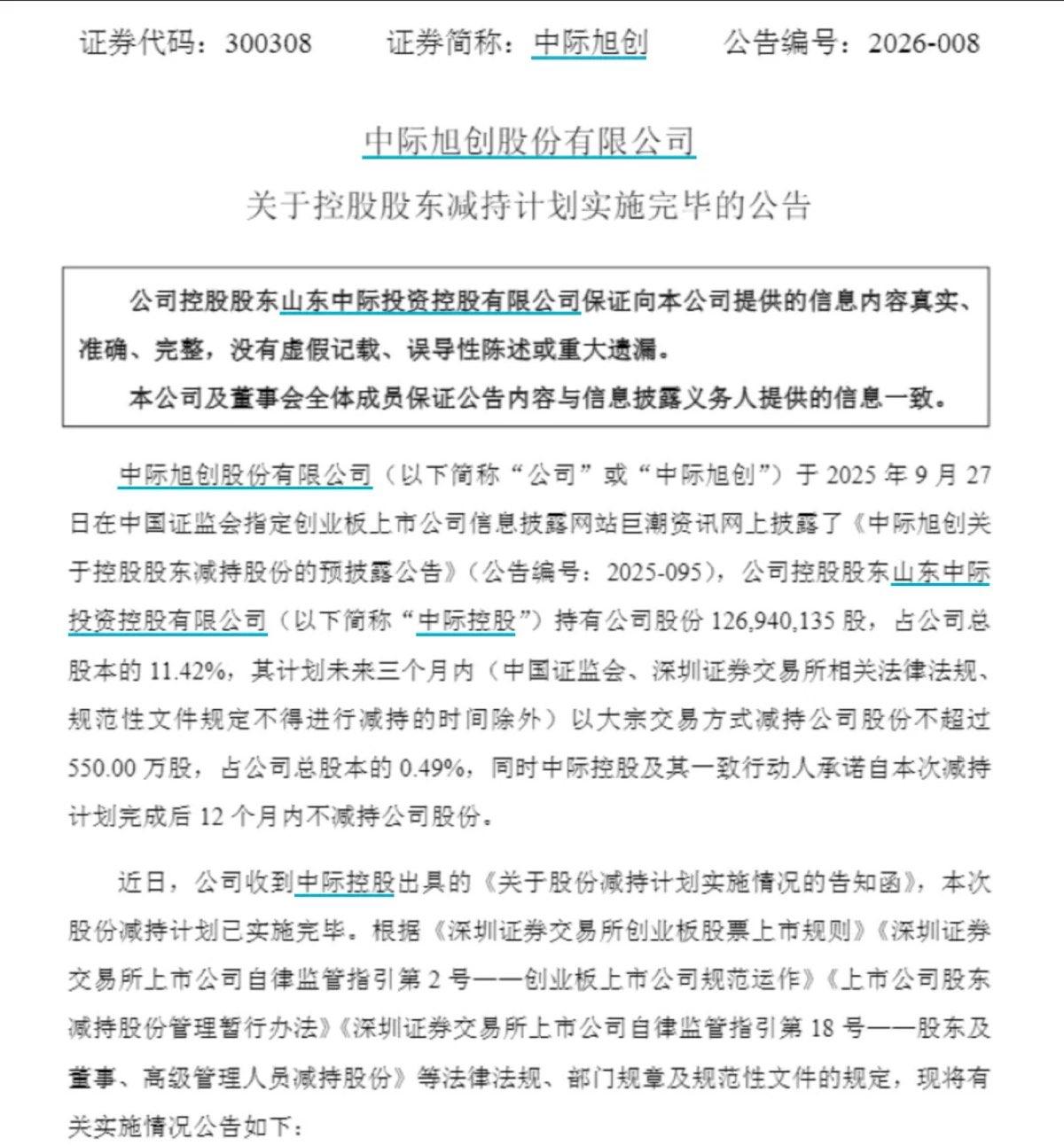
翻倍基金开始调整持仓结构!部分龙头牛股遭遇减持。 2025年,AI算力引爆A股科技行情,一批重仓算力产业链的主动权益基金,年度收益率高达100%以上。根据部分2025年度"翻倍基"最新披露的重仓股数据, 过去一个季度,不同基金经理对个别AI细分赛道龙头股的操作截然相反。 以光模块龙头中际旭创(300308)为例,永赢科技智选、中欧数字经济均在2025年四季度减持了中际旭创。其中,前者持有中际旭创的数量较2025年三季度 末减少了17%至224.49万股,中际旭创仍为基金第二大重仓股;中欧数字经济持有中际旭创的数量较2025年三季度末减少了33.42%至185.42万股,但仍为其 第一大重仓股。 截至1月22日午盘,中际旭创A股市值超6500亿元,2025年中际旭创全年涨幅近400% 除了机构密集减持,1月16日,中际旭创也公告,控股股东中际控股已完成550万股减持计划,减持均价为521.73元/股,占公司总股本的0.49%。 图/1月16日上市公司公告 而交银优择回报、前海开源沪港深乐享生活则在2025年四季度增持了中际旭创,前者持仓数量环比增长了77.25%,后者持仓数量环比大增了266.44%。截至 20 ...


6000亿光模块龙头突遭减持
21世纪经济报道· 2026-01-22 05:19
记者丨 易妍君 编辑丨姜诗蔷 翻倍基金开始调整持仓结构!部分龙头牛股遭遇减持。 2025年,AI算力引爆A股科技行情,一批重仓算力产业链的主动权益基金,年度收益率高达100%以上。根据部分2025年度"翻倍基"最新披露的 重仓股数据, 过去一个季度,不同基金经理对个别AI细分赛道龙头股的操作截然相反。 以光模块龙头中际旭创为例,永赢科技智选、中欧数字经济均在2025年四季度减持了中际旭创。 其中,前者持有中际旭创的数量较2025年三 季度末减少了17%至224.49万股,中际旭创仍为基金第二大重仓股;中欧数字经济持有中际旭创的数量较2025年三季度末减少了33.42%至 185.42万股,但仍为其第一大重仓股。 | | SZSE CNY 11:30:00 休市 査看L2全畳 | | | | | 通 部 ▽ ○ + | | --- | --- | --- | --- | --- | --- | --- | | 愛比 | 79.50% 委差 | 287 | Wind ESG评级 A | | | 详情 | | 卖五 | 589.00 | 16 | 交生 | -3.55% 120日 | | 206.95% | | 卖 ...

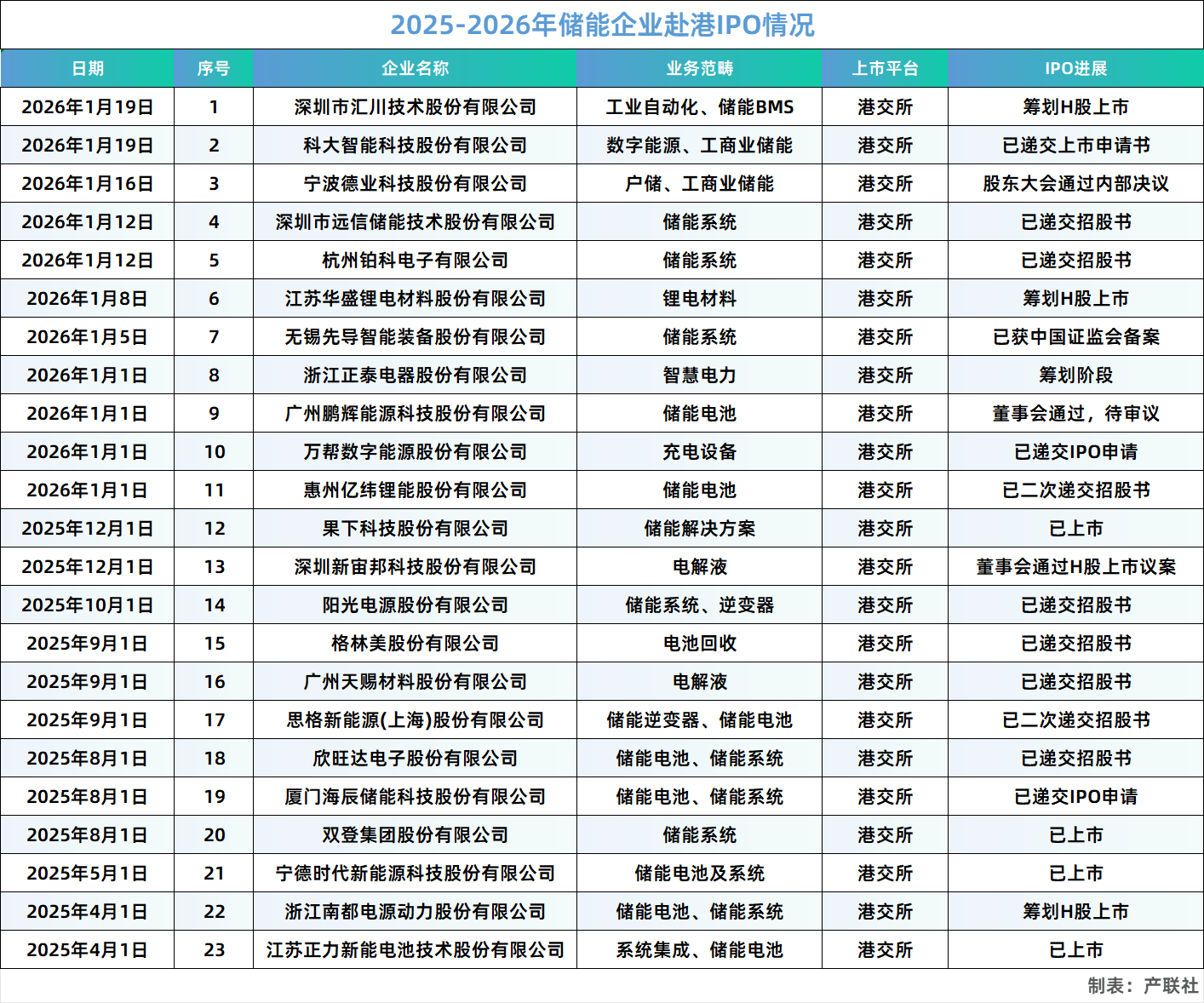
汇川技术拟赴港上市,朱兴明能否续写2800亿传奇?
Sou Hu Cai Jing· 2026-01-22 04:47
Core Viewpoint - The announcement by Huichuan Technology to initiate the overseas issuance of H-shares and list on the Hong Kong Stock Exchange marks a significant step in its globalization strategy, particularly in the context of the booming energy storage industry [2][3]. Company Strategy - Huichuan Technology, known as the "Huawei of industrial control," is embarking on its third entrepreneurial phase in the energy storage sector, which is expected to reshape the competitive landscape of the global energy storage industry [3][6]. - The company has a history of strategic pivots, having transitioned from industrial automation to electric vehicle control systems, and now to energy storage solutions, showcasing its resilience and adaptability [4][6]. Financial Performance - The total market capitalization of Huichuan Technology and its spin-off, Suzhou Huichuan United Power Systems Co., reached 280 billion yuan as of January 21, 2026 [5]. - From 2020 to 2024, the company's revenue surged from 11.5 billion yuan to 37 billion yuan, with net profit doubling to 4.285 billion yuan. In the first three quarters of 2025, revenue was 31.663 billion yuan, a 24.7% year-on-year increase, with a gross margin of 29.3% [7][8]. Market Context - The energy storage industry is undergoing a transformation, with a shift from price-driven competition to value-driven models, coinciding with Huichuan Technology's strategic return to the market [8][12]. - The Hong Kong market is experiencing a surge in energy storage IPOs, with over 30 companies expected to list in 2025, reflecting a collective recognition of the need for global capital platforms [10][12]. Competitive Landscape - The energy storage sector is characterized by intense competition among major players, including CATL and Sungrow, as well as emerging companies like EVE Energy and Aiko, all of which are accelerating their IPO processes in Hong Kong [12]. - Price pressures are evident, with a reported 25% decline in overseas energy storage system prices and a nearly 35% drop in commercial energy storage system prices in 2025 [12]. Technological Focus - Huichuan Technology is focusing on technology-driven development, positioning itself as a provider of zero-carbon system solutions and avoiding the saturated market of grid-side storage [14]. - The company has developed a comprehensive PCS matrix covering multiple scenarios and has introduced innovative business models, such as "zero down payment + profit sharing," alongside an AI energy storage scheduling platform [14]. Conclusion - The move to list on the Hong Kong Stock Exchange represents not only Huichuan Technology's strategic evolution but also reflects a broader trend of Chinese energy storage companies seeking international opportunities [15]. - The company's ability to maintain its competitive edge will depend on its technological innovation, strategic execution, and understanding of the industry's fundamentals [15].

主力个股资金流出前20:三花智控流出14.02亿元、通富微电流出13.09亿元
Jin Rong Jie· 2026-01-22 03:45
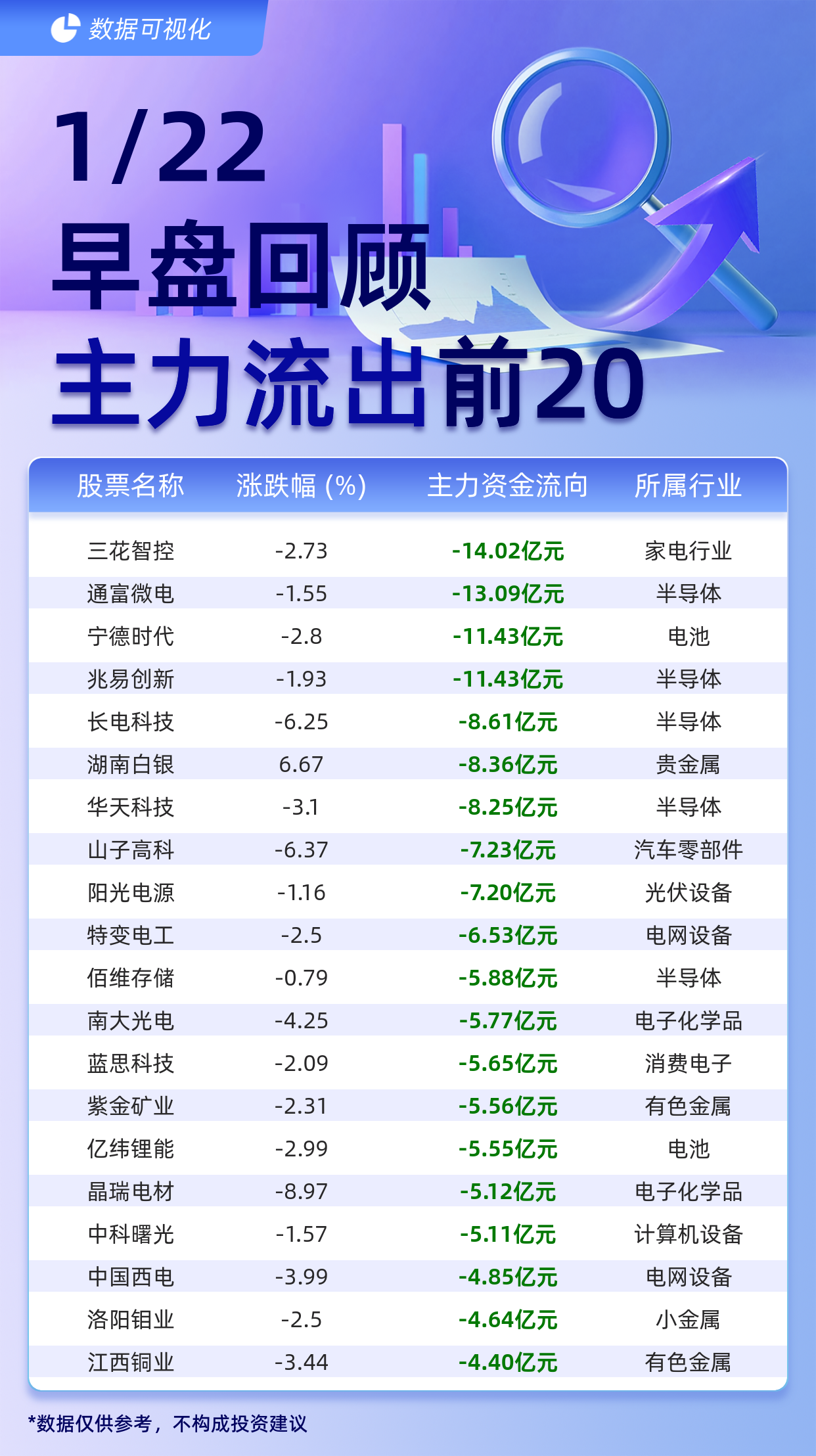
Core Viewpoint - The data indicates significant outflows of capital from various stocks, with notable amounts withdrawn from companies across different industries, suggesting a potential shift in investor sentiment and market dynamics [1][2][3] Group 1: Major Stocks with Capital Outflows - Sanhua Intelligent Control experienced a capital outflow of 1.402 billion, with a decline of 2.73% in stock price [2] - Tongfu Microelectronics saw a capital outflow of 1.309 billion, with a decrease of 1.55% [2] - Contemporary Amperex Technology reported a capital outflow of 1.143 billion, with a drop of 2.8% [2] - Zhaoyi Innovation also faced a capital outflow of 1.143 billion, with a decline of 1.93% [2] - Changdian Technology had a significant outflow of 861 million, with a sharp decrease of 6.25% [2] Group 2: Other Notable Stocks - Hunan Silver experienced a capital outflow of 836 million, but its stock price increased by 6.67% [2] - Huada Technology saw an outflow of 825 million, with a decline of 3.1% [2] - Yango Technology faced a capital outflow of 723 million, with a significant drop of 6.37% [2] - Sungrow Power Supply had an outflow of 720 million, with a decrease of 1.16% [2] - TBEA reported a capital outflow of 653 million, with a decline of 2.5% [2] Group 3: Additional Stocks with Capital Outflows - Baiwei Storage experienced a capital outflow of 588 million, with a slight decrease of 0.79% [2] - Nanda Optoelectronics saw an outflow of 577 million, with a decline of 4.25% [3] - Lens Technology faced a capital outflow of 565 million, with a decrease of 2.09% [3] - Zijin Mining reported an outflow of 556 million, with a decline of 2.31% [3] - EVE Energy experienced a capital outflow of 555 million, with a drop of 2.99% [3]





中国能源 - 2025 年中国逆变器出口额增长、光伏组件出口额下降;偏好逆变器、储能系统-China Renewable Energy PRC Inverter Export Value Up But Solar Module Export Value Down in 2025 Prefer Inverter ESS
2026-01-22 02:44
Summary of China Renewable Energy Conference Call Industry Overview - The conference call focused on the **China Renewable Energy** sector, specifically the solar module and inverter markets. Key Points on Solar Modules - **Export Value Decline**: China's solar module export value decreased by **15.3% year-over-year (yoy)** to **US$23,698 million** in 2025, despite a **13.7% yoy** increase in export volume to **268.3 GW** [1][2] - **December Performance**: In December 2025, the export value was **US$1,825 million**, reflecting a **6.5% yoy** increase but a **1.7% month-over-month (mom)** decline [2] - **Regional Demand**: The increase in export volume in December was primarily driven by: - **Europe**: **45.2% yoy** increase to **7.9 GW**, with significant contributions from Italy, the Netherlands, and Poland - **Asia (excluding China)**: **20.8% yoy** increase to **7.6 GW**, mainly from the UAE, South Korea, and the Philippines - **Africa**: **47.5% yoy** increase to **2.0 GW** [2] Key Points on Inverters - **Export Value Growth**: China's inverter export value rose by **9.3% yoy** to **US$9,042 million** in 2025, with a notable **26.1% yoy** increase to **US$839 million** in December [1][4] - **Regional Demand**: The demand for inverters in December was significantly boosted by: - **Europe**: **36.5% yoy** increase to **US$306 million**, driven by demand from Ukraine and Eastern European countries supporting residential energy storage systems (ESS) - **Africa**: **97.8% yoy** increase to **US$100 million**, with Egypt, South Africa, and Nigeria being key contributors - **Oceania**: **149.3% yoy** increase to **US$62 million**, supported by subsidy policies for residential ESS projects in Australia [4][6] Production and Installation Trends - **Module Production Decline**: China's module production volume decreased by **1.2% yoy** to **563.2 GW** in the first 20 months of 2025, with a projected further decline of **14.8% yoy** to **32.5 GW** in January 2026 due to seasonal factors [3] - **Solar Installation Growth**: Solar installations in China increased by **33.2% yoy** to **274.9 GW** in the first 11 months of 2025, although November saw a **11.9% yoy** decline to **22.0 GW** [3] Investment Preferences - The report suggests a preference for inverter companies such as **Sungrow** and **Deye**, which are expected to benefit from the growth in ESS demand [1] Risks - Potential risks affecting the inverter market include: - Lower-than-expected demand for residential and commercial energy storage in emerging markets - Increased price competition among inverter manufacturers - Higher trade tariffs on Chinese inverter products in international markets [15][17] Valuation Insights - **Deye Technology**: Target price set at **Rmb102.0/share**, based on a DCF model, anticipating sustainable growth in energy storage demand [14] - **Sungrow Power Supply**: Target price set at **Rmb240.00/share**, also based on a DCF valuation, reflecting long-term growth potential [16] This summary encapsulates the essential insights from the conference call regarding the current state and future outlook of the China Renewable Energy sector, particularly focusing on solar modules and inverters.


台积电2025Q4营收同比增长,DRAM价格持续上涨
Zhong Guo Neng Yuan Wang· 2026-01-22 01:38
Core Viewpoint - The data center sector is driving significant growth in the power equipment industry, with capital expenditures showing a high growth trend, particularly among major overseas players, while domestic giants like Alibaba and Tencent are experiencing a slowdown in their capital spending [1][3]. Demand Side - Overseas capital expenditures in Q3 2025 reached $99.617 billion, marking an 80.39% year-on-year increase and a 9.54% quarter-on-quarter rise [3]. - Alibaba's capital expenditure for Q3 2025 was 31.5 billion yuan, reflecting an 80.10% year-on-year increase but a decline of 18.55% quarter-on-quarter. The company reiterated its three-year investment framework of 380 billion yuan, indicating potential for further investment [3]. - Tencent's capital expenditure was 13 billion yuan in Q3 2025, down 24.05% year-on-year and 32.05% quarter-on-quarter, with a downward revision of its annual guidance, indicating spending below initial expectations [3]. Supply Chain - NVIDIA reported total revenue of $57.006 billion in Q3 2025, with data center product revenue reaching $51.215 billion, a historical peak, showing a 24.62% quarter-on-quarter increase and a 66.44% year-on-year increase, accounting for over 89% of total revenue [4]. - TSMC's revenue for December 2025 was 335 billion new Taiwan dollars, a 20.4% year-on-year increase but a 2.5% quarter-on-quarter decline, achieving a record high for the same period [4]. - The CPU price index in November 2025 was 99.04, slightly up from 98.20 in October, while DRAM spot prices surged from $27.14 on November 17, 2025, to $66.50 by January 16, 2026, reflecting a more than 145% increase over two months, indicating strong server demand [4]. Application Side - The number of models in use is steadily increasing, with application deployments becoming more frequent. Token usage from January 5 to January 12, 2026, reached 7.65 trillion, an 18.97% increase from the previous period [4]. - In Q3 2025, the release of models such as Grok4Fast, GPT-5nano, and gpt-oss-20B led to a decline of over 50% in the price of tokens for models scoring above 40 on the ArtificialAnalysis intelligence index [4]. Investment Recommendations - The construction of AI data centers is expected to drive demand for HVDC and SST technologies. The global data center installation capacity is projected to increase by approximately 14 GW in 2024, with major cloud providers maintaining high capital expenditures. TSMC's capital expenditure for 2026 is expected to reach $52-56 billion, a year-on-year increase of about 30% [5]. - The increasing power density of data center cabinets is likely to enhance the penetration of HVDC and SST technologies, with smart busbars expected to see widespread adoption [5]. - Recommended stocks include Zhongheng Electric (002364), Oulu Tong (300870), Weiteng Electric (688226), and Sunshine Power (300274). Stocks to watch include Kehua Data (002335), Keda (002518), Kelu Electronics (002121), Magmi Tech (688676), and Sifang Co. (601126) [5].

光伏出口退税将取消,电池片价格持续上涨
Zhong Guo Neng Yuan Wang· 2026-01-22 01:37
Core Viewpoint - The photovoltaic (PV) industry is experiencing a decline in production and demand, with significant decreases expected in December 2025, influenced by export tax policies and market conditions [1][2]. Production - PV module production in November 2025 decreased by 2.43% compared to October, with a further expected decline of 14.77% in December [2]. - Battery production for January 2026 is projected at 210 GWh in China, down 4.55% month-on-month, with significant reductions in second-tier companies, while energy storage battery production remains stable or slightly increases [2]. Prices - As of January 14, 2026, the price of polysilicon remained stable at 54.00 CNY/kg, while TOPCon dual-glass module prices increased by approximately 1.43% to 0.71 CNY/W [3]. - The average price for lithium iron phosphate battery storage systems in November 2025 was 0.5721 CNY/Wh, reflecting a 6.4% decrease [3]. Demand - In November 2025, the export value of PV modules was approximately $2.412 billion, a year-on-year increase of 34.08% and a month-on-month increase of 6.84% [4]. - Domestic PV installations in November 2025 reached 22.02 GW, a 74.76% increase month-on-month but an 11.92% decrease year-on-year [4]. Investment Recommendations - The expected cancellation of the export tax rebate for certain products in April 2026 may temporarily boost domestic PV product shipments, while also promoting the elimination of outdated production capacity [5]. - Companies to watch include Sungrow Power Supply (300274.SZ), Narada Power Source (300068.SZ), Tongrun Equipment (002150.SZ), Huashengchang (002980.SZ), and Shouhang New Energy (301658.SZ) [5].


创维欲退市,复牌股价大涨37%
2 1 Shi Ji Jing Ji Bao Dao· 2026-01-21 14:14
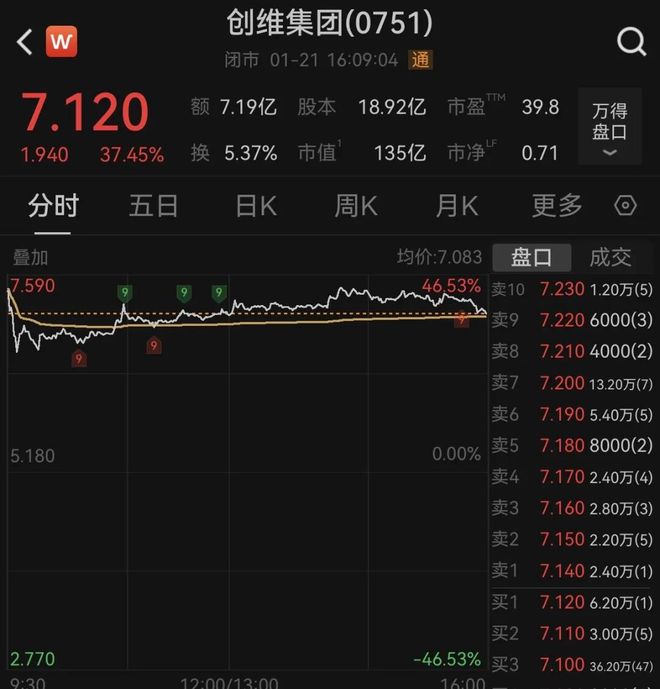
记者|曹恩惠 编辑|张伟贤 复牌归来的创维集团(00751.HK),股价一飞冲天。 1月21日,创维集团港股股价大幅高开,盘中股价最高涨逾43%,市值重新突破百亿元。截至收盘,其 股价报收7.12港元,涨幅37.45%。 截至1月21日收盘,创维集团港股股价为7.12港元。 图片来源:Wind 1月20日,创维集团一纸公告宣布了重磅信息,涉及回购股份、私有化退市以及分拆光伏业务独立上 市。 根据公告,创维集团将向全体股东分派所持创维光伏股份,创维光伏将申请以介绍方式在联交所主板上 市。 具体来看,创维集团将以实物形式向所有股东(包括控股股东黄氏一致行动集团)分派公司所持有的创 维光伏股份,每股可获发0.3699779股创维光伏股份。 值得一提的是,创维集团将通过计划安排进行股份回购,注销计划股份,计划股东可选择每股计划股份 获4.03港元现金或1股新股份。分派、创维光伏上市及股份回购的完成互为条件,将同日或大致同日发 生。而创维集团在公告中进一步表示,如果所有计划股东都以现金选择形式获得,此次交易的现金代价 最高超过25亿元。 创维光伏业务独立分拆上市,是此次创维集团调整上市布局的重要内容。也因此,该集团光伏 ...
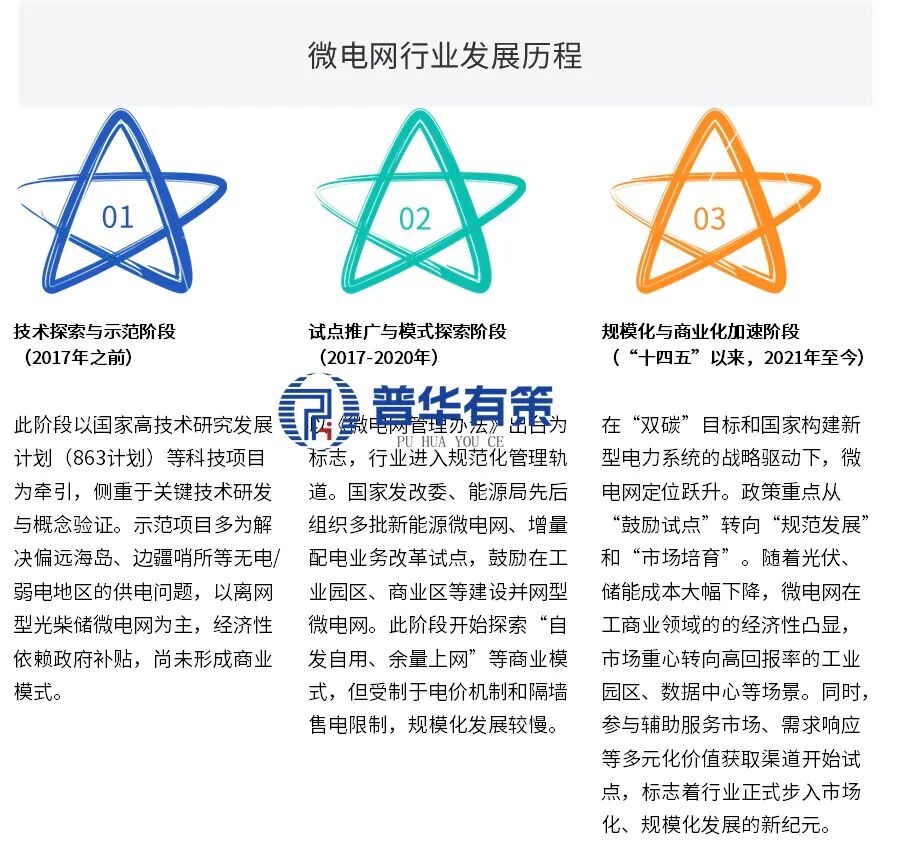
“十五五”微电网行业深度研究及趋势前景预测专项报告
Xin Lang Cai Jing· 2026-01-21 13:49
Core Insights - The microgrid sector is poised for significant growth, driven by the urgent need for energy security and the push for green, low-carbon development as emphasized in the 2025 Central Economic Work Conference [1][20] - The "14th Five-Year Plan" is expected to reinforce energy independence and green transformation, providing a stable policy outlook for the industry [1][20] Industry Development Overview - Microgrids are small-scale power systems that can operate independently or in conjunction with the main grid, consisting of distributed energy sources, loads, and control systems [2][21] - The Chinese microgrid industry is entering a phase of scale development, with rapid growth in installed capacity and diverse application scenarios [3][24] Industry Chain Summary and Impact - The microgrid industry chain is structured like a pyramid, with upstream, midstream, and downstream components that significantly influence costs, performance, and expansion speed [4][25] - Upstream includes distributed energy sources, storage systems, and core software, where recent cost reductions in photovoltaic components and lithium batteries have been pivotal for commercialization [4][25] - Midstream focuses on system integration and solution provision, where the ability to integrate various technologies and manage projects effectively is crucial for reliability and efficiency [5][26] - Downstream applications span various sectors, including industrial parks and public institutions, with distinct demands driving the need for customized and efficient products and services [6][27] Competitive Landscape - The Chinese microgrid market features a "four-pillar" competitive structure, with major players categorized into four camps: state-owned enterprises, renewable energy technology giants, specialized energy service providers, and international industrial leaders [7][28] - The first camp includes state-owned enterprises with strong grid integration capabilities, while the second camp consists of technology leaders providing integrated solutions [8][29] - The third camp focuses on specialized energy service providers that cater to specific market segments, and the fourth camp includes international brands leveraging AI and cloud computing [9][30] - The market remains fragmented, with no single dominant player, and future competition will hinge on creating or integrating into an open, collaborative ecosystem [10][31] Industry Opportunities and Trends - The microgrid sector is entering a strategic opportunity period, expected to become a model for integrated energy systems, driven by AI applications that enhance economic viability [11][32] - Key growth drivers include the demand for distributed solar energy storage, energy infrastructure in rural revitalization, and emergency power supply needs during extreme weather [11][32]