地平线

Search documents
中国车集体到欧洲“借腹生子”
Jing Ji Guan Cha Bao· 2025-10-03 05:39
Core Insights - Chinese automotive companies are rapidly establishing a brand ecosystem in Europe to overcome entry barriers and capitalize on the market opportunity [2][3] - The urgency in the European automotive industry has intensified, prompting various collaborations and local production strategies among Chinese firms [4][5] Group 1: Market Entry Strategies - Chinese automakers are adopting a "light asset" model for entering the European market, focusing on partnerships rather than building factories [4][5] - Companies like Leap Motor and Xpeng are leveraging existing European facilities for production, with plans to launch electric vehicles in multiple European countries [4][5] - The collaboration with established European manufacturers and suppliers is seen as a crucial strategy for reducing costs and risks associated with market entry [6][11] Group 2: Product Strategy and User Engagement - Chinese companies are tailoring their product strategies to meet European consumer preferences, including the introduction of plug-in hybrid models and compact cars [9][10] - There is a focus on educating European consumers about the technology and features of Chinese electric vehicles, as many users remain cautious [8][10] - Xpeng aims to maintain a global product strategy without creating a separate "European version," emphasizing the consistency of technology and features across markets [10] Group 3: Collaboration and Supply Chain Localization - The establishment of local supply chains through partnerships with European firms is essential for the success of Chinese electric vehicles in Europe [11] - Companies like Horizon Robotics are forming alliances with major suppliers to develop intelligent driving systems tailored for European markets [7][11] - The collaboration process is viewed as an opportunity for Chinese firms to learn from European manufacturing and technology practices [11]




中国车集体到欧洲“借腹生子”
经济观察报· 2025-10-03 05:06
Core Viewpoint - Chinese automotive companies are rapidly forming partnerships and localizing production in Europe to establish a competitive presence in the European market, driven by high tariffs and the need for a robust brand ecosystem [2][4]. Group 1: Market Entry Strategies - In the past 20 days, the urgency for Chinese automotive companies to enter the European market has intensified, marked by significant announcements such as Horizon's fundraising of 5.8 billion yuan and XPeng's entry into five European countries [2]. - Collaborations with established European manufacturers and suppliers, such as Magna and Bosch, are being pursued to facilitate market entry and production [2][4]. - The strategy of "light asset" models is being adopted, where companies like Leap Motor and XPeng utilize existing European facilities for production rather than building new factories [4][5]. Group 2: Localization and Production - Local production has become essential for Chinese electric vehicle manufacturers due to high export costs and compliance risks, with companies opting for partnerships to minimize investment [4][6]. - XPeng plans to enter five European markets, including Austria and Switzerland, through collaborations with local dealer groups [4][5]. - CATL has established multiple production bases in Europe, indicating a trend towards localizing the supply chain for battery production [6]. Group 3: Market Perception and Consumer Engagement - European consumers exhibit a mixed sentiment towards Chinese electric vehicles, with some expressing interest in the technology while others prefer to support local brands [9][11]. - The current penetration rate of electric vehicles in Europe is only 20%, highlighting the challenges and potential for growth in the market [12]. - Chinese companies are adapting their product strategies to meet European preferences, including the development of hybrid models and compact cars to navigate high tariffs [12]. Group 4: Technological Collaboration and Learning - The entry of Chinese electric vehicles into Europe is not just about market share but also involves collaboration with local firms to build a comprehensive supply chain [14]. - Companies like Horizon are actively seeking partnerships with global suppliers to enhance their technological capabilities and adapt to European standards [6][14]. - The process of localization will also serve as a learning opportunity for Chinese manufacturers to absorb advanced automotive technologies from Europe [14].

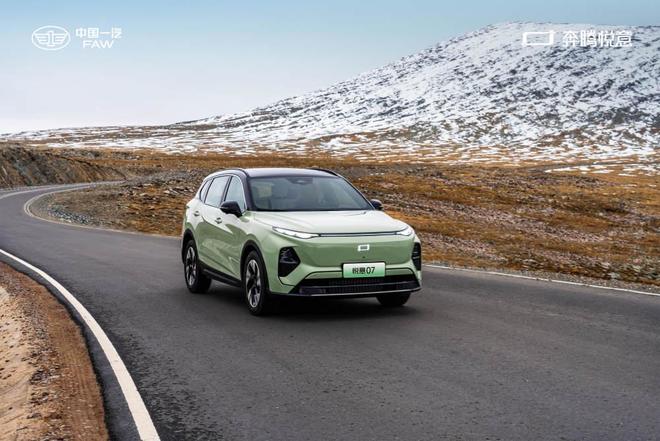
一汽奔腾新能源突围:“小马”珠玉在前,“悦意”能否复制成功?
2 1 Shi Ji Jing Ji Bao Dao· 2025-10-03 05:03
Core Insights - The sales of the FAW Bestune brand reached 137,217 units from January to September this year, marking a year-on-year increase of 39.3%, with new energy vehicle sales at 117,203 units, up 164.5% [2] - In September alone, Bestune sold 18,880 vehicles, with new energy sales hitting 16,217 units, achieving the highest monthly sales in nearly a decade [2] - The historical sales of the Bestune brand have surpassed 2 million units [2] Group 1: Transformation Strategies - The first strategy involves reforming the governance structure to enhance operational efficiency and decision-making speed, supported by a capital increase of 5 billion yuan, which has improved resource allocation [3] - The second strategy focuses on technology, with significant investment in R&D leading to the development of the Yu Yi series, which incorporates self-developed technologies across various dimensions [4][5] - The third strategy is about positioning, targeting a younger demographic with the "Joy Pai" user service brand, which aims to create emotional connections with users through community-oriented services [5][6] Group 2: Product Performance and Market Position - The Yu Yi series is positioned as "high-quality new energy vehicles affordable for every household," aligning with consumer demands for cost-effective options [6] - Despite the overall sales increase, the Yu Yi series has faced challenges, with the Yu Yi 03 and Yu Yi 07 struggling to achieve significant sales compared to the Bestune Pony, which has consistently outperformed them [7] - To address these challenges, Bestune launched the Yu Yi 03 and Yu Yi 07 Enjoy Edition, focusing on value-for-money propositions to boost sales [7][8] Group 3: Future Plans - Bestune plans to launch six new models over the next two years, aiming to build a comprehensive product matrix covering A0 to B-class markets and various powertrain options [8]
对话袁峰:躬身入局,做真正的CVC
3 6 Ke· 2025-10-02 08:01
Core Insights - Yuan Feng stands at the intersection of two key industries: electric vehicles and semiconductor technology, highlighting the importance of China's high-end manufacturing in the global market [1] - The demand for silicon carbide (SiC) chips in the electric vehicle sector is projected to grow significantly, with over 10 billion yuan in orders secured for the next four to five years [2] Company Overview - Yuan Feng has over ten years of experience in the automotive industry, having led investments in over 80 prominent "hard tech" companies while serving as CEO of GAC Capital [1] - In 2023, he joined ChipLink Integration, focusing on capital operations and SiC business, and helped establish ChipLink Power, where he serves as chairman [1][2] Investment Strategy - ChipLink Capital is defined as a "true CVC" (Corporate Venture Capital), aiming to address critical gaps in China's semiconductor industry and support the evolution of the supply chain [2][4] - The investment strategy involves both "filling gaps" in the semiconductor industry and "enhancing strengths" in the electric vehicle sector, fostering strategic collaboration with automotive companies [5][6] Market Position - ChipLink Power has emerged as a leading player in the domestic SiC market, achieving significant milestones in production and securing substantial orders [2][6] - The company emphasizes deep collaboration with automotive manufacturers, positioning them as research and development partners rather than mere suppliers [7][8] Future Goals - The focus for the next decade is to tackle the "bottleneck" issues in China's semiconductor industry, particularly in automotive chips, where domestic production is currently below 20% [15] - The aim is to create a robust ecosystem that integrates supply chains, chip design companies, and emerging applications, ensuring long-term sustainability and competitiveness [13][14]

“合作网”密集落地 中国新能源汽车迎来欧洲时刻
Jing Ji Guan Cha Bao· 2025-10-01 16:37
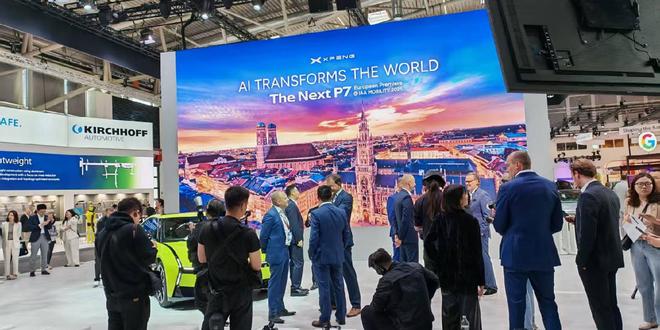
Core Insights - The European automotive industry is experiencing heightened urgency as Chinese automakers accelerate their entry into the European market, marked by significant announcements from companies like Horizon Robotics and XPeng Motors [2][3] - Chinese companies are adopting a "light asset" model for local production in Europe, collaborating with established European manufacturers to mitigate high costs and compliance risks associated with direct exports [3][4] - The recent Munich Auto Show highlighted the growing presence of Chinese electric vehicle manufacturers, showcasing their products and strategies to engage European consumers [7][9] Group 1: Market Entry Strategies - Chinese automakers are increasingly localizing production in Europe to reduce costs and compliance risks, with companies like Leap Motor and XPeng partnering with local manufacturers for production [3][4] - XPeng is set to enter five European countries, leveraging partnerships with local distributors to facilitate market entry and operations [3][4] - The collaboration with established European firms is seen as a strategic move to build a comprehensive ecosystem for Chinese automotive brands in Europe [2][3] Group 2: Product Strategy and Consumer Engagement - Chinese companies are tailoring their product strategies to meet European consumer preferences, with a focus on developing models specifically for the European market [10][11] - The current market sentiment in Europe is mixed, with some consumers expressing interest in Chinese electric vehicles while others remain cautious, preferring to support local brands [9][10] - Companies like XPeng are committed to maintaining a unified global product strategy, minimizing differences between models sold in China and Europe [11][12] Group 3: Technological Collaboration and Supply Chain Development - The establishment of local supply chains through partnerships with European firms is crucial for Chinese automakers, allowing them to learn and adapt to European manufacturing standards [12] - Horizon Robotics is actively seeking collaborations with major global suppliers to enhance its technological offerings and establish a presence in the European market [5][6] - The focus on local partnerships is expected to facilitate knowledge transfer and improve the competitiveness of Chinese electric vehicles in Europe [12]

博泰车联港股上市,200亿市值是低估还是泡沫? | 巴伦精选
Tai Mei Ti A P P· 2025-09-30 15:43
Core Viewpoint - The company, Botai Che Lian, successfully listed on the Hong Kong Stock Exchange, raising approximately HKD 919 million through the issuance of 10.4369 million shares at HKD 102.23 per share, with strong market demand reflected in a subscription multiple of 529.79 times for the public offering [2][3]. Group 1: Financial Performance - Botai Che Lian has accumulated a net loss of over CNY 1.2 billion in the past three years, raising concerns about its long-term profitability despite a revenue increase from CNY 1.218 billion in 2022 to CNY 2.557 billion in 2024 [3][4]. - The company's gross margin improved slightly from 11.8% in 2024 to 13.1% in the first five months of 2025, but remains low, leading to skepticism about sustaining a market valuation above HKD 20 billion [3][4]. Group 2: Market Position and Growth - The company is heavily reliant on smart cockpit solutions, with revenue from this segment accounting for 95.5% of total income in 2024, indicating a concentrated business model [3][4]. - Botai Che Lian's shipment volume for domain controllers is projected to grow from 488,000 units in 2022 to 915,000 units in 2024, reflecting a compound annual growth rate of 36.9% [4]. Group 3: Strategic Partnerships and Future Outlook - The company has established significant partnerships, including a collaboration with Porsche to develop a new in-car infotainment system, which is expected to enhance its market presence and attract investor interest [5][6]. - The IPO proceeds will be used to expand product offerings, enhance technology capabilities, and strengthen the company's global market presence, indicating a strategic focus on innovation and market expansion [7].

应宜伦中环敲锣,港交所智能座舱第一股响了!
汽车商业评论· 2025-09-30 06:41
Core Viewpoint - The article discusses the successful IPO of Botai Car Networking Technology (Shanghai) Co., Ltd. and its strategic partnerships, particularly with Porsche, highlighting its growth potential in the smart automotive sector and the significance of its technological advancements and market positioning [4][5][19]. Group 1: IPO and Market Performance - Botai Car Networking launched its IPO on September 22, 2025, with a subscription rate of 529.79 times, and the final issue price was HKD 102.23 per share, raising approximately HKD 919 million [4]. - On its first trading day, Botai's stock surged by over 30%, reaching a midday price of HKD 142.8, giving it a market capitalization of HKD 21.4 billion (approximately RMB 19.6 billion) [5]. Group 2: Financial Growth - From 2022 to 2024, Botai's revenue doubled from RMB 1.218 billion to RMB 2.557 billion, achieving a compound annual growth rate of 44.9% [19]. - In the first five months of 2025, the company reported revenue of RMB 754 million, a year-on-year increase of 34.4%, with a gross margin recovery to 13.1% [19]. Group 3: Strategic Partnerships - Botai has established a robust partnership ecosystem, including deep collaborations with Huawei for domestic market positioning, Qualcomm for global market integration, and Horizon for future innovation [13][15][16]. - The partnership with Porsche is particularly significant, as it positions Botai as a key player in the luxury automotive sector, similar to how CATL gained prominence through its collaboration with BMW [5][19]. Group 4: Technological Advancements - Botai has pioneered several innovations in the automotive sector, including the first 3G vehicle networking system and a solid-state sound field intelligent system, with over 6,000 patent applications, 80% of which are invention patents [9][10]. - The company has developed an integrated model of "software + hardware + cloud services," focusing on smart cockpit solutions and networked services, differentiating itself from pure hardware manufacturers [9][10]. Group 5: Future Outlook - The company is positioned to expand into new fields such as embodied intelligence, leveraging its existing technology in perception and decision-making algorithms [14]. - With its strategic upgrades and the opening of overseas markets, Botai is expected to redefine its growth logic and explore significant upward potential in the future [20].

大行评级丨招商证券国际:上调优必选目标价至172港元 维持行业首选
Ge Long Hui· 2025-09-30 02:44
Core Viewpoint - The report from China Merchants Securities International highlights the increasing interest in AI-driven robots and intelligent driving technologies during a recent roadshow in South Korea, with a ranking of focus areas being robots > intelligent driving > complete vehicles and components [1] Group 1: Robotics Sector - The humanoid robot chain recommends UBTECH as the top pick, with a target price raised from HKD 155 to HKD 172, reflecting a projected price-to-sales ratio of 26.7 times for the fiscal year 2026, driven by sustained order catalysts [1] - UBTECH's Walker series humanoid robots have accumulated contract amounts nearing CNY 430 million, with a recent CNY 250 million order being the largest humanoid robot order globally [1] - The company is expected to accelerate technology iteration due to continuous order fulfillment and delivery, with BOM costs projected to decrease by 20-30% by year-end and an additional 30-50% reduction anticipated next year [1] Group 2: Intelligent Driving Sector - The intelligent driving chain prioritizes recommendations for Horizon Robotics, Hesai Technology, and SUTENG Juchuang, focusing on SoC chips and LiDAR technologies [1] - The automotive sector recommendations include Geely Automobile, Xpeng Motors, and Fuyao Glass, indicating a strong outlook for these companies in the context of intelligent driving advancements [1]

为何我国智能辅助驾驶快速“变聪明”?这两个维度缺一不可
Zhong Guo Jing Ying Bao· 2025-09-29 17:23
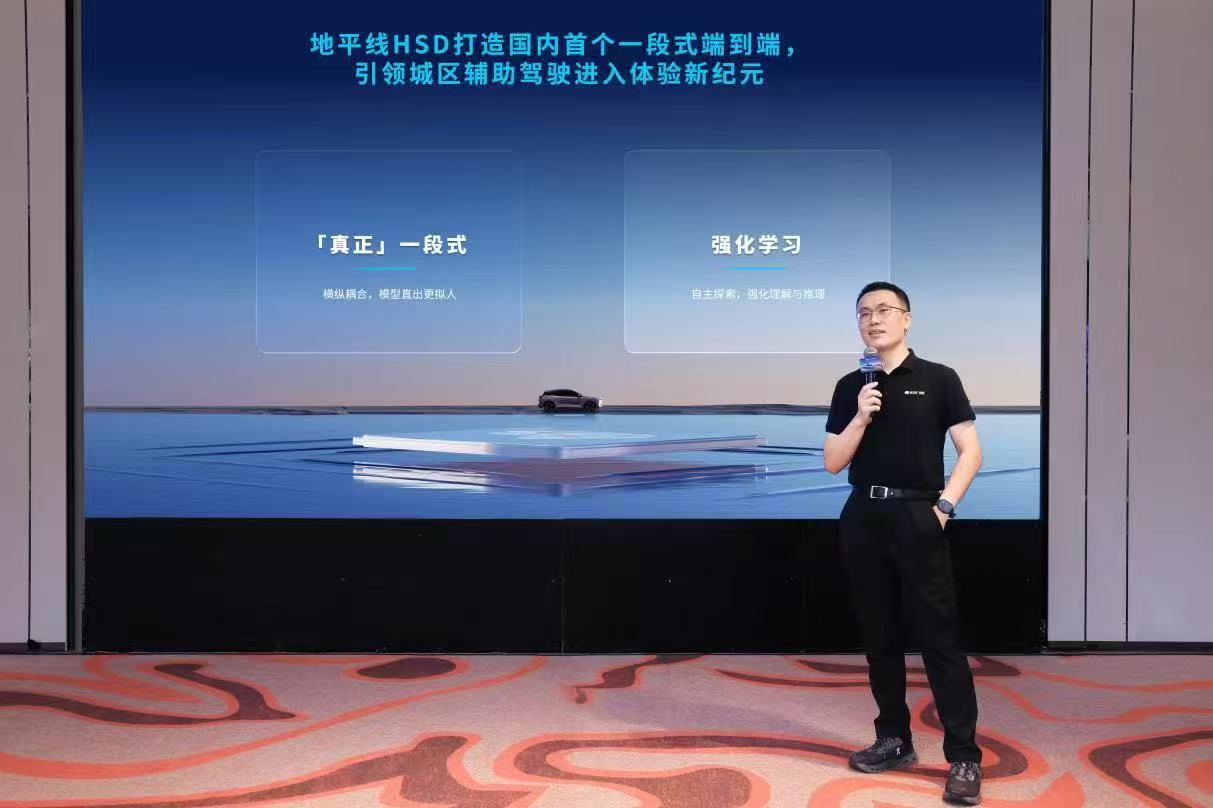
Core Insights - The article highlights three main advantages for China's development in intelligent driving: scenario advantage, ecosystem advantage, and policy advantage [1] - The integration of scenario advantages with advanced intelligent driving platforms marks the transition to the 2.0 stage of automotive intelligence [1] Group 1: Intelligent Driving Technology - Horizon's HSD (Horizon SuperDrive) solution has significantly improved urban driving capabilities, providing a smoother, more human-like, and reliable experience [4] - The "end-to-end + reinforcement learning" architecture is a key highlight of the HSD upgrade, enabling low latency and enhanced safety and efficiency [4][5] - The system's ability to process complex scenarios without modular segmentation allows for a more fluid driving experience, akin to human control [5] Group 2: System Performance - HSD demonstrates ultra-low latency and strong defensive driving capabilities, with rapid responses to unexpected situations such as construction zones and sudden obstacles [6][7] - The system's performance includes smooth control in various driving conditions, maintaining stability and fluidity even in complex traffic scenarios [7] Group 3: Safety and Certification - Horizon has established the largest active safety testing scenario database in the industry, covering over 30,000 scenarios and achieving over 10 million kilometers of testing [10] - The company has received the world's first and only ISO 8800 AI functional safety certification, enhancing its credibility in the global market [10]
上汽集团王晓秋:坚决反对“脱钩断链”,上汽是中欧贸易战中国最大受害者
Guan Cha Zhe Wang· 2025-09-29 01:55
Core Viewpoint - The diversification of the electric vehicle (EV) industry is essential, encompassing both varied pathways and global market expansion, while facing challenges such as trade policy barriers and supply chain resilience [1][3]. Group 1: Industry Challenges and Recommendations - The automotive industry is highly globalized, necessitating the maintenance of a multilateral trade system to eliminate trade barriers and foster a fair international market environment [3]. - The chairman emphasized the need for companies to transcend short-term commercial interests by integrating green and low-carbon principles throughout the industry chain to address global climate change [3]. - Recommendations include promoting open cooperation, rejecting "decoupling," and enhancing industrial collaboration to optimize the innovation ecosystem [1][3]. Group 2: Strategic Collaborations and Innovations - SAIC Motor has extended its partnership with Volkswagen until 2040, planning to develop over 20 new products for the Chinese market in the next five years [3]. - Collaborations with cross-industry companies include the launch of the H5 model with Huawei, aiming to set a new benchmark in the 200,000 yuan EV market [4]. - The company is also working with various firms to develop second-generation solid-state batteries and high-performance automotive chips, indicating a strong focus on innovation and technology [4]. Group 3: Market Growth and Future Outlook - The Chinese EV market has experienced significant growth, with a projected penetration rate exceeding 50% this year, marking a shift from exploration and policy cultivation to a market-driven phase of diverse innovation [4][5]. - The trend of mutual learning and collaboration between domestic and foreign automakers is emerging, indicating a dynamic evolution in the industry [5].