
万代

Search documents
新消费研究-情绪价值总论:始于情绪,终于情感,尊重时间,尊重经营
2025-08-13 14:53
Summary of Key Points from the Conference Call Industry Overview - The global healing economy is projected to reach $7 trillion by 2025, while China's emotional consumption market is expected to exceed 2 trillion RMB in the same year, with an annual compound growth rate exceeding 12% [1][2][3] - The cultural, film, and gaming industries are rapidly expanding, highlighting the importance of emotional value as a significant added value to products [1][3] Core Concepts and Arguments - Emotional value refers to the emotional satisfaction and psychological pleasure consumers derive from purchasing and using products. It encompasses both narrow emotional consumption sectors (e.g., trendy toys, stress-relief toys, emotionally-driven jewelry, and pets) and a broader range of products that must create emotional value [2][4] - Companies can enhance emotional value by improving product added value, increasing consumer pleasure, and boosting conversion rates. Traditional companies in sectors like pets, trendy toys, and jewelry have successfully attracted loyal users through innovative design and marketing strategies [1][4] - The Chinese market has vast potential for developing emotional value, with a focus on "starting with emotion and being loyal to management" to build sustainable, high-quality brand power [1][6] Risks and Considerations - The emotional value sector faces volatility risks, and investors should closely monitor industry dynamics and leading companies' performances while being cautious of over-reliance on single trends or short-term fads [1][7] - As GDP per capita increases, consumer demand is shifting from functional value to emotional and group value, indicating a need for companies to adapt to these changing consumer preferences [1][8] Market Dynamics - The increase in supply-side functional value disparity has concentrated asset value among a few brands, thereby elevating the importance of emotional value [1][10] - Rising incomes among younger generations (90s and 00s) drive higher demand for emotional value, as their spending structures differ significantly from previous generations [1][11] Strategic Insights - Companies should leverage AI and digital tools to capture consumer needs accurately and build a diverse product matrix to meet various consumer demands [2][16][17] - Agile supply chains are crucial for meeting emotional consumption needs, allowing companies to respond quickly to market changes [2][18] - Social media dynamics can enhance brand development and maximize channel efficiency by resonating emotionally with consumers [2][19] Case Studies and Examples - Companies like Bandai and Xiaomi exemplify successful emotional value strategies, with Bandai leveraging a mature platform for IP operations and Xiaomi transforming its automotive products into emotional carriers through user-centric design and ecosystem integration [2][21][27] - Shoujin Holdings demonstrates how social attributes can drive market value growth, emphasizing cultural representation and product quality [2][23] Conclusion - Emotional value is not limited to specific sectors but can be integrated into various traditional industries, suggesting a long-term strategic focus for companies aiming to enhance brand loyalty and consumer engagement [2][24][25] - Investors should remain vigilant against market exuberance and focus on sustainable growth factors to mitigate risks associated with emotional value investments [2][29]
日本谷子经济报告
2025-08-13 14:53
Summary of Japanese "Gaki" Economy Report Industry Overview - The Japanese "Gaki" economy is a significant part of the anime industry chain, with a commercialization market share exceeding 20% and rapid growth in online distribution, alongside steady growth in overseas and commercialization markets [1][2] - The collectible card game segment is the largest category within the Japanese "Gaki" economy, exceeding 300 billion yen, closely related to IPs like Pokémon and Dragon Ball, and has been the fastest-growing subcategory over the past five and ten years [1][3] Key Insights - The core second-dimensional group in Japan accounts for approximately 37%, while the broader second-dimensional group reaches 85%, significantly higher than the Chinese market, which has a penetration rate of around 20% [1][4] - Per capita spending on collectible cards in Japan is about 120 yen, compared to less than 20 yen in China, indicating substantial growth potential for the Chinese market [1][5] - The Japanese anime industry employs a production committee model, which shares risks and profits among stakeholders, ensuring coordinated efforts across the supply chain [1][6] Success Factors of the Japanese Anime Industry - Internal factors contributing to the success of the Japanese anime industry include high-quality IP supply, advancements in animation technology, changes in media distribution, audience expansion, and evolving business models [1][7] - External factors include government support and a favorable economic environment, with the Japanese government recognizing the anime industry as a key sector since 1996 [1][7][8] Historical Development of the Japanese Anime Industry - The development of the Japanese anime industry can be divided into several key stages, from pre-1945 when the industry was not fully formed, to the 1970s when it began to industrialize, and to the present day where it has become a mature and efficient system with global influence [1][9][10] Company-Specific Strategies Bandai - Bandai focuses on story-driven IPs and employs a full industry chain capability to expand its IP matrix, emphasizing channel development and overseas market expansion to ensure product success and supply chain stability [1][12][13][14] - Bandai's unique advantage lies in its comprehensive industry chain capabilities, allowing for synergy between content creation, animation production, and sales channels [1][14] Sanrio - Sanrio emphasizes character-driven IPs, particularly through its flagship character Hello Kitty, leveraging emotional connections and a well-structured industry chain to maintain relevance [1][12][17] - Sanrio's strategy includes a strong focus on licensing, accounting for over 50% of its business, and diversifying its IP portfolio to reduce reliance on single characters [1][18][19] Market Strategies - Both companies adopt localized strategies for different markets, with Bandai focusing on global supply chain management and Sanrio emphasizing digital channels and local partnerships to enhance brand presence [1][16][20] Implications for Chinese Enterprises - The Japanese toy economy offers valuable lessons for Chinese companies, highlighting the importance of continuous product innovation for story-driven IPs and the potential for growth in character-driven IPs through open licensing and diversification [1][21]
泡泡玛特和布鲁可中报前瞻
2025-08-13 14:53
Summary of Conference Call Records Industry and Companies Involved - **Companies**: Pop Mart (泡泡玛特) and Blokus (布鲁可) - **Industry**: Toy and IP-related products Key Points and Arguments Pop Mart (泡泡玛特) 1. **Category Expansion**: Pop Mart is expanding its product categories (Mega, sugar gel, plush toys) to enhance consumer engagement and is actively exploring small appliances and other derivatives to strengthen its consumer base [1][2][3] 2. **IP Matrix Health**: Monitoring the sales proportion of the LaBuBu IP is crucial; if it remains around 30%, it indicates a healthy IP matrix with growth in other IPs [1][3] 3. **Classic IP Performance**: Classic IPs like Molly, Dimo, and Skull Panda are expected to maintain growth in the first half of the year, with new forms and collaborations broadening consumer appeal [1][4] 4. **Emerging IP Success**: New IPs such as Crybaby, Gorilla Man, and Zizika are performing well, enriching the product line and attracting new fans [1][5] 5. **Overseas Market Potential**: The performance of stores in overseas markets, particularly in Southeast Asia and the US, is significantly higher than in the domestic market, indicating strong long-term expansion potential [1][2][21] 6. **Sales Growth Expectations**: For the first half of 2025, Pop Mart anticipates revenue growth of no less than 200% and profit growth of no less than 350%, leading to an upward adjustment in market expectations for the full year [2] Blokus (布鲁可) 1. **Performance Below Expectations**: Blokus's performance in the first half of the year was below expectations due to inventory pressure from distributors and the timing of new product launches [1][9] 2. **Future Product Expansion**: Plans to expand into adult and female-oriented products, deepen market penetration in lower-tier cities, and accelerate overseas expansion are in place, with expectations for significant growth in the second half of the year [1][10][11] 3. **Market Penetration**: The company is gradually expanding its domestic network and utilizing major channels like Walmart and Costco in North America, with the second half expected to be a peak sales season [1][11] 4. **New Product Launches**: Blokus plans to release 800 SKUs this year, doubling last year's offerings, with a focus on new IPs and optimizing existing ones to drive sales [9][10][16] 5. **Competitive Positioning**: Blokus holds a competitive advantage in the building block sector against competitors like LEGO and Bandai, primarily due to its pricing strategy and channel penetration [1][14] 6. **Valuation Insights**: The estimated valuation for Blokus is projected to be between 20 to 25 times earnings, reflecting its growth potential and brand premium [15] Additional Insights 1. **Second-Hand Market Impact**: The second-hand market's pricing dynamics are being monitored, with a focus on maintaining a healthy price range to avoid market risks associated with excessive speculation [8] 2. **Seasonality of Revenue**: Blokus's revenue exhibits seasonality, with historical data indicating stronger performance in the second half of the year due to several sales peaks [17] 3. **IP Development and Market Trends**: The overall toy industry is experiencing growth driven by demand for IP-related products, while traditional toy segments remain relatively flat [23] 4. **Future Growth Potential**: Both companies are positioned for future growth, with Pop Mart focusing on IP expansion and Blokus on market penetration and product diversification [28][25] This summary encapsulates the key insights from the conference call records, highlighting the strategic directions and performance expectations of Pop Mart and Blokus within the toy industry.

中小企业,如何成为高大上公司?
创业家· 2025-08-13 10:02
Core Viewpoint - The article emphasizes how small and medium-sized enterprises (SMEs) can evolve into high-end companies by setting ambitious goals, articulating significant aspirations, and increasing operational speed [1]. Group 1: High Goals - SMEs should aim for high market capitalization, transitioning from financial metrics to business performance, and then to market presence, ultimately leading to organizational growth [1]. Group 2: Significant Aspirations - High market value and financial goals must be translated into objectives that provide value to customers and actionable targets for employees [1]. Group 3: Increasing Speed - Under the premise of high goals and significant aspirations, companies need to enhance their operational speed to achieve these objectives [1]. Group 4: Insights from Japan - The Japanese market serves as a "future laboratory" for Chinese consumer brands, providing insights into navigating low growth, aging populations, and consumer behavior changes [6]. - Japanese brands have developed strategies that can be emulated by Chinese companies to capture consumer interest and adapt to market shifts [6]. Group 5: Key Strategies of Japanese Brands - **Supply Chain-Driven PB Products**: Companies like Kobe Bussan utilize integrated supply chains to create high-quality private label products, achieving significant scale and efficiency [7][13]. - **Continuous Iteration of Major Products**: Brands such as Kikkoman focus on evolving their flagship products to meet consumer demands, enhancing their market presence [7][16]. - **Defining Lifestyles and Emotional Resonance**: Companies like Muji and Bandai create products that resonate emotionally with consumers, adapting to changing lifestyles and preferences [8][9].


朱啸虎:靠流量起来的公司,基本都是昙花一现
创业家· 2025-08-13 10:02
Core Viewpoint - Companies relying solely on traffic-driven models tend to be short-lived, emphasizing the necessity of good products and competitive pricing for long-term success [2][3][4][5]. Group 1: Market Opportunities - In the next 5-10 years, there are three significant market opportunities in China: the aging population, pet ownership, and the chain retail model [7][8][9][10]. - The annual increase of 20 million retirees presents a lucrative market for the silver economy, as this demographic has disposable income and time to spend [8]. - The pet ownership trend indicates that households are increasingly treating pets as family members, leading to substantial monthly expenditures [9]. - The chain retail model in China has considerable room for growth, as its current penetration is significantly lower than in the US, Japan, and Hong Kong [11][12]. Group 2: Learning from Japan - A study trip to Japan is planned to explore how the silver economy has influenced product models and to analyze successful companies like Muji, 7-Eleven, and Shiseido [13][14]. - The Japanese market serves as a "future laboratory" for Chinese consumer brands, providing insights into consumer evolution over the next decade [18]. Group 3: Key Insights from Japanese Brands - Japanese brands thrive on three core principles: supply chain-driven private label (PB) products, continuous iteration of key products, and defining lifestyles that resonate emotionally with consumers [19]. - Companies like Kobe Bussan leverage a robust supply chain to create PB products, achieving significant scale and efficiency [20]. - The focus on single, high-demand products allows brands like Kikkoman to evolve from merely producing soy sauce to creating a cultural identity around it [20]. - Brands like Shiseido utilize a tiered approach to product offerings, catering to both high-end and cost-sensitive consumers [20]. Group 4: Event Details - The event will feature prominent figures in the consumer sector, including Zhu Xiaohu, who has led early investments in various successful startups [21]. - Participants will engage in discussions and visits to key Japanese companies to understand their strategies and operational models [22][23][24][25][26].

2025年东南亚潮玩市场考察报告
Sou Hu Cai Jing· 2025-08-13 01:25
Core Insights - Southeast Asia, with over 600 million people and a youthful demographic, is emerging as a significant market for trendy toys, projected to reach a market size of approximately $2.5 billion in 2024, with an annual growth rate of 20% [1][6][52]. Market Overview - The Southeast Asian trendy toy market is currently in a rapid development phase, expected to maintain a fast growth trajectory in the coming years [10]. - The market is characterized by a dominance of Chinese brands in the mass market, while international brands from Japan and the US focus on niche high-end segments, and local brands are still in their infancy [10][56]. - The market size for trendy toys in Southeast Asia is projected to be around $2.5 billion in 2024, with a year-on-year growth rate of 20%, outpacing the global average [52][56]. Consumer Insights - The primary consumer demographic for trendy toys in Southeast Asia is aged between 15 and 35, with females making up 60% of the consumer base, emphasizing the importance of instant gratification and social currency in their purchasing decisions [1][10]. Cultural Adaptation - Brands must adapt their product design and marketing strategies to align with local cultural characteristics, avoiding religious and cultural taboos [2][10]. Sales Channels - The sales of trendy toys in Southeast Asia are primarily through physical channels, including global chains, Chinese brand channels, and local channels, with e-commerce platforms like Shopee, Lazada, and TikTok Shop becoming increasingly important [1][56]. Policy and Market Environment - The relationship between China and Southeast Asian countries is close, with frequent trade interactions. Companies need to understand and comply with varying tax and certification standards across countries [2][10]. - The investment environment is generally favorable, but potential risks such as foreign investment restrictions and currency fluctuations exist [2]. Recommendations for Companies - Chinese trendy toy companies should focus on product development planning, create a diverse IP matrix, enhance craftsmanship, build an omnichannel network, innovate business models, strengthen cultural integration, protect intellectual property, and improve digital capabilities to transition from "product export" to "cultural export" [2][10].

创始人要始终关注这两件事
创业家· 2025-08-12 10:08
Core Viewpoint - The article emphasizes the importance of focusing on products and users, as well as prioritizing people in business management, including selection, utilization, and motivation of team members [1][2]. Group 1: Japanese Market Insights - The Japanese consumer market serves as a "future laboratory" for Chinese brands, providing insights into consumer evolution over the next decade [7]. - The article highlights that understanding Japan's product survival wisdom, developed during its "lost thirty years," is crucial for Chinese brands to win over consumers [7][8]. - Key strategies from successful Japanese brands include supply chain-driven private label (PB) products, continuous iteration of major products, and defining lifestyles that resonate emotionally with consumers [8][10][11]. Group 2: Successful Japanese Brands - Kobe Bussan utilizes a vertically integrated supply chain to offer over 1,000 stores and achieve a scale of 20 billion RMB [10]. - 7-Eleven employs data from its extensive network to guide the development of PB products that meet latent consumer needs [10]. - Nitori, known as the "king of Japanese furniture," applies automotive supply chain standards to achieve consistent revenue growth for 36 years [10]. Group 3: Product Development and Consumer Engagement - Kikkoman has evolved from merely producing soy sauce to creating a cultural narrative around it, enhancing consumer engagement [10]. - Shiseido employs a layered brand strategy to cater to both high-end markets and cost-sensitive consumers [10]. - Bandai focuses on developing products that tap into fundamental human desires, creating items that are both fun and addictive [12]. Group 4: Learning Opportunities - The article promotes a study trip to Japan, where participants can learn about the operational strategies of leading Japanese brands and their approaches to market challenges [3][4][23]. - The program includes insights from industry leaders and visits to successful companies, providing a comprehensive understanding of the Japanese retail landscape [14][15][19].

15.6亿意向合作!第十五届中国国际动漫博览会圆满闭幕
Nan Fang Du Shi Bao· 2025-08-12 09:41
Core Insights - The 15th China International Animation Expo concluded successfully, attracting over 600 companies and more than 2,000 animation IPs from over 40 countries and regions [1][3] - The event saw nearly 100,000 attendees, with over 20,000 being professional visitors, and generated a cooperation intention amounting to 1.56 billion yuan [3][5] - The expo showcased a new "professional exhibition + industrial town" model, enhancing the integration of exhibition and industry [6][8] Event Performance - The expo attracted nearly 100,000 visitors, including over 20,000 professionals, and over 45,000 participated in public activities [3] - The intention for cooperation from participating companies reached 15.6 billion yuan, with three projects exceeding 100 million yuan and 35 projects over 10 million yuan [3][8] - Online and offline sales during the event totaled 1.8 billion yuan [3] Government Support - Dongguan announced a plan to invest 120 million yuan in industrial support funds to promote high-quality development in the animation and toy industries [5] - The establishment of the first national technical trade measures research and evaluation work station for the toy service sector was also announced [5] Innovative Exhibition Model - The expo adopted an innovative "professional exhibition + industrial town" model, facilitating a shift from a single exhibition to a full industrial chain park [6][8] - The model included a 24/7 online toy center and five offline selection centers, promoting a continuous operational system [6] International Collaboration - The expo featured a "Global Film and Animation Creation Hall," attracting IPs from over 40 countries, with Thailand as the guest country [11] - International industry leaders shared cutting-edge animation concepts and experiences, enhancing global collaboration [11][14] Economic Impact - The event generated significant sales, with 45 exhibitors achieving over 500,000 yuan in offline sales, and a total online transaction exceeding 1 billion yuan [10] - Major deals included 1.08 billion yuan in cooperation agreements and multiple projects exceeding 10 million yuan [8][9] Cultural Exchange - The expo facilitated cultural exchanges through various activities, including the "China-Japan-Korea Animation Culture Exchange Conference" [13] - It provided a platform for over 150 cooperation intentions between international and domestic companies [13] Community Engagement - The event integrated local cultural and tourism resources, enhancing community participation through themed activities and transportation services [17][19] - The "潮流东莞 漫游未来" city space art exhibition added to the cultural atmosphere, promoting local tourism [19] Future Prospects - The expo is seen as a new starting point for the high-quality development of China's animation and toy industry, with ongoing support from local government initiatives [23] - The integration of animation into urban life is expected to enhance cultural influence and stimulate tourism [23]

从2025北京国际潮玩展看文化消费新趋势
Xin Hua Wang· 2025-08-12 06:06
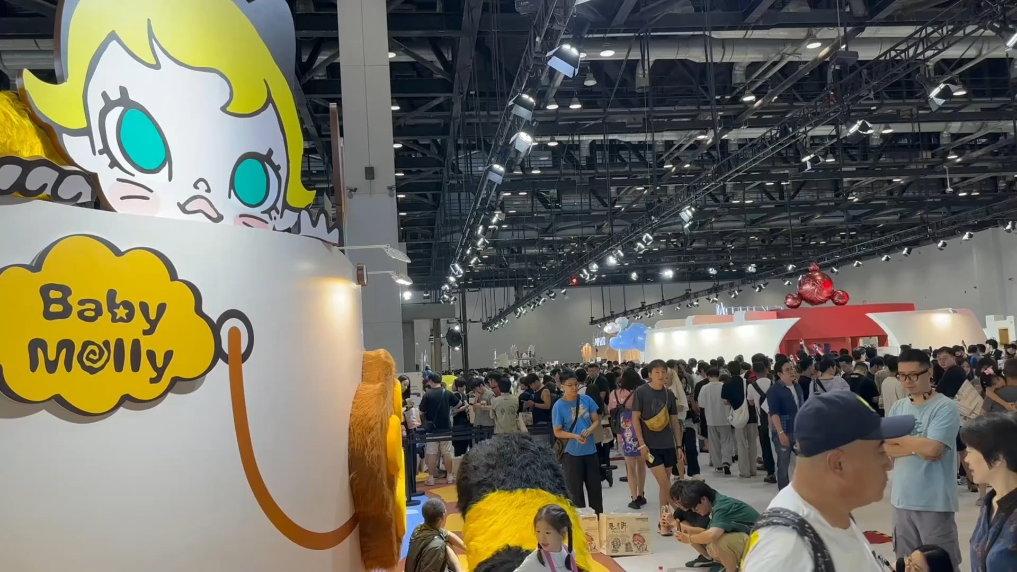
Core Insights - The 2025 PTS Beijing International Trendy Toy Expo will be held from August 1 to 3 at the National Convention Center, organized by Pop Mart, featuring renowned international IP giants such as Disney, Universal, and Bandai, alongside emerging domestic IPs, making it a global platform for trendy toy IP exchange [1] Group 1 - The collaboration between Chinese trendy IP LABUBU and international icons like Minions and Stitch has become a highlight of the expo, indicating a successful cross-border integration [3] - LABUBU's popularity overseas has led to rapid growth in the related "doll clothing" industry, with some companies reporting numerous orders from Southeast Asia [3] - The expo not only showcases well-known IPs but also serves as an important platform for new artists and niche designers to present their creative works [4]
2025年东南亚潮玩市场考察报告解读(61页附下载)
Sou Hu Cai Jing· 2025-08-11 13:26
Group 1 - The report analyzes the Southeast Asian trendy toy market, highlighting its current status, competitive landscape, consumer characteristics, policy environment, and future development trends [1][2]. - The Southeast Asian trendy toy market is projected to reach approximately $2.5 billion in 2024, with an expected annual growth rate of 20%, outpacing the global average [3][56]. - The market is characterized by a dominance of Chinese brands in the mass market, while Western and Japanese brands lead in niche segments, and local brands are still emerging [3][58]. Group 2 - Chinese brands like Pop Mart and Miniso are rapidly expanding in Southeast Asia, with Pop Mart's revenue in the region expected to reach 2.4 billion RMB in 2024, marking a year-on-year growth of 619.1% [4][60]. - International brands such as Bandai and Funko are also present in the market but primarily focus on niche segments due to pricing and distribution challenges [5][61]. - Local brands like Mighty Jaxx and XM Studios are emerging but face significant challenges in IP operation, production scale, and financial strength compared to Chinese brands [6][61]. Group 3 - The sales channels for trendy toys include both physical and online platforms, with major online marketplaces like Shopee and Lazada playing a crucial role in market penetration [7][62]. - The consumer demographic is primarily aged between 15-35 years, with female consumers making up about 60% of the market [8]. - Consumer motivations are driven by the "instant gratification" and "social currency" attributes of trendy toys, heavily influenced by social media [9]. Group 4 - The trade relationship between China and ASEAN countries is strong, with ASEAN becoming China's largest trading partner since 2020 [11]. - Different countries in Southeast Asia have varying tax and certification standards for trendy toys, necessitating companies to prepare accordingly [12]. - The investment environment in Southeast Asia is promising but comes with certain risks, including financial exchange rate risks and labor quality disparities [13]. Group 5 - The Southeast Asian trendy toy market is expected to continue its rapid growth, but competition will intensify, leading to product homogenization [14]. - Companies are advised to develop scientific layout strategies, including product development planning, channel network construction, and business model innovation [14]. - Emphasis on cultural integration is crucial for trendy toy brands to enhance market acceptance and brand influence [14][15]. Group 6 - The Southeast Asian trendy toy market has significant growth potential but faces intense competition and diverse challenges [16]. - Chinese trendy toy brands need to understand local market characteristics and develop scientific market strategies to transition from "product export" to "cultural export" [16].

