
耐克

Search documents
胖东来的第一批学徒,已经挂科了
远川研究所· 2026-01-21 13:03
Core Viewpoint - The article discusses the challenges and complexities faced by companies in the retail sector, particularly in learning from the successful model of "胖东来" (Pang Donglai), highlighting the difficulties in replicating its success due to deep-rooted operational and management issues within traditional supermarket structures [9][14][73]. Group 1: Industry Challenges - The retail industry is undergoing significant adjustments, with companies like 美特好 (Meitehao) announcing plans to learn from Pang Donglai while struggling with operational issues, including store closures and financial instability [3][6]. - Major players in the supermarket sector, such as 永辉超市 (Yonghui Supermarket), are facing severe financial challenges, including projected annual losses and significant revenue declines [6][11]. - The traditional supermarket model relies heavily on fees from brands and suppliers, which can create conflicts and inefficiencies in operations [16][20]. Group 2: Learning from Pang Donglai - Companies attempting to adopt the "Pang Donglai model" often fail to grasp its core principles, which emphasize a fundamental shift in how supermarkets operate, moving away from reliance on key accounts (KA) to focusing on direct consumer sales [15][21]. - The success of Pang Donglai is attributed to its ability to redefine product offerings and supplier relationships, allowing for greater control over inventory and pricing [22][23]. - The challenges of implementing such a model include overcoming entrenched procurement practices and the complexities of managing supplier relationships [24][27]. Group 3: Management and Employee Dynamics - Pang Donglai's approach includes high employee compensation and generous benefits, which are seen as strategies to reduce corruption and improve operational integrity [35][43]. - The management practices at Pang Donglai are characterized by strict performance standards and a focus on efficiency, which may be difficult to maintain as the company scales [49][50]. - The article highlights the importance of aligning employee incentives with company goals to foster a culture of accountability and performance [46][47]. Group 4: Historical Context and Market Dynamics - The evolution of the retail market has seen many once-dominant players fade, illustrating the challenges of sustaining success in a rapidly changing environment [60][62]. - The article emphasizes that successful business models are often context-specific and may not be easily replicated across different markets or conditions [73]. - The historical perspective on retail evolution suggests that many companies may fall into the trap of believing that they can easily replicate the success of others without understanding the underlying factors that contributed to that success [64][66].



安踏体育:主品牌短期减速,中期看好公司多品牌国际化的竞争力-20260121
Orient Securities· 2026-01-21 10:24
Investment Rating - The report maintains a "Buy" rating for the company [3][5] Core Views - The main brand of the company is experiencing short-term revenue pressure, but the mid-term outlook remains positive due to the company's multi-brand international competitiveness [2][9] - The company has adjusted its earnings forecasts slightly downward for the main brand's revenue growth over the next three years, while also increasing the sales and management expense ratios for 2026 and 2027 [10] - The target price is set at 113.00 HKD, based on a 20x PE valuation for 2026 [3][10] Financial Performance Summary - Revenue (in million RMB): - 2023A: 62,356 - 2024A: 70,826 - 2025E: 78,495 - 2026E: 85,296 - 2027E: 92,805 - Year-on-Year Growth (%): 16.2%, 13.6%, 10.8%, 8.7%, 8.8% [4] - Operating Profit (in million RMB): - 2023A: 15,367 - 2024A: 16,595 - 2025E: 18,116 - 2026E: 19,321 - 2027E: 21,369 - Year-on-Year Growth (%): 36.8%, 8.0%, 9.2%, 6.6%, 10.6% [4] - Net Profit Attributable to Parent Company (in million RMB): - 2023A: 10,236 - 2024A: 15,596 - 2025E: 13,177 - 2026E: 14,231 - 2027E: 15,931 - Year-on-Year Growth (%): 34.9%, 52.4%, -15.5%, 8.0%, 11.9% [4] - Earnings Per Share (in RMB): - 2023A: 3.66 - 2024A: 5.58 - 2025E: 4.71 - 2026E: 5.09 - 2027E: 5.70 [4] - Gross Margin (%): - 2023A: 62.6% - 2024A: 62.2% - 2025E: 61.9% - 2026E: 62.2% - 2027E: 62.5% [4] - Net Margin (%): - 2023A: 16.4% - 2024A: 22.0% - 2025E: 16.8% - 2026E: 16.7% - 2027E: 17.2% [4] - Return on Equity (%): - 2023A: 18.3% - 2024A: 23.4% - 2025E: 17.3% - 2026E: 16.5% - 2027E: 16.2% [4]

双十一降温?安踏品牌在去年四季度销售下滑丨消费参考
2 1 Shi Ji Jing Ji Bao Dao· 2026-01-21 02:08
Group 1: Market Trends - The entire sports market is under pressure, with major brands like Anta and Li Ning reporting sales declines in the fourth quarter of 2025 [1][2] - Anta's brand sales are expected to decline low single digits, while FILA is projected to grow in the mid-single digits, and other brands like Descente and KOLON are expected to grow by 35-40% [1] - Li Ning's retail revenue saw a low single-digit decline, with offline channels experiencing a mid-single-digit drop [1] Group 2: Competitive Strategies - Major brands are adjusting their promotional strategies, with some reducing the intensity of their Double Eleven sales events to focus on daily activities and channel-specific profitability [2] - Companies like Li Ning and Nike are enhancing their store experiences, with Li Ning opening a flagship store in Beijing and Nike upgrading key stores in the Greater China region [3] - The market is shifting towards a new phase of operational strategies among sports giants [4] Group 3: Financial Performance - Nike reported a 16% year-on-year decline in sales in China, amounting to $1.423 billion [1] - Anta's stock price was reported at HKD 82.55 per share, reflecting a 0.92% increase [5]
双十一降温?安踏品牌在去年四季度销售下滑
2 1 Shi Ji Jing Ji Bao Dao· 2026-01-21 01:51
Group 1 - The overall sports market is under pressure, with major brands like Anta and Li Ning reporting declines in sales for their core brands while other brands like FILA and Descente show growth [1][3] - Anta's revenue for 2025 is projected to grow in the low single digits for its core brand, while FILA is expected to see mid-single-digit growth, and other brands are forecasted to grow by 35-40% [1] - Li Ning's sales points experienced a low single-digit decline in retail revenue, with offline channels seeing a mid-single-digit drop, while e-commerce remained flat [1] Group 2 - Nike reported a 16% year-on-year decline in sales in China, amounting to $1.423 billion, attributed to reduced promotional efforts during the Double Eleven shopping festival [1] - Executives from leading domestic sports brands are reducing the intensity of promotional activities, focusing on maintaining margins across various channels [2] - Companies are adapting to market changes by enhancing their channel strategies, with Li Ning opening a flagship store in a prominent location and Nike upgrading key stores in the Greater China region [3]
运动巨头渠道策:销售下滑 门店升级丨消费参考
2 1 Shi Ji Jing Ji Bao Dao· 2026-01-20 05:10
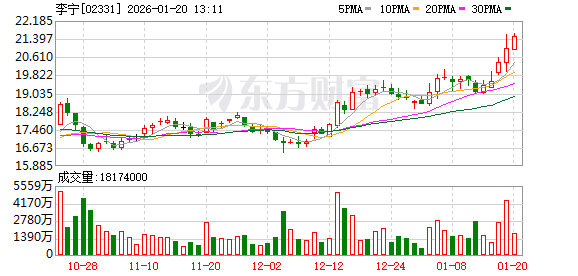
Group 1: Li Ning Company Overview - Li Ning remains optimistic about its future despite a low single-digit decline in retail sales for the fourth quarter ending December 31, 2025, excluding Li Ning YOUNG [2] - The number of sales points in China for Li Ning (excluding Li Ning YOUNG) decreased by 41 to a total of 6,091, with retail points down by 59 and wholesale points up by 33 [3] - Li Ning is investing in flagship stores, launching its first "Dragon Store" in Beijing, which is expected to create a strong synergy with the new "Honor Gold Standard" product line [3] Group 2: Market Trends and Competitors - The trend in the industry shows major brands like Nike upgrading key stores in China, with a reported 25% sales increase in upgraded locations, despite a 16% decline in overall sales [4] - Li Ning's stock price increased by 2.94% to HKD 21 per share on January 19, 2026, indicating positive market sentiment [4] Group 3: Financial Performance and Projections - Li Ning's e-commerce virtual store business remained flat, indicating stability in that segment amidst overall sales declines [2] - The company is focusing on enhancing customer experience through flagship stores, aligning with broader industry trends of investing in experiential retail [4]
可选消费W03周度趋势解析:美联储独立性和未来货币政策稳定性的担忧和要求设置信用卡利率上限,本周海外消费集体下挫-20260118
Haitong Securities International· 2026-01-18 14:35
Investment Rating - The report assigns an "Outperform" rating to multiple companies including Nike, Midea Group, JD Group, and Anta Sports, among others [1]. Core Insights - Concerns regarding the independence of the Federal Reserve and future monetary policy stability have led to a collective decline in overseas consumer sectors [4][11]. - The snack sector has shown resilience, outperforming the MSCI China index, while other sectors such as luxury goods and overseas sportswear have faced significant declines [4][11]. - The report highlights that most sectors are currently undervalued compared to their historical averages, indicating potential investment opportunities [9][15]. Sector Performance Summary - **Snack Sector**: Increased by 1.7%, with Wei Long's revenue guidance for 2026 projected to grow over 15% due to innovative products and channel expansion [6][14]. - **Jewelry Sector**: Rose by 1.6%, driven by Chow Tai Fook's strong operational performance expectations for FY26Q3 [6][14]. - **Overseas Cosmetics**: Gained 1.1%, with E.L.F Beauty's sales growth exceeding previous guidance [6][14]. - **Domestic Sportswear**: Increased by 1.5%, with Li Ning's revenue meeting expectations and a positive outlook for net profit margins [8][14]. - **Pet Sector**: Grew by 0.3%, with strong annual growth despite a slight decline in December [8][14]. - **Gambling Sector**: Slight decline of 0.1%, with Galaxy Entertainment showing resilience as a preferred investment choice [8][14]. - **Domestic Cosmetics**: Decreased by 0.3%, with expectations for recovery in 2026 [8][14]. - **Retail Sector**: Fell by 1.5%, with Target's positive leadership changes noted [8][14]. - **Luxury Goods**: Declined by 2.9%, impacted by market concerns over credit risks following Saks Global's bankruptcy [8][14]. - **Overseas Sportswear**: Experienced a significant drop of 4.0%, with major brands like Nike and Adidas facing declines [8][14]. - **Credit Card Sector**: Decreased by 5.1%, influenced by proposed caps on credit card interest rates [8][14]. Valuation Analysis - The report indicates that the expected PE ratios for various sectors in 2025 are below their historical averages, suggesting potential undervaluation: - Overseas Sportswear: 30.4x (57% of historical average) - Domestic Sportswear: 13.5x (71% of historical average) - Jewelry: 22.8x (43% of historical average) - Luxury Goods: 27.4x (49% of historical average) - Gambling: 16.2x (26% of historical average) - Overseas Cosmetics: 41.0x (61% of historical average) - Domestic Cosmetics: 27.3x (51% of historical average) - Pet Sector: 36.9x (50% of historical average) - Snack Sector: 29.8x (72% of historical average) - Retail: 29.9x (54% of historical average) - US Hotels: 34.8x (21% of historical average) - Credit Cards: 28.3x (54% of historical average) [9][15].
鞋服行业分化显现:国产品牌领跑 传统企业谋转型
Zhong Guo Jing Ying Bao· 2026-01-16 20:15
Core Insights - The Chinese footwear and apparel industry is experiencing significant differentiation in 2025 due to market adjustments and industrial transformations, with the sports and outdoor segment leading the way [1] - Domestic brands are reshaping the market through technological innovation and globalization, while traditional brands struggle with high inventory and rigid channels [1][2] Industry Performance - In the first three quarters, revenue for large apparel enterprises fell by 4.63% year-on-year, with total profits declining by 16.19%, reflecting severe industry pressure [1] - The sports footwear and apparel market is projected to reach a scale of 598.9 billion yuan, with predictions of exceeding 896.3 billion yuan by 2030 [1] Market Dynamics - The market is shifting from incremental expansion to stock competition, with leading companies gaining more influence while smaller brands face shrinking survival space [2] - Traditional brands are struggling, with notable failures such as Fuqiniaos' bankruptcy and Hongqiao's losses, attributed to slow product updates and over-reliance on offline channels [2][3] Brand Competition - Domestic sports brands are gaining market share, with local brands expected to occupy about 60% of the top 20 brands by 2025 [2] - Anta Group reported a 14.3% year-on-year revenue increase to 38.54 billion yuan, surpassing the combined revenue of Li Ning, Xtep, and 361° [2] Consumer Trends - The domestic sports goods market is becoming more concentrated, with the top 20 companies accounting for over 30% market penetration, leading to a widening gap between large and mid-sized firms [3] - Consumers are increasingly favoring high-quality, precise consumption, with a lack of innovation and differentiation leading to brand elimination [9] Channel Innovations - The industry is focusing on two main changes: deep exploration of niche markets and reconstruction of channel models, integrating offline large stores with online instant retail [4][6] - Major brands are opening larger stores, with Anta planning to add 160 "super stores" by 2025, which can achieve 2-2.5 times the sales efficiency of regular stores [5][6] Future Outlook - The industry is expected to see trends of premiumization, globalization, and technological advancement, with a significant reshuffle anticipated [7][8] - Brands that can maintain scale advantages or have precise positioning will likely survive, while small and medium enterprises will face increasing challenges [8]
李宁零售流水微降,多家机构为何上调预期?
Xin Lang Cai Jing· 2026-01-16 09:52
Core Viewpoint - Li Ning has reported a slight decline in retail sales for Q4 2025, indicating operational pressure, yet market sentiment remains positive with several brokerages raising their forecasts for the company [1][2]. Group 1: Company Performance - As of December 31, 2025, Li Ning's retail sales (excluding Li Ning YOUNG) experienced a low single-digit decline year-on-year [1]. - Offline channels, including retail and wholesale, saw a mid-single-digit decline, while e-commerce sales remained flat [1]. - For the first half of 2025, Li Ning's revenue reached 14.817 billion yuan, a year-on-year increase of 3.3%, but net profit fell by approximately 11% to 1.737 billion yuan [3]. Group 2: Market Sentiment and Forecasts - Following the operational update, Li Ning's stock price rose over 5%, reflecting positive market sentiment [1]. - Morgan Stanley forecasts moderate revenue growth for Li Ning in 2025, with net profit margins expected to stabilize at a high single-digit level [1]. - Analysts from浦银国际 suggest that if Li Ning's brand strength improves and sales trends show clear signs of recovery, the stock price could see significant upward momentum [2]. Group 3: Industry Context - The Chinese sports footwear and apparel market is characterized by intense competition, with major brands like Nike and Adidas facing challenges despite their focus on the region [2]. - Domestic brands such as Anta and 361° are maintaining growth, but increased discounting is eroding profit margins across the industry [2]. - Anta's gross margin declined by 0.7 percentage points to 63.4% in the first half of 2025, highlighting the competitive pressures in the market [2]. Group 4: Strategic Initiatives - Li Ning has partnered with the Chinese Olympic Committee, launching new products and stores aimed at capturing the mid-to-high-end market segment [4][6]. - The company is also focusing on outdoor retail spaces to penetrate niche markets, indicating a strategy to attract new customer segments [6]. - With the upcoming 2026 Milan Winter Olympics, Li Ning anticipates increased brand exposure and potential sales growth during this period [8].

美媒:展望2026年的中国,“我非常乐观”
Huan Qiu Wang· 2026-01-15 22:42
Group 1: Consumer Spending Outlook - China's consumer spending is expected to become a stronger growth engine for the economy, with significant interest from global brands and research institutions [1] - Sean Ryan, a market researcher, expresses optimism for consumer growth in 2026 despite economic challenges, highlighting five potential growth areas [1] Group 2: Tourism Industry - The relaxation of visa policies is anticipated to boost inbound tourism significantly by 2026, with many global consumers eager to explore various cities in China [1] Group 3: Sportswear Market - The fitness trend is driving the sportswear market, with both international brands like Adidas and Nike and local brands like Li Ning and Anta performing strongly [2] - Chinese consumers are increasingly focused on fitness, leading to a rise in outdoor activities and sportswear purchases [2] Group 4: Global Expansion of Local Brands - Chinese brands are not only strong in the domestic market but are also accelerating their overseas expansion, with companies like BYD and Xiaomi leading the way [2] - BYD has become a sales leader in Singapore, surpassing established brands like BMW and Toyota [2] Group 5: Value Chain Upgrades - China is achieving value chain upgrades in specialty products, becoming the largest producer of caviar and improving the quality of wines from regions like Ningxia [2] Group 6: Luxury Goods Market - The luxury goods market is expected to rebound in China by 2026, driven by rising incomes among the wealthy due to stock market gains [3] - Increased consumer confidence is likely to lead to higher spending in the luxury sector, with brands like Louis Vuitton and Chanel benefiting [3]
安利股份(300218) - 2026年1月15日投资者关系活动记录表
2026-01-15 13:46
Sales Performance - In 2025, the company experienced mixed sales results across product categories, with stable positions in functional footwear materials and sofa home furnishings, a decline in sports equipment, stable performance in consumer electronics, and growth in automotive interior materials [2][3]. - The automotive interior market is increasingly adopting PU materials, particularly among new energy vehicle manufacturers, due to their superior physical properties and eco-friendliness [2][3]. 2026 Sales Outlook - The marketing department holds an optimistic view for 2026 sales, acknowledging both challenges and opportunities in a complex macroeconomic environment, with a focus on expanding market share and revenue in functional footwear, sofa home furnishings, automotive interiors, and consumer electronics [4]. - The company aims for a steady and moderately positive production and operational plan for 2026, targeting improved performance through market expansion and product development [4]. Key Client Relationships - The company upgraded to a strategic partner with Nike in 2025, leading to increased sales and a goal to further enhance its share within Nike in 2026 [4]. - Collaborations with Adidas are in a growth phase, with production expected to ramp up in 2026, alongside maintaining strong relationships with brands like Puma, Asics, Anta, Li Ning, and Tebu [4][5]. Order and Production Status - The company employs a sales-driven production model, expecting stable order conditions in Q1 2026, with overall production and operations running smoothly [5]. - In the consumer electronics sector, the company is actively expanding its client base and developing new products to meet lightweight and high-performance demands [6]. Market Expansion in Emerging Fields - The company has achieved some production orders in the semiconductor and healthcare materials sectors, although these currently represent a small portion of overall revenue [6]. - There is ongoing development in the field of embodied intelligence, with efforts to optimize sample performance and appearance based on client feedback, although substantial orders have yet to materialize [6]. International Operations - In August 2025, Amway Vietnam launched two remaining production lines, leading to a gradual release of capacity and achieving monthly profitability in Q4 2025, despite an overall loss for the year [6].
