华天科技

Search documents
隐形“芯片大省”,凭什么跟广东“扳手腕”?
Mei Ri Jing Ji Xin Wen· 2025-10-06 10:58
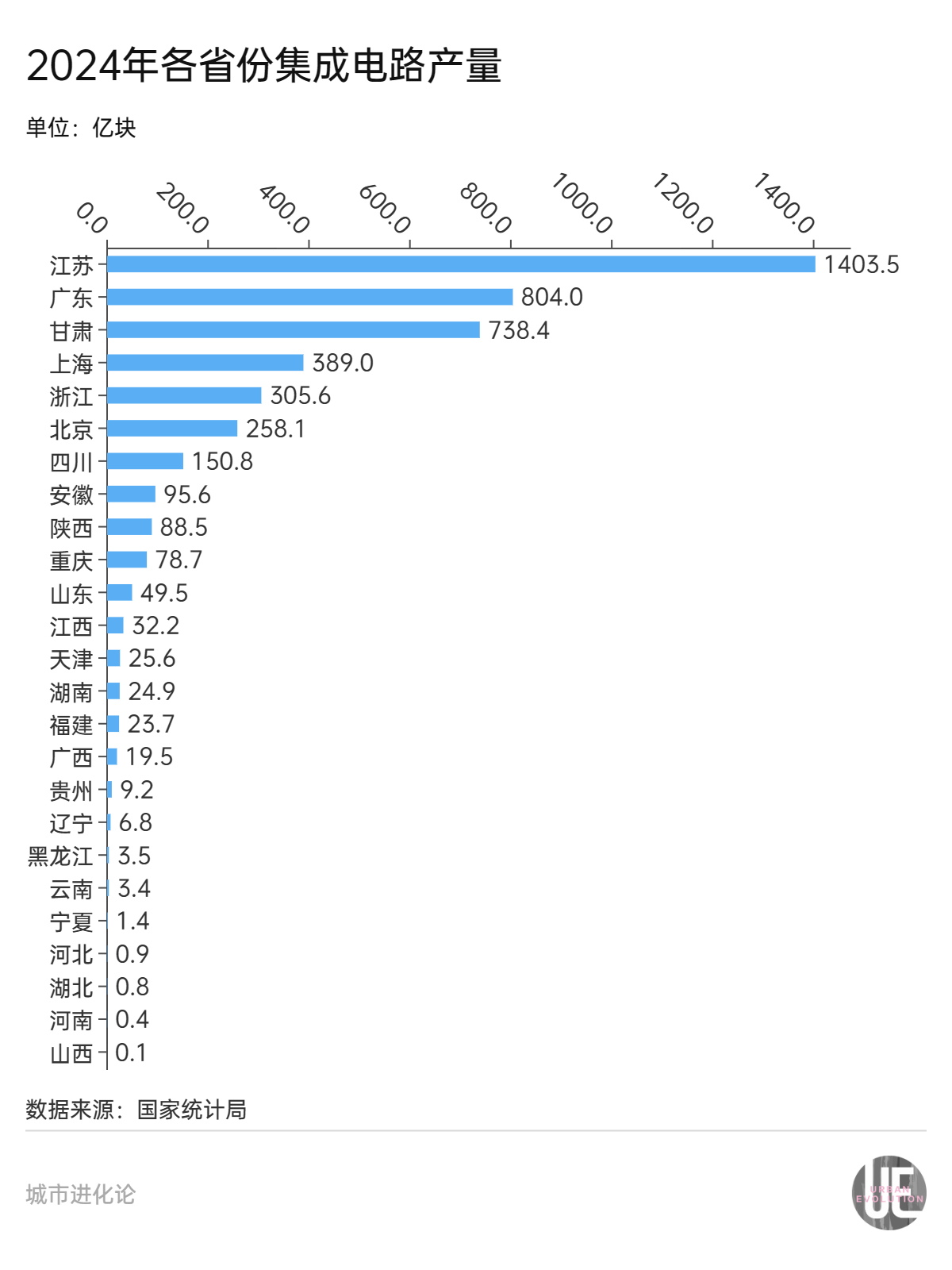
Core Insights - Gansu province, often perceived as underdeveloped, has emerged as a significant player in the semiconductor industry, ranking third in integrated circuit production in China with 73.84 billion units in 2024, only behind Jiangsu and Guangdong [1][4] - Tianshui, a city in Gansu, is responsible for the entire integrated circuit output of the province, surpassing major cities like Shenzhen and Suzhou in production volume [7][12] - Despite high production numbers, Tianshui's integrated circuit industry faces challenges, including a focus on low-end chips and a lack of presence in higher-value rankings [12][15] Production and Ranking - In the first half of 2024, Gansu's integrated circuit production reached 43.112 billion units, briefly overtaking Guangdong to become the second-largest producer in the country [4] - From 2017 to 2022, Gansu consistently held the second position in integrated circuit production, only recently being surpassed by Guangdong [4] - Tianshui's contribution of 73.84 billion units in 2024 exceeds that of Shenzhen (66.91 billion units) and Suzhou (41.5 billion units) [7] Industry Characteristics - Tianshui's integrated circuit industry primarily focuses on packaging and testing, lacking in chip design and manufacturing capabilities, which limits its overall industry value [15] - In 2023, Tianshui's integrated circuit industry output value was only 21.16 billion yuan, significantly lower than cities like Shanghai, Wuxi, and Shenzhen, which have industry values in the range of hundreds of billions [12] - Gansu's "14th Five-Year Plan" for electronic information industry development aims to enhance the integrated circuit sector and target high-end markets, with a focus on AI computing power [15]


业绩黑马崛起,两家公司三季报预增,最高涨幅达253%
Sou Hu Cai Jing· 2025-10-04 22:14
Core Insights - The A-share market experienced significant reactions to the third-quarter earnings forecasts of Brother Technology and Changchuan Technology, indicating a potential shift in investor sentiment and market dynamics [1][3]. Brother Technology - Brother Technology, a leading global producer of Vitamin K3, reported a projected net profit increase of 253.42%, driven by a price surge in its core vitamin segment, with prices rising from 131 RMB per kilogram to 260 RMB per kilogram [3]. - The company has a production capacity of 3,200 tons, accounting for 15% of the global market share, which enhances its profit margins [3]. - Additionally, Brother Technology is entering the new materials sector, specifically in the PEEK market, which is expected to grow at a compound annual growth rate (CAGR) of 16.8% over the next five years, presenting a significant opportunity [3]. Changchuan Technology - Changchuan Technology anticipates a net profit of 827 million to 877 million RMB for the third quarter, representing a year-on-year increase of 131% to 145%, with a quarterly net profit of 400 million to 450 million RMB, marking a potential increase of 215.75% [5]. - The surge in orders is attributed to the booming demand for AI and automotive chips, with major clients like Yangtze Memory Technologies and SMIC expanding production [5]. - The company has developed China's first 12-inch probe station with a precision of 0.1 microns, achieving international standards and securing Tesla's supply chain certification, which establishes a high barrier to entry for competitors [5][7]. Industry Dynamics - The overall gross margin for Changchuan Technology stands at 54.93%, with its machine gross margin at 63.48%, indicating strong profitability and operational efficiency [7]. - Both companies have capitalized on industry trends and possess strong core competencies, with Brother Technology leveraging traditional price increases alongside new material expansions, while Changchuan Technology focuses on domestic semiconductor advancements [7][10]. - The A-share market is witnessing increasing divergence, with institutional and retail investors experiencing growing information and cognitive gaps, emphasizing the importance of identifying industry turning points for investment success [12].
全都在扩产先进封装
半导体行业观察· 2025-10-04 02:14
Core Viewpoint - Advanced packaging has become a critical battleground for wafer foundries and packaging companies, driven by the slowing of Moore's Law and the explosive demand for AI and HPC solutions. Major players globally are accelerating capacity expansion to seize this key industry opportunity [2]. Group 1: Market Trends - The global advanced chip packaging market is expected to grow from $50.38 billion in 2025 to $79.85 billion by 2032, with a compound annual growth rate (CAGR) of 6.8% [2]. - The demand for high-performance, low-power packaging solutions is being fueled by AI large models, autonomous driving, cloud computing, and edge computing [2]. Group 2: TSMC's Strategy - TSMC's advanced packaging revenue is projected to exceed 10% in 2024, surpassing ASE to become the largest packaging supplier globally [4]. - TSMC is investing $100 billion in the U.S. to build three wafer foundries and two advanced packaging plants, with plans to start construction in the second half of next year [6]. - TSMC's advanced packaging technologies include InFO for mobile/HPC chips, CoWoS for logic-HBM integration, and SoW for wafer-level AI systems [4][6]. Group 3: Samsung's Position - Samsung is taking a more cautious approach to advanced packaging, having previously shelved a $7 billion investment plan due to uncertain customer demand [7]. - Recent contracts with Tesla and Apple highlight the necessity for Samsung to reconsider its advanced packaging investments [7][8]. - Samsung's integrated model of "memory + foundry + packaging" is seen as advantageous in the AI era, positioning it to restart large-scale advanced packaging initiatives once customer demand stabilizes [8]. Group 4: ASE's Developments - ASE is enhancing its advanced packaging capabilities in Kaohsiung, focusing on high-end capacities like CoWoS and SoIC [9]. - ASE's new facilities and technology advancements aim to create a flexible multi-package platform to meet diverse customer needs in the AI/HPC wave [10]. Group 5: Amkor's Expansion - Amkor is expanding its advanced packaging facility in Arizona, increasing its land area and total investment to $2 billion, with a focus on high-performance advanced packaging [12]. - The new facility will support TSMC's CoWoS and InFO technologies, crucial for Nvidia and Apple's latest chips [13][14]. Group 6: Domestic Players - Chinese packaging companies like JCET, Tongfu Microelectronics, and Huada Semiconductor are rapidly advancing in the global advanced packaging landscape [16]. - JCET is investing in various advanced packaging technologies and has launched the XDFOI® series for high-density heterogeneous integration [17]. - Tongfu Microelectronics has deepened its partnership with AMD, becoming its largest packaging supplier and achieving significant progress in large-size FCBGA technology [18]. - Huada Semiconductor is exploring CPO packaging technology and has completed various advanced packaging techniques [20]. Group 7: Future Outlook - The focus of competition is shifting from "nano-process" to "system integration," with the U.S. aiming to establish a comprehensive capability in both front-end manufacturing and back-end packaging [22]. - Domestic OSAT companies are transitioning from a "filling" role to a "breakthrough" role, with the potential to compete with international players in specific niches [22].

后摩尔时代,先进封装迈向“C位”
半导体行业观察· 2025-10-04 02:14
Core Viewpoint - The semiconductor industry is transitioning into the "post-Moore era," where traditional scaling methods are becoming less effective due to physical limits and rising costs. Advanced packaging technologies are emerging as a key focus area, driven by the demand for AI chips requiring high performance and low latency [1]. Industry Overview - The global advanced packaging market is projected to exceed $79.4 billion by 2030, with a compound annual growth rate (CAGR) of 9.5% from 2024 to 2030, primarily fueled by AI and high-performance computing demands [1]. - Major players in the advanced packaging sector include TSMC, Intel, and Samsung, each adopting unique competitive strategies to dominate the high-end packaging market [1]. TSMC's Advanced Packaging Strategy - TSMC leads the advanced packaging market with its "3D Fabric" platform, which includes CoWoS, InFO, and SoIC technologies, covering various application scenarios [2]. - The CoWoS technology has evolved to its fifth generation, supporting high-density integration and significantly enhancing memory bandwidth for high-performance computing applications [5]. - InFO technology focuses on cost-sensitive applications, enabling low-cost, thin packaging solutions, while SoIC technology allows for true 3D chip stacking [6][10]. Intel's Advanced Packaging Approach - Intel is developing its advanced packaging capabilities through EMIB and Foveros technologies, targeting high-performance computing and AI markets [7]. - EMIB technology connects bare chips using silicon bridges, while Foveros enables vertical stacking of chips, enhancing flexibility and performance [10]. Samsung's Advanced Packaging Innovations - Samsung is advancing its packaging technologies with I-Cube and X-Cube systems, addressing both 2.5D and 3D IC packaging needs [11]. - The I-Cube technology integrates logic chips and HBM on the same interposer, while the X-Cube technology enhances system integration through vertical electrical connections [12][13]. - Samsung is also focusing on SoP (System on Panel) technology, which aims to challenge TSMC's dominance in high-end AI chip packaging by offering larger integration spaces and lower costs [14][16]. Domestic Players in Advanced Packaging - Chinese companies are making strides in the advanced packaging sector, with a projected market size of 69.8 billion yuan in 2024, driven by firms like Changjiang Electronics Technology, Tongfu Microelectronics, and Huatian Technology [17]. - Changjiang Electronics is recognized as a leader in advanced packaging, leveraging its XDFOI Chiplet platform to support high-density interconnections [18]. - Tongfu Microelectronics has established a strong position through collaborations with AMD, focusing on AI and HPC advanced packaging [20]. - Huatian Technology is expanding its capabilities in advanced packaging through significant R&D investments and partnerships [22]. Future Outlook - The global advanced packaging market is expected to reach $56.9 billion by 2025, surpassing traditional packaging for the first time, with domestic firms poised to capture more market share [32]. - The ongoing development of AI computing chips and the trend towards self-sufficiency in high-end advanced packaging present significant opportunities for domestic players to narrow the gap with international leaders [32].


越亚半导体深交所创业板IPO已受理 拟募资12.2416亿元
智通财经网· 2025-09-30 13:12
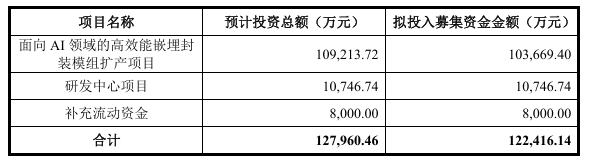
Core Viewpoint - Zhuhai Yueya Semiconductor Co., Ltd. has initiated its IPO on the Shenzhen Stock Exchange's ChiNext board, aiming to raise 1.22416 billion yuan, focusing on advanced packaging materials and products [1][2] Company Overview - Yueya Semiconductor specializes in the R&D, production, and sales of advanced packaging materials, including IC packaging substrates and embedded packaging modules, being one of the earliest domestic producers of IC packaging substrates [1] - The company is recognized for its proprietary technology, particularly the "copper pillar bumping method" for mass production of "chipless" IC packaging substrates, and has successfully launched FC-BGA packaging substrates [1] Market Position - The company has established a strong market position due to its rich customer resources and brand image, with over 100 domestic and international clients, including major players like Infineon, Qorvo, Texas Instruments, and leading domestic semiconductor testing companies [1][2] Future Growth Drivers - The ongoing development in sectors such as 5G, artificial intelligence, big data, and cloud computing is expected to drive further growth in the company's performance [2] Fundraising and Investment Projects - The funds raised will be invested in projects closely related to existing business, specifically in embedded packaging modules and IC packaging substrates [2] - The total expected investment for the projects is approximately 127.96 million yuan, with the majority allocated to the AI-focused embedded packaging module expansion project [3] Financial Performance - The company has shown steady revenue growth, with projected revenue of 810.88 million yuan for the first half of 2025 and a net profit recovery expected in 2024 compared to 2023 [4] - Historical revenue figures indicate a consistent upward trend, with 2023 revenue at 1.705 billion yuan and a net profit of 187.88 million yuan [4]

聚焦硅光CPO、异构集成,2025异质异构集成年会,宁波见!(HHIC 2025)
势银芯链· 2025-09-30 03:31
Core Viewpoint - The article emphasizes the significance of heterogeneous integration technology in the semiconductor industry, particularly in the context of the upcoming 2025 Heterogeneous Integration Conference, which aims to address the challenges and advancements in chip design and manufacturing [2][10]. Conference Background - The conference will focus on the stringent requirements for chip design and manufacturing driven by applications in artificial intelligence, smart driving, and high-performance computing [2]. - Heterogeneous integration has emerged as a crucial direction in the semiconductor field, especially as traditional Moore's Law approaches physical limits [2]. - Ningbo is highlighted as a key city for advanced manufacturing, with the Yongjiang Laboratory serving as a provincial-level innovation platform focusing on electronic information materials and micro-nano device research [2]. Conference Details - The 2025 Heterogeneous Integration Conference is scheduled for November 17-19, 2025, at the Nanyuan Wanghai Hotel, with an expected attendance of 300-500 participants [3][5]. - The conference is co-hosted by TrendBank and Yongjiang Laboratory, supported by local industry associations [3]. Agenda Highlights - The agenda includes a closed-door meeting for industry leaders, government speeches, and a ceremony for the micro-nano processing platform [4][6]. - Various topics will be discussed, including 2.5D/3D heterogeneous integration, MEMS micro-nano processing technology, and advanced packaging solutions [6][7]. Forum Highlights - The conference aims to integrate resources across the entire heterogeneous integration industry chain, fostering collaboration between technology, industry, and capital [11]. - It will involve participation from various stakeholders across the semiconductor supply chain, promoting discussions on future industry trends and development directions [11]. Registration and Fees - The registration fee for the conference is RMB 2500 per person, with early bird discounts available [12]. - Special pricing is offered for students, encouraging broader participation [12]. Participating Companies - A diverse range of companies from the semiconductor industry will be invited, including those involved in EDA tools, chip manufacturing, and advanced packaging [14][15]. Conclusion - The conference aims to facilitate deep research exchanges and industry discussions, promoting technological innovation and application integration in the semiconductor sector [10][11].
全球半导体塑封机行业总体规模、主要企业国内外市场占有率及排名
QYResearch· 2025-09-29 01:56
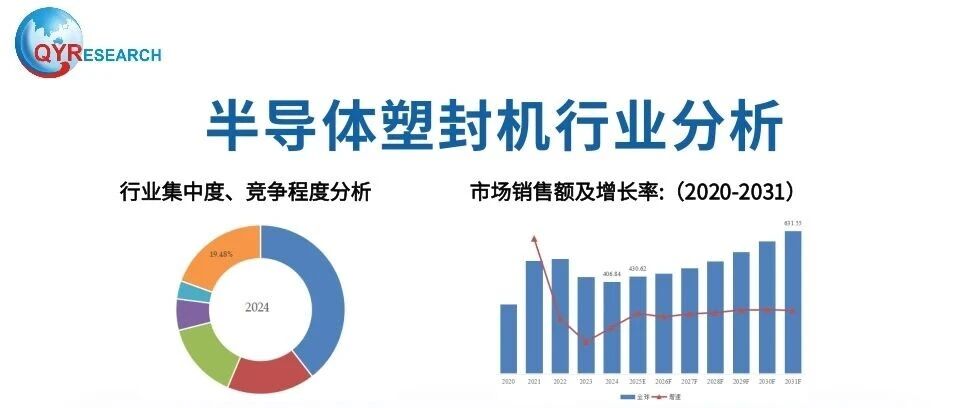
Core Viewpoint - The article discusses the development and trends in the semiconductor packaging industry, particularly focusing on the plastic packaging machines, highlighting the growth potential in the Chinese market and the shift towards advanced packaging technologies. Group 1: Semiconductor Packaging Process - The semiconductor production process includes wafer manufacturing, testing, packaging, and testing, with packaging being crucial for electrical and signal connections as well as physical protection of integrated circuits [1] - The encapsulation process involves injecting packaging materials into molds to protect semiconductor chips, which is essential due to environmental conditions that could lead to chip failure [1] Group 2: Industry Development Overview - China is actively promoting the integrated circuit industry as a strategic pillar, with a focus on high-quality development and self-sufficiency in manufacturing processes, equipment, and materials [4] - The domestic integrated circuit market is experiencing steady growth, supported by strong internal demand and a clear trend towards domestic substitution, despite global economic fluctuations [4] Group 3: Characteristics of the Semiconductor Packaging Machine Industry - The trend towards high reliability in packaging machines is becoming critical, especially for automotive and industrial-grade chips, where performance metrics like temperature control and operational consistency are essential [6] - Advanced packaging technologies are driving the need for equipment upgrades, with T-Molding and C-Molding market shares expected to diverge [7][8] Group 4: Automation and Localization - The introduction of automation and intelligence in packaging machines enhances efficiency and consistency, reducing reliance on manual labor [9] - The demand for domestic equipment is increasing as local semiconductor companies expand their production capacities, with several emerging firms gaining market share [9] Group 5: Market Size and Forecast - The global semiconductor packaging machine market is projected to reach USD 406 million in 2024, with a compound annual growth rate (CAGR) of 6.59% expected until 2031 [11] - The Chinese market is anticipated to grow from USD 179 million in 2024 to USD 275 million by 2031, representing approximately 44% of the global market [11] Group 6: Market Share and Key Players - Major players in the international market include Towa, Besi, ASMPT, and Sanan Optoelectronics, with the top five companies holding about 80.79% of the market share [15] - In the Chinese market, the leading companies also include Towa, Besi, ASMPT, and Sanan Optoelectronics, with the top five accounting for approximately 77.24% of the market [15] Group 7: Policy Support - The Chinese government has implemented various policies to support the semiconductor industry, including tax incentives for companies involved in integrated circuit design, equipment, materials, packaging, and testing [16][17][18]
存储市场涨价潮再升级 龙头股年内涨超3倍 产业链名单曝光
2 1 Shi Ji Jing Ji Bao Dao· 2025-09-28 11:56
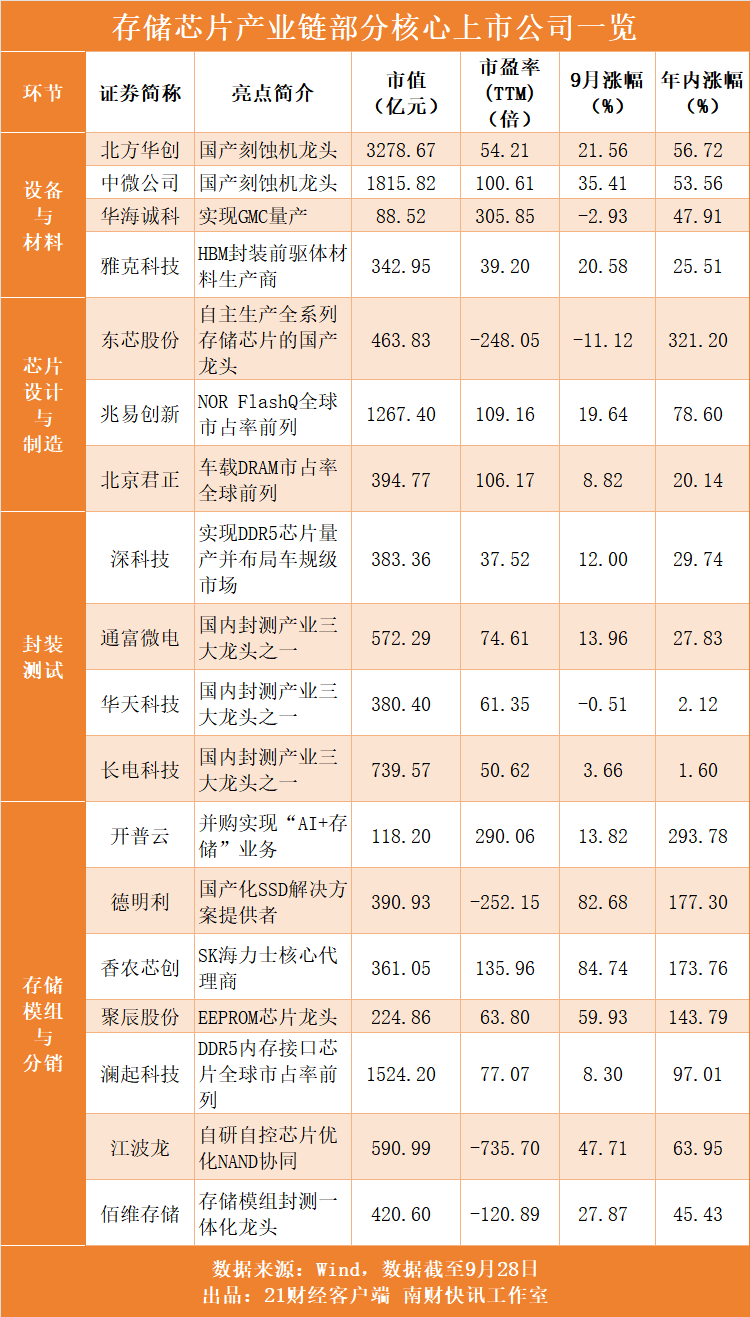
在此背景下,多家机构认为,四季度存储价格或将延续涨势。信达证券预测,AI产品增长影响存储供需两 端,四季度DRAM和NAND价格预计延续增长态势。TrendForce预估,第四季度旧制程DRAM整体价格环 比增长8%~13%,HBM价格环比增长13%~18%;NAND Flash 第四季度各类产品合约价或将全面上涨,平 均涨幅预计达到5%~10%。此外,摩根大通最新研报称,DRAM将迎四年定价上行周期。 存储市场缺货潮再蔓延,多家机构预测第四季度存储价格或将延续涨势。 近期,全球多家存储厂商相继开启调价。据悉,9月以来,闪迪(Sandisk)、美光、三星、西部数据等存 储巨头已先后宣布涨价。 头部厂商的涨价潮蔓延至下游市场,多家模组厂商加紧备货。存储模组大厂威刚日前宣布,自29日起停止 DDR4报价,DDR5与NAND闪存优先供应主要客户;NAND闪存控制芯片大厂群联则已在近日恢复部分报 价,价格涨幅约10%。 探究本轮涨价潮的原因,市场分析认为,本轮涨价潮背后是存储行业供需两端的重构。开源证券指出,在 供应端,今年以来各大存储厂商均发布减产计划,存储市场库存去化明显;在需求端,国内外大厂加大AI 资本投入, ...
研报掘金丨西部证券:维持迈为股份“买入”评级,前瞻布局HJT、钙钛矿叠层整体解决方案
Ge Long Hui A P P· 2025-09-28 09:07
Core Viewpoint - The report from Western Securities highlights that Maiwei Co., Ltd. is focusing on two main categories: etching equipment and thin film deposition equipment, achieving key breakthroughs through differentiated technological innovation [1] Group 1: Semiconductor Equipment - The company has successfully entered mass production stages with its high selectivity etching equipment and atomic layer deposition equipment, gaining traction with major wafer fabs and storage manufacturers [1] - Maiwei Co., Ltd. provides complete process equipment solutions for high-precision processing stages such as wafer cutting, grinding, polishing, and bonding [1] Group 2: Partnerships and Collaborations - The company has established close collaborations with leading domestic packaging enterprises, including Changdian Technology, Tongfu Microelectronics, Huada Semiconductor, Shenghe Jingwei, and Yongxi Electronics [1] - In the display panel sector, the company serves major domestic OLED panel manufacturers such as Visionox, BOE, and Tianma [1] Group 3: Future Developments - Maiwei Co., Ltd. is advancing into next-generation photovoltaic equipment, with a forward-looking layout for HJT and perovskite stacked overall solutions [1] - The company aims to set industry benchmarks in the segmented field of the broader semiconductor industry by adhering to top industry standards and continuous exploration [1] Group 4: Investment Rating - The company maintains a "Buy" rating according to the report [1]


继续聊聊国家集成电路大基金(原创)
叫小宋 别叫总· 2025-09-27 03:02
Investment Strategy - The first phase of the National Integrated Circuit Industry Investment Fund (大基金一期) was established in 2014 with a registered capital of 98.7 billion, and actual funds received were approximately 120 billion [3] - The second phase (大基金二期) was established in 2019 with a registered capital of 204.2 billion, and actual funds received were around 220 billion [3] - Significant investments from both phases were directed towards wafer manufacturing, including companies like SMIC, Hua Hong Semiconductor, and Changjiang Storage [3] - Investments also extended to the packaging segment, targeting companies such as Tongfu Microelectronics and Jiangsu Changjiang Electronics Technology [5] - The strategy focused on addressing the largest shortfall in the semiconductor industry, which is manufacturing, while also investing in the relatively stronger area of chip design [7] Management - The management of both phases is handled by Huaxin Investment Management Co., Ltd. (华芯), established in 2014 specifically for managing the fund [9] - The largest shareholder of Huaxin is the National Development Bank, which is also a significant contributor to the fund [9] - In the first phase, the Ministry of Finance was the largest contributor (36%), followed by the National Development Bank (22%) [10] - By the second phase, the Ministry of Finance remained the largest contributor (11.02%), with the National Development Bank as the second largest (10.78%) [10] - The first phase also involved Huaxin managing several market-oriented semiconductor funds to mitigate risks and enhance investment strategies [10] - By the second phase, Huaxin's investment capabilities had matured, managing 220 billion solely without additional fund managers [11]