红旗连锁

Search documents
“不眠生意”成为消费新蓝海,谁是下一个赢家?
Sou Hu Cai Jing· 2025-11-19 15:25
Core Viewpoint - The rise of 24-hour business operations in various sectors, particularly in food and beverage, reflects changing consumer demands and urban lifestyles, with a significant focus on nighttime consumption and emotional value rather than just functional value [4][8]. Group 1: Night Economy Trends - Many businesses, including tea shops and convenience stores, are extending their operating hours to cater to the growing demand for nighttime services, with some establishments reporting a 1.8 times increase in nighttime customer spending compared to daytime [5][6]. - The Jiangsu province has implemented policies to promote the night economy, encouraging businesses to adapt their operations to meet the needs of night consumers [4][5]. - The nighttime consumer base includes night shift workers, students, and young people, indicating a shift in lifestyle and work patterns that necessitate 24-hour services [7][8]. Group 2: Consumer Behavior and Preferences - Consumers are increasingly seeking emotional fulfillment through their purchases, with nighttime offerings providing a sense of comfort and companionship [8][9]. - A significant portion of consumer spending, approximately 60%, occurs during nighttime hours, highlighting the importance of this market segment [7][8]. - The demand for convenience and immediate gratification is driving the growth of nighttime consumption, with many consumers valuing the ability to access services at any hour [8][9]. Group 3: Operational Challenges - The 24-hour business model faces challenges such as high operational costs, including employee wages and utilities, which can lead to financial strain if nighttime revenues do not meet expectations [9][11]. - Employee turnover in night shifts poses a challenge for maintaining service quality and increasing recruitment and training costs [11]. - The unpredictability of nighttime customer traffic creates additional risks for businesses, necessitating strategies to cultivate stable nighttime consumer habits [9][12]. Group 4: Innovative Solutions - Some businesses are innovating by creating unique consumer spaces, such as cafes with study areas, to attract a diverse clientele during nighttime hours [12]. - Simplifying product offerings during nighttime operations can help reduce waste and streamline service, allowing businesses to operate more efficiently [12]. - Collaboration between businesses and government is essential to support the growth of the night economy, ensuring that urban planning and policies align with the needs of nighttime consumers [12].


估值全球最低,中国消费要反转了?瑞银:Alpha藏在这些赛道里
Hua Er Jie Jian Wen· 2025-11-19 06:27
Core Viewpoint - The valuation of China's consumer sector has reached a global low, presenting significant investment opportunities in specific segments and companies, as highlighted in UBS's latest report [1][2]. Valuation Insights - The consumer sector's valuation is low both historically and in global comparisons, with the 12-month forward P/E ratio for discretionary consumption approximately 40% lower than the global average, and the ratio for staples at a 10% discount [2]. Performance Metrics - The MSCI China discretionary consumption index has recorded a 35% year-to-date return, aligning closely with the 38% increase in the MSCI China index, indicating higher investor expectations in travel and entertainment sectors compared to the 10% rise in staples [3]. Business Model Innovations - UBS emphasizes the importance of business model innovation for identifying Alpha opportunities, particularly through the adoption of asset-light franchise models, which are helping some restaurant brands overcome traditional expansion barriers [3]. - Yum China is highlighted as a case study, with UBS predicting its store count could reach 30,000 by 2030, driven by lower-capital investment store formats that significantly reduce entry barriers for franchisees [3]. - UBS has also raised the long-term potential for Mixue Ice Cream to 80,000 stores, citing significant opportunities in lower-tier cities [3]. New Market Opportunities - UBS identifies structural growth potential in new markets, such as whiskey and trendy toys, as key themes for creating Alpha [4]. - The whiskey market in China is experiencing a shift in consumer preferences, particularly among women and young middle-class individuals in lower-tier cities, with UBS upgrading Baijiu Holdings to a "buy" rating due to its advantageous position in this growing segment [4]. - Pop Mart, a trendy toy company, reported a 245%-250% year-on-year revenue increase in Q3, with strong performance in both domestic and international markets, particularly in the U.S. [4]. Resilience in Pet Economy - The pet food market in China is projected to grow by 8.5% year-on-year in 2024, outpacing the overall pet industry growth, with increasing consumer confidence in domestic brands providing a solid growth foundation for local leaders like Zhongchong Co., which UBS rates as a "buy" [5].
商贸零售行业跟踪周报:2025年双十一数据复盘:综合电商平台稳健增长,即时零售表现亮眼-20251118
Soochow Securities· 2025-11-18 12:00
Investment Rating - The report maintains an "Overweight" rating for the retail industry [1] Core Insights - The 2025 Double Eleven sales period saw a total e-commerce sales of approximately 1,695 billion yuan, representing a year-on-year increase of 14.2%. The comprehensive e-commerce platforms accounted for 1,619.1 billion yuan, with a year-on-year growth of 12.3% [4][9] - Instant retail showed remarkable growth, with sales reaching 67 billion yuan during the Double Eleven period, marking a year-on-year increase of 138% [10][15] - Key product categories such as digital appliances, food and beverages, furniture, and pet products experienced significant growth, with pet sales reaching 9.2 billion yuan, up 59% year-on-year [15][16] Summary by Sections Weekly Industry Viewpoint - The Double Eleven sales period was extended, contributing to steady growth in total e-commerce sales. The sales period for 2025 was from October 7 to November 11, compared to October 14 to November 11 in 2024 [9] - Instant retail emerged as a highlight, with substantial growth compared to traditional e-commerce formats [10] Weekly Market Review - From November 10 to November 16, the Shenwan retail index increased by 4.06%, while the Shanghai Composite Index decreased by 0.18% [17] - Year-to-date performance shows the Shenwan retail index up by 8.43%, compared to a 19.06% increase in the Shanghai Composite Index [17][22] Company Valuation Table - The report includes a detailed valuation table for various companies in the retail sector, with specific metrics such as market capitalization and P/E ratios [24][25]


从茶饮热销到潮玩圈粉
Ren Min Ri Bao Hai Wai Ban· 2025-11-18 07:40
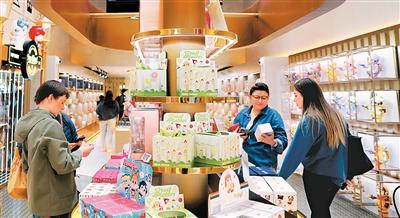
Group 1: Chinese Beverage Brands - Chinese beverage brands such as Bawang Chaji, Mixue Ice City, Nayuki, and Heytea are expanding internationally, leveraging a "culture + product" model to stand out in overseas markets [2] - Bawang Chaji's stores in Malaysia feature design elements like wooden furniture and ink wash wall decorations, creating a "Chinese aesthetic" ambiance [2] - The popularity of Chinese milk tea in Malaysia is attributed not only to taste but also to brand image, aesthetic representation, and cultural innovation [2] Group 2: Chinese Cultural Influence in Vietnam - Chinese historical dramas have gained significant popularity in Vietnam, with many young viewers actively discussing and engaging with the content [3] - Vietnamese youth are increasingly interested in Chinese culture, as evidenced by the formation of clubs dedicated to watching Chinese historical dramas [3] - The themes of loyalty, filial piety, and national sentiment in Chinese dramas resonate deeply with Vietnamese audiences [3] Group 3: Chinese Toy Brands - Chinese toy brand Pop Mart has opened 10 stores in major UK cities and plans to add 12 more by the end of 2026, indicating strong market expansion [4] - The brand Miniso has seen a significant increase in sales in the UK, with one blind box selling every three minutes, leading to a 63% sales growth over the past year [5] - Chinese toys are increasingly incorporating cultural elements, with brands like 52TOYS achieving success in Thailand through unique designs based on Chinese cultural symbols [5] Group 4: Market Trends and Consumer Engagement - The rise of Chinese trendy toys has created a fashion wave, appealing to emotional needs of consumers, which is a departure from traditional Chinese brands focused on electronics and automobiles [5] - The success of these brands in international markets highlights a new trend in cultural exchange and consumer engagement through innovative product offerings [5]


淘宝团购试水受挫,外卖从冲单量转向冲单价
Xin Lang Ke Ji· 2025-11-18 05:12
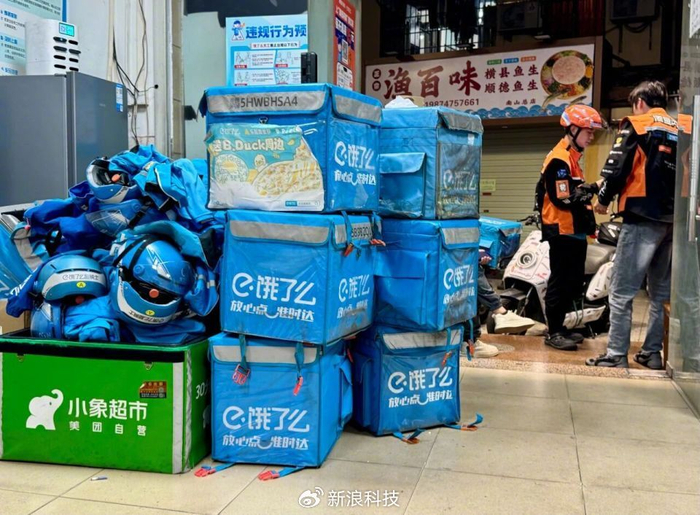
Core Insights - The group buying business is no longer a focus for Taobao Flash Sale, with operations shifting to Gaode due to underperformance in initial trials [1][3][4] - Taobao Flash Sale is now prioritizing high-value orders (over 30 yuan) instead of increasing order volume, aiming to compete with Meituan's market share in this segment [4][5][6] Group 1: Business Transition - Taobao Flash Sale's group buying operations were initially tested in cities like Shanghai, Shenzhen, and Jiaxing but failed to gain traction, with reports of zero orders during the trial [1][3] - The shift of group buying operations to Gaode was confirmed by employees, indicating a strategic pivot back to home delivery services [4][5] - The focus on high-value orders is a response to Meituan's dominance in the market, where it holds over 70% market share for orders above 30 yuan [4][5] Group 2: Market Dynamics - Taobao Flash Sale achieved a peak average order volume of 80 million per week in August, but this has since declined by 20% as the platform reduces low-price subsidies [5][6] - The transition to high-value orders may lead to higher potential profit margins for both the platform and merchants, but it risks losing the order volume achieved in August [5][6] - Competitors like Meituan have maintained stable order volumes, indicating a potential challenge for Taobao Flash Sale in sustaining its market position [5][6] Group 3: Operational Challenges - Taobao Flash Sale's operational efficiency and merchant engagement still lag behind Meituan, with reports of frequent changes in business development personnel leading to instability in merchant relationships [11][14] - Merchants have expressed concerns over the lack of consistent support and communication from Taobao Flash Sale compared to Meituan, which has a more stable business development team [13][14] - The shift in strategy towards high-value orders has led to a need for merchants to adapt, with some struggling to meet the new expectations set by the platform [6][11]


瑞幸拟赴美上市!CFO安静履历亮眼
Sou Hu Cai Jing· 2025-11-17 10:19
Core Viewpoint - Luckin Coffee, after overcoming a significant financial scandal, is planning to return to the U.S. capital market with a strong operational performance and a large number of stores [3][4][6]. Group 1: Company Background - Luckin Coffee was founded in 2017 and quickly reached a valuation of $4 billion within two years through aggressive subsidies and rapid store openings [3]. - The company went public on NASDAQ in May 2019, achieving the fastest IPO record globally [3]. - In 2020, Luckin faced a financial scandal, admitting to fabricating transactions and inflating sales figures, leading to an 80% drop in stock price and eventual delisting from NASDAQ [4]. Group 2: Financial Performance - As of Q2 2025, Luckin reported total net revenue of 12.359 billion yuan, a year-on-year increase of 47.1%, and a net profit of 1.251 billion yuan, up 43.6% [6]. - The company has expanded internationally, entering markets in Singapore, Malaysia, and the U.S., with a total of 89 overseas stores and 26,206 global stores as of the end of Q2 [6]. - Luckin aims for annual revenue exceeding 50 billion yuan in 2025 [6]. Group 3: Market Position - Luckin Coffee has become a leading player in the Chinese coffee market, holding approximately 35% market share, significantly ahead of Starbucks at 14% and Luckin's competitor, Kudi Coffee, at 18% [7]. - The rise of local coffee brands, such as Manner and Lucky Coffee, poses competitive pressure on Luckin, particularly in urban areas and lower-tier markets [8]. Group 4: Management and Governance - The company appointed a new CFO, Ms. An Jing, who has over 17 years of experience in finance and management, particularly in technology companies [9][11]. - To successfully return to the U.S. market, Luckin must meet stringent auditing and internal control requirements set by the PCAOB, which will be crucial for rebuilding investor confidence [11].


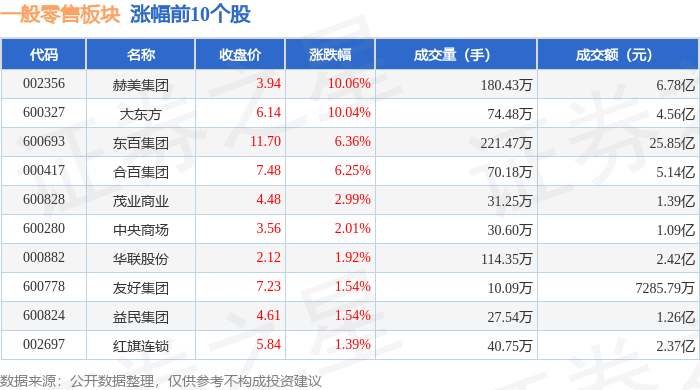
一般零售板块11月17日涨0.63%,赫美集团领涨,主力资金净流出6.78亿元
Zheng Xing Xing Ye Ri Bao· 2025-11-17 08:49
Core Viewpoint - The general retail sector experienced a slight increase of 0.63% on November 17, with significant gains from companies like Hemei Group, while the overall market indices showed a decline [1]. Group 1: Market Performance - The Shanghai Composite Index closed at 3972.03, down 0.46% - The Shenzhen Component Index closed at 13202.0, down 0.11% [1]. Group 2: Individual Stock Performance - Hemei Group led the gains with a closing price of 3.94, up 10.06% with a trading volume of 1.8043 million shares and a transaction value of 678 million yuan - Other notable performers included: - Dae Oriental: closed at 6.14, up 10.04% - Dongzi Group: closed at 11.70, up 6.36% - Hebai Group: closed at 7.48, up 6.25% [1]. Group 3: Capital Flow Analysis - The general retail sector saw a net outflow of 678 million yuan from major funds, while retail investors contributed a net inflow of 756 million yuan - Notable individual stock capital flows included: - Hemei Group: net outflow of 57.44 million yuan from major funds - Hebai Group: net inflow of 30.83 million yuan from major funds [2][3].


巴菲特时代过去了,在恶劣的竞争中,必须找到商业模式的这“三个问题”
3 6 Ke· 2025-11-17 02:54
Core Insights - The article discusses the importance of understanding business models in the context of investment analysis, particularly in the A-share market, emphasizing the need to adapt beyond traditional frameworks like those of Warren Buffett [1] Group 1: Business Models in the Tea Beverage Industry - The two tea brands, Mixue Ice Cream and Nayuki, operate under fundamentally different business models, with Mixue focusing on low-cost products and profitability, while Nayuki has reported significant losses despite high revenue [2][3] - Nayuki's business model is centered around a direct sales approach, prioritizing store locations and customer experience, which has led to operational challenges and losses [3] - In contrast, Mixue's franchise model relies on providing raw materials and support to franchisees, allowing for easier scalability and profitability [4][6] Group 2: Efficiency and Cost Management - Mixue achieves cost efficiency through lower material costs and economies of scale, allowing it to maintain competitive pricing and profitability [8][9] - The franchise model of Mixue is particularly suited to the Chinese market, leveraging a vast pool of potential franchisees who seek stable business opportunities [4][6] - The operational strategy of Gu Ming, another tea brand, focuses on supply chain efficiency, ensuring rapid delivery and fresh ingredients, which enhances its competitive edge in lower-tier markets [10] Group 3: Live Streaming E-commerce Models - The article outlines two primary business models in live streaming e-commerce: brand self-broadcasting and MCN (Multi-Channel Network) models, each with distinct core resources and key operations [11][13] - The self-broadcasting model emphasizes long-term operations and customer loyalty, while the MCN model relies on leveraging popular influencers for sales [13][14] - The challenges faced by traditional live streaming models highlight the need for companies to innovate and adapt their business strategies to maintain competitiveness [14][24] Group 4: Evolution of Oriental Selection - Oriental Selection has transitioned to a self-built supply chain model, integrating cultural elements with agricultural products to create a unique market position [18][20] - The company's shift towards self-operated products and direct supply chain management has resulted in significant revenue growth and improved profit margins [21][22] - Despite challenges following the departure of a key influencer, the company continues to pursue its strategic goals, focusing on building a sustainable business model [19][24]

零售概念快速拉升 大东方涨停
Xin Lang Cai Jing· 2025-11-17 01:56
Group 1 - The retail sector experienced a rapid increase, with companies like Dongfang rising to the daily limit, and Dongbai Group increasing by over 9% [1] - Other companies in the retail sector, including Bubugao, Hebai Group, Guoguang Chain, and Hongqi Chain, also saw gains [1] - The State Council's executive meeting emphasized enhancing supply-demand adaptability as an effective measure to unleash consumption potential and facilitate economic circulation [1] Group 2 - According to the National Bureau of Statistics, the total retail sales of consumer goods in October reached 46,291 billion yuan, representing a year-on-year growth of 2.9% [1]
聚焦六大领域,定安诚邀企业布局
Hai Nan Ri Bao· 2025-11-17 01:12
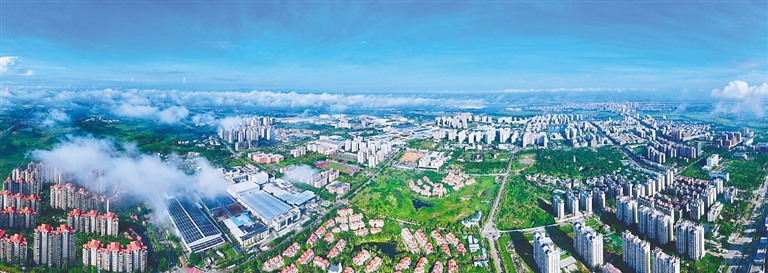
Core Insights - The article highlights the strategic development plan of Ding'an, focusing on attracting investments in six key industries, leveraging its geographical and policy advantages [4]. Group 1: Key Industries - The six targeted industries for investment include high-end food processing, green building materials, pharmaceuticals and medical devices, commercial supply chains, inspection and testing, and cultural and tourism consumption [4][5]. Group 2: High-end Food Processing - The high-end food processing sector has established a leading industry cluster centered around Mixue Ice City, with fresh coconut milk production accounting for over 50% of the national market [4]. - Future plans include promoting integrated development of food processing, science, and trade, expanding research and production of new tea beverages, and developing functional foods and pet foods [4]. Group 3: Green Building Materials - The green building materials sector has formed a leading industry cluster with companies like China Resources and Liansu Group [5]. - Key development areas will focus on prefabricated buildings, sand and gravel aggregates, environmentally friendly asphalt, and new green building materials [5]. Group 4: Pharmaceuticals and Medical Devices - The pharmaceutical and medical device sector is led by Baimaike, focusing on medical device manufacturing, traditional Chinese medicine processing, and pharmaceutical supply chains [4]. - The goal is to create an integrated industry cluster encompassing research, manufacturing, and distribution [4]. Group 5: Commercial Supply Chains - The commercial supply chain sector is spearheaded by companies like Xuewang and Meiyijia, targeting both domestic and international markets [5]. - Development will focus on international trade distribution for products like coffee, coconut, and dairy, as well as establishing supply chain sorting centers for local food and pharmaceuticals [5]. Group 6: Inspection and Testing - Ding'an is accelerating the establishment of an inspection and testing certification industry, concentrating on tropical specialty agriculture, food processing, and import-export trade [5]. - The aim is to create a concentrated area for inspection and testing certification, enhancing industry clustering effects [5]. Group 7: Cultural and Tourism Consumption - The cultural and tourism consumption sector will focus on integrating culture, sports, and tourism, with an emphasis on sports tourism, cultural tourism, health tourism, industrial tourism, and rural tourism [5].