今世缘

Search documents
“徽酒老二”迎驾贡酒陷内外困局:省内失守、省外缩水,年度目标恐难达
Guo Ji Jin Rong Bao· 2025-09-05 13:29
Core Viewpoint - Yingjia Gongjiu, once considered a "dark horse" in the liquor industry, has reported a significant decline in both revenue and profit for the first half of the year, marking the first time in five years that both metrics have decreased simultaneously [1] Financial Performance - In the first half of the year, Yingjia Gongjiu's revenue was 3.16 billion yuan, a year-on-year decrease of 16.89%, while net profit attributable to shareholders was 1.13 billion yuan, down 18.19% [1] - The company's revenue growth rates for each quarter of 2024 were 21%, 19%, 1.6%, and -5%, indicating a gradual contraction [3] - The total revenue for the previous year was 7.344 billion yuan, with a net profit of 2.589 billion yuan, but the company failed to meet its operational targets for the year [4] Market Dynamics - The decline in performance is attributed to a combination of external factors, including weak consumer demand and ongoing adjustments in the liquor industry [1][5] - The company's mid-to-high-end liquor segment saw revenue of 2.537 billion yuan in the first half, down approximately 14%, while ordinary liquor revenue fell by 32.47% to 452 million yuan [5] - The gross profit margin for the second quarter was 68.33%, a decrease of 2.8 percentage points, marking the lowest in nearly nine quarters [5] Regional Performance - Yingjia Gongjiu's revenue in its home province of Anhui has also seen a rare decline, with a 7.7% drop in the first quarter and a 12% decrease in the first half, accounting for over 60% of total revenue [8][9] - The company faces stiff competition in both provincial and external markets, with its provincial market share shrinking due to the dominance of Gujing Gongjiu [10][12] Future Outlook - The company has set a target for 2025 to achieve revenue of 7.6 billion yuan, a year-on-year increase of approximately 3.49%, and a net profit of 2.62 billion yuan, a growth of about 1% [12] - Contract liabilities, viewed as a future revenue indicator, stood at 440 million yuan, down about 5% year-on-year, suggesting potential further slowdown in growth [12]



食品饮料周报:名酒保住增长,白酒业即将穿越周期?
Zheng Quan Zhi Xing· 2025-09-05 07:24
Core Viewpoint - The food and beverage industry is experiencing a mixed performance, with some companies showing growth while others face challenges due to market adjustments and inventory pressures [2][8][9]. Market Performance - The Shanghai and Shenzhen 300 Index fell by 0.81%, while the Shenwan Food and Beverage Index decreased by 1.5% during the specified period [1]. - The top five gaining stocks included Huanlejia, Gaisi Food, Qianwei Yangchu, Baihe Co., and Huifa Food [1]. Institutional Insights - Open-source Securities suggests focusing on three lines: national mid-to-high-end recovery, regional leaders, and high-end liquor valuation recovery [2]. - Key companies to watch include Shede Liquor, Shanxi Fenjiu, Gujing Gongjiu, and Moutai, with a focus on new consumption trends and channels [2]. - Huachuang Securities recommends exploring new opportunities in the health product sector, particularly H&H International and Xianle Health [3]. Industry Trends - The liquor industry is undergoing a rational adjustment, with companies like Moutai and Zhenjiu Liudu exploring new paths to enhance market reach [7]. - The white liquor sector is seeing a significant inventory issue, with 20 listed liquor companies holding nearly 170 billion yuan in inventory, leading to cash flow pressures for some mid-tier companies [9]. Company Developments - Wuliangye has launched a promotional campaign allowing car buyers to purchase its liquor at a 25% discount [10][11]. - Yingjia Gongjiu has established a new sales company to enhance its market presence [12]. - Jiusuan Co. has adjusted its growth strategy, focusing on maintaining market share rather than absolute growth [13]. Macro Events - The Chinese warehousing index for August was reported at 49.3%, indicating a decline in new orders and a slowdown in goods turnover, which may impact the food and beverage sector [4]. - The emergence of H5N1 avian influenza in the UK could have implications for poultry-related food products [5]. Financial Metrics - The financial performance of the liquor industry shows a significant disparity, with 15 out of 21 listed companies reporting revenue declines, while only six managed to achieve growth [8]. - The industry is expected to face continued challenges, with some analysts predicting a prolonged adjustment period before recovery [8]. Inventory and Capacity Issues - Many liquor companies are struggling with high inventory levels, with some facing a six-year inventory turnover cycle, which could further strain cash flow [9]. - Despite low capacity utilization rates, some companies continue to expand production, raising concerns about future inventory management [9].




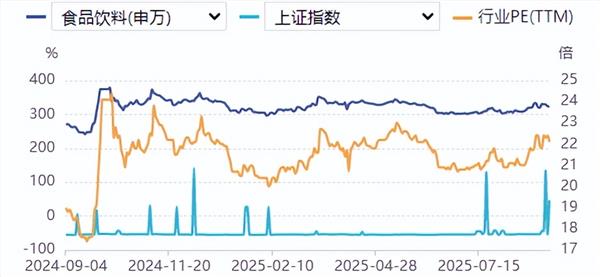
泸州老窖“主动降速”,存货5年翻了3.6倍
阿尔法工场研究院· 2025-09-05 00:07
Core Viewpoint - Luzhou Laojiao, a prominent player in the liquor industry, has shown signs of slowing growth since last year, leading to a decline in both revenue and net profit in the first half of 2025, indicating potential challenges ahead for the company [4][8]. Revenue and Profit Analysis - In the first half of 2025, Luzhou Laojiao reported revenue of 16.454 billion yuan, a decrease of 2.67% year-on-year, and a net profit of 7.663 billion yuan, down 4.54% [11]. - The company's revenue growth target for 2024 was set at 15%, but it only achieved a growth of 3.19%, indicating a significant shortfall [11]. - The company has not set specific revenue targets for 2025, instead opting for a vague goal of "steady progress," which reflects the current market uncertainties [11][13]. Market Position and Competitiveness - Luzhou Laojiao's revenue decline is relatively moderate compared to other liquor companies, ranking seventh in revenue decline among 20 listed liquor firms [13]. - The company’s performance in the second quarter of 2025 saw a revenue drop of 7.97%, placing it eighth among its peers [13]. - The overall liquor industry has been experiencing a downturn since last year, with many companies, including Luzhou Laojiao, facing challenges unrelated to any specific regulations [17]. Profitability Trends - Luzhou Laojiao's gross profit margin has been on an upward trend over the past decade, reaching 88.57% in the first half of 2024, but this trend has started to decline since last year [21][23]. - The company's net profit margin has also seen a consecutive decline over the past two years [23]. Inventory and Cash Flow - Despite a decline in revenue, Luzhou Laojiao's contract liabilities have increased, indicating a stable level of prepayments from distributors, with balances rising from 1.934 billion yuan in 2020 to 3.529 billion yuan in 2025 [26][30]. - However, the company's inventory has surged from 3.8 billion yuan in mid-2020 to 13.785 billion yuan in mid-2025, raising concerns about potential overstock issues [30]. - The inventory turnover days have reached 1,152 days, suggesting inefficiencies in inventory management [32]. Sales and Market Strategy - In the first half of 2025, Luzhou Laojiao's mid-to-high-end liquor revenue was 15.048 billion yuan, a decrease of 1.09%, while sales volume increased by 13.33% [39]. - The company is adopting a strategy of increasing sales volume at the expense of price, which has negatively impacted its product pricing and gross margins [39]. - Luzhou Laojiao is focusing on product innovation and expanding its market presence, particularly in the competitive mid-range liquor segment, to enhance its competitiveness [41].

今世缘谈不再纠结于业绩绝对增长:整体降度是大势所趋
Cai Jing Wang· 2025-09-04 23:51
Core Viewpoint - The company is shifting its focus from absolute growth targets to enhancing market share, adapting to the current market environment and consumer trends in the liquor industry [3][4]. Group 1: Company Strategy - The company has adjusted its annual performance goals, emphasizing relative market positioning rather than fixed numerical growth targets, which reflects a broader trend in the liquor industry [2][3]. - The management highlighted that the initial economic indicators set at the beginning of the year were based on available information and not firm commitments, indicating a flexible approach to market conditions [3][4]. - The company plans to increase its focus on mid-range and low-alcohol products, responding to changing consumer preferences and market dynamics [5][6]. Group 2: Financial Performance - In the first half of the year, the company reported a revenue decline of 4.84% to 6.95 billion yuan and a net profit decrease of 9.46% to 2.229 billion yuan, deviating from its original growth targets of 5%-12% [3][4]. - The company’s Q2 financial report indicated a rise in total expense ratios by 9.07 percentage points, with sales and management expense ratios at 19.02% and 5.65%, respectively, reflecting increased promotional spending [4][5]. Group 3: Market Trends - The overall trend in the liquor industry is moving towards lower alcohol content, with the company acknowledging that this shift is likely to continue [6][7]. - The company’s product "Danya Guoyuan" has seen significant growth, with an expected shipment of over 31 million bottles in 2024, indicating a successful strategy in the mid-range price segment [6][8]. - The management noted that the competitive landscape is intensifying, particularly in the high-end segment, prompting the need for strategic pricing adjustments to maintain market share [5][6].
今世缘谈不再纠结于业绩绝对增长:淡雅国缘去年出货量超3100万瓶,白酒整体降度是大势所趋
Cai Jing Wang· 2025-09-04 10:44
Group 1 - The core viewpoint of the article is that the company is shifting its focus from absolute revenue growth targets to enhancing market share amidst a challenging industry environment [2][3] - The company reported a revenue decline of 4.84% to 6.95 billion yuan and a net profit decrease of 9.46% to 2.229 billion yuan in the first half of the year [2][5] - The management emphasized that the initial economic indicators set at the beginning of the year were predictions based on available information, not firm commitments, and they are adapting to market changes [2][3] Group 2 - The company plans to increase its market share in the domestic market while achieving revenue growth in overseas markets, having established a presence in over 10 countries and regions [3][5] - The management acknowledged that the industry may not see substantial improvement until the second half of 2026 [3] - The company is focusing on the "Danyuan" product line, which is expected to see significant growth, with projected sales exceeding 31 million bottles in 2024 [9][10] Group 3 - The company is experiencing increased sales and management expenses, with a sales expense ratio of 19.02% and a management expense ratio of 5.65%, reflecting heightened promotional activities [5][6] - The management indicated that the overall trend in the industry is moving towards lower alcohol content products, aligning with changing consumer preferences [10][11] - The company aims to maintain a balance between volume and price for its key products, ensuring stable pricing in the market [9][10]
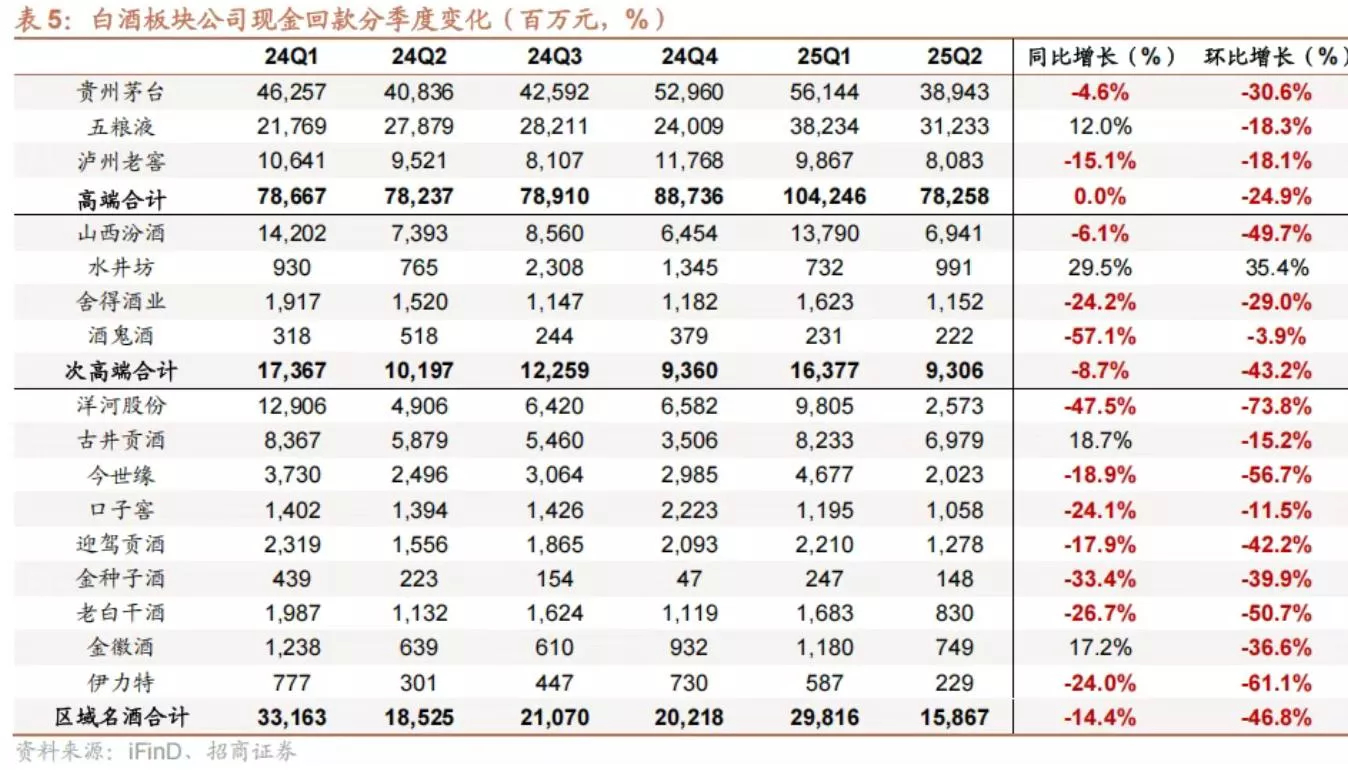
行业投资策略:中报综述:传统消费微光渐明,新消费繁花正盛
KAIYUAN SECURITIES· 2025-09-04 09:26
Core Insights - The report maintains a positive investment rating for the food and beverage industry, indicating potential recovery and growth opportunities despite current pressures [1] - The food and beverage sector has underperformed the market, with a year-to-date increase of 3.9%, lagging behind the CSI 300 by approximately 17.2 percentage points [4][16] - The snack segment has shown strong performance, with a notable increase of 55.2% from January to August 2025, while other segments like beer and seasoning products have struggled [4][16] Market Performance - The food and beverage sector's performance has been mixed, with snacks, cooked food, and other alcoholic beverages showing positive growth, while beer and seasoning products have declined [4][16] - The overall market sentiment has shifted towards technology themes, leading to weaker performance in traditional food and beverage sectors [4][16] - The report highlights that the snack segment's strong performance is driven by companies like Wancheng Group (+164.7%), Youyou Foods (+40.9%), and Haoxiangni (+36.2%) [4][16] Economic Overview - The macroeconomic environment remains challenging, with China's GDP growth at 5.2% in Q2 2025, slightly down from Q1 [5][49] - Retail sales of consumer goods increased by 5.4% year-on-year in Q2 2025, indicating a slight recovery, but traditional consumption sectors still face pressure [5][49] - The report anticipates a gradual recovery in consumer spending in the second half of 2025 [5][49] Industry Analysis - The food and beverage sector's revenue growth in Q2 2025 was 5.6%, a slight improvement from Q1, but profits declined by 2.1% [6][49] - The report notes a significant decline in the revenue growth of the liquor sector, particularly due to the impact of alcohol bans [6][49] - New consumption trends are emerging, with snack and health product segments showing resilience and growth potential [6][49] Investment Opportunities - The report suggests that the liquor sector is beginning to show signs of recovery, with potential for valuation improvement as the market stabilizes [7] - It recommends focusing on leading companies in the sector, particularly those with strong growth prospects in new consumption categories [7] - Specific companies to watch include Wancheng Group, Xiamen International Trade, and Dongpeng Beverage, which are expected to benefit from emerging trends [7]



江苏省内全线溃败!今世缘净利下跌四成
Guo Ji Jin Rong Bao· 2025-09-04 06:08
Core Viewpoint - The company reported a decline in mid-year performance, primarily driven by a significant drop in the second quarter, with revenue and net profit both experiencing substantial year-on-year decreases [2][4]. Financial Performance - In the first half of the year, the company achieved revenue of 6.951 billion yuan, a year-on-year decrease of 4.84%, and a net profit attributable to shareholders of 2.229 billion yuan, down 9.46% [2]. - The gross profit margin was 73.4%, a decrease of 0.4 percentage points compared to the same period last year [2]. - The second quarter saw a dramatic revenue decline of 29.69% year-on-year, with revenue at 1.852 billion yuan and net profit down over 37% to 585 million yuan [2]. Product Performance - Revenue from the company's main products, 特A+ and 特A, experienced year-on-year declines of -32% and -28%, respectively, indicating significant policy impact on high-end products [4]. - The management noted that high-end products, particularly those priced at "四开" and above, were most affected, while lower-tier products like "对开" and "单开" showed resilience and even some growth [4]. Market Dynamics - The company faced a 6.07% year-on-year revenue decline in the Jiangsu provincial market, with the largest drop in the Nanjing region at 7.94% [5]. - In the second quarter, revenue from the provincial market fell by 32%, with specific declines in various regions, including -39% in the Su Nan area [5]. - Despite the challenges, the company believes there is still significant growth potential in the Jiangsu market due to product and regional imbalances [5]. External Market Strategy - The company is focusing on core markets surrounding Jiangsu, such as Anhui, Shandong, Shanghai, and Zhejiang, where it aims to enhance product competitiveness [6]. - Revenue from the provincial market outside Jiangsu reached 628 million yuan, a year-on-year increase of 4.78%, with a net increase of 38 distributors [8]. Future Outlook - The management anticipates that a substantial recovery in the liquor industry may not occur until the second half of 2026, with potential improvements in the fourth quarter of 2025 [8]. - The company is exploring the introduction of lower-alcohol products to cater to younger consumers, although past attempts at lower alcohol content faced challenges [9].
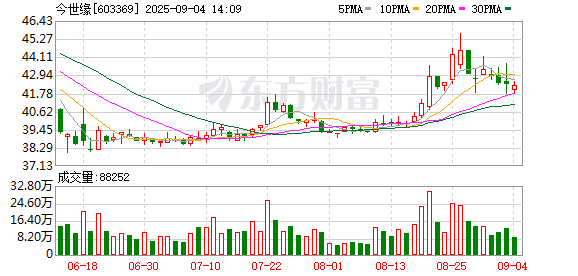
行业“深水区”:除了控量稳价,酒企还能做什么?|财报解读②
Sou Hu Cai Jing· 2025-09-03 16:05
Core Insights - The overall performance of the liquor industry is under pressure, with 20 listed liquor companies reporting a total revenue of 241.28 billion yuan in the first half of 2025, a slight decrease of 1.59% year-on-year, and net profits also facing challenges [1] - The industry is experiencing a significant divergence, with only 6 companies achieving both revenue and net profit growth, and only 4 companies maintaining positive revenue growth in the second quarter [1][2] - Major liquor companies are proactively adjusting strategies and innovating to strengthen core competitiveness and market share amid the industry's complex environment [1][4] Industry Performance - The liquor industry is currently in a "deep water zone" characterized by reduced volume, falling prices, and high inventory levels, leading to a cautious approach among companies [1][2] - Companies like Moutai and Gujing Gongjiu have acknowledged the industry's deep adjustment and the need for structural optimization to navigate the current cycle [1][2] Strategic Adjustments - "Proactive deceleration, controlling volume and stabilizing prices" has become a common strategy among liquor companies, with a focus on stability in their 2025 targets [2][4] - Nine companies have reduced contract liabilities to alleviate pressure on traditional channels, indicating a flexible market operation strategy [4] Inventory Management - The current "suspension of sales" trend is a significant market adjustment tool, with a broader product coverage and increased participation from both major and regional brands [5][7] - As of June 2025, the total inventory of 20 listed liquor companies reached approximately 170 billion yuan, reflecting a growing trend [7] Low-Alcohol Trend - The low-alcohol trend is gaining momentum, with companies like Wuliangye and Gujing Gongjiu launching new low-alcohol products to meet changing consumer preferences [8][10] - The low-alcohol market is projected to grow at a compound annual growth rate of 30%, with expectations to exceed 74 billion yuan by 2025 [11] Cross-Industry Innovations - Liquor companies are actively pursuing cross-industry innovations to expand their market reach and appeal to diverse consumer groups [14][18] - Collaborations with retail giants and the introduction of new product lines are strategies employed to enhance market penetration and operational efficiency [15][20]

高度酒库存积压,低度酒预售秒空!白酒企业要靠“降度”突围?
Sou Hu Cai Jing· 2025-09-03 13:40
Core Insights - The keyword "lower degree" has become the most popular term in the Chinese liquor industry for 2025, indicating a significant shift towards low-alcohol products [2][3] Industry Trends - The low-alcohol liquor market in China is rapidly expanding, with market size projected to grow from approximately 20 billion yuan in 2020 to 57 billion yuan by 2024, and expected to exceed 74.2 billion yuan in 2025, reflecting a compound annual growth rate (CAGR) of 30% [4] - The shift towards low-alcohol products is driven by generational changes in consumer preferences, particularly among younger consumers born in the 1990s and 2000s, who show a strong preference for low-alcohol beverages over traditional high-alcohol options [5][6] Company Strategies - Major liquor companies are actively launching low-alcohol products to capture the young consumer market. For instance, Wuliangye's 29-degree "Yi Jian Qing Xin" product has gained significant attention and sold out quickly during a live-stream event [3][7] - Luzhou Laojiao has developed a 28-degree version of its popular Guojiao 1573, while Yanghe and other companies are also introducing various low-alcohol products to diversify their offerings [11][12] - Moutai is expanding into the low-alcohol market with its Yumi brand, launching multiple new products, including a 33.8-degree liquor [6] Market Dynamics - The potential market for young drinkers in China is estimated at 490 million, supporting a market size of 400 billion yuan, which presents a significant opportunity for low-alcohol liquor [15] - Despite the promising growth, the low-alcohol market faces challenges such as product homogenization and the need for differentiation among brands [18] - Companies must innovate not only in product offerings but also in marketing strategies to cultivate a suitable consumption environment for low-alcohol beverages [20]


高度酒库存积压,低度酒预售秒空:白酒企业要靠“降度”突围?
Xin Lang Cai Jing· 2025-09-03 13:16
Core Insights - The keyword "lower degree" has become the most popular term in the Chinese liquor industry for 2025 [1] - Major liquor companies are actively launching low-alcohol products to attract younger consumers, indicating a shift in market strategy [2][4] Industry Trends - The low-alcohol liquor market in China is rapidly expanding, with market size projected to grow from approximately 20 billion yuan in 2020 to 57 billion yuan by 2024, and expected to exceed 74.2 billion yuan in 2025, reflecting a compound annual growth rate (CAGR) of 30% [4] - The shift in consumer demographics, particularly the rise of the post-90s and post-00s generations, is significantly influencing market trends, as these younger consumers show a preference for low-alcohol beverages over traditional high-alcohol options [4][14] Company Strategies - Wuliangye launched a 29-degree low-alcohol product named "Wuliangye・Yijianqingxin," which sold out quickly, indicating strong market interest [2][7] - Luzhou Laojiao has developed a 28-degree version of its popular Guojiao 1573, while Yanghe Co. plans to release a diverse range of low-alcohol products [10][11] - Moutai is also entering the low-alcohol market with its Yumi brand, launching multiple new products including a 33.8-degree liquor [5] Market Dynamics - The low-alcohol segment is seen as a crucial area for growth as traditional high-alcohol consumption declines due to changing consumer preferences and market conditions [14][18] - The potential market for young drinkers is estimated at 490 million people, supporting a market size of 400 billion yuan, which presents significant opportunities for low-alcohol products [14] Challenges and Innovations - Companies face technical challenges in producing low-alcohol beverages that maintain flavor and quality, requiring significant investment in research and development [15][18] - The market is becoming increasingly competitive, with many brands entering the low-alcohol space, leading to concerns about product homogenization and the need for differentiation [17][18]