牧原股份

Search documents
农林牧渔行业研究:猪价持续承压,看好牧业景气周期
SINOLINK SECURITIES· 2026-01-25 08:34
Investment Rating - The report does not explicitly state an investment rating for the agricultural sector, but it implies a cautious outlook on certain segments, particularly in livestock and planting industries, suggesting potential for recovery in the medium to long term [3][4][5][6]. Core Insights - The agricultural sector is experiencing mixed performance, with the livestock segment facing challenges due to supply-demand imbalances and price pressures, while the planting sector shows signs of stabilization amid potential price increases [3][4][5][6]. - The report highlights the importance of focusing on high-quality, low-cost enterprises in the livestock sector, particularly in pig farming, where there is potential for profit recovery as the market stabilizes [3][4][5]. - The planting industry is expected to benefit from government initiatives aimed at increasing crop yields and addressing supply chain disruptions caused by external factors [6][44]. Summary by Sections 1. Market Review - The agricultural index closed at 2923.59 points, with a weekly increase of 0.40%, underperforming compared to the Shanghai Composite Index [13][14]. 2. Key Data Tracking 2.1 Pig Farming - As of January 23, the national commodity pig price was 12.97 yuan/kg, with a weekly increase of 1.49%. The average weight of pigs at market was 128.89 kg, showing a slight increase [22][23]. - The report anticipates further price declines in the short term due to weak supply and demand, but a potential recovery in the second half of the year is expected as industry capacity reduces [3][4][22]. 2.2 Poultry Farming - The average price for white feather chickens was 7.50 yuan/kg, with a slight decrease of 1.19% from the previous week. The report notes that while profits are under pressure, there are signs of improvement in the yellow feather chicken market due to better demand [4][28][33]. 2.3 Livestock - As of January 16, live cattle prices in Shandong were 26.88 yuan/kg, reflecting a 0.67% increase week-on-week. The report suggests that beef prices may rise as the market enters a consumption peak [5][37][41]. - The dairy sector is also experiencing a reduction in capacity, with average purchase prices for raw milk at 3.03 yuan/kg, indicating a potential stabilization in prices moving forward [5][41]. 2.4 Planting Industry - Domestic corn prices were reported at 2265.71 yuan/ton, with a slight increase of 0.25%. The report indicates that the planting sector is stabilizing, with potential improvements if crop yields decrease significantly [6][43][44]. 2.5 Feed & Aquaculture - As of January 23, feed prices remained stable, with pig feed at 3.34 yuan/kg. Aquaculture prices showed some upward movement, particularly for shellfish [54][57].
2025年白羽祖代更新量157万套,我国牛存栏已累计下降8.6%
Huaan Securities· 2026-01-25 07:45
Investment Rating - The report maintains a positive investment rating for the pig farming sector, recommending continued investment in this area due to low valuations and expected profitability [4]. Core Insights - The report highlights a rebound in pig prices to 13 CNY/kg, with self-breeding and self-raising operations achieving profitability for two consecutive weeks [4]. - The white feather breeding stock update for 2025 is projected at 1.5742 million sets, with a year-on-year increase of 4.9% [5]. - The pet food market in urban China is expected to reach 312.6 billion CNY in 2025, growing by 4.1% year-on-year [6]. Summary by Sections Pig Farming - Pig prices have rebounded to 13 CNY/kg, with a week-on-week increase of 0.7%. The average weight of pigs at slaughter has risen to 128.89 kg, with a decrease in the proportion of heavier pigs [4]. - The profitability of self-breeding and self-raising operations has reached 43.35 CNY per head, marking a significant recovery since December 2025 [4]. - The report forecasts a new wave of price declines post-Spring Festival, indicating potential capacity reduction in the pig farming industry [4]. Poultry Farming - The white feather breeding stock update for 2025 is 1.5742 million sets, with 55% from self-breeding and 45% from imports. The price of yellow feather chicken has increased by 2.6% week-on-week [5]. - The average price of chicken products is reported at 9,250 CNY/ton, with a slight year-on-year decrease of 0.5% [5]. Pet Industry - The urban pet market is projected to grow to 312.6 billion CNY in 2025, with dog and cat markets at 160.6 billion CNY and 152.0 billion CNY, respectively [6]. - The number of pet dogs and cats in urban areas is expected to reach 126.32 million, with a year-on-year growth of 1.8% [8]. - Pet food remains the primary consumption category, accounting for 53.7% of the market share, with a projected market size of approximately 167.9 billion CNY in 2025 [8].



钱大妈港股IPO:近118亿营收背后,2.4%净利率的生鲜困局
Ge Long Hui· 2026-01-25 06:58
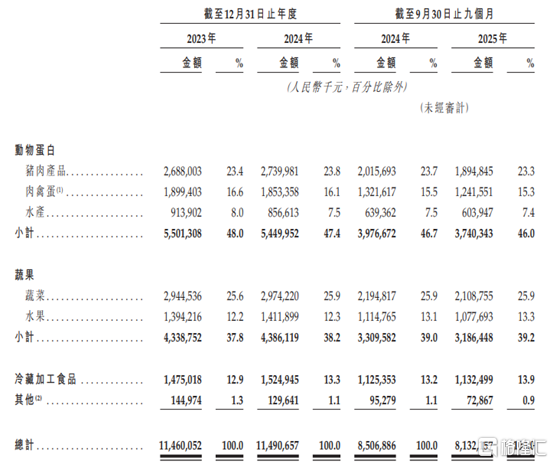
Core Viewpoint - Qian Dama International Holdings Limited is planning to go public on the Hong Kong Stock Exchange, aiming to expand its community fresh food retail business, which operates on a "discount day clear" model to minimize waste and ensure product freshness [1][19]. Group 1: Company Overview - Qian Dama is recognized as China's largest community fresh food chain and the largest meat retailer in South China, with projected revenues exceeding 11.7 billion RMB in 2024 [1][3]. - The company's business model focuses on providing fresh, high-quality cooking ingredients with a unique pricing strategy that offers discounts throughout the day [1][3]. - Qian Dama's revenue sources include animal protein (47.4%), fruits and vegetables (38.2%), and processed foods (13.3%) [3][4]. Group 2: Market Position and Competition - The community fresh food retail sector in China is highly fragmented, with Qian Dama holding only a 2.2% market share among the top five brands, which collectively account for 7.3% of the market [3][6]. - Qian Dama competes with major players like Yonghui Supermarket and various fresh food e-commerce platforms [2][3]. Group 3: Financial Performance - Qian Dama's revenue for 2023, 2024, and the first nine months of 2025 is approximately 11.744 billion RMB, 11.788 billion RMB, and 8.359 billion RMB, respectively, with net profits of 169 million RMB, 288 million RMB, and a loss of 288 million RMB [9][15]. - The company's gross margin has shown slight improvement, with rates of 9.8%, 10.2%, and 11.3% over the same periods [13][14]. Group 4: Business Model and Operations - Over 90% of Qian Dama's revenue comes from franchisees, with a decline in the number of self-operated stores from 81 in 2023 to 40 by September 2025 [11][15]. - The company primarily sources products from domestic agricultural bases and qualified suppliers, focusing on cost-effective procurement and logistics [11][12]. Group 5: Future Plans and Challenges - The IPO proceeds will be used for expanding the store network, enhancing product offerings, improving supply chain efficiency, and upgrading digital infrastructure [19]. - The company faces challenges in balancing store expansion, consumer affordability, and franchisee interests amid a competitive and slowing market [19].

双汇、唐人神、雪川上新;牧原股份最快2月香港上市;正大将在中国养小棚虾 | 一周热点
Sou Hu Cai Jing· 2026-01-25 02:10
Group 1 - Shuanghui launched a new Chinese-style marinated food brand "Lufu Zhai," focusing on blending traditional culture with modern aesthetics through gift box series [1] - The brand name "Lufu Zhai" symbolizes good fortune and is designed to convey auspicious blessings, positioning itself as a "new Chinese-style sauce and marinated gift expert" [1] - The brand aims to create culturally rich and emotionally valuable gift products while preserving classic marinated food techniques [1] Group 2 - Nanyang Biaodian introduced a new "Spicy Hot Pot Flavor Flower Roll," featuring a visually appealing design and rich flavors [2] - Xuechuan launched "Cajun Flavor French Fries" and "Original Cut Crispy Fries," focusing on diverse taste experiences and health-conscious ingredients [3][6] - Tangrenshen released "Hunan-style Sausage Duo," using high-quality pork and a quick marination process to retain freshness [7] Group 3 - The Chinese government is drafting national standards for prepared dishes to enhance consumer protection and promote high-quality industry development [11] - Muyuan Foods is set to list in Hong Kong as early as February, with an IPO fundraising target of $1.5 billion [7] - By 2025, China's meat production (pork, beef, lamb, poultry) is expected to exceed 100 million tons for the first time, with pork production reaching 5.938 million tons [12] Group 4 - Yuanji Foods submitted an application for a mainboard listing in Hong Kong, reporting significant revenue growth and a strong market position in the Chinese fast-food sector [10] - Big Pizza is preparing for an IPO, showcasing strong growth with a revenue increase of over 63% year-on-year [17] - Zhengda announced plans to start a new shrimp farming project in Jiangsu in 2026, with an expected production increase of 17% [20][21] Group 5 - Xibei received new financing, increasing its registered capital by approximately 13% [24][25] - Shandong Yisheng completed a board restructuring to enhance governance and operational efficiency [22][23]


国泰海通消费机遇混合发起A:2025年第四季度利润7.86万元 净值增长率0.93%
Sou Hu Cai Jing· 2026-01-24 15:43
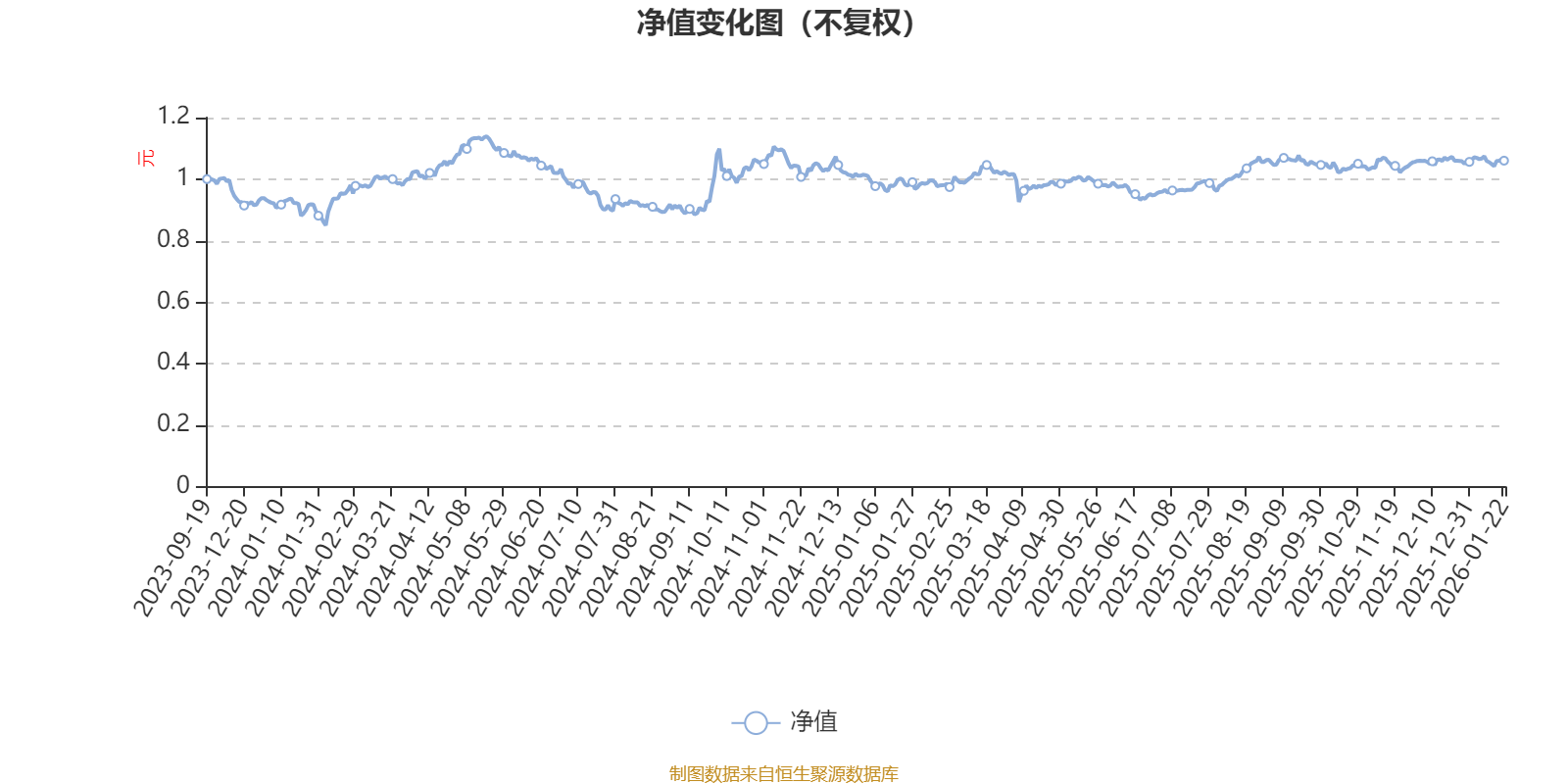
Core Viewpoint - The Guotai Haitong Consumption Opportunity Mixed Fund A (019433) reported a profit of 78,600 yuan in Q4 2025, with a weighted average profit per fund share of 0.0097 yuan. The fund's net value growth rate for the reporting period was 0.93%, and the fund size reached 8.61 million yuan by the end of Q4 2025 [3][17]. Fund Performance - As of January 22, the fund's unit net value was 1.06 yuan. The fund manager, Fan Yang, oversees four funds, all of which have positive returns over the past year. The highest one-year cumulative net value growth rate among these funds was 54.86% for Guotai Haitong Jun Dexin 2-Year Holding Mixed A, while the lowest was 7.78% for Guotai Haitong Consumption Opportunity Mixed Fund A [3]. - The fund's performance over different time frames includes a three-month net value growth rate of 2.81%, a six-month growth rate of 7.54%, and a one-year growth rate of 7.78%, ranking 15th out of 85, 14th out of 85, and 44th out of 83 among comparable funds, respectively [4]. Risk and Return Metrics - The fund has a Sharpe ratio of 0.3595 since inception, indicating a moderate level of risk-adjusted return [9]. - The maximum drawdown since inception is 22.31%, with the largest quarterly drawdown occurring in Q3 2024 at 14.32% [13]. Investment Strategy - The fund maintains a high average stock position of 85.98% since inception, with a peak of 92.07% at the end of 2025 and a low of 70.31% at the end of 2024 [16]. - The fund's portfolio is highly concentrated, with the top ten holdings including Sailun Tire, Hisense Visual Technology, Senki Lin, Muyuan Foods, Tiankang Biology, Great Wall Motors, Stone Technology, Youran Agriculture, Baiya Shares, and Xingyu Shares [20]. Future Outlook - The fund management anticipates continued investment in service consumption, focusing on new consumption led by younger demographics and elder consumption driven by the aging population. They aim to achieve better investment returns by leveraging structural changes in consumer demographics and validating corporate competitiveness amid trade tensions [3].

2025基金年报农林牧渔板块持仓分析:维持低配,β弱α强
GUOTAI HAITONG SECURITIES· 2026-01-24 15:15
Investment Rating - The report assigns an "Overweight" rating for the agricultural sector [1]. Core Insights - The report maintains a low allocation to agriculture, recommending selective agricultural stocks. The fund's agricultural holdings are valued at 46.896 billion, accounting for 0.52% of the stock investment value, which is 0.14 percentage points below the standard industry allocation of 0.66% [2][5]. - The report highlights that in Q4 2025, institutional investors increased their holdings in chicken breeding companies such as Wens Foodstuffs and Lihua, while reducing their stakes in companies like New Hope and Juxing Agriculture [2][5]. Summary by Sections Fund Holdings Changes in Agriculture - The fund's agricultural holdings have consistently remained below the industry standard allocation for five consecutive quarters, with a market value of 46.896 billion in Q4 2025, reflecting a growth rate of 0.14% [5]. - The allocation to agriculture has decreased from 0.61% in Q4 2024 to 0.52% in Q4 2025, indicating a trend of reduced investment in this sector [5]. Recommended Stocks - Recommended stocks include: - For pig farming: Muyuan Foods, Wens Foodstuffs, Tiankang Biological, and Shennong Group - For post-cycle investments: KQ Bio, Haida Group - For agricultural product supply chain: Morning Light Bio, Longping High-Tech, and others - For the pet sector: Guibao Pet, Zhongchong Co., and others - For poultry: Shennong Development [2][8][9].

华夏新机遇混合A:2025年第四季度利润57.08万元 净值增长率1.37%
Sou Hu Cai Jing· 2026-01-24 11:00
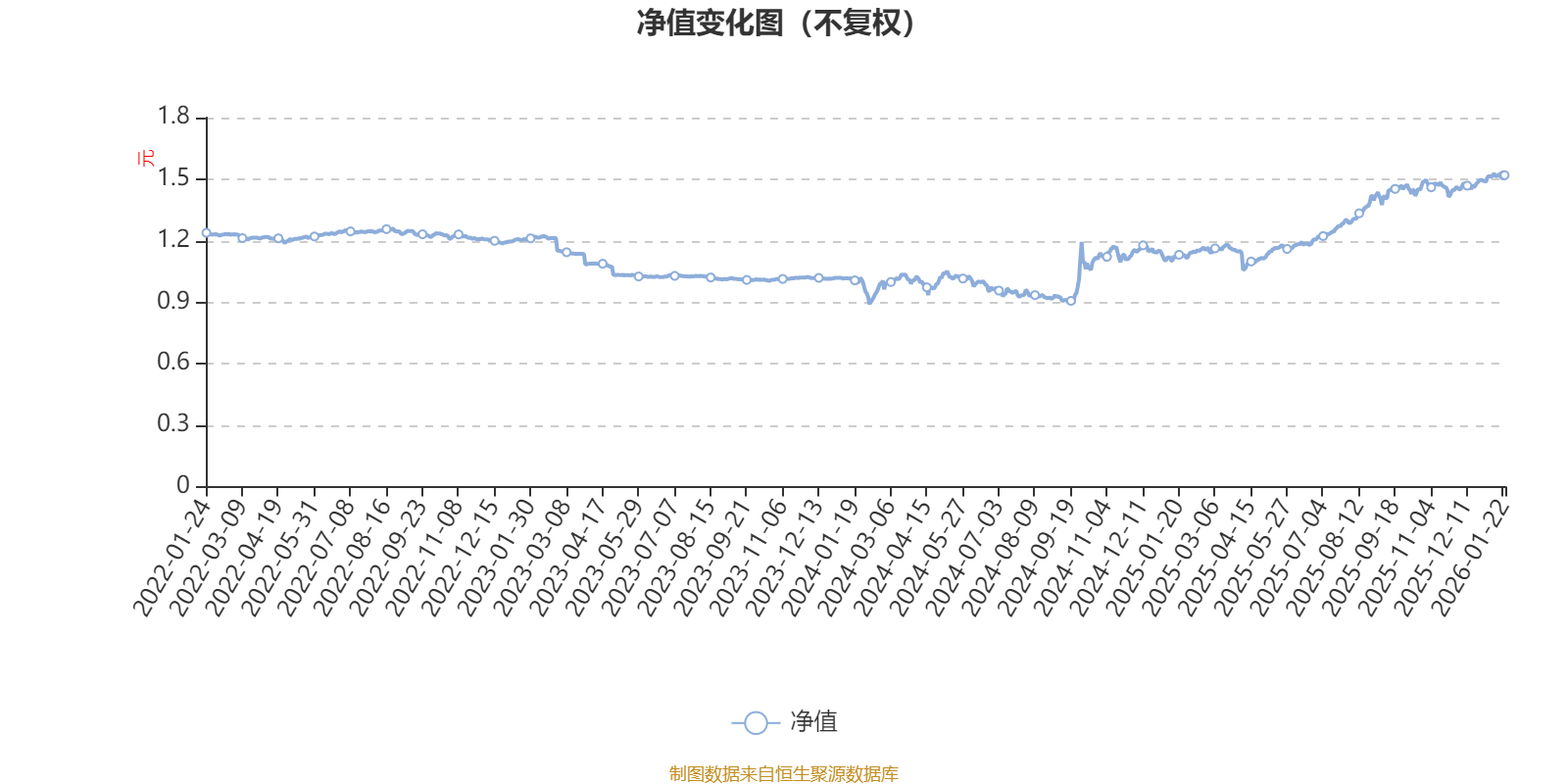
该基金属于灵活配置型基金。截至1月22日,单位净值为1.519元。基金经理是孙然晔,目前管理9只基金。其中,截至1月22日,华夏创业板综合ETF近一年 复权单位净值增长率最高,达50.28%;华夏鼎淳债券A最低,为3.06%。 基金管理人在四季报中表示,基金投资运作方面,本基金以多因子量化投资策略为主,在依据量化模型进行股票投资决策之外,还积极参与了科创板、创业 板新股申购,以获取收益增厚的机会。同时,本基金秉承尽职尽责的态度,认真应对投资者日常申购、赎回等工作。 截至1月22日,华夏新机遇混合A近三个月复权单位净值增长率为4.83%,位于同类可比基金859/1286;近半年复权单位净值增长率为19.42%,位于同类可比 基金697/1286;近一年复权单位净值增长率为34.43%,位于同类可比基金607/1286;近三年复权单位净值增长率为43.46%,位于同类可比基金232/1286。 通过所选区间该基金净值增长率分位图,可以观察该基金与同类基金业绩比较情况。图为坐标原点到区间内某时点的净值增长率在同类基金中的分位数。 AI基金华夏新机遇混合A(002411)披露2025年四季报,第四季度基金利润57.0 ...
2026,谁会成为餐饮业的“超级链接者”?
Sou Hu Cai Jing· 2026-01-24 02:11
Core Insights - The Chinese meat consumption landscape is evolving, with pork consumption expected to reach 58 million tons by 2025, reflecting a growth rate of 1.5% from 2024, primarily due to declining consumer willingness and slower recovery in dining consumption [2] - Beef and poultry consumption are on the rise, with beef gaining popularity due to its high protein and low-fat content, while chicken remains favored for its economic and nutritional advantages [3][4] - The meat supply chain is undergoing significant changes driven by market forces and policy adjustments, with a notable decline in the breeding sow population and a potential recovery in pork prices by Q3 2026 [5] Industry Trends - The integration of smart technology in the food supply chain is advancing, with automation being implemented across various stages from farming to restaurant operations, driven by rising labor costs [7][9] - The average monthly salary for restaurant staff has increased, with waitstaff and chefs earning approximately 4,851 yuan and 6,696 yuan respectively as of Q3 2025, prompting a shift towards automation to manage costs [8] - Companies are increasingly adopting intelligent devices to enhance operational efficiency, with the cost of automation technology decreasing significantly over the past five years [9][10] Supply Chain Transparency - Food safety and traceability are becoming critical competitive factors in the restaurant industry, with leading brands implementing comprehensive transparency measures to build consumer trust [12][14] - The trend towards transparency is pushing the industry to establish new benchmarks, as consumers begin to demand visibility into the supply chain from other restaurants [14][16] - Technological advancements in traceability, such as blockchain and IoT, are expected to lower costs and make these systems accessible to smaller enterprises, potentially leading to a future where every food item has a digital identity [16][17] Conclusion - The competitive landscape of the Chinese restaurant industry is shifting towards supply chain resilience, data transparency, and operational efficiency, which will be crucial for long-term sustainability [17]
当前时点如何看待生猪养殖板块
2026-01-23 15:35
Summary of the Conference Call on the Swine Breeding Sector Industry Overview - The swine breeding sector is undergoing significant structural changes, with small farms being eliminated and large breeding groups expanding. This cycle is expected to see a more pronounced capacity reduction than previous cycles, with cost control and cash flow management becoming critical [1][2]. Key Insights and Arguments - Historical data indicates that when the cumulative reduction of breeding sows reaches approximately 3%, stock prices begin to rise. The industry has experienced deep losses for three consecutive months, and a faster capacity reduction is anticipated, benefiting companies with cost advantages and strong cash flow [1][2]. - As the New Year approaches, frozen meat inventories at slaughterhouses are increasing, and consumer demand remains strong. Some large groups are taking advantage of this to raise pork prices, although the reluctance of small farmers to sell may exert downward pressure on prices [1][4]. - From 2021 to 2023, the market saw a significant exit of small breeding entities, while large-scale groups expanded. The reduction in breeding sows during this period was 8.3% and 9.1% respectively, with listed companies increasing their sow inventory by 3.5% [5]. Market Dynamics - The public fund holding ratio in the sector has increased significantly, driven by the cumulative capacity reduction rather than merely the duration of the cycle. For instance, when the cumulative reduction reached 5.2% in Q3 to Q4 of 2021, the public fund holding ratio rose from 0.96% to 1.16% [6]. - The industry is expected to face challenges in the first half of 2026, with some companies predicting pork prices could drop below 10 yuan/kg. The large-scale capacity reduction has not yet formally begun, and cash flow consumption is severe [3][7]. Price Trends and Future Outlook - Currently, pork prices in northern regions have risen from 11.5 yuan/kg to around 12 yuan/kg, but the reluctance of small farmers to sell may lead to future price pressures [4]. - The overall health of pig herds has improved, leading to a significant reduction in the demand for vaccines and veterinary drugs, which has decreased from 120-180 yuan to around 50 yuan [9]. - The efficiency of breeding has improved, with the number of piglets weaned per sow per year (PSY) increasing from approximately 17-18 to over 28 in many large groups, contributing to lower overall breeding costs [8]. Additional Important Points - The current low pork prices, if sustained for over three months, could lead to the exit of some large breeding farms from the market, highlighting the importance of monitoring capacity reduction in the industry [12]. - In regions like Hunan and Jiangxi, the market dynamics are influenced by local demand and cash flow pressures faced by small farms, with some potentially being taken over by larger groups [10][11]. This comprehensive analysis highlights the critical factors affecting the swine breeding sector, including market dynamics, price trends, and the implications of capacity reductions on investment opportunities.
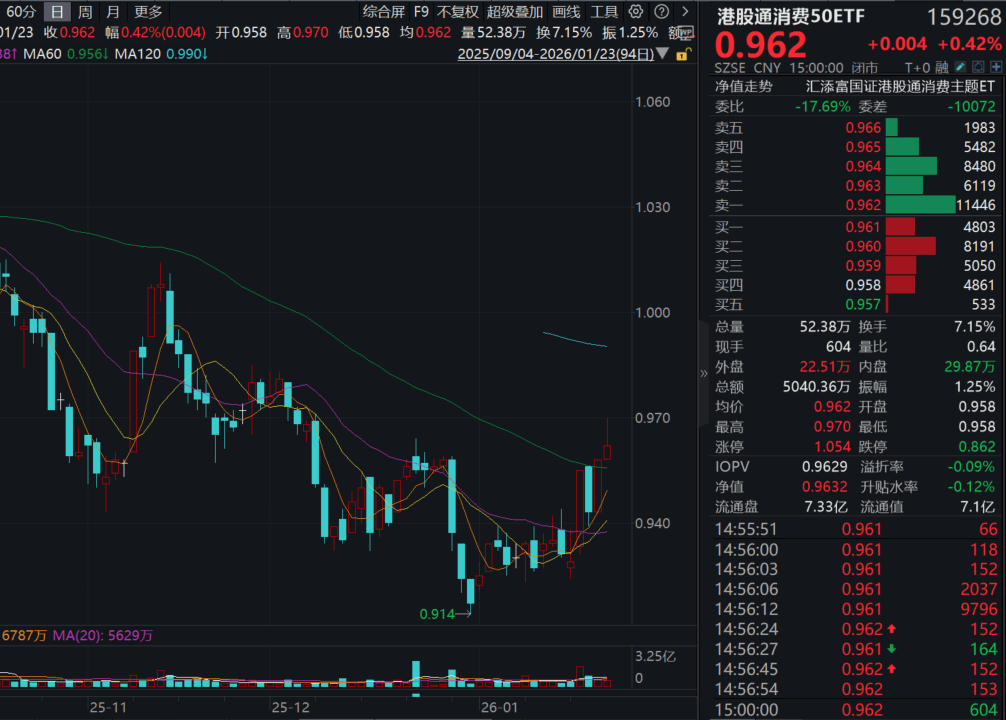
泡泡玛特、老铺黄金双双大涨6%!港股通消费50ETF(159268)再度收红!消费ETF(159928)近5日有3日获资金青睐!
Sou Hu Cai Jing· 2026-01-23 09:17
Group 1 - The core viewpoint of the articles highlights the strong performance of the Hong Kong stock market, particularly in the consumer sector, with significant gains in various consumer-related ETFs and stocks [1][3] - Pop Mart announced a share buyback of 2.51 billion HKD for 1.4 million shares, marking its first buyback action of 2024 [3] - The Consumer ETF (159928) has seen a net inflow of over 370 million HKD in the past five days, indicating strong investor interest [3] Group 2 - Huazhang Securities emphasizes the importance of the food and beverage sector, identifying it as a value opportunity due to high dividend yields and the potential for cyclical recovery [5] - The report suggests two main investment opportunities: efficient enterprises that excel in cost management and undervalued companies that can gain market share during downturns [5] - The white liquor sector is expected to undergo inventory clearance and recovery, with a focus on leading brands that have strong competitive advantages [6] Group 3 - The launch of Alibaba's Qianwen App marks a significant advancement in AI-driven consumer services, integrating various functions for seamless user experiences in shopping and travel [7] - The app's capabilities include a complete transaction loop in instant retail, travel planning, and shopping assistance, indicating a shift in consumer decision-making processes [7] - Tianfeng Securities predicts that AI technology will transform consumer engagement and growth mechanisms across various sectors, including e-commerce and online travel [7] Group 4 - The Consumer ETF (159928) is characterized by its resilience across economic cycles, with over 68.55% of its top ten holdings in essential consumer goods [8] - The top holdings include major liquor brands and agricultural companies, reflecting a diversified investment strategy within the consumer sector [9] - The ETF is positioned as an efficient investment vehicle for accessing the Hong Kong consumer market, particularly appealing to younger consumers [9]