
鸣鸣很忙

Search documents
两个85后霸总组CP,一年干出555亿
创业家· 2025-05-22 10:33
Core Viewpoint - The article discusses the rapid growth and competitive dynamics of snack retail brands "Zhao Yiming Snacks" and "Snacks Are Busy," highlighting their recent merger and the implications for the snack retail market in China, particularly in county-level cities [6][39]. Group 1: Company Overview - "Zhao Yiming Snacks" and "Snacks Are Busy" are two emerging snack retail brands that have gained popularity in county-level cities, with a significant increase in store openings [6][39]. - The brands are led by two 85-year-old CEOs, Zhao Ding and Yan Zhou, who have transformed their businesses from traditional snack shops to modern retail chains [7][20]. Group 2: Business Growth and Strategy - "Zhao Yiming Snacks" was founded in 2019 and quickly expanded from 84 stores in 2022 to over 2,500 stores [31]. - "Snacks Are Busy" has over 4,000 stores as of October 2023, supported by significant funding from investors [30][31]. - Both brands focus on low-cost snack offerings, with prices averaging 7%-40% lower than traditional supermarkets [36]. Group 3: Market Dynamics - The merger of "Zhao Yiming Snacks" and "Snacks Are Busy" into "Ming Ming Very Busy" aims to reduce internal competition and enhance market presence [37][39]. - The combined entity is expected to leverage their strengths in different market segments, with "Snacks Are Busy" focusing on acquisitions and "Zhao Yiming Snacks" on expanding in lower-tier cities [39]. Group 4: Consumer Behavior and Market Trends - The snack retail market is witnessing a shift in consumer preferences, with a high repurchase rate of 75% for members of "Ming Ming Very Busy," indicating strong customer loyalty [41]. - The article suggests that the demand for snacks may surpass that of beverages like milk tea, reflecting changing consumer habits in county-level markets [44]. Group 5: Financial Performance - "Ming Ming Very Busy" reported retail sales of 55.5 billion yuan in 2024, with over 1.6 billion transactions [47]. - The company is positioned as a leading player in the snack retail sector, with plans for further expansion following its recent IPO application [48][49].


年轻人的消费观变了
Sou Hu Cai Jing· 2025-05-21 14:07
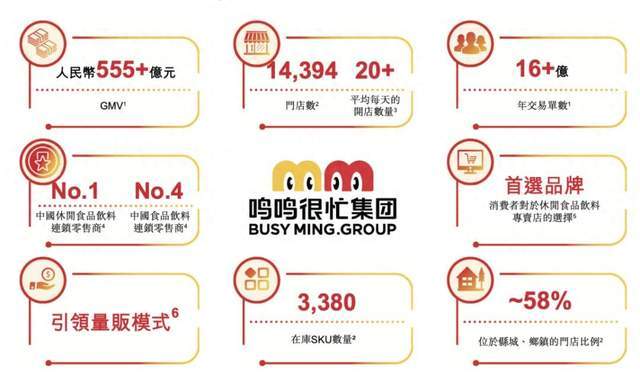
Group 1 - The core viewpoint of the articles highlights the rapid expansion of discount snack stores in urban areas, driven by consumer demand for affordable products, with "Mingming Hen Mang" leading the market with 14,394 stores and a projected GMV of 55.5 billion yuan by the end of 2024 [1][3] - The introduction of the "Zhao Yiming Savings Supermarket" 3.0 store format by "Mingming Hen Mang" reflects a strategic shift to include a wider range of products, catering to consumers' desire for both savings and quality, thereby enhancing the one-stop shopping experience [3][5] - The McKinsey 2024 China Consumer Report indicates a shift towards rational consumption, with consumers prioritizing value for money, which has made cost-effectiveness a key competitive advantage in the discount retail sector [5][6] Group 2 - The discount retail model is gaining traction across various sectors, with the apparel industry also adapting to this trend, as evidenced by Vipshop's GMV reaching 52.4 billion yuan in Q1 2025, with a significant portion of sales coming from clothing and accessories [5] - The discount retail market in China reached a scale of 1.62 trillion yuan in 2021, with projections estimating it will grow to 2.28 trillion yuan by 2025, reflecting a compound annual growth rate (CAGR) of 11% from 2022 to 2025 [5][6] - The future of discount retail is expected to become more widespread as consumer rationality deepens and businesses optimize their supply chains and product categories, indicating potential growth in various industries beyond snacks and apparel [6]
量贩零食双雄并起:对比解读鸣鸣很忙招股材料
Huaan Securities· 2025-05-15 02:05
Investment Rating - The report suggests a forward-looking investment value in Mingming Hen Mang and Wancheng Group, anticipating an acceleration in profitability for the leading players in the industry during 2025-2026 [5][61]. Core Insights - Mingming Hen Mang has emerged as a leader in the snack retail sector through a strong merger with Zhao Yiming, resulting in a combined entity with 14,394 stores across 28 provinces in China and a GMV of 55.5 billion [3][7]. - The company's rapid growth is attributed to the expansion of franchise stores and increased sales volume, with a projected revenue of 39.34 billion and adjusted net profit of 9.13 billion for 2024, reflecting a CAGR of 203% and 235% respectively from 2022 to 2024 [3][18]. - The Chinese snack and beverage market is valued at 3.7 trillion, with significant growth potential in the down-market and discount channels, where Mingming Hen Mang holds a market share of 1.5% [4][11]. Summary by Sections Company Overview - Mingming Hen Mang is recognized as a leading food and beverage retailer in China, formed by the merger of "Snacks Are Busy" and "Zhao Yiming" in November 2023, with a focus on operational efficiency and brand integration [3][7]. Industry Trends - The report highlights the ongoing penetration of the discount model in the snack market, with a fragmented retail landscape where the top five players hold only 6% market share [4][11]. Performance Metrics - Revenue and profit growth are driven by the rapid expansion of franchise stores, with a significant increase in store count from 1,902 in 2022 to 14,394 in 2024, achieving a CAGR of 175% [28][29]. - The adjusted net profit margin is expected to improve, with a stable gross margin of 7.6% and an adjusted net profit margin of 2.3% for 2024 [22][21]. Future Outlook - Key future drivers include operational efficiency improvements, upgrades in discount supermarket formats, and steady expansion into Southeast Asia, with initial steps taken in Vietnam [42][52]. - The report anticipates that the domestic discount sector has room for growth, aiming to match the overseas penetration rates of over 15% [5][61].
刚递表一季度业绩就变脸,三只松鼠闯关港股上市难题不少
Sou Hu Cai Jing· 2025-05-13 17:15
Core Viewpoint - The company, Three Squirrels, is facing significant challenges despite a return to over 10 billion RMB in revenue, with declining net profits and increasing reliance on price competition, raising concerns about the sustainability of its "high-end cost-performance" strategy [3][4][6][26]. Financial Performance - In Q1 2025, Three Squirrels reported a net profit of 239 million RMB, a year-on-year decline of 22.46%, with a non-recurring net profit drop of 38.31%, indicating a situation of revenue growth without profit increase [3][6]. - For the year 2024, the company achieved a revenue of 10.622 billion RMB, a 49.3% increase year-on-year, and a net profit of 408 million RMB, up 85.51% [4][19]. - The sales expenses for 2024 reached 1.868 billion RMB, a 50.92% increase, significantly outpacing management, financial, and R&D expenses [6][12]. Strategic Challenges - The "high-end cost-performance" strategy is under pressure, as the company heavily relies on online sales, which accounted for 69.73% of total revenue in 2024, leading to high marketing costs that erode net profits [6][9]. - The average selling price of core products has been declining, with price reductions of 9%-16% in key categories, resulting in a continuous drop in gross margin from over 31% in 2021 to below 25% in 2024 [10][11][17]. Market Position and Competition - The snack industry is experiencing intensified competition, with a shift to "stock competition," where traditional marketing strategies are becoming less effective [15][17]. - The company’s offline store count has decreased from 1,043 in 2020 to 333 in 2024, contrasting sharply with competitors like Good Products, which has over 2,700 stores [3][17]. IPO and Future Plans - Three Squirrels aims to achieve a revenue target of 20 billion RMB by 2026, requiring a doubling of revenue in two years, with significant growth needed in offline sales [19][22]. - The company plans to use part of the IPO proceeds to strengthen its offline store network and expand into new product categories, including pet food and ready-to-eat meals [21][23]. Supply Chain and Operational Issues - The company is facing challenges with cash flow, as operating cash flow net amount decreased by 62.96% year-on-year, and inventory surged by 70%, raising concerns about unsold stock [13][24]. - The current production capacity is heavily concentrated in East China, which may lead to supply-demand imbalances as new factories are planned [24].

商业模式解密:鸣鸣很忙下沉市场的隐忧,破局之路在何方?
Sou Hu Cai Jing· 2025-05-12 14:29
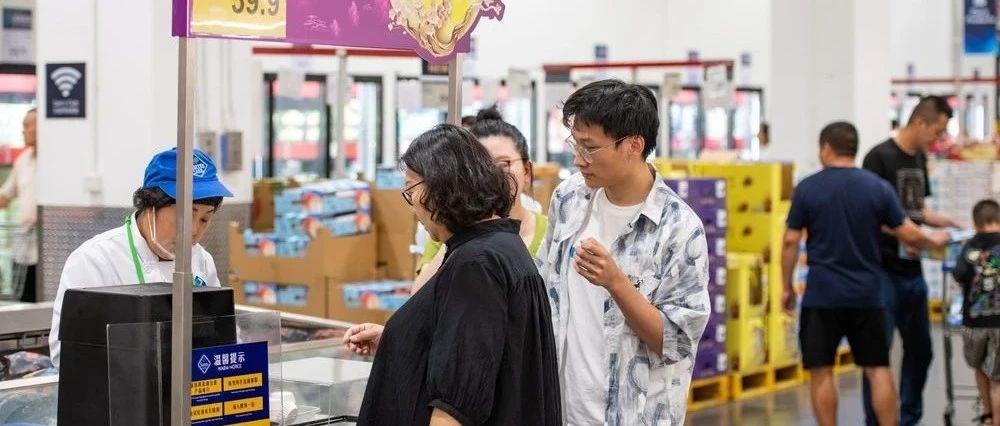
Core Insights - "Ming Ming Hen Mang" has achieved a remarkable GMV of 55.5 billion RMB, establishing a strong presence in the lower-tier market with extensive coverage across 1,224 counties and 58% of its stores located in county and town areas [4][6] - Despite impressive growth, the company faces significant challenges, including a contradiction between growth and profit, intense competition, and limitations of its business model [2][16] - The company’s low profit margin, with an adjusted net profit margin of only 2.1%, highlights the risks associated with its low-price strategy aimed at expanding market share [7][10] Business Model and Market Position - The "rural encirclement of cities" strategy has proven successful for "Ming Ming Hen Mang," allowing it to build a solid scale barrier in the lower-tier market [4] - The company leverages centralized procurement to reduce costs, achieving a gross margin of 7.5% through high-volume purchasing, which enhances its bargaining power with suppliers [4][6] - The reliance on franchise sales for 99.5% of its revenue creates a vulnerability, as profit margins are squeezed by both upstream suppliers and downstream franchisees [7][11] Financial Performance - Revenue figures for 2022, 2023, and 2024 are projected at 4.29 billion RMB, 10.30 billion RMB, and 39.34 billion RMB respectively, with adjusted net profits of 0.81 billion RMB, 2.35 billion RMB, and 9.13 billion RMB [6] - The company’s financials indicate a significant increase in sales costs, which outpace revenue growth, leading to a challenging profit landscape [6][10] Competitive Landscape - The competition with "Hao Xiang Lai" has intensified, with both companies rapidly expanding their store counts, leading to a "store arms race" that increases operational costs and risks market saturation [7][11] - Marketing expenses have tripled over three years, contributing to a challenging environment where both companies struggle to maintain profitability [7][11] Strategic Initiatives - The potential IPO could provide "Ming Ming Hen Mang" with capital to strengthen its market position, particularly in cold chain logistics and digitalization, which are crucial for operational efficiency [5][16] - Developing private label products could enhance profit margins by allowing better control over costs and quality, drawing inspiration from successful models like Miniso [8][10] - The company is exploring a dual revenue model by adopting a membership system similar to Costco, which could diversify income sources and enhance customer loyalty [15] Challenges and Risks - The low acceptance of brand premiums among lower-tier market consumers poses a challenge for the company in balancing quality and price [10] - Significant investments in cold chain logistics for fresh produce could strain cash flow, necessitating careful financial planning to avoid operational disruptions [10][16] - The company must navigate the risks associated with its single revenue model and the potential for market saturation, which could jeopardize its business model [11][16]
未来十年,中国零售渠道会有哪些变化?
虎嗅APP· 2025-05-12 10:51
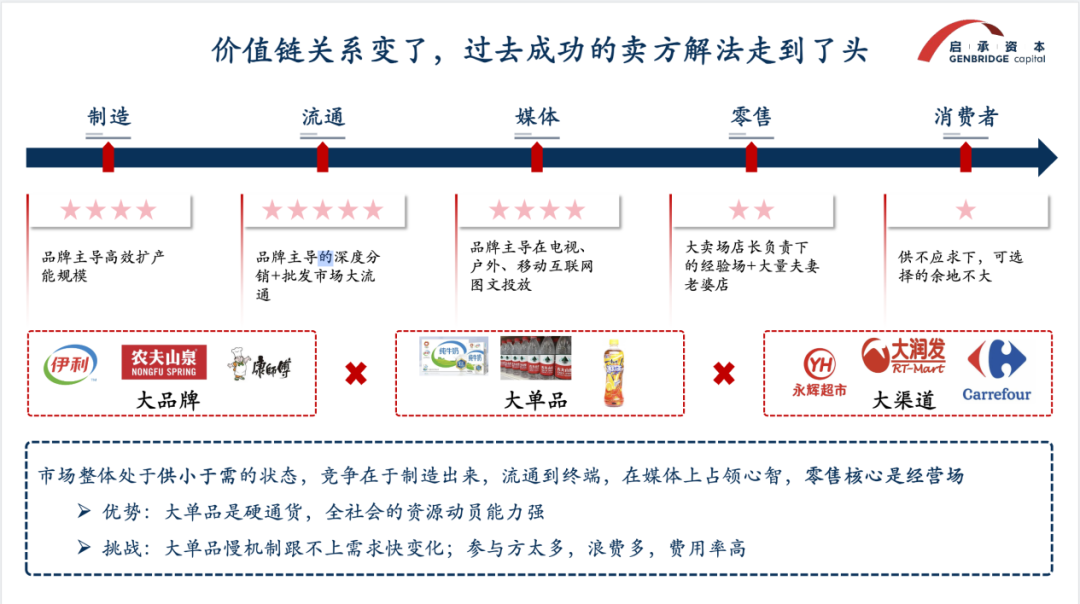
Core Viewpoint - The Chinese retail industry, particularly in the food and beverage sector, is undergoing a significant transformation, moving from a growth-driven market to a stock-driven market, leading to a restructuring of the value chain and a shift in power dynamics from brands to retailers [3][4][5][10]. Group 1: Market Transformation - The traditional supermarket model, which thrived for three decades, is nearing its end, with many leading supermarkets exiting the market in recent years [3][9]. - The future landscape may see over 2,000 super-large stores, 30,000 large stores, 200,000 medium stores, and 3 million small stores in China [4][19]. - The shift from an incremental market to a stock market is driven by urbanization, manufacturing benefits, and the proliferation of mobile internet, while demand is affected by slowing GDP growth and consumer segmentation [4][10]. Group 2: Value Chain Restructuring - The previous model dominated by brands, characterized by "big brands + big products + deep distribution," is becoming ineffective, with channel power shifting towards the end consumer [5][11]. - The current market environment features an oversupply situation, where the focus is on understanding and meeting consumer needs rather than merely distributing products [12][15]. - The emergence of "buyer solutions" is evident in successful companies like Qian Dama and Hema, which adapt to consumer demands more effectively [16][19]. Group 3: Consumer Behavior and Market Dynamics - The concept of "buyer solutions" is gaining traction, as seen in the evolution of retail strategies in Japan and the U.S., where retailers focus on specific product categories to meet consumer needs [18][19]. - The Chinese market currently has 6 million stores, with a significant number being non-chain establishments, indicating a long way to go in the chain retail evolution [18]. - The relationship between brands and retailers is shifting from a competitive to a collaborative model, emphasizing long-term partnerships and mutual understanding [25][36]. Group 4: Category Management and Innovation - The transition to a stock market necessitates a focus on category management, where retailers and brands collaborate to optimize product offerings based on consumer insights [20][23]. - The blending of categories and the emergence of new retail formats are expected to drive innovation, as seen in the integration of coffee and tea offerings in convenience stores [32][33]. - The market is witnessing a trend towards niche markets, where new products are likely to start small before potentially becoming major hits [36].
消费类企业密集赴港上市,恒生消费ETF(159699)交投活跃,近一个月日均成交1.82亿元,同类第一!
Xin Lang Cai Jing· 2025-05-12 06:27
Group 1 - The Hang Seng Consumption Index (HSCGSI) has shown a positive trend, with a 0.89% increase as of May 12, 2025, and notable gains in constituent stocks such as Techtronic Industries (00669) up 5.50% and Haier Smart Home (06690) up 5.04% [1] - The Hang Seng Consumption ETF (159699) has also increased by 0.50%, with a nearly 10% rise over the last 20 trading days, indicating strong market performance [1] - The latest valuation of the Hang Seng Consumption ETF shows a price-to-earnings ratio (PE-TTM) of 17.53, which is below 87.07% of the historical levels over the past five years, suggesting it is at a historical low [1] Group 2 - As of May 8, 2025, the top ten weighted stocks in the Hang Seng Consumption Index account for 58.88%, with companies like Pop Mart (09992) and Anta Sports (02020) leading the list [2] - There has been a surge in consumer companies seeking to list in Hong Kong, with over ten applications submitted this year, covering various sectors such as food and beverage and retail [2] - Factors driving this trend include the introduction of a fast-track policy for A+H shares by the Hong Kong Stock Exchange, improved liquidity in the Hong Kong market, and the diversion effect from stricter IPO standards in the A-share market [2] Group 3 - Huatai Securities expresses a positive outlook on Hong Kong stocks, particularly in the context of domestic consumption, amidst external disturbances and rising uncertainties [3]
未来十年,中国零售渠道会有哪些变化?
Hu Xiu· 2025-05-12 03:31
Group 1 - The core viewpoint of the article emphasizes the transition of the Chinese retail market from an incremental growth phase to a stock-based market, leading to significant changes in consumer behavior and retail strategies [5][6][10] - The company, Qicheng Capital, has focused on investing in the consumer sector since its establishment in 2016, targeting "new generation national brands" and "new generation national chains" [1][3] - The investments made by Qicheng Capital have collectively served 100 million families in China, indicating a substantial market impact [2] Group 2 - The article discusses the emergence of a "buyer solution" in the retail landscape, where the power dynamics shift from brands to retailers and consumers, reflecting a change in the value chain [11][12][14] - The current market features approximately 6 million stores in China, with a significant number being non-chain enterprises, suggesting a long way to go for the consolidation of retail chains [13] - Predictions indicate that in ten years, the market may evolve to include over 2000 large stores and 300,000 small stores centered around buyer solutions [15] Group 3 - The article highlights the importance of category management and the need for retailers to adapt to consumer demands, moving away from brand-centric strategies to a focus on category performance [17][24] - It notes that the consumer decision-making process is becoming increasingly complex, with various factors influencing purchasing behavior across different channels [30][32] - The blending of food and retail sectors is creating new opportunities for innovation, as seen in the emergence of hybrid business models [36][38] Group 4 - The article emphasizes the significance of understanding consumer segmentation and the need for retailers to tailor their offerings to specific consumer profiles [42][44] - It discusses the evolving relationships between brands and retailers, advocating for long-term partnerships based on mutual understanding and shared goals [43][45] - The future of the market is expected to be characterized by continuous innovation and the reconfiguration of product categories to meet diverse consumer needs [39][41]




5.12犀牛财经早报:年内近3500只私募新品上架 宁德时代在港上市最高发行价为263港元/股
Xi Niu Cai Jing· 2025-05-12 01:41
Group 1 - The private equity issuance market has seen a significant increase in activity, with nearly 3,500 new private securities investment funds registered this year, representing a nearly 40% growth compared to the same period last year [1] - NIO plans to issue H-shares at a maximum price of 263 HKD per share, with the pricing expected between May 13 and May 16, and trading to commence on May 20 [1] - A trend of consumer companies going public overseas has emerged, with several new consumption brands planning listings in Hong Kong and the US, driven by the need for international expansion and brand enhancement [1] Group 2 - Shanghai Ladder Medical Technology has successfully conducted a clinical trial of an invasive brain-computer interface system, allowing a participant to control a game using thoughts after implant surgery [2] - Samsung has reportedly reached an agreement with major clients to increase DRAM prices, with DDR4 prices rising by double-digit percentages and DDR5 prices increasing by single-digit percentages [2] - Polestar is recalling 3,664 vehicles in the US due to a rearview camera issue that may reduce driver visibility, with software updates planned to address the problem [2] Group 3 - Specialized Medical Company in Saudi Arabia successfully completed a $500 million IPO, with all shares sold within hours, indicating strong demand [3] - Mirxes Holding Company Limited has passed the listing hearing at the Hong Kong Stock Exchange, focusing on miRNA technology for cancer screening [4] Group 4 - Huiyuan Juice has issued a statement refuting rumors about its financial difficulties, emphasizing that such claims are malicious and damaging to its reputation [5] - Hualan Biological Engineering announced that its major shareholder plans to reduce its stake by up to 3% within three months [6] - Pilin Bio received an administrative regulatory decision from the Shanxi Securities Regulatory Bureau due to internal control deficiencies and inaccurate information disclosure [7] Group 5 - ST Jinke has received court approval for its restructuring plan, allowing the company and its subsidiary to enter the execution phase of the plan [8]




大消费行业周报(5月第2周):茶饮品牌借资本东风开启全球扩张
Century Securities· 2025-05-12 01:23
Investment Rating - The report does not explicitly state an investment rating for the industry [3]. Core Insights - The new-style tea beverage brands are leveraging capital to expand globally, with significant market activity observed as major brands like "Hushang Ayi" listed on the Hong Kong Stock Exchange, achieving a market capitalization of over HKD 18.1 billion [3][4]. - The "May Day" holiday saw robust consumer spending, with domestic travel reaching 314 million trips, a year-on-year increase of 6.4%, and total spending of CNY 180.27 billion, up 8.0% year-on-year, indicating a strong recovery in the market [4][6]. - The report highlights the potential for tea brands to expand into Southeast Asia and other developed markets, driven by favorable demographics and consumption upgrades [4][6]. Market Weekly Review - The consumer sector experienced a decline in the past two weeks, with significant drops in various sub-sectors including home appliances (-3.25%), textiles and apparel (-4.09%), and food and beverage (-4.14%) [4][6]. - Notable stock performances included "Jiaoda Aongli" (+46.37%) and "Dongbai Group" (+46.54%) leading gains, while "Xibu Muye" (-19.92%) and "Langke Intelligent" (-20.00%) faced significant losses [4][6]. Industry News and Key Company Announcements - The report mentions the upcoming "618 Shopping Festival" on platforms like Tmall and Douyin, which is expected to drive consumer engagement and sales growth [15][16]. - "Mingming Hen Mang," a major player in the snack retail sector, has submitted its listing application to the Hong Kong Stock Exchange, indicating strong growth potential with a GMV of CNY 55.5 billion [16][18]. - "Xiangyuan Cultural Tourism" reported a 51.79% increase in visitor numbers during the "May Day" holiday, showcasing the recovery in the tourism sector [20][22].