吉利

Search documents
“网红”电动车,谁能跨过“斩杀线”
创业邦· 2026-02-02 03:36
Core Viewpoint - The article discusses the evolving landscape of the electric vehicle (EV) market, emphasizing the need for sustainable sales strategies beyond initial hype and the importance of establishing a strong value proposition for long-term success [6][54]. Group 1: Market Dynamics - The EV market has seen a surge in new models, but success is often measured by initial sales figures and year-end rankings, which can be misleading [6][7]. - Traditional "internet celebrity cars" tend to follow a parabolic sales curve, peaking shortly after launch and then declining, relying on short-term marketing and product appeal [11][12]. - The article identifies three new models that have successfully navigated the market, showcasing different strategies for sustained sales [12]. Group 2: Case Studies of Successful Models - **Xiaomi SU7**: Achieved peak sales of nearly 30,000 units in March 2025, supported by Xiaomi's extensive user base and effective marketing. However, it faces the challenge of maintaining interest beyond initial hype [15][16]. - **Xpeng MONA M03**: Launched in August 2024, it quickly reached over 10,000 units in sales within three months and maintained monthly sales between 10,000 and 16,000 units, capitalizing on a key price segment and offering advanced features [18][20]. - **AITO M8**: Experienced a "deep squat and jump" sales pattern, stabilizing at over 20,000 units monthly by summer 2025, benefiting from Huawei's technology integration and brand recognition [23][24]. Group 3: Challenges and Market Positioning - The article highlights the importance of establishing a "value anchor" in consumers' minds to ensure long-term sales, as seen with models like Li Auto L6, which despite a decline, remains a top seller due to its defined market position [28][29]. - Models in the competitive 200,000 to 300,000 yuan price range face significant challenges, with many struggling to differentiate themselves in a crowded market [31][32]. - The **智界 R7** and **享界 S9** illustrate the difficulties faced by models that fail to establish a unique market position, leading to declining sales despite technological backing [34]. Group 4: The Importance of Sustainable Sales - The article emphasizes the existence of "low-profile long runners" that, while not flashy, maintain steady sales through balanced product offerings and precise market positioning [36][38]. - Models like **零跑 C10** and **腾势 D9** demonstrate the effectiveness of a stable sales strategy, contributing significantly to their brands' overall performance [41][43]. - The need for a healthy product matrix is highlighted, as brands that rely solely on a single "hit" model face increased risks in a competitive environment [51]. Group 5: Emerging Market Rules - The article outlines new market rules where "smart equality" becomes a baseline requirement, and the importance of a comprehensive product matrix is emphasized for risk mitigation [51][52]. - The concept of "value for money" has evolved to include total ownership costs, making it a critical factor in consumer decision-making [51]. - The success of models like AITO is attributed to deep collaboration between technology providers and manufacturers, contrasting with less effective loose partnerships [52].







科技+新能源巨头入核热潮起,核电迎来多元新格局
Huafu Securities· 2026-01-31 12:44
Investment Rating - The industry rating is "Outperform the Market," indicating that the overall return of the industry is expected to exceed the market benchmark index by more than 5% in the next 6 months [14]. Core Insights - The entry of technology and new energy giants into the nuclear power sector is creating a diversified new landscape, with companies like Alibaba and Geely participating in coastal nuclear power projects in China [3][4]. - The policy environment is supportive, with increasing participation of private capital in nuclear projects, projected to reach a 10% stake by 2024, and further support for private enterprises by 2026 [4]. - The integration of AI and nuclear energy is anticipated to deepen, with a focus on "computing power + nuclear energy" and the implementation of a "wind-solar-nuclear-storage integration" model in coastal bases [4]. Summary by Sections Industry Participation - Major technology companies are investing in nuclear power through equity stakes, focusing on stable energy to support computing needs, while new energy firms are providing storage solutions and core equipment manufacturing [3][4]. - The domestic nuclear equipment localization rate has reached 93.4%, establishing an ecosystem led by state-owned enterprises, empowered by private capital, and supported by technology [3]. Future Outlook - The demand for AI computing power is expected to drive the development of small modular reactors (SMR) as a key solution for energy needs, with significant interest from technology giants [5]. - Companies like Jingye Intelligent are advancing SMR technology, with plans to establish a subsidiary focused on powering AI data centers [6]. Recommended Companies - Jingye Intelligent: Plans to establish a subsidiary focused on SMR for AI data centers [6]. - Jiadian Co.: Leading position in the nuclear power sector with its helium fan products [6]. - Guoguang Electric: Key components for the ITER project [6]. - Lanshi Heavy Industry: Covers upstream nuclear fuel systems to downstream spent fuel processing [6]. - Kexin Electromechanical: Producing high-temperature gas-cooled reactor products [6]. - Hailu Heavy Industry: Services for various reactor types including third and fourth generation [6]. - Jiangsu Shentong: Secured over 90% of orders for nuclear-grade valves in new nuclear projects [6].
宁德时代(300750):换电篇:迈向应用创新,再造宁德时代
Changjiang Securities· 2026-01-31 12:43
Investment Rating - The investment rating for the company is "Buy" and is maintained [14] Core Insights - The report shifts focus from lithium battery manufacturing to application innovation, emphasizing battery swapping and separation of vehicle and battery, integrated energy storage for data centers, and zero-carbon grids [4][25] - By 2024, the company is expected to capture 72% of the high-end passenger vehicle market and 45% overall, indicating strong brand value in the high-end segment but requiring more strategies for the low-end market [9][21] - The demand for lithium batteries is expected to slow, but the trend of new energy replacing fossil fuels continues to create broader market opportunities and profit flexibility [9][25] Summary by Sections Passenger Vehicles - The company launched its first-generation chocolate battery swapping solution in January 2022, with a renewed plan set for December 2024, aiming to build 1,000 battery swapping stations by 2025 and 30,000 in the long term [10][27] - The penetration rate of new energy vehicles in the 5-15 million price range is challenging, with only 38% for 5-10 million and 52% for 10-15 million, indicating a need for better cost-performance and refueling efficiency [10][30] - If the battery swapping model is successfully promoted, the company's market share in passenger vehicles could exceed 50% [10][37] Commercial Vehicles - The report discusses the advantages of battery swapping for electric heavy trucks, including higher refueling efficiency and lower lifecycle costs compared to fast charging [12] - The company aims to establish a comprehensive network of battery swapping stations to support the growing demand for electric heavy trucks [12] Business Model Viability - The chocolate battery swapping model includes both battery swapping station operations and battery bank services, with a focus on achieving competitive pricing and operational efficiency [38] - The economic viability of battery swapping stations is sensitive to the number of daily swaps and service fees, with potential returns improving significantly with higher usage [41] Strategic Progress - The company has made significant progress in partnerships with multiple automakers, with new models set to launch in 2025, indicating a strong commitment to the battery swapping strategy [56]

赛力斯股票再创新低,市值蒸发超千亿
Xin Lang Cai Jing· 2026-01-31 09:40
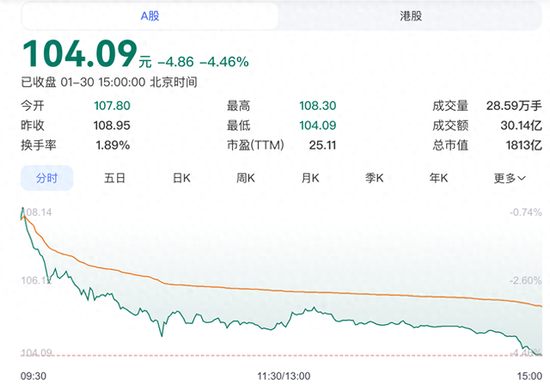
Core Viewpoint - The market is concerned about the declining market value of Seres despite its strong performance in sales and revenue, leading to a significant drop in stock price and market capitalization [1][15]. Sales Performance - In 2025, Seres is projected to achieve sales of 472,000 electric vehicles, a year-on-year increase of 10.63%, with the AITO brand accounting for over 420,000 units [3][17]. - The AITO M9 model has sold over 260,000 units, maintaining its position as the top-selling luxury vehicle in China for 20 consecutive months [3][17]. - For the first three quarters of 2025, Seres' revenue surpassed 110 billion yuan, with a net profit of 5.3 billion yuan and a gross margin of 29.37%, all showing year-on-year growth [3][18]. Market Concerns - Despite strong sales figures, the stock price has declined due to concerns over diluted channel advantages as the AITO brand's sales channels are shared with other brands under the HarmonyOS ecosystem [4][19]. - The proportion of AITO sales within the HarmonyOS ecosystem is expected to drop from 87% in 2024 to approximately 71% in 2025 [5][20]. - The initial advantage of Huawei's technology as the primary platform for AITO is diminishing, as new models are now competing for launch opportunities [6][21]. Brand Perception - Seres acquired all 919 trademarks of the AITO brand from Huawei for 2.5 billion yuan, indicating a shift from a supplier relationship to a more integrated strategic partnership [9][23]. - There is a growing recognition among consumers that AITO represents a combination of Seres manufacturing and Huawei technology, leading to a disconnect in brand perception [9][23]. Competitive Landscape - In the luxury vehicle market, AITO M9 captures 70% of the target demographic, but faces increasing competition from brands like Zeekr, Li Auto, and others targeting the same high-income consumer base [8][22]. - The competitive pressure is heightened as these brands are actively targeting consumers who are considering switching from traditional luxury brands [8][22]. Cost Structure Concerns - The gross margin of 29.37% is above the critical threshold of 20%, indicating a healthy financial position [10][24]. - However, the costs associated with Huawei's technology and marketing services are rising, with payments to Huawei for core components reaching 75 billion yuan from 2022 to mid-2025, averaging 136,000 yuan per vehicle [10][25]. - Marketing and service fees have surged from 4.036 billion yuan in 2022 to 18.111 billion yuan in 2024, indicating a heavy reliance on Huawei's brand for maintaining high margins [10][25]. Future Goals - Seres aims to produce its one-millionth vehicle by January 2026, with a target of achieving 550,000 to 600,000 units in 2026 [11][26]. - The company plans to expand its international presence, with 20% of its Hong Kong IPO proceeds allocated for overseas sales and charging network development [12][26]. - Increased investment in R&D, amounting to approximately 5.06 billion yuan in the first three quarters of 2025, is aimed at building a robust manufacturing foundation for future growth [13][26]. Strategic Challenges - As the Huawei brand's influence wanes, Seres must establish a sustainable competitive advantage in technology, distribution, and brand recognition to avoid being overshadowed by competitors [14][27].
中国车企和特斯拉的下一战,战场已定
虎嗅APP· 2026-01-30 13:58
Core Viewpoint - Tesla is shifting its focus towards humanoid robots, with CEO Elon Musk stating that the production of Model S and Model X will be phased out to prioritize the development of the Optimus robot, which Musk believes will underpin 80% of Tesla's future market value [2][3]. Group 1: Tesla's Strategic Shift - Tesla plans to cease production of Model S and Model X, transitioning the Fremont factory to produce Optimus robots [3]. - The introduction of humanoid robots is seen as a critical component of Tesla's new mission, which aims to create a "prosperous and extraordinary world" [2]. - Musk acknowledges that Tesla's main competition in the humanoid robot sector will come from Chinese companies, which are rapidly advancing in AI and robotics [3]. Group 2: Chinese Automakers' Robotics Initiatives - Chinese automakers are actively investing in humanoid robotics, with companies like Li Auto and BYD announcing plans to develop their own humanoid robots [5][6]. - The competitive landscape is intensifying, with various Chinese companies, including Chery and Xpeng, setting timelines for humanoid robot production by 2026 and 2028 [12][13]. - The overlap in technology between electric vehicles and humanoid robots is significant, with around 70% of automotive technology being applicable to robotics [8]. Group 3: Market Potential and Investment Outlook - The global market for humanoid robots is projected to reach $25 trillion by 2050, indicating a massive growth opportunity compared to the automotive sector [9]. - The high degree of technological overlap allows automakers to pivot towards robotics without substantial additional investment, making it a low-cost, high-reward opportunity [9]. - Morgan Stanley reports that China holds a dominant position in the humanoid robot supply chain, accounting for 63% of the market, which could drive down manufacturing costs [14]. Group 4: Competitive Landscape and Challenges - The competition between Tesla and Chinese automakers in the humanoid robot space is expected to intensify by 2027, with both sides having distinct advantages [12][14]. - Tesla's strength lies in its advanced AI algorithms and extensive real-world data, while Chinese companies have demonstrated rapid iteration and cost control capabilities [14]. - Talent acquisition is crucial for success in the humanoid robot sector, with both Tesla and Chinese firms vying for top talent amidst a competitive automotive landscape [17].
2026·贸促进行时 | 浙江省贸促会聚焦提能增效,锚定高水平开放
Huan Qiu Wang· 2026-01-30 12:32
Core Viewpoint - The China Council for the Promotion of International Trade (CCPIT) is implementing targeted measures to help enterprises effectively respond to external challenges and seize development opportunities, particularly in the context of the 14th Five-Year Plan and a complex international environment [2]. Group 1: Key Initiatives and Goals - The Zhejiang Provincial CCPIT aims to enhance its capabilities and effectiveness in promoting trade, focusing on the dual service brands "Zhejiang Going Global" and "Zhejiang Win-Win" to support enterprises in achieving international competitiveness [6][9]. - The provincial government report emphasizes the need for high-level opening up, aiming for a 6% growth in service trade and over 8% in digital trade by 2026, while maintaining stable export shares in goods trade [4][5]. Group 2: Strategic Focus Areas - The CCPIT will concentrate on three major tasks: enhancing the capabilities of open platforms, strengthening hub functions, and innovating trade models to boost trade quality and quantity [3][4]. - Specific initiatives include the construction of a world-class port in Ningbo-Zhoushan, the establishment of a resource allocation hub for bulk commodities, and the promotion of cross-border e-commerce [3][4]. Group 3: Trade Promotion Activities - The CCPIT plans to organize various international trade and investment activities, including the fourth Chain Expo and international procurement series, to facilitate connections between local enterprises and global markets [8][12]. - The organization will also enhance legal services for businesses, focusing on compliance, intellectual property protection, and dispute resolution to support enterprises in their international ventures [9][10]. Group 4: FTA and Investment Environment - The CCPIT is set to implement a three-year action plan for Free Trade Agreement (FTA) research and application, aiming to publish multiple practical guides and conduct numerous training sessions to assist enterprises in leveraging FTAs [13][14]. - Efforts will be made to optimize the foreign investment environment through extensive evaluations and feedback mechanisms, ensuring that foreign enterprises' needs are addressed effectively [14].
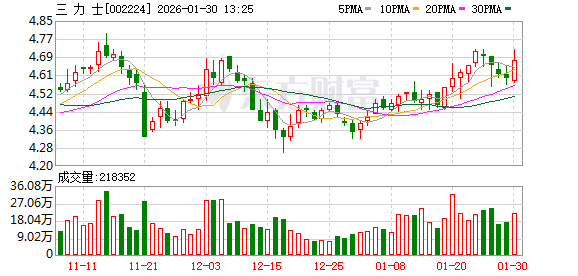
三力士:公司产品目前尚未覆盖正时皮带产品
Mei Ri Jing Ji Xin Wen· 2026-01-30 05:25
Group 1 - The company currently does not produce timing belts that can be used in new energy vehicles or hybrid vehicles [2] - There is no existing collaboration between the company and automotive manufacturers such as BYD, Geely, or Li Auto [2]

补差价、享红包、0首付,购置税新政首月,车企以变应变
Qi Lu Wan Bao· 2026-01-30 02:33
齐鲁晚报·齐鲁壹点记者 陈丹 像李女士一样,持币观望的"等等党"消费者不在少数。美恒汽车城的鸿蒙智行店,销售着智界、享界、 问界等车型。销售经理李振宇介绍,进入1月份,消费者到访量没有受太大影响,每周能有80至90组客 户,但成交量相比之前有明显变化。他指着面前的智界R7说,新政策执行后,要比去年增加10000元左 右的购置税。尽管顾客相对价格没那么敏感,但车企日新月异的智驾技术和配置硬件的不断升级,令不 少消费者选择继续观望。 2026年或许是新能源汽车市场重新洗牌的元年,也是其由政策驱动转向市场驱动的关键一年。影响消费 者购车决策的不只是购置税调整,还有整个车市环境。根据中国汽车流通协会乘用车市场信息联席分会 (乘联会)的零售口径数据,预计2026年1月狭义乘用车零售销量约为180万辆(环比下降20.4%),其 中新能源乘用车约占80万辆(环比下降33.8%,同比下降40.2%),燃油车约为100万辆。 显然,汽车市场正从高增速转向存量竞争,新能源车企间的角逐也将由单纯的"价格内卷",转向技术创 新、成本控制、服务生态等多维度的综合比拼。新的一年,谁能以更好的品质和更优的服务打动消费 者,谁就将掌握破局的 ...
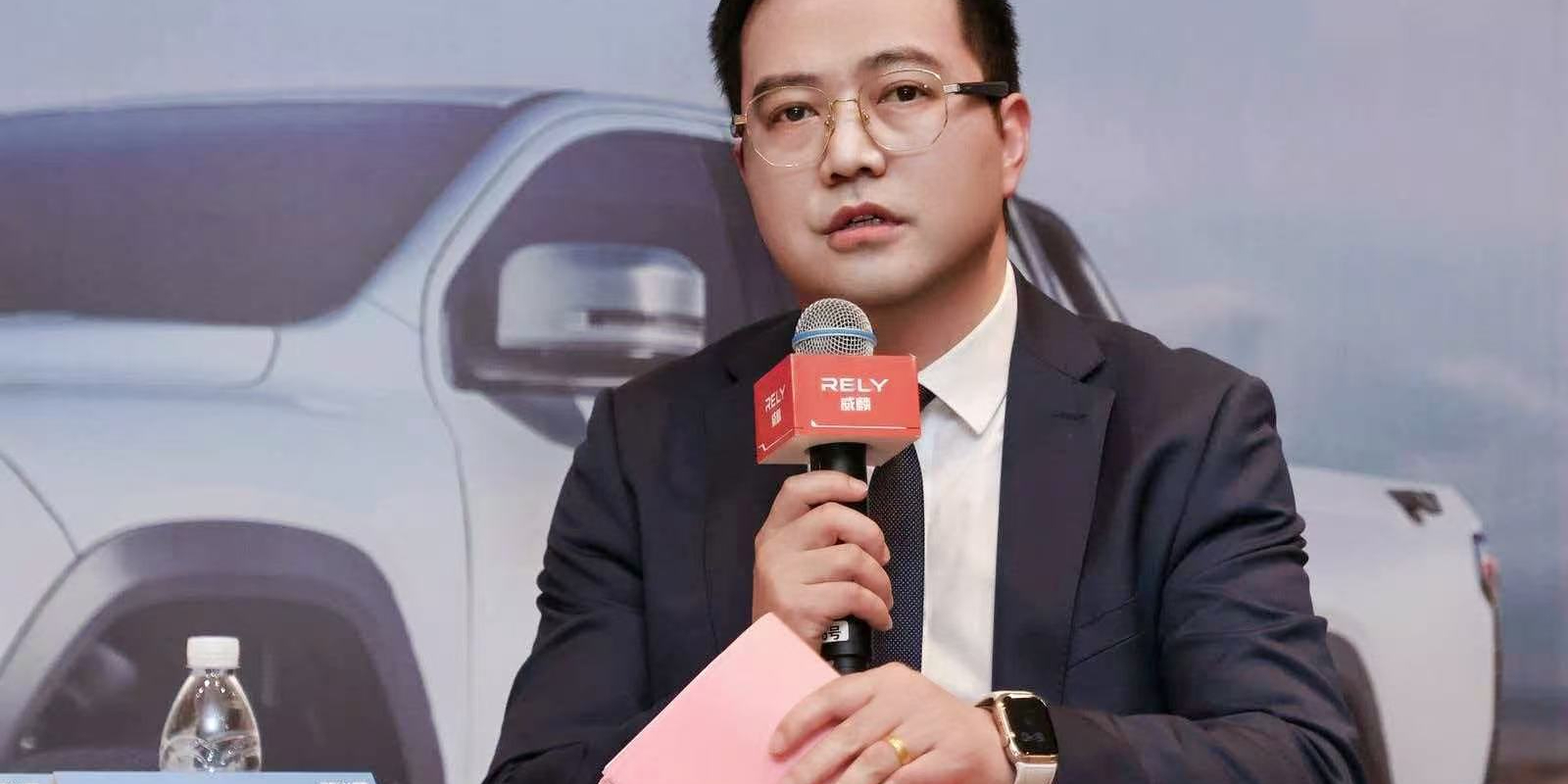
奇瑞张佳明:威麟电动皮卡重视C端,未来靠柴油混动挑战丰田、福特
Jing Ji Guan Cha Wang· 2026-01-30 00:28
目前,中国新能源皮卡市场的主要玩家包括吉利、比亚迪、郑州日产、长安和江铃。根据乘联分会数据,2025年12月,吉利雷达电动皮卡销量2092辆,比亚 迪皮卡海外销量1200辆,郑州日产销量1081辆,长安增程皮卡销量753辆,江铃新能源皮卡销量285辆。 "以往一些传统车企的电动皮卡价格较高,主要面向B端。但我们观察到,C端需求已经起来。我们预测,(威麟R08 EV)上市第一年B端和C端的比例结构 大概在1:1。随着电动皮卡普及度提高,C端用户基数更庞大,未来占比将逐步超过B端。"威麟R08 EV产品CE施竟成在接受经济观察报等媒体采访时说。 张佳明透露,威麟电动皮卡在C端会率先聚焦于对皮卡政策相对友好、新能源接受度高的区域,如海南、广东、浙江等市场。在东部地区,无论是商用车还 是乘用车,纯电动的渗透率都还有很大提升空间。因此,威麟电动皮卡也会锚定大B端(如国企、央企及政府采购)和小B端(如无人机作业、小型矿场等 特定行业用户)。 政策一直是影响皮卡市场发展的重要因素。从2016年开始,有关部门先后取消了皮卡车身喷字、粘贴反光条、营运证和驾驶员从业资格证等限制。目前,全 国约95%的地级以上城市已取消皮卡进城限 ...
欣旺达在韩再遭诉讼,专利与质量双重围剿下溃败在即?
3 6 Ke· 2026-01-29 13:24
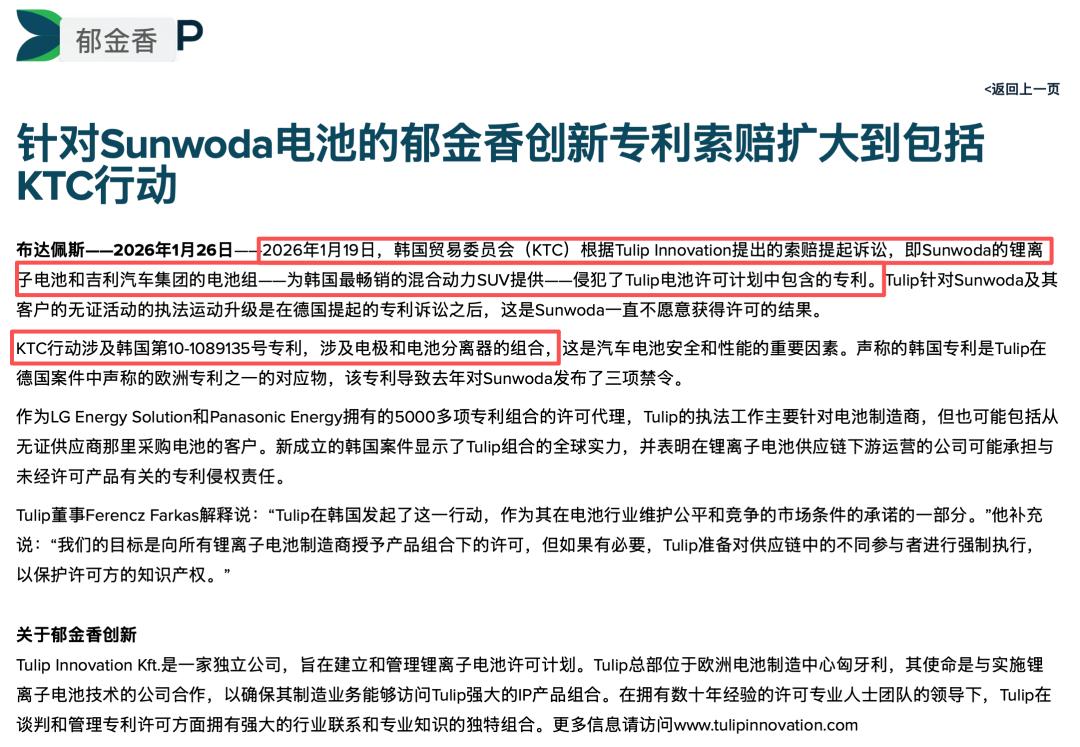
Core Viewpoint - The patent alliance "Tulip Innovation," formed by LG Energy and Panasonic, has initiated a patent infringement lawsuit against Xinwanda in South Korea, claiming that Xinwanda's lithium-ion battery cells and battery packs for Geely's popular hybrid SUV violate a specific patent related to electrode and separator technology [1][4]. Group 1: Patent Infringement and Legal Challenges - The lawsuit in South Korea is part of a broader strategy similar to previous actions taken in Germany, targeting core battery technologies that are critical for energy, safety, and lifespan [4][7]. - Xinwanda has previously faced three defeats and sales bans in Germany regarding the same patent, indicating the strength of the patent barriers established by the alliance [4][7]. - The lawsuit poses risks not only to Xinwanda but also to its customers, as the involved battery technology is used in Geely's hybrid SUV sold in South Korea, potentially affecting market prospects [7][11]. Group 2: Domestic Quality Issues and Financial Implications - Xinwanda is also facing a domestic lawsuit from Geely's Weirui company, claiming damages of 2.313 billion RMB due to serious quality issues with battery cells supplied between 2021 and 2023 [4][11]. - The quality issues have led to significant vehicle recalls, with estimates suggesting that tens of thousands of vehicles may be affected, aligning with the compensation amount sought [11][15]. - The financial impact of the 2.313 billion RMB claim is severe, potentially consuming 90% of Xinwanda's net profit for 2023 and 2024, with insufficient reserves to cover such liabilities [15][16]. Group 3: Industry Implications and Strategic Reflections - Xinwanda's situation serves as a warning for the industry, highlighting the risks of prioritizing cost over quality, as aggressive pricing strategies may compromise essential safety and reliability standards [20][24]. - The dual challenges of patent infringement and quality issues are forcing a reevaluation of supplier assessments, emphasizing the need for robust quality systems and independent patent strategies [20][24]. - The case of Xinwanda illustrates the complexities of international expansion for Chinese companies, where legal and technical challenges are becoming increasingly intertwined [20][24].