
小米

Search documents
字节跳动通报:120名员工被辞退;郑州中原保时捷中心疑似闭店跑路,保时捷回应;广汽人事变动!郑衡辞去副总经理职务,原因披露
雷峰网· 2025-12-26 00:25
Key Points - The article discusses various significant events in the automotive and technology sectors, highlighting issues such as dealership closures, personnel changes, and employee terminations in major companies [5][10][12][31]. Group 1: Automotive Industry - Zhengzhou Zhongyuan Porsche Center is suspected of closing down, leaving customers unable to retrieve their vehicles, with Porsche China investigating the situation [5][6]. - GAC Group announced the resignation of Vice President Zheng Heng due to personal health reasons, with no impact on the company's operations [10]. - BYD's off-road brand Fangchengbao achieved its 2025 sales target ahead of schedule, with a total of 183,769 vehicles sold from January to November 2025, marking a significant year-on-year increase [34]. Group 2: Technology Sector - ByteDance reported the termination of 120 employees for violating company policies, with some cases involving criminal activities [12]. - JD.com announced its 2025 year-end bonus plan, with over 92% of employees eligible for full or above bonuses, and some departments achieving up to 25 months' salary [14]. - Xiaomi celebrated its 15th anniversary, highlighting achievements such as the launch of its self-developed 3nm chip and the opening of a new factory [33]. Group 3: Market Developments - TikTok plans to establish a joint venture in the U.S. to ensure its continued operation, with a focus on data security and compliance with U.S. laws [44][45]. - Meta has initiated the development of the Quest 4 headset while delaying the release of the lightweight Quest Air headset to refine its features [47][48]. - Waymo explained the operational issues faced by its autonomous taxis during a power outage, emphasizing the need for software updates to improve decision-making in such scenarios [49].



百万交付之后 鸿蒙智行迎来“成长烦恼”
Zhong Guo Zheng Quan Bao· 2025-12-25 21:11
Core Insights - The company achieved a record of delivering one million vehicles in 43 months, marking the fastest milestone for new energy vehicle companies in China, with November deliveries reaching 81,864 units, a year-on-year increase of 89.61% [1] - The "Five Realms" matrix, consisting of multiple brands, is taking shape, with significant growth in the smart automotive ecosystem projected for 2025 [1][9] - Despite rapid growth, structural challenges are emerging within the new brands, particularly in sales adaptation and brand reputation [1][2] Brand Performance - The "Wenjie" brand remains dominant, with November sales of 51,677 units, accounting for 63% of total sales, while models M7, M8, and M9 are leading in their respective segments [2] - "Zun Jie" has surpassed the delivery volume of Porsche's Palamera in China, despite lower monthly sales of 2,000 units, indicating a strong reputation in the high-end market [2] - "Zhi Jie" has faced fluctuations in sales, with a peak of 12,000 units in November after a significant drop earlier in the year, highlighting the need for stable sales performance [2][3] Internal Challenges - The company needs to optimize product iteration and align with market demand, as evidenced by the delayed upgrades and inconsistent brand experiences across models [3][4] - "Xiang Jie" has a narrow market focus with only two models, leading to dependency on the performance of the S9T model, which has shown volatility in delivery numbers [4] - The internal resource allocation and market positioning between the "Five Realms" and the emerging "Jing" brands present challenges for ecosystem collaboration [6][9] Competitive Landscape - The rise of Huawei's "Jing" brands poses new challenges for the company's ecosystem, requiring effective resource distribution and differentiation in market positioning [6][7] - The competitive environment is intensifying, with rivals like Tesla and BYD optimizing their pricing strategies, while new entrants like Xiaomi and Zeekr accelerate product iterations [8] - The company plans to launch at least 11 new models by 2026, raising concerns about internal competition and resource coordination among multiple brands [8][9]
2025年家电出口跌宕起伏,中国品牌出海本土化突破
第一财经· 2025-12-25 12:58
Core Viewpoint - The article discusses the fluctuations in China's home appliance exports in 2025, highlighting the challenges posed by changing tariffs and the strategies employed by Chinese companies to mitigate these impacts while maintaining their status as a global manufacturing and export powerhouse in the home appliance sector [3]. Group 1: Challenges and Strategies - Chinese companies are facing significant challenges due to sudden tariff increases, such as the over 100% tariff imposed by the U.S. in April 2025, which led to order cancellations and financial strain [5]. - Companies like 乐途电器 explored various countries for production facilities, including Vietnam and Cambodia, but faced obstacles such as high rental costs and geopolitical issues affecting power supply [5][6]. - After multiple assessments, 乐途电器 ultimately decided to expand its production capacity in China rather than establishing overseas factories, reflecting a broader trend among Chinese manufacturers to prioritize domestic production amidst tariff uncertainties [6][7]. Group 2: Market Dynamics and Performance - Despite tariff disruptions, companies like 新宝股份 and TCL are still primarily producing for the U.S. market domestically, indicating a reliance on local manufacturing to meet demand [7][8]. - 海尔智家 reported growth in the North American market by enhancing local production efficiency and expanding regional capacity, while also achieving significant revenue growth in emerging markets [11]. - The overall export volume of large home appliances from China is expected to reach a record high of over 210 million units in 2025, with varying performance across different product categories [13]. Group 3: Global Expansion and Localization - Chinese home appliance brands are increasingly focusing on localization strategies, moving from merely exporting products to establishing a presence in local markets through production and branding efforts [10][14]. - Major companies are investing in overseas production bases and enhancing their marketing strategies, including sports sponsorships, to strengthen brand recognition and consumer engagement [12]. - The trend indicates a shift towards a model of "Chinese R&D + overseas production + local sales," which aims to mitigate trade risks and align more closely with market demands [14].
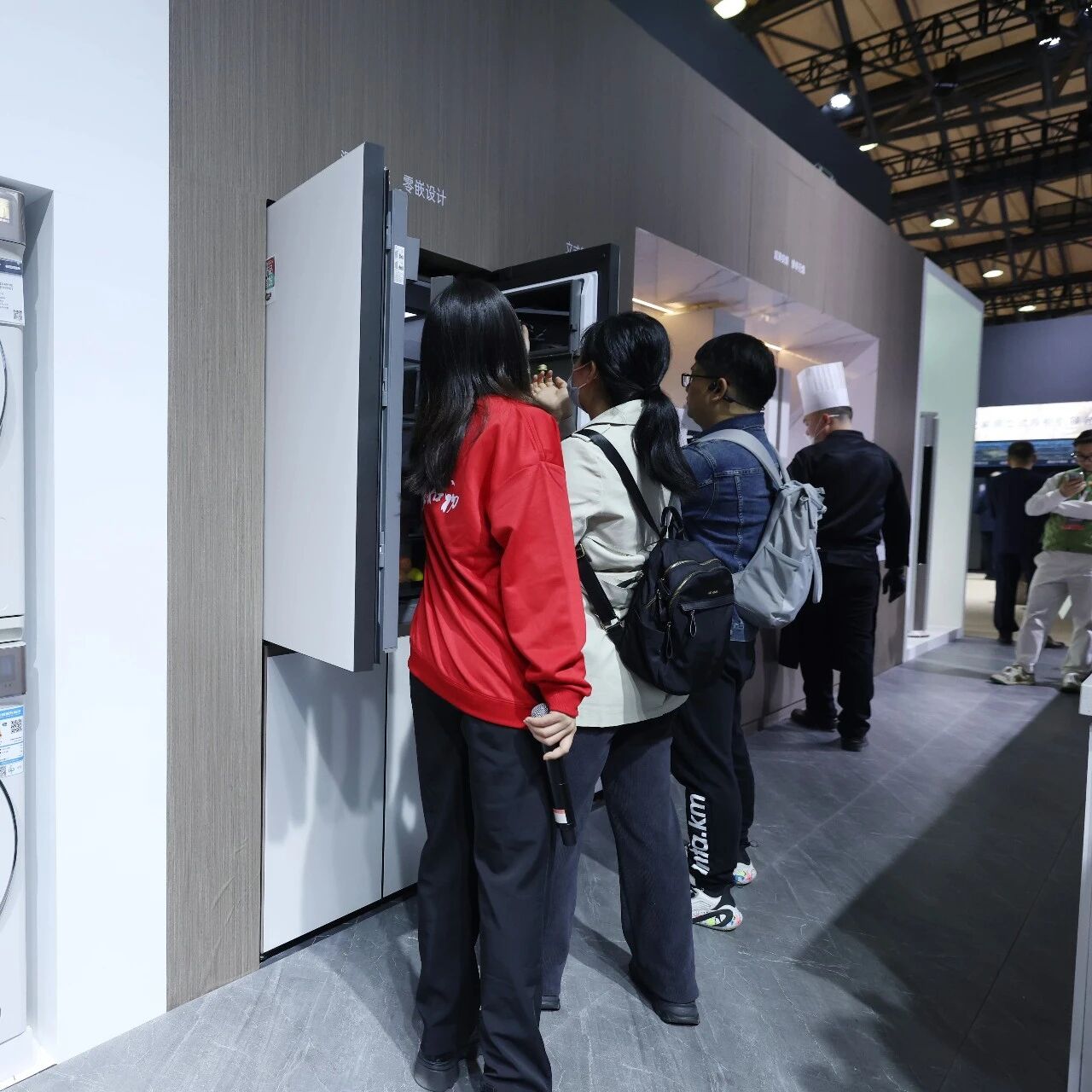
在鸟巢开过发布会的陈凯峰,决定不再做手机品牌
Jing Ji Guan Cha Wang· 2025-12-25 12:11
Core Viewpoint - The article chronicles the evolution of the Chinese mobile phone industry through the experiences of Chen Kaifeng, highlighting the transition from basic feature phones to smart devices and the strategic pivots made by companies like KuSai Intelligent in response to market changes [2][10][22]. Industry Evolution - In the late 1990s, mobile phones were luxury items in China, with high costs for both calls and devices, leading to a burgeoning electronic communication industry [2]. - By the early 2000s, domestic manufacturers primarily acted as intermediaries, lacking core technology and relying on foreign designs for assembly [3][4]. - The introduction of MediaTek's "Turnkey Solution" in 2005 significantly lowered the technical and financial barriers for manufacturers, allowing them to produce phones without extensive R&D [5]. Company Development - Chen Kaifeng founded his company in 2006, initially focusing on a unique product that catered to specific user needs, such as loudspeakers for construction workers and long battery life [6][7]. - The "shanzhai" (copycat) phones, while often viewed negatively, provided affordable access to mobile technology for lower-income consumers, contributing to the growth of the Shenzhen electronics industry [8][9]. - In 2009, the company shifted focus to branding, launching the "Koobee" brand, which initially thrived due to its understanding of the market [10][11]. Market Challenges - The smartphone market began to consolidate around major players like Xiaomi and OPPO, leading to increased competition and pressure on smaller brands [12][14][15]. - By 2017, the company faced significant challenges as the market became dominated by a few key brands, prompting a strategic pivot towards international markets and niche segments [15][21]. Strategic Shift - The company transitioned from a focus on branding to becoming an "invisible factory" for local brands in overseas markets, emphasizing customized solutions for specific regional needs [21][22]. - KuSai Intelligent began to explore specialized markets, such as rugged phones for industrial use, integrating advanced features like thermal imaging and laser measurement [18][19][20]. Future Outlook - The company is now leveraging its engineering capabilities to expand beyond mobile phones into other technology sectors, such as fitness equipment and robotics [24][25]. - Chen Kaifeng emphasizes the importance of surviving and thriving within the industry ecosystem rather than seeking fame, focusing on building a sustainable business model [26].
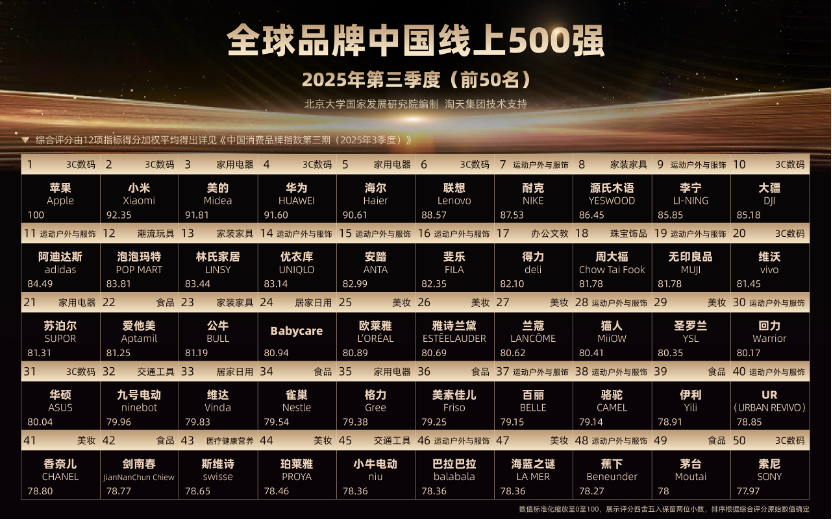
最新“全球品牌中国线上500强”季度榜单出炉 大疆首次进入前10、泡泡玛特上升显著
Zheng Quan Ri Bao Wang· 2025-12-25 11:44
Core Insights - The latest quarterly "China Online Consumption Brand Index" (CBI) and the "Global Brand China Online Top 500" (CBI500) were released, indicating a continued rise in online consumer brand purchasing power [1][3] - The CBI for the third quarter of 2025 is reported at 62.65, reflecting a year-on-year increase of 0.92%, suggesting a growing preference for branded products among online consumers [3] Industry Performance - The CBI series indicates that industries such as women's clothing, 3C smart products, daily beauty, outdoor sports, pet supplies, men's clothing, and home furnishings have shown year-on-year growth in consumption quality [4] - The increase in consumption quality is attributed to Taobao's operational strategies, which have focused on supporting original clothing brands and improving the business environment for merchants [4] Brand Rankings - DJI entered the top ten for the first time, driven by strong performance in new product sales and brand search volume, particularly in the action camera and drone sectors [4] - Pop Mart ranked twelfth, marking a significant rise in brand influence due to its series of original IPs, despite fluctuations in the trendy toy industry [4] Consumer Trends - The CBI series aims to promote high-quality online consumption by encouraging competition based on quality and innovation rather than cost [5] - The shift towards quality competition is seen as essential for creating a positive market cycle that ultimately enhances the quality of life for consumers [5]



海科新源与法恩莱特战略合作,后者拟购买27万吨电解液溶剂及添加剂
Zheng Quan Shi Bao Wang· 2025-12-25 10:41
Core Viewpoint - Haike Xinyuan (301292) has signed a strategic cooperation and raw material supply agreement with Hunan Fanelite New Energy Technology Co., Ltd. for the purchase of 270,000 tons of electrolyte solvents and additives from 2026 to 2028, enhancing both companies' market positions and supply stability [1][2]. Group 1: Company Overview - Haike Xinyuan specializes in the research, production, and sales of carbonate series lithium-ion battery electrolyte solvents, additives, and high-end propylene glycol, positioning itself as a leading enterprise in the global electrolyte solvent market [1]. - Fanelite has a diverse strategic shareholder base, including Longpan Technology and Xiaomi, and has established long-term partnerships with leading domestic battery companies, enhancing its production capabilities [2]. Group 2: Strategic Cooperation - The agreement with Fanelite is expected to leverage both companies' strengths, ensuring stable raw material supply for Fanelite and positively impacting Haike Xinyuan's sales and brand influence [2]. - Haike Xinyuan has previously signed similar agreements with Kunlun New Materials and Hefei Qianrui Technology, indicating a strategy of securing long-term supply relationships to support its growth [3].
一周一刻钟,大事快评(W137):二手车出海——日本经验;零部件观点更新;岱美股份重申-20251225
Shenwan Hongyuan Securities· 2025-12-25 10:24
Investment Rating - The report maintains a positive investment rating for the automotive industry, specifically recommending companies with strong alpha potential and growth prospects [2][4][5]. Core Insights - The report highlights the challenges faced by the used car export market, particularly from Japan, emphasizing the need for standardized rating systems and trust-building measures between buyers and sellers [3]. - It suggests that companies with strong operational capabilities, such as large dealership groups and platforms like Uxin, are well-positioned to capitalize on the growth of used car exports [3]. - The report notes that the automotive parts sector is currently facing headwinds due to high inventory levels and the exhaustion of trade-in subsidies, but there is a cautious optimism for market recovery in the coming year [4]. - Companies like Daimay and Fuda are highlighted for their stable performance and growth potential, particularly in the robotics sector and their international market presence [5][6]. Summary by Sections Used Car Export Insights - The used car export market is hindered by trust issues and a complex transaction chain, with Japan's stringent vehicle inspection policies serving as a potential model for improvement [3]. - Uxin is identified as a key player with a growing inventory of nearly 7,000 used cars, making it a recommended investment for the next two to three years [3]. Automotive Parts Sector Update - The automotive industry did not experience the anticipated year-end surge, primarily due to the depletion of trade-in subsidies and consumer hesitance [4]. - Recommendations include companies with strong alpha characteristics such as Shuanghuan Transmission and Yinlun, which are expected to benefit from stable growth and high market ceilings [4]. Daimay and Robotics Sector - Daimay is recognized for its stable earnings, low valuation, and significant growth potential, particularly in automotive interior components and robotics [5][6]. - The company has made significant strides in expanding its client base, including partnerships with major electric vehicle manufacturers, and is positioned to support Tesla's localization efforts in North America [6].






大厂抢AI人才,投资人蹲守大厂具身智能大咖
创业邦· 2025-12-25 10:10
Core Insights - The article highlights the intense competition for AI talent among major tech companies, with significant salaries being offered to attract top graduates and professionals [5][6][9] - There is a notable trend of talent leaving large companies to start ventures in embodied intelligence, indicating a shift in focus from traditional AI to more hardware-oriented applications [12][16] - Investors are increasingly favoring the embodied intelligence sector, viewing it as a friendly environment for entrepreneurs compared to the more competitive AI landscape dominated by large firms [4][20] Talent Competition - Major tech companies are offering high salaries to attract AI talent, with Tsinghua University PhD graduates receiving offers ranging from 1.6 million to 2 million yuan, and some positions in foundational AI models reaching 3 to 4 million yuan [6][7] - Companies like ByteDance and Tencent have launched aggressive recruitment programs targeting both graduates and current students, with ByteDance offering up to 20,000 yuan per day for interns [7][9] - The competition for AI talent has led to significant salary increases, with reports indicating a 50% rise in compensation for core AI personnel at Meituan by 2025 [7][9] Shift to Embodied Intelligence - A growing number of tech professionals are leaving their positions at large firms to pursue opportunities in embodied intelligence, with over 30 entrepreneurs reported to have made this transition in 2023 alone [4][12] - The article lists several notable figures who have left major companies to start their own ventures in embodied intelligence, indicating a trend among top talent to seek more innovative and less constrained environments [15][16] - The investment landscape for embodied intelligence is becoming increasingly favorable, with significant funding being directed towards startups in this field, totaling over 70 billion yuan in 2024 [15][22] Corporate Strategies - Major tech companies are cautious about investing heavily in embodied intelligence, viewing it as a less profitable venture compared to AI software development [20][22] - Companies like Alibaba, Tencent, and ByteDance are primarily investing in startups within the embodied intelligence space rather than developing their own products, aiming to mitigate risks associated with new business ventures [22][23] - The article notes that large firms are likely to adopt a strategy of gradual investment and eventual acquisition of successful startups in the embodied intelligence sector [22][23]



日本经验,零部件观点更新,岱美股份重申-20251225
Shenwan Hongyuan Securities· 2025-12-25 09:14
Investment Rating - The report maintains a positive outlook on the automotive industry, specifically recommending companies like Uxin and Daimay as strong investment opportunities [2][5]. Core Insights - The second-hand car export market faces significant challenges, including the non-standard nature of vehicles and a complex transaction chain. Japan's experience in this sector offers valuable lessons, such as stringent vehicle inspection policies and the establishment of standardized auction platforms [3][4]. - The automotive parts sector has not seen the anticipated year-end surge due to exhausted subsidies and consumer hesitance. The report suggests focusing on companies with strong alpha, such as Shuanghuan Transmission and Yinlun, which have stable growth and high market ceilings [4]. - Daimay is highlighted as a stable, undervalued company with significant growth potential, particularly in the automotive interior and robotics sectors. The company has made substantial progress in expanding its client base, including partnerships with major players like Tesla [5][7]. Summary by Sections Second-Hand Car Export - The second-hand car export market is hindered by trust issues and a lack of standardized practices. Japan's strict vehicle inspection policies and auction platforms provide a model for improvement. Uxin, with a current inventory of nearly 7,000 vehicles, is positioned for growth in this market [2][3]. Automotive Parts Sector - The automotive industry did not experience the expected late-year demand surge due to depleted subsidies and cautious consumer behavior. The report emphasizes the need to monitor the continuation of trade-in policies and suggests focusing on companies with strong alpha characteristics, such as Shuanghuan Transmission and Yinlun [4]. Daimay - Daimay is recognized for its stable performance and low valuation, with 80% of its revenue coming from overseas markets. The company is well-positioned to withstand domestic market pressures and has made significant strides in the robotics field, particularly in electronic skin technology [5][7].

大数据洞察中国二手车消费新方向
Zhong Guo Qi Che Bao Wang· 2025-12-25 08:59
Core Insights - The central theme of the articles highlights the ongoing support for automotive consumption in China, particularly through the "trade-in" policy, which is expected to maintain high demand in 2026, especially for used cars [1] - The rise of new energy vehicles (NEVs) is contrasted with the stability of traditional fuel vehicles, showcasing the varying depreciation rates and market dynamics between these segments [2][4] Group 1: Automotive Consumption Trends - The "trade-in" policy will continue to be a key initiative in promoting automotive consumption, with a focus on used car exchanges [1] - In 2025, over 11.2 million cars were traded in under the "trade-in" program, indicating a strong demand for vehicle replacement [1] - The high transfer rate of used cars, reaching 33.1% in October 2025, suggests a breaking down of regional barriers, facilitating smoother transactions [1] Group 2: Depreciation Rates and Vehicle Value - Fuel vehicles experience significant depreciation, with a first-year value retention of approximately 66%, while the third-year depreciation approaches 50% [4] - New energy vehicles see a sharper depreciation curve, with values nearly halving within two years, suggesting a need for timely trade-ins to maximize value [4] - The best time to sell fuel vehicles is within three years, while new energy vehicles should ideally be traded within two years to avoid rapid value loss [4] Group 3: Market Performance of Vehicle Brands - Traditional fuel brands like Toyota and Honda maintain strong resale values, with models like the Highlander and Accord retaining over 65% of their value after three years [2][3] - In contrast, some luxury brands, such as Land Rover and Volvo, show declining resale values, with rates around 40% [2][3] - Among new energy vehicles, Xiaomi's SU7 leads with a one-year retention rate exceeding 90%, while traditional luxury brands struggle to compete in this segment [2][3] Group 4: Regional Market Dynamics - The second-hand car market shows significant regional preferences, with Beijing having the highest average transaction price exceeding 100,000 yuan, while provinces like Gansu and Inner Mongolia show more tolerance for older vehicles [9] - The penetration rate of second-hand new energy vehicles has increased from 3.6% at the end of 2022 to 11.2% by October 2025, with southern regions showing stronger demand compared to northern areas [11] - Cross-regional transactions are becoming commonplace, with platforms like Guazi facilitating a significant volume of sales across provinces, enhancing market accessibility [8]
