
华润啤酒

Search documents
食品饮料周观点:白酒龙头积极应对,大众品关注需求边际催化-20250928
GOLDEN SUN SECURITIES· 2025-09-28 09:30
Investment Rating - The report maintains an "Increase" rating for the food and beverage industry, indicating a positive outlook for the sector [5]. Core Insights - The report highlights that leading liquor brands are actively responding to the upcoming peak sales season during the Mid-Autumn Festival and National Day, with signs of marginal improvement in sales after a prolonged bottoming period in Q2 [2]. - In the beer and beverage sector, the departure of the CFO of China Resources Beer is noted, alongside the continuous introduction of new products in the beverage industry, reflecting a competitive landscape [3]. - The report emphasizes the importance of focusing on high-growth companies in the consumer goods sector, particularly those benefiting from policy support or recovery improvements [4]. Summary by Sections Liquor Industry - The report indicates that terminal demand for liquor has shown signs of recovery, with sales in September increasing by 15%-25% month-on-month, although year-on-year figures remain slightly down [2]. - Leading brands like Moutai and Wuliangye are taking proactive measures to stabilize prices and enhance market strategies ahead of the peak sales season [2]. Beer and Beverage Sector - The report notes the resignation of the CFO of China Resources Beer and suggests monitoring the recovery of the restaurant sector and sales structure performance [3]. - New product launches in the beverage sector are highlighted, catering to consumer demand for natural and additive-free drinks [3]. Food Sector - The report mentions that Wanchen Group has submitted an application for listing on the Hong Kong Stock Exchange, with plans to expand its store network and enhance digital capabilities [4]. - The upcoming holiday season is expected to drive demand for dairy products and mooncakes, leading to a temporary surge in sales [4].


金字火腿拟跨界半导体;西贝投资成立新公司;百事任命首席科学官
Sou Hu Cai Jing· 2025-09-28 03:18
Investment Dynamics - McDonald's China plans to invest over 400 million RMB in talent training and development over the next three years, focusing on upgrading its Hamburger University with three main directions: "smarter, more open, and more focused on holistic growth" [3] - Jinzi Ham announced a plan to acquire up to 300 million RMB for a 20% stake in Zhongsheng Microelectronics, indicating a strategic shift towards the semiconductor industry due to slow growth in its main business [5] - Heineken announced a cash acquisition of Florida Ice and Farm Company (FIFCO) for 3.2 billion USD (approximately 227.52 billion RMB), expanding its beverage and retail business in Central America [7] Brand Dynamics - Xibei has established a new restaurant management company, Fan Jiji, with a registered capital of 500,000 RMB, aiming to isolate risks from its main brand due to declining customer traffic [9] - Xiaobing Xiaobing has formed a new restaurant management company, Xiaoniu, with a registered capital of 50 million RMB, marking a shift towards a "headquarters platform + partner" model [13] - Starbucks has launched a limited edition product line inspired by Dunhuang murals, enhancing store efficiency and providing a replicable model for "coffee + cultural tourism" [16][17] Product Development - Magnum Ice Cream plans to utilize AI technology from NotCo to reformulate products and develop new offerings, marking a significant step in AI-driven food research [20] Personnel Dynamics - René Lammers has been appointed as Executive Vice President and Chief Research and Innovation Officer at Estée Lauder, effective October 1, indicating a shift in R&D strategy to a board-level decision-making process [23] - The CFO of China Resources Beer, Zhao Wei, has resigned, creating a potential gap in financial decision-making at a critical time [26] - Wei Zhe has been appointed to the Food Safety and Sustainability Committee of Yum China, reflecting an upgrade of ESG and food safety oversight to the board level [29]




百果园拟筹约3亿元还债;LVMH集团出售KVD;宜家母公司CEO换届
Sou Hu Cai Jing· 2025-09-28 03:06
Investment Dynamics - China Resources Holdings' subsidiary Huachuang Xinxin plans to reduce its stake in Shanxi Fenjiu by up to 16.20 million shares, representing a maximum of 1.33% of the company's total share capital. The company currently holds 10.50% of Shanxi Fenjiu [3] - Huachuang Xinxin has previously reduced its holdings, with a total of 6.30 million shares sold between December 2024 and February 2025. The parent company, China Resources, maintains confidence in Shanxi Fenjiu's future despite the reduction [3] Brand Dynamics - LVMH's beauty incubator Kendo has sold its vegan makeup brand KVD Beauty to private equity fund Windsong Global, marking Kendo's first brand sale. KVD will join the multi-brand beauty platform Belle Brands [11] - Netflix has signed a global co-marketing agreement with Anheuser-Busch, focusing on promotional activities for shows like "The Gentlemen" and "Culinary Class Wars," featuring Budweiser and other brands during major events [14] - McDonald's is launching a Mid-Autumn Festival campaign in collaboration with the game "Black Myth: Wukong," featuring themed products and events across over 7,100 restaurants [17] - Lanzhou Beef Noodle has entered a strategic partnership with Coca-Cola to promote cultural heritage and develop co-branded products through various marketing channels [20] - The tea brand "Bawang Chaji" is opening new stores in Hong Kong, expanding its market presence since entering in 2024 [23] - Alibaba's Amap has waived the annual entry fee for all restaurant merchants and is providing various support services to enhance business opportunities [26] - IKEA's parent company Inter IKEA Group announced a CEO transition, with Jakub Jankowski set to take over in January 2026, aiming to drive international manufacturing and digitalization [28]

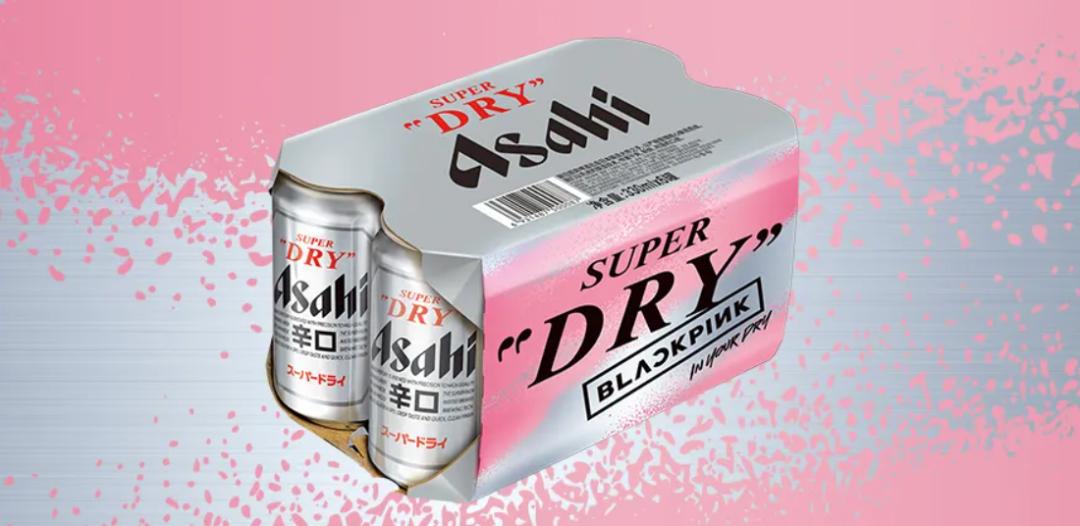
每箱最高涨20元:朝日啤酒在华部分产品发调价通知,称是“艰难决定”,有啤酒经销商预计同行不会贸然跟涨
3 6 Ke· 2025-09-28 02:38
Core Viewpoint - Asahi Beer has announced a price increase for two imported beer products in China due to rising operational costs, effective from September 25, 2023, with specific increases of 5 yuan and 20 yuan per box for different product sizes [1][3][5]. Price Adjustment Details - The price adjustment affects two products: Asahi Super Dry Beer 135ml*24 cans, with a price increase of 5 yuan per box, and Asahi Super Dry Beer 2L*6 cans, with a price increase of 20 yuan per box [3][5]. - Orders placed and paid for before September 24, 2023, will be honored at the original prices to mitigate the impact on distributors [3][5]. Reasons for Price Increase - The company cites a complex global market environment and continuous cost increases as the primary reasons for the price adjustment, emphasizing the need to maintain high-quality product offerings and service levels [3][5][8]. - Asahi Beer has previously implemented multiple price increases in the Japanese market, with a notable increase planned for April 2024 affecting 68 products, with price hikes ranging from 6% to 62% due to rising costs of raw materials and transportation [5][7]. Market Impact and Competitor Response - The price increase may not immediately affect the end consumer, as online flagship store prices remained unchanged at the time of inquiry [5]. - Other Japanese beer brands, such as Kirin and Suntory, are also facing similar cost pressures, leading to speculation that they may adopt a cautious approach to price adjustments to avoid losing core customers [8][10]. - Non-Japanese imported brands may benefit from this price increase by capturing market share, as their prices are generally lower than Asahi's [8][10]. Asahi Beer’s Market Position - Asahi Beer has a significant presence in Japan and has expanded to over 50 countries, becoming a representative brand in the international beer market [11][13]. - The company entered the Chinese market in 1994 and has made strategic decisions to withdraw and re-enter based on market conditions, with a renewed focus on high-end products in China due to growing demand [13][15]. - Despite having a loyal consumer base, Asahi Beer currently holds a market share that does not place it among the top ten in China, where major competitors dominate [16].
综述|泰中合作博览会折射两国经贸合作新机遇
Xin Hua Wang· 2025-09-28 00:50
Group 1 - The 2025 Thailand-China Cooperation Expo showcases new opportunities for economic collaboration between Thailand and China, featuring over 100 companies from both nations [1][3] - The expo is part of the celebrations for the 50th anniversary of diplomatic relations between Thailand and China, with a focus on various sectors including clean energy, digital platforms, agriculture, and education [1][3] - Thai Prime Minister Anutin emphasized the importance of expanding cooperation beyond traditional trade into areas such as high-speed rail, green economy, digital technology, and cultural exchanges [3][4] Group 2 - China has been Thailand's largest trading partner for 12 consecutive years, with bilateral trade reaching $76.1 billion in the first half of this year, a 17% increase year-on-year [4] - Over 30 cooperation agreements were signed on the first day of the expo, covering strategic commodity procurement and investment collaboration [4] - The Thai market for electric vehicles is rapidly growing, with companies like China Resources planning to leverage their charging infrastructure technology to expand in Southeast Asia [5] Group 3 - The expo features a talent recruitment section offering over 1,500 job positions in fields such as engineering, digital technology, logistics, and modern services [7] - Educational institutions from both countries are providing over 100 scholarship opportunities to attract Thai youth [7] - The event will host over ten specialized seminars and high-level dialogues focusing on topics like green finance, smart logistics, and cross-border e-commerce [9]
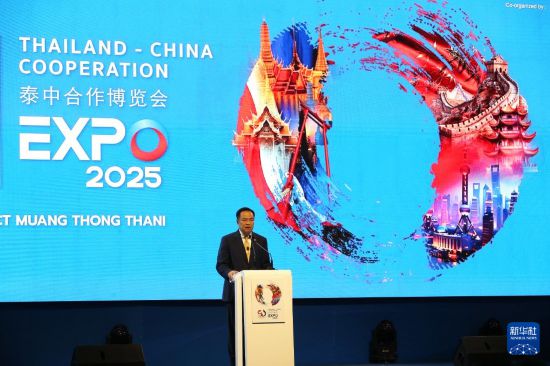
【环球财经】泰中合作博览会折射两国经贸合作新机遇
Xin Hua She· 2025-09-27 08:51
Group 1 - The 2025 Thailand-China Cooperation Expo opened in Bangkok, showcasing over 100 companies from both countries across various sectors including clean energy, digital platforms, agriculture, and education [1][2] - The exhibition area exceeded 20,000 square meters, reflecting the strong economic ties and cooperation between Thailand and China over the past 50 years [1][2] - Thailand's Prime Minister Anutin emphasized the future cooperation will extend beyond traditional trade into high-speed rail, green economy, digital technology, and cultural exchanges [1][2] Group 2 - Thailand's Trade Council Chairman noted that bilateral trade and investment have significantly increased, particularly in agriculture and energy sectors, with China being Thailand's largest trading partner for 12 consecutive years [2] - In the first half of this year, the bilateral trade volume reached $76.1 billion, marking a 17% year-on-year increase, with China absorbing over 40% of Thailand's agricultural exports [2] - Over 30 cooperation agreements were signed on the first day of the expo, focusing on strategic commodity procurement and investment collaboration [2] Group 3 - The expo featured a "Talent Recruitment Zone," offering over 1,500 job positions in engineering, digital technology, logistics, and modern services, in collaboration with Thailand's Ministry of Labor [3] - Educational institutions from both countries presented over 100 scholarship opportunities, attracting many Thai youth to inquire [3] - The event included over ten specialized seminars and high-level dialogues on topics such as green finance, smart logistics, and cross-border e-commerce, aimed at exploring cooperation opportunities in the new global economic landscape [3]
周度市场观察:酒行业-20250927
Ai Rui Zi Xun· 2025-09-27 08:46
Investment Rating - The report does not explicitly provide an investment rating for the industry Core Insights - The white liquor industry is undergoing a significant transformation with a shift towards younger and more diverse brand ambassadors, moving from traditional middle-aged male figures to younger celebrities to connect with new generations of consumers [2] - The high-end beer market is experiencing a competitive shift, with local brands like China Resources and Qingdao Beer gaining ground against international players like Budweiser [4] - The banquet market is emerging as a new battleground for revenue growth, with several liquor companies reporting double-digit growth in this segment [5] - The direct sales revenue of eight listed liquor companies exceeded 640 billion yuan in the first half of the year, with Moutai and Wuliangye leading the market [6] - The low-alcohol product segment is rapidly growing, with expectations to surpass 742 billion yuan by 2025, driven by changing consumer preferences [8] Summary by Sections Industry Trends - The white liquor industry is shifting towards younger brand ambassadors, reflecting a broader trend of appealing to younger consumers through lifestyle marketing [2] - The light bottle liquor market is experiencing a split, with traditional brands struggling while high-quality products like Guojiao are in high demand [2] - The high-end beer market is seeing local brands outperform international ones, with China Resources surpassing Budweiser in revenue [4] - The banquet market is becoming a key area for growth as companies adapt to changing consumer behaviors [5] - The direct sales model is gaining traction, with significant revenue growth reported by leading companies [6] - The low-alcohol segment is expected to grow rapidly, indicating a shift in consumer preferences towards lighter beverages [8] Top Brand News - Songhe Liquor is enhancing its quality strategy and aims for long-term growth through a focus on aged products [10] - The launch of "Dazhen·Zhenjiu" marks a significant entry into the high-end liquor market, leveraging a strong sales strategy [11] - Gujing Gongjiu is integrating cultural elements into consumer experiences to enhance brand engagement [13] - The "UMEET" blueberry distilled liquor targets younger consumers by combining health and quality [20] - The collaboration between Huajun Media and Bojiangfang aims to reshape the market for sauce-flavored liquor through strategic marketing [19]
谁是对深圳“贡献”最大的企业?腾讯第一、华润第二、招商第三
3 6 Ke· 2025-09-27 04:24
Group 1 - The top ten taxpayers in Shenzhen for 2024 include Tencent (59.2 billion), China Resources (44.4 billion), China Merchants Bank (32 billion), Ping An Group (27.3 billion), BYD (22.8 billion), Vanke (19.9 billion), Huawei (15 billion), Shenzhen Investment Control (5.8 billion), SF Express (4.1 billion), and Industrial Fulian (3.4 billion) [1] - Among the top ten taxpayers, private enterprises account for 70%, while state-owned enterprises only represent three [3][4] - The ranking may only reflect the tax contributions of these companies within Shenzhen, not their nationwide contributions, as companies like Huawei and BYD have multiple research and production bases across the country [4] Group 2 - Shenzhen's private economy contributes over 50% of the city's tax revenue, nearly 60% of its added value, and over 90% of employment [6] - In 2024, the number of private enterprises in Shenzhen reached 2.623 million, ranking first in the country [6] - Shenzhen has 886 private "little giant" enterprises and 23,700 private high-tech enterprises, ranking first and second nationally, respectively [6] - The city is home to 37 private unicorn companies, ranking third in the country [6] - In the 2025 Fortune Global 500 list, Shenzhen has ten companies listed, with seven being private enterprises, the highest among all cities in China [6] - Private enterprises are also the main force in Shenzhen's foreign trade, with imports and exports reaching 2.06 trillion in the first eight months of the year, accounting for 69.6% [6]



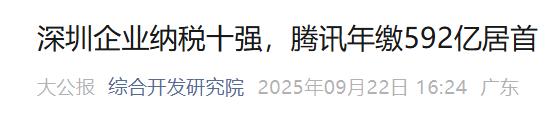
赵崇甫:品类失焦、品牌悬空,金种子酒的战略困局与人事流沙
Sou Hu Cai Jing· 2025-09-27 03:27
Core Viewpoint - Jinzhongzi Liquor is facing a financial crisis characterized by continuous losses, which stems from a lack of clarity in category strategy and brand positioning [1] Category Strategy - The company's attempt to penetrate the "mid-high-end" market has failed due to a misreading of market dynamics and speculative positioning [2] - The introduction of the "Fuhuo Xiang" series has not resonated with consumers, generating only 37.28 million yuan in revenue in the first half of the year, accounting for less than 10% of total revenue [2] - The rapid contraction of low-end products has led to a significant revenue decline, with low-end liquor income dropping by 33% year-on-year [2] Brand Positioning - Jinzhongzi's brand positioning oscillates between being a "historical famous liquor" and a "new noble of China Resources," failing to establish a strong market presence [5] - The company has multiple brand directions, such as "Soft Seed Liquor," "Fuhuo Xiang," and "Drunken Autumn," leading to resource dilution and ineffective brand communication [5] - The "China Resources" label, while providing capital and channel resources, risks creating a narrative of dependency rather than building intrinsic brand value [6] Personnel Changes - The departure of He Xiuxia symbolizes a disconnect in strategic execution, reflecting a lack of patience from China Resources regarding the liquor business [7] - Frequent leadership changes hinder the continuity of strategic initiatives, leaving stakeholders confused about the company's direction [7] - The lack of a consistent long-term strategy may prevent Jinzhongzi from establishing a solid market position, as seen in competitors like Gujing Gongjiu [7] Recommendations - Jinzhongzi should refocus on its core category strategy, identifying a stable market position and aligning its brand with that position [8] - The company needs to avoid chasing fleeting concepts like "mid-high-end" and instead concentrate on building a strong cultural identity around its existing products [8] - China Resources must recognize the differences between beer and liquor industries, allowing for a longer strategic timeline to cultivate brand value in the liquor market [8]

付鹏最新演讲:现在对黄金的共识,是对极端情况的一种表达
Feng Huang Wang Cai Jing· 2025-09-26 13:31
Group 1: Economic Trends and Insights - The current consensus on gold reflects a collective expression of concern over potential extreme risks, indicating a shift in the traditional credit system and the beginning of a new order [3][4] - The evolution of value consensus is not eternal and changes with generational shifts, as younger generations redefine consumption and investment preferences [5][6] - The global economy is at a critical juncture, requiring a breakthrough technology to drive productivity and escape current challenges, with AI emerging as a clear technological path [7][8] Group 2: AI and Its Impact - The AI industry has transitioned from concept exploration to application explosion, marking a significant shift in market focus from upstream computing power to downstream vertical applications [8][9] - The development of AI is an irreversible trend, and individuals must learn to utilize AI to remain competitive in both personal and investment markets [9][10] - The potential for AI to achieve self-production could lead to significant employment impacts, particularly in industries where AI can automate processes [10] Group 3: Demographic Changes and Consumption Patterns - Individual consumption willingness and capital expenditure capabilities are closely linked to the demographic lifecycle stage, with younger generations driving growth in certain consumer sectors [11][12] - The aging population and wealth distribution will influence various economic phenomena, including real estate and investment preferences [11][12] - Understanding the cyclical nature of population dynamics is crucial for grasping broader economic trends and their implications for investment and consumption [13]

