
古茗

Search documents
2999元童颜针炸场:消费者终于赢一回?
阿尔法工场研究院· 2025-10-14 00:07
Core Insights - The valuation anchor for the medical beauty industry is shifting from high-margin approvals to user-centric metrics such as repurchase rates, single-store models, and scalability [2][9][42] Group 1: Market Dynamics - The recent launch of New Oxygen's "Miracle Youth" series at a price point of 2999 yuan has made youth-enhancing injections more accessible to the general public, indicating a potential shift in the traditional pricing structure [4][9] - The price of youth-enhancing injections has historically been high, with some products priced significantly above gold, but the introduction of lower-priced options suggests a loosening of the previous pricing power held by manufacturers [7][11] - The Chinese medical beauty market is experiencing a surge in competition, with multiple youth-enhancing products receiving approvals, leading to a more fragmented market [23][42] Group 2: Consumer Behavior Changes - The primary consumer base for medical beauty has shifted from affluent older clients to urban white-collar workers who are more price-sensitive and seek value for money [28][29] - Consumers are increasingly relying on social media platforms for information, preferring transparent pricing and verifiable product efficacy over high-priced luxury experiences [29][30] - The demand for standardized and replicable services is growing, pushing providers to adapt their business models to focus on product quality and customer retention [31][32] Group 3: Industry Structure and Future Outlook - The medical beauty industry is moving towards a decentralized model where manufacturers are no longer the sole price setters, allowing service providers to create their own product combinations [35][46] - The shift in pricing and consumer logic is expected to impact capital markets, with investors beginning to focus on user value metrics rather than just high margins from manufacturers [40][42] - Successful models in other sectors, such as chain medical services, demonstrate that scale and user retention can lead to valuation premiums, suggesting a similar trajectory for the medical beauty industry [43][45]


黄金周即配需求激增,日均同城配送单量同比增六成
Yang Zi Wan Bao Wang· 2025-10-13 10:34
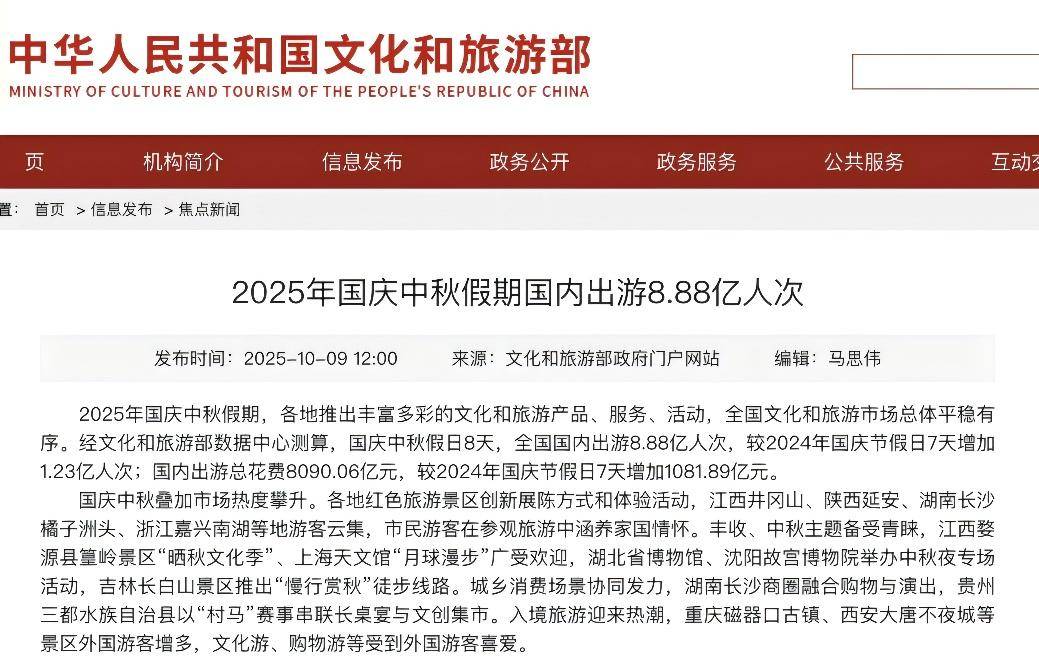
Core Insights - The combination of the National Day and Mid-Autumn Festival created an 8-day "Golden Week," significantly boosting consumer activity across the country [2] - A total of 888 million domestic trips were made during the holiday period, indicating a strong recovery in travel and tourism [2] - The "cultural tourism + instant delivery" model has enhanced travel experiences, leading to substantial increases in delivery volumes in popular tourist destinations [4] Group 1: Consumer Behavior and Trends - The average daily delivery volume for beverages increased by 168% year-on-year during the holiday, highlighting the popularity of new tea drinks as essential holiday items [3] - The "flash purchase" model has become a new norm for holiday consumption, with significant growth in delivery volumes for fast food, supermarkets, and jewelry [3][4] - The demand for "1-to-1 urgent delivery" services surged, with the volume of "exclusive delivery" orders increasing by over 500% compared to last year [5] Group 2: Impact on Tourism and Delivery Services - The holiday saw a diversification in travel patterns, with both major cities and smaller counties experiencing a surge in visitor numbers [4] - The "cultural tourism + instant delivery" model has injected new vitality into tourism consumption experiences, with delivery volumes in cities like Harbin and Jingdezhen seeing multiple-fold increases [4] - The expansion of infrastructure and the rise of instant delivery services have supported the growing popularity of county-level tourism [4]
9块9成过去时,咖啡价格战卷到2块9
36氪· 2025-10-13 10:13
Core Viewpoint - The coffee industry is undergoing a significant price war, leading to a drastic reduction in coffee prices and reshaping consumer expectations and market dynamics [4][5][6]. Price War Dynamics - Two years ago, brands like Luckin and Kudi set coffee prices at 9.9 yuan, but new tea brands like Guming and Cha Baidao have pushed prices down to the 4 yuan range [6][10]. - Major players including Starbucks have also joined the price reduction trend, with Starbucks reducing prices on several products by an average of 5 yuan, marking a significant shift in their pricing strategy [6][8]. - The competition has evolved into a full-scale industry battle, with various brands engaging in aggressive promotions and price cuts [7][8]. Consumer Behavior and Market Impact - The introduction of low-priced coffee has become the norm, with consumers able to purchase coffee for as low as 0.5 yuan through delivery platforms [7][18]. - The price war has led to a redefinition of coffee's value, with high-end brands struggling to maintain profitability and some even resorting to selling their businesses [8][23]. - The coffee market has seen a significant increase in the number of stores, but also a high rate of closures, with over 50,000 coffee shops exiting the market in the past year [23]. Brand Strategies and Responses - Guming has launched aggressive pricing strategies, offering coffee at 4.9 yuan, significantly undercutting competitors like Luckin and Kudi [11][12]. - Other tea brands, such as Cha Baidao, are also entering the low-price coffee market, indicating a trend where tea brands are diversifying into coffee to capture new market segments [12][13]. - Luckin and Kudi have responded to the price war by introducing their own low-priced coffee options, with Luckin offering promotions that bring prices down to as low as 2.9 yuan [14][18]. Industry Outlook - The coffee industry is becoming increasingly segmented, with a variety of price points catering to different consumer preferences [24]. - The long-term sustainability of the coffee market will depend on the development of supply chains and the ability of companies to adapt to changing consumer demands [24].



餐饮旅游行业:国庆中秋长假数据稳健向好
Orient Securities· 2025-10-13 09:47
Investment Rating - The industry investment rating is maintained as "Positive" [5] Core Insights - The holiday data continues to validate the resilience of cultural and tourism consumption, with both short-term catalysts and mid-term growth logic present [3] - During the National Day and Mid-Autumn Festival holiday, domestic travel reached 888 million trips, with total spending of 809 billion yuan, indicating stable tourism activity and resilient travel demand [8] - The integration of cultural and tourism consumption is highlighted, with key retail and catering enterprises seeing a sales increase of 2.7% year-on-year during the holiday period [8] Summary by Sections Holiday Data Performance - The holiday period saw 888 million domestic trips, averaging 111 million trips per day, a year-on-year increase of 1.6% [8] - Total domestic travel expenditure was 809 billion yuan, averaging 101.1 billion yuan per day, with a year-on-year increase of 1.0% [8] - Cross-regional personnel flow reached 2.432 billion trips, averaging 304 million trips per day, a historical high with a year-on-year increase of 6.2% [8] Scenic Area Performance - Scenic areas generally experienced increased visitor numbers, with Emei Mountain receiving 371,000 visitors, a 41.3% increase [8] - The overall performance of Xinyuan Cultural Tourism's scenic areas reached a historical high, with 1.655 million visitors and revenue of 98.4 million yuan, marking a 20% increase [8] Duty-Free and Outbound Tourism - Hainan's duty-free shopping amounted to 944 million yuan, a 13.6% increase, with 122,900 shopping trips, indicating a recovery in outbound tourism [8] - Nationally, outbound travel reached 16.34 million trips, an 11.5% increase, with significant growth in foreign visitors [8] Consumer Behavior Trends - The holiday period exhibited three main characteristics: parallel long-distance and nearby travel, expansion of nighttime and experiential consumption, and more efficient transportation operations [8] - The integration of cultural and tourism sectors continues to drive growth, with a focus on enhancing travel experiences and innovative sales strategies [8]



古茗20251010
2025-10-13 01:00
Summary of Gu Ming's Conference Call Company Overview - **Company**: Gu Ming - **Industry**: Beverage (Tea and Coffee) Key Points and Arguments Sales Performance and Growth - Gu Ming expects same-store sales to grow in Q4, driven by reduced delivery subsidies, new product launches, and a low base from last year due to delivery price increases [2][3] - In January to September 2025, actual revenue for franchisees increased year-on-year, but the growth rate was lower than that of GMV [2][5] - The company achieved a 20% growth rate in 2025, with Q3 also showing strong performance [24] Franchisee Profitability - Franchisees' actual revenue has been increasing, but profit margins are under pressure due to high delivery ratios and low actual revenue rates [4][21] - The delivery revenue rate is around 60%, while non-delivery remains stable at 85% [4] - Gu Ming is focusing on improving dine-in sales to enhance franchisee profitability [4][18] Expansion Plans - The company aims to reach 20,000 stores by 2027, with a target of opening approximately 3,000 new stores in 2026 [2][7][11] - Despite the competitive delivery market, franchisee willingness to open new stores has declined since May 2025 [8][9] - Gu Ming plans to expand in existing regions and invest more resources in new areas like Guangdong and Guangxi [9][10] Product Strategy - New product launches, including hot drinks and coffee, are being introduced to adapt to seasonal changes, especially in northern markets [12][17] - The company has over 10,000 coffee outlets and aims to increase user retention and purchase frequency through promotional activities [23] Market Dynamics - The competitive landscape includes ongoing delivery wars among platforms like Ele.me, Taobao, and Meituan, affecting franchisee revenue [4][15] - Gu Ming does not plan to initiate price wars but will respond to competitive pressures as necessary [28] Seasonal Adjustments - The company has introduced seasonal products to address winter demand, such as hot drinks and specific tea varieties [12][17] - Sales of fruit tea are higher in summer, while milk tea sales increase in winter [13] Digital and Supply Chain Developments - There are no significant updates on supply chain upgrades or digital systems; automation is still in the testing phase [35] Breakfast and New Product Initiatives - Gu Ming is testing breakfast products in select locations, with plans to expand offerings in 2026 [32][33] - The pricing strategy for new breakfast items is being developed, with a focus on maintaining profitability for franchisees [33] Financial Outlook - The company is monitoring franchisee profitability closely and may consider price adjustments or other measures if profitability declines significantly [20][21] Conclusion - Gu Ming is positioned for growth with a focus on expanding its store network, enhancing franchisee profitability, and adapting its product offerings to seasonal demands. The company is navigating a competitive landscape while maintaining a strategic approach to market expansion and product innovation.
万联晨会-20251013
Wanlian Securities· 2025-10-13 00:37
Core Insights - The A-share market experienced a decline, with the Shanghai Composite Index falling by 0.94% to 3,897.03 points, and the Shenzhen Component Index dropping by 2.7% [1][7] - The total trading volume in the Shanghai and Shenzhen markets reached 2.52 trillion yuan, with sectors such as building materials, coal, and textiles leading the gains, while electronics, power equipment, and computers faced losses [1][7] - The Hong Kong Hang Seng Index closed down 1.73% at 26,290.32 points, reflecting a broader trend of declines across major global indices, including a 1.9% drop in the Dow Jones and a 3.56% drop in the Nasdaq [1][7] Industry Analysis Beverage Industry - The new tea beverage market is transitioning from rapid growth to a focus on value, with increasing competition leading to a shift from high-priced, heavily marketed products to more sustainable, frequent consumption models [9][12] - The market is expected to see a concentration of power among leading companies that can effectively manage supply chains and target lower-tier markets, which remain key growth areas [9][12] - Companies are encouraged to innovate products to meet health demands and explore overseas markets while maintaining cost control and operational efficiency [9][12] Food and Beverage Manufacturing - The profit of major industrial enterprises in China showed a positive growth of 0.9% year-on-year for the first eight months of 2025, with significant improvements noted in August, where profits increased by 20.4% compared to the previous month [14][15] - Within the consumer goods sector, essential food and beverage manufacturing industries reported positive profit growth, while optional consumption sectors remained subdued [14][15] - The report suggests focusing on sectors like liquor, dairy, and beverages, which are expected to benefit from macroeconomic policies and declining raw material costs [16][17] Blood Products Industry - The blood products sector underperformed the market, with a 4.86% decline in September, attributed to short-term performance pressures and market sentiment shifts [18][19] - The industry is facing challenges such as price declines and cash flow pressures, but long-term prospects remain positive as leading companies consolidate and enhance their operational capabilities [18][19] - Key focus areas include the integration of upstream plasma resources and the development of high-margin products to improve revenue structures [20]
食品饮料行业周报:板块轮动拉升消费,餐饮链催化延续-20251012
Huaxin Securities· 2025-10-12 15:34
Investment Rating - The report maintains a "Recommended" investment rating for the food and beverage sector [9][58]. Core Insights - The report highlights that the white liquor sector is experiencing marginal improvements in sales during the double festival period, although it remains under pressure year-on-year. Channel inventory has slightly decreased but is still at a relatively high level, leading to anticipated pressure on wholesale prices as companies focus on controlling volume to maintain prices [6][56]. - The consumer sector is rebounding, driven by capital switching and favorable data from the National Day holiday. The report notes a significant increase in cross-regional mobility, with an estimated 2.432 billion people traveling during the holiday, a historical high [7][57]. - The beverage sector is performing strongly, with a focus on new consumption opportunities amid retail channel transformations. The report suggests monitoring companies like Heytea, Cha Bai Dao, and others in the tea beverage segment [8][58]. Summary by Sections Industry News - In September, Douyin's liquor sales increased by 58% month-on-month, and JD Seven Fresh reported a 109% year-on-year increase in liquor sales during the double festival period [5][18]. - The report mentions the official release of the twelve fragrance standard sample and various company developments, including Guizhou Moutai's focus on integrating tourism and liquor sales [5][18]. Company Feedback - The report provides insights into the performance of key companies, noting that the white liquor sector is under pressure but suggests focusing on high-dividend leaders like Guizhou Moutai and Wuliangye, as well as more elastic stocks like Jiu Gui Jiu and She De Jiu Ye [6][9]. - The report also emphasizes the importance of the tea beverage sector, particularly during the National Day holiday, and suggests monitoring companies like Mi Xue and Gu Ming [7][58]. Key Company and Profit Forecasts - The report includes a table of key companies with their stock prices, earnings per share (EPS), and price-to-earnings (PE) ratios, recommending a "Buy" rating for all listed companies, including Guizhou Moutai, Wuliangye, and others [59].




消费中观策略、投资建议:关注景气修复中特估
SINOLINK SECURITIES· 2025-10-12 13:59
Consumer Macro Strategy - The report highlights three major events that influenced consumer market trends over the past two weeks, including stable growth in overall consumption during the Mid-Autumn and National Day holidays, with a notable increase in outbound tourism but fewer domestic consumption highlights leading to a post-holiday decline in related sectors [3][10] - The Q3 earnings preview indicates that while the overall consumer service sector remains stable compared to Q2, consumption-related products face high base pressure in Q4, and other sectors are in a positioning phase after negative earnings surprises in Q3 [3][10] - The ongoing US-China technological competition is expanding into the consumer sector, with new tariffs announced by the US on imports from China, posing challenges for export-oriented consumer companies [3][10] New Consumption Manufacturing - The two-wheeler market showed strong performance in Q3, with healthy inventory levels in downstream channels, but the industry faces a critical test in Q1 2026 [21] - The pet industry is experiencing weaker performance in the off-season, but the upcoming Double Eleven shopping festival is expected to act as a catalyst [21] Light Industry Manufacturing - In the home furnishing sector, domestic demand remains weak due to unhealed real estate issues, while external demand faces increased tariff risks, with significant tariff hikes announced by the US [24] - The new tobacco sector is seeing intensified actions against illegal e-cigarettes in the US, benefiting legitimate brands, while HNB products maintain strong production schedules in Japan and Europe [27] - The packaging paper market is experiencing a bullish sentiment with frequent price increases expected [27] Textile and Apparel - The apparel retail sector showed a year-on-year growth of 3.1% in August, but sales weakened in September and during the National Day holiday due to weather conditions and timing changes [29] - The report suggests focusing on brands with unique market positions and those showing significant performance advantages in sub-sectors [29][30] Beauty and Personal Care - The beauty sector is recovering after a previous decline, with cosmetic retail sales increasing by 5.1% year-on-year in August, indicating a positive trend [31] - Recommendations include focusing on leading brands with strong performance and those undergoing successful reforms [31] Home Appliances - TV panel prices remained stable in early October, with various sizes maintaining consistent pricing [32] - Gree Electric's new product line aims to capture the online market segment, enhancing its competitive position [32][33] Retail and E-commerce - Offline retail shows signs of stabilization, with supermarkets performing well while department stores face slight pressure [34] - The jewelry sector is benefiting from rising gold prices, enhancing consumer acceptance and brand premium capabilities [34] Social Services - The report expresses optimism for high-value dining and the recovery of mid-to-high-end restaurants, alongside stable growth in tourism and education sectors [35] - The tea beverage market is expected to see a decline in performance due to policy impacts, with leading brands like Mixue Ice City and Gu Ming showing growth potential [36]
9块9成过去时,咖啡价格战卷到2块9
凤凰网财经· 2025-10-12 12:36
Core Viewpoint - The coffee industry is experiencing a significant price war, with prices dropping to as low as 2.9 yuan, leading to intense competition among brands and a redefinition of coffee's market value [3][4][18]. Group 1: Price War Dynamics - Two years ago, brands like Luckin Coffee and Kudi initiated a price war, setting coffee prices at 9.9 yuan, which has now evolved into a new phase where brands like Guming and Cha Baidao are offering coffee for 4 yuan and above [3][5][6]. - In 2025, a second wave of price competition was ignited by new tea brands, with Guming launching a campaign offering coffee starting at 4.9 yuan, effectively halving the previous price point [6][7]. - The price war has led to a situation where high-end brands like Starbucks have also reduced prices, with average reductions of around 5 yuan per product [3][4][18]. Group 2: Impact on Brands - The aggressive pricing strategies have forced traditional coffee brands to adapt, with Luckin Coffee and Kudi responding to the new low-price entrants by launching their own promotions, such as 5.9 yuan coffee [10][12]. - The entry of new players like Lucky Coffee, which offers coffee as low as 2.9 yuan, has further intensified the competition, leading to a significant increase in order volumes for some stores [15][16]. - The overall market has seen a decline, with over 50,000 coffee shops closing in the past year, indicating that the price war is unsustainable for many players [18][19]. Group 3: Consumer Behavior and Market Trends - Consumer expectations for coffee pricing have shifted dramatically, with many now viewing 4 yuan as a reasonable price point for coffee [6][10]. - The blurring lines between coffee and tea products have led to increased competition, with brands like Cha Baidao also entering the low-price coffee market [8][12]. - The industry is becoming increasingly segmented, with different price points catering to diverse consumer preferences, highlighting the need for brands to innovate and invest in their supply chains to remain competitive [19].

9块9成过去时,咖啡价格战卷到2块9
3 6 Ke· 2025-10-12 00:11
Core Viewpoint - The coffee price war continues, with brands like Luckin and Kudi initiating aggressive pricing strategies, leading to a significant drop in coffee prices across the industry, now entering the 4 yuan+ era [1][2][10]. Group 1: Price War Dynamics - The coffee industry has seen a shift from a 9.9 yuan pricing model to a new low of 4.9 yuan initiated by new tea drink brands like Guming [2][3]. - Guming's promotional campaign offers coffee starting at 4.9 yuan, significantly undercutting previous prices and positioning itself as a "price butcher" in the market [2][3]. - The competition has intensified with established brands like Starbucks and Kudi also reducing prices, with Starbucks implementing its first price cuts in 26 years in the Chinese market [1][2]. Group 2: Market Impact and Consumer Behavior - The aggressive pricing strategies have led to a blurring of lines between coffee and tea beverages, with increased order volumes reported by various brands [5][10]. - The introduction of low-priced coffee options has altered consumer expectations, with many now perceiving 4 yuan as a reasonable price for coffee [2][10]. - The rise of brands like Lucky Coffee, offering prices as low as 2.9 yuan, has further intensified the competition, leading to a significant increase in order volumes at certain locations [7][9]. Group 3: Industry Challenges - The ongoing price war has resulted in over 50,000 coffee shops closing in the past year, indicating a challenging environment for many players in the market [10]. - High-end brands are not only participating in the price war but are also facing operational challenges, including layoffs and acquisitions, as seen with Starbucks and Piye Coffee [10]. - The industry is becoming increasingly segmented, with various price points catering to different consumer groups, highlighting the need for long-term strategies in supply chain and investment [10].