奔驰

Search documents
理想MEGA惊魂爆燃后,三元锂电池天塌了?
36氪· 2025-11-04 09:48
Core Viewpoint - The incident involving the Li Auto MEGA has reignited concerns about battery safety in the electric vehicle industry, particularly regarding the use of ternary lithium batteries versus lithium iron phosphate batteries [4][7][9]. Group 1: Incident Overview - The Li Auto MEGA, priced over 500,000 yuan and marketed for family safety, caught fire within 10 seconds without a severe collision, raising alarms in the new energy sector [4][5]. - Following the incident, Li Auto acknowledged a defect in the coolant of the MEGA 2024 model, which could lead to thermal runaway in extreme conditions [7][9]. Group 2: Battery Safety Debate - The MEGA incident has shifted focus from vehicle design issues to battery safety, with ternary lithium batteries, known for their high performance, now under scrutiny for their thermal stability [9][12]. - Research indicates that ternary lithium batteries can begin to decompose at around 200°C, leading to rapid thermal runaway, while lithium iron phosphate batteries require much higher temperatures (500-800°C) to decompose, making them inherently safer [12][13]. Group 3: Market Dynamics and Battery Choices - The shift in market dynamics since 2016 has favored ternary lithium batteries due to their higher energy density, which has made them the preferred choice for high-end electric vehicles [19][21]. - However, the rising costs of ternary lithium batteries and the increasing market share of lithium iron phosphate batteries, which have surpassed 70% in recent months, indicate a significant change in consumer preferences [21][28]. Group 4: Future of Battery Technologies - The future of battery technology may see a coexistence of both battery types, as high-end vehicles continue to demand the performance benefits of ternary lithium batteries, while cost-effective models may increasingly adopt lithium iron phosphate batteries [34][41]. - Innovations in battery technology, such as solid-state batteries, are expected to leverage the advantages of ternary lithium materials while addressing safety concerns, indicating a potential evolution in the industry [39][41].


年轻人被电车甩晕在通勤路上
投资界· 2025-11-04 08:02
Core Viewpoint - The article discusses the phenomenon of increased motion sickness experienced by passengers in electric vehicles (EVs), attributing it to the mismatch between the rapid acceleration and deceleration of EVs and the human body's adaptation to traditional gasoline vehicles [10][19][24]. Group 1: Urban Mobility Changes - Urban mobility has accelerated, but human bodies have not adapted to this new pace, leading to discomfort during commutes [10][19]. - The frequent stop-and-go nature of city driving exacerbates the issue, as passengers struggle to adjust to the rapid changes in speed [21][24]. Group 2: Physical Responses and Sensory Feedback - Human balance relies on visual cues, physical sensations, and feedback from the vestibular system, which are disrupted in EVs due to their silent operation and immediate response to acceleration [19][20]. - The lack of engine noise in EVs means that passengers do not receive the auditory cues that prepare their bodies for movement, leading to increased instances of motion sickness [20][21]. Group 3: Driver Behavior and Passenger Experience - Driver behavior, such as sudden acceleration or deceleration, can significantly impact passenger comfort, with anxious drivers contributing to a more erratic ride [20][25]. - The design of EVs, including features like regenerative braking, can create a jarring experience for passengers, as the vehicle's behavior differs from traditional cars [25][26]. Group 4: Industry Response and Consumer Adaptation - Car manufacturers are aware of the motion sickness issue but prioritize efficiency and performance over passenger comfort, leading to a growing disconnect between vehicle design and user experience [25][26]. - There is a rising trend in the market for solutions aimed at reducing motion sickness, such as "anti-motion sickness" features and products, indicating a potential new market segment [30][31].

再裁1/4员工、CFO也跑了,激光雷达明星公司陷危机
汽车商业评论· 2025-11-04 03:25
Core Viewpoint - Luminar, a prominent player in the autonomous driving technology sector, is facing significant financial distress, with a cash reserve of approximately $72 million and total debt of $429 million, leading to potential operational challenges and workforce reductions [5][6][36]. Financial Situation - As of October 24, Luminar holds about $72 million in cash and securities, while its total debt stands at $429 million [5]. - The company may run out of cash by Q1 2026 if current spending continues, prompting a 25% workforce reduction [5][19]. - Luminar has missed loan interest payments due on October 15, with a grace period until November 6, raising concerns about potential default [22]. Management Changes - CFO Thomas Fennimore is set to leave on November 13, with the company stating his departure is not due to financial disagreements [5][23]. - Founder Austin Russell was removed as CEO in May due to an undisclosed ethical investigation but remains the largest shareholder and is reportedly seeking to buy back the company [24][27]. Business Challenges - Luminar's partnerships with major automakers like Volvo and Mercedes are under strain, with Volvo delaying the launch of models equipped with Luminar's sensors [13][14]. - The company is facing high R&D and manufacturing costs, selling sensors below production costs, and is in a price war to maintain customer relationships [16][34]. - The overall market for lidar technology is slowing, with projections for the global market size in 2025 revised down to $2 billion from $3.5 billion [38]. Industry Context - Luminar's struggles reflect broader challenges in the lidar industry, where companies are experiencing layoffs and stock price declines amid a shift in market dynamics [37][38]. - The automotive supply chain is reassessing risks, with some projects potentially facing delivery delays [39]. - Despite current challenges, Luminar retains some technological advantages, particularly in its 905 nm wavelength lidar performance [39].

一场控制权争夺,撕裂全球半导体命脉
Tai Mei Ti A P P· 2025-11-04 02:25
Core Viewpoint - The control struggle over Nexperia, a semiconductor company, has led to a significant supply chain crisis affecting global automotive production, highlighting the geopolitical tensions between the Netherlands and China [1][10]. Group 1: Supply Chain Impact - Nexperia's production capacity has been severely disrupted, with a 30% reduction in parking space and one-third of packaging equipment idle due to wafer supply interruptions from its Dutch headquarters [1]. - Major automotive manufacturers, including Volkswagen and BMW, have halted production lines due to critical chip shortages, with the European automotive industry warning of a potential 15% reduction in production capacity if the crisis continues [7][11]. - The crisis has led to a tenfold increase in the price of basic chips, with costs exceeding 3 yuan per unit, directly impacting global automotive production plans [5][7]. Group 2: Historical Context and Acquisition - Nexperia's origins trace back to the 1920s, evolving through various ownerships, including a significant acquisition by a Chinese consortium in 2016 for $2.75 billion, which was seen as a strategic move to fill gaps in China's automotive semiconductor market [2][3]. - The acquisition by Wingtech Technology in 2019 for 34 billion yuan transformed Nexperia into a key player in the automotive semiconductor sector, significantly increasing its revenue and market share [3][4]. Group 3: Legal and Political Dynamics - The Dutch government invoked a 1952 law to freeze Nexperia's assets and remove its Chinese CEO, citing concerns over financial resource misuse and technology transfer risks [4][5]. - The legality of the Dutch court's decision has been questioned, with Wingtech asserting its rights as the 100% controlling shareholder, while the timing of the Dutch intervention aligns with U.S. pressures on Chinese management [5][6]. - The geopolitical context reveals that the Netherlands is aligning with U.S. semiconductor restrictions, reflecting broader strategic concerns about China's technological advancements [10][11]. Group 4: Future Implications and Lessons - The crisis underscores the vulnerabilities of global supply chains, particularly the reliance on a single region for critical components, prompting discussions about regional redundancy in production [13][14]. - The situation serves as a cautionary tale for Chinese companies regarding the importance of political risk assessment in overseas acquisitions, emphasizing the need for a more integrated operational approach to mitigate geopolitical risks [14][16]. - The ongoing conflict illustrates the potential for political actions to disrupt established business contracts, raising concerns about the future of international investments and the sanctity of contracts [14][15].

8000亿欧元贸易额说断就断?马克龙盯上中国稀土,德国人第一个不答应
Sou Hu Cai Jing· 2025-11-03 18:38
Group 1 - The core issue in Europe is the potential use of the "anti-coercion tool" against China, which has been dormant for nearly two years, raising questions about the unity of EU member states in this gamble [3][6] - Macron's focus is on China's rare earth export controls, as he seeks to shift domestic political attention and secure a share in the global supply chain restructuring [3][6] - The economic interdependence between Europe and China is significant, with the EU-China trade volume reaching €800 billion before 2024, making China the largest source of imports for the EU and the second-largest export market [3][4] Group 2 - The "anti-coercion tool" includes measures such as tariffs, public procurement restrictions, and investment limitations, but its implementation requires a majority vote from EU member states, complicating its use [6][9] - The tool is perceived more as a bargaining chip rather than a weapon, as any retaliatory measures from China could adversely affect various European industries, including agriculture and automotive [6][9] - Macron's push for a hardline stance is seen as a political strategy to divert attention from domestic issues, but it risks escalating tensions in a globally interconnected economy [6][9] Group 3 - China's response to the situation has been calm, with advancements in semiconductor self-research and a willingness to engage with European companies in green transitions [7][9] - The broader European challenge is not unique to France, as the entire continent faces transformation pains, and blaming external factors will not resolve underlying issues [9] - A more pragmatic approach to China is suggested, emphasizing cooperation amidst competition and seeking consensus rather than confrontation [9]

视觉中国20251103
2025-11-03 15:48
Summary of Visual China Conference Call Company Overview - **Company**: Visual China - **Industry**: Visual content services, AI technology Key Points and Arguments Financial Performance - Visual China reported a stable revenue performance, with a year-on-year decline in net profit attributable to shareholders (non-GAAP) of 9.03%, although this was an improvement compared to the first half of the year [2][3] - The decline in profit was primarily due to macroeconomic conditions and adjustments within the advertising and marketing sector [3] Strategic Focus - The company adheres to a strategy of "AI intelligence + content data + application scenarios," which has led to the emergence of AI-driven creative customization as a new growth point [2][3] - Visual China has built a high-quality dataset of over 700 million compliant content items, including images, audio, video, and 3D data, enhancing its competitive edge in the industry [2][5] AI Technology Implementation - AI technologies have been integrated into the copyright trading platform, improving material matching and review efficiency, with image review efficiency increasing nearly 15 times [2][6][7] - The company has developed AI features such as search recommendations, content creation assistance, and content review, which streamline the creative process and enhance operational efficiency [6][7] Growth in AI-Driven Services - The AI-driven creative customization business has seen a year-on-year growth of 25%, with partnerships established with major brands like Huawei and Mercedes-Benz [2][8] - Visual China is actively exploring collaborations with leading AI platforms to provide visual content licensing services, similar to the partnership model between Getty Images and Perceptual [4][13] Strategic Investments - The company has made strategic investments in companies like Lingchuan Technology and Shenshu Technology to enhance its capabilities in AI visual chips and multimodal model training [9][10] - A significant investment of 100 million yuan was secured for Daxiang Visual to advance its AI strategic goals [9][10] Market Opportunities and Challenges - The company recognizes the opportunities presented by the AI era, particularly in the video processing chip sector, with a focus on the development of new chips for large model adaptation expected to be mass-produced by 2026 [11][12] - Challenges in AI content generation include ensuring compliance and accuracy of content sources, which the company addresses through partnerships and high-quality data provision [14][19] Future Business Plans - Visual China plans to expand its core business areas while exploring new business opportunities, including: 1. Increasing market share of high-quality copyright content among SMEs and C-end markets [22] 2. Transforming traditional image libraries into dynamic, multi-purpose data assets using generative AI technology [22] 3. Providing more licensed character models for large model training [22] 4. Ensuring all new business complies with copyright and ethical standards [22] Conclusion - Visual China aims to enhance its market competitiveness and deliver greater returns to investors through strategic initiatives and the integration of AI technologies into its business model [23]

视觉中国(000681) - 投资者关系管理信息
2025-11-03 10:48
Group 1: Business Performance Overview - The company achieved a stable overall revenue performance in the first three quarters of 2025, demonstrating strong business resilience [2] - The net profit attributable to shareholders, after deducting non-recurring gains and losses, decreased by 9.03% year-on-year, showing significant narrowing compared to the semi-annual report [2] - The decline in profit was primarily influenced by macroeconomic conditions and adjustments in the advertising marketing industry, indicating cyclical factors [2] Group 2: AI Strategy and Development - The company is advancing its "AI Smart + Content Data + Application Scenarios" integrated core strategy, with progress aligning with expectations [2] - Over 700 million pieces of compliant content data are available for AI model training, positioning the company as an industry leader in high-quality data sets [3] - The company has initiated a project to reprocess and upgrade its vast data assets, converting unstructured data into structured data for efficient AI model learning [3] Group 3: AI-Driven Business Innovations - The company launched an AI-assisted creative service platform, which has seen a revenue increase of approximately 25% year-on-year [7] - AI technology has significantly improved content management and copyright verification processes, with video review efficiency increasing nearly fivefold and image review efficiency increasing nearly fifteenfold [5] - The company signed strategic cooperation agreements with leading data service providers to enhance the compliance ecosystem for AI data services [4] Group 4: Market Expansion and Strategic Investments - The company strategically invested in PixelBloom, which has expanded its influence in the AI productivity tools sector, with revenue sources now exceeding 50 countries and regions [8] - The company is exploring cross-industry service models and has initiated collaborations with emerging companies in the AI chip sector to enhance its technological capabilities [9] - The company is actively developing AI tools for the animation and video production sectors, aiming to improve creative production efficiency [13] Group 5: Future Outlook and Strategic Goals - The company aims to solidify its core advantages while expanding into new innovative businesses, targeting increased market share among small and medium enterprises [15] - The focus will remain on driving growth in copyright transactions and customized content services, while also exploring opportunities in the electronic sector and cultural industries [12] - The company is committed to building a traceable compliance material system to meet the growing demand for legal and commercially viable AI-generated content [15]
固态电池角逐来到冲刺阶段 国内固态电池相关专利申请量达1.3万项
Zhong Guo Jing Ying Bao· 2025-11-03 10:35
Group 1 - Solid-state battery technology is entering a critical phase, with Samsung SDI, BMW Group, and Solid Power collaborating on a solid-state battery validation project [1] - Solid Power will supply sulfide solid electrolytes to Samsung SDI, which will integrate and manufacture these electrolytes into battery cells, while BMW will test the performance in next-generation evaluation models [1] - Solid-state batteries are expected to offer higher energy density and safety, potentially improving the range of electric vehicles, but widespread commercialization is not anticipated until after 2030 [1] Group 2 - In China, 44.1% of solid-state battery-related companies have been established for 5 to 10 years, with a significant concentration in South and East China [2] - As of October 31, China has filed 13,000 solid-state battery-related patents, primarily in the form of invention patents, which account for 63.7% of the total [2] - A research team from the Chinese Academy of Sciences has developed an anion regulation technology that addresses the contact issue between electrolytes and lithium electrodes in solid-state batteries, providing crucial support for practical applications [2]
理想MEGA惊魂爆燃后,三元锂电池天塌了?
3 6 Ke· 2025-11-03 06:06
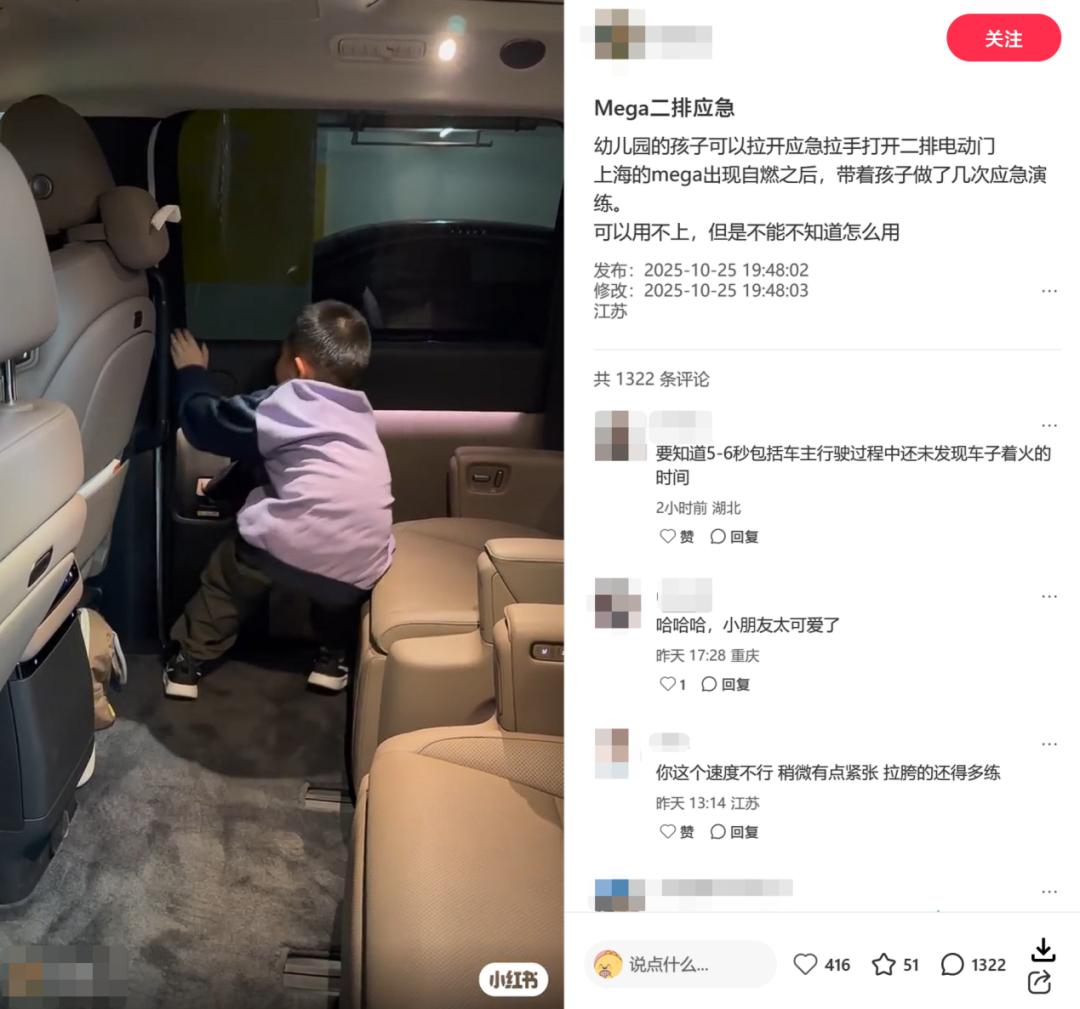
Core Viewpoint - The incident involving the Ideal MEGA electric vehicle, which caught fire within 10 seconds, has sparked significant discussions about battery safety in the electric vehicle industry, particularly regarding the risks associated with high-performance lithium-ion batteries [1][2]. Group 1: Incident and Immediate Reactions - The Ideal MEGA fire incident has led to widespread concern among middle-class parents who purchased the vehicle, prompting discussions on "electric vehicle escape" for children [1]. - Following the incident, Ideal officially apologized and acknowledged a defect in the coolant of the MEGA 2024 model, which could lead to thermal runaway of the battery under extreme conditions [2]. Group 2: Battery Technology Debate - The incident has reignited the long-standing debate between the safety of lithium iron phosphate (LFP) batteries and the performance of ternary lithium batteries, with the former being seen as safer but less powerful [2][5]. - Ideal's MEGA uses the Kirin ternary lithium battery, which was previously marketed as having superior safety features, including a low failure rate and advanced battery management systems [3][5]. Group 3: Battery Characteristics and Safety - Ternary lithium batteries have lower thermal stability, with decomposition reactions potentially starting at around 200°C, while LFP batteries require much higher temperatures (500-800°C) to decompose, making LFP inherently safer [5]. - Experimental data shows that ternary lithium cells can reach peak temperatures of 400-600°C within 10 seconds during short-circuit tests, whereas LFP cells take about 2 minutes to reach 300°C, highlighting a critical safety difference [5]. Group 4: Market Dynamics and Battery Choices - The shift in the market dynamics began in 2016 when subsidies for electric vehicles were linked to battery energy density, favoring ternary lithium batteries, which led to a significant market share increase for them [8][10]. - However, by 2021, LFP batteries began to regain market share, surpassing 70% in 2023, driven by cost-effectiveness and the growing demand for affordable electric vehicles [10][11]. Group 5: Future of Battery Technologies - The future of battery technology may not be a straightforward choice between LFP and ternary lithium, as both have distinct advantages and are likely to coexist based on market demands [24]. - Ternary lithium batteries are seen as a key pathway to next-generation solid-state batteries, which promise improved safety and energy density, while also being suitable for high-performance applications like flying cars and robotics [22][24].
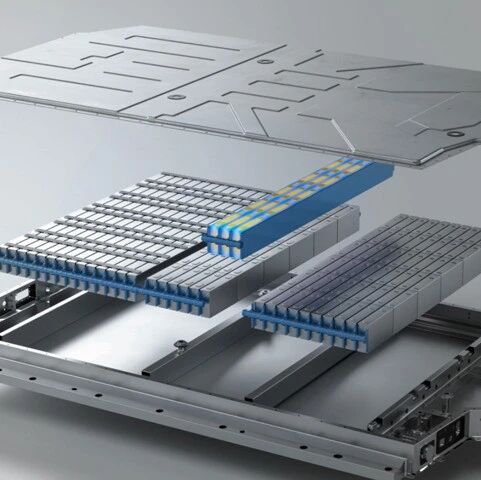
比亚迪的“刀片”和日本市场的“铠甲”
Jing Ji Guan Cha Wang· 2025-11-03 04:48
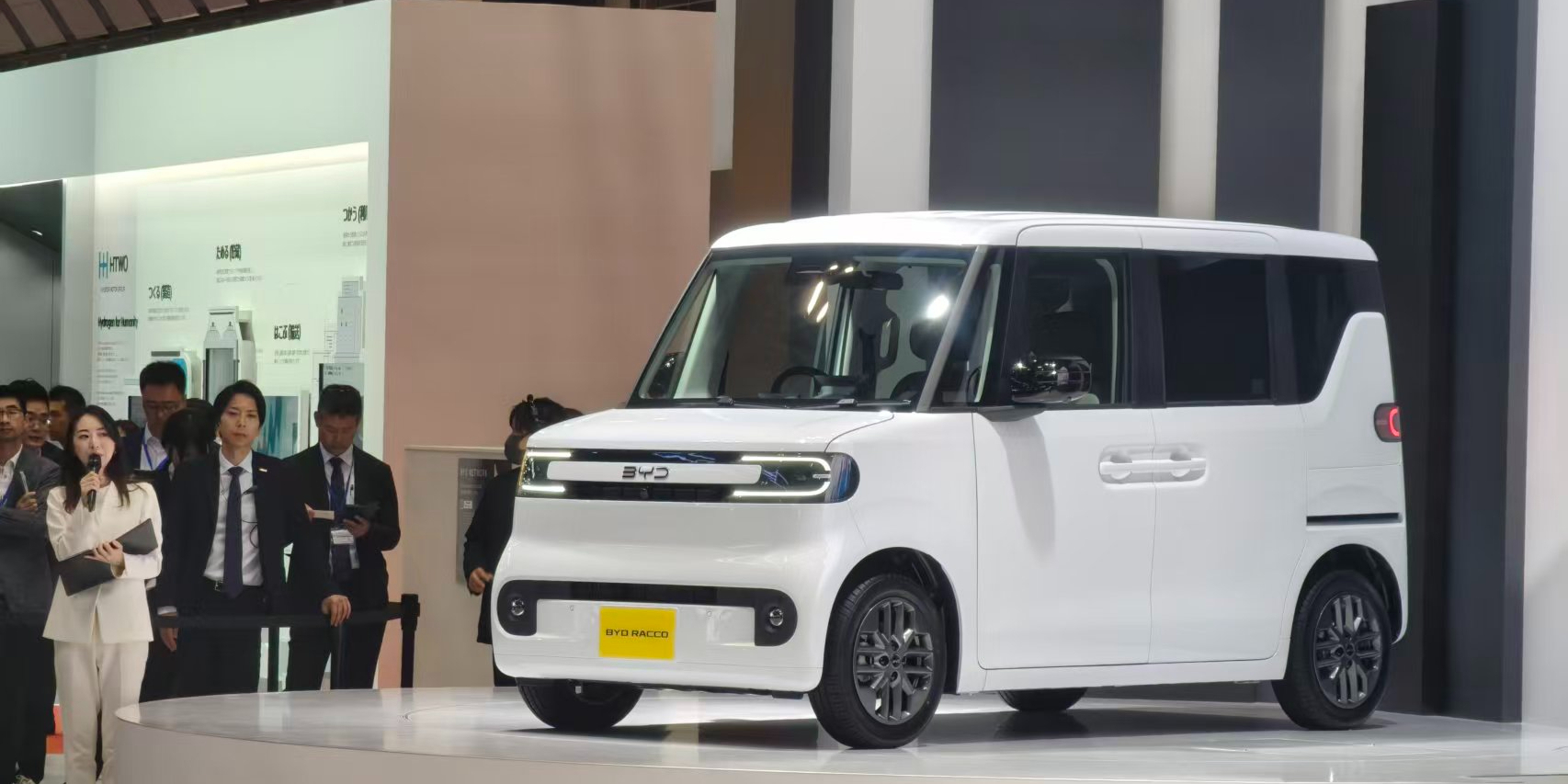
Core Viewpoint - The 2025 Japan Mobility Show highlights the contrasting approaches of Japanese automakers focusing on electrification and future mobility, while only BYD represents the advanced electrification level of Chinese automakers [2][3]. Group 1: Japanese Automakers' Initiatives - Japanese automakers showcased a diverse range of electric and future mobility products, including Toyota's Corolla concept car, Honda's "0 series" electric models, and Nissan's new LEAF [2]. - Other Japanese brands like Mazda, Subaru, Suzuki, and Mitsubishi also presented their electrification products, indicating a strong local commitment to electric mobility [2]. - The event reflects Japan's automotive industry contemplating and adjusting to the wave of electrification and automation, although the transformation is still in its early stages [3]. Group 2: BYD's Market Position - BYD has been in the Japanese market for over 20 years, initially focusing on battery and electronic businesses before introducing electric buses and commercial vehicles since 2015 [4]. - In the last three years, BYD has launched several passenger car models in Japan, including ATTO3, DOLPHIN, SEAL, and SEALION7 [5]. - BYD's sales in Japan have reached approximately 7,100 units, which is modest compared to its performance in other global markets, highlighting the challenges of penetrating the Japanese market [8]. Group 3: K-Car Strategy - BYD's introduction of the K-EV model, specifically designed for the Japanese market, aims to address local consumer preferences for K-Cars, which account for 35% to 40% of the market share [8][9]. - The K-EV offers a range of 180 kilometers and features like sliding doors, differentiating it from traditional small displacement fuel K-Cars [8]. - The success of BYD's K-Car in Japan will depend on the speed of changing consumer perceptions towards electric vehicles [9]. Group 4: Market Dynamics and Future Outlook - The Japanese automotive market is dominated by local brands, with over 90% market share, making it difficult for non-Japanese brands to compete [8]. - Despite the challenges, there is a growing acceptance of electric vehicles in Japan, with a 45.7% increase in registered imported electric vehicles from last year to the first half of this year [10]. - BYD plans to expand its product lineup in Japan, aiming to establish 7 to 8 models by 2027 and increase its sales points from 66 to 100 [7][10].