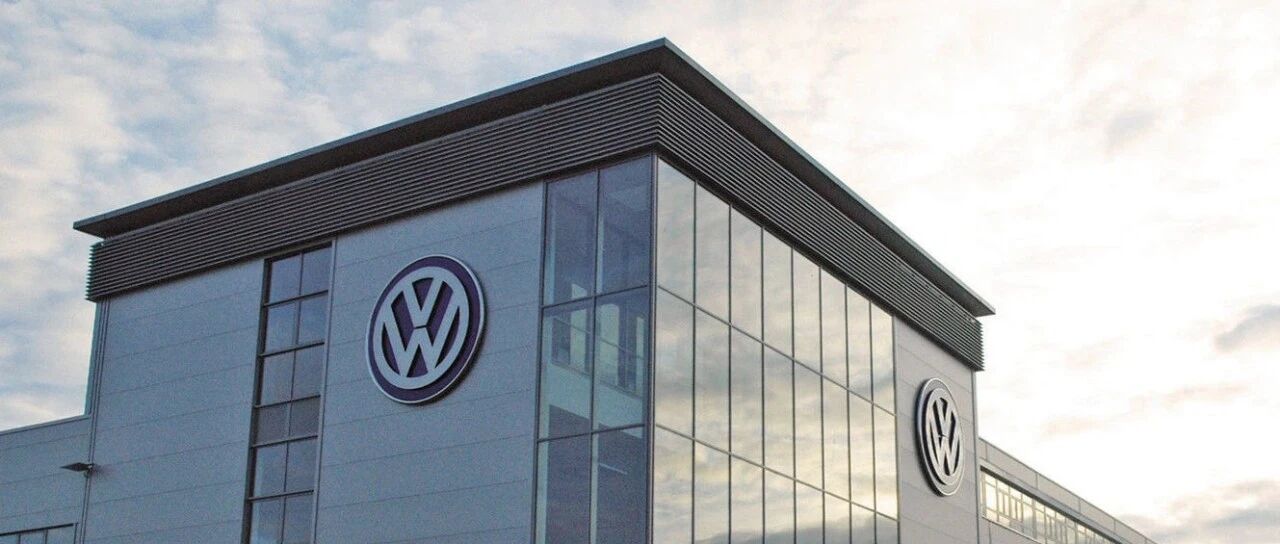
大众汽车集团

Search documents
德美经贸降温折射跨大西洋裂痕加深
Xin Lang Cai Jing· 2026-01-27 04:21
Group 1 - The core viewpoint of the article highlights a significant deterioration in the economic and trade relations between Germany and the United States since the beginning of 2025, primarily due to policy uncertainties under President Trump's administration [1][2]. - German direct investment in the U.S. dropped to €10.2 billion from nearly €19 billion in the same period the previous year, marking a year-on-year decline of approximately 45% [2]. - German exports to the U.S. also saw a notable decline, with a year-on-year decrease of about 9% from February to October 2025, particularly in the automotive sector, which fell nearly 19% [2]. Group 2 - Analysts express concerns that the ongoing trade tensions and tariff threats from the U.S. are undermining German companies' confidence in investing and trading with the U.S., leading to a perception of the U.S. as a high-risk market [3]. - Public trust in the U.S. among the German populace is declining, with about three-quarters of respondents believing that the U.S. is not a reliable partner for Germany [3]. - The German economy is urged to diversify its investments and reduce reliance on the U.S. market to enhance economic resilience amid rising geopolitical uncertainties [3]. Group 3 - There are growing calls within Germany to reconsider the safety of its gold reserves stored in the U.S., with officials and economists questioning the rationale for keeping a significant portion of these reserves abroad [4][5]. - Germany holds over 1,200 tons of gold reserves in the U.S., which constitutes more than 30% of its total gold reserves, prompting discussions about repatriating these assets due to geopolitical risks [5]. - The deterioration in U.S.-German economic relations is seen as a reflection of broader issues affecting transatlantic trust, suggesting that Europe may increasingly focus on strategic autonomy and diversified economic partnerships in the future [5].

中欧谈判成功!对中国电动车“免税”!只有欧洲车主受伤的世界达成了?
电动车公社· 2026-01-26 16:06
Core Viewpoint - The EU's imposition of anti-subsidy tariffs on Chinese electric vehicles (EVs) has been resolved through negotiations, transitioning from a confrontational stance to a cooperative approach that benefits both parties [1][2][22]. Group 1: Tariff Negotiations and Outcomes - In October 2023, the EU initiated an anti-subsidy investigation against Chinese EVs, citing unfair competition due to subsidies [1]. - By January 2024, the EU announced progress in the tariff case, introducing guidelines for price commitments that would allow Chinese EVs to avoid tariffs by setting a minimum price recognized by the EU [3][4]. - The minimum price must eliminate the damaging effects of subsidies, meaning that prices can only increase, not decrease [9][12]. Group 2: Implications for Chinese Automakers - Chinese automakers must comply with strict monitoring requirements, including detailed reporting on vehicle models and sales channels in the EU [14][16]. - To improve their chances of passing EU scrutiny, Chinese companies may need to limit the number of EV imports and specify minimum prices for certain models [17]. - Establishing manufacturing plants in the EU is seen as a beneficial strategy for Chinese companies to enhance local production and employment [18]. Group 3: Competitive Landscape - Despite the added tariffs, Chinese EVs remain competitive in the European market due to their advantages in technology and cost-effectiveness [23][24]. - For instance, the BYD Yuan PLUS sells for over 100,000 yuan in China but is priced at around 40,000 euros (approximately 327,500 yuan) in Germany, still competing effectively against local brands [25]. - The introduction of minimum import prices has shifted the competitive strategy of Chinese automakers towards higher quality and service, rather than solely relying on lower prices [30][41]. Group 4: Challenges for European Automakers - European automakers face significant challenges, with high prices for their EVs making them less attractive to consumers compared to Chinese alternatives [43]. - In 2022, pure electric vehicles accounted for only 12.1% of new car registrations in the EU, with projections showing only a slight increase to 16.9% by 2025 [44]. - Major European manufacturers like Volkswagen are experiencing financial difficulties, with a reported net loss of 1.072 billion euros in Q3 2025 [47][49]. Group 5: Future Cooperation - The EU's approach to setting minimum import prices for Chinese EVs aims to balance market competition and support local manufacturers while allowing for potential collaboration [63][64]. - European automakers are increasingly looking to leverage Chinese production capabilities and technology to enhance their own offerings, as seen with Renault and Volkswagen's strategies [65][68]. - This cooperative framework could lead to a win-win situation for both Chinese and European companies in the EV sector [76].


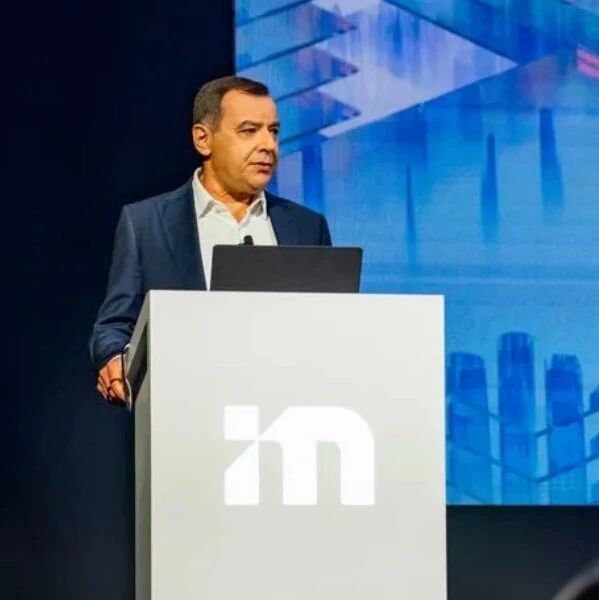
对话 Mobileye CEO Amnon Shashua:物理AI,Mobileye两手抓
雷峰网· 2026-01-26 11:17
" 两三年前发展驾驶自动化的共识「先消费级、后 Robotaxi」路 径,如今发生反转。 " 作者丨 包永刚 编辑丨 林觉民 物理AI,也就是人工智能与现实世界交互的智能体,正成为科技圈最受关注的话题之一。CES 2026上各 种形态的机器人的亮相,试探着物理 AI 的边界与可能性。 CES 2026期间,Mobileye创始人、总裁兼首席执行官Amnon Shashua教授与雷峰网对话时表示:" 汽 车和机器人是物理AI目前两个最典型的应用场景。 " 在这两个方向上,Mobileye 都不是旁观者。 汽车是 Mobileye 长期深耕、为外界熟知的基本盘;而机器人,则是Mobileye刚刚对外展示的全新增长引 擎。在宣布以约 9 亿美元收购人形机器人公司Mentee Robotics之后,Mobileye 横跨物理AI的两大赛 道,也成为了拥有两条主线的"双引擎"公司。 CES期间与Amnon Shashua的深度交流, 可以看到 Mobileye 的三层思考: 一是如何守住并扩大辅助驾 驶这一规模庞大的市场;二是如何推动 Robotaxi 真正走向规模化;三是,Mobileye双引擎战略的布局与 长期潜力 ...
全球大公司要闻 | 苹果降价促销,AI巨头春节“撒钱”
Wind万得· 2026-01-25 22:43
Group 1 - Tencent and Baidu are distributing significant cash rewards during the Spring Festival, with Tencent offering 1 billion yuan in cash red envelopes and Baidu providing 500 million yuan in cash rewards through its app [2] - Apple has initiated a major discount on the iPhone Air 256GB model, reducing the price from 7999 yuan to 5499 yuan, marking the largest price drop for this model in history [2] - Nvidia's CEO Jensen Huang is visiting China to deepen cooperation in AI technology, while the company faces production halts for certain components [3] Group 2 - Xiaomi's CEO Lei Jun announced that the new generation of Xiaomi SU7 is expected to have sample cars available before the Spring Festival [5] - NIO's subsidiary has achieved 91.36% progress in its battery doubling plan, with over 7309 new batteries invested as of January 24 [5] - Hunan Gold plans to acquire 100% equity of two companies to enhance its competitiveness in the precious metals refining and processing sector [5] Group 3 - Microsoft is addressing issues with Windows 11 that have affected basic applications, while also expanding its gaming strategy to include Xbox games on PS5 and Switch [8] - Amazon's low Earth orbit satellites are facing criticism for their brightness affecting astronomical observations, and the company is experiencing a decline in order volume [8] - The U.S. government plans to invest 1.6 billion USD in a rare earth company to secure critical mineral supplies, acquiring a 10% stake [8] Group 4 - Samsung Electronics plans to increase NAND flash supply prices by 100% in Q1 2026, reflecting ongoing tensions in the semiconductor market [10] - Toyota maintains its leading position in the Thai automotive market while facing challenges in electric vehicle transitions in China [10] - SK Hynix aims to launch high bandwidth memory samples by 2026 to meet the demands of AI and data center high-performance computing [10] Group 5 - Volkswagen's CEO stated that plans to build an Audi factory in the U.S. are contingent on tariff reductions, while its joint venture plans to launch 13 new models by 2026 [12] - BMW is implementing a second official price adjustment in 2026, with some models seeing price reductions exceeding 60,000 yuan [12] - LVMH is increasing investments in the beauty sector to strengthen its position in the high-end beauty market [12]




宁德时代落子北京;湖南裕能单季净利暴涨500%;璞泰来业绩预喜;五粮液储能项目第二次开标;天华新能港股IPO;刚果(金)向美提供矿产清单
起点锂电· 2026-01-25 11:00
Group 1 - CATL launched the "Tianxing II" light commercial series solution, introducing the first intelligent battery management application for the light commercial vehicle industry, aiming to break the standardization bottleneck and promote customized operations in the new energy light commercial vehicle sector [3] - CATL is rapidly advancing the construction of a 15GWh battery factory in Beijing with an investment of 4 billion yuan, indicating imminent project implementation [5] - CATL, along with partners, established Beijing Times Power Battery Co., Ltd. with a registered capital of 1 billion yuan, where CATL holds a 51% stake responsible for the factory's construction and operation [6] Group 2 - Penghui Energy expects to turn a profit in 2025 with a projected net profit of 170 million to 230 million yuan, driven by increased sales orders and revenue growth [7] - The second phase of the Xiamen Times project is set to produce 30GWh of battery cells, with construction expected to be completed by Q2 of this year [8] - The Chongqing project by Ruipu Lanjun-Saike Technology aims for an initial capacity of 12GWh, with total investment of 10 billion yuan and expected annual output value of 26 billion yuan upon full production [9] Group 3 - EVE Energy was recognized as the world's first cylindrical battery lighthouse factory, achieving certification for its advanced manufacturing and digital solutions [10][11] - Portugal signed six investment agreements totaling 30.77 billion euros, with four projects related to battery materials and electric vehicles, aimed at promoting energy transition [12] - Xiamen New Energy and Quan Feng Holdings signed a strategic cooperation memorandum to focus on lithium battery technology innovations [13] Group 4 - The Xiangdong lithium battery project in Hebei has been publicly accepted, with a total investment of 1.35 billion yuan and plans for a production capacity of 4GW [14] - Trina Solar signed two major projects, including a 250 MW/1 GWh energy storage project in Italy and a supply contract for battery storage systems in Latin America totaling 1.203 GWh [15][16] - Tianhua New Energy is planning an IPO in Hong Kong to enhance its international strategy and financing capabilities [18] Group 5 - Tianqi Lithium is expanding its lithium hexafluorophosphate project with an investment of 300 million yuan, increasing production capacity from 150,000 tons to 280,000 tons [19] - Hunan Youneng expects a significant increase in net profit for 2025, projecting a rise of 93.75% to 135.87% year-on-year [20] - Purtai's net profit for 2025 is expected to increase by 93.18% to 101.58%, driven by strong demand in the energy storage market [21] Group 6 - Rontgen High-Tech's production capacity for its core product has been fully sold out in Q1 2026, prompting the company to seek financing for new production lines [22] - The Democratic Republic of Congo submitted a shortlist of state-owned mineral assets to the U.S. for evaluation, including various mining projects [23] - Wanhua Chemical is advancing two lithium battery material projects with a total production capacity of 85,000 tons of lithium iron phosphate [24] Group 7 - Hunan Youneng is increasing its production capacity through a stock issuance, raising up to 4.788 billion yuan for new projects [25] - Lichi Intelligent passed the IPO review for its listing on the Growth Enterprise Market [27] - Efei Laser signed a 158 million yuan contract for lithium battery equipment, which is expected to positively impact future financial performance [30]

青山集团:全球“镍矿和不锈钢老大”进军铝业和电池
Hua Er Jie Jian Wen· 2026-01-24 12:51
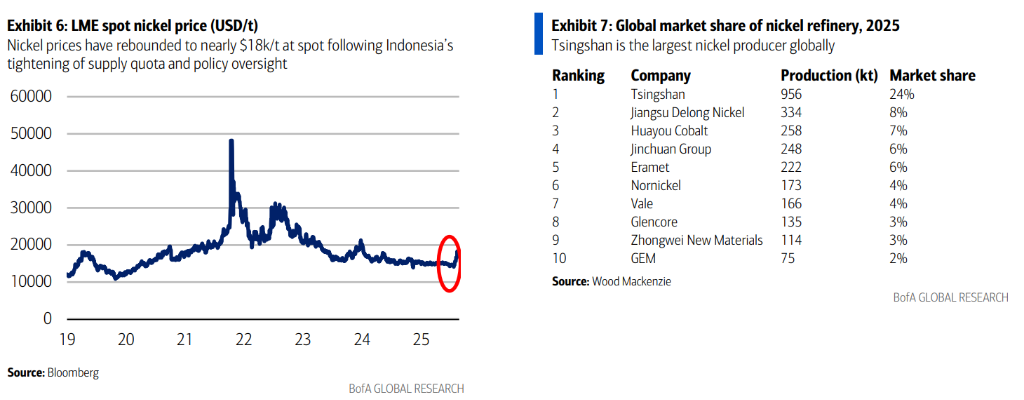
Core Viewpoint - Tsingshan Group, the world's largest stainless steel and nickel producer, is rapidly expanding its industrial footprint from its core nickel and stainless steel business into the aluminum and new energy battery sectors [1]. Group 1: Nickel and Stainless Steel Business - Tsingshan Group generated annual revenue of $56.5 billion and ranks 247th on the Fortune Global 500 list [1]. - The company holds a 25%-30% market share in the nickel industry, significantly influencing nickel price trends, which recently rebounded to nearly $18,000 per ton due to tightened supply quotas and regulatory policies in Indonesia [1]. - In 2023, Tsingshan's stainless steel production exceeded 16 million tons, maintaining its position as the largest producer [14]. Group 2: Expansion into Aluminum - Tsingshan is replicating its successful "mine-park-smelting" model from the nickel industry to the aluminum sector, with approximately 500,000 tons per year of primary aluminum capacity in Indonesia [8]. - The company is advancing large-scale joint ventures with Xinfa Group in Indonesia, with planned capacities exceeding 1 million tons per year [9]. - The completion of new power facilities necessary for these aluminum projects is expected to be delayed until mid-2027, potentially impacting actual production contributions [10]. Group 3: New Energy Battery Sector - Tsingshan's ambitions extend to battery manufacturing, with its subsidiary REPT Battero ranking among the top ten globally in battery installation capacity and fifth in energy storage battery shipments [11]. - The company is establishing a battery recycling network in partnership with GEM and Huayou Cobalt to complete its industrial chain [13]. - A memorandum of understanding was signed with Volkswagen Group in 2022 to establish upstream raw material joint ventures in Indonesia and China, ensuring supply chain security and cost reduction [12]. Group 4: Strategic Partnerships and Acquisitions - Tsingshan is enhancing its competitive edge in the stainless steel sector through acquisitions and collaborations, including the planned acquisition of POSCO's core stainless steel assets in China by 2025 [14]. - The company has registered nickel cathodes produced at its Dingxin plant as an LME delivery brand to strengthen its hedging capabilities against market volatility [15].
韩三楚:大众支付知识产权费从造车新企获CEA架构
Zhong Guo Jing Ying Bao· 2026-01-23 12:06
Core Insights - Volkswagen Group (China) has acquired key technology packages from Xpeng Motors through intellectual property payments, including the overall electronic and electrical architecture, regional controller hardware design, related underlying software, and cloud implementation [1] - The collaboration between Volkswagen and Xpeng began in 2023, with Volkswagen investing approximately $700 million for a 4.99% stake and agreeing to jointly develop electric vehicles for the Chinese market [1] - The CEA project, initiated in July 2024, aims to create a new generation of electronic and electrical architecture tailored to Chinese market demands, allowing Volkswagen's China team to rapidly absorb technology and iterate independently [1] Company Strategy - The first model utilizing this collaboration, the "Zhizhong 07," was delivered in a short timeframe, benefiting from the CEA1.0 architecture developed within 18 months [1] - The "white box" technology transfer does not include Xpeng's core software for intelligent driving and cockpit applications, which are essential for brand differentiation [1] - Volkswagen's future core new energy vehicle platforms in China will be the CMP (Compact Modular Platform) and CSP (Scalable Platform), with the local electronic and electrical architecture (CEA) being the only enabling technology for these platforms [1] Differentiation Approach - The CEA architecture will allow for differentiated configurations based on various brand models, similar to how different room styles can be achieved through decoration [2] - Both the electronic and electrical architecture and the vehicle's interior and exterior designs can be customized to create brand distinctions, akin to the similarities and differences found in mobile phones [2]

大众裁员大刀,砍向董事会,一次撸掉10位
3 6 Ke· 2026-01-23 11:30
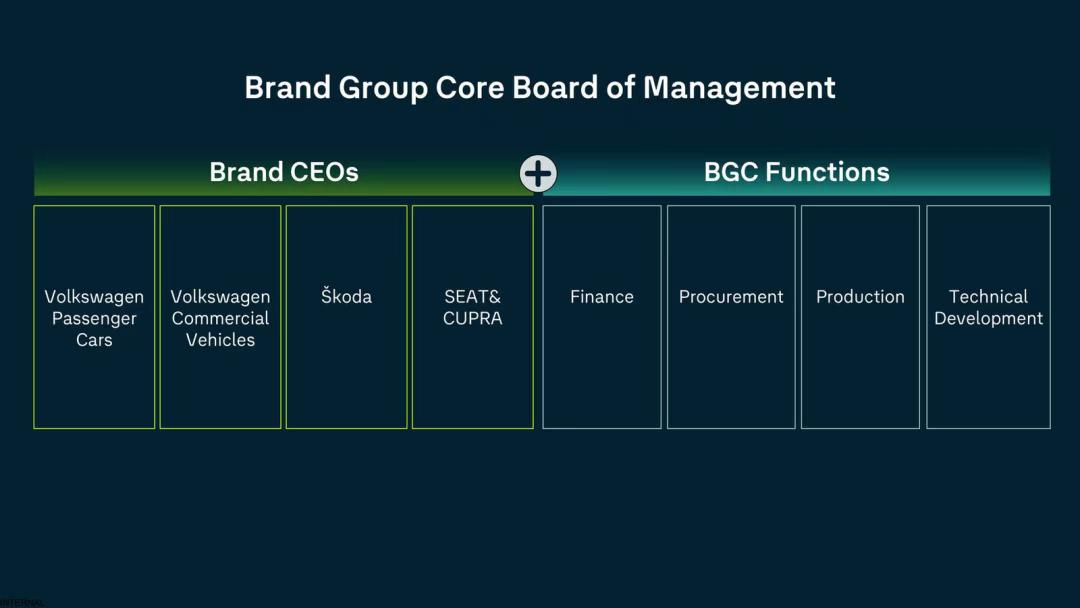
Group 1 - Volkswagen is undergoing a significant restructuring plan, aiming to reduce the number of board members from 29 to 19, effectively cutting one-third of the board [1][2] - The new organizational structure will centralize key functions such as R&D, procurement, and production at the headquarters in Wolfsburg, rather than delegating them to individual brands [2][4] - The restructuring is expected to save the company approximately €1 billion (around 8.1 billion yuan) by 2030, with €600 million in personnel costs and €400 million in manufacturing costs [9][12] Group 2 - The newly formed Brand Core Management Committee (BGC) will oversee the management of core brands, with a focus on improving efficiency and accelerating product development [4][11] - Volkswagen plans to consolidate its global factories into five regions, with China being managed separately due to its unique market conditions [9][12] - The company has announced plans to cut 35,000 jobs in Germany by 2030 and reduce production capacity, aiming for annual cost reductions of €15 billion (approximately 114.3 billion yuan) [12][16] Group 3 - Volkswagen's sales forecast for 2025 indicates a slight decline in global sales, with a drop of 0.5% compared to 2024, particularly in key markets like North America and China [14][16] - The company reported its first quarterly loss in five years, with a net loss of €1.072 billion, a significant decrease from a net profit of €1.558 billion in the previous year [14][15] - Volkswagen plans to launch over 20 new models in China by 2026, with a focus on electric and hybrid vehicles, aiming to increase its market presence [16]
全球大公司要闻 | 苹果官网降价1000元,京东推黄金手机壳
Wind万得· 2026-01-23 00:13
// 热点头条 // 1. 阿里巴巴:传旗下芯片公司平头哥拟独立上市,市场反应积极,美股股价应声上涨,市值显著增长, 股价创出去年11月以来新高。平头哥成立于2018年,是阿里在芯片领域的核心布局,此次独立上市计划 将加速其技术商业化进程,目前阿里方面未对此正式置评。 // 美洲地区公司要闻 // 2. 特斯拉:CEO马斯克表示,公司计划在2026年年底或2027年向公众出售人形机器人Optimus,同时 SpaceX和特斯拉每年正在建设高达100吉瓦的太阳能发电能力,这一系列举措显示出公司在新能源和人 工智能领域的长远布局。马斯克在达沃斯宣布自动驾驶出租车在奥斯汀启动无安全员试驾,计划年底前 广泛应用;保险公司对FSD用户保费减半,因数据显示FSD可减少事故,该保险产品1月26日在亚利桑 那州推出,一个月后在俄勒冈州推出。 3. 铠侠:证实受AI需求驱动,今年产能已全部售罄,供应紧张局面预计持续至2027年。当前存储芯片 市场正处于一轮前所未有的超级周期,全球三大存储芯片生产商均面临供应趋紧的情况,难以满足市场 需求。 4. 京东:京造旗舰店上架Au99.99黄金手机壳,按黄金重量分5个档位,10g标价11 ...
朝嫡系下手,汽车巨头血洗管理层
汽车商业评论· 2026-01-22 23:07
Core Viewpoint - Volkswagen Group is implementing significant restructuring measures, including a reduction in board positions and a shift towards a more centralized management structure to enhance efficiency and reduce costs [4][5][26]. Group 1: Restructuring Plans - Volkswagen plans to reduce the number of board positions in its core brands from 29 to 19 by 2026, eliminating 10 positions directly [5]. - The restructuring will streamline management, with each brand's leadership reduced to four members, including a CEO and heads of finance, HR, and sales [7]. - A new Brand Core Management Committee (BGC) will oversee key functions like R&D, procurement, and production from the headquarters in Wolfsburg [8][11]. Group 2: Leadership Changes - Thomas Schfer will lead the new BGC, which includes CEOs from Volkswagen, Škoda, SEAT/CUPRA, and Volkswagen Commercial Vehicles, along with four core function heads [8]. - Key appointments include David Powels as CFO, Kai Grünitz as head of technology, Karsten Schnake in charge of procurement, and Christian Vollmer overseeing production [13][15][17][20]. Group 3: Production Network Reorganization - The production network will shift from brand-based management to regional management, consolidating over 20 factories into five regions: Central Europe, Iberia, Eastern Europe/India, North America, and South America [22]. - The new management model will first be implemented in the Iberian Peninsula, with a focus on cross-brand collaboration [24]. - The restructuring in production is expected to save approximately €1 billion by 2030, including €600 million in personnel costs and €400 million in manufacturing costs [26]. Group 4: Financial Performance and Cost Control - Volkswagen aims to cut its five-year investment plan from €180 billion to €160 billion due to weak cash flow, focusing investments on electric vehicles, software, and autonomous driving [28]. - The automotive division is projected to generate a net cash flow of approximately €6 billion in 2025, up from €5 billion the previous year [28][31]. - Despite effective cost control measures, challenges remain, particularly with Porsche's asset impairment losses impacting overall financial performance [31].