
零跑汽车

Search documents
小米汽车销量创新高,华为鸿蒙月销逼近9万,12月国产新能源百花齐放
Xin Lang Cai Jing· 2026-01-09 11:54
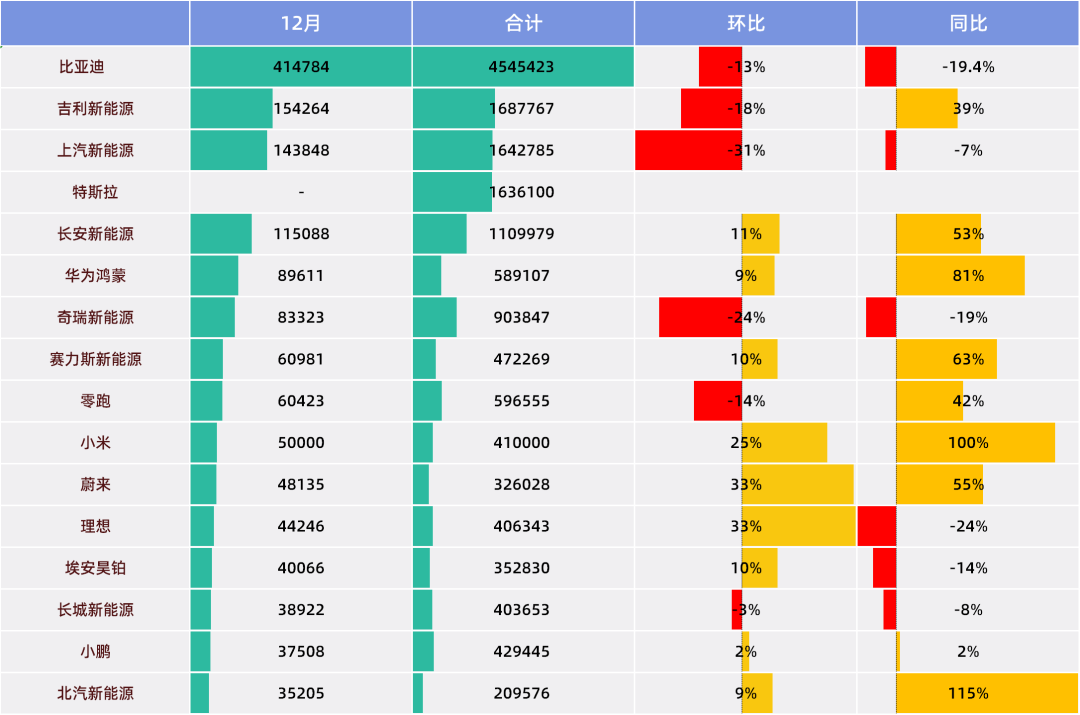
Core Insights - BYD's sales surged from 426,000 units in 2020 to 4.545 million units in 2025, achieving a compound annual growth rate of 60% [1] - Despite rapid growth, BYD faced intense competition from other automakers and did not meet its performance targets in 2025 [1] - The Chinese automotive market is undergoing significant changes, with many companies preparing for global expansion [1] Sales Performance - In December, BYD sold 414,784 units, a decrease of 13% month-over-month and 19.4% year-over-year [3] - Among 15 Chinese automakers, only five achieved both month-over-month and year-over-year sales growth [4] - The average sales volume dropped to 94,427 units in December, primarily due to declines in the first and second-tier companies [4] Market Dynamics - The Chinese government continues to support the automotive market with subsidies exceeding 1.1 billion yuan [2] - The competition is intensifying, with several brands achieving historical sales highs, particularly in the third tier [6] - The central economic work conference emphasized the importance of domestic demand, indicating ongoing support for the automotive sector [7] Company-Specific Developments - Only five out of 14 automakers met their sales targets for 2025, with companies like Li Auto and Aion falling short [8] - BYD's electric vehicle sales reached 2.2567 million units, surpassing Tesla's 1.636 million units for the first time [11] - The export volume of Chinese automobiles is expected to exceed 7 million units in 2025, with BYD emerging as a key player [14] Technological Advancements - The introduction of L3 autonomous driving technology is gaining momentum, with several companies, including BYD and Huawei, conducting road tests [17][18] - The competition for L3 autonomous driving capabilities is expected to intensify in 2026 [18] Brand Strategies - Huawei's HarmonyOS ecosystem has expanded, contributing to record sales for its vehicles [19] - Xiaomi's sales reached over 500,000 units in 2025, but the company faced a public relations crisis that may impact future products [21][23] - NIO and Xpeng have shifted to lower price segments to maintain competitiveness, with NIO achieving a record monthly sales of 48,135 units in December [24][27] Future Outlook - The automotive industry is expected to continue evolving rapidly, with companies focusing on both domestic and international markets [49] - The competitive landscape is shifting, with traditional automakers adapting to new market realities and consumer preferences [49]







2025车企目标达成率透视:巨头稳健、新势力分化,新能源与出口双引擎驱动
Ju Chao Zi Xun· 2026-01-09 10:11
Core Insights - The Chinese automotive market has undergone significant changes in 2025, moving away from broad high growth to a more structured competitive landscape, with increasing penetration of new energy vehicles (NEVs) and a shift in the importance of overseas markets from a strategic option to a core pillar for survival and development [2] Group 1: Annual Goals and Performance - BYD demonstrated strong resilience, achieving a sales target of 460.24 million units, which is a 100.05% target achievement rate after a pragmatic adjustment from an initial goal of 550 million units [3] - Other traditional automakers like Geely (302.46 million units), SAIC Motor (450.75 million units), and Chery (280.64 million units) also met or closely approached their annual targets, indicating stability during their transformation [3] - In contrast, Li Auto's sales of 40.63 million units fell significantly short of its adjusted target of 64 million units, achieving only about 58% of its goal, highlighting challenges in product iteration and market expansion [5] Group 2: Growth Dynamics - The growth drivers for the automotive industry are clearly identified as internal growth in the NEV sector and expansion into overseas markets [9] - BYD maintained its leading position in the NEV market with sales of 460.24 million units, while new entrants like Leap Motor and Xpeng Motors achieved impressive growth rates of 103.13% and 125.88%, respectively [10] - Traditional automakers like Chery and Geely have made positive strides in transitioning to NEVs, but companies like Dongfeng and GAC face significant growth pressures due to slower transitions [12] Group 3: Export Performance - Exports have become a critical variable in determining industry rankings, with BYD's exports skyrocketing from 416,000 units in 2024 to 1,046,000 units in 2025, a growth of over 150% [12] - Chery led exports with 1,344,000 units, while SAIC Motor also surpassed 1,070,000 units in overseas sales, contributing to a total export of 4,386,800 units among the top five Chinese automakers [12] - Tesla's export growth in China was weak, with only 222,700 units exported from January to November 2025, indicating increasing competition from local brands in the international market [13] Group 4: Future Outlook - The market performance in 2025 indicates a shift from relying solely on domestic market growth to a comprehensive capability competition among automakers [15] - Strategic resilience and operational rationality are crucial, with companies like BYD successfully adjusting targets based on market feedback, while others like Xiaomi and Leap Motor are breaking through by precisely targeting niche markets [15] - The competition has evolved from mere sales volume expansion to a comprehensive comparison of technological depth, product ecosystem breadth, user operation precision, and sustainable profitability [16]
403批新车公告 | 比亚迪车型升级,均可选装激光雷达
数说新能源· 2026-01-09 08:35
Group 1 - The article discusses the specifications and upgrades of various electric vehicles (EVs) and plug-in hybrid electric vehicles (PHEVs) from different manufacturers, highlighting significant improvements in motor power and battery capacity [2][3][4]. - BYD's models, such as the Song Ultra and Dolphin, showcase competitive dimensions and motor power, with the Song Ultra featuring a motor power of 270 kW and a top speed of 210 km/h [1]. - The article notes that many models are now offering optional features like laser radar, indicating a trend towards enhanced safety and automation in the EV market [2][3]. Group 2 - The Tengshi Z9 GT EV has introduced a new single motor version with a power increase from 240 kW to 310 kW, along with a new PHEV version that includes a 63.8 kWh battery and a pure electric range of 301 km [2]. - The article mentions the increase in motor power for the Fangcheng Leopard Titanium 3 from 110 kW to 135 kW for the front motor and from 160 kW to 240 kW for the rear motor [2]. - The Haima 06 EV has upgraded its motor power from 170/180 kW to 240 kW, reflecting the industry's push for higher performance [2]. Group 3 - The article provides a comparison of various models, including the Zhijie V9 and Lantu Dreamer, with specifications such as length, wheelbase, battery capacity, and pure electric range [3]. - The Geely Automotive section highlights a model with a battery capacity of 55.1 kWh and a pure electric range of 257 km, showcasing the competitive landscape in battery technology [3]. - The article also mentions the introduction of new versions of existing models, such as the Xingyao 7 EMI and Galaxy A7 EMI, which have increased battery capacities and electric ranges [3]. Group 4 - Leap Motor's D19 model features dimensions of 5252*1995*1800 mm and a battery capacity of 80.3 kWh, with a pure electric range of 370 km [4]. - The article notes that the Leap A10 BEV has a maximum speed of 160 km/h, indicating the performance capabilities of newer models [4]. - The article also discusses the introduction of new models from various manufacturers, emphasizing the ongoing innovation in the EV sector [4]. Group 5 - The article mentions the introduction of the Xiaomi SU7, which has a maximum speed of 265 km/h, showcasing advancements in performance among electric vehicles [5]. - GAC Group's HA800 model features a 1.5T engine with a power output of 118 kW and a top speed of 185 km/h, indicating the integration of traditional and electric powertrains [5]. - The article highlights the trend of manufacturers offering laser radar options in their vehicles, reflecting a growing focus on safety and advanced driver-assistance systems [5].

MiniMax大涨近110%,总市值超千亿港元
第一财经· 2026-01-09 08:35
Market Overview - On January 9, the Hang Seng Index rose by 0.32% to close at 26,231.79 points, while the Hang Seng Tech Index increased by 0.15% to 5,687.14 points [1][2]. - The total trading volume for the Hang Seng Index was 245.1 billion, and for the Hang Seng Tech Index, it was 69.3 billion [2]. Company Highlights - MiniMax, a large model company, debuted on the Hong Kong Stock Exchange with an issue price set at the upper limit of the range, at 165 HKD per share. The stock opened with a gain of over 50% and closed with a total increase of 109.09%, reaching 345 HKD per share, with a trading volume of 4 billion HKD and a total market capitalization exceeding 100 billion HKD [2]. Sector Performance - In the tech sector, stock performances varied: Alibaba Health rose by over 4%, Tencent Music, Kuaishou, and Bilibili increased by over 3%. Conversely, BYD Electronics, Meituan, and Baidu Group saw declines of over 2% [4][5]. - Notable stock movements included: - Alibaba Health: 5.770 HKD, +4.72% - Tencent Music: 68.700 HKD, +3.93% - Kuaishou: 74.700 HKD, +3.89% - BYD Electronics: 34.300 HKD, -2.56% - Meituan: 98.500 HKD, -2.48% - Baidu Group: 137.400 HKD, -2.07% [5]. Commodity and Sector Trends - The non-ferrous metals and oil & petrochemical sectors experienced gains, with Shandong Gold rising over 6%. In contrast, the photovoltaic sector faced significant declines, with New Energy dropping over 8% and GCL-Poly Energy falling over 7% [4].

乘联分会:2025年12月新能源车在国内总体乘用车的零售渗透率59.1%
Zheng Quan Shi Bao Wang· 2026-01-09 08:25
Core Insights - The penetration rate of new energy vehicles (NEVs) in China's overall passenger car retail market is projected to reach 59.1% by December 2025, an increase of 9.6 percentage points year-on-year [1] Group 1: Market Performance - In December, the penetration rate of NEVs among domestic self-owned brands reached 80.9% [1] - The penetration rate of NEVs in the luxury car segment was 39.1% [1] - The penetration rate of NEVs among mainstream joint venture brands was only 8.2% [1] Group 2: Retail Market Share - In December, the retail market share of self-owned brand NEVs was 64.4%, a year-on-year decrease of 6.7 percentage points [1] - The retail market share of NEVs among mainstream joint venture brands was 3.7%, showing a year-on-year increase of 0.9 percentage points [1] - The new force brands, including XPeng Motors, Leap Motor, and Xiaomi Auto, contributed to a year-on-year growth of 4.9 percentage points in their market share, reaching 23.5% [1] - Tesla's market share was 7.0%, with a year-on-year increase of 0.6 percentage points [1]
CES变成中国科技秀:机器人跳舞、熊猫获奖
3 6 Ke· 2026-01-09 08:24
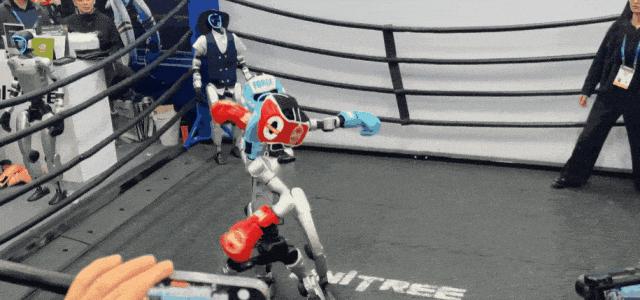
Group 1: Core Themes of CES 2026 - The main theme of CES 2026 is "human-centered" AI applications, marking a shift from traditional consumer electronics to AI-centric technological transformations [1] - Chinese companies are increasingly taking center stage at CES, with 942 exhibitors, accounting for approximately 22% of the total, maintaining their position as the second-largest exhibiting nation [1] - In specific sectors, Chinese firms dominate, with 55% of humanoid robot exhibitors and nearly 70% of AI glasses brands coming from China [1] Group 2: Robotics and AI Innovations - Chinese manufacturers are expected to continue leading in cost reduction and efficiency improvements in humanoid robots, showcasing their capabilities in unstructured environments [2] - Notable products include the Unitree H1 humanoid robot with advanced sensing capabilities and the latest generation of the "绝影" series robotic dogs, which excel in indoor navigation [4][11] - The "Care-bot" humanoid robot by Fourier demonstrates embodied intelligence in real-life interaction scenarios [7] Group 3: Consumer Electronics and Smart Devices - Over 80% of global smart glasses supply chain manufacturers are from China, with 16 Chinese companies showcasing their products at CES [15] - Innovations in smart home devices include the AI-driven "安安" companion robot designed for elderly and cognitively impaired individuals [16] - Companies like Alibaba and XREAL are launching advanced AI glasses, with features such as ultra-lightweight designs and integration with various AI services [19][20] Group 4: Automotive and AI Integration - The automotive industry is transitioning from "software-defined" to "AI-defined" vehicles, with companies like Geely and Great Wall showcasing new technologies [28] - Geely's G-ASD smart driving solution and Great Wall's focus on new energy technologies highlight the industry's shift towards AI integration [30][32] - New products like the AI-driven logistics solutions from New Stone and advanced lidar technology from Hesai demonstrate the growing importance of AI in transportation [34][35] Group 5: Home Appliances and AI - Hisense introduced new RGB-Mini LED display technology and AI-controlled smart refrigerators, showcasing the integration of AI in home appliances [41] - TCL's innovations in display technology, including the world's first printed OLED car screen, reflect advancements in consumer electronics [43][44] - Companies are increasingly focusing on AI capabilities in home security and smart home management systems [51][49] Group 6: Overall Impact of AI - CES 2026 emphasizes the profound impact of AI on the consumer electronics industry, with expectations for AI user numbers to grow significantly [59] - The event serves as a platform for global tech companies to set the foundation for future technological development and transformation [59] - The integration of AI into various sectors, including robotics, automotive, and consumer electronics, indicates a trend towards deeper AI adoption in everyday life [59]



固德电材IPO注册生效:2025年营收预增20%,董事长妻子朱英任投资总监
Sou Hu Cai Jing· 2026-01-09 07:37
Core Viewpoint - Gude Electric Materials (Suzhou) Co., Ltd. has successfully registered for an IPO on the ChiNext board, aiming to raise approximately 1.176 billion yuan to support its operations in the electric vehicle battery thermal runaway protection sector [2] Company Overview - Gude Electric Materials was established in 2008 and specializes in the research, development, production, and sales of thermal runaway protection components for electric vehicle batteries and high-performance insulation products for electrical engineering [2] - The company has become a primary supplier for several global automotive manufacturers and battery producers, establishing long-term partnerships with industry leaders such as General Motors, Ford, Stellantis, and CATL [2] Financial Performance - The company reported total assets of 1.130 billion yuan as of June 30, 2025, with a net profit of 80.63 million yuan for the first half of 2025 [3] - Revenue projections for 2025 indicate an expected increase to 1.09 billion yuan, representing a 20.05% growth compared to the previous year [4] - The net profit attributable to the parent company for 2025 is forecasted to be 177.47 million yuan, reflecting a 3.32% increase year-over-year [4] Shareholding Structure - The controlling shareholder and actual controller of Gude Electric Materials is Zhu Guolai, who holds 46.76% of the shares and has significant influence over company decisions [6] - Zhu Guolai's family members and associates collectively control 60.55% of the voting rights, indicating a concentrated ownership structure [6] Management Team - Zhu Guolai, born in October 1979, has served as the chairman and general manager since November 2011, bringing extensive experience from previous roles in sales and management [8] - Zhu Haofeng, the deputy general manager, holds 10.40% of the shares and has been with the company since its early years, contributing to its growth and operational strategies [8]
展望2026:车市到了需要大火收汁的时候
Xi Niu Cai Jing· 2026-01-09 06:35
Group 1 - BYD has surpassed Tesla to become the sales champion in the new energy vehicle market, marking a significant achievement for the brand since the rise of new car manufacturers began in 2015 [1] - The luxury car market is experiencing a contraction, making it difficult for established brands to return to previous high sales volumes and profit margins [1][2] - The automotive market is becoming increasingly complex, with a proliferation of brands and models leading to consumer confusion [3][4] Group 2 - The automotive industry is witnessing a trend of inventory clearance and brand consolidation as companies adapt to changing market dynamics [2] - Companies like Geely and GAC are restructuring their brand and product lines to focus on more market-accepted models, resulting in significant sales growth and improved financial performance [5][6] - The integration of resources and partnerships, such as Leap Motor's collaboration with FAW, is aimed at enhancing capabilities and achieving growth targets [7][8] Group 3 - A larger scale of consolidation in the automotive industry is anticipated, driven by the need for efficiency and resource optimization [9] - The market is expected to face a decline in domestic passenger car sales by approximately 7% in 2026, prompting brands to concentrate on developing high-quality products [9][10] - The current automotive landscape necessitates a strategic approach to brand and product management, as excessive brand proliferation has diluted consumer demand [10]
汽车视点 | 新势力“出海”步入爆发期 何小鹏预言行业“魔幻五年”开启新竞局
Xin Hua Cai Jing· 2026-01-09 06:01
Group 1 - The core message of the news is that XPeng Motors is making significant strides in global expansion, with the launch of the 2026 XPeng P7+ marking its first simultaneous release in 36 countries, indicating a shift from a startup to a global player [1] - XPeng has launched four new models, including the P7+, G6, and G9, simultaneously for global markets, emphasizing the importance of good products and technology originating from China [1] - In 2025, XPeng's overseas deliveries reached 45,008 units, a 96% year-on-year increase, expanding its business to 60 countries and regions [2] Group 2 - XPeng is advancing its localization strategy with the establishment of manufacturing bases in Indonesia, Austria, and Malaysia, creating a global manufacturing network covering Asia and Europe [2] - By the end of 2025, XPeng had connected 2.66 million charging stations globally, with 1.06 million in Europe, and plans to build self-operated fast charging stations in various regions starting in 2026 [2] - XPeng's founder, He Xiaopeng, expressed confidence that by the second half of 2026, restrictions on advanced driver assistance systems in Europe may be lifted, allowing for broader deployment of autonomous driving technology [3] Group 3 - The year 2026 is viewed as a critical juncture for new energy vehicle brands, with various companies, including NIO and Li Auto, planning to expand their global presence significantly [4][5] - Li Auto has established R&D centers in Germany and the U.S. to support its global strategy, while NIO aims to enter seven European countries by 2026 [4] - Leap Motor achieved over 60,000 deliveries in 2025, leading the new energy vehicle export rankings, and plans to accelerate localization efforts in Malaysia and Spain [5] Group 4 - The overall trend indicates that by 2025, Chinese new energy vehicle brands are entering a systematic expansion phase in overseas markets, with a focus on local production and tailored product development [6] - Data from the China Association of Automobile Manufacturers shows that from January to November 2025, China's automobile exports reached 6.343 million units, with a significant increase in new energy vehicle exports [7] - The average price of Chinese electric vehicles in overseas markets has reached $30,000, successfully penetrating the mainstream mid-range market [8]


新势力“出海”步入爆发期 何小鹏预言行业“魔幻五年”开启新竞局
Xin Hua Cai Jing· 2026-01-09 06:01
Core Insights - Xiaopeng Motors is launching its 2026 P7+ model globally, marking its first simultaneous release in 36 countries, including production in Europe, indicating a significant milestone in its global expansion strategy [1] - The company aims to establish itself as a major player in the global automotive market, with a vision for the next five years described as "magical" by its founder, He Xiaopeng [3][4] Group 1: Global Expansion and Product Launch - Xiaopeng P7+ is part of a broader strategy that includes the simultaneous launch of four new models, emphasizing the importance of good products and technology reaching global markets [1] - By 2025, Xiaopeng's overseas deliveries are projected to reach 45,008 units, a 96% increase year-on-year, with expansion into 60 countries [1] - The company has already established a presence in several European markets, with the G6 and G9 models achieving significant sales milestones [1] Group 2: Local Production and R&D - Xiaopeng is advancing its localization strategy with the establishment of manufacturing bases in Indonesia, Austria, and Malaysia, creating a global manufacturing network [2] - The company has set up nine R&D centers worldwide, with a new center in Munich, Germany, aimed at localizing technology and product innovation [2] - Xiaopeng plans to build a self-operated fast-charging network across Europe, Asia, and America starting in 2026, enhancing its global charging infrastructure [2] Group 3: Autonomous Driving and Technology - The company is preparing for the potential easing of regulations on advanced driver-assistance systems (ADAS) in Europe by 2026, which could facilitate the global rollout of its autonomous driving technology [2][3] - Xiaopeng's intelligent cockpit technology, based on its second-generation VLM, supports seamless multilingual communication, catering to diverse markets [3] Group 4: Industry Trends and Competitor Movements - The year 2026 is viewed as a critical juncture for new energy vehicle brands as they seek to expand internationally amid increasing domestic competition [4] - Other Chinese automakers, such as NIO and Li Auto, are also ramping up their global strategies, with plans to enter multiple European markets and establish local production [5][6] - The overall trend indicates a shift from simple product exports to deeper localization strategies among Chinese automakers, enhancing their competitiveness in international markets [8] Group 5: Market Performance and Projections - In 2025, China's automotive exports reached 6.343 million units, with a notable increase in new energy vehicle exports, which doubled to 2.315 million units [7] - The market share of Chinese electric vehicles in overseas markets rose from 9.9% in 2024 to 15.4% in 2025, reflecting growing competitiveness [7] - Projections for 2026 suggest that overseas sales of Chinese passenger vehicles could reach between 641,000 to 656,000 units, with significant growth in new energy vehicle exports [8]