
零跑汽车

Search documents
从监管智驾到准许L3上路,十大事件解码多维博弈
Xin Jing Bao· 2026-01-08 08:29
Core Insights - The Chinese automotive market in 2025 is undergoing a multifaceted transformation driven by policy regulations, capital restructuring, technological breakthroughs, and safety standards. This transformation is not merely a technical iteration or market reshuffle but a comprehensive evolution that presents opportunities for industry restructuring and transformation [1] Regulatory Changes - The Ministry of Industry and Information Technology (MIIT) has mandated that automotive companies clarify system functionality and safety responses, moving away from exaggerated claims in intelligent driving promotions. This shift has led to a more rational understanding of "assisted driving" versus "autonomous driving" among consumers [2] Supply Chain Developments - The implementation of a 60-day payment term for large enterprises purchasing from small and medium-sized suppliers has significantly alleviated cash flow pressures on these suppliers. This change allows them to invest more in technology development, enhancing the quality and technical level of components [3] New Corporate Structures - The establishment of the China Changan Automobile Group as a new state-owned enterprise marks a significant shift in the industry landscape, enhancing decision-making autonomy and financing capabilities while focusing on new energy and intelligent technology [5] Asset Restructuring - Dongfeng Group has accelerated its transformation by divesting low-efficiency fuel assets and focusing on high-end new energy brands. This strategic move exemplifies how traditional automakers can innovate through capital restructuring [6][7] Safety Regulations - New regulations regarding hidden door handles require mechanical emergency functions to ensure safety in extreme conditions, reflecting a balance between innovation and safety in vehicle design [8] Market Performance - Chery Automobile's successful IPO, achieving a market value exceeding 200 billion HKD, highlights its strong performance with a 7.8% increase in total sales and a 54.9% surge in new energy vehicle sales [9] Autonomous Driving Milestones - The approval of L3-level conditional autonomous driving vehicles for real-world testing represents a significant milestone for the industry, allowing for data collection and setting safety boundaries for future developments [10] Corporate Integrations - The completion of the integration of Geely and Zeekr signifies a strategic elevation of Geely's market position, enhancing its technological capabilities and financial stability [11] Quality Concerns - A significant lawsuit against Xinwanda for quality issues in battery cells has raised alarms in the battery industry, emphasizing the need for improved quality management throughout the product lifecycle [12][13] Strategic Partnerships - FAW's investment in Leap Motor illustrates a strategic collaboration that combines manufacturing strength with innovative technology, potentially enhancing both companies' market positions [14]


2026仅1家目标销量翻倍,车企不再“放卫星”
Feng Huang Wang Cai Jing· 2026-01-08 08:26
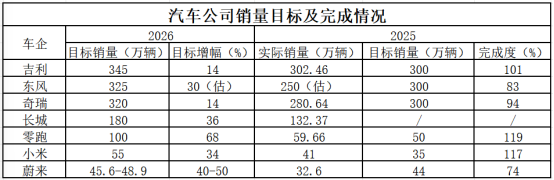
Core Viewpoint - The Chinese automotive market, particularly in the new energy vehicle (NEV) sector, is transitioning from rapid growth to a more cautious approach, with manufacturers setting more conservative sales targets for 2026 compared to previous years [1] Group 1: Sales Targets and Growth Rates - Geely has set the highest sales target for 2026 at 3.45 million units, representing a 14% increase from 2025, with a goal of 2.22 million units in NEV sales, a 32% year-on-year growth [3] - Dongfeng aims for a total sales target of 3.25 million units in 2026, with an estimated growth rate exceeding 30% based on projected 2025 sales of approximately 2.5 million units [3] - Chery has announced a target of 3.2 million units for 2026, reflecting a 14.03% increase from 2025 [3] - Leap Motor is the only manufacturer aiming for a doubling of sales, targeting 1 million units in 2026, up from 500,000 units in 2025 [1][2] Group 2: Performance and Adjustments - Longhua's 2025 cumulative sales were 1.32 million units, with a significant adjustment in their 2026 target from at least 2.49 million units down to 1.8 million units, indicating a 36% growth from the previous year [4] - NIO has set a sales target for 2026 between 456,000 and 489,000 units, aiming for a growth rate of 40-50% from the previous year [6] - Xiaomi has also set a target for 2026 that exceeds a 30% increase from its previous year's sales, with plans to launch a new generation of vehicles [6] Group 3: Market Dynamics - The implementation of a 50% reduction in NEV purchase tax and adjustments to subsidy policies are creating new variables in the domestic automotive market [1] - Traditional automakers are adopting more cautious growth targets, while new entrants remain optimistic but have tempered their previous aggressive growth statements [1]


2026仅1家目标销量翻倍,车企不再“放卫星”
凤凰网财经· 2026-01-08 08:09
Core Viewpoint - The Chinese automotive market, particularly in the new energy vehicle (NEV) sector, is transitioning from rapid growth to a more cautious approach, with manufacturers setting more conservative sales targets for 2026 compared to previous years [2]. Group 1: Sales Targets and Growth Rates - Traditional automakers are adopting more cautious growth targets, while new entrants, despite maintaining optimism, have reduced their aggressive growth ambitions [2]. - Among seven automotive manufacturers analyzed, only Leap Motor set a doubling sales target from 500,000 units in 2025 to 1 million in 2026 [2]. - Geely has the highest sales target for 2026 at 3.45 million units, representing a 14% growth from 2025, with a projected NEV sales target of 2.22 million units, up 32% from the previous year [5]. - Dongfeng aims for a total sales target of 3.25 million units in 2026, with an estimated growth rate exceeding 30% [5]. - Chery has set a target of 3.2 million units for 2026, reflecting a 14% increase from 2025 [6]. - Great Wall Motors has adjusted its 2026 sales target down to a minimum of 1.8 million units, a 36% increase from the previous year [6]. - NIO aims for a sales target of 456,000 to 489,000 units in 2026, maintaining a growth rate of 40%-50% [7]. Group 2: Market Dynamics and Strategies - The implementation of a halved purchase tax for NEVs and adjustments to subsidy policies are introducing new variables into the domestic automotive market [2]. - Dongfeng's new brand, Yipai Technology, plans to launch six new models by 2026, indicating a strategic focus on innovation [6]. - Xiaomi has set a sales target for 2026 that exceeds a 30% increase from last year's actual sales, with plans to upgrade its vehicle lineup [8]. - The new Xiaomi SU7 is expected to launch in April 2026, featuring advanced driving assistance hardware and improved range capabilities [8].



以“全域自研”为基因 以“科技普惠”为使命 零跑汽车举办成立10周年发布会介绍发展情况
Zhong Guo Zhi Liang Xin Wen Wang· 2026-01-08 07:50
Core Insights - Leap Motor celebrated its 10th anniversary, showcasing its development and future strategic plans, including the global debut of its flagship SUV D19 and MPV D99 [1] - The company emphasizes "full self-research" as its core driving force, achieving significant technological advancements and a competitive self-sufficient parts system [2] - Leap Motor has established a diverse product lineup under 300,000 yuan, covering various vehicle types and offering both pure electric and extended-range options [3] - The company has expanded its global presence, establishing a network in 35 countries and regions, with over 800 overseas sales and service outlets [4] Group 1 - Leap Motor has delivered over 1.2 million vehicles and achieved monthly sales exceeding 70,000 units, marking a transition to sustainable profitability [1] - The company maintains a high R&D personnel ratio of 90% during its initial phase, focusing on key areas such as vehicle architecture and autonomous driving systems [2] - Leap Motor's strategy includes a dual approach of "vehicle + Tier" to enhance its unique development model in the Chinese automotive industry [2] Group 2 - The company has successfully completed its product layout across four major series and has a robust sales and service network with over 1,800 outlets [3] - Leap Motor's collaboration with Stellantis Group has accelerated its international expansion, enhancing its brand presence globally [4] - The company aims to leverage its technological advancements and manufacturing efficiency to strengthen its market competitiveness in the global electric vehicle industry [4]
造车新势力10年沉浮:既分高下,也决生死
Jing Ji Guan Cha Wang· 2026-01-08 07:36
Core Insights - The article highlights the contrasting fates of new energy vehicle manufacturers in China, with Leap Motor achieving significant sales success while Neta Auto faces bankruptcy [2] - The landscape of new car manufacturers has drastically changed since 2015, with only a few remaining competitive players in the market [2] Group 1: Leap Motor's Success - Leap Motor is projected to sell nearly 600,000 vehicles in 2025, marking a 103% year-on-year increase and securing the title of sales champion among new car manufacturers [3] - The company shifted its strategy to target the mainstream market, launching models like the T03 and C11, which contributed to its sales growth [3] - Leap Motor has formed strategic partnerships with Stellantis and FAW, enhancing its brand credibility and accelerating its international expansion [3] Group 2: Hongmeng Zhixing's Rise - Hongmeng Zhixing, formerly Huawei Smart Selection, has seen rapid growth, with total deliveries reaching 589,000 units in 2025, a 32% increase from the previous year [4][5] - The AITO Wenjie brand, particularly the Wenjie M7, has been a significant contributor to this growth, with 420,000 units delivered in 2025, accounting for 71% of total sales [5] Group 3: Xiaomi's Entry - Xiaomi, entering the automotive sector later than its competitors, achieved sales of 412,000 vehicles in 2025, surpassing its target and ranking fifth among new energy vehicle manufacturers [5] - Despite its success, Xiaomi has faced challenges, including negative publicity related to safety incidents and design issues [5] Group 4: The Decline of "Wei Xiao Li" - The trio of "Wei Xiao Li" (NIO, Li Auto, and Xpeng) has experienced a divergence in performance, with NIO's sales declining to 326,000 units in 2025, despite a 47% year-on-year increase [6][7] - Xpeng led the trio with sales of 429,000 units, a 126% increase, while Li Auto's sales fell by 19.6% to 405,900 units, marking a significant drop from its previous leadership position [7][8] Group 5: Industry Challenges and Failures - The article discusses the decline of many new energy vehicle manufacturers, categorizing them into three groups: those that failed before mass production, those that made strategic errors, and those that faced funding issues [9][10] - Notable failures include companies like LeEco and Byton, which struggled with financial sustainability and market competition [10] Group 6: Future Outlook - The article suggests that the next decade will be more challenging for remaining players, emphasizing the need for operational efficiency and cost control to survive in a competitive environment [10][11] - New entrants continue to emerge, indicating ongoing interest in the automotive sector despite the challenges faced by existing manufacturers [11]


碳酸锂行情日报:有色整体回调,川军顽强救场
鑫椤锂电· 2026-01-08 07:19
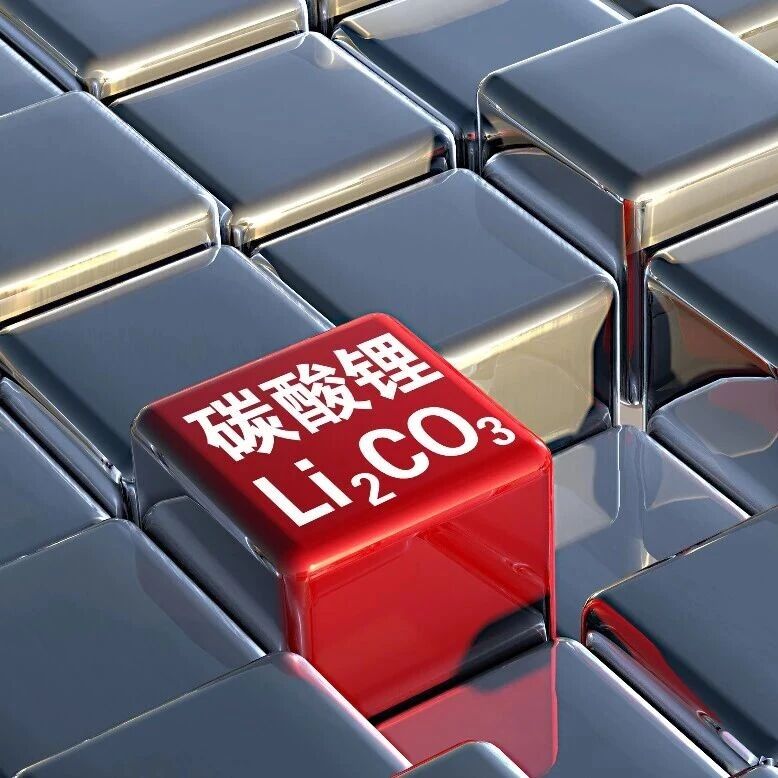
Market Overview - On January 8, the spot settlement guidance price for battery-grade lithium carbonate (99.5%) was 142,000 CNY/ton, an increase of 5,000 CNY from the previous working day [1] - The settlement guidance price for battery-grade lithium hydroxide (56.5% coarse particles) was 120,000 CNY/ton, up by 7,000 CNY from the previous working day [1] - Futures prices initially opened lower due to overall adjustments in the non-ferrous futures market but later stabilized and surged, with forward contract prices exceeding 150,000 CNY/ton [1] Price Changes - The price changes for various lithium products on January 8 compared to January 7 are as follows: - Lithium concentrate: 1,900 CNY/ton, up 100 CNY [2] - Battery-grade lithium carbonate: 14.2 CNY/kg, up 0.5 CNY [2] - Lithium hydroxide: 12 CNY/kg, up 0.7 CNY [2] - Lithium iron phosphate: 4.91 CNY/kg, up 0.2 CNY [2] - Ternary materials: 17.5 CNY/kg, unchanged [2] Industry Sentiment - Upstream companies believe a new cycle has just begun, with a significant upward trend expected to continue until 2026 [6] - Some midstream and downstream companies expressed concerns that the early-year price increases were beyond expectations, potentially overshooting future market conditions [6] - Capital market participants indicated that recent regulatory adjustments in exchanges make lithium carbonate less suitable for speculative trading, suggesting a wait-and-see approach [6] Supply Chain Insights - Several lithium salt companies in Sichuan plan maintenance from late January to February, primarily affecting production in Meishan, Mianzhu, and Suining, but the impact is expected to be limited [7] - Dazhong Mining plans to implement a lithium mining project with a capacity of 2 million tons/year, capable of producing 80,000 tons of lithium carbonate [7] Strategic Focus - Due to the rapid increase in lithium carbonate prices, many downstream users have abandoned previous stockpiling plans, focusing instead on just-in-time inventory replenishment [10] - Companies are prioritizing supply chain security over achieving cost advantages, acknowledging that the optimal timing for establishing cost advantages has passed [10] - Future attention will be on the volume of lithium mining and changes in the internal rate of return (IRR) for energy storage [10]
盘点2026年部分车企销量目标
Zhong Guo Qi Che Bao Wang· 2026-01-08 07:15
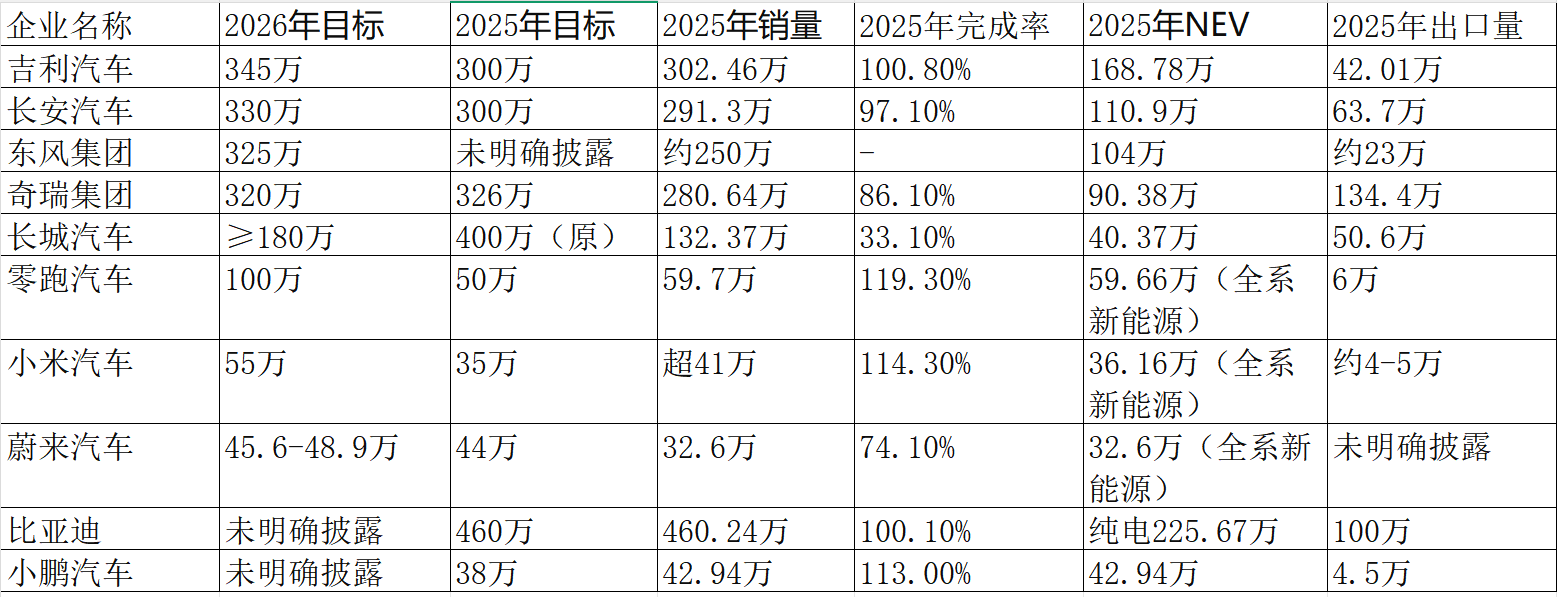
Core Viewpoint - Several automotive companies have announced their sales targets for 2026, and an analysis of their 2025 performance reveals the potential challenges they may face in achieving these goals [3]. Group 1: Company Performance and Targets - Geely Automobile aims for a target of 3.45 million units in 2026, having achieved 3.0246 million units in 2025, exceeding its target of 3 million units with a completion rate of 100.8% [3] - BYD's actual sales in 2025 reached 4.6024 million units, surpassing its adjusted target of 4.6 million units, with a significant pure electric sales figure of 2.2567 million units, ranking first globally [5] - Leap Motor set a target of 1 million units for 2026, achieving 597,000 units in 2025, exceeding its target of 500,000 units with a completion rate of 119.3% [8] - Changan Automobile has a target of 3.3 million units for 2026, with 2025 sales of 2.913 million units, achieving a completion rate of 97.1% [12] - Chery Group aims for 3.2 million units in 2026, having sold 2.8064 million units in 2025, with a completion rate of 86.1% [15] - NIO targets between 456,000 and 489,000 units for 2026, with 2025 sales of 326,000 units, achieving a completion rate of 74.1% [20] Group 2: Challenges Faced by Companies - Geely faces challenges such as EU anti-subsidy investigations and changes in Brazil's tax policies affecting exports [3][4] - BYD needs to improve sales in the high-end market, particularly for its luxury models, and address rising overseas transportation costs, which increased by 47% [6][7] - Leap Motor must compete in the 100,000-150,000 yuan market against Geely and Changan, while its gross margin is only 12%, below the industry average of 15% [10] - Changan's challenges include competition in the new energy market with BYD and Tesla, and reliance on Middle Eastern and Southeast Asian markets for exports, which are subject to geopolitical risks [14] - Chery's domestic market faces low new energy penetration at 32%, necessitating a faster transition, while its exports are vulnerable to currency fluctuations and trade barriers [15] - Great Wall Motors has significantly reduced its target from 4 million to 1.8 million units, indicating a strategic contraction, and faces delays in its new energy transition [18][19] - NIO's sales target increase of 40-50% requires monthly sales of 38,000-41,000 units, while its average monthly sales in 2025 were only 27,000 units, alongside ongoing financial losses [22] Group 3: Industry Trends and Insights - The competition in the automotive market is intensifying, with many companies having gross margins below the industry average of 15%, limiting their operational flexibility [23] - The price volatility of lithium carbonate, a key component for batteries, is expected to negatively impact cost reduction efforts for automotive companies in 2026 [23] - The automotive industry is entering a phase of "technology-driven + globalization" competition, requiring companies to balance scale, profit, and technology to achieve their 2026 targets [25]

2025全年销量出炉:汽车行业维持“一超多强”格局,三大预期打开行业空间
智通财经网· 2026-01-08 06:29
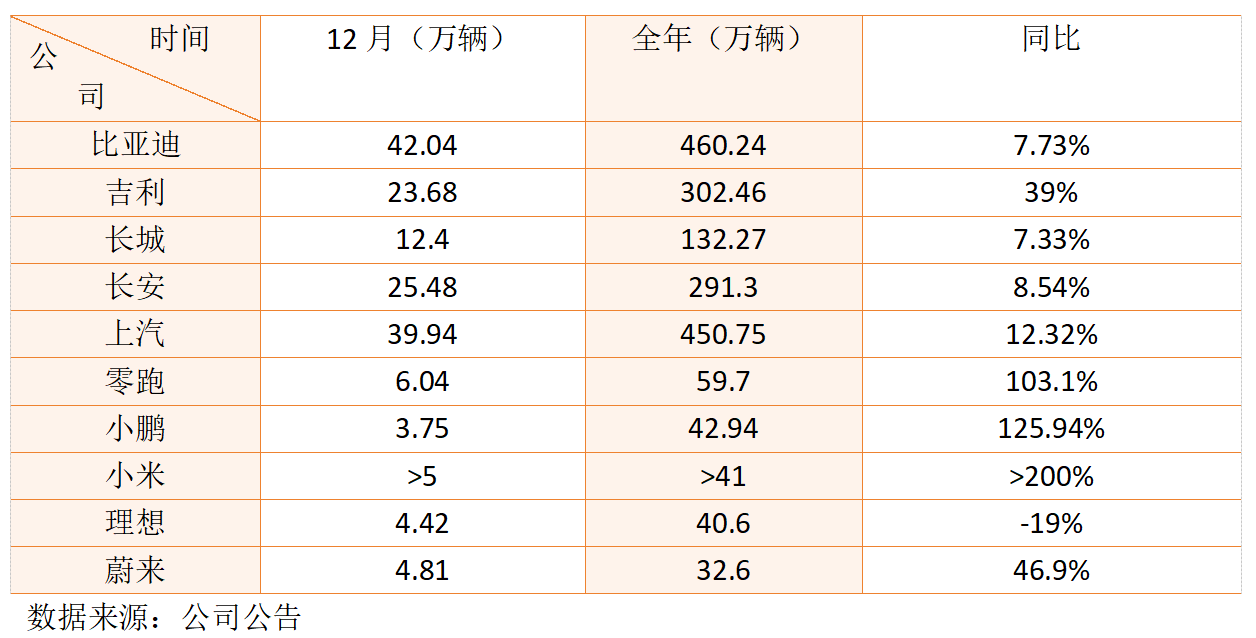
Core Insights - The automotive industry in 2025 has shown a mixed performance, with new energy vehicle (NEV) sales growing significantly while traditional brands face challenges [1][2][10] - BYD remains the dominant player with 4.6024 million units sold, while Leap Motor has emerged as a leading new force with 597,000 units sold [1][2][3] - The market is experiencing a shift towards domestic NEVs, with traditional brands like SAIC and Volkswagen seeing significant declines in sales [2][4] Sales Performance - In December, Leap Motor sold 64,000 units, a 42.11% increase, while NIO and Xiaomi also reported substantial growth [2] - For the entire year, BYD led with 4.6024 million units sold, followed by Geely with 302,460 units and Leap Motor with 597,000 units, which represents a 103.1% increase [3][4] - Traditional automakers, except for BYD, are accelerating their transition to NEVs, with SAIC's NEV sales reaching 1.643 million units, a 33.12% increase [4] Market Trends - The NEV retail penetration rate has surpassed 50%, indicating a slowing growth trend in a high base market [1][4] - The industry is witnessing three major trends: intelligent driving, long-range requirements, and increasing exports [4][5] - The introduction of L3-level autonomous driving vehicles is expected to create new market dynamics [5] Export Growth - NEV exports have surged, with BYD and Chery leading the charge, achieving over 90% growth in export volume [6] - BYD's overseas sales reached 1.0496 million units, a 145% increase, while Chery maintained its position as the top Chinese brand in passenger car exports [6] Investment Opportunities - The automotive sector is currently in an adjustment phase, with some stocks undervalued, presenting potential investment opportunities [8] - BYD is highlighted as a strong investment due to its comprehensive supply chain and rapid overseas growth [8] - Leap Motor is recognized as a leading new force with consistent sales growth and profitability, making it an attractive investment target [8][9] Competitive Landscape - The competition in the NEV market is intensifying, with traditional brands struggling against the rise of domestic manufacturers [7][10] - The market is expected to face challenges in 2026, including the potential withdrawal of purchase tax subsidies and increased competition [7][10]
车市2025丨年销量分化加剧:谁在领跑?谁已掉队?
Bei Ke Cai Jing· 2026-01-08 06:01
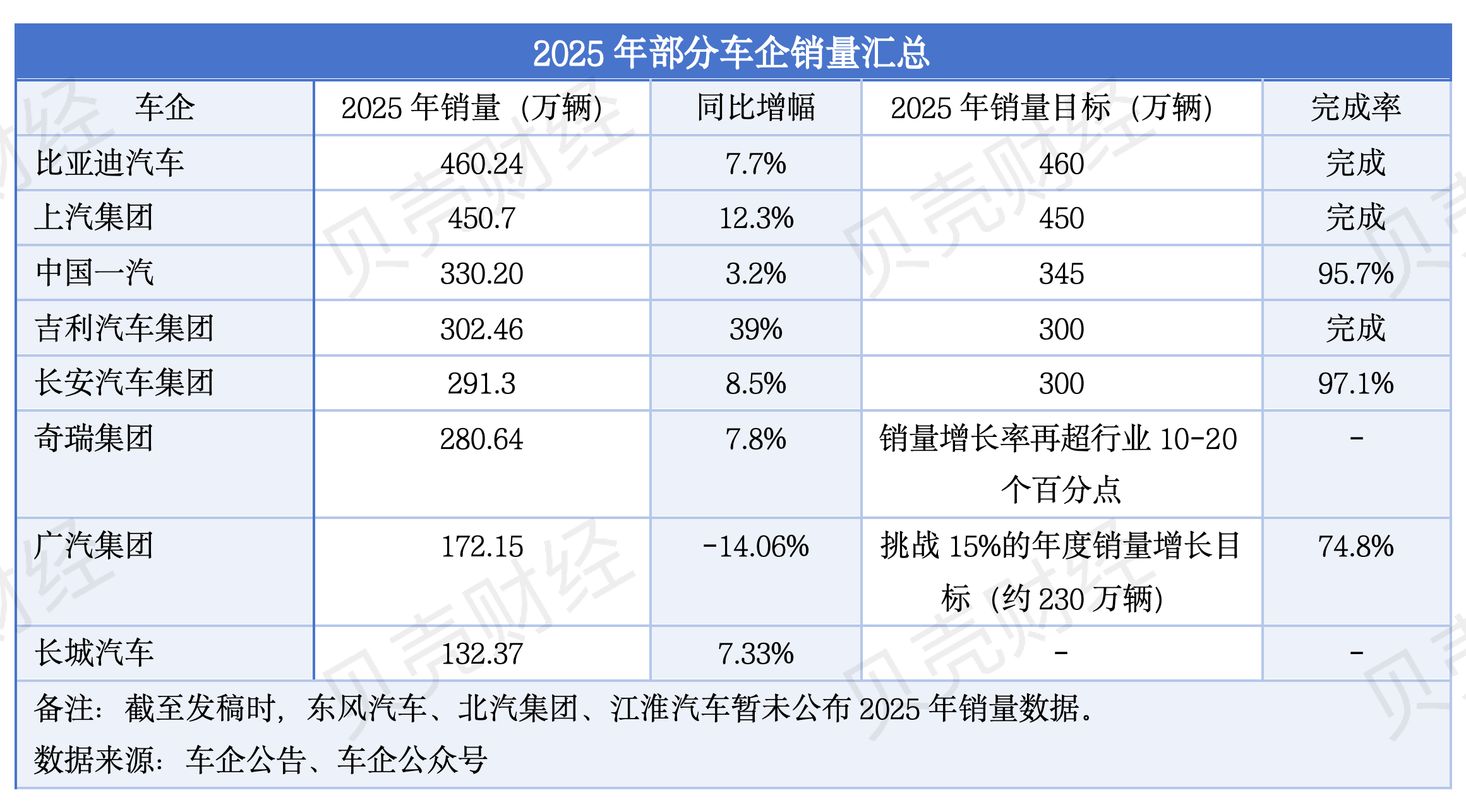
Core Viewpoint - The Chinese automotive market in 2025 is characterized by "overall growth with internal differentiation," as the transition to new energy continues and competition intensifies [1] Group 1: Sales Performance of Major Automotive Groups - Among the automotive groups that have reported 2025 sales, seven achieved positive growth, with four groups exceeding 3 million units in annual sales, solidifying the leading position [2][6] - BYD sold 4.6024 million vehicles in 2025, a year-on-year increase of 7.7%, achieving its annual target [7] - SAIC followed closely with approximately 4.507 million vehicles sold, a 12.3% increase year-on-year, also meeting its annual target [8] - Geely's total sales reached 3.0246 million units, a 39% year-on-year increase, exceeding its target and setting a historical high [9] - Changan and FAW were close to their targets, achieving 95.7% and 97.1% of their goals, respectively [10] Group 2: New Forces in the Automotive Market - The new energy vehicle segment is experiencing significant differentiation, with 400,000 units becoming a critical threshold for scale [3] - Among the new forces, Leap Motor, Seres, Xiaopeng, Xiaomi, and Li Auto crossed this threshold, creating a gap with subsequent tiers [3] - Three out of eleven new energy vehicle companies met their sales targets, with Leap Motor, Xiaopeng, and Xiaomi being the notable achievers [12] Group 3: Competitive Landscape and Future Outlook - The automotive market is entering a phase of stock competition, where the competition extends beyond product and sales to include technology iteration speed, ecosystem building, and operational efficiency [4] - The consensus for 2026 is that competition will intensify, with traditional companies focusing on high-end and intelligent vehicles while new forces seek differentiation through rapid technological advancements [5][22] - The shift in the automotive export landscape indicates that new energy vehicles have become the core growth engine, replacing traditional fuel vehicles [21] Group 4: Overseas Market Performance - The overseas market is becoming a key growth area, with Chery, SAIC, and BYD forming a "million-unit club" in overseas sales [18] - Chery led with over 1.344 million vehicles exported, while BYD achieved a 145% year-on-year increase in overseas sales, surpassing 1 million units for the first time [19][20]


杭州凌旗汽车销售服务有限公司成立
Zheng Quan Ri Bao Wang· 2026-01-08 05:42
Group 1 - The core point of the article is the establishment of Hangzhou Lingqi Automobile Sales Service Co., Ltd., which is fully owned by Leap Motor's subsidiary, Lingpao Automobile Trading Co., Ltd. [1] - The registered capital of the new company is 2 million yuan, indicating a significant investment in the automotive sector [1] - The business scope includes the sales of new energy vehicles, automobile sales, and small micro passenger car rental services, reflecting a focus on the growing market for electric vehicles [1]