
国信证券

Search documents
国家电力投资集团拟发行1000亿元小公募
Sou Hu Cai Jing· 2025-12-12 04:36
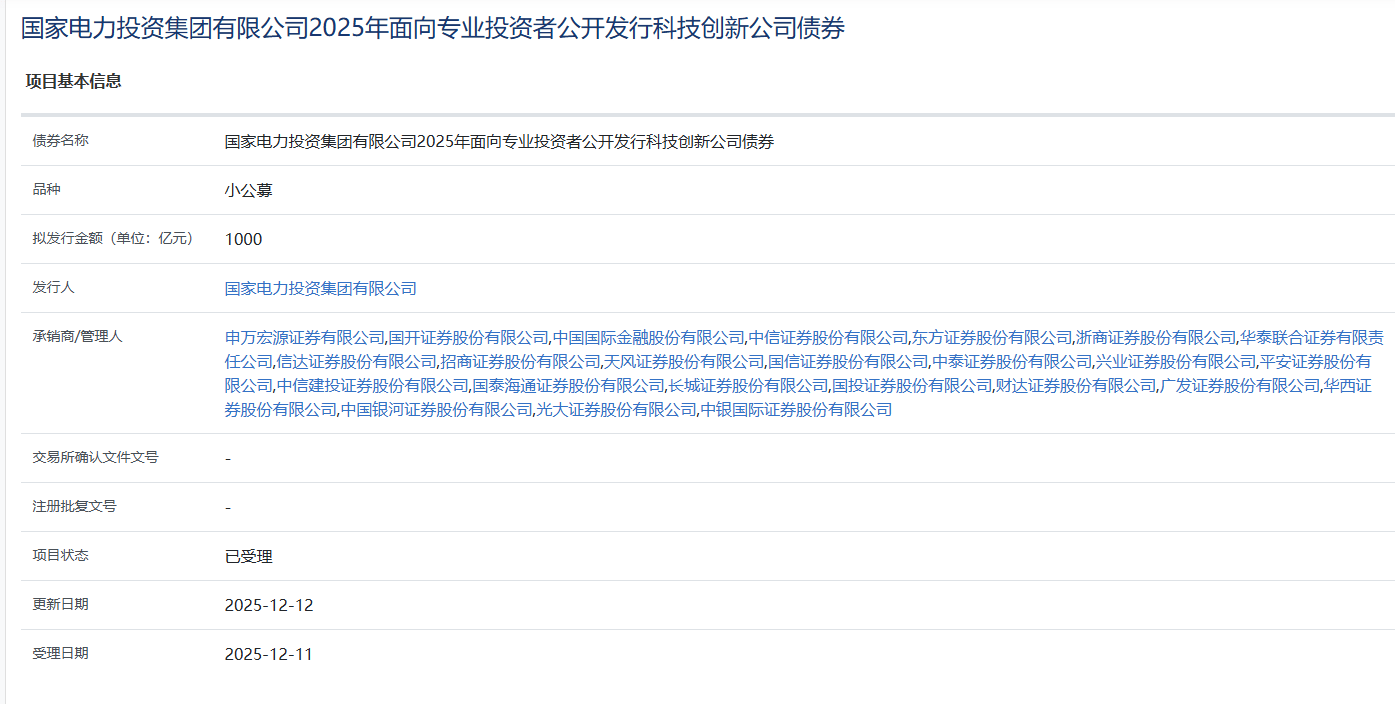
经中诚信综合评定,发行人的主体信用等级为AAA,本次债券注册阶段不进行债项评级。募集资金扣除发行费用后将用于补充营运资金,偿还本部及成员 单位债务(含部分公司债券)等。 【大河财立方消息】12月12日,国家电力投资集团有限公司2025年面向专业投资者公开发行科技创新公司债券获上交所受理。该债券拟发行金额1000亿元, 品种为小公募。承销商/管理人为申万宏源证券、国开证券、中金公司等。 | 债券名称 | 国家电力投资集团有限公司2025年面向专业投资者公开发行科技创新公司债券 | | --- | --- | | 品种 | 小V量 | | 拟发行金额(单位:亿元) | 1000 | | 发行人 | 国家电力投资集团有限公司 | | 承销商/管理人 | 申万宏源证券有限公司,国开证券股份有限公司,中国国际金融股份有限公司,中信证券股份有限公司,东方证券股份有限公司,浙1 任公司,信达证券股份有限公司,招商证券股份有限公司,天风证券股份有限公司,国信证券股份有限公司,中泰证券股份有限公司, | | | 限公司,中信建投证券股份有限公司,国泰海通证券股份有限公司,长城证券股份有限公司,国投证券股份有限公司,财公证券股份 ...

速腾聚创(02498)涨5.81% 机构指其受益于ADAS及高阶智驾快速发展 在手订单充沛
Xin Lang Cai Jing· 2025-12-12 04:16
Core Viewpoint - The stock price of Sutonju Chuang (02498) has risen by 5.81%, reaching HKD 37.16, with a trading volume of HKD 266 million, driven by strong demand in the ADAS and advanced driving assistance systems market [1][2] Product Development - By 2025, Sutonju Chuang's self-developed SPAD-SoC and 2DVCSEL chips have passed AEC-Q series automotive certification, establishing the only mass-producible digital laser radar matrix in the industry, including models EM4, EMX, and E1, which have been delivered at scale [1][2] Customer Acquisition - The company has secured contracts with 13 automotive manufacturers for 56 vehicle models on its EM platform, leveraging its leading digital LiDAR product advantages [1][2] - Over 90% of global key players in the Robotaxi and Robotruck sectors have established partnerships with the company, including well-known firms such as Didi, Pony.ai, WeRide, and leading L4 autonomous driving companies in Silicon Valley [1][2] - To date, Sutonju Chuang has obtained contracts for 23 vehicle models from 12 overseas and joint venture brands, covering key markets in the Asia-Pacific, Europe, and North America [1][2] - The company has cumulatively secured contracts for 144 vehicle models from 32 automotive manufacturers and Tier 1 suppliers [1][2]
中央经济工作会议,多位券商首席经济学家火速解读!
Zheng Quan Shi Bao Wang· 2025-12-12 03:48
Core Viewpoint - The Central Economic Work Conference held in Beijing from December 10 to 11 outlines the economic work for 2026, emphasizing a shift in policy focus from merely increasing efforts to enhancing collaboration and effectiveness in economic measures [1] Policy Framework - The policy tone has shifted from "promoting stability through progress" to "seeking progress while maintaining stability and improving quality and efficiency" [2][3] - The conference continues to advocate for a moderately loose monetary policy, with potential adjustments in reserve requirement ratios and interest rates to stimulate economic growth [2] - Fiscal policy is expected to maintain necessary levels of deficit and debt, with a focus on optimizing expenditure structure rather than aggressive expansion [3] Domestic Demand Strategy - The strategy to "build a strong domestic market" is prioritized, addressing the imbalance between strong supply and weak demand [4] - Key initiatives include optimizing the implementation of "two new" policies (equipment updates and trade-ins), establishing a plan for urban and rural income growth, and addressing the decline in fixed asset investment [4][5] Innovation and Competition Regulation - The conference emphasizes "innovation-driven development" and the need to cultivate new growth drivers while addressing "involution" in competition [6] - Specific focus areas for innovation include advancements in artificial intelligence, semiconductor research, and the application of digital technologies in manufacturing [6] - The regulation of competition is set to become a key reform task, with a focus on establishing a unified national market and addressing issues like price wars and local investment incentives [7] Real Estate and Capital Market - The policy approach to the real estate market has shifted to a long-term model focusing on controlling increments, reducing inventory, and optimizing supply [7] - The capital market is expected to see deeper reforms, with a shift in focus from stability to enhancing market mechanisms and supporting new quality productivity [7]
中央经济工作会议,多位券商首席经济学家火速解读!
券商中国· 2025-12-12 03:33
Core Viewpoint - The Central Economic Work Conference held on December 10-11, 2025, emphasized a shift in policy focus from quantity expansion to quality and efficiency, highlighting the integration of existing and new policies for better effectiveness [2][3]. Policy Framework - The macroeconomic policy maintains a positive tone but has undergone significant changes, with a shift from "promoting stability through growth" to "seeking progress while maintaining stability and improving quality and efficiency" [3][4]. - Fiscal policy will focus on maintaining necessary levels of deficit and debt, with a potential reduction in the deficit ratio to around 4% or slightly lower, emphasizing the optimization of expenditure structure [4][6]. - Monetary policy aims to promote stable economic growth and reasonable price recovery, with a more flexible approach to tools like interest rate cuts and reserve requirement ratio adjustments [5][4]. Domestic Demand Strategy - The strategy to build a strong domestic market is prioritized, addressing the "strong supply and weak demand" contradiction and laying a long-term foundation for economic growth [6]. - Key highlights include optimizing the implementation of "two new" policies (equipment updates and trade-ins), establishing a plan for urban and rural income growth, and addressing the decline in fixed asset investment [6][7]. Innovation and Competition Order - The conference underscored the importance of innovation and the cultivation of new growth drivers, with a focus on artificial intelligence and other advanced technologies [8]. - The "anti-involution" initiative has been elevated to a primary reform task, aiming to standardize competition and eliminate barriers to high-quality development [8][9]. Real Estate and Capital Market - The policy approach to the real estate market has shifted from "stabilizing prices" to a long-term model of "controlling growth, reducing inventory, and optimizing supply," indicating a lower priority for large-scale stimulus [9]. - The capital market is set for deeper reforms, with a focus on enhancing market mechanisms and supporting new quality productivity, laying the groundwork for a "technology growth" style in the A-share market for 2026 [9].

港股通消费ETF华安(159285)短线走强,机构:看好新消费与传统消费白马龙头企业发展空间
2 1 Shi Ji Jing Ji Bao Dao· 2025-12-12 02:31
Group 1: Market Performance - The consumer sector showed strong performance in early trading, with the Hong Kong Stock Connect Consumer ETF (Huashan, 159285) rising by 0.97% and the Food and Beverage ETF (516900) increasing by 0.69% [1] - The technology sector remains active, with the Sci-Tech Chip ETF (588290) up 55.66% year-to-date and the ChiNext 50 ETF (159949) up 57.23% year-to-date as of December 11 [1] Group 2: Economic Policy and Outlook - The Central Economic Work Conference held on December 10-11 emphasized the importance of domestic demand, aiming to build a strong domestic market and implement actions to boost consumption [1] - The conference plans to expand the supply of quality goods and services, optimize the implementation of "two new" policies, and remove unreasonable restrictions in the consumption sector to unleash service consumption potential [1] - The conference also aims to stabilize investment, increase the scale of central budget investments, and effectively stimulate private investment through new policy financial tools [1] Group 3: Sector Analysis - According to China International Capital Corporation (CICC), the Chinese consumer market is complex and diverse, presenting new opportunities, with significant growth potential for both new consumption enterprises and leading traditional consumer companies [1] - Guotai Junan Securities noted a clear divergence in micro-enterprise profitability, primarily concentrated in high-growth sectors such as TMT and industries benefiting from "anti-involution" policies, indicating a structural recovery driven by new economy sectors [2]

2026年开启A股ESG强信披 471家上市公司将迎首次大考
Huan Qiu Wang· 2025-12-12 02:00
Core Viewpoint - The upcoming year 2026 is set to be a pivotal moment for ESG (Environmental, Social, and Governance) disclosures in the A-share market, with significant regulatory frameworks being established to enhance corporate sustainability reporting [1] Group 1: Regulatory Framework and Compliance - In 2025, multiple government bodies, including the Ministry of Finance and the China Securities Regulatory Commission, introduced policies mandating ESG disclosures for A-share listed companies, requiring adherence to specific guidelines [1] - By the end of 2025, 2,481 A-share companies disclosed their ESG reports, achieving a disclosure rate of 46.09%, with strong compliance from companies categorized under ESG strong disclosure [1][2] - The ESG strong disclosure companies are required to submit their reports by April 30, 2026, with 471 companies currently identified under this category [2] Group 2: Industry Trends and Performance - The coal, construction materials, and real estate sectors have shown high compliance rates in ESG reporting, while the telecommunications sector had the lowest at 81.25% [2] - Companies like Cangge Mining, recently included in the Shenzhen 100 Index, have begun their carbon accounting processes, indicating a growing trend among firms to engage in ESG practices [3] - The demand for zero-carbon factory certifications has surged, particularly in the manufacturing sector, as companies seek to enhance their green credentials for better financing and export opportunities [5][6] Group 3: Challenges and Opportunities - Many companies face challenges in achieving comprehensive ESG disclosures, particularly in carbon management and reporting, with a significant number still unprepared for the upcoming deadlines [2][3] - The financial sector is increasingly focusing on ESG performance, with over half of the ESG strong disclosure brokerages establishing dedicated ESG committees to enhance governance and reporting [9] - International investors are placing greater emphasis on sustainable governance frameworks, indicating that Chinese companies must strengthen their ESG disclosures to attract foreign capital [10]
政策面聚焦:央行货币政策解读
Sou Hu Cai Jing· 2025-12-12 01:57
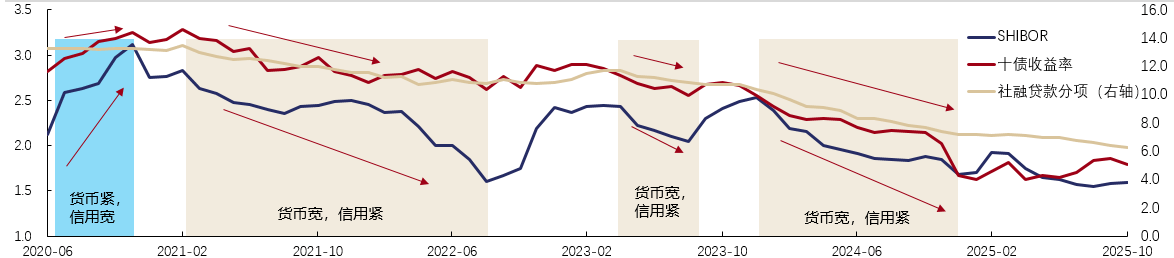
Core Viewpoint - The central theme of the articles revolves around the current monetary policy stance of the central bank, characterized by "loose monetary policy and tight credit," which is expected to influence the bond market dynamics in the near future [1][3][4]. Group 1: Monetary Policy Analysis - The central bank has repeatedly emphasized the need to "nurture liquidity" and maintain "appropriate looseness" in monetary policy this year [1]. - Historical trends indicate that periods of "loose monetary policy and tight credit" often yield the highest bond value, as increased liquidity from the central bank typically flows into the bond market [1]. - Current indicators suggest that while credit remains tight, the monetary policy is still considered loose, with the SHIBOR rate reflecting stable funding costs within the banking system [3]. Group 2: Economic Context and Future Expectations - The economic momentum appears weak, leading to speculation about potential interest rate cuts; however, there are no strong signals for aggressive stimulus from the central bank at this time [4]. - The GDP growth target of 5% for this year is deemed achievable, which may reduce the urgency for significant economic stimulus measures [4]. - A constructed index measuring monetary policy strength indicates that the current policy is weaker than last year, suggesting a cautious approach moving forward [4]. Group 3: Market Implications - The bond market is currently experiencing a lack of clear direction, characterized by weak fluctuations, as the macroeconomic environment is favorable but monetary policy remains ambiguous [4]. - The ten-year government bond ETF (511260) is highlighted as a potential investment opportunity, being the only ETF tracking the ten-year government bond index, thus offering good allocation value [5].
港股开盘 | 恒指高开0.9% 锂电池板块活跃 宁德时代涨近3%
智通财经网· 2025-12-12 01:37
Market Overview - The Hang Seng Index opened up by 0.9%, while the Hang Seng Tech Index rose by 1.02% [1] - Precious metals stocks, such as Zhaojin Mining and Zijin Mining, saw gains of approximately 2% and over 3% respectively [1] - The lithium battery sector was active, with CATL increasing by nearly 3% and Ganfeng Lithium rising by over 2% [1] Future Outlook for Hong Kong Stocks - Everbright Securities believes there is significant room for the index to rise compared to previous bull markets, but the duration of the bull market may be more important than the magnitude of the increase under the "slow bull" policy guidance [1] - Short-term market dynamics may lack strong catalysts, and investors may adopt a more cautious approach as year-end approaches, leading to a period of consolidation [1] - Guotai Junan Securities indicates that the recent short-term adjustments could pave the way for market growth in 2026, with over 110 billion RMB of net inflow from southbound funds into the Hong Kong stock market in November [1] - The persistent reverse accumulation of southbound funds during market declines reflects ample liquidity and a strong intent to position in Hong Kong stocks at lower levels [1] - The firm predicts that the Hong Kong stock market could operate between 30,000 and 32,000 points in 2026 [1] Valuation Recovery - CITIC Securities anticipates a second round of valuation recovery for Hong Kong stocks in 2026, driven by a resonance of internal and external factors [1] - For investment in Hong Kong stocks in 2026, the focus should be on "earnings certainty + valuation elasticity," identifying opportunities in four key sectors: technology, pharmaceuticals, resource products, and essential consumer goods [1]

国信证券晨会纪要-20251212
Guoxin Securities· 2025-12-12 01:11
证券研究报告 | 2025年12月12日 | 晨会纪要 | | --- | | 数据日期:2025-12-11 | 上证综指 | 深证成指沪深 | 300 指数 | 中小板综指 | 创业板综指 | 科创 50 | | --- | --- | --- | --- | --- | --- | --- | | 收盘指数(点) | 3873.31 | 13147.38 | 4552.18 | 13968.17 | 3831.12 | 1325.83 | | 涨跌幅度(%) | -0.69 | -1.26 | -0.86 | -1.42 | -1.49 | -1.54 | | 成交金额(亿元) | 7643.50 | 10927.62 | 4324.31 | 3540.74 | 5132.25 | 532.40 | 【常规内容】 宏观与策略 策略快评:AI 赋能资产配置(三十一)-对冲基金怎么用 AI 做投资 策略快评:AI 赋能资产配置(三十)-投研效率革命已至,但 AI 边界在 哪? 行业与公司 化工行业快评:2026 年度制冷剂配额核发公示点评-2026 年制冷剂配额 公示,年底配额调整幅度较小 食品饮料行业 2 ...
拥抱大资管竞合时代 | 大集合产品公募化改造倒计时 券商资管行业将迎分化与重塑
Shang Hai Zheng Quan Bao· 2025-12-12 00:55
Core Viewpoint - The public offering transformation of large collective products in the brokerage asset management sector is entering a critical phase, with new models emerging beyond traditional internal transfers and "brother" fund company takeovers, indicating a potential reshaping of the industry landscape [1][6]. Group 1: Public Offering Transformation - As of December, several institutions have announced the final destinations of their large collective products, with notable transfers occurring to unrelated third-party fund companies, marking a shift from the previous internal transfer model [2][3]. - The emergence of "non-affiliated party transfers" as a new pathway for public offering transformation reflects a pragmatic choice for some brokerage asset management firms facing internal resource shortages and challenges in obtaining public offering licenses [3][6]. - Currently, there are still 47 large collective products undergoing public offering transformation in the market [4]. Group 2: Public License Application Status - The queue for public offering license applications has been cleared, with only two out of six institutions that applied in 2023 receiving approval, highlighting the difficulties faced by brokerage asset management firms in obtaining public licenses [5]. - The competitive landscape of the public offering industry has become increasingly solidified, with over 160 institutions and the top ten firms holding nearly 40% market share, making it challenging for new entrants to establish a competitive presence [5]. Group 3: Industry Restructuring - The public offering transformation is not just a regulatory requirement but also a reorganization of the industry landscape, with firms that have obtained public licenses needing to integrate into the competitive public offering system [6]. - Firms that have not yet entered the public offering space may focus on private equity and institutional business, emphasizing customized asset management solutions to meet complex client needs [6]. - Companies are expected to concentrate resources on strengthening core asset management capabilities and providing personalized, data-driven asset allocation solutions to clients [6].