
比亚迪

Search documents
加拿大官宣电动汽车新战略对中企有何影响?学者:加方希望“以市场换技术”
Di Yi Cai Jing Zi Xun· 2026-02-07 04:24
据央视新闻,加拿大总理马克·卡尼2月5日宣布一项电动汽车新战略,包括重启购车补贴,并表示将与 中国合作推动加拿大本土生产和出口电动汽车。 根据加拿大总理府发布的声明,加拿大将充分利用现有和新增的贸易协定,包括近期与中国达成的电动 汽车合作协议,以促进该领域的大规模投资,实现加拿大汽车出口市场多元化,并将加拿大打造成为全 球电动汽车领域的领导者之一。 广东外语外贸大学加拿大研究中心兼职研究员刘江韵对第一财经表示,卡尼对汽车产业的新政一定程度 上在模仿加拿大上世纪80年代的"移植(Transplant)"战略,即通过结合关税减免和出口限制政策,吸 引当时的日本汽车制造商在加拿大建立生产基地,而不是单纯向加拿大出口整车。此次最大的不同是, 过去加拿大的"底气"是背靠美国市场,当今则需要依靠发挥自身市场的吸引力。 已有中企开始布局? 卡尼上月访华期间宣布,加拿大将给予中国电动汽车每年4.9万辆的配额,配额内享受6.1%的最惠国关 税待遇,配额数量将按一定比例逐年增长。期间,加拿大工业部长乔利也在北京会见了比亚迪、奇瑞以 及在中国拥有大规模业务的加拿大汽车零部件供应商麦格纳高管,并鼓励这些企业在未来赴加投资办 厂。 目 ...

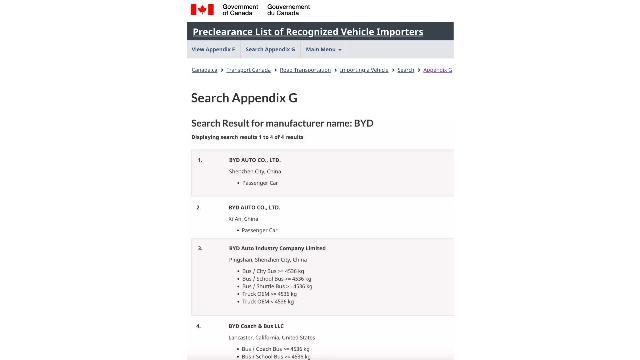
中策橡胶:知名本土轮胎企业,产能进一步提升-20260207
GUOTAI HAITONG SECURITIES· 2026-02-07 02:20
Investment Rating - The report assigns a rating of "Buy" to the company with a target price of 66.13 CNY [4][18]. Core Insights - The company is one of the largest tire manufacturers in China, with ongoing capacity expansion for its main products [2][21]. - The global automotive ownership is on a long-term growth trend, which is expected to drive the tire industry market size upward. The global radial tire market is projected to grow from 1.586 billion units in 2020 to 1.856 billion units by 2024, with a compound annual growth rate (CAGR) of 5.38% [12][21]. - The company has a diverse product range, including radial tires, bias tires, and specialty tires, and is recognized as a national high-tech enterprise [12][22]. - The company is expanding its production capacity, with a total capacity of 21.462 million tires and an output of 19.12989 million tires in 2023 [23]. Financial Summary - The company’s total revenue is projected to grow from 35.252 billion CNY in 2023 to 51.035 billion CNY by 2027, reflecting a growth rate of 10.5% in 2023 and 6.3% in 2027 [11][16]. - Net profit attributable to the parent company is expected to increase significantly from 2.638 billion CNY in 2023 to 5.524 billion CNY in 2027, with a notable growth of 115.4% in 2024 [11][16]. - Earnings per share (EPS) are forecasted to be 3.02 CNY in 2023, rising to 6.32 CNY by 2027 [11][17]. Market Position - The company has established a strong presence in both domestic and international markets, exporting to Europe, North America, Africa, Southeast Asia, and the Middle East [12][22]. - The company is increasingly becoming a preferred supplier for mid-to-high-end vehicles, benefiting from the rapid development of the automotive industry in China [21][22]. - The company is investing in projects to enhance its production capabilities, including a green digital factory and new production lines for high-performance tires [23].
趋势研判!2026年中国智能驾驶域控制器市场政策、产业链全景、发展现状及未来发展趋势分析:爆发增长迈向千亿市场,融合自主驱动产业进阶[图]
Chan Ye Xin Xi Wang· 2026-02-07 01:18
内容概要:智能驾驶域控制器(ADCU)是汽车产业智能化与电子电气架构演进的核心产物,它作 为"车载大脑",通过高性能计算平台集中整合并统一调度原先分散的感知、决策、规划与执行功能,是 推动高阶自动驾驶落地的关键枢纽。近年来,国家通过一系列政策从可靠性提升、标准制定、AI融合 及成果转化等多维度为行业发展提供了强有力的支持。伴随技术迭代与场景渗透,智能驾驶域电子市场 稳步增长,域控制器市场更是呈爆发式扩张,从单一功能单元演进为集中式决策平台,受多传感融合、 厂商自研布局等因素驱动活力充沛。数据显示:2020-2024年市场规模从9.8亿元飙升至167.4亿元, 2025-2026年我国智能驾驶域控制器市场规模预计将从290.3亿元增长至447.6亿元。未来行业将向架构深 度融合、全产业链自主可控、场景赋能与模式创新三大方向进阶,依托技术与生态升级,持续强化在整 车智能化中的核心枢纽价值,发展空间广阔。 上市企业:德赛西威(002920.SZ)、经纬恒润(688326.SH)、比亚迪(002594.SZ)、零跑汽车 (09863.HK)、蔚来-SW(09866.HK) 相关企业:华为技术有限公司、北京地平线信息技 ...

从马斯克到李想,车圈开始流行“不务正业”
创业邦· 2026-02-07 01:09
以下文章来源于螺旋实验室 ,作者螺旋君 螺旋实验室 . 公众情绪瞭望者 来源丨 螺旋实验室(ID:spiral_lab) 作者丨无情 编辑丨坚果 图源丨Unsplash 2025年,全球汽车行业的价格战打得刀光剑影,市场格局也迎来了新变化,曾经的"销量王"不再稳 守龙门,更多后起之秀崛起,车圈竞争变得更加激烈。 对于这样的变化,有的企业选择直面竞争,迎难而上;但也有企业选择了另一条截然不同的道路,往 汽车以外的方向讲故事。 近日,特斯拉发布了2025年四季报,全年汽车交付量同比下降8.6%至164万辆。但在财报发布后, 特斯拉的股价涨幅一度超过4%,市场似乎并不在意其汽车业务下滑的事实。 无独有偶,理想董事长李想近期召开了一场全员大会,但出乎很多人意料,整场会议并未深度提及汽 车销量、产品迭代,而是全程围绕AI领域,李想更笃定"一定要做机器人"。 然而,特斯拉和理想并非孤例。近几年来,当消费者在谈及汽车市场,仿佛都有一种车企越来越不像 汽车公司的感觉:小鹏端出被误以为是"真人套皮"的人形机器人、比亚迪设立未来实验室专攻具身人 工智能领域……一时间,车企似乎集体"不务正业"。 当传统车企不再埋头"造车",而是集 ...




EV普及迟缓,丰田等转向混动寻找商机
日经中文网· 2026-02-07 00:33
Group 1 - Toyota plans to increase the production of hybrid vehicles (HV) by 30% by 2028, reaching a total of 6.7 million units, compared to the planned production in 2026 [2][4] - The overall global production, including gasoline and electric vehicles, is expected to increase by 10% by 2028, reaching approximately 11.3 million units [4] - The proportion of HV in Toyota's global production will rise from 50% in 2026 to 60% in 2028 [4] Group 2 - The company will invest up to 1.5 trillion yen in the U.S. over the next five years, with an initial investment of 140 billion yen in five factories to increase HV-specific engine and component production [5] - The shift in EV policies in the U.S. and Europe has led to increased consumer interest in HV as an alternative eco-friendly vehicle [5][7] - Global Data predicts that by 2030, the combined global sales of HV and plug-in hybrid vehicles (PHV) will reach approximately 29 million units, an increase of about 2.8 million units compared to previous forecasts [5] Group 3 - Major automotive companies in the U.S. and Europe are adjusting their strategies, with Ford exiting the main EV development and Tesla repurposing its high-end EV production facilities for humanoid robots [7] - General Motors is collaborating with Hyundai to develop HV vehicles, while Volkswagen is working on improving fuel efficiency with new "full hybrid" technology [7] - Despite a slowdown in EV sales, it is still expected that EVs will surpass HV in the future, with predictions indicating that by 2031, EVs will account for 30% of the new car market [7] Group 4 - Toyota's strategy involves parallel development of HV, PHV, and EV, allowing for flexibility in a rapidly changing automotive market [7] - The funds generated from HV sales will be utilized for the development of the next generation of vehicles [7]

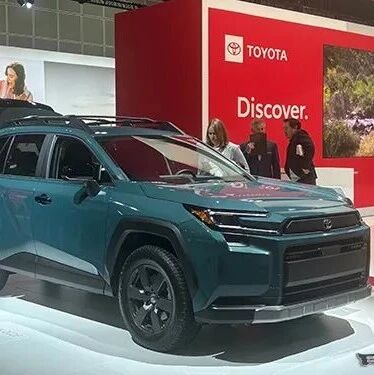
What BYD Needs to Prove in 2026
Yahoo Finance· 2026-02-06 17:25
Market Overview - China is the largest auto market globally, accounting for 30% of all new vehicle sales in 2025, while the United States holds an 18.4% share, and Japan and India are tied at 5.1% each [1] Domestic Manufacturers - The Chinese auto market, once dominated by foreign manufacturers like Volkswagen, Toyota, and General Motors, has seen the rise of domestic manufacturers over the past 30 years, with BYD emerging as a leader [2] Electric Vehicle Market - The International Energy Association (IEA) projects that electric vehicles (EVs) will constitute 60% of all vehicle sales in China by 2025 and grow to 80% by the end of the decade [3] Government Subsidies - China previously offered aggressive subsidies and tax breaks to promote EV purchases, but as the market matures, the government is cutting these subsidies, leading to a projected decline in domestic passenger vehicle sales in 2026 [4] Raw Material Costs - The price of lithium, a crucial material for battery production, has more than doubled from approximately $11 per kilogram to $23 per kilogram over the past year, with a 35% increase year-to-date in 2026 [5] BYD's Financial Performance - BYD's revenue for Q3 2025 decreased by 3.05% compared to Q3 2024, with diluted earnings per share (EPS) falling by 36%. Additionally, net operating cash flow for the first nine months of 2025 dropped by 27.42%, and EPS for the same period was down 11.42% compared to 2024 [6]
客车市场的2025年:暴涨与亏损并存,不出海就出局
经济观察报· 2026-02-06 14:31
Group 1 - The core viewpoint of the article is that after the peak of the new energy vehicle replacement cycle, the bus market in 2026 is expected to return to a state of stagnation, with maintaining sales levels being a positive outcome. The industry should focus on eliminating weaker companies to allow stronger ones to gain market share and profit margins, rather than solely pursuing volume growth [1][3]. Group 2 - Recent performance forecasts for A-share listed bus companies indicate significant divergence in profitability for 2025, with some companies expecting nearly double net profit growth while others face "growth without profit" [2]. - Jinlong Automobile and Zhongtong Bus are projected to see substantial net profit increases in 2025, while Ankai Bus is expected to shift from profit to loss [6][8]. - The bus industry is experiencing a small growth peak in 2025, with sales of buses over 6 meters reaching 137,212 units, a year-on-year increase of 8.84% [2]. Group 3 - Jinlong Automobile anticipates a net profit of approximately 463 million yuan in 2025, a year-on-year increase of 193.68%, driven by growth in overseas markets [6]. - Zhongtong Bus expects a net profit between 320 million and 410 million yuan, with a year-on-year growth of 28.28% to 64.36% [7]. - Yutong Bus, which did not release a full-year forecast, achieved a net profit of 3.292 billion yuan in the first three quarters of 2025, a year-on-year increase of 35.38% [8]. Group 4 - Ankai Bus is projected to incur a loss of 50 million to 60 million yuan in 2025, primarily due to intense market competition leading to a decline in product gross margins [8]. - The company has struggled with profitability since 2013, with only one year of positive non-recurring net profit [8]. Group 5 - The article emphasizes the importance of internationalization for bus companies, stating that without expanding into overseas markets, companies may struggle to compete domestically [11]. - The demand for buses in international markets is expected to grow, particularly for new energy vehicles, as older buses require replacement [12].


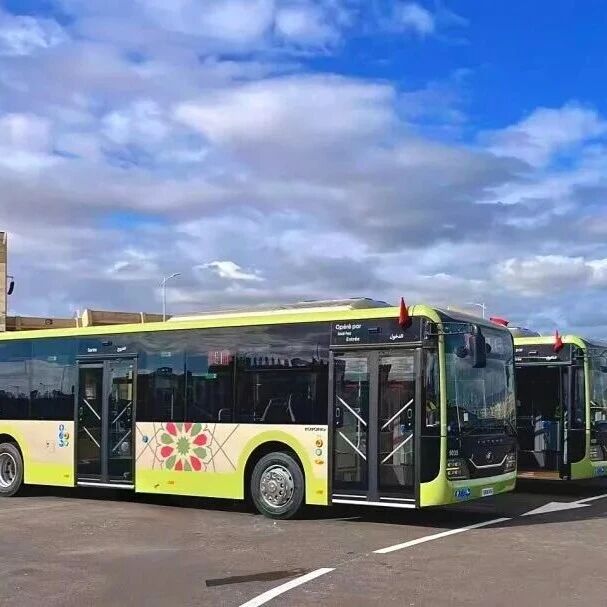
比亚迪在美关联公司起诉美国政府,挑战关税行政令
Ju Chao Zi Xun· 2026-02-06 13:56
Core Viewpoint - BYD has filed a lawsuit against the U.S. federal government challenging a series of tariff orders under the International Emergency Economic Powers Act, reflecting the company's response to international trade environment changes and its efforts to protect market rights [2][3] Group 1: Legal Action - Four U.S. subsidiaries of BYD, including BYD America LLC, BYD Coach & Bus LLC, BYD Energy LLC, and BYD Motors LLC, initiated the lawsuit on January 26 [2] - The defendants include key officials from the U.S. federal government, Department of Homeland Security, Customs and Border Protection, U.S. Trade Representative's Office, and the Treasury Department [2] - The U.S. International Trade Court disclosed the lawsuit information on February 2 [2] Group 2: Global Expansion Plans - BYD aims to sell 1.3 million vehicles outside of China by 2026, representing a 25% increase in overseas deliveries compared to 2025 [2] - The company reported a total of 4,602,436 new energy vehicles sold in 2025, marking a year-on-year growth of 7.73%, with over 1.04 million units delivered to overseas markets [3] - BYD is actively expanding its presence in Europe, Latin America, and Southeast Asia, with local production facilities in Thailand, Uzbekistan, and Brazil already operational, and a factory in Hungary set to commence operations soon [3] Group 3: Market Challenges - The lawsuit reflects the challenges faced by Chinese electric vehicle companies in the global market, particularly regarding policies and market dynamics [3] - The ongoing developments in the lawsuit are expected to be closely monitored for their implications on BYD's market strategy and international operations [3]
神州租车发布2026春节大数据:9天长假催生租车热 跨城订单数量同比增长超70%
Zheng Quan Ri Bao Wang· 2026-02-06 13:49
本报讯 (记者矫月)2026年春节,在"史上最长假期"与高速免费通行政策的双重利好下,国内租车市 场迎来热潮。近日,神州租车有限公司(以下简称"神州租车")发布2026马年春节自驾出行预测大数 据。数据显示,今年春节租车市场呈现早启动、长租期、高增长三大特征,租车预订量与用户规模双双 实现同比增长。其中,跨城出行订单数量同比增长超70%,新能源车型预订量同比激增六倍,以00后为 代表的新生代用户规模大涨63%,自驾出行在承载返乡需求的同时,正进一步满足用户多元化的假期出 游选择。 出行方式上,高铁民航网络的高效衔接推动"大交通+落地租"普及。昆明长水、三亚凤凰、海口美兰、 南宁吴圩、西双版纳嘎洒五大机场租车服务点包揽预订量TOP5,成为连接交通枢纽与目的地景区的"最 后一公里"接驳站。 在扩充运力"硬实力"的同时,神州租车也持续深化包含脏必赔、上门取送、24小时客服、异地还车等在 内的品质出行服务体系,确保在春节超大流量下,用户依然能享受到确定性、标准化的出行保障,让用 户的每一程自驾都能从容无忧。 值得关注的是,依托神州租车全国覆盖的网络与异地还车便利,跨城自驾需求显著增长,海口-三亚、 南宁-北海等省内旅 ...
直销奇迹?比亚迪财险综合费用率低至5.21%,实现首年盈利
Hua Er Jie Jian Wen· 2026-02-06 13:25
反映在财报数据上,比亚迪财险2025年的手续费及佣金支出为零,综合费用率整体仅为5.21%,而同业 平均水平整体在25%左右。 "去中介"带来的成本优势为比亚迪财险腾出了巨大的赔付空间,使得该公司在承保端承压的情况下,依 然能实现整体财务的平衡。 值得注意的是,这种模式的可持续性建立在比亚迪对产业链的绝对掌控之上: 该公司四季度发生的13次重大关联交易,对象主要指向比亚迪汽车工业有限公司,这意味着,理赔维修 并没有流向不可控的外部市场,而是在集团内部完成了闭环。 如果将2024年的车险试水视为一场压力测试,那么比亚迪财险刚刚交出的2025年答卷,则意味着这家背 靠制造业巨头的险企已度过了最危险的磨合期。 偿付能力报告显示,比亚迪财险在2025年不仅保费规模倍增,更完成了从巨亏到盈利的反转,对于长期 被"新能源车险难做"困扰的保险业而言,这份报告提供了一个极具观察价值的非典型样本。 数据层面的修复是显而易见的。 2025年,比亚迪财险累计实现保险业务收入28.71亿元,较上年增长112.56%;净利润达到9362.4万元, 扭转了2024年高达1.69亿元的亏损局面。 业绩反转的核心逻辑,并非来自承保端的改善, ...