
中国海外发展

Search documents
开年上演人事“大戏”,超十家房地产公司高层变动
Di Yi Cai Jing· 2026-02-11 08:52
Core Viewpoint - The real estate industry is experiencing significant executive turnover, with over ten companies undergoing leadership changes within a month, reflecting a broader trend of organizational restructuring and strategic realignment in response to market pressures [2][3][7]. Group 1: Executive Changes - More than ten real estate companies, including Joy City Holdings, Zhongliang Holdings, and New World Development, have reported executive changes since the beginning of 2026, with reasons ranging from retirement to personal resignations [2][3]. - Joy City Holdings announced the resignation of director Chen Lang due to reaching retirement age, while Zhongliang Holdings saw the departure of executive director He Jian and the appointment of Zhao Peng as his successor [3]. - Other companies like Rongsheng Development and Guangming Real Estate have also experienced frequent executive changes, indicating a trend of leadership turnover across the sector [4][5]. Group 2: Organizational Restructuring - The beginning of the year is a critical period for real estate companies to implement reforms, with 21 companies undergoing 31 organizational adjustments since January 2025 [5]. - Major firms such as Poly, China Overseas, and Longfor have initiated new rounds of optimization adjustments, with China Overseas restructuring its management model from a three-tier to a two-tier system [6]. - The adjustments aim to enhance resource allocation and core business management, reflecting a shift towards quality-focused operations in response to market challenges [6][7]. Group 3: Industry Trends and Challenges - The frequent changes in leadership are indicative of the industry's response to ongoing sales pressures and financial losses experienced by publicly listed real estate companies since 2022 [7]. - The shift from large-scale development to refined operations and asset-light models necessitates new leadership capable of navigating these changes [7]. - Companies are urged to focus on financial security, operational efficiency, and precise investment strategies to adapt to the evolving economic landscape [7].





新消费时代下的大机遇系列报告一:从“场所”到“场景”,新消费时代下的商业地产迎来重大机遇
Bank of China Securities· 2026-02-11 08:04
Investment Rating - The report rates the real estate industry as "Outperforming the Market" [1] Core Insights - The traditional residential development sector is contracting, while commercial real estate is entering a policy-driven growth phase, with a focus on new consumption scenarios starting from 2024 [1][8] - The shift from traditional commercial spaces to immersive experience-driven scenarios is essential to meet the diverse needs of modern consumers [1][10] - The report emphasizes the importance of integrating "scene" and "consumption" to create unique consumer experiences, enhancing customer retention and engagement [1][10] Summary by Sections 1. Current State of Commercial Real Estate - The commercial real estate sector has entered a "stock era," with the number of new openings in 2025 reaching a ten-year low, with 369 new projects and a total area of approximately 27.41 million square meters, down 24% and 25% year-on-year respectively [15][19] - High vacancy rates and declining rents are significant challenges, with 2025 seeing a 20% share of new openings being stock renovation projects [14][15] - New market entrants include outlet malls and themed commercial spaces, which are becoming differentiated "new scenes" [14][15] 2. New Consumption Scenarios - The core of new scenarios lies in transitioning from merely providing sales spaces to creating emotionally resonant immersive experiences [1][10] - The rise of new consumption brands is reshaping the operational strategies of commercial real estate, focusing on customer flow and experience rather than just transactions [1][10] - Non-standard commercial projects, characterized by small-scale and open street designs, are gaining traction, with a 18.7% increase in foot traffic compared to traditional shopping centers [1][10] 3. Differentiated Commercial Spaces - The report categorizes non-standard commercial spaces into three types: fashion innovation, retro innovation, and ecological innovation, each targeting different consumer emotional needs [1][10] - Major cities like Shanghai, Beijing, Hangzhou, and Chengdu are leading in the development of non-standard commercial projects, with a significant focus on cultural and experiential elements [1][10] 4. Recommendations for Developers and Operators - Developers and operators are encouraged to innovate by creating differentiated offerings that resonate with specific consumer segments, emphasizing cultural integration and social spaces [1][10] - The report suggests that the focus should shift from traditional metrics like rental income to new indicators such as customer dwell time and engagement in experiential activities [1][10] - The commercial real estate sector is expected to benefit from favorable policies during the 14th Five-Year Plan, with opportunities for high-quality assets to thrive [1][10]
2026年1月中国房企业绩分析报告
克而瑞地产研究· 2026-02-11 06:07
Core Viewpoint - The real estate market in core cities has shown signs of recovery, with the top 100 real estate companies achieving a sales amount of 165.45 billion yuan in January 2026 [1][14][16]. Group 1: Sales Performance - In January 2026, the top 100 real estate companies achieved a total sales amount of 165.45 billion yuan [14][16]. - The sales performance threshold for the top 100 real estate companies has decreased compared to January 2025 [17]. - Seven companies entered the top 100 list for the first time, with CITIC City Opening making it into the top 30 [21]. Group 2: Year-on-Year Growth - A total of 32 companies among the top 100 experienced year-on-year growth in January 2026, with 10 companies seeing growth rates exceeding 100% [25]. - Notable performers include Junyi Holdings with a growth rate of 757.4% and Haian Group with 488.2% [27]. Group 3: Market Trends - The new housing market showed weak performance in January, with a transaction area of approximately 8.1 million square meters in 50 key cities [27]. - The second-hand housing market, however, saw a recovery with a transaction area of approximately 8.1 million square meters, reflecting a 16% month-on-month increase and a 33% year-on-year increase [27]. Group 4: Policy Support - In January 2026, the central government released various policies focusing on urban renewal, financing optimization, and tax incentives to support the real estate market [28]. - Financial support measures include a reduction in the re-lending rate by 0.25 percentage points to 1.25% and a decrease in the minimum down payment ratio for commercial properties to 30% [28].




资讯早班车-2026-02-11-20260211
Bao Cheng Qi Huo· 2026-02-11 01:32
1. Report Industry Investment Rating No relevant content provided. 2. Core Viewpoints of the Report - The economy in early 2026 shows a complex situation. The GDP growth rate slows down, and the manufacturing and non - manufacturing PMIs fluctuate. The consumer price index and producer price index have different trends, and the investment and consumption data also show certain changes. In the commodity market, there are adjustments in futures contract rules and price fluctuations in various commodities. The financial market has changes in monetary policy, bond market, and exchange rate market, and the stock market shows different trends in A - shares and Hong Kong stocks [1][38][39]. 3. Summary According to the Directory 3.1 Macro Data - GDP growth rate in Q4 2025 was 4.5%, down from 4.8% in the previous quarter and 5.4% in the same period last year [1]. - In January 2026, the manufacturing PMI was 49.3%, slightly up from 49.0% in the previous month, and the non - manufacturing PMI: business activity was 49.4%, down from 50.1% in the previous month [1]. - In December 2025, social financing scale was 2207.5 billion yuan, down from 3529.9 billion yuan in the previous month and 2853.7 billion yuan in the same period last year [1]. - CPI in December 2025 was 0.8% year - on - year, up from - 0.3% in the previous month, and PPI was - 1.9% year - on - year, up from - 2.3% in the previous month [1]. 3.2 Commodity Investment Reference 3.2.1 Comprehensive - Dalian Commodity Exchange adjusted the daily price limit and trading margin levels of various futures contracts from February 12, 2026 [2]. - Bank of China adjusted the margin ratios of gold and silver deferred contracts from February 11 [2]. - On February 10, 41 domestic commodity varieties had positive basis, and 27 had negative basis [3]. - The China Futures Association drafted a management rule for stress testing of futures companies' trading and settlement systems and solicited public opinions [3]. - Heraeus Limited was approved as an overseas standard gold ingot provider by the Shanghai Gold Exchange and can trade and deliver since February 5, 2026 [4]. - Fed officials Logan and Hamark said the Fed's policy stance was close to neutral and there might be no need for further rate cuts if inflation fell and the labor market remained stable [4]. 3.2.2 Metals - On February 11, spot gold reached $5050, up 0.53% for the day, and spot silver reached $81 per ounce, up 0.81% for the day [5]. - Chow Tai Fook may adjust the price of gold products in mid - March, with an expected increase of 15% - 30% for fixed - price products [5]. - The price of indium has reached a more than ten - year high, up more than 55% since last September [5]. - In December, Codelco's copper production increased by 3.7% year - on - year to 181,400 tons, while the copper production of Collahuasi Mine decreased by 12.1% year - on - year to 36,200 tons [6]. - As of February 10, 2026, the holdings of SPDR Gold Trust decreased by 0.34 tons to 1079.32 tons [6]. - On February 9, tin and copper inventories reached new highs, while aluminum, zinc, and lead inventories decreased [6][7]. 3.2.3 Coal, Coke, Steel, and Minerals - The White House will hold a coal - related event on Wednesday [8]. - The US Trade Representative is conducting negotiations on key minerals, including with Mexico and India, and expects to finalize an agreement with Indonesia in the next few weeks. Japan and the US will discuss a project supported by a $550 - billion investment tool [8][9]. 3.2.4 Energy and Chemicals - Zhoushan was approved to carry out the mixed - export business of marine bio - fuel oil [9]. - The US Energy Information Administration predicted that US natural gas production would reach a record high in 2026, while demand would remain stable. It also provided forecasts for oil demand and prices [9][10]. 3.2.5 Agricultural Products - Beef prices showed a slight upward trend as the Spring Festival approached. Egg prices declined due to sufficient supply and weakening demand [11]. - The US Department of Agriculture's February forecast for US soybean production, ending stocks, and yield in the 2025/2026 season remained unchanged from January [12]. - Bangladesh will purchase soybeans, wheat, cotton, and corn. Brazil's February exports of soybean meal and soybeans are expected to increase [13]. - The India Cotton Association expects the cotton supply in the 2025 - 26 season to be 42.8 million bales [14]. 3.3 Financial News Compilation 3.3.1 Open Market - On February 10, the central bank conducted 311.4 billion yuan of 7 - day reverse repurchase operations, with a net injection of 205.9 billion yuan [15]. - On February 10, the Ministry of Finance and the central bank conducted a 150 - billion - yuan central treasury cash management commercial bank time - deposit auction, with an interest rate of 1.73% [15]. 3.3.2 Important News and Information - The central bank will continue to implement a moderately loose monetary policy, use policy tools flexibly, and normalize treasury bond trading operations [16]. - The 21st session of the 14th National People's Congress Standing Committee will be held from February 25 - 26, with multiple draft laws to be reviewed [17]. - The market regulatory authority approved a batch of important national standards in various fields [17]. - Five ministries jointly issued a guide for the construction of the science and technology service industry standard system [18]. - In January 2026, investment in digital economy - related fields was active, and consumption increased [18]. - Fiscal expenditure is shifting from infrastructure to "new - quality productivity" [19]. - The focus of the real estate market in 2026 is to stabilize the market, reduce inventory, strengthen housing security, and promote urban renewal [20]. - In 2025, the national social logistics volume increased by 5.1% year - on - year, with significant growth in the logistics volume of industrial robots and new - energy vehicles [20]. - Local debt resolution is in a critical stage, and some areas have completed debt - clearing tasks [20]. - Some real - estate enterprises have new financing activities, but the financing environment has only "point - like improvement" [21]. - Banks have issued a large number of large - denomination certificates of deposit, with a short - term trend and differentiated product strategies [21]. - The wealth management scale of large - scale wealth management companies declined in January 2026, but there are positive expectations for the future [22][23]. - Small and medium - sized banks have raised deposit interest rates at the beginning of the year [23]. - Tianjin's first batch of ESG - standardized bonds for financial leasing were issued [23]. - Alphabet issued a 750 - million - pound 100 - year bond, with over 7 - fold over - subscription [24]. - According to CME's "FedWatch", the probability of the Fed cutting interest rates in March is 21.6%, and the probability of maintaining the interest rate is 78.4% [24]. - Japan's national debt reached a record high at the end of 2025 [25]. - Ray Dalio warned that the US is in the "fifth stage" of the imperial cycle and recommended holding 5% - 15% of gold in the investment portfolio [26]. - There were various bond - related events, including credit rating adjustments and disciplinary actions [27]. - Overseas credit rating agencies adjusted the credit ratings of some Chinese real - estate enterprises [28]. 3.3.3 Bond Market Summary - The inter - bank bond market showed narrow fluctuations, with government bonds performing better than policy - financial bonds. The money market interest rates mostly increased [29][31]. - The exchange - traded bond market had active trading, with some bonds rising and some falling. The convertible bond index declined [29][30]. - The yields of European and US government bonds declined [33]. 3.3.4 Exchange Rate Express - The on - shore RMB against the US dollar rose 155 points to 6.9129 at the close on February 11. The RMB central parity rate against the US dollar was raised by 65 points [34]. - The US dollar index rose slightly, and most non - US currencies fell [34]. 3.3.5 Research Report Highlights - CITIC Securities believes that the liquidity of urban investment bonds will continue to differentiate, and 3 - 5 - year urban investment bonds have high cost - performance [35]. - CITIC Securities points out that the consumption during the Spring Festival and the policy from local two sessions are the focuses in Q1, and the industrial destocking speed after March and the implementation of new industrial policies are crucial for the annual economic recovery [35]. - Xingzheng Fixed - Income suggests that investors focus on the coupon strategy for Chinese - funded US - dollar bonds in 2026 and pay attention to the yields of offshore urban investment dim - sum bonds and bonds of banks and financial services sectors [36]. - Yangtze River Fixed - Income believes that the spread changes of local bonds are affected by market trading and policies, and there are differences in liquidity and trading preferences among different provinces [36]. 3.3.6 Today's Reminder - On February 11, 280 bonds were listed, 74 bonds were issued, 75 bonds were due for payment, and 89 bonds were due for principal and interest repayment [37]. 3.4 Stock Market News - On February 11, the A - share market showed narrow fluctuations, with the Shanghai Composite Index rising 0.13%, the Shenzhen Component Index rising 0.02%, and the ChiNext Index falling 0.37%. AI application stocks and some concept stocks were active, while photovoltaic and consumer stocks were weak [38]. - The Hong Kong Hang Seng Index rose 0.58%, and AI application stocks and innovative drug concept stocks rose. Southbound funds had a small net purchase, and Tencent Holdings was sold [39]. - Foreign institutions are optimistic about Chinese assets, believing that China has a complete industrial chain, strong innovation ability, and attractive valuations [39].
每日投资策略:国都港股操作导航-20260210
Guodu Securities Hongkong· 2026-02-10 06:28
Market Overview - The Hang Seng Index rose by 467 points or 1.76%, closing at 27,027 points, after reaching a high of 27,111 points during the day [3][4] - The total market turnover was 255.14 billion HKD, with a net outflow of 1.887 billion HKD from northbound trading [3] Key Stock Performances - Among the 88 blue-chip stocks, 70 saw an increase, with notable gains from Alibaba (up 1.9% to 157.9 HKD), Tencent (up 2.3% to 560 HKD), and Baidu (up 3.2% to 142.2 HKD) [4] - Kuaishou experienced a decline of 2.7%, closing at 69.3 HKD, while China Mobile fell by 2.1% to 78.5 HKD, marking it as one of the weaker performers [4] Real Estate Market Insights - DBS Bank indicated that the commercial real estate market in Hong Kong is under pressure, with office and retail sectors still finding their floor, and transactions occurring at discounted prices [8] - The bank noted that despite some ongoing transactions, the influx of new developments continues to exert pressure on office inventory [8] Employment Regulations - The Ministry of Human Resources and Social Security in China has initiated administrative guidance for 16 major platform companies, including Meituan and JD, to ensure compliance with labor management and protect workers' rights [9] Entertainment Industry Projections - The domestic box office for the upcoming Spring Festival is expected to reach between 7 billion to 8 billion RMB, with optimistic forecasts suggesting it could exceed 8 billion RMB [10] - Eight films have been scheduled for release during this period, with "Fast Life 3" anticipated to perform well based on its previous popularity [10] Company-Specific Developments - Pop Mart reported global sales of over 400 million units across all IP categories in 2025, with the "THE MONSTERS" category alone exceeding 100 million units [11] - China Resources Pharmaceutical is initiating the sale of a 17.87% stake in Hefei Tianmai Biotechnology, with a starting price of approximately 1.42 billion RMB [12] - Yingda Real Estate reported a 51% increase in revenue, with total income from continuing operations reaching 1.046 billion HKD [13] - Hong Kong Telecom is establishing a new AI data center in the Lok Ma Chau area, aiming to enhance cross-border connectivity and meet the growing demand for fiber optics [14]
房地产行业“以旧换新”专题报告:上海重启试点,逻辑顺、预期效果强、值得期待
GF SECURITIES· 2026-02-10 04:12
Investment Rating - The report maintains a "Buy" rating for the real estate sector, indicating a positive outlook for investment opportunities in this area [4]. Core Insights - The "old-for-new" policy is being reintroduced in Shanghai, which is expected to effectively stabilize housing prices and stimulate market activity [10][26]. - The policy focuses on acquiring second-hand homes to address inventory issues and enhance market liquidity, with specific criteria for eligible properties [10][26]. - The anticipated financial impact includes a potential market transaction increase of approximately 1,080 billion yuan, representing a 9% boost to total market transactions and a 24% increase in new home sales [3][10]. Summary by Sections 1. Background of the "Old-for-New" Policy - The central government has emphasized the need for policies that control inventory and improve supply, with the "old-for-new" initiative aligning closely with these goals [10][11]. 2. Historical Experience of "Old-for-New" - The "old-for-new" model is categorized into acquisition and assistance types, with the acquisition model being more effective in driving sales [16][21]. - The acquisition model has been implemented in over 20 cities, with a total of 14,520 units identified for trial [16][21]. 3. Shanghai's "Old-for-New" Policy - The policy aims to stabilize housing prices by focusing on second-hand homes, with specific requirements for properties built before 2000 and under 400 million yuan [3][10]. - The estimated funding requirement for the acquisition of 27,000 units is approximately 54 billion yuan, leveraging a 1:2 replacement ratio to maximize market impact [3][10]. 4. Feasibility of the Latest "Old-for-New" Policy - Shanghai is positioned as a key city for the implementation of this policy due to its strong government credibility and market stability [3][10]. - The second-hand housing market in Shanghai has shown signs of stabilization, with a reduction in the average transaction cycle to 22.2 months and a 2% month-on-month price rebound [3][10]. 5. Investment Recommendations - The report suggests that the current environment, characterized by improving transaction volumes and prices in the second-hand market, presents significant investment opportunities [3][10].



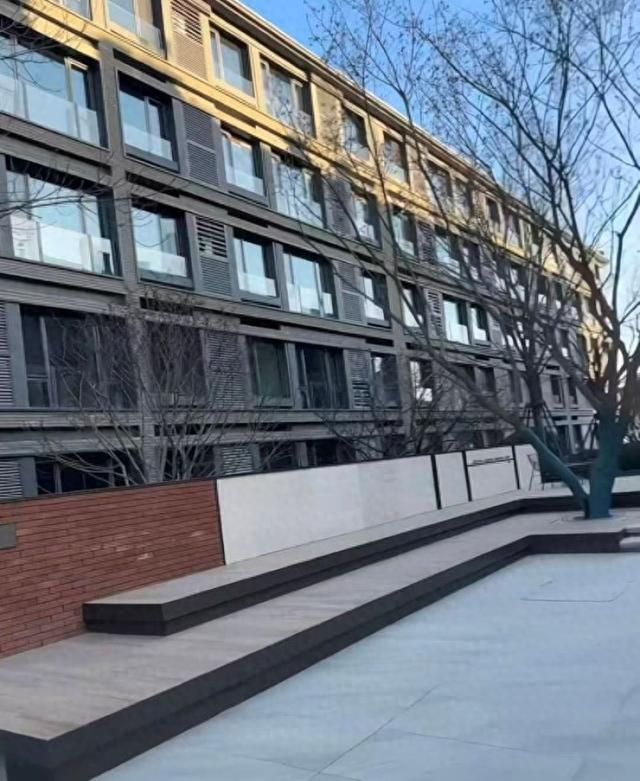
厨房竟被安排在地下!业主被燃气公司贴条停气,中海海淀豪宅被指违规 | 追问“好房子”
Hua Xia Shi Bao· 2026-02-10 03:36
Core Viewpoint - China Overseas Land & Investment's project, Zhonghai Huide Li, is facing scrutiny due to design violations related to gas pipeline installations in its duplex units, raising safety concerns for homeowners [2][3][5]. Group 1: Project Details - Zhonghai Huide Li is designed as a garden-style apartment with an opening price of approximately 83,000 yuan per square meter, and the project has already been delivered [2]. - Homeowners have reported that the gas pipelines were improperly installed in underground storage spaces, which were intended to serve as kitchens, leading to gas supply interruptions during renovations [3][5]. - Similar design issues have been identified in another project, Zhonghai Fuhua Li, where duplex units also feature non-compliant gas pipeline installations [6]. Group 2: Regulatory Compliance - According to the "Gas Engineering Project Specification," gas pipelines should not be installed in underground spaces where gas could accumulate, and the "Residential Project Specification" prohibits gas installations in bedrooms and vertical shafts [5][6]. - Homeowners have expressed concerns about the safety implications of these design violations, which could affect living conditions and pose risks [3][5]. Group 3: Market Impact - The market response has seen a decline in the resale prices of units in Zhonghai Huide Li, with a notable drop from initial prices exceeding 10 million yuan for some units [9]. - China Overseas Land & Investment has been actively acquiring land, with a reported land acquisition amount of 90.7 billion yuan in 2025, leading the industry [9][10]. - The company ranks fourth in sales in Beijing's real estate market, with a sales scale of 14.816 billion yuan in 2025 [10]. Group 4: Ongoing Issues - The company has faced multiple controversies in recent years, including complaints about reduced quality and discrepancies between delivery standards and marketing claims [12]. - Previous projects have also encountered issues, such as reduced exterior finishes and noise problems due to delayed installations of soundproofing measures [12].
新房二手房成交环比调整,放松政策持续出台
CAITONG SECURITIES· 2026-02-10 02:35
Market Performance - The real estate sector (CITIC) had a weekly performance of 0.0%, while the CSI 300 and Wind All A indices decreased by -1.3% and -1.5% respectively, resulting in excess returns of 1.3% and 1.4%[5] - Among 29 CITIC industry sectors, real estate ranked 15th in performance[5] New Housing Market - In the week from January 31 to February 6, 2026, the new housing transaction area in 36 cities was 1.392 million square meters, down 2.9% week-on-week but up 175.7% year-on-year[10] - Cumulative transactions from February 1 to February 6 reached 1.204 million square meters, a year-on-year increase of 257.9%[10] - Year-to-date transactions as of February 6 totaled 6.798 million square meters, down 16.2% year-on-year[10] Second-Hand Housing Market - For the same week, the transaction area for second-hand housing in 15 cities was 1.644 million square meters, down 3.6% week-on-week but up 245.8% year-on-year[16] - Cumulative transactions from February 1 to February 6 were 1.535 million square meters, a year-on-year increase of 423.1%[16] - Year-to-date transactions as of February 6 totaled 8.383 million square meters, up 37.1% year-on-year[16] Inventory and Depletion Cycle - Cumulative new housing inventory in 13 cities was 77.165 million square meters, down 0.7% week-on-week and down 4.6% year-on-year[24] - The new housing depletion cycle for these cities is 22.9 months, with a week-on-week change of -0.1 months and a year-on-year change of +6.2 months[24] Land Market - The land transaction area from February 2 to February 8 was 1.1863 million square meters, down 44.9% week-on-week and down 36.0% year-on-year[43] - The average land price was 1,552 RMB per square meter, up 42.8% week-on-week and up 71.5% year-on-year[43] - Year-to-date land transactions as of February 8 totaled 10.556 million square meters, down 15.8% year-on-year[43] Investment Recommendations - Recommended mainland developers include A-shares: Binhai Group, China Merchants Shekou; Hong Kong stocks: China Overseas Development, Greentown China, China Resources Land, Jianfa International Group[9] - For light asset operation companies, recommended property management companies include Greentown Service and commercial management companies like China Resources Vientiane Life[9] Risk Factors - Risks include potential delays in the relaxation of real estate control policies, continued industry downturns, and ongoing credit risks leading to liquidity deterioration[5]



区域公司“消失术”蔓延 多家大型房企开年“变阵”
Xin Jing Bao· 2026-02-10 01:54
岁末年初房企调整架构不算新鲜事,但今年开年以来,主角是清一色的头部央国企。近日,中海地产撤 销了4大区域公司,从原有的"总部-区域-城市"三级架构调整为"总部-城市"两级架构。 不止中海,1月以来,中建八局、保利发展、华发股份、建发房产、华润置地等房企轮番出手,要么砍 区域、要么合职能、要么重组合并,大方向是"精简+聚焦",背后的逻辑耐人寻味。 房地产深度调整期,央国企这种"行业压舱石"也被业绩和行业格局双重倒逼,只能主动"动刀",谋求变 化。 做"减法":从"三级"到"两级",区域层级继续"瘦身" 据市场消息显示,中海集团董事长颜建国在1月底的内部会议上宣布了这一组织架构调整。这意味着, 中海地产沿用多年的区域管控模式,退出历史舞台。 此前中海长期维持四大区域布局,中间曾加过西部区域,后来又合并回去,如今直接全部裁撤,足以看 出行业迭代的大势所趋。 中海地产这波操作,看似突然,实则早有铺垫。据了解,去年,中海沈阳与大连、重庆与贵阳等城市公 司完成了合并。 中海并不是第一家裁撤区域公司的房企。区域公司"消失术",前两年已在行业中出现。 回溯房地产黄金扩张期,区域公司是房企"跑马圈地"的核心抓手,总部放权,区域 ...
区域公司“消失术”蔓延,多家大型房企开年“变阵”
Bei Ke Cai Jing· 2026-02-10 01:40
Core Viewpoint - The recent restructuring actions taken by major state-owned real estate companies in China, including China Overseas Land & Investment, reflect a broader trend of streamlining operations to enhance efficiency and focus on core business areas amid industry challenges [1][2][3][17]. Group 1: Organizational Restructuring - China Overseas Land & Investment has eliminated four regional companies, shifting from a three-tier structure ("headquarters-regional-city") to a two-tier structure ("headquarters-city") [1][4]. - Other companies such as China State Construction Engineering Corporation, Poly Developments, and China Resources Land have also made similar moves to reduce regional layers and consolidate functions, indicating a trend towards "streamlining and focusing" [2][8]. - The elimination of regional companies is seen as a response to the inefficiencies created by additional management layers, which do not align with the current need for cost reduction and efficiency improvement [7][10]. Group 2: Performance Pressures - China Overseas Land & Investment reported a significant decline in sales performance, with a total contracted property sales amount of 251.23 billion yuan in 2025, a year-on-year decrease of 19.1% [9]. - The company also experienced a drop in revenue and net profit, with 2024 revenues at 185.15 billion yuan, down 8.6%, and a net profit of 15.64 billion yuan, down 38.9% [9]. - Similarly, Huafa Group announced its first loss since going public, projecting a net profit loss of between 9 billion to 7 billion yuan for 2025, reflecting a year-on-year decline of over 1000% [11]. Group 3: Strategic Focus and Integration - Companies are not only cutting regional structures but are also integrating business functions to strengthen core competencies. For instance, Poly Developments is restructuring its headquarters into ten functional departments to support its strategic transformation into a "real estate ecological platform" [12][13]. - China State Construction Engineering Corporation's subsidiary, China State Construction Eight Bureau, is reorganizing its operations into three major business segments to concentrate on real estate and enhance competitiveness [15][16]. - The overarching goal of these adjustments is to reduce costs, improve efficiency, and better position companies to navigate the ongoing industry adjustments [17][18].