
星展银行

Search documents
人民币升破7,跨境消费怎样花最省钱?
36氪· 2026-01-06 09:37
Core Viewpoint - The article discusses the recent fluctuations in the RMB/USD exchange rate, highlighting a significant appreciation of the RMB against the USD, driven by various economic factors including trade surpluses and changes in U.S. monetary policy [4][38][39]. Exchange Rate Dynamics - As of December 31, 2025, the USD index fell by 9.04%, while the onshore and offshore RMB appreciated by approximately 4.43% and 5.18%, respectively [38]. - The RMB/USD exchange rate experienced a "V-shaped" rebound throughout 2025, with the offshore RMB reaching a high of 6.9988 on December 26, marking the first time it surpassed the 7.0 threshold since September 2024 [11][12][13]. - The People's Bank of China (PBOC) adjusted the RMB midpoint rate to 7.023 on January 5, 2026, indicating a proactive approach to manage exchange rate expectations [5]. Trade Surplus and Currency Strength - China's trade surplus reached a record $1.08 trillion in the first eleven months of 2025, a 21.7% year-on-year increase, providing a solid foundation for the RMB's appreciation [25]. - The article notes that the strong trade surplus, coupled with a shift in market sentiment regarding U.S.-China trade relations, has contributed to the RMB's upward momentum [8][25]. Market Sentiment and Capital Flows - There has been a notable increase in foreign investment in Chinese assets, with a net inflow of $10.1 billion into domestic stocks and funds in the first half of 2025, reversing a two-year trend of net outflows [7][31]. - The article emphasizes that the RMB's appreciation is not solely driven by trade surpluses but also by a combination of capital inflows from securities investments and derivatives hedging [29]. Future Outlook - Analysts predict that the RMB will experience a "moderate bullish, two-way fluctuation" trend in 2026, with the exchange rate expected to stabilize between 6.80 and 7.00 [9][44]. - The ongoing U.S. Federal Reserve's interest rate cuts are anticipated to further narrow the interest rate differential between China and the U.S., supporting the RMB's strength [40][44].

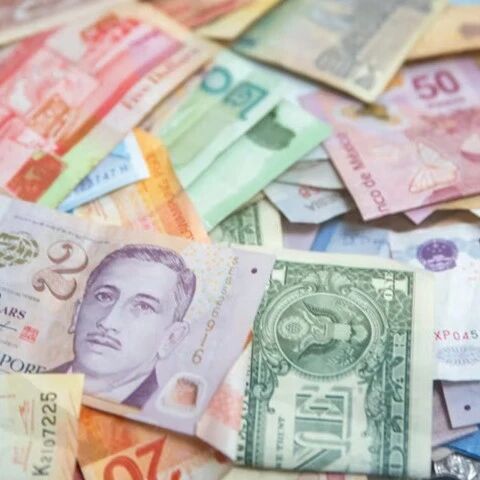
人民币升破7,跨境消费怎样花最省钱
Xin Lang Cai Jing· 2026-01-05 09:37
Core Viewpoint - The Chinese yuan has experienced a significant appreciation against the US dollar, with the offshore yuan breaking the 7.0 mark for the first time in 15 months, driven by a weakening dollar and improved trade dynamics between China and the US [2][3][4]. Exchange Rate Dynamics - As of December 31, 2025, the US dollar index fell by 9.04%, while the onshore and offshore yuan appreciated by approximately 4.43% and 5.18%, respectively [2][4][26]. - The yuan's exchange rate fluctuated around the 7.0 mark, with the offshore yuan reaching a high of 6.9988 on December 26, 2025, marking the highest level since September 2024 [2][9][42]. - The People's Bank of China (PBOC) adjusted the yuan's central parity rate to 7.023, an increase of 58 basis points from the previous trading day [2][35]. Trade Surplus and Currency Demand - China's trade surplus reached a record $1.08 trillion in the first 11 months of 2025, a year-on-year increase of 21.7%, providing a solid foundation for the yuan's strength [5][18][49]. - There has been a notable increase in currency settlement demand from export enterprises, particularly as the yuan approached the 7.0 level, leading to a surge in consultations regarding exchange rates [3][49]. Central Bank's Role - The PBOC has actively managed the yuan's exchange rate to prevent excessive appreciation that could harm export profits, utilizing tools such as the counter-cyclical factor and offshore central bank bills [4][47]. - The central bank's intervention strategy has shifted from preventing depreciation to controlling appreciation, indicating a more nuanced approach to managing market expectations [47][50]. Market Sentiment and Future Outlook - Analysts predict a "moderate bullish, two-way fluctuation" for the yuan in 2026, with expectations that the exchange rate will gradually rise to a range of 6.80-7.00 [40][27]. - The narrowing of the interest rate differential between China and the US, alongside potential concentrated currency settlements by enterprises, is expected to support the yuan's appreciation [27][40].

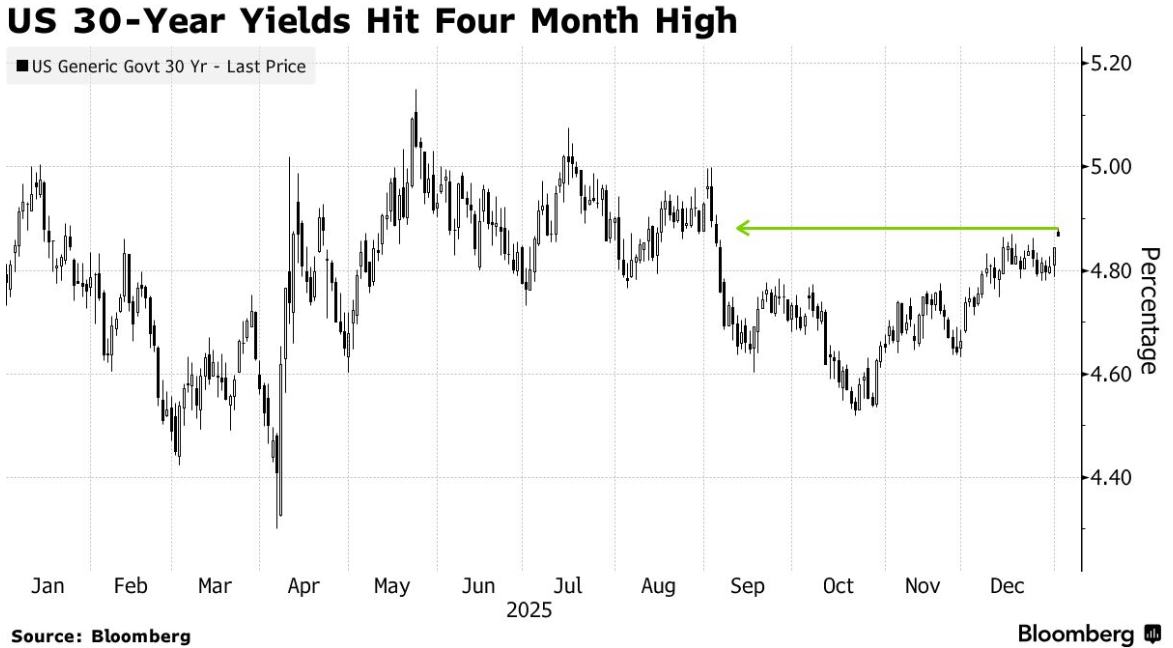
2026开年债市遭抛售:30年期美债收益率创四个月新高,经济乐观预期重挫避险需求
智通财经网· 2026-01-02 11:33
Group 1 - The U.S. Treasury bonds experienced a decline on the first trading day of 2026, with the 30-year bond yield rising to its highest level since early September of the previous year, driven by optimistic market sentiment regarding the U.S. growth outlook, which reduced demand for safe-haven assets [1] - The 30-year Treasury yield increased by 4 basis points to 4.88%, while the 10-year yield rose by 2 basis points to 4.19%. This movement followed data indicating that initial jobless claims in the U.S. fell to one of the lowest levels of the year [1] - A fixed income strategist from DBS Bank noted that the rise in long-term yields may reflect an increase in optimism about the U.S. economy, which could also be echoed in the stock market [1] Group 2 - Australian bonds also fell, as market speculation about rising commodity prices is expected to enhance the country's growth prospects, with both 3-year and 10-year bond yields increasing by approximately 9 basis points [3] - The Australian dollar appreciated by 0.5% against the U.S. dollar, outperforming other currencies in the G10 group [3] - A strategist from Lombard Odier indicated that the fluctuations in the Australian dollar and interest rates partly reflect bond investors' cautious positioning ahead of the U.S. December non-farm payroll data release, with increased activity in the global metal trade market contributing to this momentum [3] - Long-term bonds in Germany and France also recorded declines at the opening [3]
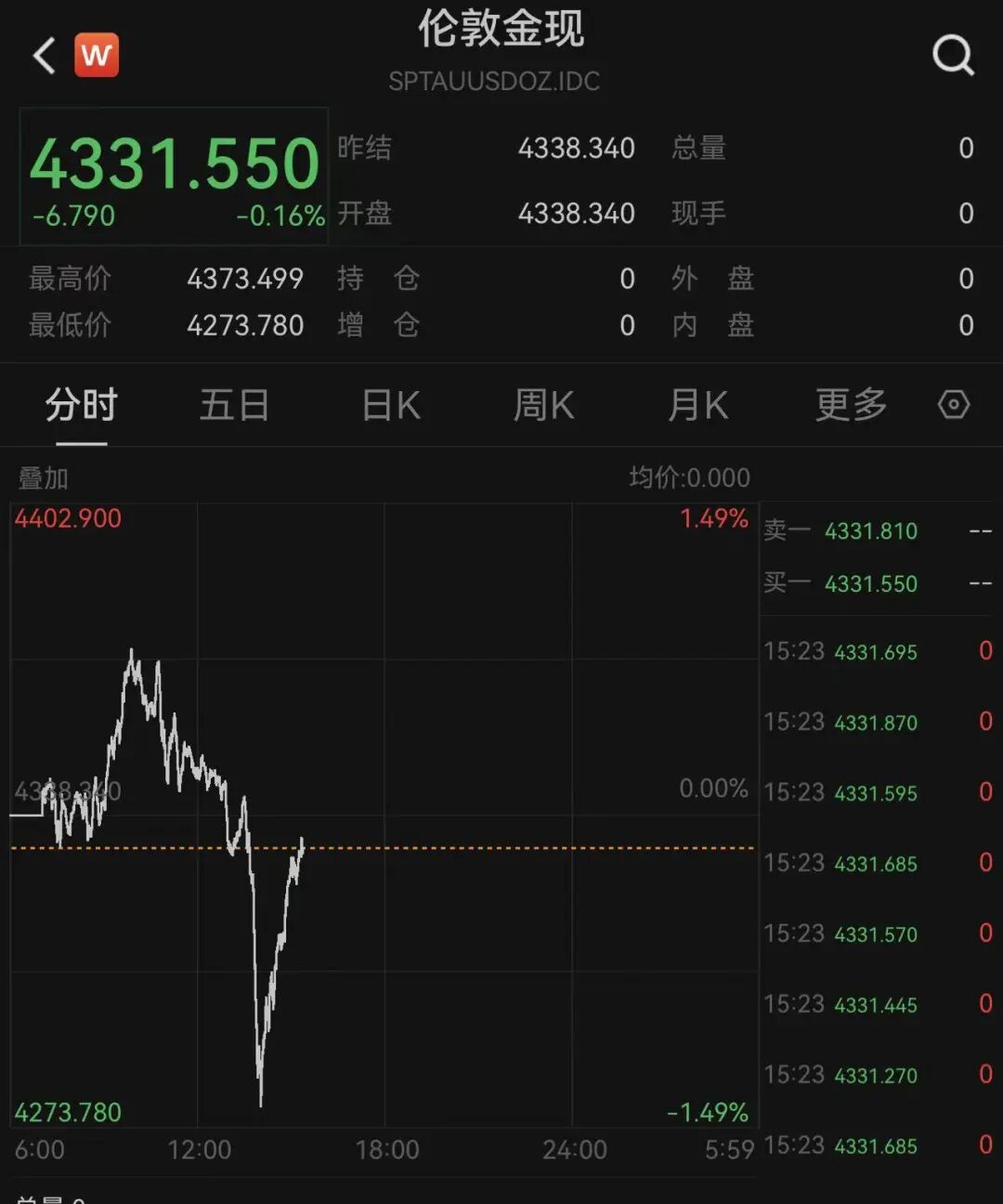
突发!金价,一度直线下跌;银价,跳水!金融圈人士直言:有人在出货
Mei Ri Jing Ji Xin Wen· 2025-12-31 07:48
每经编辑|程鹏 12月31日午后,贵金属板块变绿,黄金、白银、铂金价格纷纷下跌。 现货黄金直线下跌,一度下跌1.50%失守4300美元/盎司,现跌0.16%;现货白银一度跌超7%,现跌5.02%。 | ( W | | | 伦敦金现 | | | | | | | --- | --- | --- | --- | --- | --- | --- | --- | --- | | | SPTAUUSDOZ.IDC | | | | | | | | | 4331.550 Ff | | | | 4338.340 | | 总量 | | 0 | | -6.790 | | -0.16% 升盘 | | 4338.340 | | 现手 | | 0 | | 最高价 | 持 | 4373.499 世 | | | 0 | Ar 智 | | 0 | | 最低价 | 福 | 4273.780 它 | | | 0 | 内 盘 | | 0 | | 书时 | | 五日 日K | | 居K | | 月K | 白天 | | | 量加 | | | | | | 均价:0.000 | | | | 4402.900 | | | | | | 1.49% | 4331 ...
认购金额超过预期3倍!ADQ与亚洲金融机构达成50亿美元融资协议
Sou Hu Cai Jing· 2025-12-29 05:33
Core Insights - ADQ successfully closed its first five-year, $5 billion syndicated loan in the Greater China region, with demand exceeding expectations by three times, reaching over $12 billion [1][2] - The strong demand reflects investor confidence in ADQ's creditworthiness and mission, enhancing its liquidity and providing flexibility for commercially attractive investments [1][2] Group 1: Transaction Highlights - The $5 billion syndicated loan transaction by ADQ saw participation from over 30 major financial institutions across Greater China, including China, Hong Kong, Macau, and Taiwan [2] - The financing diversifies ADQ's funding structure, supports its mid-term investment strategy, and strengthens its liquidity position [2] - The transaction was arranged by six global coordinators, including Bank of China (Dubai Branch), DBS Bank Ltd., HSBC, Industrial and Commercial Bank of China (Dubai Branch), Standard Chartered Bank (Hong Kong), and JPMorgan Securities [2] Group 2: About ADQ - Established in 2018, ADQ is an active sovereign investor focused on critical infrastructure and global supply chains, serving as a strategic partner to the Abu Dhabi government [2] - As of December 31, 2024, ADQ's total assets reached $251 billion, with a rapidly expanding portfolio across various core economic sectors, including energy, utilities, transportation, logistics, healthcare, and sustainable manufacturing [2]

当“3%”美元理财遇上人民币破7关口,警惕高息理财可持续性
Sou Hu Cai Jing· 2025-12-27 00:15
来源: 21世纪经济报道 值得关注的是,此次利率决议的投票结果呈现明显分歧。 会议以9票赞成、3票反对的结果通过降息提案,这是2019年以来美联储利率决议中首次出现3张异议票。异议声音主要分为两派:部分理事主张采取更激进 的宽松措施,认为应一次性降息50个基点,以期更有效应对就业市场下行风险;另有部分理事则倾向维持当前利率水平,担忧持续降息可能加剧通胀反弹压 力。 上海金融与发展实验室首席专家、主任曾刚向21世纪经济报道记者分析指出,"美联储2025年累计降息75基点,核心是稳就业防衰退、通胀可控下政策回归 中性。"他进一步解释道,这一系列举措延续了2024年的宽松基调,旨在托底经济、维持金融环境宽松。 北京时间12月11日凌晨,美联储宣布实施2025年内的第三次降息,将联邦基金利率目标区间下调25个基点至3.50%–3.75%。至此,美联储在本年度已累计降 息75个基点,业内人士表示,符合市场普遍预期。 值得关注的是,在此政策窗口期,国内一批年化收益率仍保持在"3%"以上的美元理财产品,正吸引不少投资者的目光。然而,另一关键因素也在悄然影响 美元理财的投资回报:人民币对美元汇率持续走强,汇率多日逼近"7"关 ...

【高端访谈】全球变局下,外资银行如何重构在华发展路径?——专访星展中国行长郑思祯
Xin Hua Cai Jing· 2025-12-26 07:10
Core Viewpoint - DBS Bank is actively participating in China's financial opening process, focusing on investment opportunities and value creation in the context of global order restructuring by 2025 [1][2]. Group 1: Financial Opening and Investment Strategy - DBS Bank has been a witness and participant in China's opening process since establishing a representative office in Beijing in 1993, and has increased its investment in China significantly in recent years [2]. - The bank has established DBS Securities and increased its shareholding to 91% by December 2024, demonstrating its long-term commitment to the Chinese market [2]. - As a direct participant in the Cross-Border Interbank Payment System (CIPS), DBS Bank plays a crucial role in the internationalization of the Renminbi, with a 30% year-on-year increase in CIPS transaction volume expected in 2024 [2][3]. Group 2: Wealth Management Focus - Since 2025, DBS Bank has achieved record growth in its wealth management business, particularly in China, where the sector is undergoing rapid development and transformation [3][5]. - The bank is focusing on high-net-worth individuals, particularly in major cities like Beijing, Shanghai, Guangzhou, Shenzhen, and Hangzhou, and has raised client entry thresholds [4][5]. - A report indicates that 45% of high-net-worth individuals in China are investing in overseas financial products, with an average of 20% of their total assets allocated to foreign investments [4]. Group 3: Support for New Economy Enterprises - DBS Bank has established a "New Economy Department" to provide comprehensive financial services for technology and innovation enterprises, facilitating their international expansion [6][7]. - The bank aims to assist Chinese companies in their global operations by offering services such as cross-border settlement, trade financing, and foreign exchange risk management [6][7]. - With the deepening of economic cooperation between China and ASEAN, DBS Bank sees significant opportunities in supporting Chinese enterprises entering the ASEAN market [6][7].
星展银行纪沫:2026全球经济或超预期上行 中国兼具经济稳定器和科技助推器角色
Zhong Guo Jing Ying Bao· 2025-12-25 12:51
Global Economic Outlook - The OECD predicts a global GDP growth rate of 2.9% for 2026, with optimistic views contrasting current market sentiments [1] - Factors driving the US economy include interest rate cuts, the implementation of the "Inflation Reduction Act," ongoing AI infrastructure investments, increased defense spending, and enhanced manufacturing investments [2] - Emerging markets are expected to benefit from China's economic spillover effects, with Asia and Southeast Asia likely to show optimistic growth due to trade and supply chain investments [2] Inflation and Risks - US inflation is projected to stabilize between 2.8% and 3% in 2026, influenced by tariff policy easing, while China's low inflation supports consumer purchasing power and asset price stability [3] - The risk of an AI bubble bursting is considered low, as AI investments are still in early stages and supported by the real economy [4] China's Economic Transformation - China is in a critical transition from quantitative to qualitative changes, having achieved global leadership in 54 out of 64 core technologies, particularly in energy and high-end materials [5][6] - The driving forces behind China's technological advancements include energy production and storage capabilities, a large talent pool, and a significant share in global manufacturing [6] - Policy coordination is essential, focusing on traditional industry upgrades and support for emerging sectors, while maintaining a balanced monetary policy [6] Currency Outlook - The Chinese yuan is expected to maintain its role as a "global currency stabilizer," with increasing attractiveness for international capital allocation in 2026 [6]
稳定币这一年:光环褪去后的监管博弈与生存暗战
Xin Lang Cai Jing· 2025-12-25 12:40
Core Insights - The stablecoin sector has undergone a significant transformation from enthusiasm to rationality in 2025, achieving a record annual trading volume of $46 trillion and a total market capitalization of $300 billion, establishing itself as a core bridge between traditional finance and blockchain [3][4][14] - However, the sector faces challenges such as de-pegging incidents and compliance disputes, indicating a shift towards a new phase of regulatory restructuring [3][14] Transition from Marginal to Central - In 2025, stablecoins transitioned from being a peripheral aspect of crypto to a central infrastructure for global capital flow, with a trading volume increase of 106% year-over-year [4][14] - The total market capitalization of stablecoins surpassed $300 billion, with over 1% of USD existing in tokenized stablecoin form on public blockchains [4][14] - The infrastructure improvements, such as advancements in Layer 1 and Layer 2 chains, have significantly reduced transaction costs and settlement times, enhancing cross-border payment efficiency [5][15] Traditional Financial Institutions' Involvement - Major financial institutions are increasingly engaging with stablecoins, marking a maturation of the industry [6][16] - Notable developments include Visa's announcement allowing US banks to conduct settlements using USDC, and other institutions like Bank of New York Mellon and BlackRock expanding their services related to stablecoins [5][16] Market Dynamics and Holdings - Approximately 99% of stablecoins are USD-denominated, with USDT and USDC accounting for 87% of the market share [6][17] - Stablecoins have become significant holders of U.S. Treasury securities, surpassing sovereign nations like Saudi Arabia and South Korea [6][17] Global Regulatory Landscape - A global regulatory framework for stablecoins is rapidly taking shape, with the U.S. implementing the GENIUS Act and the EU establishing the MiCA regulation [7][18] - China has classified stablecoins as a form of virtual currency, deeming related activities illegal due to concerns over compliance and financial stability [8][19] - Hong Kong has introduced stringent regulations for stablecoins, focusing on licensing, reserve management, and redemption guarantees [8][19] Risks and Challenges - The stablecoin market continues to face deep-rooted risks, including high-risk asset exposure and liquidity issues, as highlighted by recent downgrades of USDT's rating [10][20] - The concentration of market share in a few entities, particularly Tether, poses systemic risks that could lead to significant liquidity freezes [10][20] - The industry is expected to evolve towards compliance, scenario-based applications, and regionalization, with predictions of stablecoin market capitalization reaching $500 billion to $600 billion by 2028 [11][21] Conclusion - The year 2025 marks a pivotal moment for stablecoins, characterized by a retreat from speculative fervor and a move towards rational reconstruction [11][21] - Financial innovation must align with regulatory frameworks to ensure stability and contribute positively to the digital transformation of the global financial system [11][21]

欧洲央行利率稳定欧元走强
Jin Tou Wang· 2025-12-24 03:01
Core Viewpoint - The Euro is strengthening against the US Dollar due to the divergence in monetary policies between the European Central Bank (ECB) and the Federal Reserve (Fed), with the ECB maintaining stable interest rates while the Fed continues its easing policy [1][2]. Group 1: ECB's Policy and Economic Outlook - The ECB decided to keep the Eurozone deposit facility rate at 2.00%, the main refinancing rate at 2.15%, and the marginal lending rate at 2.40%, marking the sixth consecutive pause in rate cuts since July 2025 [1]. - The Eurozone economy and inflation are stabilizing, with core inflation gradually approaching the 2% medium-term target and a slight economic recovery observed in the first three quarters [1]. - The ECB's latest forecast indicates that inflation rates will stabilize near the target range over the next two years, providing a foundation for policy stability [1]. Group 2: Fed's Easing Policy and Market Sentiment - The Fed lowered the federal funds rate target range by 25 basis points to 3.5%-3.75%, marking the third consecutive cut since September 2025 and a total reduction of 75 basis points for the year [2]. - There is a divergence in market expectations regarding the Fed's future policy, with some institutions predicting further rate cuts while others believe the current rate is appropriate [2]. - The contrasting monetary policies between the Fed and the ECB are expected to continue benefiting the Euro [2]. Group 3: Market Predictions and Technical Analysis - Market sentiment is leaning towards Euro bullishness, with Goldman Sachs predicting the Euro to rise to 1.25 against the Dollar in the next 12 months, and JPMorgan forecasting a rise to 1.22 by March 2026 [3]. - The bullish outlook is supported by three main factors: the persistent divergence in monetary policies, the relatively high valuation of the Dollar, and stronger-than-expected economic resilience in the Eurozone [3]. - Technically, the Euro has established a bullish trend after stabilizing above the 1.17 level, with key support between 1.1750-1.1780 and resistance at 1.1850 [4].