
万华化学

Search documents
2026年1月橡胶策略报告-20260105
Guang Da Qi Huo· 2026-01-05 05:04
光期研究 2 0 2 6年1月橡 胶 策 略 报 告 2 0 2 6 年 1 月 1 光大证券 2020 年 半 年 度 业 绩 E V E R B R I G H T S E C U R I T I E S 橡胶:旺产转低产,胶价震荡 p 2 | | 目 | 录 | | --- | --- | --- | | 1、价格:期货盘面宽幅震荡 | | | | 2、供应:天胶国内进入停割季 | | | | 3、需求:轮胎库存累库高位 | | | | 4、库存:天然橡胶库存中性 | | | | 5、持仓 | | | p 3 1.1 价格:RU盘面月涨幅1.27%,NR盘面月涨幅3.1%,BR盘面月跌幅10.61% 图表:NR主力合约走势(单位:元/吨) 图表:沪胶主力价格(单位:元/吨) 图表:BR主力合约走势(单位:元/吨) 10000 12000 14000 16000 18000 20000 22000 24000 26000 28000 RSS3 SCRWF 沪胶主连 8500 9500 10500 11500 12500 13500 14500 15500 16500 17500 2022-09 2022- ...
石化ETF(159731)连续4日合计“吸金”超2620万元,主要龙头企业的重大变化大概率有望带来行业的修复机会
Sou Hu Cai Jing· 2026-01-05 02:21
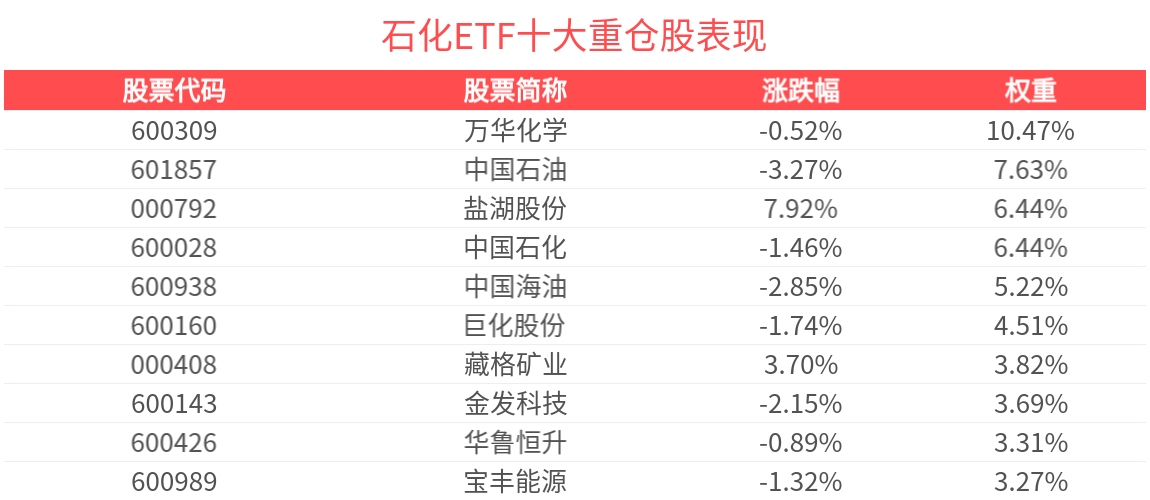
截至2026年1月5日10:05,中证石化产业指数下跌0.36%。成分股方面涨跌互现,盐湖股份、亚钾国际、藏格矿业等领涨;恒逸石化、广东宏大、恒力石化等 领跌。石化ETF(159731)下跌0.22%,最新报价0.92元。从资金净流入方面来看,石化ETF近4天获得连续资金净流入,合计"吸金"2620.60万元。石化ETF最 新份额达2.67亿份,最新规模达2.45亿元,创近1年新高。 截至12月31日,石化ETF近2年净值上涨41.49%。从收益能力看,截至2025年12月31日,石化ETF自成立以来,最高单月回报为15.86%,最长连涨月数为8个 月,最长连涨涨幅为41.60%,上涨月份平均收益率为5.25%。截至2025年12月31日,石化ETF近1年超越基准年化收益为2.05%。 (以上所列股票仅为指数成份股,无特定推荐之意) 石化ETF(159731),场外联接(华夏中证石化产业ETF发起式联接A:017855;华夏中证石化产业ETF发起式联接C:017856)。 以上内容与数据,与有连云立场无关,不构成投资建议。据此操作,风险自担。 | 股票代码 | 股票简称 | 涨跌幅 | 权重 | | --- ...

【非银金融*孙婷】公募基金降费第三阶段落地,引导权益类基金发展,平滑对短债基金的影响
Sou Hu Cai Jing· 2026-01-05 01:17
Core Viewpoint - The China Securities Regulatory Commission (CSRC) has revised the regulations on public fund sales fees, leading to a significant reduction in fees, which is expected to benefit investors and promote the development of equity funds [1][2]. Summary by Relevant Sections Fee Reduction Impact - The third phase of the fee reduction is estimated to lower overall fund sales fees by approximately 30 billion yuan, representing a 34% decrease [1]. - The maximum subscription and purchase fees for equity, mixed, and bond funds have been reduced from 1.2%/1.5% and 0.6% to 0.8%, 0.5%, and 0.3% respectively [2]. - The maximum annual sales service fee for equity and mixed funds has been reduced from 0.6% to 0.4%, while for index and bond funds, it has decreased from 0.4% to 0.2% [2]. Encouragement of Long-term Investment - The new regulations encourage long-term holding by eliminating sales service fees for funds held for over a year, except for money market funds [2]. - Redemption fees will now be fully allocated to fund assets, shifting the focus of fund sales institutions from transaction volume to asset retention [2]. Differentiated Commission Structure - The tail commission for sales to individual investors remains capped at 50%, while for non-individual sales, the cap for equity funds is set at 30% and for other funds reduced from 30% to 15% [3]. - This differentiated structure aims to promote retail business development and guide the growth of equity funds [3]. Overall Fee Reduction Strategy - The cumulative fee reduction across three phases is projected to save investors around 500 billion yuan annually, with the first two phases contributing approximately 140 billion yuan and 68 billion yuan respectively [3].

华泰证券今日早参-20260105
HTSC· 2026-01-05 01:09
Group 1: Macro Insights - The New Year's holiday saw a significant increase in travel and consumption, with daily cross-regional personnel flow up 19.5% year-on-year and average consumer spending rising over 30% compared to last year [2][3] - The manufacturing PMI showed a seasonal rebound, indicating a recovery in exports and manufacturing activity [2] - Real estate transactions remain low, but there is a call for stronger policy support to stabilize the market [2] Group 2: Oil and Energy Sector - The geopolitical situation in Venezuela has shifted dramatically, with the U.S. taking control of the oil industry, which may have far-reaching implications for global geopolitics and trade [3] - The potential for market-driven investments in Venezuela's oil sector could reshape the energy landscape in the Americas [3] Group 3: Investment Strategy - The spring market is expected to continue its upward trend, supported by improved PMI data and favorable liquidity conditions [6][9] - The focus for investors should be on thematic investments in sectors like commercial aerospace, humanoid robots, and domestic computing power [6] - A balanced approach is recommended, with an emphasis on high-dividend stocks and cyclical sectors such as consumer goods and energy [6] Group 4: Transportation Sector - During the New Year's holiday, the number of cross-regional travelers reached 595 million, with a daily average increase of 19.62% year-on-year, driven by a low base from the previous year [16] - The railway sector experienced the highest growth rate at 52.6%, indicating strong demand for rail travel [16] Group 5: Consumer Sector - The New Year's holiday saw a steady increase in consumer spending, with total spending reaching 847.89 billion yuan, a 6.3% increase year-on-year [17] - The report highlights structural opportunities in the consumer sector, particularly in domestic brands, AI-enabled technology consumption, and emotional spending [17] Group 6: Real Estate Sector - The emphasis on managing expectations in the real estate market has increased, with a focus on stabilizing market sentiment [18] - There is optimism for investment opportunities in well-managed real estate companies and high-dividend property management firms [18] Group 7: Chemical Industry - The polycarbonate (PC) industry is expected to enter a favorable cycle due to strong demand from the electric vehicle sector and limited new capacity additions [19] - The industry is projected to achieve high operating rates of 87% to 95% from 2025 to 2027, indicating a positive outlook for key players [19] Group 8: Technology Sector - The CES 2026 event is anticipated to shift focus towards AI-driven technologies, marking a significant transition in the consumer electronics landscape [20] - The report suggests that AI applications will be a key area to watch, with implications for various sectors including automotive and industrial applications [20] Group 9: Fixed Income Market - The bond market is expected to face mixed conditions, with short-term trading opportunities arising from new public fund sales regulations [13] - The report suggests a focus on short-term strategies and flexible operations in response to market dynamics [14]
山海寻梦 不觉其远;前路迢迢 阔步而行 26家公司掌门人寄语2026
Shang Hai Zheng Quan Bao· 2026-01-04 21:00
Group 1 - Huawei's rotating chairman Meng Wanzhou emphasizes the importance of resilience and professionalism in overcoming challenges and creating value in the face of the intelligent transformation wave, highlighting the need for strategic focus and organizational strength by 2026 [27] - Hengrui Medicine plans to increase R&D investment, focusing on oncology, autoimmune, and metabolic diseases, aiming to address unmet clinical needs and enhance international cooperation for global commercialization of Chinese innovative drugs by 2026 [28] - Wanhua Chemical's chairman Liao Zengtai aims to enhance operational quality and focus on technological innovation, particularly in battery materials and high-end new materials, to create a competitive advantage and develop an integrated growth model by 2026 [29] Group 2 - Muyuan Foods' chairman Qin Yinglin reflects on the company's journey from starting with 22 pigs to becoming the largest pig farming enterprise globally, emphasizing the importance of innovation and technology in achieving a dignified and efficient pig farming process by 2026 [30] - Gree Electric's chairman Dong Mingzhu commits to deepening core business and accelerating in smart equipment and new energy sectors, while focusing on green and digital transformation to enhance product quality and service for global users by 2026 [31] - Geely Holding Group's chairman Li Shufu highlights the importance of making bold decisions during critical moments, emphasizing the need to overcome challenges and maintain core values as the company approaches its 40th anniversary in 2026 [32] Group 3 - SAIC Motor's chairman Wang Xiaoqiu outlines the company's commitment to deepening reforms and focusing on intelligent and electric vehicle development, aiming for high-quality growth and user-centered innovation by 2026 [32] - Hengli Group's chairman Chen Jianhua stresses the importance of practical action and innovation in overcoming development challenges, encouraging a proactive approach to seize opportunities in the coming years [33] - LONGi Green Energy's chairman Zhong Baoshan believes the photovoltaic industry is at a pivotal moment, emphasizing the need for technological innovation to navigate challenges and capitalize on the global green energy transition [34] Group 4 - Inspur's chairman Li Jun emphasizes the transformative impact of artificial intelligence on the global economy and the importance of open collaboration to unlock AI's potential, with a focus on building a comprehensive innovation ecosystem by 2026 [35] - TCL's chairman Li Dongsheng highlights the need for strategic focus on achieving global leadership and enhancing core capabilities to drive high-quality development amid economic uncertainties in 2026 [36] - Trina Solar's co-chairman Gao Haichun emphasizes the company's evolution from a product supplier to a system-level innovator, focusing on creating solutions that transcend traditional competition by 2026 [38] Group 5 - JinkoSolar's chairman Li Xian-de discusses the potential of space photovoltaic technology as a sustainable energy solution for future AI power needs, marking the company's 20th anniversary with a vision for universal solar energy [39] - Leo Group's chairman Wang Xiangrong aims to enhance the company's strategic focus and sustainable value, emphasizing collaboration with customers and employees to achieve higher-dimensional value creation by 2026 [40] - Innovent Biologics' chairman Cui Jisong outlines the company's commitment to innovation and global expansion, aiming to launch multiple new drugs and maintain an entrepreneurial spirit in the face of uncertainty by 2026 [41]






山海寻梦,不觉其远;前路迢迢,阔步而行 26家公司掌门人寄语2026
Shang Hai Zheng Quan Bao· 2026-01-04 20:55
Group 1 - Huawei's rotating chairman Meng Wanzhou emphasized the importance of resilience and professionalism in overcoming challenges and creating value, highlighting the long-term strategic opportunities presented by the wave of intelligent transformation [25] - Hengrui Medicine's chairman Sun Piaoyang announced plans to increase R&D investment, focusing on oncology, autoimmune, and metabolic diseases, while promoting international cooperation and accelerating overseas clinical trials [26] - Wanhua Chemical's chairman Liao Zengtai aims to enhance operational quality and focus on technological innovation, particularly in battery materials and high-end new materials [27] Group 2 - Muyuan Foods' chairman Qin Yinglin expressed commitment to smart pig farming and improving animal health, aiming to enhance the quality and safety of pork for consumers [28] - Gree Electric's chairman Dong Mingzhu plans to deepen the core business while accelerating in smart equipment and renewable energy sectors, emphasizing a commitment to green and digital transformation [29] - Geely Holding Group's chairman Li Shufu highlighted the importance of making bold decisions during critical moments, focusing on core values and sustainable development [30] Group 3 - SAIC Motor's chairman Wang Xiaoqiu stated the company will deepen reforms and focus on intelligent and electric vehicle development, aiming for high-quality growth [30] - Hengli Group's chairman Chen Jianhua emphasized the need for a proactive approach to overcome challenges and achieve breakthroughs in the coming years [31] - LONGi Green Energy's chairman Zhong Baoshen believes the photovoltaic industry is at a pivotal moment, with significant opportunities for innovation and growth [32] Group 4 - TCL's chairman Li Dongsheng stressed the importance of maintaining strategic focus and enhancing core capabilities to achieve high-quality development [33] - Inspur's acting chairman Li Jun highlighted the transformative impact of artificial intelligence on the economy and the need for open and collaborative innovation [35] - Trina Solar's co-chairman Gao Haichun mentioned the company's evolution from a product supplier to a solution provider, focusing on system-level product innovation [36] Group 5 - JinkoSolar's chairman Li Xian-de discussed the potential of space photovoltaic technology as a sustainable energy solution for future challenges [37] - LEO Technology's chairman Wang Xiangrong emphasized the importance of creating value beyond mere data growth, focusing on sustainable and collaborative progress [38] - Innovent Biologics' chairman Cui Jisong outlined the company's commitment to innovation and global expansion in the next decade [39] Group 6 - Fosun International's chairman Guo Guangchang highlighted the growing demand for health and wellness, emphasizing the need to leverage the company's strengths in various industries [40] - Obsidian Technology's chairman Huang Yuanhao expressed the importance of innovation in robotics and AI vision, aiming to lead in the upcoming technological revolution [41] - Volkswagen's chairman Yang Guoping emphasized the commitment to brand and innovation as the company embarks on a new journey in the "14th Five-Year Plan" [42]

2400亿化工茅宣布涨价
2 1 Shi Ji Jing Ji Bao Dao· 2026-01-04 16:11
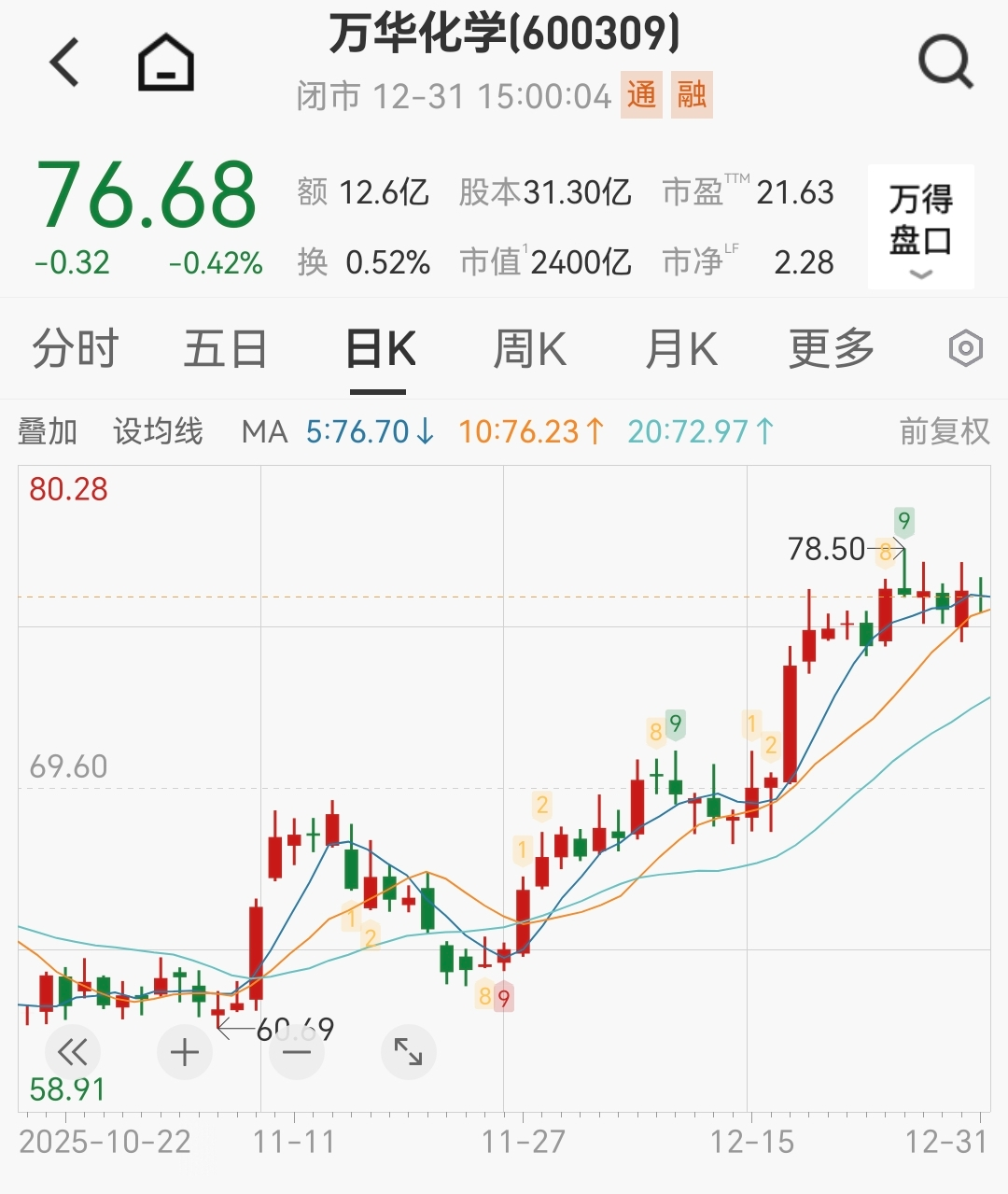
Core Viewpoint - Wanhua Chemical's price increases for MDI and TDI products are part of a broader global trend, driven by supply disruptions and rising raw material costs, amidst a high concentration of industry players [1][4][5]. Price Adjustments - Wanhua Chemical has announced multiple price hikes since December 2025, with increases of $200/ton for MDI in Southeast Asia and South Asia, and €300/ton in Europe [4]. - Other major companies like BASF and Dow have also raised prices, indicating a strong market adjustment across the polyurethane sector [4]. Supply Chain Disruptions - The price increases are attributed to unexpected production halts and geopolitical tensions affecting raw material costs [5]. - Notable production disruptions include a month-long shutdown of Hunstman’s MDI facility in the Netherlands and Wanhua's 100,000-ton MDI capacity in Ningbo, which is undergoing maintenance for 55 days [5][7]. Industry Dynamics - The polyurethane industry is characterized by high concentration, with major players like Wanhua, BASF, and Hunstman dominating the market, which limits the impact of domestic competition [1][5]. - The ongoing supply issues in Europe, particularly concerning ethylene, are expected to persist, affecting the overall production landscape [7][8]. Market Performance - Wanhua Chemical's stock has seen a rise of over 12% in the past 20 days, with a market capitalization of 240 billion yuan as of December 31, 2025 [1][2]. - The company's revenue for the first three quarters of the year was 144.23 billion yuan, a slight decline of 2.29% year-on-year, while net profit showed a smaller decline of 17.45% [10]. Future Outlook - Analysts suggest that the recovery of downstream demand is crucial for the overall improvement of the chemical sector, with expectations of a gradual recovery in Wanhua's operational performance [10][11]. - The ongoing capital investments in China's chemical industry and the exit of overseas capacities may stabilize the market in the coming years [11].
2400亿化工茅宣布涨价
21世纪经济报道· 2026-01-04 16:07
Core Viewpoint - The article discusses the recent price increases in the polyurethane industry, particularly focusing on Wanhua Chemical's price adjustments for MDI and TDI products, which are part of a broader trend influenced by supply disruptions and geopolitical factors [1][4][5]. Price Adjustments - Wanhua Chemical has announced multiple price increases for its core products, including MDI and TDI, starting from December 1, 2025, with increases of $200/ton in Southeast Asia and South Asia, and €300/ton in Europe [4]. - Following Wanhua, other major players like BASF and Dow also raised their MDI prices, indicating a synchronized market response [4][5]. - The price adjustments are attributed to unexpected production halts and rising raw material costs due to geopolitical tensions [5][6]. Supply Chain Disruptions - The polyurethane industry is experiencing significant supply chain disruptions due to unexpected maintenance and production halts at major facilities, including Wanhua's and BASF's plants [6]. - Notably, Hunstman’s MDI facility in the Netherlands faced an unexpected shutdown, exacerbating supply shortages [5][6]. - The article highlights that the European ethylene supply is under pressure, with several plants expected to close or reduce output, further tightening the market [8][9]. Market Dynamics - The article notes that the polyurethane industry has a high concentration of major global players, which limits the impact of domestic competition on pricing [1]. - Analysts suggest that the current price increases are part of a normal market adjustment rather than a reaction to domestic competition [1]. - The overall market sentiment is shifting towards a more optimistic outlook, with expectations of recovery in downstream demand being crucial for the industry's long-term health [12][13]. Future Outlook - The article indicates that while the current price increases are beneficial, the recovery of downstream demand is essential for sustained growth in the chemical sector [12]. - Analysts from UBS believe that the capital expenditure in China's chemical industry is beginning to decline, which may stabilize the industry's performance in the coming years [13]. - The article concludes that Wanhua Chemical's strategic positioning and the ongoing global supply adjustments could enhance its market share and profitability in the future [13].
机器人TPU材料交流
2026-01-04 15:35
Summary of TPU Materials in Robotics Industry Conference Call Industry Overview - The conference call focused on the TPU (Thermoplastic Polyurethane) materials industry, particularly its applications in the robotics sector [2][3][10]. Key Characteristics of TPU - TPU combines the elasticity of rubber with the processability of plastics, offering excellent wear resistance, tear strength, and a tensile strength typically above 60 MPa [2][3]. - It remains stable in extreme temperatures ranging from -40°C to 120°C, making it suitable for various applications in robotics [4][10]. Applications in Robotics - TPU is widely used in four key areas within robotics: 1. **Safety Protection Components**: Flexible joint covers and protective shells, valued at approximately 6,000 RMB per robot [6]. 2. **Lightweight Composite Structures**: Used in non-load-bearing parts to reduce weight while maintaining rigidity, valued at around 2,000 RMB [6]. 3. **Transmission Sealing Systems**: Includes wear-resistant components like joint seals, valued at about 1,500 RMB [6]. 4. **Sensor and Cable Protection**: For flexible sensor packaging and high-bend cables, valued at approximately 500 RMB [6]. Market Dynamics - The global TPU production capacity is expected to reach 1.3 million tons by 2025, with China accounting for 46.2% of this capacity [3][4]. - Major international producers include BASF and Covestro, while leading domestic companies are Wanhua Chemical, Huafeng Chemical, Meirui New Materials, and Innovate [9][10]. Pricing Trends - The average price of TPU materials for robotics ranges from 23,000 to 28,000 RMB per ton, significantly higher than the average price of general-purpose TPU at around 15,000 RMB per ton [12][19]. - The price is influenced by the complexity of the production process and the specific properties required for robotics applications [12][19]. Challenges in Production - Key challenges in TPU production include material modification, mold opening, and injection molding processes, which require precise temperature control and specific conditions [15][18]. - The production of high-performance TPU involves complex chemical reactions and careful selection of raw materials, which can create barriers to entry for new competitors [13][14]. Environmental Regulations - Future environmental regulations, such as the EU REACH regulation, will significantly impact the TPU industry, pushing for the development of bio-based TPU to reduce harmful substances and carbon emissions [22]. - Companies like BASF and Wanhua are actively working on bio-based TPU, with production lines being established to increase bio-content in their products [22]. Future Outlook - The demand for TPU in the robotics sector is expected to grow, with projections indicating that the market value could exceed 10 billion RMB by 2030 [20]. - As the number of robots increases, the average TPU usage per robot is anticipated to rise, potentially leading to limited price decreases despite increased production [19][20]. Conclusion - The TPU materials market in the robotics industry is characterized by strong growth potential, driven by technological advancements and increasing applications in various robotic components. The focus on sustainability and compliance with environmental regulations will shape the future landscape of the industry [22].

化工-Q4业绩前瞻及多品种更新推荐
2026-01-04 15:35
Summary of Chemical Industry Conference Call Industry Overview - The chemical sector is entering a clear cyclical turning point starting from July 2024, with 2026 expected to be a significant year for the industry. [2] - Supply-side reforms have led to a substantial decrease in new capacity and production growth, creating a foundation for valuation recovery and an upward trend in the chemical stocks. [2] - Despite the current demand not fully recovering, the certainty on the supply side has resulted in strong stock performance. [2] Key Insights - **Investment Recommendations**: Prioritize large leading companies such as Hengli Petrochemical, Rongsheng Petrochemical, and Hualu Chemical, as well as high-elasticity targets in the polyester industry chain. [2][4] - **Oil Price Forecast**: Anticipation that oil prices may bottom out in the first half of 2026, providing a final opportunity for increased investment in the chemical sector. Historical data indicates that chemical stock prices typically bottom out about a year before oil prices. [5] - **PTA Market**: PTA prices have recently improved, with low-cost companies achieving slight profits. 2026 is expected to mark the beginning of profit recovery for PTA. [6] - **Aromatics Sector**: The aromatics industry, particularly PX prices, has shown significant increases due to expanded oil product cracking margins and reduced supply from the U.S. [10] - **Chlor-alkali Industry**: The chlor-alkali sector has faced simultaneous declines in caustic soda and PVC prices, leading to overall losses. Limited new capacity in caustic soda and PVC is expected to accelerate the exit of outdated capacities. [12][13] Additional Insights - **Biodiesel Market**: The second-generation biodiesel prices remain strong, with significant capacity increases expected from companies like Zhuoyue New Energy. [14] - **Refrigerant Market**: The refrigerant sector has seen price increases across major products, with a positive outlook for future price growth. [21][22] - **Silicon and Chromium Market**: Prices for silicon and chromium have remained stable, with expectations for a price increase in March due to seasonal demand. [7] - **Tire Industry**: The tire market is experiencing a seasonal slowdown, but domestic brands like Sailun are showing strong sales growth. [24] Conclusion - The overall outlook for the chemical sector in 2026 is strongly positive, with recommendations to focus on large leading enterprises and high-elasticity targets while closely monitoring supply-demand dynamics for optimal investment timing. [7]


