地平线

Search documents
2025上海车展,零部件企业破局重构产业格局
Jing Ji Guan Cha Bao· 2025-05-21 08:32
Core Insights - The 2025 Shanghai Auto Show serves as a significant platform for the automotive supply chain, showcasing a transformation from "supporting players" to "leading players" in the industry [1][16] - The exhibition area for auto parts spans 100,000 square meters, hosting over 1,500 suppliers from 28 countries, marking it as the largest auto parts display in history [2][4] - The event highlights the shift towards smart and electric vehicles, with a notable presence of both traditional suppliers and new tech companies [2][3] Industry Transformation - The automotive supply chain is evolving with technology companies entering the market, changing the competitive landscape from hardware manufacturing to a software-hardware integrated ecosystem [3] - The collaboration between component suppliers and vehicle manufacturers is shifting from "supplying" to "joint development," as seen in partnerships like Huawei with Jianghuai Auto and CATL with SAIC [3][5] Scale and Competition - More than half of the world's top 100 auto parts suppliers participated in the show, showcasing their advanced technologies and products [4][5] - Domestic companies like CATL and Huawei are demonstrating significant growth and technological advancements, indicating a shift in industry power dynamics [5][11] Technological Innovations - The event showcased breakthroughs in battery technology, including CATL's sodium-ion battery and BYD's all-solid-state battery, which address safety and performance concerns [7][8] - Major Tier 1 suppliers are accelerating local R&D efforts, with Bosch and Continental introducing advanced driver assistance systems that leverage local technology [9][10] Local Market Dynamics - Chinese auto parts companies are rapidly gaining ground, with over 1,200 domestic automotive chips displayed, reflecting a shift from being a backup option to a primary choice for automakers [11] - Companies like Huawei and CATL are setting benchmarks in technology and ecosystem development, with innovative solutions like rapid battery swapping and smart vehicle systems [12][13] Global Strategy and Localization - Multinational companies are deepening their local strategies in China, with significant investments and a focus on integrating into the local automotive ecosystem [13][14] - The trend of localization is becoming essential for global suppliers, as they adapt to the unique demands of the Chinese market while also aiming for global outreach [15][16]


智能辅助驾驶竞速与暗战:万亿市值谁领衔,技术功能哪家强?
Bei Ke Cai Jing· 2025-05-21 04:11
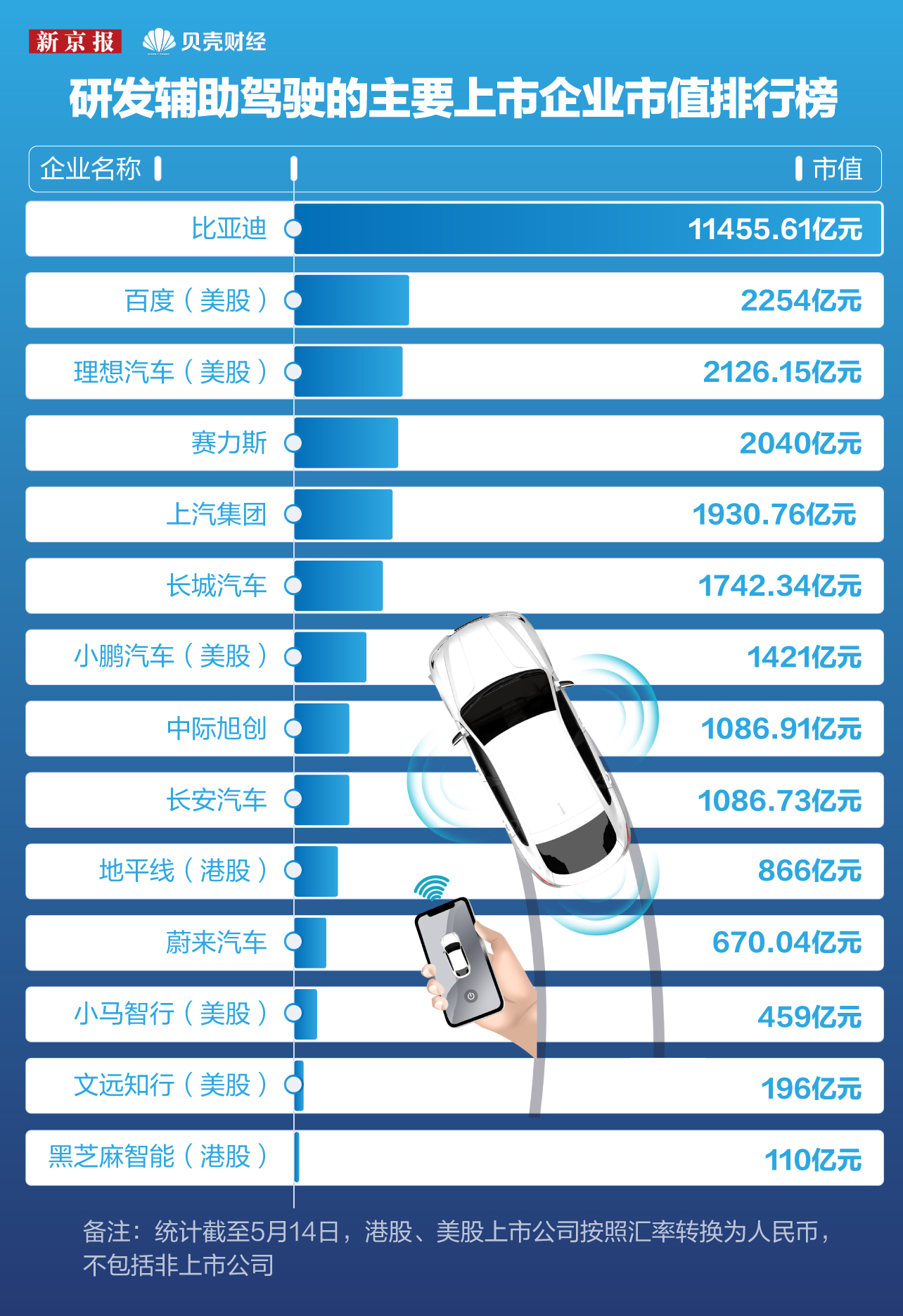
Core Insights - The intelligent driving industry is undergoing rapid transformation driven by advancements in technology such as chips, lidar, AI algorithms, and vehicle-road collaboration, leading to the commercialization of smart assisted driving [1][2] - By 2025, the competition in the smart assisted driving sector will not only be about technical parameters but also about market positioning and strategic partnerships among companies [1][2] - The total number of companies involved in smart assisted driving in China has exceeded 1,000, with at least 300 listed companies in A-shares, Hong Kong, and US markets [1][3] Market Capitalization and Competition - As of May 14, 2025, the top five companies in A-shares related to smart assisted driving by market capitalization are BYD (1.11 trillion yuan), Seres (213.4 billion yuan), SAIC Motor (192.2 billion yuan), Great Wall Motors (172.9 billion yuan), and Zhongji Xuchuang [4] - The competition among the second-tier companies is intensifying, with market capitalizations of Seres, SAIC, and Great Wall Motors closely clustered within a few billion yuan [4][7] - In the US market, companies like Xpeng and Li Auto are also competing closely in terms of market capitalization [4] Sales Performance - BYD leads the global market in new energy vehicle sales, achieving 4.272 million units sold in 2024, a year-on-year increase of 41.26%, which provides a strong data foundation for its assisted driving development [8][9] - The competition for BYD is not only among domestic manufacturers but also with Tesla, with BYD adopting a strategy of making smart assisted driving technology accessible to lower-priced vehicles [9] Ecosystem and Development Strategies - The smart assisted driving technology is rapidly evolving, with companies pursuing either full-stack self-research or collaborative approaches to differentiate their solutions [12][19] - BYD and Xpeng are examples of companies that are leading in self-research, while Huawei is noted for its collaborative "friend circle" model, partnering with multiple automakers [13][19] - Momenta stands out in the supply chain with a broad customer base, collaborating with seven of the top ten global automakers and over 130 production models [21] Supply Chain Dynamics - The competition among supply chain companies is characterized by a wide range of partnerships and diverse customer types, with companies striving to expand their client base [21] - In the lidar sector, companies like Hesai and RoboSense are engaged in fierce competition, with plans to significantly reduce prices to make lidar technology more accessible [21][24] - The chip sector is also highly competitive, with domestic companies striving to replace established players like Mobileye in the L2 market [24] Industry Challenges and Future Outlook - The commercialization of L3 and higher-level autonomous driving technologies faces regulatory hurdles, with no clear guidelines on liability and road regulations yet established [26][27] - Despite the challenges, the intelligent driving industry in China is on a growth trajectory, with companies like BYD and Huawei leading the way in making assisted driving technology more accessible [28] - The ultimate goal of the industry remains to surpass human driving capabilities in terms of safety and efficiency [28]

关于小米造芯这件事,我们只说三个点
3 6 Ke· 2025-05-21 00:20
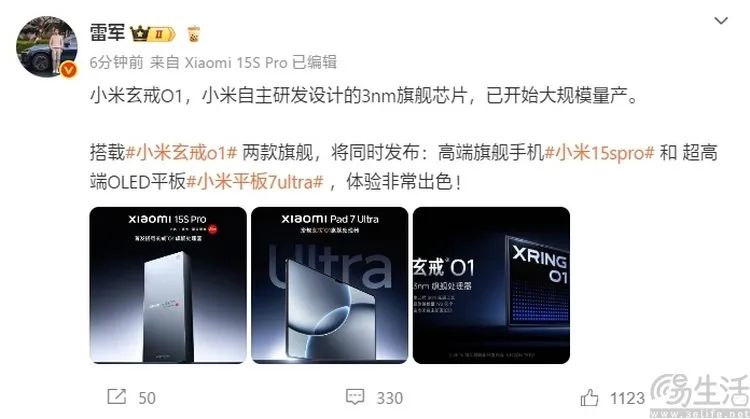
Core Viewpoint - Xiaomi is advancing its chip development with the upcoming launch of the "玄戒O1" chip, which will utilize second-generation 3nm process technology, marking a significant step in its self-developed chip journey [4][22]. Group 1: Chip Development History - Xiaomi began its chip development journey with the "澎湃S1" in 2014 and transitioned to various self-developed "小芯片" until 2017 [1]. - In 2021, Xiaomi re-initiated the development of a SoC "大芯片" [4]. Group 2: Industry Reactions - The announcement of the "玄戒O1" has sparked widespread discussion and analysis across social media platforms, with various opinions on its performance and pricing emerging [6]. - Some skepticism exists regarding the authenticity of the chip's self-developed status, particularly concerning its architecture and components [9][12]. Group 3: Architecture and Self-Development Debate - Critics argue that the use of ARM architecture in the "玄戒O1" undermines its classification as a self-developed chip [9]. - The article counters that many successful chip manufacturers, including MediaTek and Unisoc, also utilize public ARM architectures, suggesting that using such architectures does not negate self-development claims [11][12]. Group 4: Advanced Process Technology - The "玄戒O1" will employ advanced 3nm process technology, which has raised questions about why Xiaomi can access this technology while others cannot [22][25]. - Current U.S. regulations do impose restrictions on chip manufacturing, but they are conditional and do not outright ban the use of advanced processes for certain chip types [26][28]. Group 5: Investment and R&D Costs - Xiaomi's total investment in chip development is reported to be 135 billion yuan, which raises questions when compared to OPPO's previous 500 billion yuan investment that did not yield similar results [33][35]. - The article highlights that the cost of developing advanced chips can vary significantly, and the reported R&D costs of other companies, such as MediaTek, suggest that Xiaomi's investment may be sufficient for successful chip development [37][39].

祥峰二期天使基金完成超5亿元募集,持续支持高潜力中国初创科技发展
IPO早知道· 2025-05-20 10:44
重点关注天使轮和pre-A轮的早期项目,聚焦于硬科技和医疗科技领域。 本文为IPO早知道原创 作者| Stone Jin 微信公众号|ipozaozhidao 据 IPO早知道消息, 祥峰二期天使基金 日前完成 超 5亿元人民币 募集 。本期基金的成功募集,除 了一期天使基金老 LP的大规模复投,也得到了产业投资人和地方政府的大力支持。 祥峰中国重点关注创新科技和医疗科技。旗下有多支美元和人民币基金,管理规模合计约 200亿人 民币,已投资超过160家创业公司 ,代表项目包括 宇树科技、曦智科技、和铂医药 ( 2142.HK ) 、芯驰科技、地平线 ( 9660.HK ) 、 SES AI麻省固能 ( NYSE: SES ) 、微芯生物 ( 688321.SH ) 、慧智微电子 ( 688512.SH ) 、云英谷、摩拜单车 (美团收购)、极智嘉、精锋 医疗等 。 向前追溯,祥峰天使一期基金于 2020年成立,截至目前已投资朗力半导体、冠华、松灵、万勋等 20多家优质且稳健成长的创新企业。近三分之二的基金项目已经完成了下一轮融资,并已在2023年 完成了首个项目的退出。 2024年,祥峰投资刚刚成立规模近36 ...

启明创投邝子平:中国新质生产力正在走向世界,创投行业可以发挥重要作用
IPO早知道· 2025-05-20 02:14
Core Viewpoint - The article emphasizes the significant investment opportunities in China's new productive forces, particularly in the context of the global market and technological advancements [2][19]. Group 1: New Productive Forces in China - China's new productive forces are gaining global recognition, with immense investment potential [2]. - The emergence of companies like DeepSeek showcases China's advancements in AI, reducing costs significantly compared to international counterparts [4][5]. - The gap between China's AI capabilities and international standards has narrowed to just two to three months, indicating rapid progress [6]. Group 2: Investment Opportunities - The biopharmaceutical sector in China is experiencing a transformation, with 30% of global license-ins coming from Chinese startups in 2024, up from 0% in 2019 [8]. - The shift from being a major recipient of foreign technology to a leading source of innovation (license-out) highlights China's growing influence in the global market [8]. - The export composition of China has evolved, with machinery and electronics now accounting for 42% of total exports, reflecting a shift towards high-tech products [9]. Group 3: Globalization of Chinese Companies - Chinese tech companies are increasingly expanding their international presence, although none have yet surpassed 50% of revenue from overseas [10]. - Emerging companies like Stone Technology and Insta360 are leading in their respective fields globally, with significant portions of their revenue coming from international markets [11]. - The recognition of Chinese technology firms is growing, paralleling the country's manufacturing capabilities established over the past decades [12]. Group 4: Role of Venture Capital - The venture capital industry in China plays a crucial role in supporting technological innovation, focusing on high-risk, long-term investments [15]. - Despite facing challenges in recent years, the potential for investment in Chinese startups remains strong, with six out of seven companies valued over $100 billion globally being from China [16]. - Key investment areas identified include AI, biopharmaceuticals, and renewable energy, which are expected to yield significant returns in the coming years [18].
汽车行业周报:汽车两新补贴申请量突破1000万份,地平线发布L2城区辅助驾驶HSD
Southwest Securities· 2025-05-19 04:53
Investment Rating - The report maintains an "Outperform" rating for the automotive industry as of May 18, 2025 [1] Core Insights - The automotive industry is experiencing a positive retail trend, with passenger car retail sales reaching 574,000 units from May 1 to May 11, 2025, representing a year-on-year increase of 12% and a month-on-month increase of 34% [7][61] - The cumulative retail sales for the year have reached 7.446 million units, showing an 8% year-on-year growth [61] - The report highlights the significant impact of the "old-for-new" vehicle subsidy policy, with applications exceeding 10 million since its implementation in 2024, and 3.225 million applications recorded by May 11, 2025 [7][48] - The report emphasizes advancements in smart vehicles, particularly the launch of Horizon's L2 urban assisted driving system, which is expected to enhance vehicle computing platforms [7][64] Summary by Sections Passenger Vehicles - Retail sales for passenger vehicles from May 1 to May 11, 2025, were 574,000 units, up 12% year-on-year and 34% month-on-month [61][62] - Cumulative wholesale for the year reached 8.932 million units, with a 12% year-on-year increase [62] - Key companies to watch include BYD, Geely, Xpeng, SAIC, Changan, GAC, and Leap Motor [62] New Energy Vehicles - Retail sales of new energy passenger vehicles reached 294,000 units from May 1 to May 11, 2025, marking a 32% year-on-year increase [63] - The retail penetration rate for new energy vehicles is 51.3%, with cumulative sales of 3.618 million units for the year, reflecting a 35% year-on-year growth [63] - Recommended companies include BYD, Geely, Huayu Automotive, and others [63] Smart Vehicles - The report discusses the launch of Horizon's L2 urban assisted driving system, which will be mass-produced in September 2025 [64] - Companies with technological advancements in smart driving algorithms and sensors are highlighted, including BYD, Geely, and various component manufacturers [64] Heavy Trucks - In April, heavy truck sales were approximately 88,000 units, with a year-on-year increase of 6.5% [11][65] - The report notes a significant rise in new energy heavy truck sales, which reached 15,800 units, a 245% year-on-year increase [11][65] - Companies to monitor include Weichai Power, China National Heavy Duty Truck Group, and Tianrun Industrial [65] Robotics - The report mentions the "Digital China Construction 2025 Action Plan," which aims to enhance AI applications and develop intelligent manufacturing equipment [66] - Companies involved in humanoid robotics and AI technology are recommended, including Top Group, Sanhua Intelligent Controls, and others [66]



“含华量”成合资车企新标签
Zhong Guo Qi Che Bao Wang· 2025-05-19 00:59
Group 1 - Joint venture car manufacturers are making significant advancements in smart driving technology through collaborations with domestic suppliers, which they promote as a competitive advantage [2][3] - Volkswagen Group's investment in Horizon and the establishment of a joint venture to provide autonomous driving solutions for the Chinese market exemplify the efforts of joint venture car manufacturers to enhance their smart driving capabilities [3] - The introduction of advanced features in models like the Buick Electra E5, including the new VCS smart cockpit system and Super Cruise driver assistance system, highlights the aggressive push of joint venture brands in the smart technology arena [3][4] Group 2 - The increasing penetration of new energy vehicles (NEVs) and the rapid rise of domestic brands are pressuring joint venture car manufacturers to enhance their smart technology offerings [4][5] - The long decision-making chains of joint venture manufacturers, which were manageable in the traditional fuel vehicle era, hinder their ability to adapt quickly to the fast-changing NEV market [5][10] - The collaboration between joint venture manufacturers and domestic smart driving suppliers is seen as a necessary trend to improve their technological capabilities and market competitiveness [7][10] Group 3 - The concept of "Chinese content" or "含华量" is gaining attention, referring to the proportion of local technology components in vehicles, which reflects the commitment of joint venture manufacturers to enhance their smart technology [7][10] - The potential emergence of a "new joint venture era" is suggested, where competition and collaboration coexist between joint venture and domestic brands in the NEV market [9] - Joint venture manufacturers are also seeking partnerships beyond domestic suppliers, indicating a shift towards a more open and diverse collaboration landscape in the automotive industry [9][10]

安徽+常州汽车产业链调研更新
2025-05-18 15:48
Summary of Conference Call Records Industry Overview - The conference call focused on the automotive industry, particularly the electric vehicle (EV) and intelligent driving sectors, as well as the automotive parts industry in regions like Anhui and Changzhou [1][2]. Key Points and Arguments Electric Vehicles and Intelligent Driving - Top choice for investment in the EV and intelligent driving sectors is Topology, with Horizon as the preferred choice for intelligent incremental components, followed by Desay and Huayang [1][2]. - Jianghuai Automobile's new model S800 is expected to launch at the end of May 2025, with a conservative monthly sales estimate of 1,000 units, potentially reaching 2,000-3,000 units in stable conditions [1][4]. Automotive Parts Industry - The automotive parts sector is experiencing structural changes, with a focus on companies showing performance inflection points and those with low valuations, recommending companies like Xiangyu and Jifeng [2][3]. - Ankai Bus is entering a profit release phase, targeting a revenue of approximately 3 billion yuan for the year, reflecting the competitive landscape in the bus industry [2][10]. Company-Specific Insights - Berteli is projected to see a revenue increase of about 30% in 2025, with significant growth in EPB (30%), line control (40%), and lightweight components (70-80%) [1][9]. - Newyu is transforming its customer base, gaining orders from major clients like Geely and North American EV customers, with expected revenue from its Serbia factory of 400-500 million yuan this year [2][11]. - Newquan is expected to achieve a revenue of over 17 billion yuan in 2025, with Chery and Tesla as its largest clients [2][12]. Regional Developments - The Anhui region is seeing rapid development in the robotics industry, with companies like Anhui Heli and Aifert collaborating closely with Huawei to advance industrial automation [1][5][6]. - Companies like Jujie and Ruiyu are focusing on welding automation and industrial robot applications, showcasing strong business synergies [1][7]. Future Projections - Jianghuai's partnership with Huawei involves significant investment, with a total expected investment reaching 10 billion yuan, aiming for breakeven by 2027 [1][4]. - Berteli's new product launches include EMB products expected to enter mass production in 2026, with a focus on key components in the robotics sector [1][9]. Additional Important Information - The competitive landscape in the bus market is intense, with Ankai targeting Southeast Asia, Central Asia, and the Middle East for exports [2][10]. - Newyu's strategic focus on high-value automotive lighting products is expected to enhance its market position, particularly in the North American market [2][11]. - Newquan's acquisition of Wuhu Lichi is aimed at consolidating its market position and driving business growth [2][12]. This summary encapsulates the key insights and projections from the conference call, highlighting the dynamics within the automotive industry and specific company strategies.


特斯拉机器人流畅舞动,硬件软件双升级
2025-05-18 15:48
Summary of Key Points from Conference Call Industry Overview - The robotics materials sector is transitioning from prototype stages to mainstream visibility, with companies that possess strong customization and modification capabilities gaining a competitive edge. The competition in the industry is not only about technological barriers and services but also about cost control and solution provision capabilities [1][2] Core Companies and Their Developments - **聚合顺 (Polymer Group)**: A notable nylon supplier whose products are being used in the external coverings of robots, actively participating in related business development [1][3] - **中石科技 (Zhongshi Technology)**: Has extensive experience in electronic product cooling materials, which presents potential applications in robot cooling materials [1][3] - **祥龙电业 (Xianglong Electric)**: Expected to achieve a production capacity increase of 40,000 tons this year, with a long-term plan for 150,000 tons of green manufacturing capacity [1][4][13] - **京运通 (Jingyuntong)**: Focused on steel replacement technologies, such as ductile iron replacing alloy steel, which shows significant growth potential in the harmonic reducer sector [1][4][12] Market Trends and Opportunities - The human resources sector is optimistic due to high market risk appetite and rapid changes in the robotics industry. Huawei's frequent investments in human resources and potential changes in hardware components like actuators and reducers present market opportunities [1][5] - The AI perception head is a high-value emerging product, currently in the sampling phase with major clients like Xiaopeng and Xiaomi, indicating strong market interest [1][7][8] Technical Insights - The harmonic reducer requires strict material specifications, with the lifespan of the flexible wheel being a limiting factor. Optimization directions include structural improvements and advancements in gear shapes and heat treatment processes [1][9][10] - The flexible wheel technology has matured in the automotive sector but is still expanding in robotics materials, with significant improvements in load-bearing capacity [1][11] Investment Recommendations - Focus on intelligent technology sectors, including chip manufacturers like Horizon Robotics, Rockchip, and Amlogic, as well as sensor companies such as Lianying Co. (human sensors) and Xince Standards (data sensors) [1][17] - Upcoming events like the Shanghai Artificial Intelligence Conference and the Beijing Machinery Conference are expected to drive market momentum [1][17]


AEBS新规解读:从“推荐”到“强制”,中国汽车安全标准迎来历史性跨越
21世纪经济报道· 2025-05-18 14:54
Group 1 - The core viewpoint of the article is that the implementation of mandatory AEBS (Advanced Emergency Braking System) standards in China marks a significant transformation in automotive safety, transitioning from voluntary to compulsory installation for various vehicle categories [1][3][4] - The new regulations will expand the scope of AEBS to include N1 class light commercial vehicles, covering approximately 30% more vehicles than before [3] - The market for AEBS is expected to grow dramatically, with the installation rate projected to rise from less than 60% to 100%, and the market size anticipated to increase from 38 billion yuan in 2024 to 120 billion yuan by 2026 [1][7] Group 2 - The new AEBS standards will require all relevant vehicles to be equipped with the system, with a phased implementation timeline set for 2026 to 2028 [3] - The AEBS system is crucial for active vehicle safety, utilizing a three-module approach: perception, decision-making, and execution, to prevent accidents caused by driver inattention or fatigue [5] - The new standards introduce stricter performance requirements, including the ability to recognize vulnerable road users such as pedestrians and cyclists, and incorporate simulation testing into the evaluation process [5][6] Group 3 - The current AEBS market in China shows a "dumbbell" distribution, with a significant disparity in installation rates across different vehicle price segments, indicating a substantial market gap for lower-priced models [6] - Following the new regulations, the AEBS market is projected to experience explosive growth, driven by the inclusion of N1 class vehicles and the increased installation rates for entry-level models [7] - The AEBS industry chain consists of three main components: perception (sensors), decision-making (algorithms/chips), and execution (braking systems), all of which are expected to benefit from the new regulations [9][10] Group 4 - The perception layer of AEBS, primarily composed of cameras and millimeter-wave radars, is essential for the system's functionality, with significant growth expected in the market for these components [9] - The decision-making layer, which processes sensor data, is led by companies like Horizon Robotics, which holds a 28% market share in this segment [9] - The execution layer, consisting of electronic braking systems, is also seeing increased penetration in the market, with projections indicating a rise from 50.8% in 2024 to 65% by 2025 [10]