奈雪的茶

Search documents
外资行加码中国—东盟战略,从服务制造业到助力新消费出海
Di Yi Cai Jing· 2025-06-12 12:42
Core Viewpoint - ASEAN has evolved from a manufacturing hub to a competitive development ground across various industries, driven by geopolitical uncertainties and the restructuring of global supply chains [1][5]. Group 1: Economic Cooperation and Trade - The China-ASEAN Free Trade Area 3.0 negotiations have been completed, marking a significant step towards signing an upgraded protocol, which will accelerate trade cooperation between China and ASEAN [1][3]. - ASEAN's total GDP has surpassed $4 trillion, and the region is expected to become a new frontier for global growth, with China and ASEAN having a combined population of over 2 billion [2][4]. - The 3.0 version of the Free Trade Area includes key areas such as digital economy, green economy, and supply chain resilience, promoting cooperation in artificial intelligence, e-commerce, and smart manufacturing [3][4]. Group 2: Investment Trends - Chinese direct investment in ASEAN is projected to grow by 12% in 2024, with ASEAN being a primary destination for Chinese investments, reflecting a long-term strategic shift towards establishing complete industrial and value chains overseas [4][6]. - The region is characterized by political stability, a young population, and diverse industrial policies, making it an attractive market for Chinese enterprises [4][6]. Group 3: Market Expansion and New Consumption - The focus of investment has shifted from manufacturing to a more diverse range of sectors, including digital enterprises, services, and finance, as companies recognize the potential of ASEAN as an independent consumer market [5][6]. - Notable companies like Nayuki Tea and Pop Mart are expanding aggressively in Southeast Asia, with significant growth in store openings, indicating a robust market opportunity [6][7]. Group 4: Currency and Financial Trends - The internationalization of the Renminbi (RMB) is accelerating, with RMB accounting for over 50% of China's import and export settlements in 2023, reflecting a growing trend despite currency fluctuations [8][9]. - The RMB's role in global trade settlements is expected to increase, particularly as it becomes a low-cost financing currency for Chinese enterprises and countries closely tied to China [8][9].
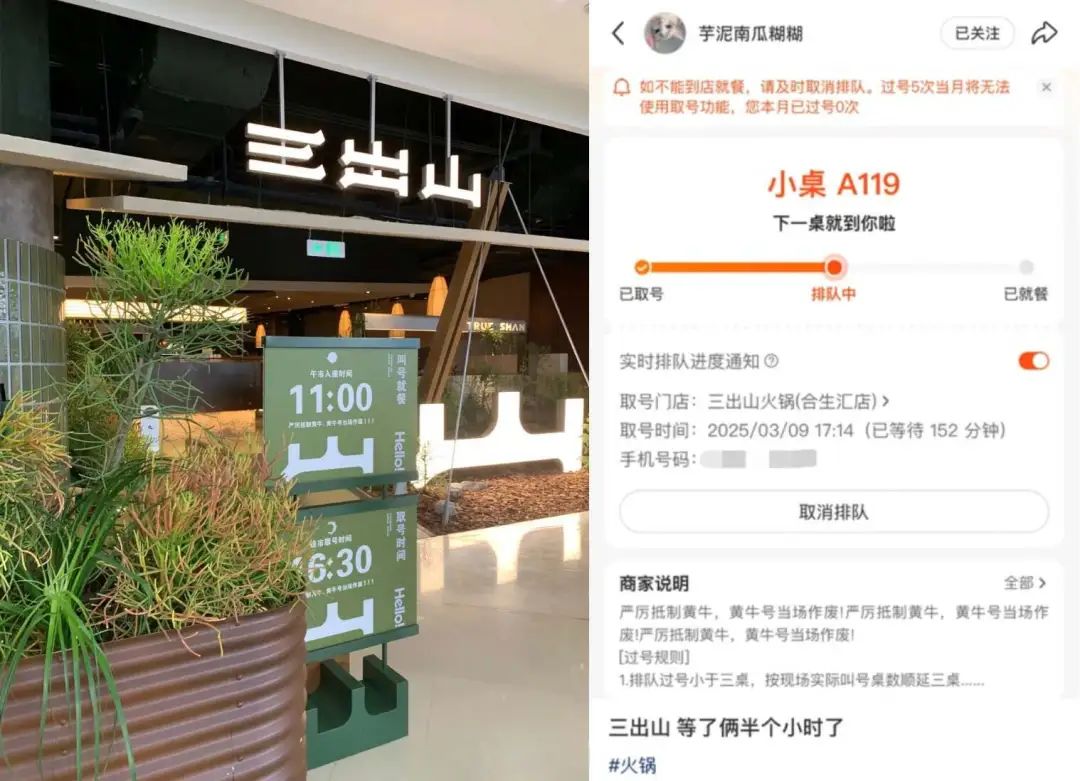
名字带“山”的餐厅,越来越多了?
3 6 Ke· 2025-06-12 12:15
Core Insights - The emergence of "mountain wild hotpot" brands has rapidly gained popularity across major shopping malls, with brands like "San Chushan" and "Shan Huan Huan" expanding their presence significantly in a short time [1][3][19] - These brands share common characteristics, including a focus on mountain-themed decor and unique, often rare ingredients that emphasize a connection to nature [9][11][13] Brand Expansion - "Shan Huan Huan" opened 13 new stores in 13 cities within April 2025, bringing its total to 80 locations [1] - "San Chushan" increased its store count from 10 in November 2023 to 37 by April 2025 [1] Market Trends - The "mountain lifestyle" trend reflects urban consumers' desire to escape city life, with a growing interest in outdoor activities like camping and hiking [17][19] - Data from Meituan shows a 102% increase in searches related to "camping" among users aged 20-35 [17] Consumer Experience - The design of mountain wild hotpot restaurants aims to create an immersive experience reminiscent of nature, featuring earthy tones and natural elements [9][15] - The menu often includes unique mountain vegetables and ecological ingredients, with prices for some items comparable to meat dishes [11][21] Pricing and Market Position - The average consumer spending at popular mountain wild hotpot restaurants is around 130 yuan, contrasting with the overall decline in hotpot prices, which have dropped to an average of 59 yuan [21][24] - This pricing strategy allows new entrants to differentiate themselves in a highly competitive market, which is projected to reach 617.5 billion yuan in 2024 [24][26] Competitive Landscape - The hotpot market is increasingly saturated, with major brands like Haidilao and Xiaobai Xiaobai dominating the space [26][28] - New entrants are leveraging the mountain wild concept to carve out a niche, appealing to consumers seeking unique dining experiences [28]

蜜雪冰城宣布放缓开店,乡镇市场只招本地人
3 6 Ke· 2025-06-12 06:33
Core Viewpoint - The recent adjustments in the franchise policy of Mixue Ice City aim to optimize store layout, slow down the overall expansion pace, and focus on special channel store development in response to increasing market competition and declining store performance [1][3][11]. Summary by Relevant Sections Franchise Policy Adjustments - Starting from June 11, 2025, Mixue Ice City will implement changes to its franchise policy, including optimizing store layout, adjusting protection ranges, and encouraging franchisees to return to frontline operations [1]. - Existing franchisees with strong performance will receive more opportunities for new store applications, while new franchisees will be restricted from opening stores in blank towns unless they have local residency [1][11]. Market Conditions and Performance Metrics - The industry is entering a phase of stock competition, with a significant slowdown in store growth. In 2024, the total number of brand stores decreased by 16,000, with a growth rate dropping from 32.5% to 11.12% [3]. - As of December 2024, Mixue Ice City had over 41,000 stores, with daily average GMV per store declining from 4,144 yuan in 2021 to 4,127 yuan in 2023, and gross margin for franchise stores decreasing from 32.03% to 30.10% during the same period [3][11]. Strategic Focus Areas - Mixue Ice City is focusing on three main areas to enhance store revenue: encouraging franchisees to return to frontline operations, promoting the establishment of special channel stores, and imposing stricter requirements for new store franchises in blank towns [4][7][11]. - The company has previously implemented a policy requiring franchisees to complete a minimum of 90 hours of in-store presence each month to ensure better service quality [4][5]. Special Channel Development - The emphasis on special channel stores is a response to the competitive landscape, with other brands also focusing on high-traffic areas such as hospitals and schools [7][11]. - The operational challenges of these special channel locations are acknowledged, but they offer higher customer flow stability and profitability once established [11]. Local Market Strategy - The requirement for franchisees to have local residency and manage stores personally in blank towns is aimed at ensuring that operators understand local consumer habits and are committed to long-term operations [11]. - This strategy is designed to improve the survival rate of new stores in low-traffic, high-difficulty markets [11].

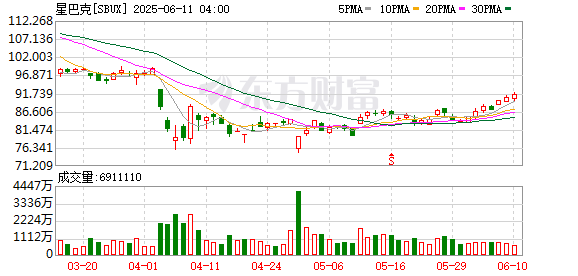
星巴克的“降价策”丨消费参考+
2 1 Shi Ji Jing Ji Bao Dao· 2025-06-11 06:18
Core Viewpoint - Starbucks has officially announced a price reduction for several of its popular products, aiming to capture a larger share of the tea beverage market in China [2][3]. Group 1: Pricing Strategy - Starting June 10, Starbucks will lower prices on several products, including Frappuccino, iced tea, and tea lattes, with an average price drop of around 5 yuan for a large cup, bringing the minimum price to 23 yuan [3]. - The tea beverage market in China is larger than the coffee market, with the current market sizes being 258.5 billion yuan for tea and 172.1 billion yuan for coffee [4]. Group 2: Competitive Landscape - Competitors like Heytea and Nayuki have lower average customer prices, at 17.44 yuan and 19.32 yuan respectively, which puts pressure on Starbucks to remain competitive [6]. - The rise of low-cost competitors, such as Kudi and Luckin Coffee, which offer products at prices as low as 5.9 yuan and 9.9 yuan respectively, has prompted Starbucks to consider price reductions to avoid losing customers [11][12]. Group 3: Operational Advantages - Starbucks has advantages in product development and supply chain management, which supports its ability to offer competitive pricing while maintaining quality [5]. - The company’s operational model emphasizes customer experience, which may justify its higher prices compared to competitors [6][8]. Group 4: Market Adaptation - Starbucks has shown flexibility in its operations, allowing its Chinese team more autonomy in decision-making, which has led to successful marketing strategies and product development tailored to local preferences [14][16][19]. - In the first quarter, Starbucks China reported a revenue increase of 5% year-on-year, reaching 740 million USD, with same-store transaction volume growing by 4% [18].

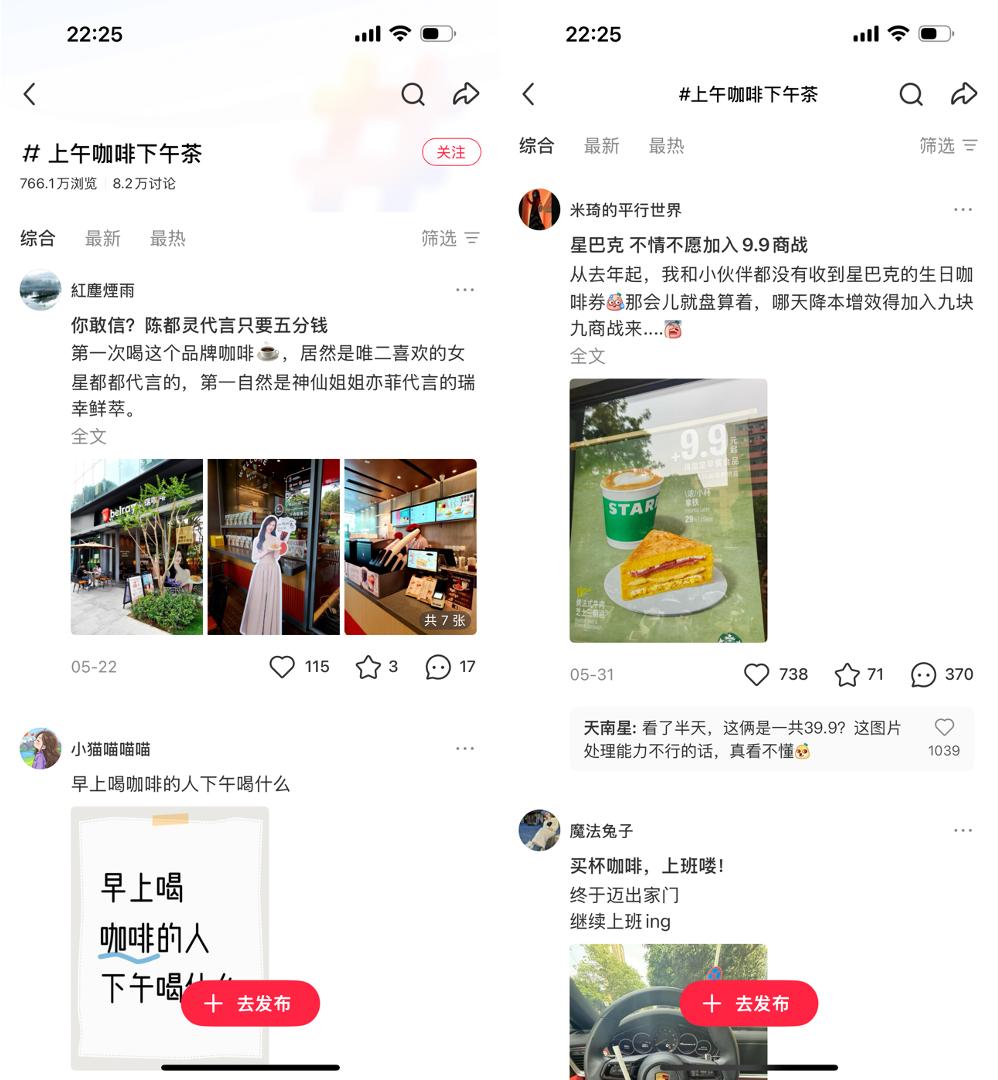
早上咖啡下午茶,星巴克、瑞幸们用“咖啡+茶饮”抢占全时段消费?
3 6 Ke· 2025-06-11 03:23
Group 1 - Starbucks China is focusing on the non-coffee beverage market, launching a new strategy of "morning coffee, afternoon non-coffee" with significant price adjustments for its summer offerings [1][6][8] - The introduction of new products includes popular categories like Frappuccino, iced tea, and tea lattes, aimed at enhancing the afternoon tea experience [1][6][8] - The competitive landscape is intensifying as brands like Luckin Coffee and Tims are also expanding their tea offerings, indicating a trend where coffee and tea boundaries are blurring [1][5][11] Group 2 - The consumer demand for diverse beverage options is rising, with a notable increase in non-coffee drink consumption during the afternoon tea hours [4][5][9] - The "morning coffee, afternoon tea" trend is becoming a social norm among urban professionals, with significant online engagement around this concept [2][4] - The market for new tea beverages is projected to grow, with the new tea drink market expected to reach 149.8 billion yuan in 2023 and potentially exceed 200 billion yuan by 2025 [13] Group 3 - Starbucks is leveraging a combination of quality, scene, and affordability to capture the growing afternoon tea market, with a focus on local adaptation [8][9][18] - The company's financial performance in China shows positive growth, with revenues reaching 739.7 million USD in Q2 2025, a 5% year-on-year increase [8][12] - Luckin Coffee's strategy of integrating tea into its offerings has shown success, with its light milk tea series achieving significant sales, indicating a successful "coffee-tea" fusion approach [11][12] Group 4 - The competition between coffee and tea brands is expected to intensify, with both sectors experiencing rapid expansion and overlapping consumer bases [13][14][18] - Brands are increasingly innovating by launching hybrid products that combine coffee and tea, catering to the evolving preferences of consumers [14][15] - The future of the market will depend on brands' ability to meet diverse consumer needs across various scenarios, emphasizing the importance of product innovation and marketing strategies [18]

2025年5月餐饮新趋势:节日效应带火市场,地域风味引领创新热浪
Sou Hu Cai Jing· 2025-06-10 14:41
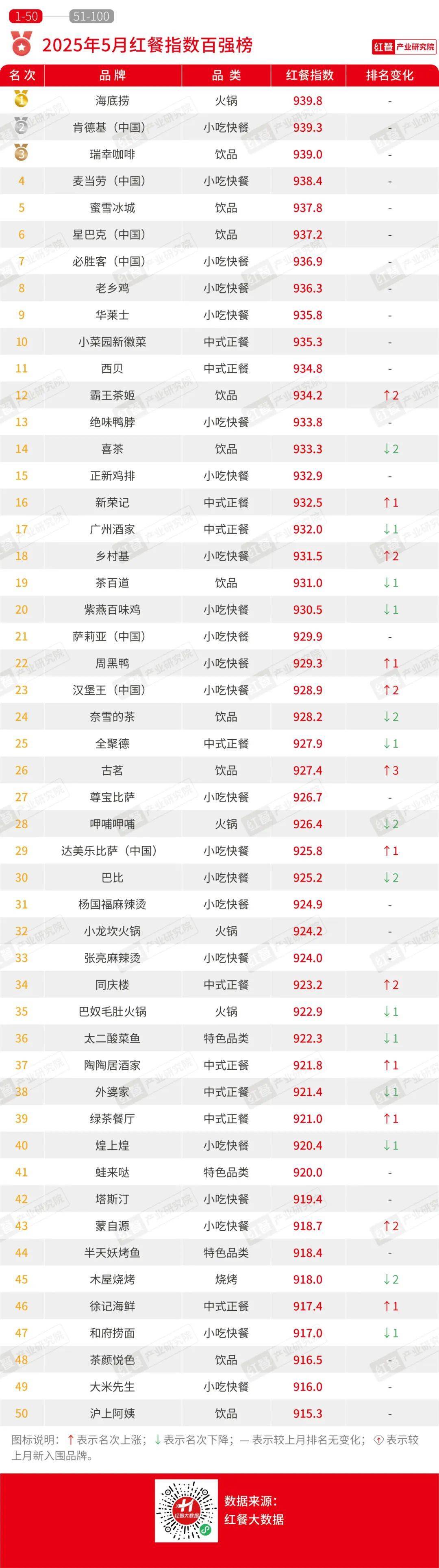
Core Insights - The national catering market is experiencing a consumption boom driven by a series of holidays in May 2025, including Labor Day, Mother's Day, "520" confession day, and the Dragon Boat Festival, alongside increased demand for summer specialty dining [1] - The catering industry prosperity index significantly rose from 94.7 in April to 104.2 in May, reflecting a 10% month-on-month increase, indicating strong holiday economic impact and consumer vitality [1] - The index calculation method has been optimized to better capture industry trends, covering over 3,000 catering outlets across more than 50 cities, including various categories such as Chinese cuisine, fast food, hot pot, barbecue, and beverages [1] Industry Rankings - In the May 2025 Red Catering Index Top 100, Haidilao, KFC (China), and Luckin Coffee ranked in the top three, with McDonald's (China), Mixue Ice City, Starbucks (China), and Pizza Hut (China) following closely [5] - The fast food category had the highest representation with 36 brands, while Chinese cuisine had 23 brands, hot pot and beverages each had 13 brands, and specialty categories had 9 brands [5] Market Trends - The holiday economy has not only boosted the overall catering market index but also sparked innovation within the industry, with new product launches across key segments such as Western fast food, noodles, tea drinks, coffee, hot pot, and bakery [6][12] - In the Western fast food segment, regional flavors are gaining popularity, exemplified by Burger King's new shrimp and beef burger [8] - The tea drink market is led by fruit teas, with innovative products featuring local flavors and health elements [8] - The coffee market is vibrant, with new products incorporating fruit flavors and nut elements [10] - The hot pot market is seeing a surge in new side dish offerings, with Haidilao introducing popular new items [10] Financing Activity - In May 2025, there were 4 recorded financing events in the national catering sector, primarily focused on downstream catering brands, with 3 companies indicating IPO intentions [12] - These financing activities reflect the market's vibrancy and suggest future growth trends within the industry [12] Overall Market Outlook - The catering market in May 2025 is characterized by rising consumption, active innovation, brand expansion, and accelerated financing, injecting new vitality into the industry and enhancing consumer dining experiences [13]


港股新消费概念股走势分化 泡泡玛特一度涨超4%再创历史新高
news flash· 2025-06-10 02:09
无需港股通,A股账户就能T+0买港股>> 港股新消费概念股走势分化,泡泡玛特一度涨超4%再创历史新高,锅圈涨近3%,奈雪的茶、名创优品 均涨近2%;古茗、蜜雪集团均跌进4%,茶百道跌超3.6%,布鲁可跌2.2%。 ...

“饮品顶流”羽衣甘蓝暗战供应链 新茶饮如何“卷”到田间地头?
Mei Ri Jing Ji Xin Wen· 2025-06-09 14:51
Group 1 - The core viewpoint of the articles highlights the rising trend of kale-based beverages in the new tea drink industry, with brands like Heytea, Nayuki, and Luckin Coffee leading the charge in promoting health-focused products [1][9] - Kale is being marketed as a low-sugar, low-calorie ingredient, appealing to health-conscious consumers, and has become a significant trend in the beverage sector [1][9] - The new tea drink industry is not only innovating in product offerings but is also extending its focus to the agricultural supply chain, emphasizing the importance of sourcing high-quality, pesticide-free ingredients [1][4][14] Group 2 - The supply chain for fruits and vegetables in the new tea drink sector is undergoing a transformation, moving towards customized sourcing and cultivation to ensure consistent quality and flavor [2][4][5] - Companies like Heytea are establishing direct partnerships with farms to control the cultivation process, ensuring that their standards for pesticide use and fruit quality are met [5][14] - The trend of using niche ingredients, such as kale, is seen as a potential key to creating popular products, with many brands quickly following suit once a successful item is launched [9][10] Group 3 - The cultivation of kale in China is expanding, with a focus on its dual role as both a food ingredient and an ornamental plant, which has contributed to its popularity in urban areas [8][9] - The industry is facing challenges related to pesticide residues, particularly with kale's structure making it susceptible to pests, necessitating innovative pest control methods [10][14] - New tea drink brands are investing in advanced cleaning technologies and processes to ensure that their products meet zero pesticide residue standards, which is becoming a competitive differentiator in the market [10][13][14]
渣打高恕年:中国-东盟自贸区3.0版发出倡导贸易开放“最强音”
Xin Hua Cai Jing· 2025-06-09 08:29
Core Viewpoint - The completion of the China-ASEAN Free Trade Area 3.0 negotiations is timely and sends a strong message advocating for multilateralism and trade openness, which will accelerate the development of the China-ASEAN trade corridor and create a multiplier effect for global growth [1][2]. Group 1: Trade Relations and Economic Cooperation - China and ASEAN have become each other's largest trading partners, with trade volumes continuing to grow. The completion of the Free Trade Area 3.0 negotiations signals a commitment to multilateralism and open trade amidst global protectionism [2][3]. - The 3.0 version of the Free Trade Area includes key areas such as digital economy, green economy, and supply chain resilience, making it more modern and forward-looking. Its implementation will enhance cooperation in various sectors, including digital economy, artificial intelligence, e-commerce, and smart manufacturing [2][3]. Group 2: Investment Trends and Strategies - Chinese enterprises are expected to continue investing in ASEAN, particularly those focusing on local market development rather than solely on exports to the U.S. The investment trend remains strong despite uncertainties in U.S. tariff policies [4][6]. - The "China +1" strategy has evolved into a "2.0 version," where Chinese companies are increasingly establishing complete supply chains overseas, indicating a deeper understanding of local markets and partnerships [4][6]. Group 3: Market Potential and Future Outlook - The ASEAN market presents significant long-term investment opportunities due to its political stability, a rapidly growing young population, and a large consumer market. The rise of the middle class in Southeast Asia will create more consumption and investment opportunities for various enterprises, including Chinese firms [6][7]. - Investment from China to ASEAN is projected to grow, with a reported increase of 12.6% year-on-year, primarily directed towards countries like Singapore, Indonesia, and Thailand, and focusing on sectors such as leasing, business services, and manufacturing [7].
健康养生+情绪价值+中华文化,茶饮品牌走出消费“双循环”之路-仲量联行
Sou Hu Cai Jing· 2025-06-09 03:47
Core Insights - The rise of Chinese tea brands is driven by health, emotional value, and cultural empowerment, establishing a unique "dual circulation" consumption path that enables local to global expansion [1] Group 1: Emotional Value Driving Consumption Upgrade - Tea brands connect with consumers through three emotional value links: self-emotion focusing on health, community emotion through cross-industry collaborations, and social emotion leveraging Chinese culture [2][15] - Health-oriented products like low-sugar and fresh fruit teas are gaining popularity, aligning with consumer health trends [2] - Collaborations with entertainment IPs, such as the partnership between "Nezha 2" and Ba Wang Tea, enhance user engagement and brand loyalty [2][19] - Cultural collaborations with institutions like the Palace Museum promote traditional culture globally, creating emotional resonance with consumers [2] Group 2: Market Competition Landscape and Operational Strategy Adjustments - The tea market is experiencing a price drop and profit restructuring, with average customer prices falling from over 30 yuan to the 15-20 yuan range, a decrease of 30-50% [3][23] - Key brands like Mixue Ice City and Gu Ming are seeing a slowdown in single-store GMV growth, shifting focus to refined operations [3] - The franchise model is expanding, with brands like Mixue Ice City and Gu Ming having over 99% of their stores as franchises, leveraging supply chain control for scale [4][28] - Brands are also exploring high-margin peripheral retail products, similar to Starbucks, to diversify revenue streams [5][29] Group 3: Spatial Layout from Downstream Markets to Global Expansion - Tea brands are adopting a three-dimensional layout strategy: urban densification, penetration into lower-tier markets, and overseas expansion [6][7] - In high-tier cities, tea brands occupy 1.5%-2.5% of premium shopping centers, enhancing brand image through flagship and concept stores [6] - Lower-tier brands are focusing on third and fourth-tier cities, with significant increases in store numbers, utilizing core business districts and delivery channels [7] - Overseas, Mixue Ice City has over 4,800 stores, with brands like Ba Wang Tea and Nayuki entering Southeast Asia and key markets in Europe and America, showing a 46.9% growth in overseas same-store GMV [7][44] Group 4: Future Trends from Product Competition to Ecosystem Building - The tea industry is transitioning from broad competition to meticulous operations, with supply chain efficiency and industry integration becoming core barriers [8] - Brands need to balance health attributes, cultural narratives, and global layouts, using a combination of emotional value, full-chain operations, and spatial penetration to elevate Chinese tea from a local symbol to a global cultural phenomenon [8][49]