
中国生物制药

Search documents
重要信号!高盛:维持A股超配 国际资本加仓中国科技股
Shang Hai Zheng Quan Bao· 2025-09-18 23:24
Group 1 - International investment banks have raised target prices for several Chinese stocks, including Alibaba, Tencent, Baidu, and BYD, indicating a positive outlook for these companies [1][4] - Goldman Sachs maintains an overweight rating on A-shares and H-shares, predicting potential upside of 8% and 3% respectively over the next 12 months, and encourages investors to buy on dips [2][3] - The current market is characterized as a consolidation phase rather than a reversal, with A-share sentiment indicators suggesting a more favorable environment for upward trends compared to previous conditions [2][3] Group 2 - Goldman Sachs highlights that the recent stock market rally is driven by valuation and liquidity, with fundamental support contributing to the upward trend [2] - The potential allocation of Chinese residents' wealth to stock assets could reach trillions of dollars, indicating a gradual and long-term shift in investment behavior [3] - Major international investment firms are increasingly optimistic about China's technology sector, particularly in AI, robotics, and biotechnology, which are seen as areas of global competitiveness [1][6][7] Group 3 - Specific target price adjustments include Alibaba's price raised from $163 to $179, Tencent's target set at HKD 735, and Baidu's price increased from $108 to $157 [4][5] - BYD's stock is expected to perform well due to stable pricing and the conclusion of competitors' new product cycles, with a target price of HKD 140 [5] - Recent strategic investments in AI and technology sectors, such as the $700 million raised by GCL-Poly and $200 million by Weimob, reflect growing confidence in the commercialization of AI technologies [8]




重要信号!高盛:维持A股超配
Shang Hai Zheng Quan Bao· 2025-09-18 14:57
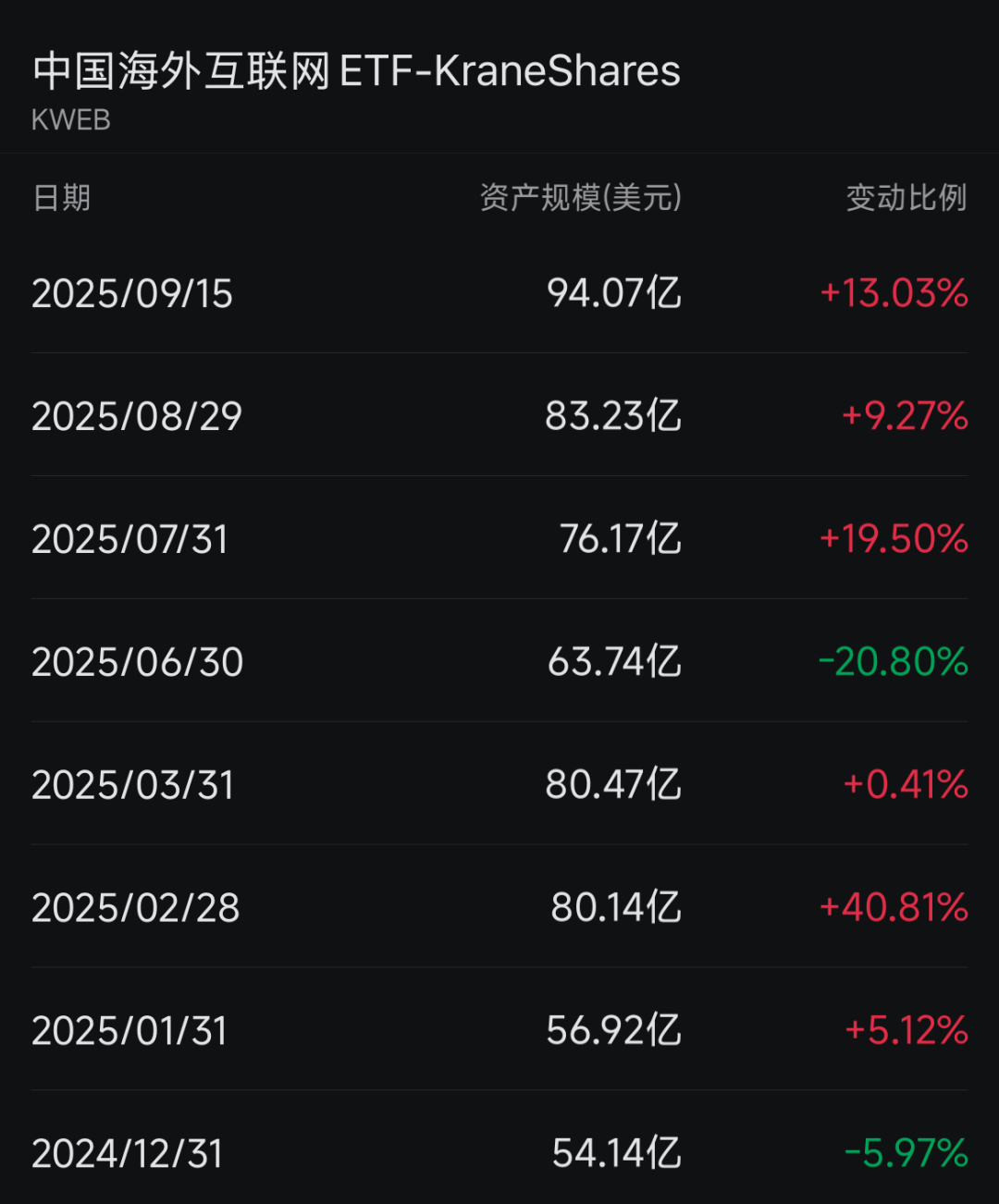
Group 1: Market Outlook - International investment banks have raised target prices for several Chinese stocks, including Alibaba, Tencent, Baidu, and BYD, indicating a positive outlook for these companies [1][3] - Goldman Sachs maintains an overweight rating on A-shares and H-shares, predicting potential upside of 8% and 3% respectively over the next 12 months, and suggests investors buy on dips [1][2] - The current market is characterized as a consolidation phase rather than a reversal, with major indices showing mid-single-digit earnings growth trends for this year and next [2] Group 2: Stock Target Price Adjustments - Goldman Sachs raised Alibaba's target price from $163 to $179 for US shares and from HKD 158 to HKD 174 for Hong Kong shares, maintaining a buy rating based on improved growth assumptions for Alibaba Cloud [3] - Citigroup has set a target price of HKD 735 for Tencent, citing expectations that Tencent will leverage AI capabilities to enhance core business monetization [3] - Jefferies increased Baidu's target price from $108 to $157 for US shares and from HKD 104 to HKD 152 for Hong Kong shares, maintaining a buy rating due to Baidu's recent AI developments [4] Group 3: Capital Inflows and Investment Trends - International capital is actively increasing its positions in Chinese technology stocks, with a focus on AI, robotics, and biotechnology, as these sectors show global competitiveness [1][5] - The KraneShares China Internet ETF has seen its assets grow from $83.23 billion at the end of August to $94.07 billion by mid-September, reflecting a 13% increase [6][7] - Strategic investments in companies like GCL-Poly and Weimob highlight the growing interest in AI development and international expansion, with GCL-Poly raising approximately $700 million and Weimob securing $200 million for AI initiatives [8][9]

下跌,放量!
Zhong Guo Ji Jin Bao· 2025-09-18 10:32
Market Overview - The Hang Seng Index fell by 1.35% to 26,544.85 points, while the Hang Seng Technology Index decreased by 0.99% to 6,271.22 points, and the Hang Seng China Enterprises Index dropped by 1.46% to 9,456.52 points [2][3] - The total market turnover reached 413.31 billion HKD, marking the highest level since April 8 of this year [2] Individual Stock Performance - Alibaba's stock had a turnover of 33.704 billion HKD, closing down by 1.98% [4][6] - Tencent Holdings recorded a turnover of 19.433 billion HKD, down by 2.95%, with a recent buyback of 839,000 shares [4] - Semiconductor stocks, particularly Huahong Semiconductor, saw gains, with Huahong rising over 8% to reach a new high [3] Notable Stock Movements - Pop Mart experienced a significant increase, closing up by 4.62% at 267.2 HKD per share, with a turnover of 6.074 billion HKD [8] - SMIC (Semiconductor Manufacturing International Corporation) rose by 2.66%, with a turnover of 17.235 billion HKD [4][11] Industry Insights - Morgan Stanley's report indicated a cautious sentiment towards Pop Mart, but they maintain a positive outlook, suggesting that increased supply could enhance customer experience and demand [10] - The global top ten foundry companies are projected to have a combined revenue of 41.718 billion HKD in Q2 2025, reflecting a quarter-on-quarter growth of 14.6% [11][13] - SMIC's gross margin improved by 8 percentage points year-on-year, with revenue growth of 23.14% expected in the first half of 2025 [13]

港股收盘(09.18) | 恒指收跌1.35% 科网股普遍走软 芯片、机器人概念再度活跃
Zhi Tong Cai Jing· 2025-09-18 09:01
Group 1: Market Overview - The Federal Reserve lowered interest rates by 25 basis points, signaling a mixed hawkish tone from Chairman Powell, which impacted the Hong Kong stock market negatively, with the Hang Seng Index dropping 1.35% to 26,544.85 points [1] - The trading volume for the day was 413.31 billion HKD, with the Hang Seng China Enterprises Index and Hang Seng Tech Index also experiencing declines of 1.46% and 0.99% respectively [1] Group 2: Blue-Chip Performance - Pop Mart (09992) led blue-chip stocks with a 4.62% increase, closing at 267.2 HKD, contributing 13.67 points to the Hang Seng Index [2] - Semiconductor company SMIC (00981) rose by 2.66%, while other blue-chip stocks like Sino Biopharmaceutical (01177) and Xinyi Solar (00968) had mixed performances [2] Group 3: Sector Highlights - Hydrogen energy stocks surged, with Yihua Tong (02402) increasing by 23.26%, driven by supportive policies for the hydrogen industry in various Chinese cities [3][4] - Semiconductor stocks continued their upward trend, with Huahong Semiconductor (01347) rising by 8.62% [4] - The robotics sector showed renewed activity, with several companies like Shou Cheng Holdings (00697) and Sanhua Intelligent Controls (02050) experiencing gains [5][6] Group 4: Notable Company Developments - Huawei announced plans to launch new AI chips between 2026 and 2028, indicating a strong focus on self-developed technology [5] - Kaisa Capital (00936) saw a dramatic increase of 174.19% after announcing a partnership to advance asset tokenization in compliance with Hong Kong regulations [8] - Hong Kong Broadband (01310) surged by 68.55% following a voluntary cash offer from China Mobile Hong Kong [9] Group 5: Pharmaceutical Developments - Hengrui Medicine (01276) reached a new high, up 5.77%, after its subsidiary received a priority review notice for a new cancer treatment drug [12]

医药生物行业2025H1财报总结:Q2环比改善,创新药迎发展机遇
East Money Securities· 2025-09-18 06:26
Investment Rating - The report maintains an investment rating of "Outperform" for the pharmaceutical and biotechnology industry, indicating a positive outlook compared to the broader market [4]. Core Insights - The pharmaceutical and biotechnology industry is experiencing a recovery in Q2 2025, with innovative drugs poised for significant development opportunities [1][10]. - The overall revenue for 461 A-share pharmaceutical companies in H1 2025 was CNY 11,939.5 billion, a year-on-year decrease of 3.21%, while net profit attributable to shareholders was CNY 1,016.2 billion, down 8.55% [8][24]. - The medical services sector showed positive growth, with revenue increasing by 3.92% year-on-year, while other segments like raw materials, chemical preparations, traditional Chinese medicine, and medical devices faced declines [8][24]. Summary by Sections 1. Market Review - The pharmaceutical and biotechnology index rose by 7.36% in H1 2025, outperforming the CSI 300 index by 7.33 percentage points, with the chemical preparation sector leading with a 20.09% increase [15][21]. 2. Industry Performance - In H1 2025, the chemical preparation sector reported a revenue of CNY 2,044.3 billion, down 5.77%, and a net profit of CNY 223.1 billion, down 22.92% [43]. - The medical services sector achieved a revenue of CNY 890.2 billion, with a significant net profit increase of 40.22% [8][24]. - The report highlights a trend of improving performance in Q2 compared to Q1, with several sectors showing signs of recovery [30]. 3. Subsector Analysis Raw Materials - The raw materials sector generated CNY 459.1 billion in revenue, a decrease of 6.74%, with a net profit of CNY 45.4 billion, down 2.71% [32][38]. - The report suggests a long-term growth outlook for the raw materials sector, driven by increasing demand and regulatory changes [38]. Chemical Preparations - The chemical preparations sector is expected to benefit from new policies supporting innovative drugs, with a focus on balancing price and clinical needs [48][49]. - The sector's revenue and profit are under pressure but are anticipated to recover as innovation and reform take hold [43][48]. Traditional Chinese Medicine - The traditional Chinese medicine sector reported a revenue of CNY 1,731.95 billion, with a slight profit increase of 0.24% [52]. - The sector is seen as having structural opportunities despite overall revenue declines [52]. Medical Services - The medical services sector is highlighted for its robust growth, with a focus on integrated service platforms [30][31]. Medical Devices - The medical devices sector is expected to recover as demand for equipment updates increases, with a revenue of CNY 1,155.6 billion, down 4.47% [8][30]. 4. Recommendations - The report recommends focusing on leading companies in various sectors, such as Tianyu Co. in raw materials, BeiGene in innovative drugs, and Yifeng Pharmacy in medical commerce [8][42][50].



中国创新药企“闯美”,如何预防政策风险?
Hu Xiu· 2025-09-18 06:03
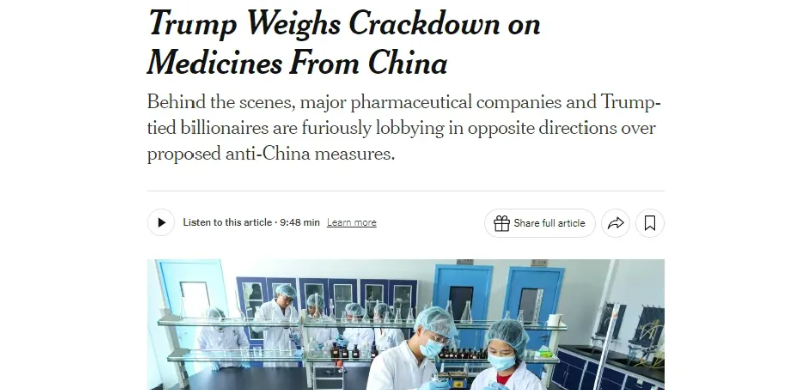
Core Viewpoint - The Trump administration is drafting an executive order that will impose three major restrictions on commercial transactions involving Chinese innovative drug patents or rights, focusing on national security reviews by the Committee on Foreign Investment in the United States (CFIUS) [1][2]. Summary by Sections Executive Order Details - The draft includes three main provisions: 1. Inclusion of Chinese innovative drug BD transactions in the CFIUS mandatory review list, ending the previous "low-risk automatic exemption" practice [2]. 2. FDA will implement "racial sensitivity supplementary reviews" for drugs relying on Chinese clinical data, requiring at least 20% comparative data from non-Asian populations [2]. 3. Establishment of a "key drug domestic production fund" to provide production subsidies for 15 categories of drugs, including antibiotics and acetaminophen, while implementing a "domestic priority" principle in federal procurement [2]. Market Reaction - The market reacted swiftly to the policy risks, with the Hong Kong innovative drug index (HK1105) dropping 3.82% on September 11, 2025, and the A-share innovative drug sector (BK1106) declining 2.17%, with over 80% of stocks in the sector experiencing pullbacks [3]. - The following day, the indices showed signs of recovery, indicating investors' responses to policy uncertainties and rational corrections [3]. Globalization Trends - Despite the geopolitical risks, the trend of Chinese innovative drugs going global remains intact, with total license-out transactions to Europe and the U.S. reaching $9.43 billion as of September 2025 [3]. - Major transactions include a $950 million licensing deal between BeiGene and Royalty Pharma, and a $6 billion global licensing agreement between 3SBio and Pfizer, highlighting a shift towards milestone payments and regional licensing [3]. Industry Challenges - The domestic market faces challenges, with annual growth in medical insurance fund spending (approximately 12%) lagging behind the growth in innovative drug R&D investment (approximately 25%) [4]. - The average reduction in medical negotiations remains high at 54%, and commercial health insurance coverage for innovative drugs is below 15%, creating a supply-demand imbalance that necessitates going global [4]. Risk Resilience Assessment - Goldman Sachs has categorized Chinese innovative drug companies into three risk resilience tiers based on their sensitivity to policy changes and operational capabilities [4][5]. - Companies with mature global layouts exhibit the strongest resilience, while those heavily reliant on domestic markets show the weakest resilience [5][10]. Strategic Defense Framework - A three-dimensional defense system is proposed to address risks associated with the executive order, focusing on transaction review, data compliance, and supply chain security [13]. - Strategies include conducting national security risk pre-assessments for transactions over $50 million and establishing partnerships with U.S. law firms to navigate regulatory challenges [14][15]. Conclusion - The construction of a quantifiable "risk resilience index" is essential for Chinese innovative drugs in the global 2.0 era, emphasizing the need for companies to embed policy hedging clauses in transaction structures and consider racial diversity data in clinical stages [23].



华创医药 | 2025年我们做了什么
华创医药组公众平台· 2025-09-18 03:41
Core Viewpoint - The Chinese innovative drug industry is gradually catching up with Europe and the United States in terms of technology, with some targets and technical pathways already leading globally. The number and value of new drugs authorized for overseas markets continue to increase, leading to world-class pricing and non-linear investment elasticity. The domestic market is experiencing strong growth in demand, with domestic new drug sales continuing to rise, and several innovative pharmaceutical companies have turned losses into profits, entering a stable growth phase [2]. Group 1: Innovative Drugs - The innovative drug sector is witnessing a significant increase in sales driven by strong domestic demand, with a number of innovative companies achieving profitability [2]. - The trend of domestic innovative drugs going overseas is accelerating, with increasing numbers and values of new drug authorizations [2]. - The industry is positioned for a "Davis double" effect, where both performance and valuation are expected to improve [2]. Group 2: High-Value Medical Consumables - The orthopedic sector is expected to see mild price reductions, while domestic replacements continue to grow, and overseas business progresses rapidly [2]. - The neurosurgery and neurointervention fields are stabilizing after centralized procurement, with new products expected to contribute to growth [2]. Group 3: Medical Devices - The medical device sector is experiencing a high-speed growth in bidding data, with companies entering a destocking phase, which is expected to improve performance in the second half of the year [2]. - The low-value consumables sector is seeing continuous product upgrades and accelerated expansion into overseas markets [2]. Group 4: Blood Products - The supply side of the blood products industry is increasingly concentrated among state-owned enterprises, leading to a clearer competitive landscape [2]. - The demand side is expected to upgrade towards new products, gradually improving the industry's overall health [2]. Group 5: API (Active Pharmaceutical Ingredients) - The industry is at an upward turning point due to the end of a capital expenditure peak, combined with three growth drivers: new high-end market products, integrated consolidation and overseas expansion, and cost-leading CDMO [2]. - Leading companies are expected to see explosive growth in revenue and profits in the medium term [2]. Group 6: CXO (Contract Research Organization) - The CXO sector is seeing a revival in A+H financing activity, with multiple significant business developments enhancing market confidence [2]. - The focus is on optimizing the supply-side landscape and increasing market share for leading CRO companies [2]. Group 7: Traditional Chinese Medicine and Retail Pharmacy - The traditional Chinese medicine sector is showing signs of recovery, with friendly pricing for new drugs, while the retail pharmacy sector is influenced by supply-side adjustments and business model upgrades [2]. - The performance of offline pharmacies is expected to improve in the second half of 2025, with leading chains like YaoXingTang making progress in store upgrades [2]. Group 8: Research Reports - A series of in-depth research reports on various companies and sectors within the pharmaceutical and medical device industries have been published, highlighting their growth potential and market positioning [3][4].


医药行业周报:行业波动中内外资略有分歧,择时布局创新药产业链低估优质标的-20250918
BOCOM International· 2025-09-18 03:13
Industry Rating - The report rates the pharmaceutical industry as "Leading" [1] Core Insights - There is a divergence between domestic and foreign capital in the pharmaceutical sector, with a focus on timing and selecting undervalued quality stocks in the innovative drug supply chain [1][4] - The report suggests that after a broad rally in innovative drugs, the importance of timing and stock selection has significantly increased, recommending gradual positioning during market corrections [4] Market Performance - The Hang Seng Index rose by 1.9% during the week of September 9-16, 2025, while the Hang Seng Healthcare Index fell by 3.0%, ranking 12th among 12 industry indices [4][8] - Sub-industry performance varied, with hospitals (+27.1%) and medical devices (+6.8%) showing gains, while biopharmaceuticals (-2.2%) and internet medicine (-3.5%) declined [4][8] Institutional Holdings - As of September 16, 2025, domestic capital's holding ratio through Hong Kong Stock Connect remained stable at 22.1%, while foreign capital's holding ratio decreased to 38.4% [33][38] - Domestic investors have been increasing their positions in leading and innovative drug companies, while foreign investors have shown a preference for CXO companies with better cost-performance ratios [4][38] Valuation Overview - The report provides a valuation summary for various companies, with target prices and ratings indicating a generally bullish outlook on innovative drug companies [3] - The average price-to-earnings ratio (P/E) for the pharmaceutical sector is noted, with specific segments like prescription drugs at 31.4 times and biopharmaceuticals at 14.2 times [17] Regulatory Developments - The National Medical Products Administration (NMPA) announced a fast-track review process for innovative drug clinical trial applications, aiming to streamline approvals for certain categories of drugs [7] - The report discusses the latest draft of the national centralized drug procurement rules, highlighting systematic optimizations in bidding mechanisms and quality assurance requirements [6][7]
智通港股通资金流向统计(T+2)|9月18日
智通财经网· 2025-09-17 23:34
Key Points - The top three stocks with net inflow of southbound funds are Alibaba-W (09988) with 5.278 billion, Yingfu Fund (02800) with 2.782 billion, and Hang Seng China Enterprises (02828) with 1.566 billion [1] - The top three stocks with net outflow of southbound funds are Xiaomi Group-W (01810) with -0.721 billion, Innovent Biologics (01801) with -0.466 billion, and Pop Mart (09992) with -0.458 billion [1] - In terms of net inflow ratio, Yuexiu Transportation Infrastructure (01052) leads with 63.76%, followed by Crystal International (02232) with 56.34%, and China Resources Gas (01193) with 53.63% [1] - The stocks with the highest net outflow ratio include QuanFeng Holdings (02285) at -59.36%, Yadea Group (01585) at -54.53%, and TCL Electronics (01070) at -54.28% [1] Net Inflow Rankings - The top ten stocks by net inflow include Alibaba-W (09988) with 5.278 billion, Yingfu Fund (02800) with 2.782 billion, and Hang Seng China Enterprises (02828) with 1.566 billion [2] - Other notable stocks in the net inflow list are Meituan-W (03690) with 0.670 billion and Southern Hang Seng Technology (03033) with 0.620 billion [2] Net Outflow Rankings - The top ten stocks by net outflow include Xiaomi Group-W (01810) with -0.721 billion, Innovent Biologics (01801) with -0.466 billion, and Pop Mart (09992) with -0.458 billion [2] - Other significant stocks in the net outflow list are Li Auto-W (02015) with -0.298 billion and China Construction Bank (00939) with -0.254 billion [2] Net Inflow Ratio Rankings - The top three stocks by net inflow ratio are Yuexiu Transportation Infrastructure (01052) at 63.76%, Crystal International (02232) at 56.34%, and China Resources Gas (01193) at 53.63% [3] - Additional stocks with high net inflow ratios include China Ship Leasing (03877) at 49.13% and Jiangsu Ninghu Expressway at 45.49% [3] Net Outflow Ratio Rankings - The stocks with the highest net outflow ratios include QuanFeng Holdings (02285) at -59.36%, Yadea Group (01585) at -54.53%, and TCL Electronics (01070) at -54.28% [3] - Other notable stocks with significant net outflow ratios are Kangji Medical (09997) at -53.77% and QiuTai Technology (01478) at -47.17% [3]



IBD治疗:MNC押注大市场,关注新靶点新机制
Huafu Securities· 2025-09-17 12:54
Investment Rating - The industry investment rating is "Outperform" [1] Core Viewpoints - The global market for Inflammatory Bowel Disease (IBD) drugs is expected to reach $37 billion by 2030, with major pharmaceutical companies investing in this area [4][26] - There is a significant unmet clinical need for new therapies due to the complexity of IBD mechanisms and the high percentage of patients who do not respond to initial treatments [4][18] - The report emphasizes the importance of new targets and mechanisms in drug development, particularly focusing on TL1A, which has garnered interest from multiple multinational corporations (MNCs) [4][32] Summary by Sections IBD Treatment Overview - IBD includes Ulcerative Colitis (UC) and Crohn's Disease (CD), affecting over 3 million patients in the US and Europe, with no current cure available [4][10] - The market for IBD drugs is projected to grow at a compound annual growth rate (CAGR) of 5.88% from $23.26 billion in 2022 to $37 billion by 2030 [26][29] Market Dynamics - The sales proportion of TNF inhibitors is declining, while IL-23 inhibitors and JAK inhibitors are increasing in sales [4][29] - Ustekinumab is expected to contribute approximately $7.8 billion to the market by 2024, while Vedolizumab is projected to reach $6.107 billion [4][29] Clinical Needs and Drug Development - There is a pressing need for new therapies as up to 30% of patients do not respond to initial treatments, and 40% lose response over time [4][18] - The report suggests focusing on new targets and mechanisms, including companies like Abivax, Chenxin Pharmaceutical, and others for potential investment opportunities [4][32] Long-term Investment Strategy - The report recommends a strategic focus on leading innovative drug companies and those involved in the development of new therapies for IBD, highlighting companies such as Innovent Biologics, BeiGene, and others [4][32] - The report also notes the potential for significant market transactions in the IBD space, with several deals exceeding $5 billion in value [4][30]