
长安汽车

Search documents
61亿元融资遭误读!深蓝汽车邓承浩直言:现金流非常好
Sou Hu Cai Jing· 2026-01-12 08:28
Group 1 - The core point of the news is that Deep Blue Automotive has successfully completed a C-round financing of 6.122 billion yuan, marking a significant step in its strategic development [2][3] - The financing was led by major stakeholders, including Changan Automobile, which invested 3.122 billion yuan, maintaining a 50.9959% ownership stake, and Chongqing Yufu Holdings Group, which invested 2.5 billion yuan to become the second-largest shareholder with a 12.0934% stake [3] - Deep Blue Automotive's registered capital increased from 328 million yuan to 466 million yuan following the completion of this financing round [3] Group 2 - The chairman of Deep Blue Automotive, Deng Chenghao, clarified that the financing is not due to cash flow issues but is a strategic move to enhance the company's capabilities in intelligent and electric vehicle technologies, as well as global brand development [5] - Revenue projections for Deep Blue Automotive are expected to rise from 15.677 billion yuan in 2022 to 37.224 billion yuan in 2024, with a forecast of achieving monthly profitability by Q4 2024 [5] - In January 2026, Deep Blue Automotive not only secured financing but also obtained one of the first large-scale L3 autonomous driving licenses in China, with plans to launch the Deep Blue S09 and accelerate product iterations [5]

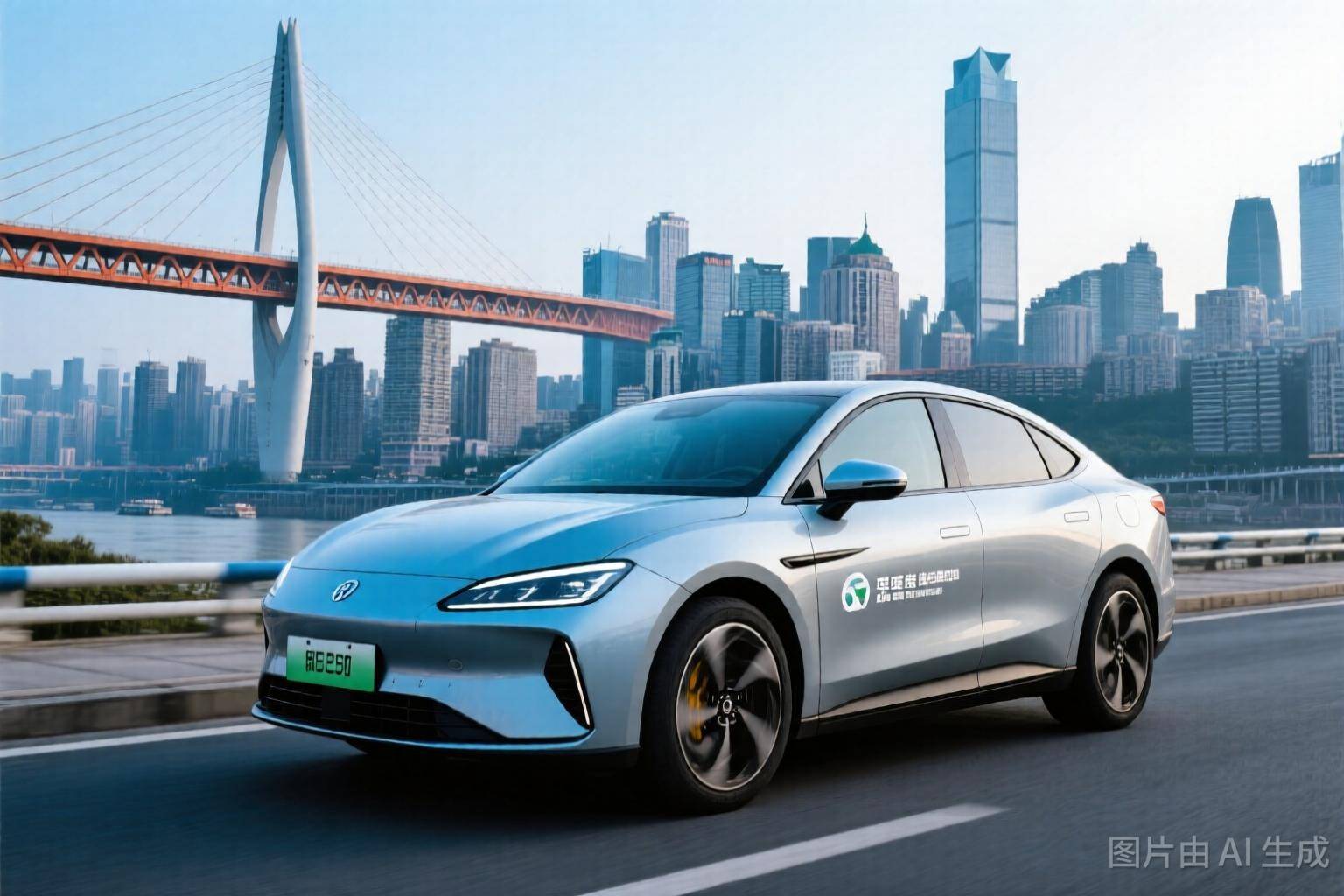
长安汽车发展大事记
Zhong Guo Jing Ying Bao· 2026-01-12 08:18
Core Insights - The company has a rich history in the automotive industry, starting from self-funding in the early 1980s to becoming a significant player in the market with various innovative products and initiatives. Group 1: Historical Milestones - In the early 1980s, the company self-funded 35 million yuan to enter the automotive sector, marking the beginning of its entrepreneurial journey [1] - In 1984, the company launched the first batch of microcars in China, including the SC1 12 micro van and SC1 10 micro truck [2] - The first "Aotu" model from Changan Suzuki was produced in 1995, becoming China's first national car due to its affordability and fuel efficiency [2] - In 1999, the Changan Star completed crash tests at Tsinghua University, significantly impacting the microcar market in China [3] Group 2: International Expansion and R&D - In 2001, the company began international R&D efforts by establishing a presence in Turin, Italy [4] - By 2003, it set up an overseas technology sub-center and representative office in Italy, laying the groundwork for global R&D [5] - In 2010, the first national key laboratory for automotive noise, vibration, and safety technology was established at the company [8] Group 3: Product Innovations - The first self-branded sedan, the Benben, was launched in 2006, creating a significant market impact [6] - In 2007, the company introduced its first hybrid vehicle, the "Changan Jiexun HEV" [7] - The first generation of the global strategic model, the Yidong, was launched in 2011, achieving over 100,000 sales in its first year [9] Group 4: Technological Advancements - In 2016, the company completed a 2000-kilometer autonomous driving test from Chongqing to Beijing, paving the way for smart driving technology [10] - In 2017, the company launched the "Shangri-La" plan to accelerate its layout in the new energy vehicle sector [11] - In 2018, the "Beidou Tianshu" plan was introduced, establishing three global smart new energy brands [12] Group 5: Future Plans and Achievements - In 2023, the company announced the "Haina Baichuan" plan for global expansion, targeting five overseas markets [13] - By 2024, the Blue Whale powertrain will be upgraded to New Blue Whale power, achieving international leading technology levels [14] - The company is set to reach a historic milestone of producing its 30 millionth vehicle by December 10, 2025, becoming the fastest Chinese automotive company to achieve this feat [14]

AI应用方向延续强势,32位基金经理发生任职变动
Sou Hu Cai Jing· 2026-01-12 07:38
根据巨灵统计的数据,近30天(12.13-1.12)共有567只基金产品的基金经理发生离职。其中(1.10-1.12)日有8只基金产品 发布基金经理离职公告,涉及4名基金经理。从变动原因上来看,有1位基金经理是由于工作变动而从管理的2只基金产品中 离职。有2位基金经理是由于个人原因而从管理的3只基金产品中离职。有1位基金经理是由于死亡而从管理的3只基金产品 中离职。 华安基金蒋璆现任基金资产总规模为55.78亿元,管理过的基金都为混合型基金,任职期间回报最高的产品是华安制造先锋 混合A(006154),为混合型基金,在任职的7年又20天时间内获得302.13%的回报,至今仍在管理该基金。 新基金经理上任方面,其中(1.10-1.12)日有110只基金产品发布基金经理任职公告,涉及29名基金经理。鹏华基金闫冬现 任基金资产总规模为224.95亿元,管理过的基金都为指数型基金,任职期间回报最高的产品是鹏华中证A股资源产业指数 (LOF)A(160620),为指数型基金,在任职的6年又55天时间内获得196.39%的回报,至今仍在管理该基金。闫冬新任鹏华 中证工业有色金属主题ETF这只基金产品的基金经理。 1月12 ...
2025车企生存法则:对内做整合,在外找盟友
3 6 Ke· 2026-01-12 05:55
Core Insights - The Chinese automotive market is undergoing a significant consolidation wave in 2025, with major players like Geely and Changan actively restructuring to enhance efficiency and competitiveness [1][2][3] - New energy vehicles (NEVs) have reached a milestone, with sales hitting 1.715 million units in October 2025, achieving a penetration rate of 51.6%, indicating a deep market shift from traditional fuel vehicles [1] - The competition among automakers has evolved from price wars to a comprehensive battle over technology, configuration, and service, highlighting a growing disparity among companies [1][4] Internal Integration - Geely has initiated a series of internal integrations, including the merger of its Geometry brand into the Galaxy series and the strategic consolidation of Zeekr and Lynk & Co under the Zeekr Technology Group [2] - Changan and Dongfeng have also made strategic adjustments, with Changan's chairman emphasizing the need for restructuring to enhance competitiveness [3] - NIO and Li Auto have undertaken organizational changes to streamline operations and improve efficiency, aligning with their profitability goals for 2025 [4] External Collaborations - Huawei has emerged as a key player in the automotive ecosystem, expanding its partnerships with automakers like GAC and Dongfeng to create new brands and models [5][6] - The collaboration models with Huawei include standardized parts sales, full-stack smart vehicle solutions, and deep involvement in product design and sales networks [5][7] - As of now, Huawei has partnered with over 20 automotive brands, indicating its significant influence in the industry [8] Market Trends - The overall retail sales of narrow passenger vehicles in December 2025 were approximately 2.262 million units, reflecting a 14% year-on-year decline, attributed to policy changes and consumer sentiment [9] - For the entire year of 2025, cumulative retail sales reached about 23.744 million units, a 3.8% increase from the previous year, signaling a shift towards a more rational and high-quality development phase in the market [10] - The automotive industry's profit margin was around 4.4% in the first eleven months of 2025, indicating competitive pressures and the need for cost reduction strategies among automakers [10][11] Industry Consensus - The automotive industry is increasingly focused on cost reduction and efficiency improvements, with companies consolidating brands and integrating operations to enhance profitability [11] - The rise of core suppliers like CATL and Huawei has shifted the dynamics of the supply chain, prompting automakers to seek deeper collaborations rather than traditional procurement relationships [11][12] - Future competition will hinge not only on brand and product differentiation but also on the ability to collaborate within the ecosystem [12]

经济新方位·新场景新动能丨山城有个数字“练”车场
Ren Min Ri Bao· 2026-01-12 04:37
人民日报记者 刘新吾 一辆搭载网联自动驾驶系统的新能源汽车正平稳行驶,前方路口突然有行人横穿马路,路侧传感器 精准识别,立即将数据回传云端,云端平台完成计算并下发指令,车辆提前减速避让…… 不同车型、不同驾驶行为……在示范区,不断积累的海量真实数据,正助力系统决策模型持续进 化,推动创新技术从实验室逐步走向更广阔的应用。 重庆理工大学车辆工程学院院长赖晨光表示,示范区破解了封闭场地与真实路况脱节等问题,打破 了"信息孤岛"困境,让测试更贴近实际协同需求。"将单车智能与网联赋能结合起来,帮助车企通过场 景验证技术,降低研发和量产风险,还有助于破解智能辅助驾驶商业化落地瓶颈。"赖晨光说。 数字"练"车场的搭建,也离不开政策支持和体制机制创新。 重庆出台系列政策,推动基于"车路云一体化"的感知、决策、控制等服务在示范区域实现全覆盖。 同时,探索机制创新,为开放测试打通多头管理、上路限制、数据不通等关键堵点:打破部门壁垒,推 动交通、工信、公安等多部门协同管理;创新测试牌照与交通事故保险制度,让道路测试限制更少;建 立统一的数据共享与安全管理平台,促进"车路云"跨系统融合…… 政策精准扶持,路测场景快速成长,释放强劲 ...
若愚与硬哥转发了大博主对雷军王传福不提宁德的评论
理想TOP2· 2026-01-12 04:20
Core Viewpoint - The article discusses the shifting dynamics in the electric vehicle (EV) industry, particularly the changing power balance between battery manufacturers and automakers, with a focus on the growing trend of automakers developing their own batteries to gain more control over costs and supply chains [3][4]. Group 1: Industry Dynamics - The power dynamics in the EV industry are changing, with automakers increasingly moving away from reliance on major battery suppliers like CATL (Contemporary Amperex Technology Co., Limited) [3]. - The traditional model where automakers had to "kneel" to battery suppliers for production capacity is being replaced by a more balanced approach, where automakers are looking to self-manufacture batteries or choose from multiple suppliers [3][4]. - The shift is driven by rising costs and the need for supply chain security, which has become a new key performance indicator (KPI) for executives [3]. Group 2: Self-Manufacturing Benefits - Developing in-house batteries can lead to clearer cost structures, often resulting in savings of 10-20% compared to purchasing from external suppliers, while also allowing for better performance specifications [4]. - Automakers are exploring different strategies for battery production, with companies like BYD opting for a fully integrated approach, while others like Xiaomi and Changan are taking a more hybrid route [4]. Group 3: CATL's Response - In response to the changing landscape, CATL is also adapting its strategies by focusing on technological advancements, tighter partnerships with automakers, and shifting its business model from merely selling batteries to providing "battery services" [4]. - The competitive landscape is evolving, with consumers now having the option to choose between vehicles with CATL's technology or those with transparent, self-manufactured batteries that promise cost efficiency and reliability [4].

L3级自动驾驶车型准入落地,预计Q2向个人用户开放
Ju Chao Zi Xun· 2026-01-12 03:18
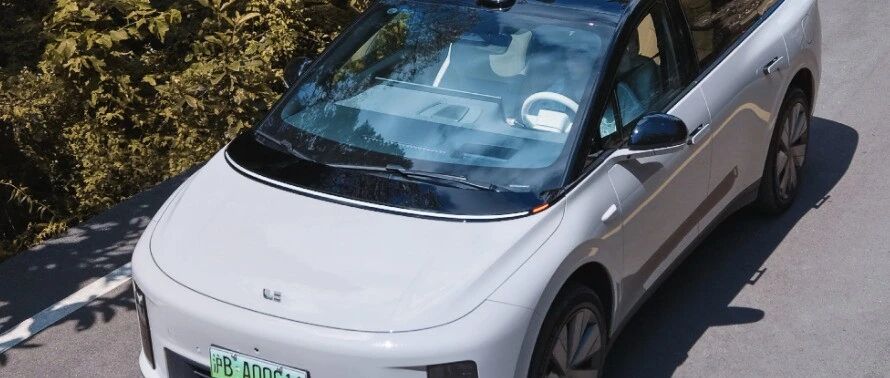
Group 1 - The core theme of the event held by BAIC New Energy is "Upgrading Together to Paint the Intelligent Journey," where the launch of the Arcfox Alpha S (L3 version) for large-scale road trial operations was announced [2] - The trial operation will adopt a "B-end first, gradually open" strategy to ensure operational safety, with plans to open to individual users by the second quarter of 2026 [2] - The Ministry of Industry and Information Technology of China announced the first batch of L3 conditional autonomous driving vehicle permits on December 15, 2025, marking a significant step towards the commercialization of L3 autonomous driving in China [2] Group 2 - Two models approved for the trial come from different manufacturers: the Changan SC7000AAARBEV, capable of autonomous driving at a maximum speed of 50 km/h in congested traffic, and the Arcfox BJ7001A61NBEV, capable of 80 km/h [3] - The Changan model will operate in designated areas in Chongqing, while the Arcfox model will operate in specific regions in Beijing [3] - Both manufacturers have completed product testing and safety assessments, and the next step involves conducting road trials in the specified areas [3] Group 3 - Huawei's Smart Automotive Solutions BU CEO provided insights into the automotive industry's development phases, highlighting the transition from electrification (2015-2022) to intelligence (2022-2027) and then to automation starting in 2027 [4] - The automation phase will see algorithms fully replace drivers, redefining safety and experience standards, significantly enhancing travel efficiency and societal efficiency [4] - L3 autonomous driving is expected to scale up in 2027, marking a new milestone in the development of smart vehicles [4]
锂电回收行业迎来转机 能源金属涨价推升“城市矿山”价值
Zheng Quan Shi Bao· 2026-01-12 03:03
Core Viewpoint - The lithium battery recycling industry is transitioning from a rough development phase to a more refined, standardized, and globalized stage, driven by rising prices of lithium and cobalt, supportive policies, and increasing demand for energy metals [1][2][6]. Industry Overview - Lithium battery recycling is likened to the development of "urban mines," converting waste batteries into valuable, recyclable resources [1]. - The industry is witnessing a transformation, with a market size exceeding 100 billion yuan, reshaping the resource supply landscape in the new energy sector [1][7]. Profitability and Market Dynamics - The profitability of lithium battery recycling businesses has improved significantly, with a reported 59% year-on-year increase in battery dismantling volume, reaching 36,000 tons in the first three quarters of 2025 [2]. - The rise in prices of lithium, cobalt, and nickel has enhanced cash flow for recycling companies, shifting the profit model from reliance on subsidies to the intrinsic value of recycled materials [2][3]. Policy and Regulatory Environment - The Chinese government has relaxed import policies for recycled materials, allowing certain types of black powder to be imported, which addresses previous challenges in the industry [3]. - This regulatory change is expected to secure domestic strategic resource supply and integrate China's battery recycling industry into global resource allocation [2][3]. Capacity Expansion and Capital Operations - Leading companies are adopting a dual strategy of capacity expansion and capital operations to capture market opportunities, with significant investments in new facilities and technology partnerships [4][5]. - Companies like Grinmei and Tianqi are actively pursuing acquisitions and financing to enhance their operational capabilities and market presence [4][5]. Technological Advancements and Lifecycle Integration - The industry is evolving from merely end-of-life disposal to playing a crucial role in the entire battery lifecycle, with companies developing comprehensive value chains from recycling to remanufacturing [6]. - Grinmei has achieved a lithium recovery rate exceeding 96.5% through innovative technologies, establishing partnerships with over 1,000 automotive and battery manufacturers [6]. Future Outlook - The lithium battery recycling market is projected to grow at an annual rate exceeding 50% over the next 3 to 5 years, with the domestic market expected to surpass 100 billion yuan by 2030 [7]. - The industry is moving towards a more regulated and competitive environment, with non-compliant players gradually exiting the market, signaling a positive trend for sustainable practices [7].


全球首款量产固态电池已诞生在芬兰,中国企业为何不怕?
3 6 Ke· 2026-01-12 01:44
Core Viewpoint - The Finnish startup Donut Lab has announced the release of a solid-state battery, claiming it has a cycle life of up to 100,000 times, an energy density of 400 Wh/kg, and a rapid charging capability of 5 minutes, which has surprised the market and raised questions about the competitive landscape in solid-state battery technology [1][3][5]. Group 1: Donut Lab's Solid-State Battery - Donut Lab's solid-state battery is claimed to have a cycle life of 100,000 times and an energy density of 400 Wh/kg, with a charging time of just 5 minutes [3][5]. - The company asserts it has the capability for gigawatt-hour level mass production and can supply globally [3]. - The announcement has caused concern among investors, questioning whether the solid-state battery's "D-Day" has arrived while others remain passive [5]. Group 2: Market Reactions and Competitor Responses - Despite the significant announcement, the response from global battery and automotive manufacturers, particularly Chinese companies, has been muted [5][6]. - Chinese companies may not be worried due to previous announcements of breakthroughs in solid-state battery technology by other firms like Nissan and Toyota, which have not yet materialized into market-ready products [6][10]. - The lack of immediate reaction from Chinese firms suggests confidence in their existing technology and market position [21][29]. Group 3: Challenges and Skepticism - There are doubts about the feasibility of Donut Lab's claims, particularly regarding the cycle life and cost of solid-state batteries, which are traditionally much higher than lithium-ion batteries [14][16]. - The solid-state battery industry faces significant challenges, including interface resistance, slow ion transport, high manufacturing costs, and low yield rates [18][20]. - The skepticism is further fueled by the lack of detailed specifications and pricing information from Donut Lab [20]. Group 4: China's Position in Solid-State Battery Development - China has a comprehensive and robust supply chain for electric vehicle batteries, with significant advancements in solid-state battery technology expected in the coming years [27][29]. - Major Chinese companies like CATL and BYD are planning to launch solid-state batteries with competitive energy densities and production timelines, indicating a strong domestic market focus [25][26]. - The Chinese market's scale and the established supply chain provide a competitive advantage, making it less likely for Chinese firms to be intimidated by new entrants like Donut Lab [22][29].



电力设备与新能源行业1月第1周周报:动储电池推进反内卷,光伏出口退税取消-20260112
Bank of China Securities· 2026-01-12 01:05
Investment Rating - The report maintains an "Outperform" rating for the power equipment and new energy industry [1]. Core Insights - The global sales of new energy vehicles are expected to grow rapidly in 2026, driving demand for batteries and materials [1]. - The Ministry of Industry and Information Technology is working to regulate competition in the power and energy storage battery industry, which is likely to improve profitability across the supply chain [1]. - Sodium batteries are anticipated to enter large-scale applications, while solid-state battery industrialization is progressing, highlighting the importance of related materials and equipment companies [1]. - The photovoltaic sector is focusing on "anti-involution" as a key investment theme, with regulatory discussions aimed at controlling upstream silicon material prices and enhancing profitability in downstream battery components [1]. - The demand for wind power is expected to continue growing, supported by government initiatives for new photovoltaic and wind power projects [1]. - The energy storage sector remains robust, with recommendations to focus on energy cell and large-scale integration manufacturers [1]. - Hydrogen energy is projected to open new demand avenues, particularly in green hydrogen applications, with a focus on equipment and operational segments [1]. - Nuclear fusion is identified as a long-term energy development direction, with recommendations to monitor core suppliers in this area [1]. Summary by Sections New Energy Vehicles - Expected sales in 2025 for new energy passenger vehicles in China are projected at 12.809 million units, a year-on-year increase of 17.6% [2]. Battery Technology - CATL announced plans for large-scale sodium battery applications in 2026, while solid-state battery prototypes are entering real vehicle testing [2]. Photovoltaic Industry - The cancellation of VAT export rebates for photovoltaic products is set to take effect from April 1, 2026, impacting market dynamics [2]. - The photovoltaic industry is experiencing price adjustments, with silicon material prices rising and a focus on maintaining profitability in the supply chain [15][19]. Wind Power - The wind power sector saw significant growth, with a 22.06% increase in stock prices for wind energy companies [10][13]. Energy Storage - The price of lithium carbonate has risen significantly, with current prices around 115,000-119,000 RMB per ton, reflecting a 19.1% increase [27]. - Energy cell prices for various models have also increased, with the average price for 100 Ah cells at 0.403 RMB per watt-hour, up from previous levels [28]. Market Trends - The overall power equipment and new energy sector saw a 5.02% increase in stock prices, outperforming the broader market indices [10][13].